SINGAPORE ETHNIC FOOD MARKET OVERVIEW
The Singapore ethnic food market size is valued at $531.74 million as of 2025 and is expected to reach $922.18 million by 2032, progressing with a CAGR of 8.18% during the forecast years, 2025-2032.
Singapore’s multicultural population, comprising Chinese, Malay, Indian, and expatriate communities, drives robust demand for diverse international cuisine trends. Rising tourism creates substantial opportunities as visitors seek authentic food recipes representing various global cultures. Moreover, government support for food innovation and import liberalization encourages market growth through streamlined regulatory processes.
The expanding presence of premium restaurant chains offering authentic global flavors shapes consumer taste shifts toward sophisticated dining experiences. Young professionals and millennials actively explore packaged ethnic foods beyond traditional Singaporean hawker fare. Additionally, Singapore’s compact geography and efficient distribution infrastructure facilitate rapid market penetration for specialty food imports. E-commerce platforms enable convenient access to ready-to-eat ethnic dishes from diverse cuisines.
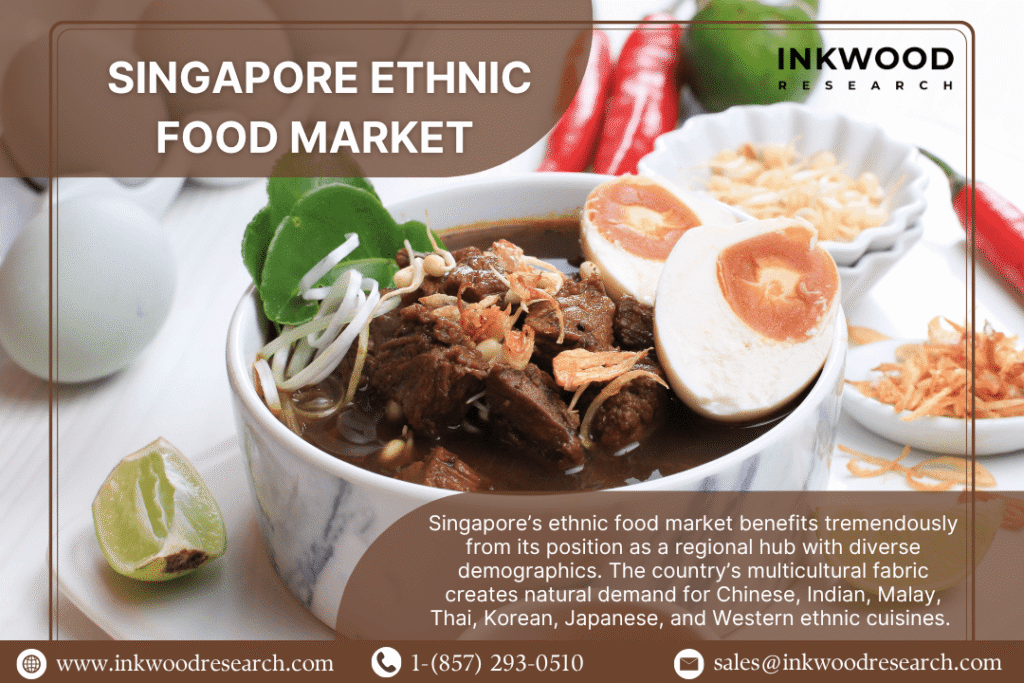
Singapore’s ethnic food market benefits tremendously from its position as a regional hub with diverse demographics. The country’s multicultural fabric creates natural demand for Chinese, Indian, Malay, Thai, Korean, Japanese, and Western ethnic cuisines. However, intense competition from established hawker centers and food courts creates challenges for packaged ethnic foods. Singapore’s vibrant street food popularity offers authentic, affordable alternatives to retail-ready-to-eat ethnic dishes. Nevertheless, convenience and food safety concerns increasingly drive urban professionals toward packaged ethnic foods from certified brands.
To Know More About This Report, Request a Free Sample Copy
Government regulations under the Singapore Food Agency (SFA) ensure stringent safety standards for imported specialty food imports. The SFA’s comprehensive food safety framework requires detailed ingredient disclosure, allergen labeling, and origin certification for packaged ethnic foods. These regulations create entry barriers for smaller international brands but simultaneously build consumer trust in certified products. High import dependence increases costs and supply chain vulnerability as Singapore lacks local agricultural production. Limited fresh ingredient availability constrains authentic food recipes requiring specific regional produce.
Consequently, manufacturers rely heavily on frozen ethnic meals and preserved ingredients meeting extended shelf life requirements. Cultural dining habits evolve as younger Singaporeans prioritize experiential eating and Instagram-worthy culinary discoveries. Fusion food innovations blending local Singaporean flavors with international techniques attract adventurous consumers seeking novel taste experiences. Plant-based ethnic meals are gaining considerable momentum as health-conscious consumers embrace flexitarian diets for wellness and environmental reasons.
Halal food expansion accelerates across the island nation, accommodating Muslim residents and tourists seeking certified products. Sustainable ethnic packaging appeals strongly to environmentally conscious Singaporeans prioritizing waste reduction and recycling. Online retail channels facilitate access to gourmet ethnic meals and specialty food imports previously unavailable through conventional stores. Festival food consumption drives seasonal peaks as diverse communities celebrate cultural traditions through traditional food demand.
The Singapore ethnic food market is segmented into cuisine type, food type, product type, and distribution channel. The food type segment is further categorized into vegetarian/vegan ethnic foods and non-vegetarian ethnic foods.
Vegetarian and vegan ethnic foods represent a rapidly growing segment within Singapore’s health-conscious consumer landscape. Singapore’s significant Buddhist and Hindu populations maintain strong vegetarian traditions, creating sustained traditional food demand. Indian vegetarian cuisines, including dosas, samosas, and curries, dominate this segment through specialty food imports and local production.
Thai vegetarian dishes featuring coconut milk, tofu, and vegetables appeal to wellness-focused consumers seeking flavorful plant-based options. Chinese Buddhist vegetarian cuisine offers sophisticated meat alternatives using mushrooms, soy products, and creative cooking techniques. Moreover, the rising flexitarian trend among young Singaporeans drives demand for plant-based ethnic meals beyond religious communities.
Health-conscious ethnic food options align with Singapore’s national wellness initiatives, promoting balanced nutrition and disease prevention. The government’s Healthier Dining Programme encourages restaurants and food manufacturers to offer nutritious alternatives. Consequently, packaged ethnic foods increasingly feature lower sodium, reduced sugar, and organic ethnic food ingredients. International cuisine trends emphasize vegetable-forward preparations, highlighting fresh produce and bold seasonings from the global spices market outlook.
Middle Eastern mezze platters, Mediterranean salads, and Mexican bean-based dishes naturally accommodate vegetarian preferences. Additionally, Korean temple food and Japanese shojin ryori introduce consumers to sophisticated plant-based culinary traditions. Ready-to-eat ethnic dishes featuring jackfruit, tempeh, and seitan provide convenient protein alternatives for busy professionals.
Sustainable ethnic packaging using biodegradable materials enhances appeal among environmentally conscious consumers purchasing organic ethnic food. Consumer taste shifts toward authentic food recipes free from artificial additives drive clean-label product development. Exotic flavors analysis reveals growing appreciation for herb-forward, spice-rich vegetarian preparations from diverse cultures. Consequently, this segment offers substantial growth opportunities for brands emphasizing health, authenticity, and sustainability in vegetarian ethnic food offerings.
Some of the top players operating in the Singapore ethnic food market include Ajinomoto Co Inc, Nestlé SA, General Mills Inc, McCormick & Company Inc, Yeo’s Group, etc.
McCormick & Company Inc operates as a leading global manufacturer and distributor of spices, seasonings, condiments, and flavoring products headquartered in Maryland, United States. The company specializes in producing flavor solutions spanning consumer products, food service offerings, and industrial applications distributed worldwide. McCormick’s extensive product portfolio includes the iconic McCormick spices, Lawry’s seasonings, French’s condiments, and Cholula hot sauce brands.
Within Singapore’s ethnic food market, McCormick produces packaged ethnic foods, cooking sauces, seasoning blends, and authentic food recipes adapted for Asian consumers. The company’s ethnic seasoning ranges include Thai curry pastes, Indian spice blends, Mexican taco seasonings, and Chinese stir-fry sauces. Moreover, McCormick leverages over 135 years of flavor expertise to develop traditional food demand products, maintaining authentic taste profiles. The firm operates regional facilities throughout Asia-Pacific, enabling efficient distribution of specialty food imports and locally manufactured products.
McCormick’s business model emphasizes quality, innovation, and culinary authenticity aligned with international cuisine trends. Strategic partnerships with major Singapore retailers like FairPrice, Cold Storage, and Giant ensure prominent shelf placement for ready-to-eat ethnic dishes. Additionally, McCormick’s digital platforms provide cooking tutorials and authentic food recipes, encouraging home preparation of gourmet ethnic meals. The firm’s commitment to sourcing from the global food trade ensures access to premium ingredients from the spices market outlook regions. Consequently, McCormick maintains strong brand recognition and market leadership through consistent quality, flavor innovation, and a deep understanding of consumer taste shifts in Singapore’s diverse ethnic food sector.
REPORT SYNOPSIS
| REPORT SCOPE | DETAILS |
|---|---|
| Market Forecast Years | 2025-2032 |
| Base Year | 2024 |
| Market Historical Years | 2018-2023 |
| Forecast Units | Revenue ($ Million) |
| Segments Analyzed | Cuisine Type, Food Type, Product Type, and Distribution Channel |
| Country Analyzed | Singapore |
| Companies Analyzed | Ajinomoto Co Inc, Nestlé SA, General Mills Inc, McCormick & Company Inc |
TABLE OF CONTENTS
RESEARCH SCOPE & METHODOLOGY
- STUDY OBJECTIVES
- METHODOLOGY
- ASSUMPTIONS & LIMITATIONS
EXECUTIVE SUMMARY
- MARKET SIZE & FORECAST
- MARKET OVERVIEW
- SCOPE OF STUDY
- CRISIS SCENARIO ANALYSIS
- MAJOR MARKET FINDINGS
- THE MARKET IS EXPERIENCING STRONG GROWTH DUE TO INCREASING CONSUMER INTEREST IN AUTHENTIC AND DIVERSE CUISINES
- RISING MIGRATION AND CULTURAL EXCHANGE ARE BROADENING THE CONSUMER BASE FOR MULTI-REGIONAL FOOD PRODUCTS
- PRE-PACKAGED AND READY-TO-EAT ETHNIC FOOD SEGMENTS ARE GAINING POPULARITY AMONG URBAN AND MILLENNIAL CONSUMERS
- LEADING BRANDS ARE INVESTING IN CLEAN LABEL INGREDIENTS AND HEALTHIER RECIPE VARIANTS TO APPEAL TO HEALTH-CONSCIOUS BUYERS
MARKET DYNAMICS
- KEY DRIVERS
- RISING MULTICULTURAL POPULATION BOOSTS DEMAND FOR DIVERSE ETHNIC CUISINES
- EXPANSION OF PREMIUM RESTAURANT CHAINS OFFERING AUTHENTIC GLOBAL FLAVORS
- INCREASE IN TOURISM DRIVES CONSUMPTION OF INTERNATIONAL FOOD PRODUCTS
- GOVERNMENT SUPPORT FOR FOOD INNOVATION AND IMPORT LIBERALIZATION ENCOURAGES MARKET GROWTH
- KEY RESTRAINTS
- HIGH IMPORT DEPENDENCE INCREASES COST AND SUPPLY CHAIN VULNERABILITY
- LIMITED LOCAL AGRICULTURAL PRODUCTION CONSTRAINS FRESH INGREDIENT AVAILABILITY
- INTENSE COMPETITION FROM FAST-FOOD AND FUSION CUISINES REDUCES BRAND DIFFERENTIATION
- STRINGENT FOOD SAFETY REGULATIONS DELAY PRODUCT LAUNCHES AND MARKET ENTRY
- KEY DRIVERS
KEY ANALYTICS
- KEY MARKET TRENDS
- INCREASING ADOPTION OF FUSION CUISINES BLENDING LOCAL AND GLOBAL FLAVORS
- GROWING DEMAND FOR PLANT-BASED AND VEGAN ETHNIC FOOD OPTIONS
- RISING POPULARITY OF ETHNIC STREET FOOD CONCEPTS IN QUICK-SERVICE RESTAURANTS
- INNOVATION IN PACKAGING AND PRESERVATION TO EXTEND SHELF LIFE AND QUALITY
- PORTER’S FIVE FORCES ANALYSIS
- BUYERS POWER
- SUPPLIERS POWER
- SUBSTITUTION
- NEW ENTRANTS
- INDUSTRY RIVALRY
- GROWTH PROSPECT MAPPING
- GROWTH PROSPECT MAPPING FOR SINGAPORE
- MARKET MATURITY ANALYSIS
- MARKET CONCENTRATION ANALYSIS
- VALUE CHAIN ANALYSIS
- RAW MATERIAL SUPPLIERS
- INGREDIENT PROCESSORS
- FOOD MANUFACTURERS
- PACKAGING COMPANIES
- DISTRIBUTORS AND RETAILERS
- FOOD SERVICE OPERATORS
- END CONSUMER
- KEY BUYING CRITERIA
- TASTE AUTHENTICITY
- HEALTH AND NUTRITION
- PRICE AFFORDABILITY
- BRAND REPUTATION
- REGULATORY FRAMEWORK
- KEY MARKET TRENDS
ETHNIC FOOD MARKET BY CUISINE TYPE
- CHINESE
- MARKET FORECAST FIGURE
- SEGMENT ANALYSIS
- JAPANESE
- MARKET FORECAST FIGURE
- SEGMENT ANALYSIS
- INDIAN
- MARKET FORECAST FIGURE
- SEGMENT ANALYSIS
- THAI
- MARKET FORECAST FIGURE
- SEGMENT ANALYSIS
- KOREAN
- MARKET FORECAST FIGURE
- SEGMENT ANALYSIS
- MEXICAN
- MARKET FORECAST FIGURE
- SEGMENT ANALYSIS
- BRAZILIAN
- MARKET FORECAST FIGURE
- SEGMENT ANALYSIS
- LEBANESE
- MARKET FORECAST FIGURE
- SEGMENT ANALYSIS
- OTHER CUISINE TYPES
- MARKET FORECAST FIGURE
- SEGMENT ANALYSIS
- CHINESE
ETHNIC FOOD MARKET BY FOOD TYPE
- VEGETARIAN/VEGAN ETHNIC FOODS
- MARKET FORECAST FIGURE
- SEGMENT ANALYSIS
- NON-VEGETARIAN ETHNIC FOODS
- MARKET FORECAST FIGURE
- SEGMENT ANALYSIS
- VEGETARIAN/VEGAN ETHNIC FOODS
ETHNIC FOOD MARKET BY PRODUCT TYPE
- READY-TO-EAT MEALS
- MARKET FORECAST FIGURE
- SEGMENT ANALYSIS
- FROZEN FOOD
- MARKET FORECAST FIGURE
- SEGMENT ANALYSIS
- PACKAGED FOOD
- MARKET FORECAST FIGURE
- SEGMENT ANALYSIS
- CANNED FOOD
- MARKET FORECAST FIGURE
- SEGMENT ANALYSIS
- DRIED MEALS
- MARKET FORECAST FIGURE
- SEGMENT ANALYSIS
- OTHER PRODUCT TYPES
- MARKET FORECAST FIGURE
- SEGMENT ANALYSIS
- READY-TO-EAT MEALS
ETHNIC FOOD MARKET BY DISTRIBUTION CHANNEL
- SUPERMARKETS / HYPERMARKETS
- MARKET FORECAST FIGURE
- SEGMENT ANALYSIS
- CONVENIENCE / GROCERY STORES
- MARKET FORECAST FIGURE
- SEGMENT ANALYSIS
- SPECIALTY STORES
- MARKET FORECAST FIGURE
- SEGMENT ANALYSIS
- ONLINE RETAIL
- MARKET FORECAST FIGURE
- SEGMENT ANALYSIS
- OTHER DISTRIBUTION CHANNELS
- MARKET FORECAST FIGURE
- SEGMENT ANALYSIS
- SUPERMARKETS / HYPERMARKETS
COMPETITIVE LANDSCAPE
- KEY STRATEGIC DEVELOPMENTS
- MERGERS & ACQUISITIONS
- PRODUCT LAUNCHES & DEVELOPMENTS
- PARTNERSHIPS & AGREEMENTS
- BUSINESS EXPANSIONS & DIVESTITURES
- COMPANY PROFILES
- AJINOMOTO CO INC
- COMPANY OVERVIEW
- PRODUCTS
- STRENGTHS & CHALLENGES
- GENERAL MILLS INC
- COMPANY OVERVIEW
- PRODUCTS
- STRENGTHS & CHALLENGES
- MCCORMICK & COMPANY INC
- COMPANY OVERVIEW
- PRODUCTS
- STRENGTHS & CHALLENGES
- NESTLÉ SA
- COMPANY OVERVIEW
- PRODUCTS
- STRENGTHS & CHALLENGES
- YEO’S GROUP
- COMPANY OVERVIEW
- PRODUCTS
- STRENGTHS & CHALLENGE
- AJINOMOTO CO INC
- KEY STRATEGIC DEVELOPMENTS
LIST OF TABLES
TABLE 1: MARKET SNAPSHOT – ETHNIC FOOD
TABLE 2: MARKET BY CUISINE TYPE, HISTORICAL YEARS, 2018-2023 (IN $ MILLION)
TABLE 3: MARKET BY CUISINE TYPE, FORECAST YEARS, 2025-2032 (IN $ MILLION)
TABLE 4: MARKET BY FOOD TYPE, HISTORICAL YEARS, 2018-2023 (IN $ MILLION)
TABLE 5: MARKET BY FOOD TYPE, FORECAST YEARS, 2025-2032 (IN $ MILLION)
TABLE 6: MARKET BY PRODUCT TYPE, HISTORICAL YEARS, 2018-2023 (IN $ MILLION)
TABLE 7: MARKET BY PRODUCT TYPE, FORECAST YEARS, 2025-2032 (IN $ MILLION)
TABLE 8: MARKET BY DISTRIBUTION CHANNEL, HISTORICAL YEARS, 2018-2023 (IN $ MILLION)
TABLE 9: MARKET BY DISTRIBUTION CHANNEL, FORECAST YEARS, 2025-2032 (IN $ MILLION)
TABLE 10: KEY PLAYERS OPERATING IN THE SINGAPORE MARKET
TABLE 11: LIST OF MERGERS & ACQUISITIONS
TABLE 12: LIST OF PRODUCT LAUNCHES & DEVELOPMENTS
TABLE 13: LIST OF PARTNERSHIPS & AGREEMENTS
TABLE 14: LIST OF BUSINESS EXPANSIONS & DIVESTITURES
LIST OF FIGURES
FIGURE 1: KEY MARKET TRENDS
FIGURE 2: PORTER’S FIVE FORCES ANALYSIS
FIGURE 3: GROWTH PROSPECT MAPPING FOR SINGAPORE
FIGURE 4: MARKET MATURITY ANALYSIS
FIGURE 5: MARKET CONCENTRATION ANALYSIS
FIGURE 6: VALUE CHAIN ANALYSIS
FIGURE 7: KEY BUYING CRITERIA
FIGURE 8: SEGMENT GROWTH POTENTIAL, BY CUISINE TYPE, IN 2024
FIGURE 9: CHINESE MARKET SIZE, 2025–2032 (IN $ MILLION)
FIGURE 10: JAPANESE MARKET SIZE, 2025–2032 (IN $ MILLION)
FIGURE 11: INDIAN MARKET SIZE, 2025–2032 (IN $ MILLION)
FIGURE 12: THAI MARKET SIZE, 2025–2032 (IN $ MILLION)
FIGURE 13: KOREAN MARKET SIZE, 2025–2032 (IN $ MILLION)
FIGURE 14: MEXICAN MARKET SIZE, 2025–2032 (IN $ MILLION)
FIGURE 15: BRAZILIAN MARKET SIZE, 2025–2032 (IN $ MILLION)
FIGURE 16: LEBANESE MARKET SIZE, 2025–2032 (IN $ MILLION)
FIGURE 17: OTHER CUISINE TYPES MARKET SIZE, 2025–2032 (IN $ MILLION)
FIGURE 18: SEGMENT GROWTH POTENTIAL, BY FOOD TYPE, IN 2024
FIGURE 19: VEGETARIAN/VEGAN ETHNIC FOODS MARKET SIZE, 2025–2032 (IN $ MILLION)
FIGURE 20: NON-VEGETARIAN ETHNIC FOODS MARKET SIZE, 2025–2032 (IN $ MILLION)
FIGURE 21: SEGMENT GROWTH POTENTIAL, BY PRODUCT TYPE, IN 2024
FIGURE 22: READY-TO-EAT MEALS MARKET SIZE, 2025–2032 (IN $ MILLION)
FIGURE 23: FROZEN FOOD MARKET SIZE, 2025–2032 (IN $ MILLION)
FIGURE 24: PACKAGED FOOD MARKET SIZE, 2025–2032 (IN $ MILLION)
FIGURE 25: CANNED FOOD MARKET SIZE, 2025–2032 (IN $ MILLION)
FIGURE 26: DRIED MEALS MARKET SIZE, 2025–2032 (IN $ MILLION)
FIGURE 27: OTHER FOOD TYPES MARKET SIZE, 2025–2032 (IN $ MILLION)
FIGURE 28: SEGMENT GROWTH POTENTIAL, BY DISTRIBUTION CHANNEL, IN 2024
FIGURE 29: SUPERMARKETS / HYPERMARKETS MARKET SIZE, 2025–2032 (IN $ MILLION)
FIGURE 30: CONVENIENCE / GROCERY STORES MARKET SIZE, 2025–2032 (IN $ MILLION)
FIGURE 31: SPECIALTY STORES MARKET SIZE, 2025–2032 (IN $ MILLION)
FIGURE 32: ONLINE RETAIL MARKET SIZE, 2025–2032 (IN $ MILLION)
FIGURE 33: OTHER DISTRIBUTION CHANNELS MARKET SIZE, 2025–2032 (IN $ MILLION)
FAQ’s
RELATED REPORTS
-

UNITED STATES AI-DRIVEN CLOUD MIGRATION SERVICES MARKET FORECAST 2026-2034
-

UNITED KINGDOM AI-DRIVEN CLOUD MIGRATION SERVICES MARKET FORECAST 2026-2034
-

UNITED ARAB EMIRATES AI-DRIVEN CLOUD MIGRATION SERVICES MARKET FORECAST 2026-2034
-

SOUTH KOREA AI-DRIVEN CLOUD MIGRATION SERVICES MARKET FORECAST 2026-2034
-

SINGAPORE AI-DRIVEN CLOUD MIGRATION SERVICES MARKET FORECAST 2026-2034
-

SAUDI ARABIA AI-DRIVEN CLOUD MIGRATION SERVICES MARKET FORECAST 2026-2034
-

AUSTRALIA AI-DRIVEN CLOUD MIGRATION SERVICES MARKET FORECAST 2026-2034
-

JAPAN AI-DRIVEN CLOUD MIGRATION SERVICES MARKET FORECAST 2026-2034
-

INDIA AI-DRIVEN CLOUD MIGRATION SERVICES MARKET FORECAST 2026-2034
-

CHINA AI-DRIVEN CLOUD MIGRATION SERVICES MARKET FORECAST 2026-2034