JAPAN ETHNIC FOOD MARKET OVERVIEW
The Japan ethnic food market size is valued at $4475.22 million as of 2025 and is expected to reach $8461.90 million by 2032, progressing with a CAGR of 9.53% during the forecast years, 2025-2032.
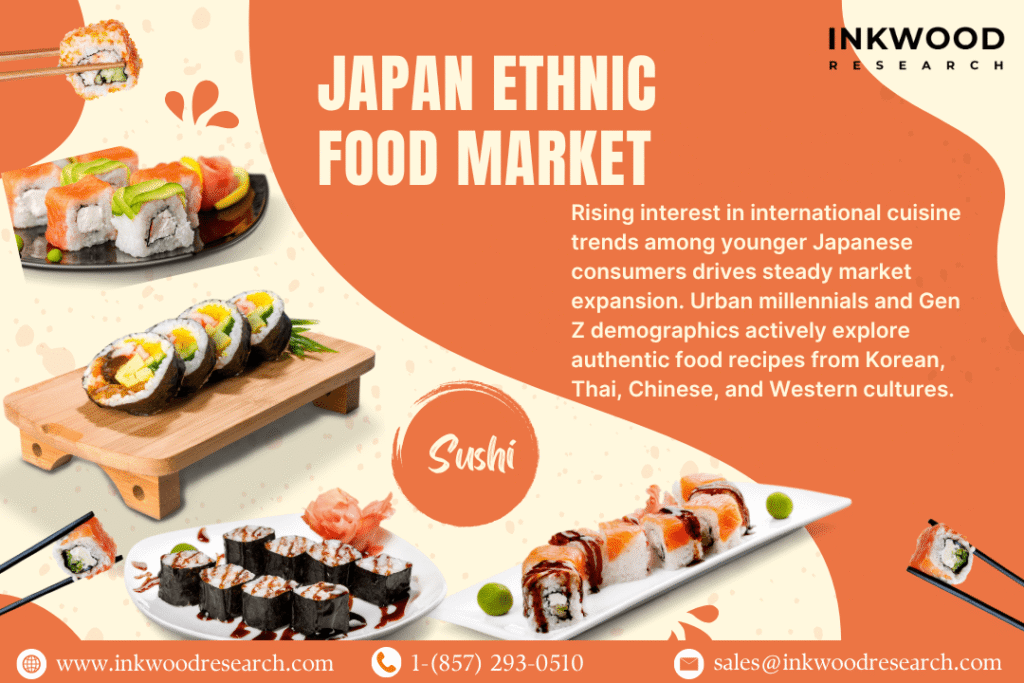
Rising interest in international cuisine trends among younger Japanese consumers drives steady market expansion. Urban millennials and Gen Z demographics actively explore authentic food recipes from Korean, Thai, Chinese, and Western cultures. International tourism exposure shapes sophisticated palates seeking exotic flavors analysis beyond traditional Japanese fare. Moreover, Japan’s robust convenience culture creates strong demand for ready-to-eat ethnic dishes requiring minimal preparation.
The growing number of foreign residents enhances market diversity, subsequently increasing traditional food demand for authentic packaged ethnic foods. E-commerce platforms facilitate access to specialty food imports previously unavailable through conventional retail channels. Additionally, fusion food innovations blending Japanese ingredients with international techniques attract adventurous consumers. Health-conscious ethnic food options align with Japanese wellness priorities, emphasizing nutritional balance and quality ingredients.
To Know More About This Report, Request a Free Sample Copy
Japan’s ethnic food market thrives on consumer openness to culinary experimentation despite deep-rooted traditional dining preferences. Tokyo, Osaka, and other major metropolitan areas showcase vibrant restaurant ethnic menus featuring diverse international cuisines. Korean cuisine dominates ethnic food consumption, driven by geographical proximity and strong cultural exchange through K-pop influence.
Thai, Vietnamese, Indian, and Italian cuisines gain substantial traction through specialty food imports and restaurant proliferation. Convenience stores operated by Seven-Eleven Japan, Lawson, and FamilyMart stock extensive ranges of frozen ethnic meals catering to busy professionals. These retailers strategically position ready-to-eat ethnic dishes near checkout areas, capturing impulse purchases from time-pressed consumers. Furthermore, Japan’s sophisticated cold chain infrastructure ensures consistent quality for frozen ethnic meals distributed nationwide.
Government regulations under the Food Sanitation Act, enforced by the Ministry of Health, Labour and Welfare, ensure stringent safety standards. Imported packaged ethnic foods must comply with detailed labeling requirements specifying ingredients, allergens, and country of origin. These regulations create barriers for smaller international brands but simultaneously build consumer trust in certified products.
Halal food expansion accelerates, particularly in Tokyo and Osaka, accommodating growing Muslim tourist populations and residents. Street food popularity from Southeast Asian countries influences product innovation in ethnic snacks growth categories. Sustainable ethnic packaging appeals strongly to environmentally conscious Japanese consumers, prioritizing waste reduction. Cultural dining habits evolve as younger generations prioritize experiential eating and social media-worthy culinary discoveries.
The Japan ethnic food market is segmented into cuisine type, food type, product type, and distribution channel. The product type segment is further categorized into ready-to-eat meals, frozen food, packaged food, canned food, dried meals, and other product types.
Frozen ethnic meals represent a critical growth segment within Japan’s convenience-driven food landscape. Japan’s extensive freezer infrastructure across retail channels supports widespread distribution of diverse international cuisine trends and products. Consumers appreciate frozen formats that maintain authentic food recipes while offering extended shelf life and preparation flexibility.
Working professionals rely heavily on frozen ethnic meals for weeknight dinners, reducing cooking time without sacrificing variety. Single-person households, which comprise a significant portion of the Japanese demographics, favor individually portioned frozen ethnic meals. Major retailers like Aeon and Ito-Yokado dedicate substantial freezer space to ethnic food options, reflecting strong consumer demand.
Product innovation focuses on premium frozen ethnic meals featuring restaurant-quality gourmet ethnic meals at accessible price points. Manufacturers invest in advanced freezing technologies that preserve the texture, flavor, and nutritional value of authentic food recipes. Korean frozen dumplings, Thai curry sets, and Italian pasta dishes dominate sales across supermarkets and convenience stores.
Additionally, seasonal limited-edition frozen ethnic meals tied to cultural celebrations drive festival food consumption peaks. Health-conscious ethnic food variants featuring reduced sodium and organic ethnic food ingredients capture growing wellness-focused consumer segments. Packaging innovations include microwave-safe containers and resealable formats addressing convenience and waste reduction priorities.
Furthermore, clear labeling with detailed cooking instructions and origin stories enhances consumer confidence in unfamiliar cuisines. Frozen ethnic meals enable Japanese consumers to explore exotic flavors analysis without committing to restaurant dining expenses. Consumer taste shifts toward bold international flavors, driving continuous category expansion and product diversification. Consequently, the frozen food segment offers substantial growth opportunities for brands emphasizing quality, authenticity, and convenience.
Some of the top players operating in the Japan ethnic food market include Ajinomoto Co Inc, Nestlé SA, General Mills Inc, McCormick & Company Inc, etc.
Nestlé SA operates as a leading global food and beverage company headquartered in Vevey, Switzerland, with significant operations throughout Japan. The company specializes in manufacturing nutrition, health, and wellness products spanning multiple categories, including beverages, dairy, confectionery, and prepared meals. Nestlé’s extensive product portfolio in Japan includes the Kit Kat brand, Nescafé coffee, Milo nutritional beverages, and diverse culinary solutions. Within Japan’s ethnic food market, Nestlé produces frozen ethnic meals, ready-to-eat ethnic dishes, packaged sauces, and cooking ingredients through its culinary division.
The company’s Maggi brand offers authentic food recipes and seasoning products catering to international cuisine trends. Nestlé Japan operates multiple production facilities, ensuring efficient distribution of packaged ethnic foods across retail channels nationwide. The firm’s business model emphasizes nutritional value, taste authenticity, and product innovation aligned with health-conscious ethnic food trends. Strategic partnerships with Japanese retailers secure prominent shelf placement for ready-to-eat ethnic dishes in supermarkets and convenience stores. Moreover, Nestlé invests heavily in sustainable ethnic packaging initiatives using recyclable materials, addressing environmental concerns.
The company’s research and development centers focus on fusion food innovations adapted specifically for Japanese consumer preferences. Nestlé actively expands its portfolio of plant-based ethnic meals, responding to growing demand for vegetarian alternatives. The firm leverages its global supply chain to source specialty food imports and authentic ingredients for traditional food demand. Consequently, Nestlé maintains a strong market presence through consistent quality, innovation, and adaptation to evolving consumer taste shifts in Japan’s ethnic food sector.
REPORT SYNOPSIS
| REPORT SCOPE | DETAILS |
|---|---|
| Market Forecast Years | 2025-2032 |
| Base Year | 2024 |
| Market Historical Years | 2018-2023 |
| Forecast Units | Revenue ($ Million) |
| Segments Analyzed | Cuisine Type, Food Type, Product Type, and Distribution Channel |
| Country Analyzed | Japan |
| Companies Analyzed | Ajinomoto Co Inc, Nestlé SA, General Mills, McCormick & Company Inc |
TABLE OF CONTENTS
RESEARCH SCOPE & METHODOLOGY
- STUDY OBJECTIVES
- METHODOLOGY
- ASSUMPTIONS & LIMITATIONS
EXECUTIVE SUMMARY
- MARKET SIZE & FORECAST
- MARKET OVERVIEW
- SCOPE OF STUDY
- CRISIS SCENARIO ANALYSIS
- MAJOR MARKET FINDINGS
- THE MARKET IS EXPERIENCING STRONG GROWTH DUE TO INCREASING CONSUMER INTEREST IN AUTHENTIC AND DIVERSE CUISINES
- RISING MIGRATION AND CULTURAL EXCHANGE ARE BROADENING THE CONSUMER BASE FOR MULTI-REGIONAL FOOD PRODUCTS
- PRE-PACKAGED AND READY-TO-EAT ETHNIC FOOD SEGMENTS ARE GAINING POPULARITY AMONG URBAN AND MILLENNIAL CONSUMERS
- LEADING BRANDS ARE INVESTING IN CLEAN LABEL INGREDIENTS AND HEALTHIER RECIPE VARIANTS TO APPEAL TO HEALTH-CONSCIOUS BUYER
MARKET DYNAMICS
- KEY DRIVERS
- GROWING INTEREST IN GLOBAL CUISINES AMONG YOUNGER CONSUMERS DRIVES MARKET EXPANSION
- INCREASE IN INTERNATIONAL TOURISM STIMULATES DEMAND FOR ETHNIC RESTAURANTS AND RETAIL PRODUCTS
- STRONG DISTRIBUTION NETWORKS FACILITATE WIDER ACCESS TO IMPORTED FOODS
- RISING NUMBER OF FOREIGN RESIDENTS ENHANCES MARKET DIVERSITY AND DEMAND
- KEY RESTRAINTS
- HIGH MARKET MATURITY LIMITS ROOM FOR RAPID EXPANSION
- CULTURAL PREFERENCE FOR TRADITIONAL JAPANESE CUISINE SLOWS ADOPTION OF NEW FLAVORS
- AGING POPULATION REDUCES CONSUMPTION OF EXPERIMENTAL OR SPICY FOODS
- HIGH IMPORT COSTS AND FLUCTUATING CURRENCY VALUES AFFECT PRICING AND PROFITABILITY
- KEY DRIVERS
KEY ANALYTICS
- KEY MARKET TRENDS
- INCREASING ADOPTION OF FUSION CUISINES BLENDING LOCAL AND GLOBAL FLAVORS
- GROWING DEMAND FOR PLANT-BASED AND VEGAN ETHNIC FOOD OPTIONS
- RISING POPULARITY OF ETHNIC STREET FOOD CONCEPTS IN QUICK-SERVICE RESTAURANTS
- INNOVATION IN PACKAGING AND PRESERVATION TO EXTEND SHELF LIFE AND QUALITY
- PORTER’S FIVE FORCES ANALYSIS
- BUYERS POWER
- SUPPLIERS POWER
- SUBSTITUTION
- NEW ENTRANTS
- INDUSTRY RIVALRY
- GROWTH PROSPECT MAPPING
- GROWTH PROSPECT MAPPING FOR JAPAN
- MARKET MATURITY ANALYSIS
- MARKET CONCENTRATION ANALYSIS
- VALUE CHAIN ANALYSIS
- RAW MATERIAL SUPPLIERS
- INGREDIENT PROCESSORS
- FOOD MANUFACTURERS
- PACKAGING COMPANIES
- DISTRIBUTORS AND RETAILERS
- FOOD SERVICE OPERATORS
- END CONSUMER
- KEY BUYING CRITERIA
- TASTE AUTHENTICITY
- HEALTH AND NUTRITION
- PRICE AFFORDABILITY
- BRAND REPUTATION
- REGULATORY FRAMEWORK
- KEY MARKET TRENDS
ETHNIC FOOD MARKET BY CUISINE TYPE
- CHINESE
- MARKET FORECAST FIGURE
- SEGMENT ANALYSIS
- JAPANESE
- MARKET FORECAST FIGURE
- SEGMENT ANALYSIS
- INDIAN
- MARKET FORECAST FIGURE
- SEGMENT ANALYSIS
- THAI
- MARKET FORECAST FIGURE
- SEGMENT ANALYSIS
- KOREAN
- MARKET FORECAST FIGURE
- SEGMENT ANALYSIS
- MEXICAN
- MARKET FORECAST FIGURE
- SEGMENT ANALYSIS
- BRAZILIAN
- MARKET FORECAST FIGURE
- SEGMENT ANALYSIS
- LEBANESE
- MARKET FORECAST FIGURE
- SEGMENT ANALYSIS
- OTHER CUISINE TYPES
- MARKET FORECAST FIGURE
- SEGMENT ANALYSIS
- CHINESE
ETHNIC FOOD MARKET BY FOOD TYPE
- VEGETARIAN/VEGAN ETHNIC FOODS
- MARKET FORECAST FIGURE
- SEGMENT ANALYSIS
- NON-VEGETARIAN ETHNIC FOODS
- MARKET FORECAST FIGURE
- SEGMENT ANALYSIS
- VEGETARIAN/VEGAN ETHNIC FOODS
ETHNIC FOOD MARKET BY PRODUCT TYPE
- READY-TO-EAT MEALS
- MARKET FORECAST FIGURE
- SEGMENT ANALYSIS
- FROZEN FOOD
- MARKET FORECAST FIGURE
- SEGMENT ANALYSIS
- PACKAGED FOOD
- MARKET FORECAST FIGURE
- SEGMENT ANALYSIS
- CANNED FOOD
- MARKET FORECAST FIGURE
- SEGMENT ANALYSIS
- DRIED MEALS
- MARKET FORECAST FIGURE
- SEGMENT ANALYSIS
- OTHER PRODUCT TYPES
- MARKET FORECAST FIGURE
- SEGMENT ANALYSIS
- READY-TO-EAT MEALS
ETHNIC FOOD MARKET BY DISTRIBUTION CHANNEL
- SUPERMARKETS / HYPERMARKETS
- MARKET FORECAST FIGURE
- SEGMENT ANALYSIS
- CONVENIENCE / GROCERY STORES
- MARKET FORECAST FIGURE
- SEGMENT ANALYSIS
- SPECIALTY STORES
- MARKET FORECAST FIGURE
- SEGMENT ANALYSIS
- ONLINE RETAIL
- MARKET FORECAST FIGURE
- SEGMENT ANALYSIS
- OTHER DISTRIBUTION CHANNELS
- MARKET FORECAST FIGURE
- SEGMENT ANALYSIS
- SUPERMARKETS / HYPERMARKETS
COMPETITIVE LANDSCAPE
- KEY STRATEGIC DEVELOPMENTS
- MERGERS & ACQUISITIONS
- PRODUCT LAUNCHES & DEVELOPMENTS
- PARTNERSHIPS & AGREEMENTS
- BUSINESS EXPANSIONS & DIVESTITURES
- COMPANY PROFILES
- AJINOMOTO CO INC
- COMPANY OVERVIEW
- PRODUCTS
- STRENGTHS & CHALLENGES
- GENERAL MILLS INC
- COMPANY OVERVIEW
- PRODUCTS
- STRENGTHS & CHALLENGES
- MCCORMICK & COMPANY INC
- COMPANY OVERVIEW
- PRODUCTS
- STRENGTHS & CHALLENGES
- NESTLÉ SA
- COMPANY OVERVIEW
- PRODUCTS
- STRENGTHS & CHALLENGES
- AJINOMOTO CO INC
- KEY STRATEGIC DEVELOPMENTS
LIST OF TABLES
TABLE 1: MARKET SNAPSHOT – ETHNIC FOOD
TABLE 2: MARKET BY CUISINE TYPE, HISTORICAL YEARS, 2018-2023 (IN $ MILLION)
TABLE 3: MARKET BY CUISINE TYPE, FORECAST YEARS, 2025-2032 (IN $ MILLION)
TABLE 4: MARKET BY FOOD TYPE, HISTORICAL YEARS, 2018-2023 (IN $ MILLION)
TABLE 5: MARKET BY FOOD TYPE, FORECAST YEARS, 2025-2032 (IN $ MILLION)
TABLE 6: MARKET BY PRODUCT TYPE, HISTORICAL YEARS, 2018-2023 (IN $ MILLION)
TABLE 7: MARKET BY PRODUCT TYPE, FORECAST YEARS, 2025-2032 (IN $ MILLION)
TABLE 8: MARKET BY DISTRIBUTION CHANNEL, HISTORICAL YEARS, 2018-2023 (IN $ MILLION)
TABLE 9: MARKET BY DISTRIBUTION CHANNEL, FORECAST YEARS, 2025-2032 (IN $ MILLION)
TABLE 10: KEY PLAYERS OPERATING IN THE JAPAN MARKET
TABLE 11: LIST OF MERGERS & ACQUISITIONS
TABLE 12: LIST OF PRODUCT LAUNCHES & DEVELOPMENTS
TABLE 13: LIST OF PARTNERSHIPS & AGREEMENTS
TABLE 14: LIST OF BUSINESS EXPANSIONS & DIVESTITURES
LIST OF FIGURES
FIGURE 1: KEY MARKET TRENDS
FIGURE 2: PORTER’S FIVE FORCES ANALYSIS
FIGURE 3: GROWTH PROSPECT MAPPING FOR JAPAN
FIGURE 4: MARKET MATURITY ANALYSIS
FIGURE 5: MARKET CONCENTRATION ANALYSIS
FIGURE 6: VALUE CHAIN ANALYSIS
FIGURE 7: KEY BUYING CRITERIA
FIGURE 8: SEGMENT GROWTH POTENTIAL, BY CUISINE TYPE, IN 2024
FIGURE 9: CHINESE MARKET SIZE, 2025–2032 (IN $ MILLION)
FIGURE 10: JAPANESE MARKET SIZE, 2025–2032 (IN $ MILLION)
FIGURE 11: INDIAN MARKET SIZE, 2025–2032 (IN $ MILLION)
FIGURE 12: THAI MARKET SIZE, 2025–2032 (IN $ MILLION)
FIGURE 13: KOREAN MARKET SIZE, 2025–2032 (IN $ MILLION)
FIGURE 14: MEXICAN MARKET SIZE, 2025–2032 (IN $ MILLION)
FIGURE 15: BRAZILIAN MARKET SIZE, 2025–2032 (IN $ MILLION)
FIGURE 16: LEBANESE MARKET SIZE, 2025–2032 (IN $ MILLION)
FIGURE 17: OTHER CUISINE TYPES MARKET SIZE, 2025–2032 (IN $ MILLION)
FIGURE 18: SEGMENT GROWTH POTENTIAL, BY FOOD TYPE, IN 2024
FIGURE 19: VEGETARIAN/VEGAN ETHNIC FOODS MARKET SIZE, 2025–2032 (IN $ MILLION)
FIGURE 20: NON-VEGETARIAN ETHNIC FOODS MARKET SIZE, 2025–2032 (IN $ MILLION)
FIGURE 21: SEGMENT GROWTH POTENTIAL, BY PRODUCT TYPE, IN 2024
FIGURE 22: READY-TO-EAT MEALS MARKET SIZE, 2025–2032 (IN $ MILLION)
FIGURE 23: FROZEN FOOD MARKET SIZE, 2025–2032 (IN $ MILLION)
FIGURE 24: PACKAGED FOOD MARKET SIZE, 2025–2032 (IN $ MILLION)
FIGURE 25: CANNED FOOD MARKET SIZE, 2025–2032 (IN $ MILLION)
FIGURE 26: DRIED MEALS MARKET SIZE, 2025–2032 (IN $ MILLION)
FIGURE 27: OTHER FOOD TYPES MARKET SIZE, 2025–2032 (IN $ MILLION)
FIGURE 28: SEGMENT GROWTH POTENTIAL, BY DISTRIBUTION CHANNEL, IN 2024
FIGURE 29: SUPERMARKETS / HYPERMARKETS MARKET SIZE, 2025–2032 (IN $ MILLION)
FIGURE 30: CONVENIENCE / GROCERY STORES MARKET SIZE, 2025–2032 (IN $ MILLION)
FIGURE 31: SPECIALTY STORES MARKET SIZE, 2025–2032 (IN $ MILLION)
FIGURE 32: ONLINE RETAIL MARKET SIZE, 2025–2032 (IN $ MILLION)
FIGURE 33: OTHER DISTRIBUTION CHANNELS MARKET SIZE, 2025–2032 (IN $ MILLION)
FAQ’s
RELATED REPORTS
-

UNITED STATES AI-DRIVEN CLOUD MIGRATION SERVICES MARKET FORECAST 2026-2034
-

UNITED KINGDOM AI-DRIVEN CLOUD MIGRATION SERVICES MARKET FORECAST 2026-2034
-

UNITED ARAB EMIRATES AI-DRIVEN CLOUD MIGRATION SERVICES MARKET FORECAST 2026-2034
-

SOUTH KOREA AI-DRIVEN CLOUD MIGRATION SERVICES MARKET FORECAST 2026-2034
-

SINGAPORE AI-DRIVEN CLOUD MIGRATION SERVICES MARKET FORECAST 2026-2034
-

SAUDI ARABIA AI-DRIVEN CLOUD MIGRATION SERVICES MARKET FORECAST 2026-2034
-

AUSTRALIA AI-DRIVEN CLOUD MIGRATION SERVICES MARKET FORECAST 2026-2034
-

JAPAN AI-DRIVEN CLOUD MIGRATION SERVICES MARKET FORECAST 2026-2034
-

INDIA AI-DRIVEN CLOUD MIGRATION SERVICES MARKET FORECAST 2026-2034
-

CHINA AI-DRIVEN CLOUD MIGRATION SERVICES MARKET FORECAST 2026-2034