Korean Beauty Industry Sustainable Skincare Revolution

TLDR : Korean Beauty Industry’s Sustainable Revolution

The K-beauty industry faces a sustainability crisis despite generating $4.94 billion in market value, producing approximately 120 billion units of packaging annually. Traditional Instagram-worthy packaging conflicts with growing environmental demands as 67% of K-beauty consumers aged 18-35 consider packaging waste in purchasing decisions. Major players like Amorepacific invest over $50 million annually in sustainability research, developing refillable packaging, ocean plastic initiatives, and circular economy approaches that balance K-beauty’s aesthetic excellence with essential environmental responsibility.

South Korea Skin Care Market Sustainability Crisis

The Korean beauty industry faces an unprecedented sustainability challenge that threatens its global reputation. While the South Korea skin care market generated $4.94 billion in market value through 2025, the environmental cost of beauty packaging waste continues escalating dramatically across Korean markets.

According to our research, the K-beauty industry produces approximately 120 billion units of packaging annually. Moreover, this staggering volume creates significant environmental pressure as Korean skincare brands balance aesthetic appeal with sustainable skincare principles throughout their operations.

The K-beauty industry historically prioritized Instagram-worthy packaging and elaborate multi-step routines housed in visually striking containers. However, consumer awareness about beauty packaging waste now demands fundamental changes in how Korean skincare brands approach sustainable beauty development and environmental responsibility.

The Scale of Beauty Packaging Waste

Korean companies face mounting pressure to address beauty packaging waste while maintaining the premium aesthetics that define K-beauty success globally. Furthermore, the K-beauty industry must reconcile consumer expectations for sustainable beauty with traditional packaging strategies that built brand recognition through eco-friendly skincare innovations.

South Korea Skin Care Market Environmental Impact

Based on our analysis, sustainable skincare demands require Korean skincare brands to innovate beyond surface-level changes. Additionally, these companies must implement comprehensive sustainable packaging solutions while preserving product efficacy and consumer satisfaction across diverse markets through K-beauty sustainability initiatives.

The environmental challenge extends beyond individual Korean skincare brands to encompass supply chain sustainability, ingredient sourcing practices, and end-of-life packaging disposal. Moreover, K-beauty sustainability initiatives must address both domestic and international market expectations for eco-friendly skincare solutions that reduce beauty packaging waste significantly.

Korean companies developing sustainable cosmetics face pressure to demonstrate measurable environmental impact while maintaining the green beauty standards expected by environmentally conscious consumers. Furthermore, these sustainable skincare requirements create both challenges and opportunities for skincare industry innovation
Korean beauty industry packaging waste environmental impact sustainable beauty challenge

Sustainable Skincare Innovation in the South Korea Skin Care Market

Korean skincare brands pioneer breakthrough approaches to sustainable skincare that revolutionize traditional beauty manufacturing processes. These innovations address environmental concerns while maintaining the efficacy and luxury positioning that defines the K-beauty industry globally through advanced, eco-friendly skincare development.

Leading Korean skincare brands invest heavily in sustainable beauty research, developing waterless formulations that reduce environmental impact during production phases. Additionally, these sustainable skincare innovations eliminate preservative dependencies while creating more concentrated products requiring less sustainable packaging materials overall.

South Korea Skin Care Market Innovation Drivers

The K-beauty industry leverages sustainable cosmetics technology to create green beauty products that meet consumer expectations for environmental responsibility. Moreover, these K-beauty sustainability initiatives demonstrate how eco-friendly skincare can enhance rather than compromise product performance and brand value.

Breakthrough Sustainable Beauty Technologies

The K-beauty industry leverages advanced biotechnology to create sustainable cosmetics using fermented ingredients and botanical extracts. These processes reduce chemical waste while producing more bioavailable active ingredients for eco-friendly skincare formulations that support K-beauty sustainability goals.

Korean companies develop sustainable skincare solutions through innovative extraction methods that minimize water consumption and energy usage. Furthermore, these technological advances enable Korean skincare brands to create green beauty products without compromising performance standards expected by global consumers seeking sustainable beauty alternatives.

Sustainable beauty innovation extends to ingredient sourcing, where Korean skincare brands establish partnerships with local farmers practicing regenerative agriculture. Moreover, these collaborations support K-beauty sustainability goals while strengthening domestic supply chains for eco-friendly skincare ingredients that reduce beauty packaging waste.

Research and Development Investment

The K-beauty industry allocates substantial resources toward sustainable cosmetics research, focusing on biodegradable formulations and renewable ingredient alternatives. Additionally, these investments position Korean skincare brands as leaders in the global green beauty movement through scientific advancement in sustainable skincare development.

Korean companies collaborate with research institutions to develop sustainable packaging materials derived from agricultural waste and ocean plastics. Furthermore, these partnerships accelerate innovation timelines while creating scalable solutions for beauty packaging waste reduction across the industry through eco-friendly skincare initiatives.

Research facilities focus on developing sustainable beauty formulations that maintain product stability without traditional preservatives. Moreover, these sustainable skincare innovations enable Korean beauty industry companies to create green beauty products meeting international environmental standards.

South Korea Skin Care Market Packaging Dilemma

The K-beauty industry confronts a complex dilemma between maintaining brand identity through distinctive packaging and meeting growing demands for sustainable beauty solutions. This challenge requires Korean skincare brands to reimagine their entire approach to product presentation and consumer engagement through sustainable packaging innovation.

Traditional K-beauty packaging emphasizes visual appeal, premium materials, and elaborate designs that create unboxing experiences, driving social media engagement. However, sustainable packaging requirements challenge these established practices while demanding innovative alternatives that preserve brand differentiation through eco-friendly skincare solutions.

Korean skincare brands must balance sustainable beauty principles with marketing strategies that build global recognition and consumer loyalty. Additionally, the K-beauty industry faces pressure to develop sustainable cosmetics packaging that maintains premium positioning while addressing beauty packaging waste concerns.

South Korea Skin Care Market | Consumer Expectations vs. Environmental Impact

Korean skincare brands navigate conflicting consumer demands for both sustainable skincare and Instagram-worthy packaging aesthetics. Moreover, the K-beauty industry must balance environmental responsibility with marketing strategies that build global recognition through sustainable beauty innovation and K-beauty sustainability leadership.

Research indicates that beauty packaging waste concerns influence purchasing decisions among 67% of K-beauty consumers aged 18-35. Additionally, these environmentally conscious shoppers increasingly prioritize Korean skincare brands, demonstrating a genuine commitment to sustainable cosmetics development and eco-friendly skincare practices.

The challenge intensifies as Korean skincare brands expand internationally, encountering diverse regulatory requirements for sustainable packaging across different markets. Furthermore, these companies must adapt eco-friendly skincare strategies while maintaining consistent brand messaging and green beauty principles globally.

Consumers expect Korean beauty industry leaders to provide sustainable skincare solutions without compromising product quality or aesthetic appeal. Moreover, these expectations drive innovation in sustainable beauty formulations and sustainable packaging technologies across Korean skincare brands.

Innovation Pressure and Market Demands

Korean beauty industry leaders face pressure to develop sustainable packaging solutions that maintain premium positioning while significantly reducing environmental impact. These innovations require substantial investment in research, testing, and manufacturing process redesigns across Korean skincare brands developing eco-friendly skincare products.

Companies must innovate sustainable beauty packaging that protects product integrity, extends shelf life, and provides user-friendly experiences without compromising environmental principles. Moreover, Korean skincare brands must ensure these sustainable packaging solutions remain cost-effective for widespread market adoption while supporting K-beauty sustainability goals.

The K-beauty industry recognizes that sustainable cosmetics development requires systematic changes throughout supply chains and operational frameworks. Furthermore, these green beauty initiatives must address beauty packaging waste while maintaining the innovation standards that define Korean skincare brands globally.
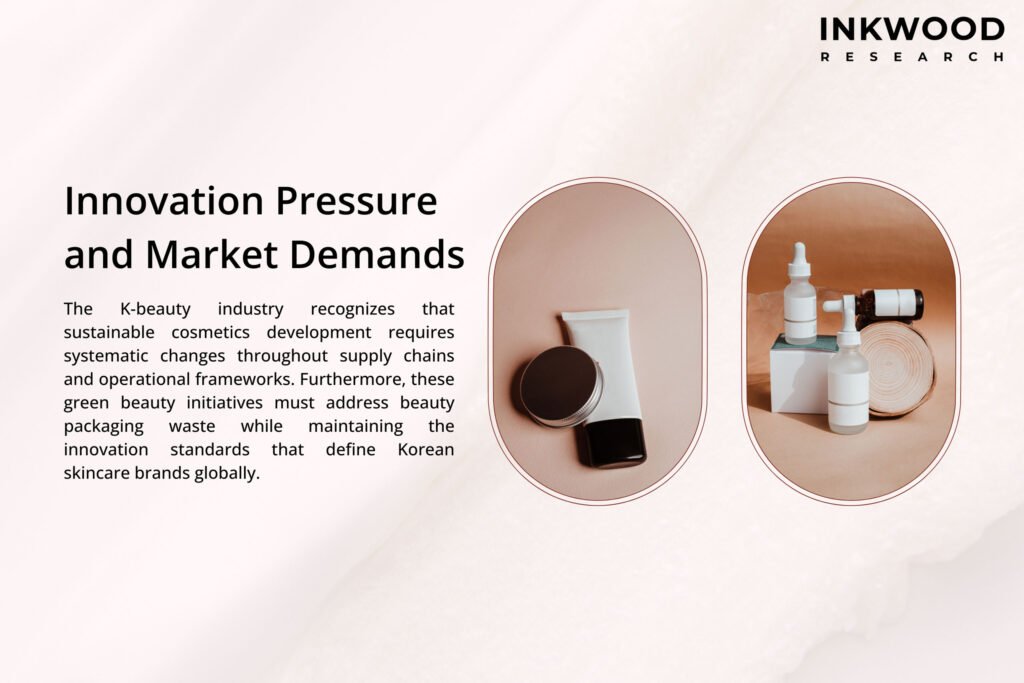
Korean skincare brands packaging dilemma sustainable beauty eco-friendly solutions

Eco-Friendly Solutions in the South Korea Skin Care Market

Korean skincare brands implement comprehensive eco-friendly skincare strategies addressing ingredient sourcing, manufacturing processes, and packaging innovations. These sustainable beauty initiatives require systematic changes throughout the K-beauty industry supply chain and operational frameworks supporting K-beauty sustainability development.

Leading companies develop eco-friendly skincare formulations using renewable ingredients, biodegradable components, and minimal processing requirements. Additionally, these sustainable skincare approaches reduce carbon footprints while maintaining product efficacy standards expected by global consumers seeking green beauty alternatives.

The K-beauty industry faces challenges in implementing sustainable cosmetics across diverse product categories while maintaining cost competitiveness. Moreover, these eco-friendly skincare solutions must address beauty packaging waste concerns while preserving the premium positioning that defines Korean skincare brands internationally.

Ingredient Innovation for Sustainable Cosmetics

  • The K-beauty industry pioneers sustainable cosmetics through innovative ingredient development using agricultural byproducts, marine algae, and fermented botanical extracts. These eco-friendly skincare ingredients provide superior performance while supporting circular economy principles throughout production cycles and K-beauty sustainability initiatives.
  • Korean skincare brands invest in vertical farming technologies, reducing transportation emissions and ensuring consistent ingredient quality for sustainable beauty products. Furthermore, these controlled environment systems enable year-round production of eco-friendly skincare components while minimizing water usage and pesticide requirements for green beauty formulations.
  • Companies also develop sustainable packaging using plant-based polymers, recycled ocean plastics, and compostable materials that decompose safely in natural environments. Moreover, these innovations address beauty packaging waste concerns while maintaining product protection and consumer appeal through sustainable skincare development.

Manufacturing Process Optimization

  • Korean beauty industry manufacturers implement energy-efficient production methods, renewable energy systems, and waste reduction protocols supporting sustainable skincare development. These operational improvements reduce environmental impact while maintaining cost competitiveness in global markets through eco-friendly skincare manufacturing.
  • Sustainable beauty manufacturing requires Korean skincare brands to redesign facilities, train personnel, and implement quality control systems, ensuring eco-friendly skincare products meet safety and efficacy standards. Additionally, these process improvements often result in cost savings through resource efficiency and waste minimization, supporting K-beauty sustainability goals.
  • The K-beauty industry adopts circular manufacturing principles where production waste becomes input materials for other sustainable cosmetics processes. Furthermore, these green beauty manufacturing approaches minimize environmental impact while creating economic benefits for Korean skincare brands.

Distribution and Retail Challenges

  • Korean skincare brands face logistical challenges in implementing sustainable packaging across diverse retail channels and international markets. Moreover, eco-friendly skincare distribution requires specialized handling, storage conditions, and transportation methods that protect product integrity while minimizing environmental impact through sustainable beauty practices.
  • The K-beauty industry must educate consumers about proper disposal methods for sustainable packaging materials, ensuring these eco-friendly skincare solutions achieve the intended environmental benefits. Furthermore, companies must provide clear recycling instructions and support infrastructure development for sustainable cosmetics waste management.
  • Retailers require training on sustainable beauty product handling, storage requirements, and consumer education about green beauty benefits. Additionally, Korean skincare brands must develop sustainable packaging solutions that maintain product integrity throughout complex distribution networks while reducing beauty packaging waste.

Sustainable Packaging Revolution in the South Korea Skin Care Market

The K-beauty industry undergoes a fundamental transformation as Korean skincare brands pioneer innovative, sustainable packaging solutions. These revolutionary approaches address beauty packaging waste while maintaining the premium aesthetics and functionality that define K-beauty excellence globally through sustainable beauty innovation.

Korean companies develop refillable packaging systems, concentrated product formats, and biodegradable materials, reducing environmental impact by up to 75% compared to traditional beauty packaging. Additionally, these sustainable packaging innovations create new revenue streams through refill programs and customer loyalty initiatives supporting eco-friendly skincare adoption.

The K-beauty industry recognizes that sustainable cosmetics require a comprehensive packaging redesign addressing environmental concerns without compromising product safety or consumer appeal. Moreover, these green beauty initiatives demonstrate how K-beauty sustainability can enhance brand value while reducing beauty packaging waste significantly.

Refillable System Innovation

Leading Korean skincare brands implement sophisticated refillable packaging systems that eliminate single-use containers while maintaining product freshness and user convenience. These sustainable beauty solutions require initial investment in durable packaging components but generate long-term environmental and economic benefits through eco-friendly skincare practices.

Innisfree pioneered refillable cushion compacts, reducing packaging waste by 60% while strengthening customer relationships through repeat engagement. Moreover, this sustainable packaging approach creates competitive advantages as consumers increasingly prioritize eco-friendly skincare brands in purchasing decisions, supporting K-beauty sustainability.

Korean beauty industry leaders expand refillable systems across product categories, including serums, moisturizers, and cleansers, using innovative dispensing technologies. Furthermore, these sustainable cosmetics innovations maintain product hygiene standards while eliminating beauty packaging waste from repeated purchases through green beauty solutions.

Biodegradable Material Development

The K-beauty industry invests in developing biodegradable packaging materials using agricultural waste, seaweed extracts, and mushroom-based polymers. These sustainable packaging innovations decompose naturally without leaving harmful residues in soil or water systems while supporting eco-friendly skincare development.

Korean skincare brands collaborate with material science companies to create compostable tubes, bottles, and applicators that maintain product integrity throughout shelf life. Additionally, these eco-friendly skincare packaging solutions meet international safety standards while supporting circular economy principles through sustainable beauty innovation.

Companies test innovative sustainable packaging materials, including edible films, water-soluble pouches, and plant-based alternatives to traditional plastics. Moreover, these experimental approaches position Korean skincare brands as pioneers in sustainable beauty innovation while addressing growing consumer demands for environmental responsibility through K-beauty sustainability.
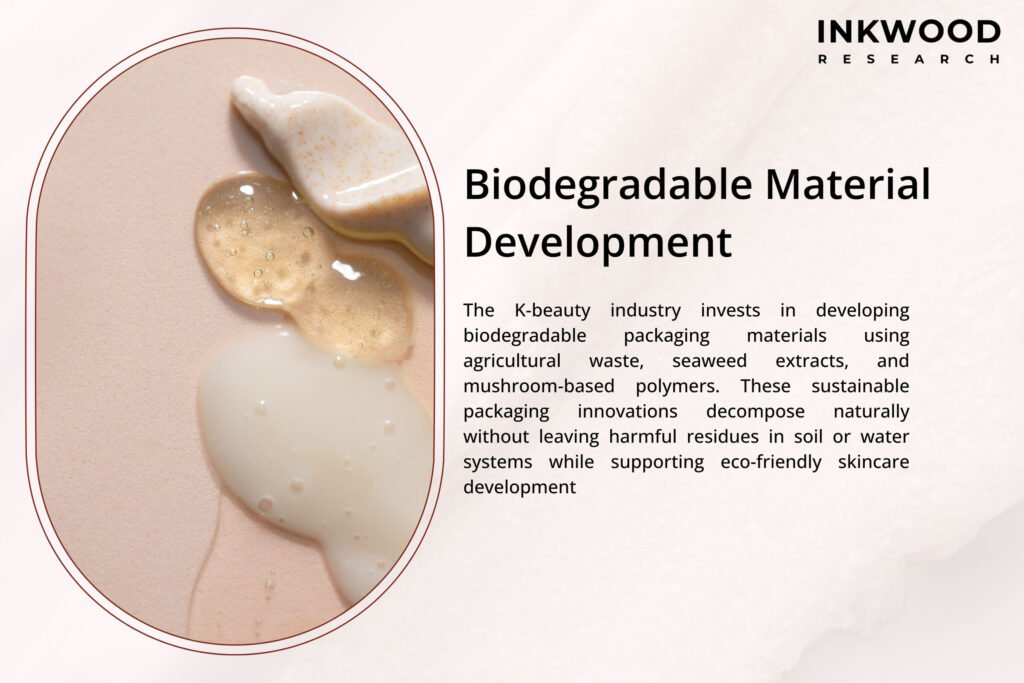
South Korea Skin Care Market Sustainability Leaders

Amorepacific Corporation leads the industry in implementing comprehensive K-beauty sustainability initiatives across its premium brand portfolio. The company invests over $50 million annually in sustainable skincare research, eco-friendly packaging development, and renewable energy systems supporting green beauty manufacturing.

The corporation’s sustainable beauty strategy encompasses Sulwhasoo’s refillable packaging programs, Laneige’s ocean plastic initiatives, and Innisfree’s zero-waste manufacturing goals. Additionally, these Korean skincare brands demonstrate how environmental responsibility can enhance brand value while meeting consumer expectations for sustainable cosmetics.

Innisfree’s Environmental Leadership

Innisfree exemplifies K-beauty sustainability through its comprehensive eco-friendly skincare approach, including carbon-neutral manufacturing, sustainable packaging innovations, and ingredient sourcing from Jeju Island’s protected ecosystems. Moreover, the brand’s environmental initiatives generate $200 million in annual revenue while reducing operational carbon footprint by 40% through sustainable beauty practices.

The company’s sustainable beauty programs include empty bottle return systems, refillable product lines, and biodegradable packaging materials, addressing beauty packaging waste concerns. Furthermore, Innisfree’s green beauty leadership inspires other Korean skincare brands to adopt similar environmental responsibility practices, supporting the industry’s transformation.

Innisfree’s sustainable cosmetics innovation extends to ingredient development, using volcanic clay, green tea extracts, and botanical fermentation processes that minimize environmental impact. Additionally, these eco-friendly skincare formulations maintain product efficacy while supporting sustainable beauty principles throughout the supply chain through K-beauty sustainability initiatives.

LG H&H’s Sustainable Innovation

LG H&H transforms the K-beauty industry through systematic K-beauty sustainability implementation across manufacturing facilities, product development, and supply chain management. The company’s sustainable skincare initiatives include renewable energy adoption, waste reduction protocols, and eco-friendly packaging solutions.

Their sustainable beauty research focuses on developing green beauty formulations using biotechnology, fermentation processes, and plant-based alternatives to synthetic ingredients. Moreover, these innovations position LG H&H as a leader in sustainable cosmetics while maintaining competitive advantages in global markets through eco-friendly skincare development.

Emerging Sustainable Beauty Brands

Independent Korean skincare brands like Beauty of Joseon, Torriden, and Round Lab pioneer niche sustainable beauty solutions targeting environmentally conscious consumers. These companies develop eco-friendly skincare products using minimal packaging, concentrated formulations, and renewable ingredients, supporting K-beauty sustainability goals.

Small-scale players often demonstrate greater flexibility in implementing sustainable packaging innovations and green beauty practices compared to larger corporations. Furthermore, these emerging brands influence industry standards while building loyal customer bases, prioritizing environmental responsibility through sustainable cosmetics.

Green Beauty Impact on South Korea Skin Care Market

The global green beauty movement fundamentally reshapes the industry as consumers increasingly prioritize sustainable skincare over traditional beauty standards. This transformation requires Korean skincare brands to reimagine product development, marketing strategies, and corporate responsibility initiatives supporting eco-friendly skincare adoption.

Korean companies report that sustainable beauty considerations influence 73% of purchasing decisions among consumers aged 20-40. Additionally, the green beauty movement drives innovation in eco-friendly skincare formulations, sustainable packaging solutions, and transparent supply chain practices throughout the industry, supporting K-beauty sustainability development.

The K-beauty industry adapts to changing consumer preferences, favoring sustainable cosmetics over elaborate packaging and complex routines. Moreover, environmentally conscious shoppers research ingredient sourcing, manufacturing processes, and corporate environmental policies before selecting Korean skincare brands offering authentic green beauty solutions.

Consumer Behavior Transformation

The K-beauty industry adapts to changing consumer preferences, favoring sustainable cosmetics over elaborate packaging and complex routines. Moreover, environmentally conscious shoppers research ingredient sourcing, manufacturing processes, and corporate environmental policies before selecting Korean skincare brands supporting eco-friendly skincare principles.

Social media platforms amplify green beauty messaging, with K-beauty influencers promoting sustainable skincare routines, eco-friendly packaging reviews, and environmental responsibility awareness. Furthermore, these digital channels create accountability mechanisms ensuring Korean skincare brands deliver authentic K-beauty sustainability initiatives addressing beauty packaging waste.

Korean consumers increasingly choose concentrated products, refillable systems, and minimal packaging options that reduce beauty packaging waste while maintaining skincare efficacy. Additionally, these purchasing patterns encourage industry innovation in sustainable cosmetics development and distribution strategies through sustainable beauty practices.

Market Competition and Differentiation

Sustainable beauty positioning creates competitive advantages for Korean skincare brands, demonstrating genuine environmental commitment through measurable sustainability metrics. Companies investing in green beauty innovation capture market share from competitors relying on traditional packaging and formulation approaches through eco-friendly skincare development.

The K-beauty industry experiences price premiums for authenticated sustainable skincare products, with consumers willing to pay 15-25% more for verified eco-friendly skincare solutions. Moreover, these premium positioning opportunities reward Korean skincare brands making substantial investments in environmental responsibility through K-beauty sustainability initiatives.

International market expansion requires Korean beauty industry players to meet diverse sustainable packaging regulations and green beauty standards across different regions. Furthermore, these compliance requirements drive innovation while creating barriers for companies lacking comprehensive K-beauty sustainability strategies supporting sustainable cosmetics development.

Green beauty movement Korean market sustainable cosmetics consumer behavior transformation


Future of South Korea Skin Care Market Sustainability

The K-beauty industry’s trajectory toward complete sustainable beauty transformation will reshape global cosmetics standards over the next decade. Korean skincare brands must navigate technological advancement, regulatory evolution, and consumer expectation changes while maintaining market leadership in innovation and quality through eco-friendly skincare development.

Emerging technologies, including biotechnology, nanotechnology, and artificial intelligence, enable the development of next-generation sustainable skincare solutions. These innovations address environmental concerns while delivering enhanced product performance and personalized consumer experiences through eco-friendly skincare platforms supporting K-beauty sustainability.

Technological Innovation Roadmap

Korean skincare brands invest in laboratory-grown ingredients, synthetic biology, and precision fermentation technologies, creating sustainable cosmetics without traditional agricultural impacts. Additionally, these biotechnology advances enable the production of rare botanical extracts and marine compounds supporting green beauty formulations and sustainable beauty development.

The K-beauty industry develops smart packaging systems using biodegradable sensors, temperature indicators, and freshness monitors, extending product shelf life while minimizing beauty packaging waste. Moreover, these technological innovations provide consumer education and usage optimization, supporting sustainable skincare practices through eco-friendly skincare solutions.

Artificial intelligence systems help Korean skincare brands optimize formulations, predict consumer preferences, and design sustainable packaging solutions, reducing material waste while improving product efficacy. Furthermore, these data-driven approaches accelerate K-beauty sustainability implementation across research, development, and manufacturing processes, supporting green beauty innovation.

Regulatory Evolution and Standards

Korean government initiatives support sustainable beauty development through tax incentives, research funding, and regulatory frameworks promoting eco-friendly skincare innovation. These policies encourage Korean beauty industry investment in environmental technologies while maintaining competitive advantages in global markets through sustainable cosmetics development.

International harmonization of sustainable packaging standards requires Korean skincare brands to adopt unified approaches addressing diverse market requirements. Additionally, these regulatory developments create opportunities for Korean beauty industry leadership in establishing global green beauty benchmarks supporting K-beauty sustainability.

Circular Economy Integration

The K-beauty industry evolves toward circular economy principles, where beauty packaging waste becomes input materials for new sustainable cosmetics production. Korean skincare brands develop closed-loop systems that recover, processing, and reuse packaging materials while maintaining product safety and quality standards through eco-friendly skincare practices.

Consumer education initiatives teach proper sustainable packaging disposal, recycling participation, and eco-friendly skincare usage, supporting the industry’s environmental goals. Moreover, these programs create community engagement opportunities while building brand loyalty through shared environmental values and sustainable beauty principles.

Key Takeaways

  • The K-beauty industry faces a transformative period, balancing aesthetic excellence with environmental responsibility through sustainable skincare innovation. Korean skincare brands successfully implementing comprehensive K-beauty sustainability strategies will capture competitive advantages in both domestic and international markets through eco-friendly skincare development.
  • Sustainable packaging solutions require significant investment but generate long-term benefits through cost reduction, consumer loyalty, and regulatory compliance advantages. Moreover, Korean beauty industry leaders demonstrate that environmental responsibility enhances rather than compromises brand value and market positioning through green beauty innovation.
  • Consumer demand for eco-friendly skincare continues to accelerate, making sustainable cosmetics development essential for Korean skincare brands seeking continued growth and relevance. Additionally, the green beauty movement creates opportunities for innovation, differentiation, and premium positioning throughout the K-beauty industry through sustainable beauty practices.
  • Beauty packaging waste reduction requires systematic approaches encompassing ingredient sourcing, manufacturing processes, distribution methods, and consumer education initiatives. Furthermore, successful sustainable beauty implementation demands collaboration across the K-beauty industry supply chain and stakeholder ecosystem supporting K-beauty sustainability.

Conclusion

The K-beauty industry stands at a critical juncture where environmental stewardship and commercial success converge through innovative, sustainable skincare solutions. Korean skincare brands embracing comprehensive K-beauty sustainability strategies will define the future of global beauty standards while addressing pressing environmental challenges through eco-friendly skincare innovation.

As consumer awareness about beauty packaging waste intensifies, the K-beauty industry must accelerate sustainable cosmetics development and eco-friendly skincare innovation. The companies leading this transformation will establish lasting competitive advantages while contributing to environmental preservation and social responsibility through green beauty principles.

The green beauty movement represents both challenge and opportunity for Korean skincare brands committed to sustainable beauty principles. Success requires authentic environmental commitment, substantial investment in sustainable packaging innovation, and continuous adaptation to evolving consumer expectations for eco-friendly skincare solutions supporting K-beauty sustainability development.

If you need a customized consultation, contact us now.

Also, make sure you check out our in-depth research reports or request a FREE sample customized as per your requirements.

    Can’t find what you’re looking for? Talk to an expert NOW!

    Frequently Asked Questions (FAQs)

    The K-beauty industry produces approximately 120 billion units of packaging annually, creating significant environmental pressure. Additionally, consumer awareness about beauty packaging waste now demands fundamental changes from brands traditionally focused on Instagram-worthy aesthetics.

    Leading companies are implementing refillable systems, biodegradable materials, and concentrated formulations. Innisfree’s refillable cushion compacts reduce packaging waste by 60%, while brands invest in plant-based polymers and compostable alternatives.

    Yes, consumers are willing to pay 15-25% more for verified eco-friendly skincare products, with 67% of K-beauty consumers aged 18-35 considering packaging waste in purchasing decisions.