Table of Contents

This analysis is brought to you by Inkwood Research, a leading market intelligence firm specializing in advanced healthcare technologies, surgical innovation ecosystems, and integrated operating room systems. Our research team combines extensive experience analyzing medical imaging technologies, surgical equipment markets, and healthcare infrastructure developments across global markets. Based on our proprietary research methodologies and strategic partnerships with medical device manufacturers, healthcare institutions, and surgical technology providers, we deliver actionable insights that empower strategic decision-making for enterprises navigating the evolving landscape of hybrid operating room adoption.
TLDR
Hybrid operating rooms integrate advanced imaging equipment with traditional surgical capabilities. These specialized suites combine angiography systems, CT scanners, MRI scanners, operating room fixtures, and surgical instruments into unified environments. Cardiovascular surgery, neurosurgery, spine surgery, orthopedic procedures, and thoracic interventions benefit significantly from real-time imaging guidance. According to our research, the global hybrid OR market reached US$2,246.27 million in 2026 and projects growth to US$5,370.00 million by 2034 at an 11.51% CAGR. Major manufacturers, including Siemens Healthineers, Philips Healthcare, and GE Healthcare, continue advancing integrated platform capabilities.
Hospital administrators, cardiovascular surgeons, neurosurgeons, orthopedic specialists, interventional radiologists, medical equipment procurement directors, healthcare technology investors, surgical center operators, and medical device manufacturers will gain valuable insights into the hybrid operating room systems market growth patterns, specialty-specific applications, technological integration requirements, and investment considerations for advancing clinical hybrid operating room market capabilities within specialized surgical environments.
The Evolution of Specialized Hybrid Operating Room Environments
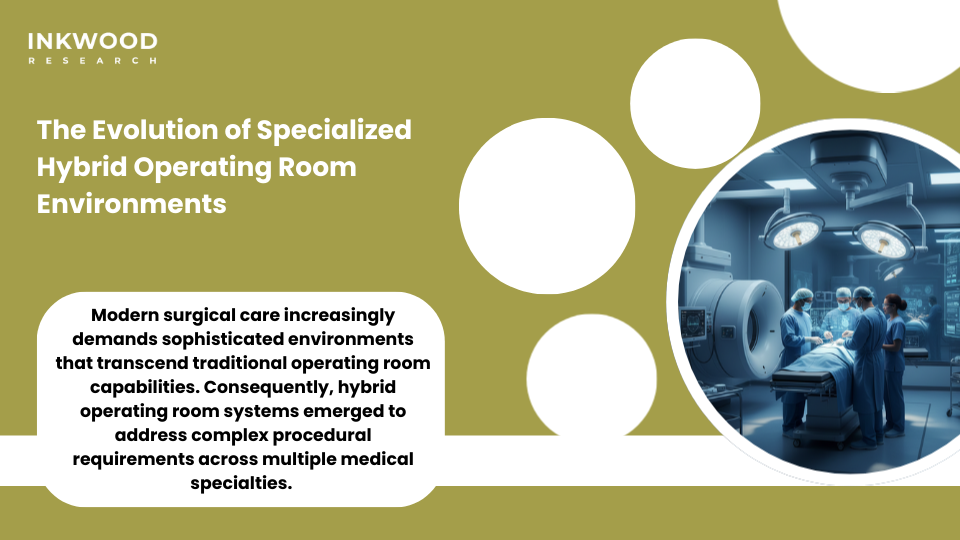
Modern surgical care increasingly demands sophisticated environments that transcend traditional operating room capabilities. Consequently, hybrid operating room systems emerged to address complex procedural requirements across multiple medical specialties. These advanced suites fundamentally transform how surgeons approach intricate cases requiring simultaneous surgical intervention and diagnostic imaging.
Defining the Hybrid OR Advantage for Specialized Fields
Traditional operating rooms typically separate surgical procedures from diagnostic imaging facilities. However, this separation creates inefficiencies when complex cases require immediate imaging feedback. Meanwhile, hybrid operating rooms eliminate this constraint by integrating advanced imaging modalities directly into sterile surgical environments.
Furthermore, these specialized suites enable multidisciplinary teams to collaborate seamlessly during procedures. Cardiovascular surgeons work alongside interventional cardiologists within the same space. Similarly, neurosurgeons coordinate with neuroradiologists for real-time imaging guidance. This integration represents a fundamental shift from sequential care delivery to truly concurrent multidisciplinary intervention.
Additionally, hybrid ORs incorporate sophisticated audiovisual display systems and tools that enhance surgical precision. Large-format displays present imaging data instantaneously during procedures. Advanced visualization platforms allow surgeons to overlay diagnostic images onto the surgical field. These capabilities significantly improve procedural outcomes across specialized surgical disciplines.
Market Growth Dynamics and Industry Expansion
Based on our analysis, the global hybrid/integrated operating room market demonstrates a robust growth trajectory through 2034. Market valuation reached US$2,246.27 million in 2026, according to industry research. Projections indicate the market will expand to US$5,370.00 million by 2034, representing an 11.51% compound annual growth rate during this forecast period.
Moreover, technological convergence drives increasing adoption rates among tertiary care institutions worldwide. Hospitals prioritize hybrid OR infrastructure upgrades to remain competitive in attracting specialized surgical volumes. Consequently, healthcare systems invest substantially in integrated operating environments that support complex multi-specialty procedures.
Nevertheless, implementation costs present significant barriers for many healthcare organizations. Complete hybrid OR installations typically require multi-million dollar capital investments. Equipment expenses, construction modifications, and staff training programs compound these financial challenges. Therefore, strategic planning becomes essential for institutions considering hybrid OR adoption.
Cardiovascular Surgery: Where Hybrid OR Technology Shines Brightest
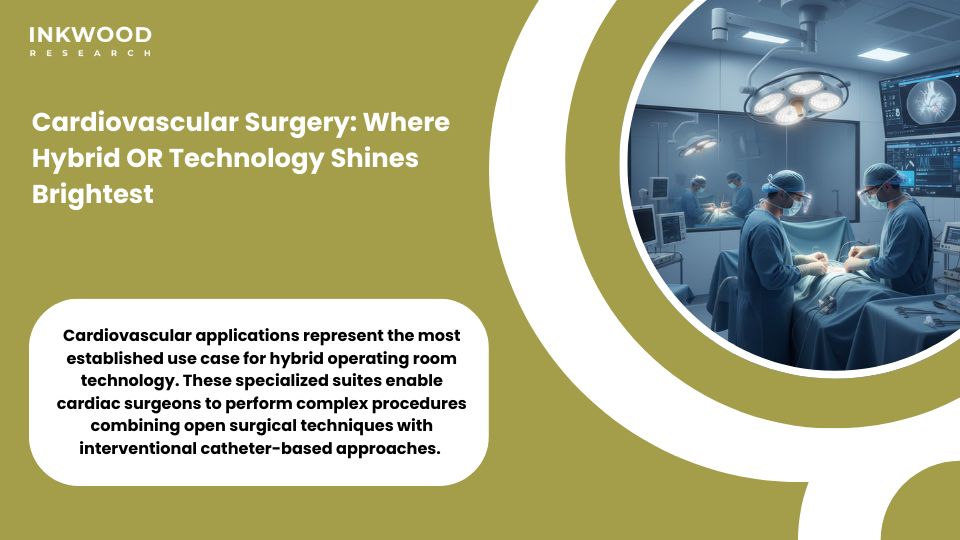
Cardiovascular applications represent the most established use case for hybrid operating room technology. These specialized suites enable cardiac surgeons to perform complex procedures combining open surgical techniques with interventional catheter-based approaches. Transcatheter aortic valve replacement procedures exemplify this integrated methodology perfectly.
Advanced Angiography Systems for Cardiac Procedures
Angiography systems constitute the cornerstone of cardiovascular hybrid OR capabilities. These sophisticated imaging platforms provide real-time visualization of coronary arteries and cardiac structures during procedures. According to research from NCBI, hybrid ORs facilitate transcatheter valve replacement and repair with enhanced precision compared to traditional catheterization laboratories.
Furthermore, modern angiography equipment delivers exceptional image quality while minimizing radiation exposure. Ceiling-mounted robotic C-arms offer unprecedented flexibility in positioning and imaging angles. Advanced dose-reduction protocols protect both patients and surgical teams during extended procedures. These capabilities prove particularly valuable during complex aortic surgeries requiring multiple imaging sequences.
Additionally, integration between angiography systems and surgical instruments enhances procedural efficiency significantly. Synchronized data streams allow surgeons to visualize catheter positions relative to anatomical structures instantaneously. Digital subtraction angiography eliminates background structures for clearer vascular visualization. These technical advantages translate directly into improved patient outcomes and reduced procedure times.
Pediatric Cardiac Surgery Applications
Pediatric cardiac surgery represents another area where hybrid OR environments demonstrate exceptional value. Congenital heart defects often require combined surgical and interventional approaches for optimal outcomes. However, traditional care pathways necessitated separate procedures in different locations, increasing patient risk and family stress.
Nevertheless, hybrid ORs enable pediatric cardiac teams to address complex malformations comprehensively in single sessions. Surgeons can perform open repairs while interventional cardiologists simultaneously address associated vascular abnormalities. Moreover, this integrated approach reduces cumulative anesthesia exposure for vulnerable pediatric patients. The Canadian Cardiovascular Society position statement recommends that transcatheter aortic valve implantation programs maintain access to hybrid OR facilities according to NCBI research.
Neurosurgery Applications: Precision Through Integrated Imaging
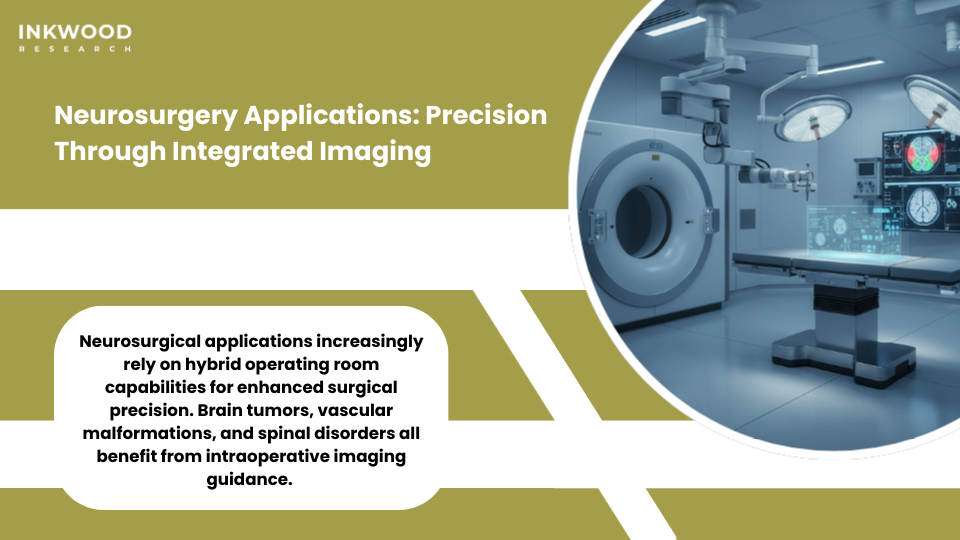
Neurosurgical applications increasingly rely on hybrid operating room capabilities for enhanced surgical precision. Brain tumors, vascular malformations, and spinal disorders all benefit from intraoperative imaging guidance. Consequently, hybrid ORs equipped with MRI scanners and CT systems transform neurosurgical practice fundamentally.
Intraoperative MRI Guidance for Brain Surgery
MRI scanners integrated into hybrid operating rooms enable neurosurgeons to verify tumor resection completeness intraoperatively. Traditional workflows required postoperative imaging to assess resection margins, potentially necessitating additional procedures if residual tumor remained. Meanwhile, hybrid ORs with MRI capability allow immediate verification and extended resection during the initial surgery.
Furthermore, this technology proves invaluable for deep-brain stimulation electrode placement procedures. Surgeons precisely position electrodes using real-time MRI guidance, ensuring optimal therapeutic outcomes for movement disorders. According to research published in PMC, hybrid ORs equipped with cone beam CT systems increasingly serve neurosurgical applications, particularly for spine and cerebrovascular procedures.
Neurovascular Interventions in Hybrid Environments
Cerebrovascular procedures particularly benefit from hybrid OR capabilities combining surgical and interventional techniques. Arteriovenous malformations often require both endovascular embolization and surgical resection for complete treatment. However, performing these procedures sequentially in separate locations significantly increases risks.
Nevertheless, hybrid operating rooms enable neurosurgeons and interventional neuroradiologists to collaborate during complex cerebrovascular cases. Teams can perform initial endovascular work followed immediately by open surgical procedures without patient transport. Moreover, biplane angiography systems provide exceptional visualization during both endovascular and surgical phases of treatment.
Spine and Orthopedic Surgery: Enhanced Accuracy Through Real-Time Visualization
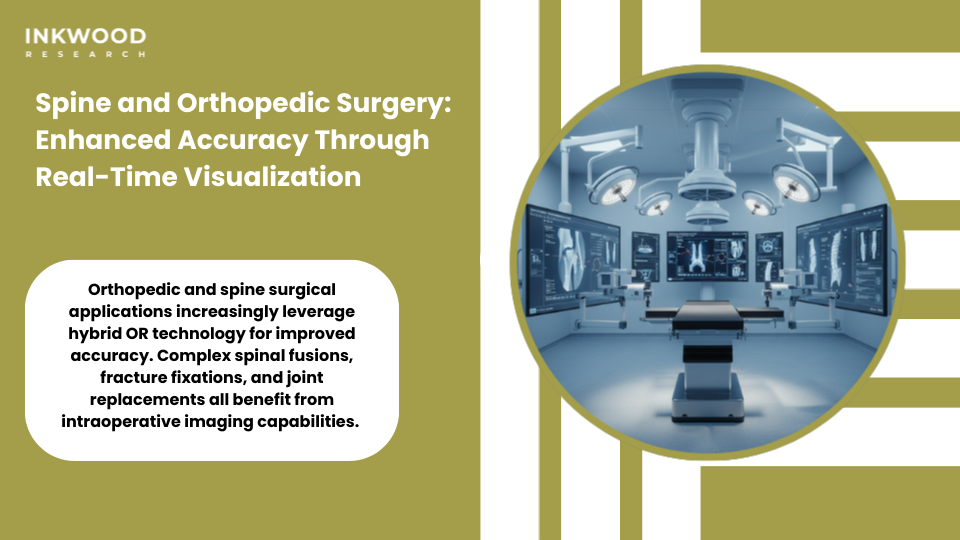
Orthopedic and spine surgical applications increasingly leverage hybrid OR technology for improved accuracy. Complex spinal fusions, fracture fixations, and joint replacements all benefit from intraoperative imaging capabilities. Consequently, orthopedic departments invest heavily in hybrid OR infrastructure to support technically demanding procedures.
Spine Surgery with Intraoperative CT Verification
Spinal instrumentation procedures demand exceptional accuracy to avoid neurological complications. Traditional fluoroscopy provides limited visualization of screw positions relative to critical neural structures. Meanwhile, hybrid ORs with integrated CT scanners enable surgeons to verify instrumentation placement immediately during procedures.
Furthermore, this capability reduces revision surgery rates significantly by identifying misplaced hardware before case completion. Surgeons can adjust screw trajectories based on high-resolution CT imaging without removing the patient from the operating table. Research indicates hybrid ORs equipped with cone beam CT systems demonstrate particular value for spine surgery applications, according to PMC studies.
Minimally Invasive Orthopedic Techniques
Minimally invasive orthopedic procedures rely heavily on imaging guidance for safe execution. Percutaneous fracture fixation, for instance, requires continuous fluoroscopic monitoring throughout the case. However, traditional C-arm fluoroscopy offers limited three-dimensional visualization capabilities.
Nevertheless, hybrid ORs equipped with advanced imaging systems overcome these limitations effectively. Three-dimensional fluoroscopy and cone beam CT provide comprehensive spatial information during minimally invasive procedures. Additionally, navigation systems synchronized with imaging equipment further enhance surgical precision. These technological capabilities expand the range of procedures amenable to minimally invasive approaches.
Critical Equipment Components Enabling Multi-Specialty Capabilities
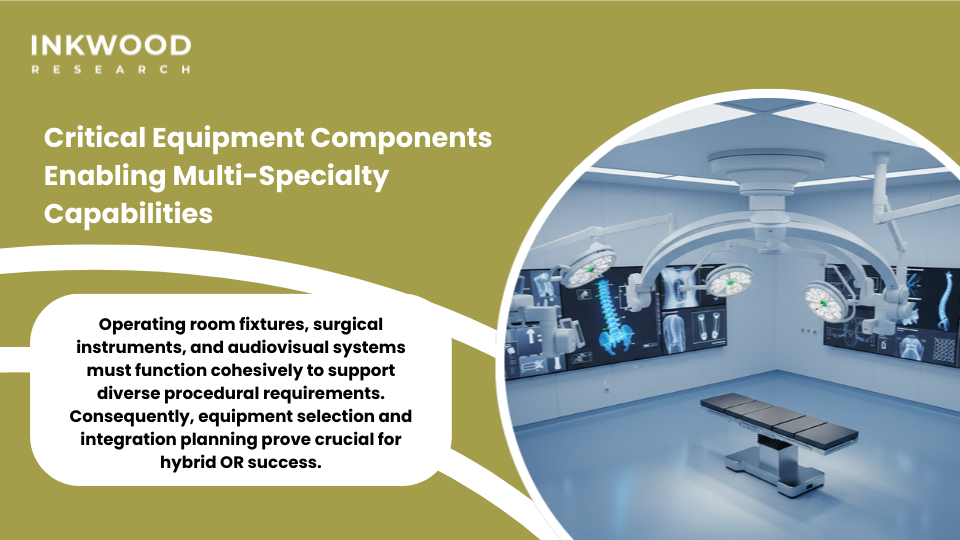
Successful hybrid operating rooms depend on the sophisticated integration of multiple equipment categories. Operating room fixtures, surgical instruments, and audiovisual systems must function cohesively to support diverse procedural requirements. Consequently, equipment selection and integration planning prove crucial for hybrid OR success.
Operating Room Fixtures and Surgical Infrastructure
Operating room fixtures form the foundation of hybrid OR functionality. Surgical tables must accommodate both surgical positioning requirements and imaging equipment constraints. Carbon fiber tabletops enable X-ray penetration while maintaining sufficient strength for patient support. Moreover, motorized tables with precise positioning capabilities facilitate optimal imaging angles during procedures.
Furthermore, surgical lighting systems in hybrid ORs require special consideration for imaging compatibility. Traditional overhead lights can interfere with imaging equipment movement and create shadows on monitors. Therefore, hybrid OR lighting typically employs ceiling-mounted LED systems with flexible positioning arms. These specialized fixtures provide excellent illumination without compromising imaging capabilities.
Audiovisual Display Systems and Communication Tools
Audiovisual display systems constitute essential components of modern hybrid operating rooms. Large-format displays present imaging data, patient monitoring information, and surgical navigation interfaces simultaneously. Multiple screens positioned strategically throughout the OR ensure all team members have access to critical visual information easily.
Additionally, advanced visualization platforms enable sophisticated image manipulation and overlay capabilities. Surgeons can fuse pre-operative CT or MRI images with real-time fluoroscopy for enhanced anatomical guidance. Three-dimensional reconstructions rotate and zoom according to surgical needs. These audiovisual tools significantly enhance the surgical team’s situational awareness during complex procedures.
Recent Technological Advancements by Leading Manufacturers
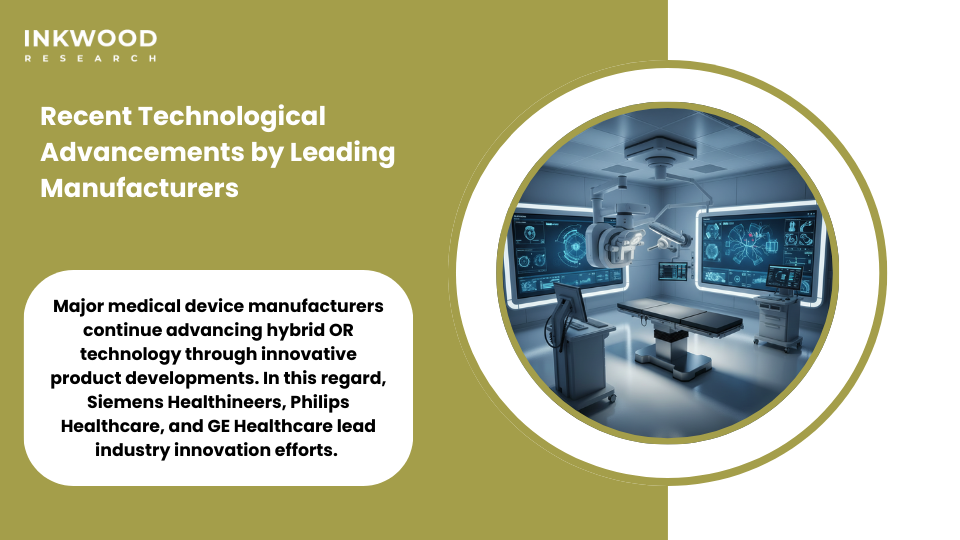
Major medical device manufacturers continue advancing hybrid OR technology through innovative product developments. In this regard, Siemens Healthineers, Philips Healthcare, and GE Healthcare lead industry innovation efforts. Recent product launches demonstrate an ongoing commitment to enhancing integrated surgical environments.
Siemens Healthineers Innovation Pipeline
Siemens Healthineers expanded its ARTIS icono series to include robotic support and three-dimensional imaging integration capabilities. This advancement enables greater flexibility in positioning imaging equipment during complex procedures. Moreover, the system incorporates real-time data synchronization features that enhance workflow efficiency significantly.
Furthermore, Siemens announced a collaboration with Medtronic in September 2024 to integrate surgical and robotic solutions with advanced imaging technologies. This partnership aims to enhance precision and efficiency in hybrid operating rooms, according to industry reports. The collaboration particularly focuses on spine-focused robotic systems integrated with Siemens’ real-time imaging solutions, including advanced C-arm technologies.
Philips Healthcare Platform Enhancements
Philips Healthcare introduced a modular hybrid operating room with robotic-assisted surgery capabilities. The modular design allows healthcare institutions to customize configurations based on specific procedural requirements and spatial constraints.
Additionally, Philips collaborated with Microsoft Azure to integrate cloud-based solutions with Azure’s computing and artificial intelligence capabilities. This partnership aims to enhance data analysis and visualization within hybrid ORs. The IntelliSpace Portal integration with cloud infrastructure enables more sophisticated image processing and storage solutions.
GE Healthcare Cardiovascular Solutions
GE Healthcare expanded its cardiovascular imaging solutions for hybrid operating rooms in 2024, impacting more than 120 facilities globally. The company unveiled its Discovery IGS 730 angiography system featuring augmented reality capabilities.
This innovative system overlays real-time anatomical data onto the surgeon’s field of view, enhancing surgical precision and guidance. Moreover, GE Healthcare’s AI-enhanced platforms promise to further elevate hybrid OR capabilities through machine learning algorithms that optimize imaging protocols automatically.
Implementation Considerations for Specialized Departments
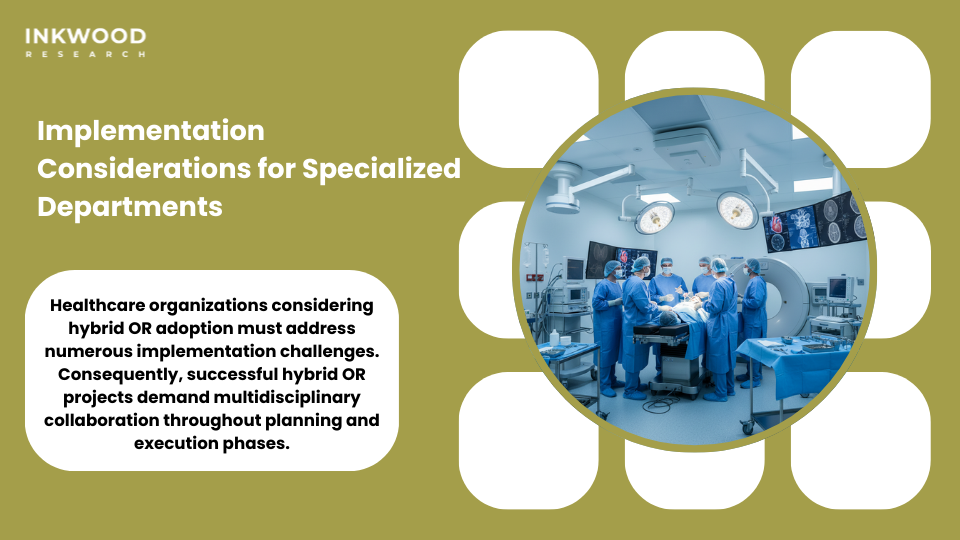
Healthcare organizations considering hybrid OR adoption must address numerous implementation challenges. Spatial requirements, infrastructure modifications, and workflow redesign all require careful planning. Consequently, successful hybrid OR projects demand multidisciplinary collaboration throughout planning and execution phases.
Physical Infrastructure and Space Planning
Hybrid operating rooms require significantly more space than traditional surgical suites. Imaging equipment, particularly ceiling-mounted systems, necessitates increased ceiling heights and floor space. Additionally, lead-lined walls provide radiation protection for adjacent areas. These physical requirements often necessitate substantial construction modifications for existing hospitals.
Furthermore, electrical and data infrastructure must support substantial power requirements and network connectivity. Multiple imaging modalities operate simultaneously during some procedures, creating significant electrical demands. Robust network infrastructure enables seamless data transfer between imaging systems, visualization platforms, and electronic health records. These technical requirements add complexity and cost to hybrid OR projects.
Workflow Optimization and Team Training
Successful hybrid OR implementation requires comprehensive workflow redesign and team training programs. Traditional surgical roles and responsibilities shift significantly in hybrid environments. Operating room nurses, surgical technologists, and radiologic technologists must develop new skill sets for equipment operation and patient positioning.
Moreover, effective communication protocols become even more critical in hybrid OR settings. Multiple subspecialty teams collaborate during complex procedures, requiring clear leadership structures and decision-making hierarchies. Regular simulation training helps teams develop cohesion and refine protocols before treating patients. These human factors considerations ultimately determine whether hybrid OR investments deliver anticipated benefits.
Key Takeaways
- Hybrid operating rooms integrate advanced imaging systems, including angiography, CT, and MRI, with traditional surgical capabilities, transforming complex procedural approaches across multiple specialties.
- The global hybrid/integrated operating room market demonstrates robust growth, reaching US$2,246.27 million in 2026 with projections to US$5,370.00 million by 2034 at 11.51% CAGR.
- Cardiovascular surgery represents the most established hybrid OR application, with transcatheter valve procedures and complex aortic surgeries benefiting substantially from integrated imaging capabilities.
- Neurosurgical applications increasingly rely on hybrid OR technology, particularly intraoperative MRI guidance for tumor resections and cerebrovascular interventions, combining surgical and endovascular techniques.
- Spine and orthopedic procedures achieve enhanced accuracy through intraoperative CT verification, reducing revision surgery rates and expanding minimally invasive technique applications.
- Critical equipment components, including specialized operating room fixtures, surgical instruments, and audiovisual display systems, must integrate seamlessly to support diverse procedural requirements effectively.
- Leading manufacturers, including Siemens Healthineers, Philips Healthcare, and GE Healthcare, continue advancing hybrid OR technology through AI integration, robotic support, and cloud-based visualization platforms.
- Successful implementation requires addressing substantial infrastructure challenges, including space requirements, electrical systems, workflow redesign, and comprehensive team training programs.
- Investment costs remain significant barriers for many institutions, necessitating strategic planning and phased implementation approaches to achieve optimal returns on hybrid OR expenditures.
Conclusion
Hybrid operating rooms represent transformative technology advancing specialized surgical care across cardiovascular, neurological, and orthopedic disciplines. These sophisticated environments enable previously impossible procedural approaches by integrating advanced imaging directly into sterile surgical settings. Consequently, patient outcomes improve while procedural efficiency gains significantly.
Nevertheless, successful hybrid OR adoption requires substantial financial investment and careful implementation planning. Healthcare organizations must evaluate specialty-specific procedural volumes, available capital resources, and institutional strategic priorities when considering hybrid OR development. Based on our analysis, institutions with strong cardiovascular or neurosurgical programs typically achieve optimal returns on these investments.
Moreover, technological advancements from leading manufacturers continue expanding hybrid OR capabilities through artificial intelligence integration, robotic assistance, and enhanced visualization platforms. These innovations promise to further elevate surgical precision and patient safety across multiple specialties. Therefore, hybrid OR technology will increasingly become standard infrastructure for tertiary care institutions pursuing surgical excellence.
For organizations seeking deeper insights into hybrid operating room market dynamics or equipment procurement strategies, Inkwood Research offers comprehensive market intelligence and consulting services. Contact our team to explore how these evolving technologies align with your institutional strategic objectives and capital planning initiatives.
Frequently Asked Questions (FAQs)
Hybrid operating rooms integrate advanced diagnostic imaging equipment, including angiography systems, CT scanners, and MRI machines, directly into sterile surgical environments. Traditional ORs separate imaging facilities from surgical spaces, requiring patient transport between locations. Hybrid ORs enable simultaneous surgical intervention and real-time imaging guidance, particularly benefiting complex cardiovascular, neurosurgical, and orthopedic procedures requiring combined surgical and interventional approaches.
Cardiovascular surgery demonstrates the most established hybrid OR applications, particularly for transcatheter valve procedures and complex aortic surgeries. Neurosurgery benefits substantially through intraoperative MRI guidance for tumor resections and cerebrovascular interventions. Spine and orthopedic surgery achieve enhanced accuracy through intraoperative CT verification. Additionally, thoracic surgery, trauma surgery, and pediatric cardiac surgery increasingly leverage hybrid OR technology for improved procedural outcomes.
Complete hybrid OR installations typically require multi-million dollar capital investments. Major expense categories include advanced imaging equipment (angiography, CT, MRI systems), specialized operating room fixtures including radiolucent tables and surgical lighting, substantial infrastructure modifications for increased space and radiation shielding, audiovisual display systems and integration platforms, and comprehensive staff training programs.