Table of Contents

This analysis is brought to you by Inkwood Research, a leading market intelligence firm specializing in European healthcare systems, hospital-at-home innovation, and acute care delivery models. Our research team draws on deep expertise in NHS policy reforms, German hospital restructuring programs, and remote patient monitoring ecosystems across the United Kingdom and Continental Europe. Through strategic research methodologies and healthcare provider partnerships, we deliver actionable intelligence for leaders navigating the Europe acute care at home market.
TLDR
Hospital systems in the United Kingdom and Germany are under mounting pressure to reduce inpatient bed dependency, and home-based acute care is emerging as a central policy response. The United Kingdom acute care at home market is projected to grow from US$774.15 million in 2026 to US$2,830.58 million by 2034, reflecting a 17.59% CAGR. Similarly, the Germany acute care at home market is forecast to reach US$3,536.07 million by 2034 from US$993.38 million in 2026. Both markets are being propelled by landmark policy changes, digital health infrastructure, and a structural shift toward patient-centric care models that is reshaping the entire Europe acute care at home market.
Healthcare executives at NHS trusts, German hospital networks, and acute care providers will find this analysis directly relevant. Additionally, health technology investors, remote patient monitoring platform developers, government health policymakers, and consultants evaluating hospital at home market opportunities in Europe will gain targeted insights on growth drivers, key developments, and market positioning in the United Kingdom acute care at home market and Germany acute care at home market.
What Is Driving Acute Care at Home Market Growth in Europe?
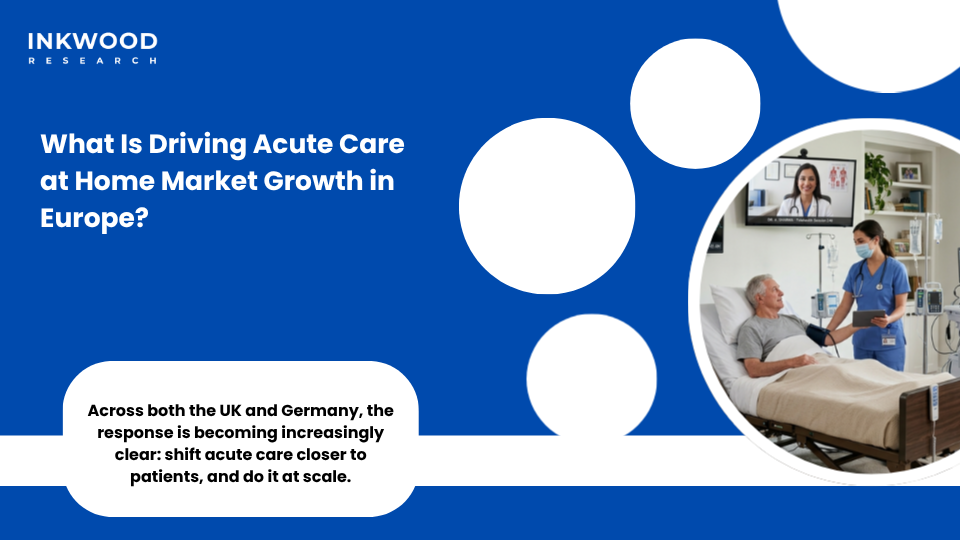
Europe’s health systems are facing a well-documented convergence of pressures, aging populations, rising chronic disease burdens, and a persistent shortage of hospital beds. These structural challenges are pushing policymakers and providers to think well beyond the traditional ward. Across both the UK and Germany, the response is becoming increasingly clear: shift acute care closer to patients, and do it at scale.
The acute care at home market is gaining significant traction as a result, with both countries investing heavily in the infrastructure, policy frameworks, and technology needed to support it. Moreover, the cost argument is compelling; delivering home-based acute care can reduce operational costs for health systems while simultaneously improving patient satisfaction and recovery outcomes. Consequently, hospital at home services are no longer a fringe idea; they are a mainstream policy priority across the Europe acute care at home market.
Why Is Hospital Capacity the Core Pressure Point?
- NHS England consistently operates above 90% bed occupancy, a level widely recognized as clinically unsafe for sustained periods
- Germany has around 1,700-1,900 hospitals, yet fragmentation and structural inefficiency are driving a long-overdue reform
- Workforce shortages compound bed pressures in both countries, making acute care home models a pragmatic and scalable alternative
How Is the NHS Scaling Hospital at Home Services in the UK?
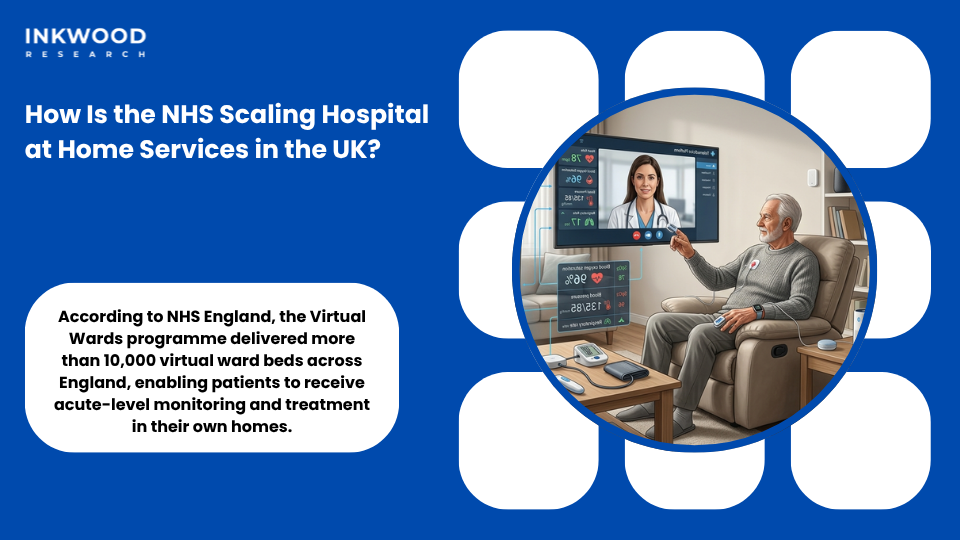
The NHS has made hospital at home one of its most visible strategic priorities. In particular, the Virtual Wards programme, launched as part of NHS England’s plan to recover elective and urgent care capacity, has rapidly expanded the reach of the United Kingdom acute care at home market. According to NHS England, the Virtual Wards programme delivered more than 10,000 virtual ward beds across England, enabling patients to receive acute-level monitoring and treatment in their own homes.
Virtual wards allow clinicians to remotely monitor patients with conditions such as heart failure, COPD, and COVID-19, using pulse oximeters, blood pressure monitors, and digital dashboards. Furthermore, this model reduces unnecessary admissions while enabling early discharge, two outcomes that directly address the NHS’s capacity challenge. The hospital at home market in the UK is therefore being built on a foundation of NHS policy intent backed by real, measurable operational delivery.
What Conditions Are Being Treated Through NHS Virtual Wards?
- Respiratory: COPD, pneumonia, and COVID-related acute illness managed with home oxygen monitoring
- Cardiovascular: heart failure monitoring and post-acute cardiac care with daily nurse check-ins
- Frailty and elderly care: proactive multi-morbidity assessment and remote vital sign tracking
- Post-surgical recovery: early discharge programs with home-based wound care and physiotherapy
What Role Does Remote Patient Monitoring Play in UK Home-Based Acute Care?
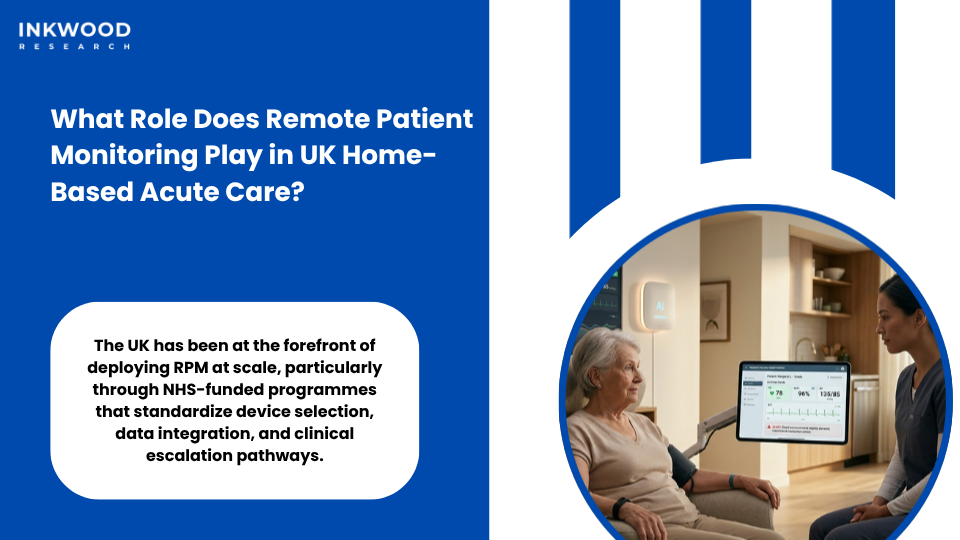
Remote patient monitoring (RPM) is the technological backbone of home-based acute care in the United Kingdom. Without it, clinicians cannot safely manage acute patients outside a ward setting, and the entire value proposition of the acute home healthcare market collapses. The UK has been at the forefront of deploying RPM at scale, particularly through NHS-funded programmes that standardize device selection, data integration, and clinical escalation pathways.
Wearable monitoring devices, smartphone-based check-ins, and AI-powered alert systems are increasingly standard in UK virtual ward deployments. Additionally, platforms that integrate with NHS clinical systems, including electronic patient records and digital health care plans, are enabling clinicians to manage virtual ward cohorts efficiently alongside traditional inpatient caseloads. As a result, the RPM component of the acute care at home services market is attracting both NHS investment and private capital from health technology investors.
How Does Digital Health Infrastructure Support Acute Home Care in the UK?
- NHS App integration: patients access care plans, test results, and clinician contact in a single unified platform
- Interoperability mandates: NHS data standards are enabling RPM platforms to connect directly with hospital clinical systems
- AI triage tools: machine learning models flag patient deterioration in virtual ward cohorts before clinical events occur
How Is Germany's €50B Reform Fund Accelerating Home-Based Acute Care?

Germany’s hospital landscape is undergoing its most significant structural overhaul in decades. The Krankenhausversorgungsverbesserungsgesetz (KHVVG), or Hospital Care Improvement Act, passed in 2024 and established a €50 billion transformation fund to restructure Germany’s hospital network over the coming decade. A key element of this reform is the planned reduction of acute inpatient beds in favor of day clinics, integrated care centers, and home-based care delivery, all of which directly feed the Germany acute care at home market.
This is not simply a budget exercise. The reform reflects a strategic recognition that Germany’s hospital structure, characterized by too many small, under-resourced facilities, is both clinically suboptimal and financially unsustainable. By concentrating acute care in specialized centers and building community-based care capacity, the reform creates the structural conditions for home-based acute care to scale meaningfully. Furthermore, federal incentives tied to the transformation fund are encouraging regional health authorities to develop home care infrastructure as part of their restructuring plans.
How Are Integrated Care Models Changing Hospital at Home Services in Germany?
- Selective contracts (Selektivverträge): insurers and providers are designing home-based acute care pathways outside the traditional DRG hospital billing framework
- Expanded telemedicine reimbursement codes: these are enabling remote physician consultations as part of home-based acute treatment pathways
- Digital care coordination: Germany’s move toward interoperable patient records supports multidisciplinary home care team management
How Is the ePA Mandate Transforming the Germany Acute Care at Home Market?
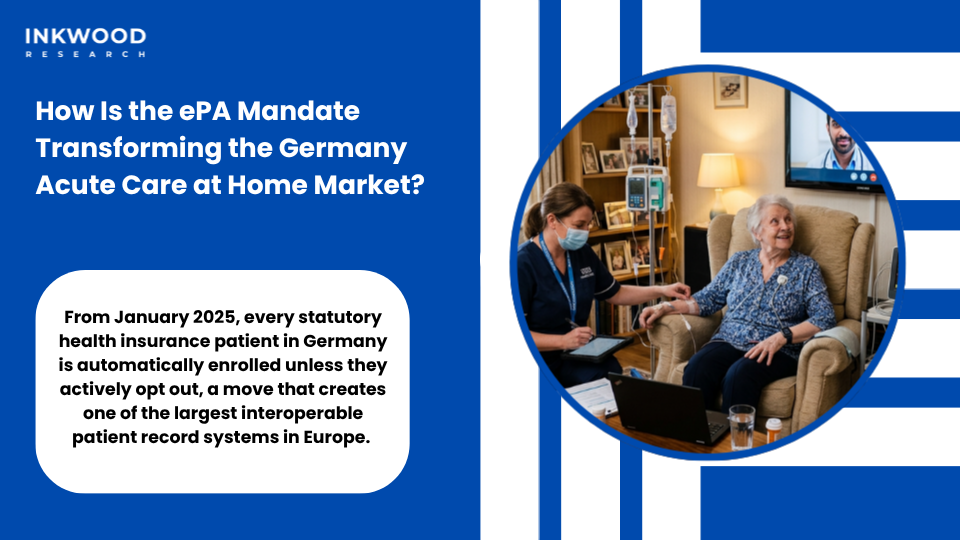
One of the most consequential digital health developments in Germany is the mandatory rollout of the elektronische Patientenakte (ePA), or electronic patient record. From January 2025, every statutory health insurance patient in Germany is automatically enrolled unless they actively opt out, a move that creates one of the largest interoperable patient record systems in Europe. For the Germany acute care at home market, this is transformative, because continuity of care data is a prerequisite for safe home-based acute treatment.
When a patient with heart failure transitions from hospital to a home care setting, clinicians need real-time access to medication histories, diagnostic results, and care plans. The ePA provides exactly that infrastructure, enabling the seamless handoff between inpatient and home-based acute care that high-acuity patients require.
Moreover, the ePA’s integration with wearable monitoring platforms is expected to accelerate the adoption of digital health in acute home care by giving remote clinicians the contextual data they need to make safe clinical decisions at speed.
Several organizations are making notable moves across both markets, bringing together technology, clinical expertise, and distribution reach to build the acute care at home services industry in Europe.
- Huma Therapeutics (UK): A digital health platform provider partnering with NHS trusts to deliver virtual ward and RPM solutions. Huma’s platform is deployed across multiple NHS Integrated Care Boards for conditions including heart failure and COPD, directly supporting the United Kingdom acute care at home market.
- Tunstall Healthcare (UK): A veteran of the UK telecare market, Tunstall provides connected care technology to NHS and social care organizations, supporting both hospital at home services and community-based monitoring programs.
- Philips (operating across UK and Germany): Philips’ Hospital to Home solutions, including RPM platforms and telehealth infrastructure, are widely deployed across European health systems, including NHS trusts and German statutory insurer partnerships.
- Fresenius Medical Care (Germany): Best known for dialysis, Fresenius is expanding its home care capabilities significantly under Germany’s reform-driven structural shift toward outpatient and home settings.
- Siemens Healthineers (Germany): Advancing digital diagnostics and AI-powered triage tools that integrate with Germany’s evolving ePA-enabled home care infrastructure.
Key Takeaways
- The United Kingdom acute care at home market is projected to grow from US$774.15 million in 2026 to US$2,830.58 million by 2034 at a 17.59% CAGR
- The Germany acute care at home market is forecast to reach US$3,536.07 million by 2034, growing from US$993.38 million in 2026 at a 17.20% CAGR
- NHS England’s Virtual Wards programme has delivered more than 10,000 virtual ward beds across England, forming the operational backbone of the UK acute care at home services market
- Germany’s €50 billion KHVVG transformation fund is the single most significant policy catalyst for home-based acute care development in Continental Europe
- The mandatory ePA rollout from January 2025 enables seamless electronic patient records for all statutory health insurance patients in Germany, directly underpinning safe home-based acute care delivery
- Remote patient monitoring, AI triage tools, and integrated digital health platforms are the critical technology enablers across both the UK and Germany markets
Conclusion
According to our research, Chile’s green hydrogen strategy demonstrates how comprehensive planning, combining natural advantages with policy support, can position nations as emerging clean energy leaders. Exceptional renewable resources create fundamental cost competitiveness. Government commitment through financial incentives and regulatory frameworks reduces investment risks. International partnerships establish market access and knowledge transfer channels.
Pilot projects transitioning toward commercial operations validate technical and economic assumptions underlying ambitious national targets. Success stories will attract additional investments, accelerating capacity development. Conversely, challenges encountered provide learning opportunities informing subsequent projects. This iterative approach balances ambition with pragmatism, managing risks while maintaining strategic momentum.
Chile’s hydrogen journey offers valuable lessons for other nations pursuing similar strategies. Resource advantages alone prove insufficient without supportive policies and strategic planning. International engagement accelerates development through technology transfer and market access. Ultimately, Chile’s success or challenges will inform global hydrogen economy development as countries worldwide pursue clean energy transitions.
Frequently Asked Questions
What is the size of the United Kingdom acute care at home market?
The UK market is valued at US$774.15 million in 2026, forecast to reach US$2,830.58 million by 2034 at a 17.59% CAGR.
How many NHS virtual ward beds has England delivered?
NHS England has delivered over 10,000 virtual ward beds, enabling acute-level hospital at home services for patients with COPD, heart failure, and frailty.
What is Germany's €50 billion hospital reform fund?
Germany’s KHVVG (2024) established a €50 billion transformation fund to restructure hospitals and scale home-based acute care delivery models across the country.
What is the Germany acute care at home market forecast?
The Germany acute care at home market is projected to grow from US$993.38 million in 2026 to US$3,536.07 million by 2034 at a 17.20% CAGR.
How does the ePA support home-based acute care in Germany?
The ePA gives clinicians real-time access to patient records across care settings, enabling safe and seamless continuity of acute care delivered at home.
Which companies lead the Europe acute care at home market?
Key players include Huma Therapeutics, Tunstall Healthcare, Philips, Fresenius Medical Care, and Siemens Healthineers, active across the UK and Germany acute home healthcare markets.