Table of Contents
TLDR
The global UAV battery market is experiencing unprecedented transformation through innovative green battery technologies. Lithium-sulfur and solid-state batteries now deliver 500+ Wh/kg energy density, doubling traditional capabilities. Furthermore, sustainable drone operations benefit from eco-friendly chemistries eliminating cobalt and graphite dependencies. Meanwhile, North American manufacturers lead with NDAA-compliant solutions, reducing foreign supply chain risks. Additionally, the market projects growth from $1.77 billion in 2024 to $5 billion by 2035, driven by defense procurement and commercial adoption across agriculture, logistics, and infrastructure monitoring sectors.
Drone fleet operators seeking longer flight times will discover actionable insights. Similarly, procurement managers evaluating sustainable battery solutions gain competitive intelligence. Moreover, investment analysts tracking clean technology opportunities have access to comprehensive market data. Defense contractors requiring NDAA-compliant power systems find strategic guidance. Additionally, agricultural technology providers implementing precision farming solutions benefit from operational benchmarks throughout this analysis.
How Green Battery Technologies Transform Sustainable UAV Operations
The global UAV battery market stands at a pivotal crossroads. Traditional lithium-ion technologies face mounting pressure from environmental regulations and performance limitations. However, breakthrough innovations in green battery technologies promise to revolutionize sustainable drone operations across commercial and defense sectors.
Picture a fleet of agricultural drones completing multi-hour field surveys without battery swaps. Now imagine defense UAVs executing extended reconnaissance missions using domestically-sourced, eco-friendly power systems. These scenarios aren’t futuristic fantasies. According to Inkwood Research, the UAV battery market reached $2990.52 million in 2024. Moreover, projections indicate growth to $7725.30 million by 2032, representing a 14.52% CAGR.
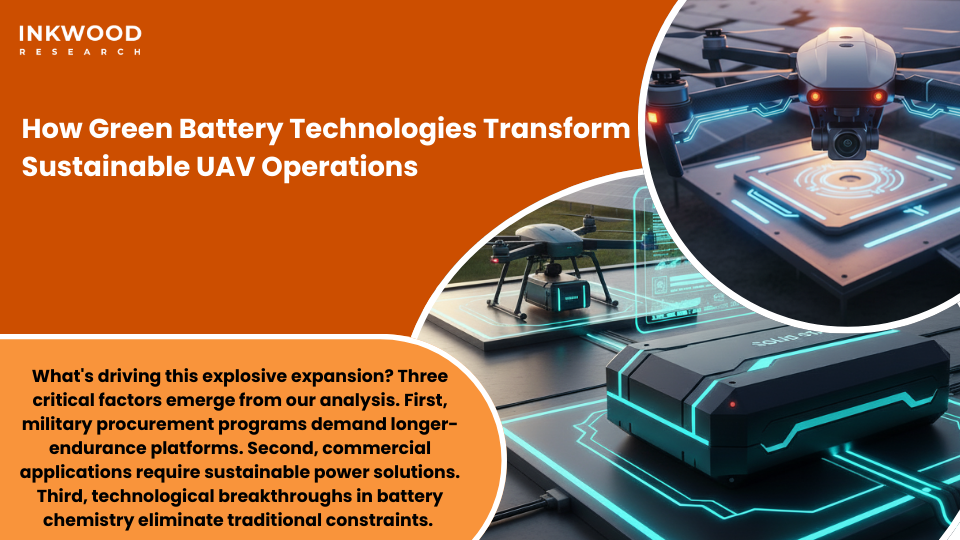
What’s driving this explosive expansion? Three critical factors emerge from our analysis. First, military procurement programs demand longer-endurance platforms. Second, commercial applications require sustainable power solutions. Third, technological breakthroughs in battery chemistry eliminate traditional constraints. Consequently, manufacturers race to develop lithium-sulfur batteries and solid-state batteries that deliver unprecedented performance while minimizing environmental impact.
Global UAV Battery Market Overview: Industry Transformation
Key Market Drivers in the UAV Battery Market
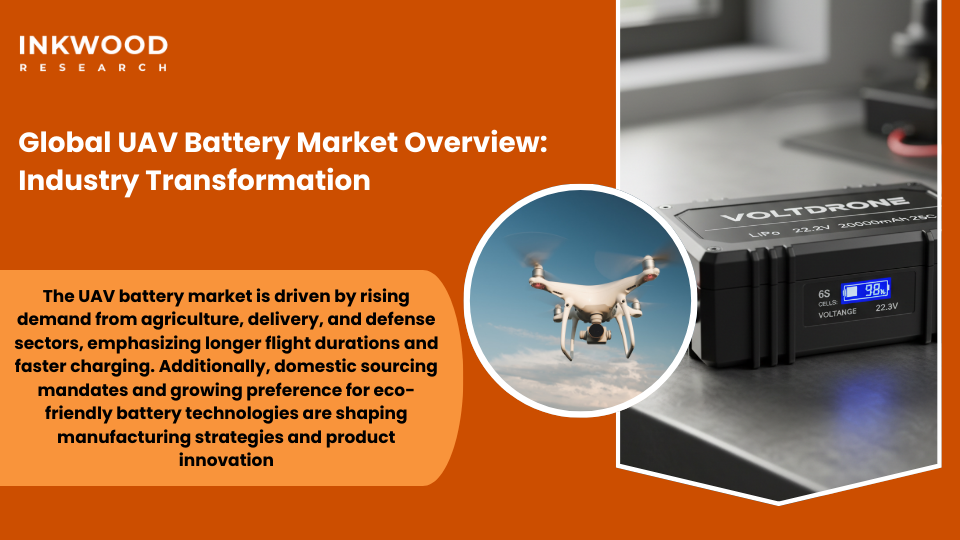
Multiple catalysts propel market expansion. Initially, agricultural applications demand extended flight times for crop monitoring. For instance, precision farming operations require batteries supporting 2-3 hour missions. Similarly, delivery services need a rapid charging infrastructure to maintain operational efficiency. Moreover, defense modernization programs invest heavily in autonomous systems.
Beyond commercial factors, regulatory frameworks shape development trajectories. Specifically, the 2024 National Defense Authorization Act mandates domestic battery sourcing. Consequently, manufacturers establish North American production facilities. Environmental considerations also influence purchasing decisions. Organizations increasingly prioritize eco-friendly battery chemistries that reduce carbon footprints while delivering superior performance metrics.
Revolutionary Green Battery Technologies Reshaping the UAV Battery Market

Lithium-Sulfur Batteries: Energy Density Breakthrough
Lithium-sulfur technology represents a quantum leap forward. Traditional lithium-ion batteries plateau around 250 Wh/kg energy density. However, lithium-sulfur batteries shatter this ceiling. Sion Power announced prototype UAV batteries achieving 500+ Wh/kg in late 2024. This breakthrough captured immediate attention from major defense contractors.
What does this mean practically? Flight times potentially double without increasing battery weight. Furthermore, payload capacities expand significantly. In May 2025, Lyten announced a national security initiative featuring American-made lithium-sulfur batteries. Their demonstration showed a UAV achieving 3+ hour flight times at speeds reaching 86 mph. Moreover, next-generation releases target 8-hour endurance using identical platforms.
Environmental benefits compound performance advantages. Lyten’s batteries eliminate nickel, manganese, cobalt, and graphite, materials predominantly sourced from Chinese supply chains. Subsequently, manufacturers achieve NDAA compliance while reducing geopolitical dependencies. Additionally, sustainable drone operations benefit from simplified recycling processes and reduced mining impacts.
Solid-State Batteries: Safety and Performance
Solid-state technology addresses critical safety concerns inherent in liquid electrolyte systems. Traditional batteries risk thermal runaway events under stress conditions. Conversely, solid-state designs replace liquid components with solid materials. Therefore, fire risks diminish dramatically while energy densities increase.
Research from Monash University demonstrates ultra-fast charging capabilities in lithium-sulfur configurations. Their technology enables recharge times measured in hours rather than overnight cycles. Furthermore, batteries maintain high performance without degradation across thousands of charge cycles. This development proves crucial for commercial drone fleets requiring daily operations.
Manufacturing scalability represents another key advantage. Industry experts note that solid-state production leverages existing lithium-ion equipment and, consequently, manufacturers transition production lines without massive capital investments. Market projections suggest solid-state batteries will capture increasing market share as production scales and costs decline through 2032.
Hydrogen Fuel Cells and Hybrid Systems
Hydrogen fuel cells offer complementary solutions for specific applications. While batteries excel in short-to-medium range missions, fuel cells enable extended endurance operations. Data further indicates that fuel cells represent the fastest-growing segment, driven by sustainability requirements and technological maturation.
How do hybrid systems work? They combine battery packs with fuel cell generators. Initially, batteries provide high power for takeoff and maneuvering. Subsequently, fuel cells sustain cruise flight efficiently. Consequently, operators achieve optimal performance across varied mission profiles. Additionally, renewable energy integration through hydrogen production creates truly sustainable operation cycles.
Sustainable Drone Operations Framework in the UAV Battery Market
Eco-Friendly Battery Chemistries and Materials
Material innovation drives sustainability improvements across the UAV battery market. Manufacturers increasingly explore alternatives to conflict minerals and environmentally-damaging extraction processes. For example, lithium iron phosphate (LiFePO4) chemistry offers improved thermal stability. Moreover, iron-based cathodes eliminate cobalt dependency entirely.
Silicon anode technology presents another breakthrough. Amprius Technologies developed SiMaxx batteries using silicon instead of graphite anodes. According to Commercial UAV News, silicon stores 10x more lithium than graphite. Consequently, drones equipped with SiMaxx batteries achieved 75% longer flight times compared to carbon anode alternatives. Additionally, silicon anodes support faster charging cycles without degradation.
Recycling programs gain momentum as battery volumes increase. Research indicates approximately 50,000 drone batteries entered recycling streams in 2022. Nevertheless, industry capacity must expand dramatically. Companies developing closed-loop recycling systems extract valuable materials efficiently. Furthermore, second-life applications repurpose degraded batteries for less-demanding stationary storage applications.
Battery Management Systems for Optimal Performance
Advanced battery management systems maximize efficiency and lifespan, while modern BMS platforms monitor individual cell health in real-time. Subsequently, systems optimize charging profiles based on temperature, usage patterns, and degradation indicators. Additionally, predictive analytics identify potential failures before they occur.
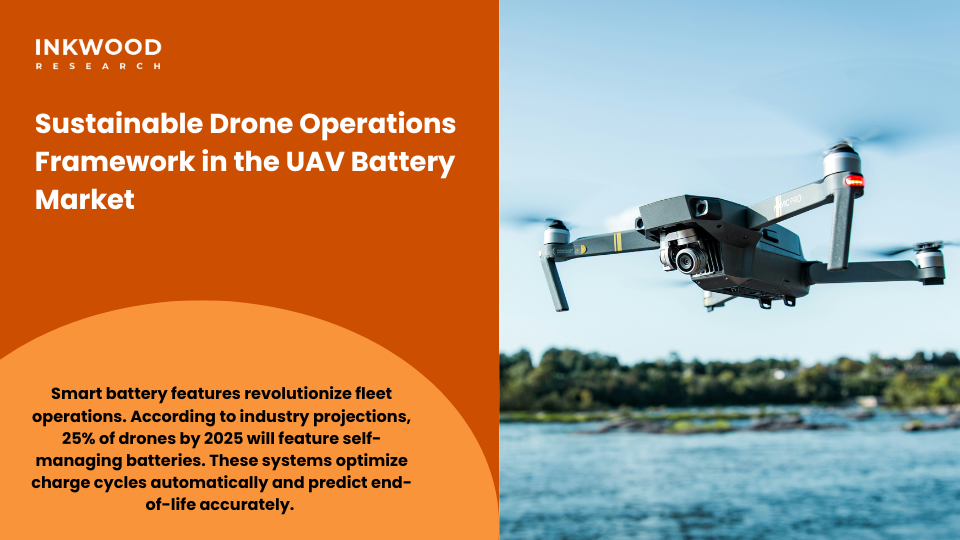
Smart battery features revolutionize fleet operations. According to industry projections, 25% of drones by 2025 will feature self-managing batteries. These systems optimize charge cycles automatically and predict end-of-life accurately. Moreover, wireless data transfer enables real-time performance monitoring. Operators receive instant alerts regarding battery health degradation or anomalies requiring attention.
Integration with renewable energy sources creates truly sustainable ecosystems. Solar-powered charging stations equipped with AI management systems adapt current flows to battery conditions. Meanwhile, predictive analytics schedules charging cycles for entire fleets, reducing downtime significantly. Furthermore, automated swapping stations powered by AI robotics replace depleted batteries within seconds.
Circular Economy Approaches
Circular economy principles reshape battery lifecycle management. Rather than linear “make-use-dispose” models, manufacturers design for reuse and recovery. Battery producers increasingly integrate recycled components into new products. Industry data shows a 20% surge in recycled material utilization.
What happens when batteries reach end-of-life? AI-powered systems analyze performance data to determine repurposing potential. Batteries no longer suitable for aviation applications often retain 70-80% capacity. Therefore, secondary markets emerge for stationary storage, backup power, and less-demanding applications. This approach extends the useful life while reducing waste.
Regulatory frameworks increasingly mandate responsible lifecycle management. European Union regulations drive certified, airworthy battery technologies with strict environmental standards. Similarly, North American agencies implement requirements for domestic recycling infrastructure. Consequently, manufacturers invest in closed-loop systems, ensuring materials efficiently re-enter supply chains.
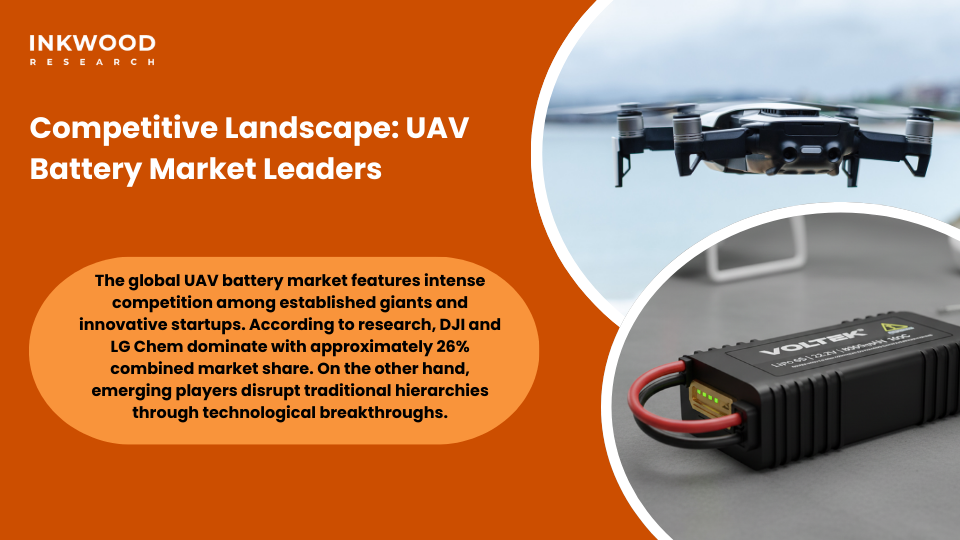
Market Share and Key Players
The global UAV battery market features intense competition among established giants and innovative startups. According to research, DJI and LG Chem dominate with approximately 26% combined market share. On the other hand, emerging players disrupt traditional hierarchies through technological breakthroughs.
- DJI maintains commanding positions through proprietary lithium polymer battery technology and integrated battery management systems. Their November 2024 Power Expansion Battery 2000 launch introduced 2 kWh capacity for Power 1000 stations. Meanwhile, comprehensive ecosystem integration provides competitive advantages that competitors struggle to match.
- Lyten emerged as a formidable challenger in 2024-2025. With over $425 million in equity investment and 520+ patents, the company’s lithium-sulfur platform attracted Defense Innovation Unit attention. Their acquisition of Northvolt’s San Leandro facility accelerates production scaling. Furthermore, partnerships with Stellantis, FedEx, and Honeywell validate commercial viability. Lyten’s batteries are already scheduled for an International Space Station demonstration in 2025.
- Amprius Technologies revolutionizes the market through silicon anode innovation. Their September 2023 partnership with Tenergy unveiled battery packs 31% lighter with 6% more energy than standard options. Subsequently, military and commercial operators recognize SiMaxx technology as industry-leading. Additionally, the Stafl Systems partnership enhances electric mobility applications through SiCore cell integration.
- Sion Power achieved breakthrough milestones in lithium-metal technology. Late 2024 announcements detailed prototype UAV batteries delivering 500+ Wh/kg energy density. This development caught major defense contractors’ attention immediately. Moreover, technology demonstrations validated performance claims across demanding operational scenarios.
Regional Competitive Dynamics
Asia-Pacific manufacturers leverage cost advantages and production scale. The region hosts over 60% of global battery manufacturing capacity. Chinese companies like Grepow Battery and Tattu (Gens Ace) lead OEM battery segments with high-density cells. Additionally, government support accelerates domestic innovation in lithium-sulfur and solid-state technologies.
North American players prioritize NDAA compliance and domestic supply chains. Companies like MaxAmps, EaglePicher Technologies, and Legend Batteries expand production capabilities. Furthermore, defense procurement requirements create protected market segments. Consequently, American manufacturers invest heavily in advanced chemistries meeting military specifications.
European competitors focus on sustainability and regulatory compliance. German manufacturers develop cobalt-free, high-voltage lithium packs meeting stringent airworthiness guidelines. Meanwhile, public-private collaborations support solar-charged drone hub rollouts requiring ultra-stable energy cells. Additionally, circular economy mandates drive recycling infrastructure investments.
Latest Product Developments and Innovations in the UAV Battery Market
Recent Breakthrough Announcements (2024-2025)
The past 12 months witnessed unprecedented innovation velocity:
- May 2025:Lyten announced American-made lithium-sulfur batteries for defense applications. Their demonstration UAV achieved 3+ hour flight times, with next-generation versions targeting 8-hour endurance. This development addresses critical national security requirements while eliminating foreign supply chain dependencies.
- January 2025:SES AI Corporation revealed AI-enhanced 2170 cylindrical cells at CES. Designed for humanoid robotics and drone applications, these cells leverage machine learning for performance optimization. Additionally, Intelligent Energy Limited partnered with IBT to develop 100 kW fuel cell generators using evaporatively-cooled IE-DRIVE technology.
- November 2024:DJI introduced the Power Expansion Battery 2000, offering 2 kWh capacity for extended operational durations. Meanwhile, battery leasing models captured approximately 8% of total market revenue, signaling shifting ownership paradigms. Furthermore, modular pack architectures featured in 18% of new releases, supporting easier maintenance for large-scale fleets.
- September 2024:H3 Dynamics partnered with Oxford’s Qdot Technology, developing hydrogen-powered VTOL aircraft. This collaboration validates hydrogen-electric fuel cell systems for aviation authority certifications. Additionally, Amprius and Tenergy unveiled next-generation packs at CUAV Las Vegas, demonstrating 31% weight reduction with 6% energy improvements.
Technological Advancements Driving Market Evolution
- Energy density improvements dominate development priorities. Conventional lithium-ion batteries reached theoretical limits around 250-300 Wh/kg. However, lithium-sulfur batteries now demonstrate 500+ Wh/kg in production-ready formats. Consequently, flight times potentially double without proportional weight increases. Moreover, payload capacities expand significantly for commercial and defense applications.
- Charging speed breakthroughs address operational bottlenecks. Traditional batteries require 1-2 hours for full charges, limiting daily mission counts. Nevertheless, fast-charging technologies reduce recharge times to minutes rather than hours. Research from Monash University shows ultra-fast charging lithium-sulfur batteries powering commercial drones while maintaining cycle life exceeding 3,000 charges.
- Safety enhancements eliminate historical concerns. Solid-state batteries replace flammable liquid electrolytes with stable solid materials. Subsequently, thermal runaway risks diminish dramatically. Additionally, improved battery management systems prevent overcharging and overheating through real-time monitoring and predictive analytics.
Regional Market Dynamics in the Global UAV Battery Market
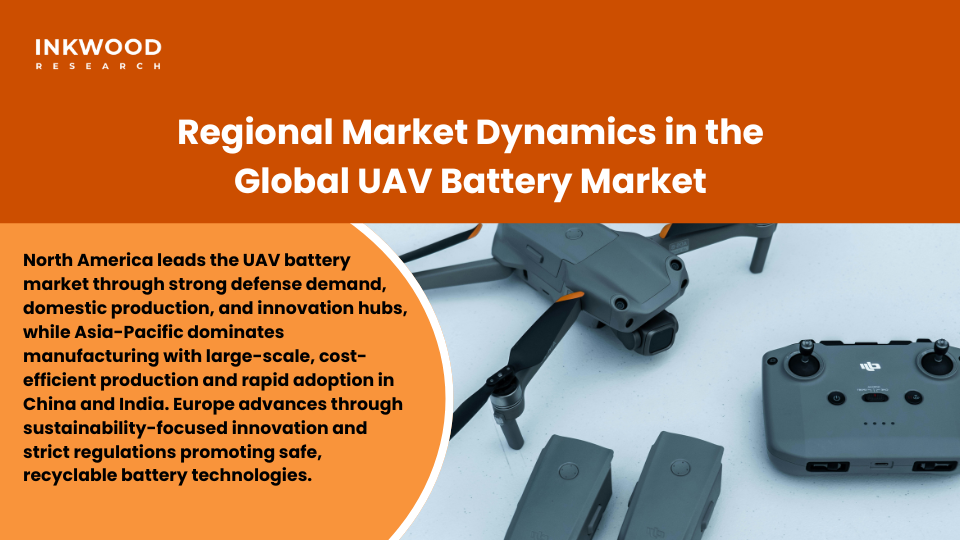
North America: Innovation and Defense Leadership
North America dominates the UAV battery market with a commanding market position. According to our analysis, the region reached $1052.36 million in 2025. Moreover, projections indicate growth to $2680.68 million by 2032, representing continued dominance driven by advanced technology adoption and defense applications.
What explains North American leadership? Defense procurement programs invest billions in autonomous systems annually. The U.S. Department of Defense operates over 10,000 active UAVs requiring specialized battery technologies. Subsequently, manufacturers establish domestic production meeting NDAA compliance requirements. Additionally, FAA regulations supporting commercial drone operations create favorable market conditions.
Innovation ecosystems concentrate in technology hubs. Silicon Valley companies like Lyten attract substantial venture capital investments. Meanwhile, established aerospace contractors in Seattle, Los Angeles, and Denver integrate advanced batteries into defense platforms. Furthermore, university partnerships accelerate fundamental research in next-generation chemistries and manufacturing processes.
Asia-Pacific: Manufacturing Dominance and Growth
Asia-Pacific demonstrates explosive growth potential. The region reached $801.04 million in 2025, with projections indicating $2220.14 million by 2032. China accounts for 47.72% of regional revenue, as of 2025, driven by massive UAV manufacturing capabilities. Additionally, government initiatives promoting “low-altitude economy” zones accelerate advanced battery technology demand.
Manufacturing scale provides competitive advantages. Over 60% of global battery production capacity resides in the Asia-Pacific. Chinese manufacturers like Grepow Battery and Sunwoda leverage economies of scale, producing batteries 20% cheaper than North American alternatives. Moreover, aggressive R&D investments, increasing 25% over three years, drive continuous innovation.
Emerging markets accelerate adoption rates. India implements drones extensively for agricultural monitoring and infrastructure inspection. Japan advances solid-state battery development through public-private consortia. South Korea focuses on next-generation chemistries for defense and commercial applications. Consequently, Asia-Pacific growth rates exceed global averages significantly.
Europe: Sustainability and Regulatory Excellence
European markets prioritize environmental compliance and sustainability. The region reached $788.49 million in 2025, with growth to $1949.09 million projected by 2032. Germany, France, and the United Kingdom lead adoption through smart city initiatives and agricultural applications. Additionally, EU regulations mandate certified, airworthy battery technologies meeting stringent environmental standards.
How do regulations shape development? European airworthiness guidelines require comprehensive safety testing and lifecycle environmental assessments. Consequently, manufacturers develop cobalt-free, high-voltage lithium packs exceeding baseline requirements. Furthermore, circular economy mandates drive recycling infrastructure investments exceeding other regions.
Public-private collaborations accelerate sustainable solutions. Governments fund solar-charged drone hub deployments requiring ultra-stable energy cells. Meanwhile, cross-border initiatives harmonize regulations, facilitating Pan-European operations. Research programs explore bio-based battery materials and closed-loop recycling systems, reducing environmental impacts.
Key Takeaways: Global UAV Battery Market Insights
- Market Growth: The global UAV battery market growth is driven by defense procurement and commercial expansion across agriculture, logistics, and infrastructure sectors.
- Technology Breakthroughs: Lithium-sulfur batteries achieve 500+ Wh/kg energy density, doubling traditional capabilities. Solid-state technologies eliminate safety concerns while enabling ultra-fast charging cycles.
- Sustainability Leadership: Green battery technologies eliminate cobalt, nickel, and graphite dependencies. Manufacturers achieve NDAA compliance through domestic, eco-friendly production systems.
- Competitive Dynamics: Established players like DJI and LG Chem maintain market leadership. However, innovators like Lyten, Amprius, and Sion Power disrupt through technological breakthroughs.
- Regional Patterns: North America leads with $2680.68 million projected by 2032. Asia-Pacific demonstrates the fastest growth rates. Europe prioritizes sustainability compliance and circular economy principles.
Conclusion: Sustainable Future of UAV Battery Market
Green battery technologies fundamentally transform the global UAV battery market. Lithium-sulfur and solid-state innovations deliver unprecedented energy densities while eliminating environmental concerns. Moreover, domestic manufacturing capabilities reduce geopolitical dependencies and enhance supply chain resilience.
Looking forward, the convergence of multiple trends accelerates market evolution. Defense agencies prioritize longer-endurance platforms powered by sustainable energy systems. Commercial operators demand rapid-charging infrastructure supporting autonomous fleet operations. Meanwhile, regulatory frameworks mandate environmental compliance and circular economy principles.
What’s the bottom line? Organizations investing in green battery technologies gain competitive advantages across multiple dimensions. Performance improvements enable new mission profiles previously impossible. Sustainability credentials attract environmentally-conscious customers and meet regulatory requirements. Supply chain independence mitigates geopolitical risks while supporting domestic industries.
The market trajectory appears clear. Our analysis indicates accelerating innovation velocity through 2032 and beyond. Companies positioning themselves at the intersection of performance, sustainability, and domestic manufacturing will capture disproportionate value. Conversely, organizations clinging to legacy technologies risk obsolescence as market dynamics shift fundamentally.
Ready to explore how advanced UAV battery solutions can transform your operations?
Contact Inkwood Research for comprehensive market intelligence and strategic guidance tailored to your specific requirements. Our expert analysts provide actionable insights, helping organizations navigate the rapidly evolving landscape of sustainable drone operations and green battery technologies.
Frequently Asked Questions (FAQs)
Lithium-sulfur batteries deliver 500+ Wh/kg energy density, doubling traditional lithium-ion capabilities. This breakthrough enables flight times to potentially double without increasing weight. Additionally, lithium-sulfur eliminates cobalt, nickel, and graphite dependencies, reducing supply chain risks. Moreover, American manufacturers like Lyten produce NDAA-compliant batteries using domestic materials, addressing national security concerns while improving environmental sustainability.
Green technologies eliminate conflict minerals and reduce environmental impacts through eco-friendly chemistries. Manufacturers develop closed-loop recycling systems that extract valuable materials efficiently. Furthermore, integration with renewable energy charging infrastructure creates truly sustainable operation cycles. Battery management systems optimize performance while extending lifespans. Subsequently, total lifecycle carbon footprints decrease significantly compared to traditional technologies.
DJI and LG Chem maintain market leadership with 26% combined share. However, Lyten disrupts through lithium-sulfur breakthroughs, achieving 3-8 hour flight times. Amprius Technologies revolutionizes silicon anode development, delivering 31% weight reductions. Sion Power demonstrates 500+ Wh/kg prototypes attracting defense contractors. Meanwhile, regional players like Grepow Battery and EaglePicher Technologies expand production, meeting specific market requirements.