Table of Contents
This analysis is brought to you by Inkwood Research, a leading market intelligence firm specializing in renewable energy infrastructure, offshore wind technologies, and clean energy transition strategies across North America. Our research team combines extensive experience analyzing wind turbine innovations, grid integration systems, and state-level energy procurement policies throughout the United States. Based on our proprietary research methodologies and strategic partnerships with energy developers, transmission operators, and federal agencies, we deliver actionable insights that empower strategic decision-making for enterprises navigating America’s offshore wind revolution.
TLDR
America’s ambitious goal to deploy 30 GW of offshore wind capacity by 2030 represents a transformative shift in the nation’s energy landscape. However, achieving this target requires overcoming significant challenges in supply chain development, transmission infrastructure, regulatory coordination, and community engagement. States like New York and New Jersey are leading procurement efforts, yet execution remains complex amid rising costs, vessel shortages, and stakeholder concerns. Successfully navigating these obstacles will determine whether the United States can establish offshore wind as a cornerstone of its clean energy future.
Energy executives, renewable project developers, investment analysts, policy makers, and corporate sustainability officers seeking comprehensive insights into U.S. offshore wind deployment strategies will benefit from this analysis. Additionally, port operators, marine construction firms, and transmission planners evaluating infrastructure investment opportunities will find valuable strategic guidance for navigating this rapidly evolving market.
U.S. Offshore Wind at 30 GW by 2030: Ambition, State Momentum, and Execution Challenges
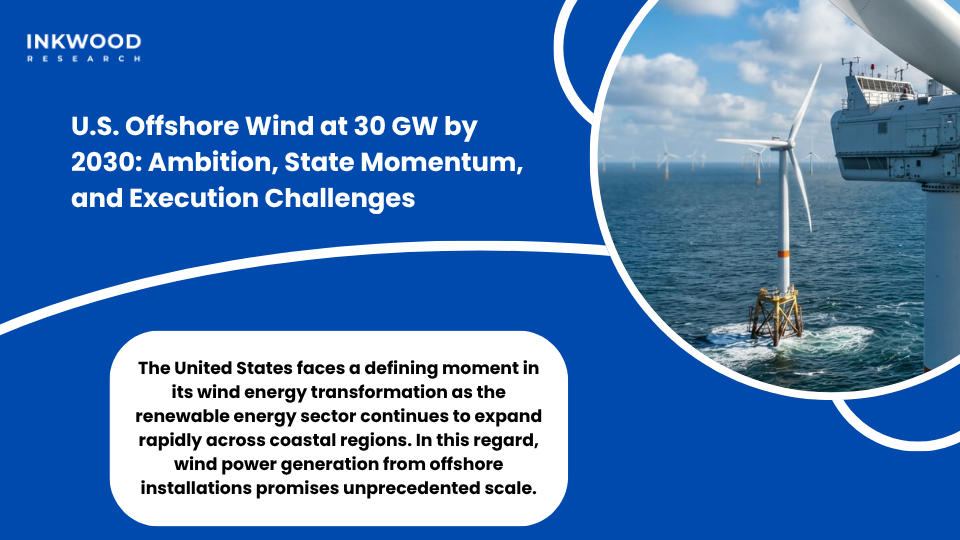
The United States faces a defining moment in its wind energy transformation as the renewable energy sector continues to expand rapidly across coastal regions. In this regard, wind power generation from offshore installations promises unprecedented scale. Wind turbines stationed in federal waters could revolutionize electricity supply for millions. Additionally, massive wind farms are emerging along the Eastern Seaboard.
Subsequently, concerns about carbon emissions drive urgent policy action, as the United States wind energy market confronts substantial execution challenges. Moreover, achieving ambitious wind energy projects requires coordinated federal and state efforts. Understanding these complex implementation dynamics becomes essential for stakeholders navigating this transformation.
The ambitious federal goal to install 30 gigawatts of offshore wind capacity by 2030 represents more than environmental policy; the target signifies a comprehensive industrial strategy aimed at economic revitalization. Coastal communities that once thrived on traditional manufacturing now see opportunities in emerging green technologies. Ports previously serving shipping and logistics are being transformed into specialized offshore wind staging facilities.
However, translating policy ambitions into physical infrastructure presents formidable obstacles. Supply chain constraints limit the availability of specialized vessels and components. Moreover, transmission capacity remains insufficient to deliver offshore-generated electricity to consumption centers. Regulatory frameworks across federal, state, and local jurisdictions create complex approval processes that can delay project timelines significantly.
What Makes the 30 GW Target Both Ambitious and Achievable?
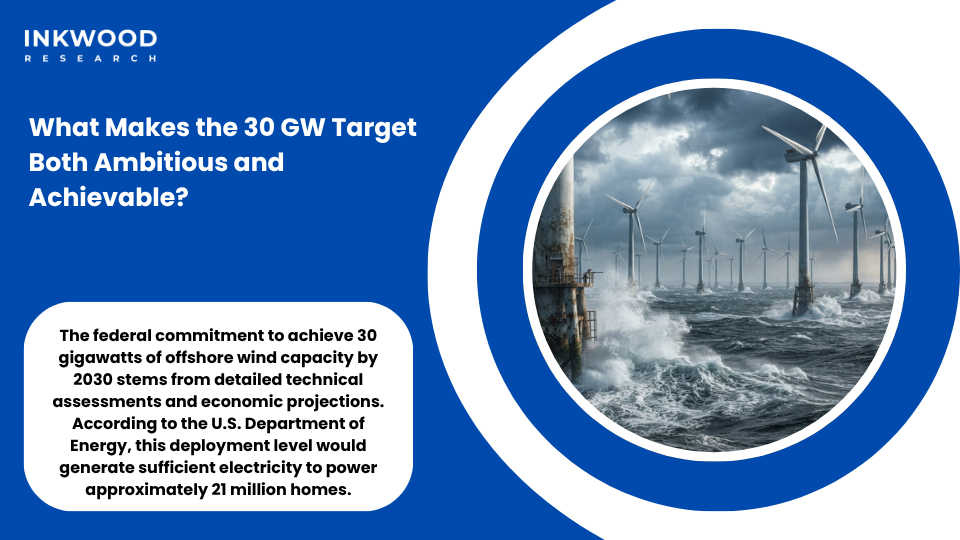
The federal commitment to achieve 30 gigawatts of offshore wind capacity by 2030 stems from detailed technical assessments and economic projections. According to the U.S. Department of Energy, this deployment level would generate sufficient electricity to power approximately 21 million homes. Furthermore, achieving this milestone could create over 77,300 jobs across the manufacturing, installation, and operations sectors. Consequently, the economic benefits extend well beyond clean electricity generation.
Nevertheless, the current installed offshore wind capacity in the United States remains minimal compared to European counterparts. Only seven turbines totaling 42 megawatts operated domestically as of 2022. Therefore, scaling up to 30,000 megawatts within eight years represents an unprecedented industrial mobilization. Additionally, this rapid expansion requires developing entirely new supply chains, training thousands of workers, and coordinating complex regulatory approvals.
The technical resource potential exists to support this ambition. The United States possesses over 4,200 gigawatts of offshore wind technical potential across its coastal waters. This capacity could meet the nation’s electricity demand more than three times over. Moreover, offshore locations provide access to stronger, more consistent wind resources compared to onshore sites. Subsequently, capacity factors for offshore installations typically exceed those of land-based wind farms.
Strategic Advantages of the United States Wind Energy Market
Offshore wind farms offer unique strategic advantages for coastal regions facing transmission congestion and limited space. Notably, these installations can deliver large-scale power generation directly to high-demand coastal load centers. Cities like New York, Boston, and Virginia Beach consume enormous quantities of electricity within constrained geographic footprints. Traditional renewable energy projects struggle to achieve the necessary scale within these dense urban environments.
Furthermore, offshore wind energy projects can integrate seamlessly with existing grid infrastructure when properly planned. Subsea transmission cables connect offshore platforms directly to onshore substations serving urban centers. This configuration minimizes the need for extensive new transmission lines across populated areas. Additionally, the proximity of generation to consumption reduces transmission losses and improves grid reliability.
How Are States Driving Offshore Wind Development?
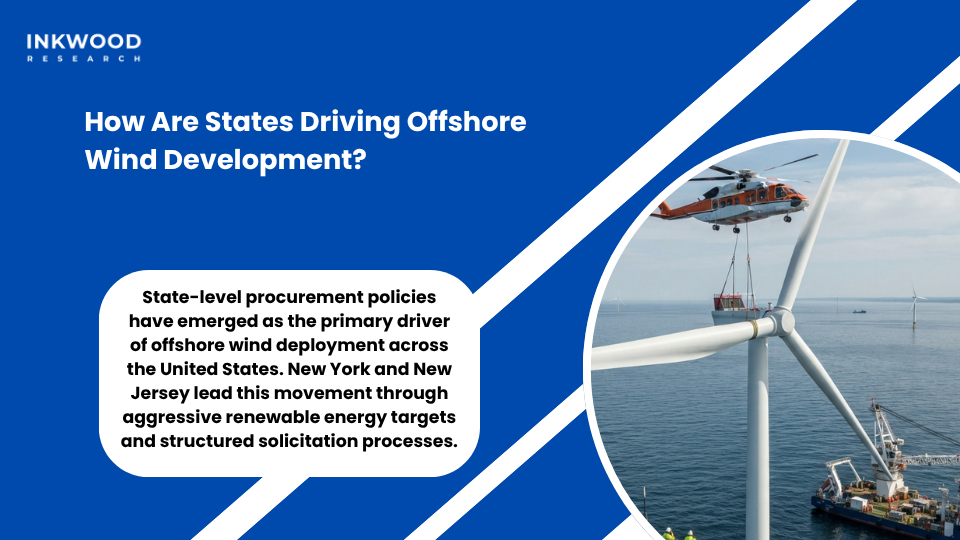
State-level procurement policies have emerged as the primary driver of offshore wind deployment across the United States. New York and New Jersey lead this movement through aggressive renewable energy targets and structured solicitation processes. These states have collectively awarded contracts for thousands of megawatts of offshore wind capacity. Moreover, their commitment to long-term procurement creates market certainty that attracts substantial private investment.
Specifically, New York has committed to procuring 9,000 megawatts of offshore wind by 2035, while New Jersey targets 11,000 megawatts by 2040. Additionally, Massachusetts, Connecticut, Rhode Island, Maryland, Virginia, and North Carolina have established their own offshore wind goals. Collectively, these state-level commitments total approximately 39,000 megawatts by 2040. Therefore, state policy ambition actually exceeds the federal 30-gigawatt target for 2030.
State Investment in the United States Wind Energy Market Infrastructure
Beyond procurement commitments, states are making substantial infrastructure investments to support offshore wind development. New York has pledged $500 million toward port upgrades, manufacturing facilities, and supply chain development. Similarly, New Jersey created the New Jersey Wind Port, a specialized facility designed to support offshore wind construction and operations. This 30-hectare port will accommodate up to 1,500 permanent jobs plus hundreds of construction positions.
Furthermore, states are implementing workforce development programs to build the skilled labor force required for offshore wind projects. Training partnerships between community colleges, technical schools, and industry employers are creating pathways into well-paying offshore wind careers. Additionally, states are prioritizing economic opportunities for disadvantaged communities historically underserved by energy sector employment.
What Supply Chain Challenges Threaten the United States Wind Energy Market?
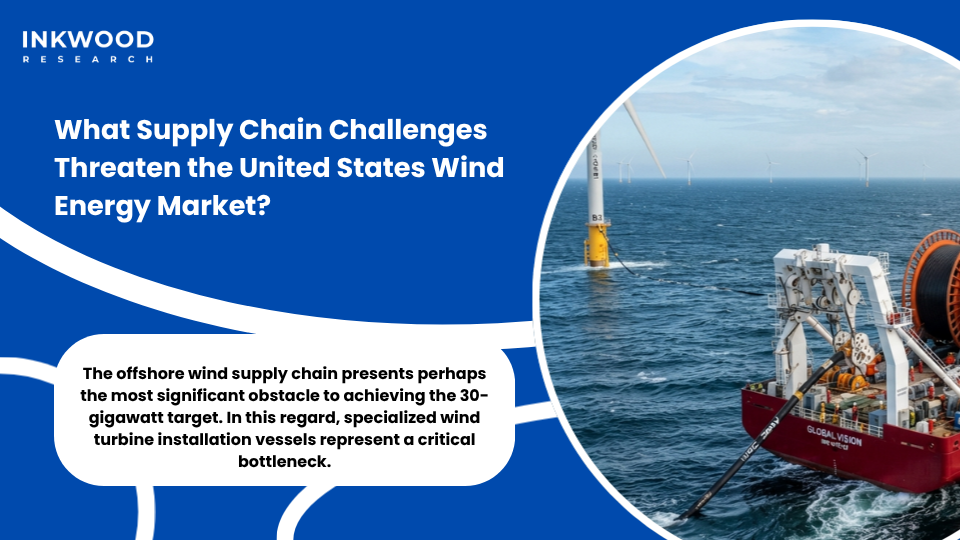
The offshore wind supply chain presents perhaps the most significant obstacle to achieving the 30-gigawatt target. In this regard, specialized wind turbine installation vessels represent a critical bottleneck. According to the Atlantic Council, these massive ships can lift components weighing over 2,500 tons and operate in water depths exceeding 60 meters. Currently, the United States lacks domestically flagged vessels capable of installing next-generation offshore turbines.
Moreover, the Jones Act complicates vessel availability by requiring domestic shipping between U.S. ports to utilize American-built, owned, flagged, and crewed vessels. While this law supports domestic shipbuilding and maritime employment, it also increases costs and limits options for offshore wind developers. Consequently, industry stakeholders debate whether Jones Act modifications or domestic vessel construction represents the optimal path forward.
Manufacturing Capacity Gaps in Wind Energy Projects
Beyond vessels, domestic manufacturing capacity for turbine components remains underdeveloped. Modern offshore turbines feature blades extending over 90 meters and nacelles weighing hundreds of tons. Producing these massive components requires specialized facilities with substantial capital investment. While some manufacturers have announced plans for U.S. production facilities, construction timelines may not align with project deployment schedules.
Additionally, the supply chain extends beyond primary components to include foundations, subsea cables, and substations. Each element requires specific expertise and manufacturing capabilities. Therefore, developing a comprehensive domestic supply chain involves coordinating investments across multiple industry segments. Furthermore, maintaining competitive pricing while building domestic capacity presents ongoing challenges for project economics.
Why Is Transmission Infrastructure Critical for Offshore Wind Success?
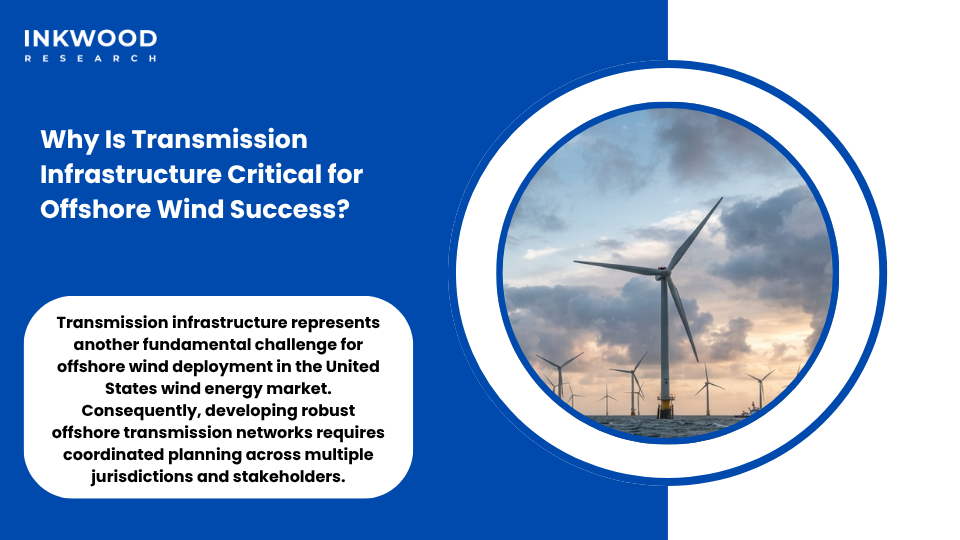
Transmission infrastructure represents another fundamental challenge for offshore wind deployment in the United States wind energy market. Most coastal regions currently lack sufficient grid capacity to accommodate gigawatt-scale offshore wind projects. Existing transmission systems were designed primarily to deliver power from centralized fossil fuel plants, not to receive large injections of offshore renewable generation.
Consequently, developing robust offshore transmission networks requires coordinated planning across multiple jurisdictions and stakeholders. Individual project developers have historically built radial connections from offshore platforms directly to onshore substations. However, this approach becomes increasingly inefficient as more projects come online. Therefore, integrated transmission solutions that connect multiple wind farms to shared grid infrastructure offer greater long-term value.
Regional Transmission Planning for Wind Power Generation
Regional transmission organizations and independent system operators are beginning to develop comprehensive offshore transmission plans. These frameworks envision backbone transmission networks that can accommodate both current and future offshore wind development. Moreover, such systems improve reliability by providing multiple pathways for power delivery and reducing transmission congestion.
Nevertheless, financing and regulatory approval for these transmission investments remain complex. Transmission projects often require multi-billion-dollar capital commitments with decades-long cost recovery periods. Additionally, allocating costs fairly among states and ratepayer groups generates contentious policy debates. Therefore, achieving consensus on integrated transmission solutions requires sustained political will and stakeholder collaboration.
How Can Community Engagement Accelerate Development?
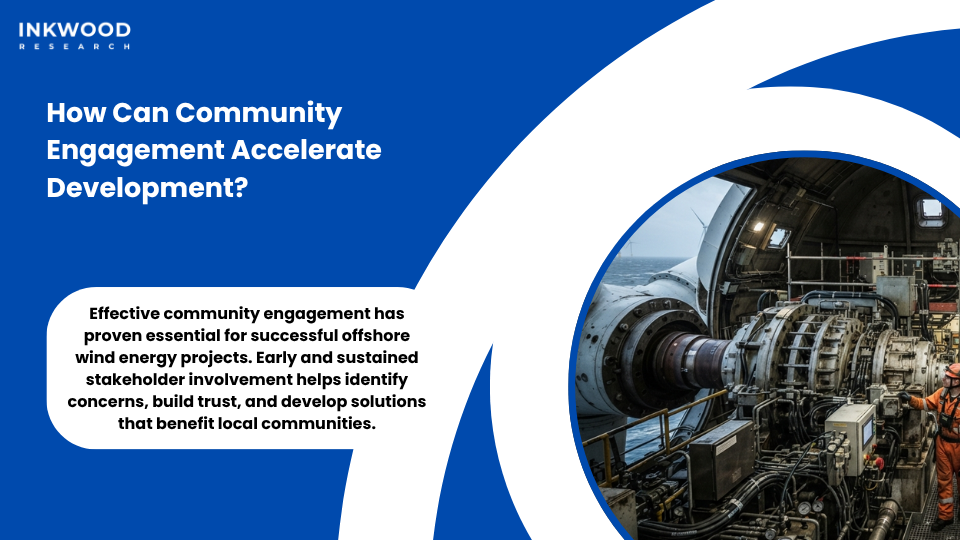
Effective community engagement has proven essential for successful offshore wind energy projects. Early and sustained stakeholder involvement helps identify concerns, build trust, and develop solutions that benefit local communities. States like New York and New Jersey have demonstrated how proactive outreach can overcome initial skepticism and generate broad support for offshore wind development.
Particularly important is engagement with fishing communities, whose traditional activities intersect with offshore wind development areas. Competition for ocean space, concerns about disrupted fishing grounds, and safety considerations create legitimate stakeholder concerns. However, thoughtful planning can often accommodate both industries. International examples demonstrate that offshore wind farms and commercial fishing can coexist with appropriate mitigation measures.
Economic Benefits for Coastal Communities
Emphasizing economic development opportunities helps build community support for offshore wind projects. These installations create thousands of well-paying jobs in manufacturing, construction, operations, and maintenance. Moreover, revitalized port facilities inject new economic activity into communities that may have struggled following declines in traditional maritime industries.
Furthermore, community benefits agreements can ensure that local residents share directly in project success. Some developers have committed to hiring targets for local workers, apprenticeship programs, and direct financial contributions to community development funds. Additionally, partnerships with labor unions strengthen workforce quality while creating stakeholders invested in project success.
Recent Developments by Major Companies
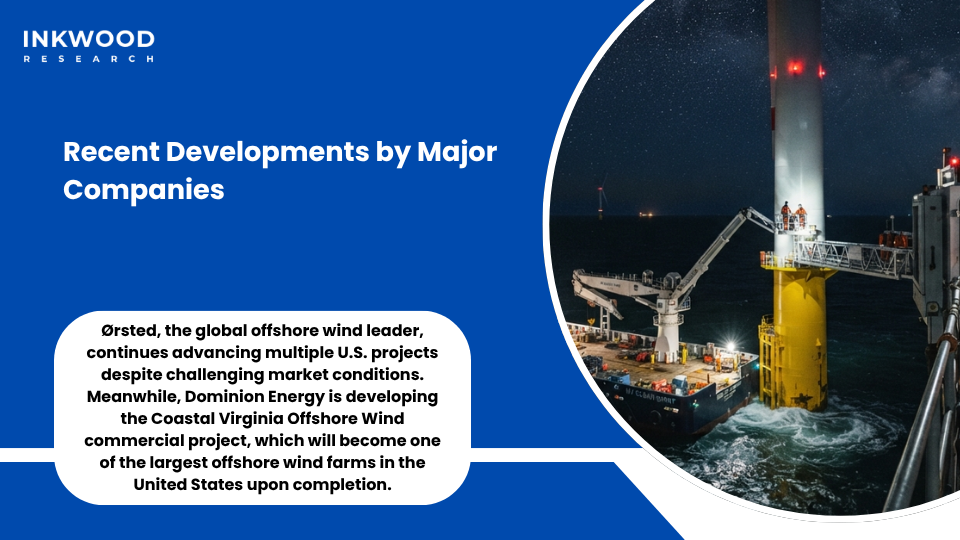
Ørsted, the global offshore wind leader, continues advancing multiple U.S. projects despite challenging market conditions. The company operates the Block Island Wind Farm off Rhode Island and the Coastal Virginia Offshore Wind pilot project. Additionally, Ørsted holds development rights for Revolution Wind, Sunrise Wind, and Ocean Wind projects serving northeastern states. However, the company has also navigated project cancellations due to rising costs and supply chain challenges.
Meanwhile, Dominion Energy is developing the Coastal Virginia Offshore Wind commercial project, which will become one of the largest offshore wind farms in the United States upon completion. This 2,600-megawatt project received regulatory approval and is progressing toward construction. Meanwhile, Equinor and BP are partnering on Empire Wind and Beacon Wind projects offshore New York. These developments represent billions in private sector investment toward achieving the 30-gigawatt goal.
Furthermore, component manufacturers are establishing U.S. production facilities. GE Renewable Energy, Siemens Gamesa, and Vestas have all announced American manufacturing investments. Additionally, foundation and cable manufacturers are expanding domestic capacity. These supply chain developments, while still emerging, signal growing confidence in long-term U.S. market potential.
Key Takeaways
- The United States wind energy market is projected to grow from US$25,090.42 million in 2026 to US$55,112.64 million by 2034, representing a compound annual growth rate of 10.34% as offshore wind capacity expands significantly.
- State-level procurement commitments exceeding 39,000 megawatts by 2040 demonstrate strong policy support, though execution challenges regarding supply chains, transmission, and regulatory coordination remain substantial.
- Specialized vessel shortages and Jones Act requirements create supply chain bottlenecks that threaten deployment timelines, requiring either domestic shipbuilding expansion or regulatory modifications.
- Transmission infrastructure development requires coordinated regional planning and multi-billion-dollar investments to deliver offshore-generated electricity to coastal demand centers effectively.
- Community engagement strategies that emphasize job creation, economic development, and stakeholder collaboration have proven essential for building public support and overcoming local opposition to offshore wind projects.
Conclusion
Achieving the 30-gigawatt offshore wind target by 2030 requires coordinated action across industry, government, and communities. While technical potential and policy support exist, execution challenges demand innovative solutions and sustained commitment. The United States stands at a critical juncture where strategic decisions made today will determine whether offshore wind becomes a cornerstone of the clean energy transition or remains an unrealized ambition.
Nevertheless, encouraging signs suggest momentum is building despite obstacles. State procurement commitments, private sector investments, and emerging supply chain development all indicate growing confidence in offshore wind’s future. Moreover, the economic and environmental benefits of successful deployment extend far beyond electricity generation to encompass job creation, industrial revitalization, and climate mitigation.
For businesses, investors, and policymakers, understanding the complex dynamics shaping offshore wind development is essential for strategic planning. Inkwood Research offers comprehensive market intelligence and consulting services to help stakeholders navigate this transformative sector. Contact our team to explore how offshore wind energy can align with your organization’s strategic objectives.
Frequently Asked Questions (FAQs)
As of 2022, only 42 megawatts across seven turbines operated domestically, demonstrating the significant expansion required to achieve the 30-gigawatt target.
New York and New Jersey lead procurement efforts with combined targets exceeding 20,000 megawatts, followed by Massachusetts, Connecticut, Maryland, Virginia, and other coastal states.
The Jones Act requires domestic shipping to use U.S.-built, owned, flagged, and crewed vessels, creating challenges for offshore wind installation due to limited domestic vessel availability.
Achieving 30 gigawatts could generate over 77,300 jobs across manufacturing, installation, operations, and maintenance sectors, according to Department of Energy projections.
Coastal grids lack the capacity to accommodate gigawatt-scale offshore generation, requiring billions in transmission investments to deliver electricity from offshore platforms to onshore consumers.
Thoughtful planning, stakeholder engagement, and mitigation measures can address fishing industry concerns while accommodating both industries in shared ocean spaces.