Table of Contents

This analysis is brought to you by Inkwood Research, a leading market intelligence firm specializing in India’s rapidly expanding drone technology sector, indigenous UAV battery development, and Make in India manufacturing initiatives. Our research team combines extensive experience analyzing the India UAV battery market, government policies including Drone Shakti mission and liberalized drone rules, and emerging startup ecosystem featuring companies like Garuda Aerospace, ideaForge Technology, and Raphe mPhibr. Based on our proprietary research methodologies and strategic partnerships with Indian battery manufacturers, defense organizations, agricultural technology providers, and regulatory authorities including DGCA and Ministry of Electronics and Information Technology, we deliver actionable insights that empower strategic decision-making for commercial drone operators, agricultural innovators, and technology investors navigating India’s transformation into a global drone manufacturing hub.
TLDR
Maximizing UAV battery lifespan requires strategic charging practices, proper storage protocols, and operational discipline. Implementing correct voltage management, temperature control, and discharge cycle optimization extends lithium-ion batteries performance by 40-60%. Furthermore, avoiding complete depletion, maintaining 40-60% storage charge, and calibrating cells quarterly prevent premature degradation. Understanding battery technology chemistry fundamentals, investing in quality charging equipment, and following manufacturer specifications transform expensive battery replacements into predictable, cost-effective operational expenses for commercial and recreational drone operators.
This practical guide benefits commercial drone operators managing fleet operations, agricultural pilots conducting precision farming missions, recreational enthusiasts maximizing equipment investments, and defense contractors optimizing tactical UAV battery deployments. Additionally, India UAV battery market stakeholders, logistics companies developing delivery programs, infrastructure inspection teams, and emergency response coordinators will gain actionable strategies for extending battery technology lifecycles while reducing operational costs and mission downtime.
1. Implement Optimal Charging Practices

Understanding Charge Cycles; Let’s Dive In –
Lithium-ion batteries’ chemistry fundamentals dictate that partial charging cycles significantly extend operational lifespans compared to full 0-100% charges. Specifically, maintaining charge levels between 20-80% reduces chemical stress on battery cells. Moreover, this practice can extend the usable lifecycle by 40-60% according to battery research from leading manufacturers. Consequently, operators should avoid unnecessary full charges when missions require only partial capacity.
The India UAV battery market emphasizes these charging practices as domestic manufacturers work to establish quality standards matching international competitors. Indian startups developing indigenous battery technology solutions incorporate smart charging algorithms that automatically implement optimal voltage management. Furthermore, these innovations address unique operational challenges posed by the country’s diverse climatic conditions.
Slow Charging Benefits
Rapid charging generates excessive heat, accelerating chemical degradation within lithium-polymer battery cells. Therefore, using standard charging rates whenever time permits protects internal structures. Additionally, manufacturers typically recommend 1C charging rates as the default option, meaning a 5000mAh battery charges at 5 amps. Fast charging should remain reserved for urgent operational requirements rather than standard practice.
Battery management systems (BMS) with AI-based monitoring enhance performance by optimizing charge rates based on cell temperatures and voltage differentials. These intelligent systems adjust charging currents dynamically, preventing dangerous conditions while maximizing efficiency. Moreover, advanced chargers communicate with UAV battery packs, implementing manufacturer-specific protocols that balance speed against longevity considerations.
2. Master Storage Protocols
Ideal Storage Voltage
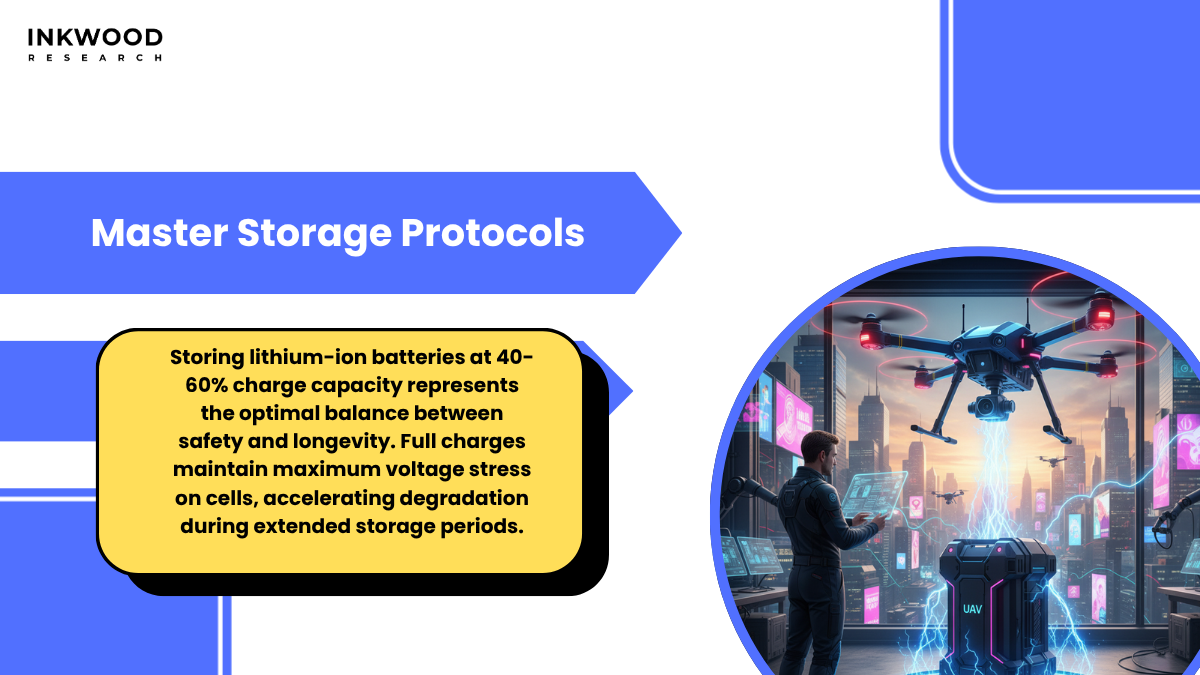
Storing lithium-ion batteries at 40-60% charge capacity represents the optimal balance between safety and longevity. Full charges maintain maximum voltage stress on cells, accelerating degradation during extended storage periods. Conversely, completely depleted batteries risk voltage dropping below critical thresholds, causing permanent capacity loss. Therefore, the 3.7-3.85V per cell range provides ideal storage conditions.
Commercial operators managing large UAV battery inventories should implement rotation systems ensuring older units cycle through operations before newer acquisitions. This first-in-first-out approach prevents extended storage periods that compound degradation factors. Additionally, quarterly voltage checks verify stored batteries maintain safe levels, enabling timely intervention before permanent damage occurs.
Environmental Considerations
Temperature dramatically influences battery technology storage effectiveness. Ideally, batteries should remain in climate-controlled environments between 15-25°C (59-77°F). Higher temperatures accelerate self-discharge rates and chemical decomposition, while freezing conditions can crack cell separators. Moreover, humidity control prevents corrosion of electrical contacts and circuit boards within battery packs.
According to the Ministry of Electronics and Information Technology, strategic initiatives promote indigenous development of advanced battery chemistries, including improved storage characteristics. Indian research institutions collaborate with manufacturers to develop energy storage solutions optimized for tropical heat, monsoon humidity, and Himalayan cold conditions. These specialized formulations address storage challenges unique to the subcontinent’s diverse climate zones.
3. Control Operating Temperatures
Temperature Impact on Performance
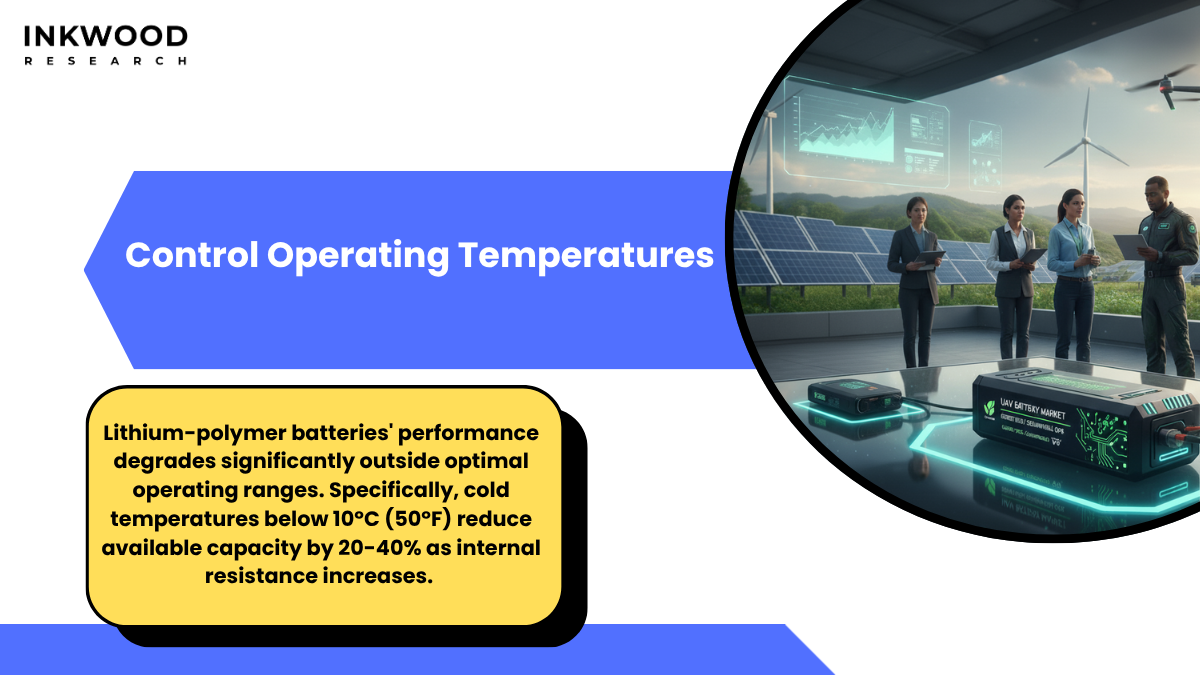
Lithium-polymer batteries’ performance degrades significantly outside optimal operating ranges. Specifically, cold temperatures below 10°C (50°F) reduce available capacity by 20-40% as internal resistance increases. Conversely, excessive heat above 40°C (104°F) accelerates chemical reactions that permanently reduce battery lifespan. Therefore, operators must account for ambient conditions when planning missions.
Preheating batteries before cold-weather operations maintains performance levels. Simple techniques include keeping spare batteries inside heated vehicles or using electric heating pads set to low temperatures. Additionally, thermal insulation wraps protect batteries during flight, preventing rapid temperature drops at altitude, where conditions often prove substantially colder than ground level.
Cooling Strategies
High-power missions generate significant heat within battery cells. Consequently, allowing adequate cooling periods between flights prevents cumulative thermal stress. Moreover, monitoring battery temperatures immediately after landing indicates when safe charging can commence. Most manufacturers recommend waiting until cells return to ambient temperature before initiating charge cycles.
Advanced thermal management systems integrated into professional-grade UAV battery packs actively regulate temperatures through passive cooling designs or active air circulation. These systems become essential for agricultural spraying operations, extended surveillance missions, or cargo delivery applications involving repeated rapid discharge cycles. Furthermore, thermal sensors provide real-time data enabling operators to abort missions before dangerous temperatures develop.
4. Avoid Complete Battery Depletion

Voltage Floor Protection
Lithium-ion batteries cells sustain permanent damage when discharged below the manufacturer-specified minimum voltages. Typically, this critical threshold sits at 3.0V per cell for most UAV applications. Subsequently, automated low-voltage warnings should trigger immediate return-to-home protocols. Ignoring these alerts risks not only battery damage but also potential mid-flight power loss, endangering the aircraft.
Modern flight controllers integrate sophisticated battery management systems that calculate remaining capacity based on current draw patterns and historical performance data. These systems provide accurate runtime predictions, enabling operators to plan missions confidently. Additionally, conservative settings establishing slightly higher voltage floors add safety margins, accounting for unexpected circumstances like strong headwinds increasing power consumption.
Strategic Landing Reserves
Professional operators establish 20-30% battery reserves as mandatory landing minimums. This practice ensures sufficient power for contingencies, including navigation to alternate landing sites or holding patterns awaiting clearance. Moreover, consistently landing with adequate reserves prevents routine deep discharges that accumulate long-term damage.
The India UAV battery market benefits from government initiatives like the Drone Shakti mission, promoting best practices across commercial operators. Training programs emphasize battery technology management fundamentals, ensuring pilots understand how operational decisions impact equipment longevity. Furthermore, regulatory frameworks increasingly mandate minimum battery reserves for commercial drone operations, standardizing safety practices industry-wide.
5. Calibrate Batteries Regularly

Calibration Necessity
Battery management electronics track capacity through mathematical models that estimate remaining charge based on voltage and current measurements. However, these calculations accumulate errors over time, gradually diverging from actual capacity. Therefore, periodic calibration cycles reset these models, restoring accurate state-of-charge reporting essential for mission planning.
Calibration involves fully charging the UAV battery, then completely discharging it to the minimum safe voltage under controlled conditions. This process allows the battery management systems to remeasure actual capacity, updating internal parameters. Subsequently, operators should calibrate batteries quarterly or after every 30-40 charge cycles, depending on usage intensity.
Proper Calibration Procedures
Calibration discharges should occur at moderate rates, avoiding excessive stress on cells. Specifically, using 0.5C discharge rates provides accurate measurements without accelerated wear. Additionally, monitoring individual cell voltages during calibration identifies weak cells requiring attention or indicating that battery retirement becomes appropriate.
Indian manufacturers developing indigenous battery technology incorporate automatic calibration reminders within their battery management systems. These features simplify maintenance schedules for commercial operators managing dozens of battery packs. Moreover, data logging capabilities track calibration history, enabling predictive maintenance strategies that replace batteries before mission-critical failures occur.
6. Invest in Quality Charging Equipment

Charger Quality Matters
Premium charging equipment delivers precise voltage regulation, balanced cell charging, and comprehensive safety features protecting valuable lithium-polymer battery investments. Conversely, inexpensive chargers often lack proper voltage regulation, causing overcharging that permanently damages cells. Moreover, quality chargers incorporate multiple safety mechanisms, including temperature monitoring, short-circuit protection, and automatic shutoff at full charge.
Manufacturers like EnerSys and Saft Batteries provide certified charging solutions specifically designed for aviation-grade UAV battery applications. These professional-grade chargers communicate with intelligent battery packs, implementing manufacturer-specific protocols, optimizing charge profiles. Additionally, multi-bay charging stations enable fleet operators to manage numerous batteries simultaneously while maintaining individual monitoring and control.
Smart Charging Features
Advanced chargers automatically adjust charging parameters based on battery chemistry, cell configuration, and current state. Subsequently, these intelligent systems maximize charging speed while prioritizing longevity over convenience. Furthermore, built-in storage modes automatically maintain batteries at optimal voltage levels for extended periods.
According to the Directorate General of Civil Aviation guidelines, commercial drone operators must utilize certified charging equipment meeting aviation safety standards. Progressive regulatory reforms emphasize equipment quality as essential for preventing incidents and maintaining operational reliability. Moreover, insurance providers increasingly require documented evidence of proper charging practices and approved equipment usage.
7. Monitor Cell Balance
Understanding Cell Balance
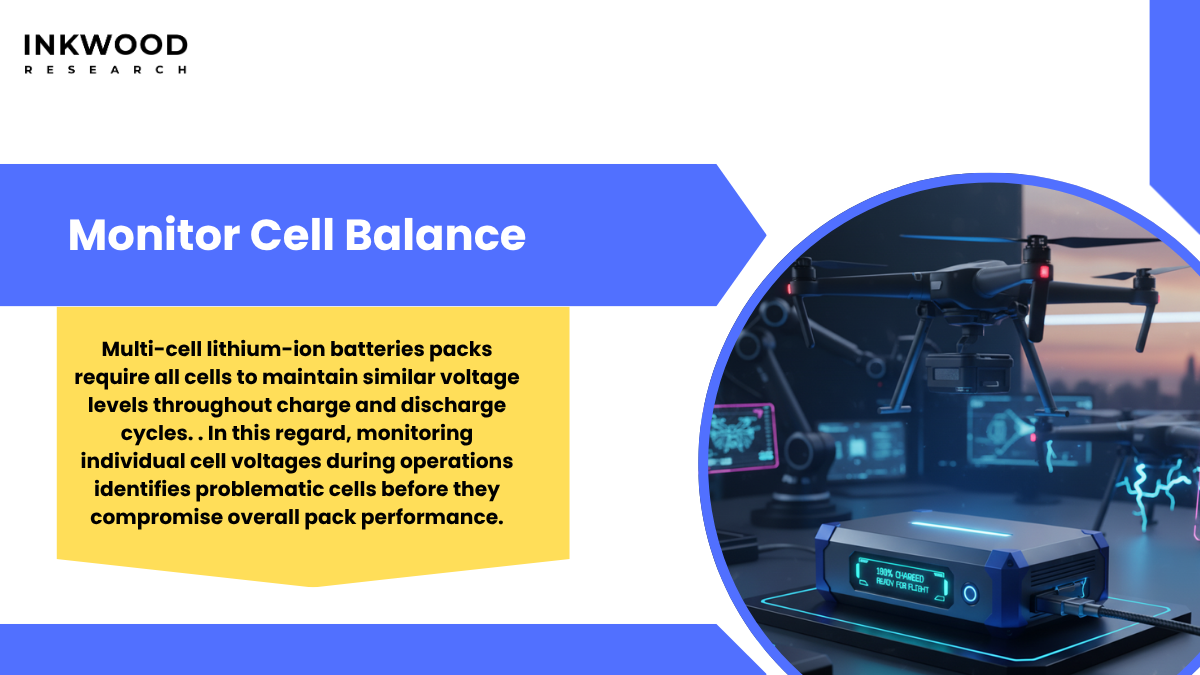
Multi-cell lithium-ion batteries packs require all cells to maintain similar voltage levels throughout charge and discharge cycles. However, manufacturing variations and usage patterns cause cells to drift apart gradually. Subsequently, the strongest cell reaches full charge first, triggering charge termination while weaker cells remain undercharged. This imbalance reduces effective capacity and accelerates degradation.
Quality battery management systems incorporate active balancing circuits that redistribute charge between cells during charging cycles. These systems ensure all cells reach identical voltages at full charge. In this regard, monitoring individual cell voltages during operations identifies problematic cells before they compromise overall pack performance.
Balancing Best Practices
Operators should utilize chargers with sophisticated balancing capabilities rather than basic constant-current designs. Specifically, active balancing during every charge cycle maintains tight voltage tolerances across cells. Moreover, regular voltage measurements using specialized testing equipment verify balancing effectiveness.
The India UAV battery market emphasizes cell balancing as a critical quality differentiator as domestic manufacturers compete with established international suppliers. Startups investing in advanced battery management systems development demonstrate commitment to aviation-grade quality standards. Furthermore, government Production Linked Incentive schemes reward technological sophistication, including intelligent balancing implementations.
8. Maintain Proper Discharge Rates
C-Rating Fundamentals
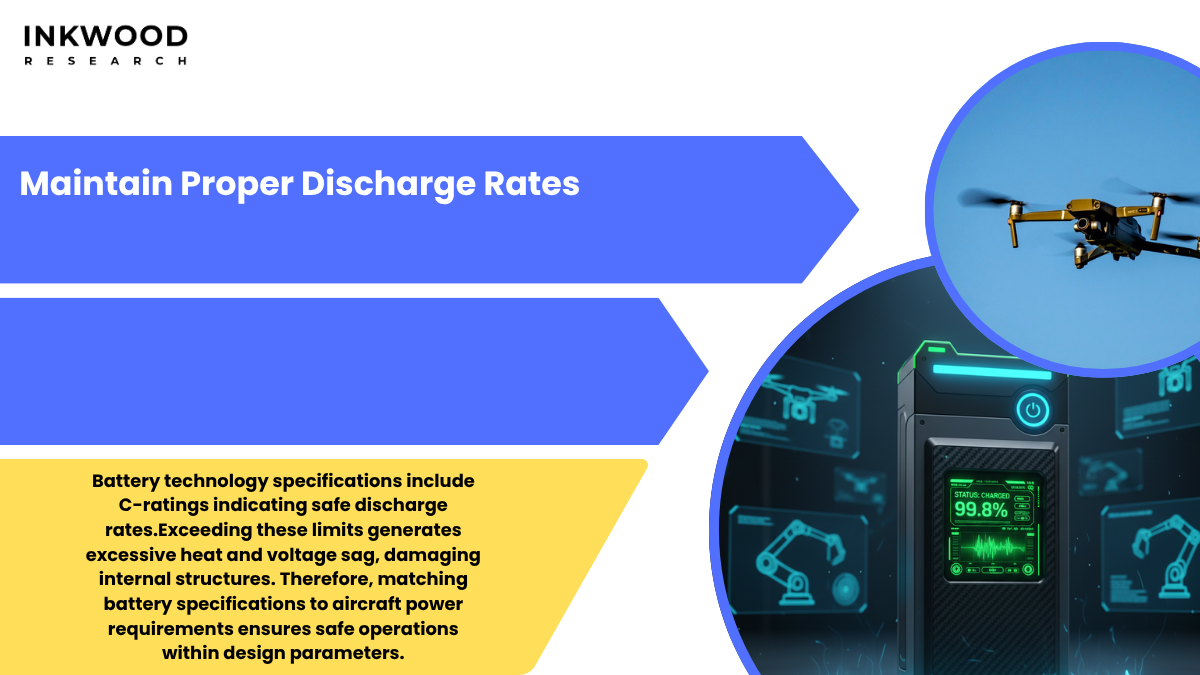
Battery technology specifications include C-ratings indicating safe discharge rates. A 5000mAh battery with a 30C rating safely delivers 150 amps continuously. Exceeding these limits generates excessive heat and voltage sag, damaging internal structures. Therefore, matching battery specifications to aircraft power requirements ensures safe operations within design parameters.
Aggressive flying styles, including rapid acceleration, high-speed maneuvers, and maximum payload operations, draw peak currents approaching or exceeding continuous ratings. Consequently, pilots should select batteries with adequate C-ratings providing comfortable margins above typical power demands. Additionally, monitoring battery temperatures after aggressive flights indicates whether discharge rates approached dangerous levels.
Operational Considerations
Agricultural drone operations conducting pesticide spraying missions face particularly demanding discharge profiles. Heavy payloads combined with sustained hovering draw significant continuous current. Moreover, environmental conditions, including high temperatures and altitude operations, further stress lithium-polymer battery systems. Therefore, operators must carefully evaluate battery specifications against mission profiles.
BYD and CATL manufacturing facilities produce specialized high-discharge batteries optimized for demanding UAV applications. These products incorporate enhanced electrode designs and advanced electrolyte formulations supporting elevated current draws. Furthermore, ruggedized construction withstands vibration, impact, and environmental exposure typical of commercial drone operations in challenging conditions.
9. Follow Manufacturer Specifications

Documentation Importance
Every UAV battery includes specific operational parameters established through extensive testing and certification processes. These specifications cover charging voltages, discharge rates, storage conditions, and lifecycle expectations. Consequently, operators must thoroughly review documentation, understanding all recommended practices and prohibited actions.
Manufacturers provide detailed guidance regarding compatible charging equipment, environmental limitations, and maintenance requirements. Moreover, warranty coverage typically requires documented compliance with specified procedures. Deviating from these guidelines not only risks equipment damage but also potentially voids manufacturer support and insurance coverage for commercial operations.
Application-Specific Requirements
Different UAV applications demand specialized battery technology solutions. Agricultural drones require extended endurance supporting large payload capacities. Defense reconnaissance platforms prioritize lightweight construction, maximizing flight duration. Consumer photography drones balance performance against cost considerations. Therefore, selecting batteries engineered specifically for intended applications ensures optimal results.
Companies like Shenzhen Grepow Battery and Amperex Technology Limited (ATL) offer extensive product portfolios addressing diverse UAV requirements. Their engineering teams collaborate with aircraft manufacturers, developing customized specifications matching unique operational profiles. Additionally, technical support services assist operators with battery integration challenges, installation procedures, and troubleshooting guidance.
10. Track Battery Performance Data

Data-Driven Management
Systematic performance tracking identifies degradation patterns enabling proactive battery retirement before mission-critical failures. Recording charge capacities, cycle counts, and discharge times establishes baseline performance metrics. Subsequently, comparing current measurements against historical data reveals declining performance trajectories.
Professional fleet operators implement comprehensive battery management systems tracking individual unit histories throughout operational lifecycles. These databases correlate performance degradation with usage patterns, environmental exposure, and maintenance practices. Moreover, analytics identify opportunities for procedure improvements, extending fleet-wide battery longevity.
Predictive Maintenance Benefits
Advanced monitoring systems leverage machine learning algorithms to predict remaining useful life based on accumulated performance data. These predictions enable strategic battery replacement scheduling, avoiding unexpected failures during critical operations. Additionally, bulk purchasing based on projected replacement timelines often secures favorable pricing from suppliers.
The India UAV battery market is increasingly adopting cloud-based fleet management platforms, integrating battery performance tracking with maintenance scheduling and inventory management. These comprehensive solutions streamline operations for commercial drone companies managing hundreds of battery packs across multiple locations. Furthermore, regulatory compliance documentation becomes automated, reducing administrative burdens while ensuring audit readiness.
Key Takeaways
Maximizing UAV battery lifespan requires implementing ten strategic practices that transform expensive consumables into predictable operational expenses. First, optimal charging practices maintaining 20-80% charge levels extend lifecycles by 40-60% through reduced chemical stress. Second, proper storage protocols at 40-60% voltage in climate-controlled environments prevent degradation during idle periods.
Third, temperature control through preheating cold batteries and allowing cooling after missions protects against performance degradation and permanent damage. Fourth, avoiding complete depletion by establishing 20-30% landing reserves prevents voltage dropping below critical thresholds. Fifth, quarterly calibration cycles maintain accurate capacity reporting essential for mission planning.
Sixth, investing in quality charging equipment with precise voltage regulation and safety features protects valuable battery investments. Seventh, monitoring cell balance ensures multi-cell packs maintain uniform voltages, maximizing effective capacity. Eighth, proper discharge rate management, matching battery C-ratings to aircraft power demands, prevents excessive stress.
Ninth, following manufacturer specifications regarding charging, storage, and operational parameters ensures warranty coverage and optimal performance. Tenth, tracking performance data through comprehensive battery management systems enables predictive maintenance and strategic replacement scheduling.
Conclusion
According to our analysis, the India UAV battery market benefits tremendously from these standardized practices as the sector evolves from experimental deployments to mature commercial operations. Government initiatives promoting best practices combined with domestic manufacturing capabilities advancing battery technology solutions position India as a significant player in global unmanned aerial vehicle markets while commercial operators implementing these strategies achieve substantial cost reductions and operational reliability improvements.
Maximize your drone operations while minimizing battery replacement costs!
Contact Inkwood Research for comprehensive battery management training programs, fleet optimization consulting, and strategic procurement guidance tailored to your specific operational requirements.
Frequently Asked Questions
How often should I replace my UAV batteries?
Lithium-ion batteries typically support 300-500 charge cycles before capacity degradation reaches 20-30%. However, implementing proper charging practices, storage protocols, and temperature management extends lifecycles significantly. Monitor individual battery performance data rather than relying solely on cycle counts. Replace batteries when capacity drops below 80% of original specifications or when voltage imbalances develop between cells, indicating degradation.
Can I charge batteries immediately after a flight?
Allow UAV battery packs to return to ambient temperature before charging. Hot batteries from high-power missions should cool for 30-60 minutes, preventing accelerated degradation from charging at elevated temperatures. Additionally, inspect batteries for physical damage, swelling, or unusual odors before connecting to charging equipment. Monitor temperatures during charging cycles, aborting if excessive heat develops.
What storage practices work best for long-term battery preservation?
Store lithium-polymer batteries at 40-60% charge capacity (approximately 3.7-3.85V per cell) in climate-controlled environments between 15-25°C (59-77°F). Check voltage levels quarterly, recharging slightly if self-discharge drops below 40%. Remove batteries from aircraft during extended storage periods, preventing drainage through aircraft electronics. Use fireproof storage containers providing additional safety protection against rare thermal runaway incidents.