Table of Contents

TLDR
Artificial intelligence is revolutionizing the anti-aging products market through personalization capabilities, custom formulas and technologies, and real-time skin analysis. Advanced AI algorithms analyze millions of data points. They create individualized skin care regimens that adapt to aging skin needs, climate-related factors, and genetic predispositions. From L’Oréal’s Perso device to genetic-based formulations, artificial intelligence (AI)-driven platforms are transforming how older adults access effective anti-aging solutions, making custom treatments mainstream rather than luxury offerings.
Technology leaders, beauty executives, dermatology professionals, and AI developers will benefit from these insights. Forward-thinking consumers interested in anti-aging solutions will also find value. Investors evaluating beauty tech opportunities, product managers developing next-generation formulations, and older adults seeking cutting-edge anti-aging approaches will find actionable intelligence.
The AI Revolution Transforming the Anti-Aging Products Market

Convergence of artificial intelligence and personalized medicine is reshaping the anti-aging products market. In turn, this is creating notable opportunities for customized treatments that address individual skin aging patterns. According to our research, technological innovations, including AI-powered customization, are key drivers of the North America anti-aging products market growth.
This transformation extends far beyond simple product suggestions. In this regard, they encompass real-time skin analysis, ecological adaptation, and molecular-level customization that creates truly custom anti-aging solutions. Genetic testing integrated with AI-driven formulas represents cutting-edge personalized treatment. This enables brands to develop products based on individual genetic predispositions to skin aging.
AI platforms use advanced skin care technology, making complex anti-aging treatments accessible to a broader consumer base. These innovations are no longer limited to high-end dermatology practices and luxury spas. In fact, even older adults can access professional-grade skin care solutions from the comfort of their homes.
Personalized Skin Analysis: Beyond Traditional Assessment Methods
AI-powered skin analysis represents a signifiant leap from traditional skin care analysis methods. Now, they use advanced computer vision programs to detect subtle changes in skin texture, tone, and aging patterns. Leading platforms like Haut.AI leverage over 3 million facial images to evaluate 150+ facial biomarkers with 98% diagnostic accuracy across various skin types.
Furthermore, these systems analyze factors invisible to the human eye. These include, micro-inflammation, early collagen degradation, and barrier function irregularities that precede visible signs of aging. Subsequently, machine learning computer programs process this data to predict future skin aging patterns and suggest preventive treatments for individual needs.
Also, AI skin analysis platforms like Cetaphil’s MySkin and La Roche-Posay’s MyRoutine AI widen access to professional-grade skin tests. Consumers can receive dermatologist-level analysis through smartphone applications that deliver treatment recommendations for aging skin.
Essentially, beauty brands are adopting these AI-driven tools to provide more accurate and anti-aging recommendations.. Plus, traditional one-size-fits-all approaches are being replaced by data-driven solutions that account for individual skin and aging patterns.
Custom Formulation Technology: The Science Behind Personalized Products
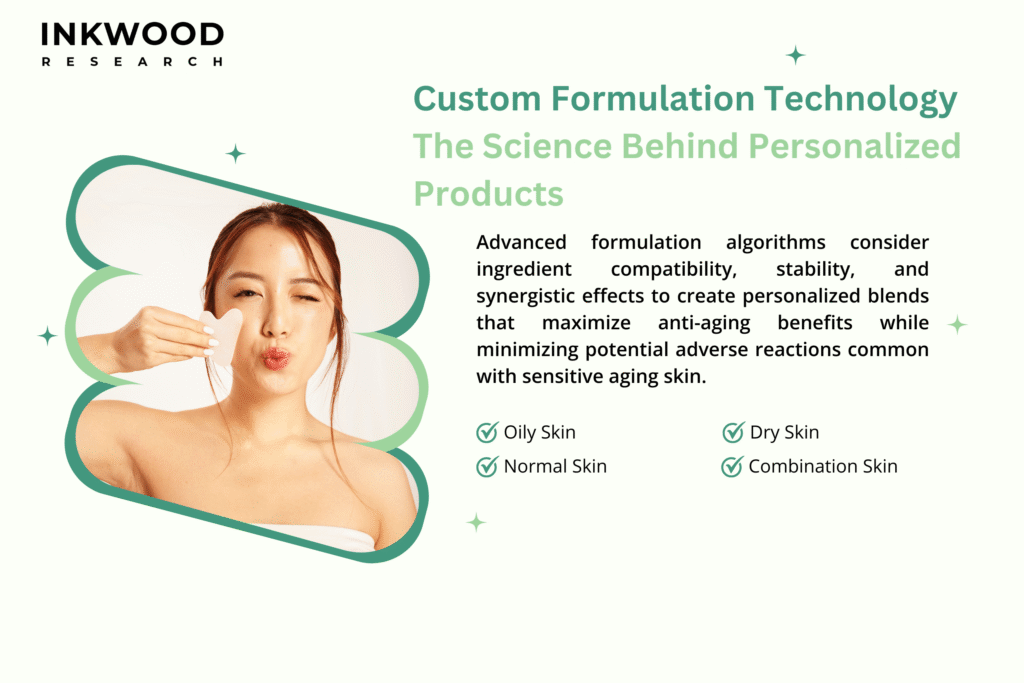
Additionally, custom technology enables real-time creation of personalized anti-aging products tailored to individual skin traits and environmental conditions. For instance, L’Oréal’s Perso device exemplifies this innovation, creating custom moisturizers, serums, and under-eye treatments on demand. This is based on AI analysis of skin condition, external factors, and personal preferences.
Further, this technology integrates multiple data streams. These include local weather conditions, UV index, pollution levels, and individual skin responses to create optimized solutions. Moreover, the system adjusts ingredient concentrations and combinations for morning versus evening applications. In turn, they ensure optimal efficacy throughout the day for aging skin.
Also, advanced AI systems consider ingredient compatibility and stability to create personalized blends. They maximize anti-aging benefits while minimizing potential adverse reactions common with sensitive aging skin. This approach, in turn, represents a fundamental shift from mass production to individualized manufacturing.
Consumer demand for customized solutions is increasing as people become more educated about ingredient science. Accordingly, brands are investing heavily in AI-driven technologies that can deliver truly personalized skin care solutions at scale.
Genomic Integration: DNA-Based Anti-Aging Solutions
Integrating genetic testing with AI-driven formulas represents the cutting edge of tailored anti-aging treatment, enabling brands to develop products based on individual genetic tendenciesto skin aging processes. Genetic analysis identifies variations in genes controlling collagen synthesis, antioxidant production, and inflammatory responses that influence how skin ages.
Further, artificial intelligence models analyze genetic data alongside visible characteristics to predict optimal ingredient combinations for each individual. For example, variations in the COL1A1 gene affecting collagen production may indicate enhanced responsiveness to peptide-based treatments. Similarly, differences in antioxidant enzyme genes suggest custom vitamin C requirements for aging skin.
Plus, this genomic approach enables proactive treatment strategies that address aging processes before visible changes occur. By understanding genetic risk factors for photoaging, loss of elasticity, and pigmentation changes, artificial intelligence (AI) systems can suggestions preventive treatments tailored to individual genetic profiles. In addition, older adults can begin targeted anti-aging interventions based on their genetic dispositions.
Globally, the skin care industry is increasingly incorporating genetic testing into anti-aging protocols. Consumers can receive scientifically-based products that address their unique genetic makeup and aging risks, creating more effective and targeted treatment approaches.
Environmental Adaptation: Real-Time Responsive Formulations
Advanced AI platforms incorporate real-time climate data to optimize anti-aging products for current conditions that affect skin aging. Integration with weather databases, air quality monitors, and UV index measurements enables adjustments that address stressors affecting aging skin.
Climate-responsive solutions automatically adjust hydration levels based on humidity, increase antioxidant concentrations during high pollution periods, and modify UV protection factors according to seasonal changes. Also, this intelligence ensures that anti-aging treatments remain optimally effective regardless of external conditions that can accelerate skin aging.
Further, seasonal adaptation AI systems recognize that aging skin has different needs throughout the year, modifying formulations to address winter dryness, summer UV exposure, and transitional period sensitivities. This approach maximizes treatment efficacy while preventing over-treatment or under-protection during varying conditions.
In addition, the anti-aging products market increasingly demands solutions that adapt to real-world conditions affecting skin health. In this regard, AI-driven environmental adaptation represents a significant advancement in personalized skin care that addresses the complex interplay between aging skin and environmental factors.
Machine Learning Algorithms: Continuous Optimization and Learning
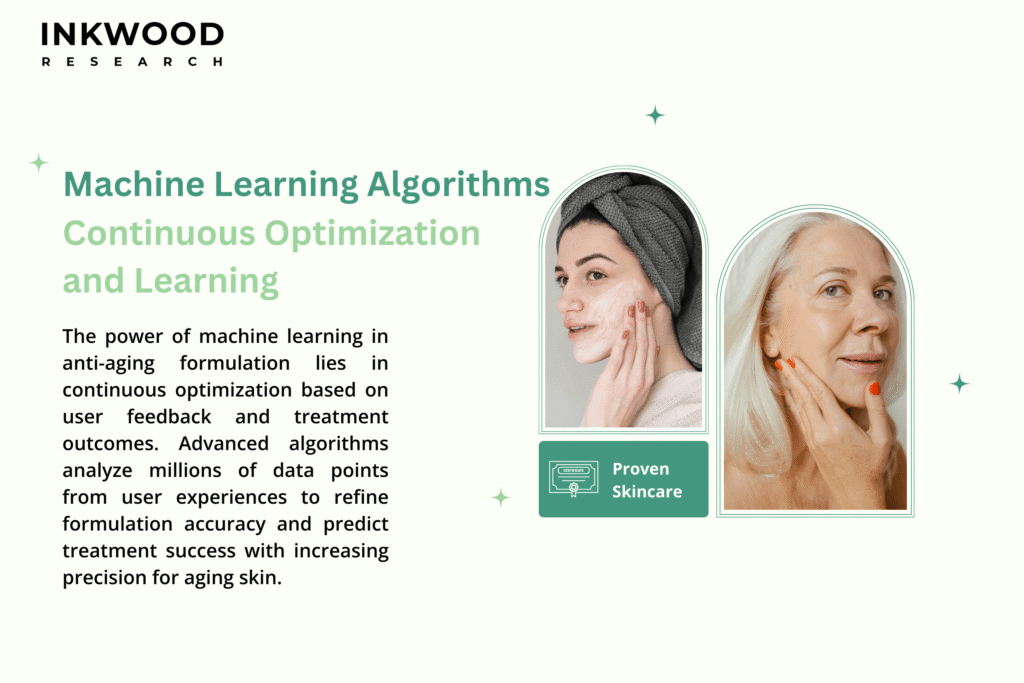
Machine learning in anti-aging lies in continuous optimization based on user feedback and treatment outcomes. Advanced AI systems analyze millions of data points from user experiences to refine accuracy and predict treatment success with increasing precision for aging skin.
Platforms like Proven Skincare utilize the “Skin Genome Project” to analyze over 20,000 ingredients, 100,000 products, and millions of customer testimonials. Moreover, they create hyper-personalized solutions that continuously improve based on collective learning from user experiences with anti-aging treatments.
Predictive modeling identifies which ingredient combinations work best for specific skin types, ages, and conditions, enabling proactive adjustments before visible improvements plateau. Additionally, this approach transforms anti-aging treatment from reactive problem-solving to proactive optimization of skin health trajectories for older adults.
In all, the skin care industry benefits from these machine learning insights that reveal patterns invisible to traditional analysis methods. Brands can develop more effective anti-aging products while reducing the trial-and-error period typically associated with finding the right skin care regimen.
Biomarker Monitoring: Precision Tracking of Treatment Efficacy
AI-powered biomarker monitoring represents a breakthrough in measuring anti-aging treatment efficacy at the molecular level, enabling precise tracking of treatment progress beyond visible improvements. Essentially, advanced analysis techniques measure collagen density, elastin integrity, and cellular turnover rates to provide objective treatment tests for aging skin.
Real-time biomarker analysis through non-invasive techniques enables immediate formulation adjustments when treatment progress stagnates or accelerates. This precision monitoring approach optimizes treatment protocols for maximum efficacy while minimizing unnecessary ingredient exposure in sensitive aging skin.
Furthermore, longitudinal biomarker tracking creates individual aging profiles that predict future treatment needs and identify optimal intervention timing. This predictive capability enables proactive treatment modifications that maintain optimal skin health rather than simply responding to aging changes after they occur.
Moreover, the anti-aging products market increasingly relies on biomarker data to validate treatment efficacy and guide product development. Also, companies investing in biomarker monitoring technologies gain competitive advantages through more precise and effective anti-aging solutions.
Wearable Technology Integration: Holistic Anti-Aging Monitoring
Wearable technology integration with AI-driven anti-aging platforms creates comprehensive monitoring systems. Accordingly, smartwatches and fitness trackers monitor sleep quality, stress levels, and UV exposure that directly impact skin aging processes in older adults.
This holistic approach recognizes that anti-aging treatment efficacy depends on lifestyle factors, including hydration, nutrition, and environmental exposure. AI algorithms integrate wearable data with topical treatment protocols to optimize overall anti-aging strategies that address both internal and external aging factors.
In addition, stress monitoring through heart rate variability and sleep quality analysis enables formulation adjustments that address stress-induced skin aging through targeted ingredient selection. This comprehensive approach creates truly custom anti-aging strategies that address individual lifestyle patterns and their impact on skin health.
Artificial Intelligence in Ingredient Discovery and Optimization
- AI algorithms are shifting anti-aging ingredient discovery by analyzing molecular structures, predicting efficacy, and identifying novel compounds with anti-aging potential. Machine learning platforms screen thousands of potential ingredients to identify optimal combinations for specific skin aging concerns.
- Computational chemistry models predict how ingredients will interact with aging skin at the molecular level, enabling the selection of compounds with maximum efficacy and minimal side effects. This approach significantly accelerates ingredient development while reducing the need for extensive animal testing in the skin care industry.
- AI-driven ingredient optimization considers factors like penetration enhancement and stability improvement to maximize anti-aging benefits. This systematic approach to ingredient selection represents a core improvement over traditional trial-and-error methods.
In essence, the anti-aging products market benefits from AI-discovered ingredients that show superior efficacy compared to traditional compounds. Companies leveraging AI for ingredient discovery gain competitive advantages through more innovative and effective skin care formulations.
Predictive Analytics: Anticipating Future Skin Aging Patterns
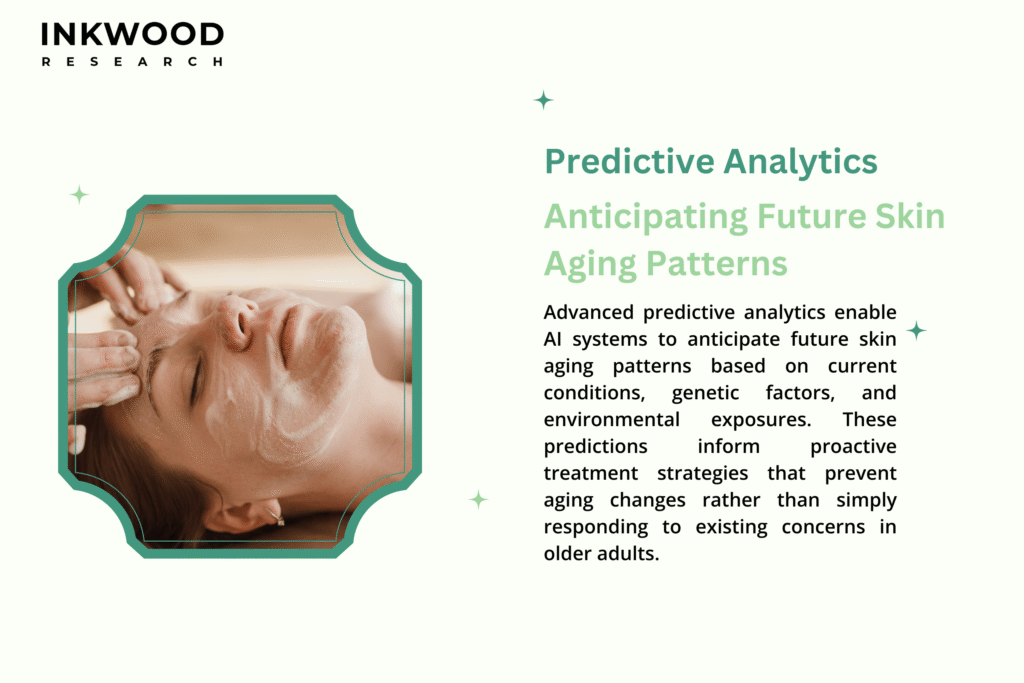
In essence, advanced predictive analytics enable AI systems to anticipate future skin aging patterns based on current conditions, genetic factors, and environmental exposures. Further, these predictions inform proactive treatment strategies that prevent aging changes rather than simply responding to existing concerns in older adults.
Predictive modeling analyzes historical skin data, lifestyle factors, and genetic tendencies to forecast when specific aging changes are likely to occur. This foresight enables early intervention with targeted treatments that prevent or minimize age-related skin changes. Consumers can maintain healthier skin for longer periods through predictive anti-aging strategies.
Long-term treatment planning based on predictive analytics ensures that anti-aging strategies remain effective over time. Such a proactive approach maximizes treatment efficacy while optimizing the cost-effectiveness of long-term anti-aging care. Brands investing in predictive analytics technologies can offer more effective anti-aging solutions to their customers.
Market Transformation: From Products to Platforms
Moving toward AI-driven personalization is fundamentally transforming the anti-aging market from product-centric to platform-centric business models. Beauty brands are evolving into technology companies that provide ongoing personalized services rather than one-time anti-aging product purchases.
- Subscription models enable continuous formulation optimization based on changing skin needs, seasonal variations, and treatment progress. This approach creates stronger customer relationships while ensuring optimal treatment efficacy through continuous monitoring and adjustment for aging skin.
- Platform-based business models enable brands to collect vast amounts of user data that inform product development, marketing strategies, and expansion into new therapeutic areas. This data-driven approach creates competitive advantages that are difficult for traditional beauty companies to replicate in the anti-aging products market.
In conclusion, the market is witnessing a fundamental shift toward service-based models that prioritize long-term customer relationships over single-transaction sales. Companies successfully implementing platform strategies are positioned to dominate the future anti-aging market landscape.
Key Takeaways
- Personalization at Scale: AI enables truly customized anti-aging formulations that adapt to individual skin characteristics, genetic factors, and environmental conditions in real-time.
- Data-Driven Precision: Machine learning systems analyze millions of data points to optimize treatment outcomes and predict the most effective ingredient combinations for specific skin types.
- Proactive Prevention: Predictive analytics and biomarker monitoring enable early intervention strategies that prevent aging changes rather than simply treating existing concerns.
- Holistic Integration: Wearable technology and environmental data create comprehensive anti-aging strategies that address lifestyle factors beyond topical treatments.
- Market Evolution: The shift from product-centric to platform-centric business models is creating new opportunities for continuous, personalized skin care services.
Future Horizons: Next-Generation AI Applications
The future of AI in anti-aging extends toward even more complex applications, including real-time skin chemistry analysis, predictive aging simulation, and fully automated formulation laboratories. Such emerging technologies promise to further personalize and optimize anti-aging treatments for older adults.
Integration with advanced tech, including stem cell research, regenerative medicine, and nanotechnology, will create AI-guided treatments that address aging at the cellular level. In fact, such approaches represent the convergence of artificial intelligence with cutting-edge anti-aging science that could revolutionize how we approach skin aging.
Virtual reality and augmented reality integration will enable consumers to visualize treatment outcomes before beginning therapy, improving treatment compliance and satisfaction among older adults who want to understand expected results. Immersive technologies like these will transform how consumers interact with and understand their personalized anti-aging treatments. Accordingly, companies investing in next-generation AI applications will lead the transformation of the skin care industry.
Frequently Asked Questions (FAQs)
AI skin analysis platforms like Haut.AI achieve 98% diagnostic accuracy across diverse skin types by analyzing over 150 facial biomarkers. While highly accurate for routine assessment, AI complements rather than replaces dermatologist expertise, particularly for complex skin conditions. The technology excels at detecting subtle changes invisible to the human eye and tracking progress over time.
Initially, AI-personalized anti-aging products may have higher upfront costs due to advanced technology and custom formulation. However, the precision targeting often leads to better results with fewer products needed, potentially offering better long-term value. As the technology scales, costs are expected to decrease while maintaining superior personalization capabilities.
AI-personalized anti-aging treatments typically show initial improvements within 4-6 weeks, with more significant results visible after 8-12 weeks of consistent use. The AI continuously optimizes formulations based on skin response, often leading to faster and more sustained improvements compared to traditional trial-and-error approaches to finding effective products.