
Estimated Reading Time: 8 minutes
This blog is written for real estate developers, homebuilders, and housing authorities looking for faster ways to deliver homes. Construction executives facing tight labor markets will also find practical insight here. Additionally, investors, policymakers, and emergency planners can use this analysis to see where modular construction creates real value. It also shows where off-site construction still faces limits.
This analysis is brought to you by Inkwood Research, a market intelligence firm focused on construction technology and housing supply. We track off-site manufacturing trends across North America, Europe, and Asia-Pacific. Our analysts study volumetric modular systems, prefabricated homes, and public housing programs. We also work alongside developers, manufacturers, and investors who want clear, evidence-based guidance on where factory-built housing is heading next.
TL;DR
The modular construction market is moving from niche to necessity. According to our analysis, it is projected to reach US$137.42 billion, growing at a 6.68% CAGR. A deepening housing shortage, a persistent construction labor shortage, and the need for fast disaster recovery housing are pushing builders toward off-site construction. As a result, prefabricated homes, volumetric modular units, and factory-built housing now play a bigger role in delivering affordable housing and modular homes at scale.
Who Will Find This Blog Useful?
This blog is for agribusiness leaders, farm equipment manufacturers, and agritech startups planning growth in Asia-Pacific. Investors evaluating drone and sensor companies will also find it useful. In addition, policymakers shaping agritech subsidies, cooperative managers, and sustainability teams can use these insights. Together, they will see where precision farming delivers practical value today.
Table of Contents
- What Is Modular Construction and Why Is the Modular Construction Market Growing?
- Can Modular Construction Solve the Housing Shortage?
- Is Modular Construction Cheaper Than Traditional Construction?
- How Fast Can Modular Construction Deliver in a Crisis?
- Who Is Leading the Modular Construction Market Today?
- What Is Holding the Modular Construction Market Back?
- Key Takeaways
- Conclusion
- Frequently Asked Questions
1. What Is Modular Construction and Why Is the Modular Construction Market Growing?
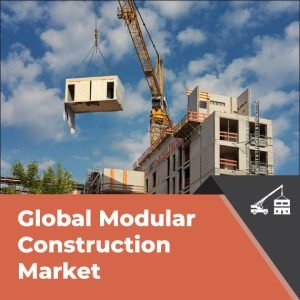
Picture a house that is mostly finished before it ever reaches the street. That is the basic promise of modular construction. Builders assemble rooms or entire sections inside a factory and then ship them to the site for final assembly. Meanwhile, crews on the ground prepare foundations and utilities, so two critical tasks run side by side instead of one after the other.
According to our analysis, the global modular construction market is projected to reach US$137.42 billion, growing at a 6.68% CAGR. That steady climb reflects a broader shift in how developers think about speed, risk, and cost certainty.
Volumetric Modular vs. Panelized Off-Site Construction
Off-site construction comes in a few main forms, and each one suits a different type of project:
- Volumetric modular: Three-dimensional boxes, often fully finished with fixtures, that stack like building blocks.
- Panelized systems: Flat wall, floor, and roof panels that crews erect on site.
- Hybrid approaches: Factory-built bathroom or kitchen pods placed inside a conventionally built frame.
Because each method moves a different share of work into the factory, the right choice usually depends on site access, building height, and local codes.
2. Can Modular Construction Solve the Housing Shortage?
Housing affordability has become a shared pain point across many economies, and supply sits at the heart of the problem. In the United States, the Census Bureau reports that 1,005,000 single-family homes were completed in 2025. Even so, many households still struggle to find affordable housing, and the housing shortage remains a daily reality. Across the Atlantic, the UK government has committed to delivering 1.5 million homes in this Parliament. That goal has put modern methods of construction firmly on the policy agenda.
Why Factory-Built Housing Helps Close the Supply Gap
So, where does modular construction fit into this picture? Based on our research, factory-built housing tackles three bottlenecks at once:
- Speed: Site work and module production happen at the same time, which compresses schedules.
- Labor efficiency: Factories rely on repeatable indoor tasks, which eases pressure from the construction labor shortage.
- Predictability: Controlled conditions reduce weather delays and costly rework.
That said, modular homes will not fix affordability on their own. Land costs, zoning, and financing still shape what gets built, so the strongest gains come when policy and production move together.
Inkwood Research Client Spotlight: Sizing a Regional Modular Housing Opportunity
A North American residential developer approached Inkwood Research to test whether volumetric modular could support its affordable housing pipeline. Our team mapped regional demand, factory capacity within practical shipping distances, and local code readiness. As a result, the client narrowed its focus to the markets where off-site construction offered the clearest schedule and cost advantages.
3.Is Modular Construction Cheaper Than Traditional Construction?
It is one of the most common questions developers ask, and the honest answer is that it depends. Modular construction rarely wins on materials alone; instead, its savings usually come from time. When a project opens months earlier, owners start earning revenue sooner and carry construction loans for a shorter period.
Marriott offers a useful example. The hotel group began studying modular construction in 2014 to offset delays linked to a construction labor shortage. Since then, its design team has said modular production can shave several months off a hotel schedule.
Where the Savings in Modular Construction Come From
- Shorter financing periods, since faster delivery reduces interest costs.
- Less waste, because factories cut materials to precise specifications.
- Fewer delays, as indoor production avoids most weather disruptions.
- Earlier revenue, especially for hotels, student housing, and rental projects.
However, those advantages can shrink when transport distances grow or when a design needs heavy customization. For that reason, our analysis suggests modular performs best on repeatable building types with standardized layouts.
4.How Fast Can Modular Construction Deliver in a Crisis?
Few moments reveal the value of speed more clearly than an emergency. In early 2020, Wuhan’s Huoshenshan Hospital was built in about 10 days with prefabricated units, giving the city a dedicated facility as COVID-19 cases surged.
Disaster recovery housing follows a similar logic. After the August 2023 Lahaina wildfire, FEMA completed its Kilohana temporary housing community on a hillside where no homes had stood before. Notably, FEMA said these were its first prefabricated, modular temporary homes to meet the International Building Code. They are also designed to last 30 years or more.
Lessons From Rapid Modular Deployment
- Prefabricated units can be produced far from the disaster zone while crews prepare the site.
- Durable modular homes can later be moved or reused, unlike short-life emergency shelters.
- Local contractors still matter, and Maui-based Alpha Inc. helped install the Kilohana homes.
Consequently, governments are starting to treat modular capacity as part of resilience planning rather than a last-minute fix.
Inkwood Research Client Spotlight: Building a Disaster-Ready Supply Strategy
A public-sector infrastructure advisor engaged Inkwood Research to assess how quickly modular manufacturers could respond to large displacement events. We profiled production capacity, logistics routes, and code compliance across key suppliers. Consequently, the client built a pre-qualified supplier framework that shortens procurement timelines whenever emergency housing is needed.
Know more about the market and its players
5.Who Is Leading the Modular Construction Market Today?
Leadership in the modular construction market looks different depending on the segment, and a handful of organizations show how the field is evolving.
Homebuilders Scaling Factory-Built Housing
Sekisui House, the Japanese homebuilder long known for industrialized housing, completed its acquisition of M.D.C. Holdings in April 2024. The deal widened its U.S. reach across 16 states, giving a factory-minded builder a far larger platform in one of the world’s biggest housing markets.
Hotels, Contractors, and the Public Sector
- Marriott International planned its AC Hotel New York NoMad as the world’s tallest modular hotel, with guestrooms built off-site and stacked on Sixth Avenue.
- Skystone Group served as general contractor and modular manufacturer on that same Manhattan tower.
- FEMA and Alpha Inc. showed in Hawaii that modular homes can serve as code-compliant disaster recovery housing.
Taken together, these moves suggest that modular construction is no longer just a product category. Instead, it is becoming a strategy that builders, hotel brands, and governments actively pursue.
Get a free sample of the report
6.What Is Holding the Modular Construction Market Back?
Despite the momentum, factory-built housing still faces real friction. During a September 2024 House of Lords debate, members noted that the sector has seen a number of businesses fail in recent years. Understandably, lenders and buyers have become more cautious.
The Main Barriers to Modular Construction
- Demand volatility: Factories need a steady order book to stay profitable.
- Transport limits: Road rules restrict module size and shipping distance.
- Code fragmentation: Different local rules make standard designs harder to scale.
- Financing gaps: Lenders often struggle to value off-site progress.
Fortunately, these challenges are solvable. Standardized designs, public-sector pipeline commitments, and clearer lending rules can help manufacturers plan with confidence.
Inkwood Research Client Spotlight: De-Risking a Modular Factory Investment
An infrastructure investor asked Inkwood Research to evaluate a proposed modular housing plant before committing capital. Our analysts stress-tested regional demand, competing capacity, and order-book stability. Therefore, the investor restructured its entry plan around anchor contracts, which reduced its exposure to the demand swings that have hurt other off-site construction ventures.
7.Key Takeaways
- The modular construction market is projected to reach US$137.42 billion at a 6.68% CAGR, according to our analysis.
- Housing supply targets in the U.S. and UK keep off-site construction high on the policy agenda.
- Savings from modular construction come mainly from speed, lower financing costs, and less waste.
- Projects from Wuhan to Lahaina show how prefabricated buildings support emergency and disaster recovery housing.
- Sekisui House, Marriott, Skystone Group, and FEMA illustrate how builders and governments are scaling factory-built housing.
- Steady demand, standard designs, and better financing remain the keys to long-term growth.
Conclusion
Modular construction has spent decades as a promising idea, and today it is finally earning a place in mainstream housing strategy. The housing shortage, the construction labor shortage, and disaster recovery needs are all adding pressure. As a result, factory-built housing is becoming a practical tool rather than an experiment. Still, success depends on picking the right projects, partners, and markets.
Inkwood Research helps developers, manufacturers, and investors make those choices with confidence. Connect with our team for a consultation on how our modular construction market intelligence can support your next move.
Frequently Asked Questions
Is modular construction cheaper than traditional construction?
Not always on materials. However, faster schedules, shorter financing periods, and less waste often make modular construction more cost-effective overall.
How long does it take to build a modular home?
Timelines vary by project. Because factory production and site preparation run at the same time, modular homes are usually finished faster than site-built homes.
Are modular homes as durable as site-built homes?
Yes, when built to local codes. FEMA’s Kilohana modular homes, for example, meet the International Building Code and are designed to last decades.
What is the modular construction market size?
According to our analysis, the modular construction market is projected to reach US$137.42 billion, growing at a 6.68% CAGR.
How does modular construction help with disaster recovery?
Factories can build homes away from the affected area while crews prepare sites, so displaced families can move into safe housing much sooner.
Can modular construction solve the housing shortage?
It can help significantly by speeding up delivery. Even so, land, zoning, and financing reforms are also needed to improve affordable housing supply.