Table of Contents

This analysis draws from Inkwood Research’s proprietary intelligence on Thailand’s integrated operating room market ecosystem. Our research team specializes in Southeast Asian healthcare infrastructure, advanced surgical technologies, and medical tourism dynamics. Through strategic partnerships with healthcare technology providers and regional hospital networks, we deliver authoritative insights on Thailand’s position as a premier destination for complex surgical procedures requiring hybrid OR capabilities.
TLDR
Thailand’s hybrid operating room market reaches unprecedented momentum as medical tourism surges. Advanced angiography systems, CT scanners, and MRI technologies transform surgical capabilities nationwide. Bangkok hospitals lead adoption with JCI-accredited facilities. Cardiovascular surgery, neurosurgery, and orthopedic procedures drive investment. Market projections show $20.18 million in 2026, expanding to $58.58 million by 2034. International patients seeking world-class care fuel demand. Operating room fixtures and audiovisual display systems enhance precision. Government support strengthens the healthcare infrastructure continuously.
Healthcare technology investors, medical tourism operators, hospital administrators, surgical equipment manufacturers, cardiovascular specialists, and healthcare infrastructure developers will discover essential intelligence on Thailand’s hybrid OR expansion. Regional health policymakers, international patient facilitators, and medical device distributors gain strategic insights into Southeast Asia’s fastest-growing surgical technology market for informed decision-making.
Thailand’s Medical Tourism Surge Drives Technology Adoption
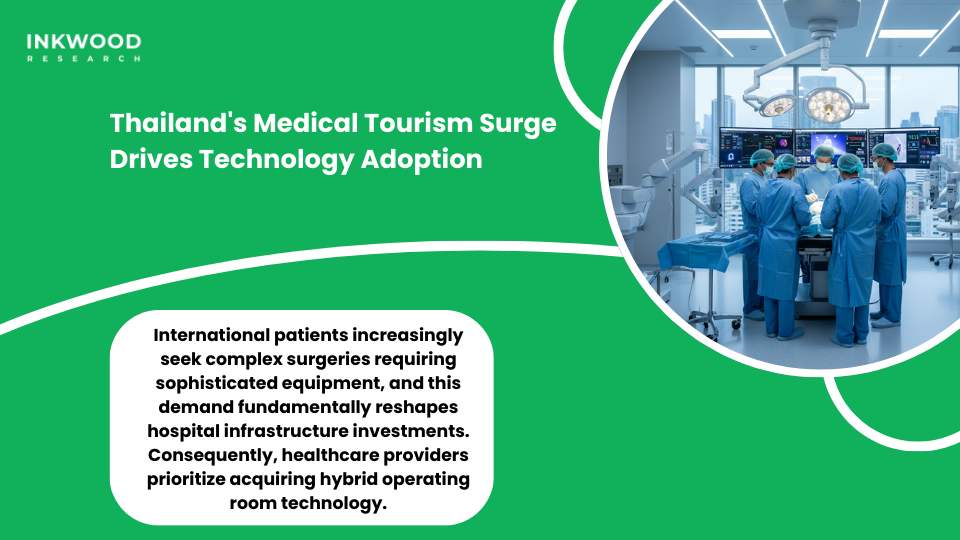
Bangkok’s private hospitals have witnessed an extraordinary transformation this decade. Medical tourism propels Thailand toward becoming Southeast Asia’s premier healthcare destination. According to industry data, Thailand maintains 63 JCI-accredited facilities as of early 2025. International patients increasingly seek complex surgeries requiring sophisticated equipment, and this demand fundamentally reshapes hospital infrastructure investments. Consequently, healthcare providers prioritize acquiring hybrid operating room technology.
Thailand’s hybrid operating room market demonstrates remarkable momentum. Market intelligence indicates valuations reaching $20.18 million in 2026. Furthermore, projections extend to $58.58 million by 2034, representing 14.25% compound annual growth. These figures reflect strategic infrastructure development aligning with medical tourism expansion. Bumrungrad International Hospital, Samitivej Hospitals, and Bangkok Hospital lead technology adoption.
Medical procedures requiring real-time imaging drive hospital investments forward. In this regard, cardiovascular interventions, neurosurgical procedures, and orthopedic surgeries benefit significantly from hybrid OR capabilities. Traditional operating rooms no longer meet these advanced surgical demands. Meanwhile, patient safety requirements intensify globally. Hospitals must demonstrate technological sophistication to attract international clientele.
Government Support Strengthens Healthcare Infrastructure
Thailand’s government actively promotes medical tourism through strategic initiatives. The Thailand Board of Investment offers incentives encouraging healthcare technology investments. Tax exemptions benefit hospitals importing advanced surgical equipment. Moreover, the Medical Hub Project supports infrastructure modernization nationwide. These policies create favorable conditions for hybrid OR adoption.
Regulatory frameworks facilitate technology integration within existing hospital systems. Healthcare facilities receive streamlined approval processes for equipment installations. Additionally, medical tourism visa policies attract international patients seeking treatment. The government recognizes healthcare as a critical economic sector. Investment continues flowing toward surgical technology infrastructure development.
Integrated Operating Room Systems Transform Surgical Capabilities
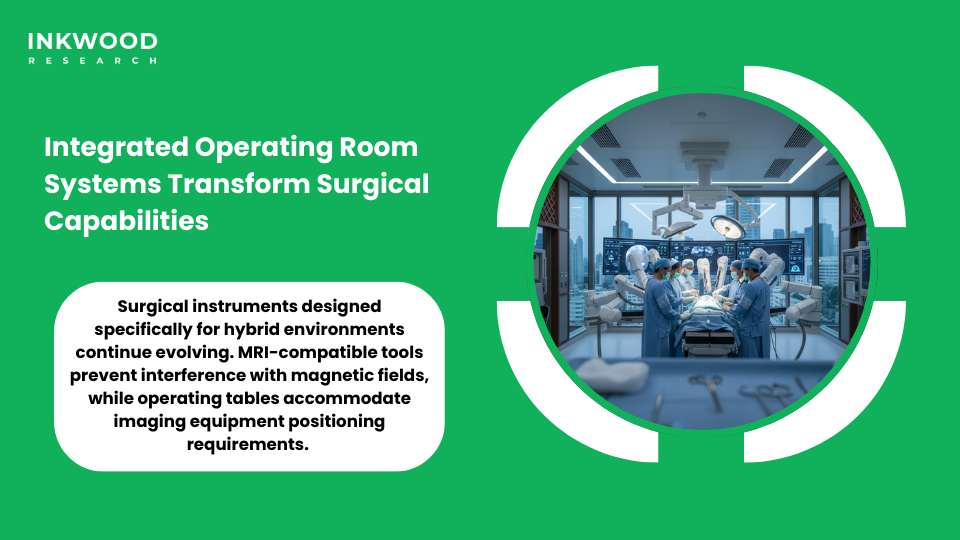
Hybrid operating rooms combine diagnostic imaging with surgical intervention capabilities. Unlike conventional theaters, these facilities integrate CT scanners, angiography systems, and MRI equipment directly. Surgeons perform procedures without repositioning patients between departments. This integration reduces surgical time dramatically. Furthermore, complication rates decrease through real-time imaging guidance.
Angiography systems represent core components within Thailand’s hybrid ORs. Cardiovascular specialists utilize fluoroscopy for minimally invasive procedures. These systems provide high-resolution imaging during coronary interventions. Subsequently, patient recovery times shorten considerably. Hospitals report improved surgical outcomes through enhanced visualization capabilities.
CT scanners installed within operating theaters enable immediate diagnostic confirmation. Neurosurgeons locate tumors precisely before initiating procedures. Operating room fixtures accommodate bulky imaging equipment without compromising sterility. Audiovisual display systems present imaging data across multiple screens. Surgical teams access information seamlessly throughout procedures.
Advanced Imaging Devices Enhance Surgical Precision
MRI scanners within hybrid ORs offer unprecedented soft tissue visualization. Neurosurgical procedures benefit enormously from intraoperative MRI capabilities. Surgeons verify complete tumor resection before closing surgical sites. This technology reduces reoperation rates significantly. Consequently, patient satisfaction improves alongside clinical outcomes.
Surgical instruments designed specifically for hybrid environments continue evolving. MRI-compatible tools prevent interference with magnetic fields, while operating tables accommodate imaging equipment positioning requirements. These specialized components increase hybrid OR construction costs substantially. However, hospitals justify investments through enhanced surgical capabilities and patient outcomes.
Market Dynamics and Growth Trajectory

Thailand’s integrated operating room market experiences accelerating growth momentum. The projected 14.25% CAGR from 2026 through 2034 reflects robust demand fundamentals, with medical tourism volumes correlating directly with hybrid OR availability. Hospitals lacking advanced surgical technology lose competitive positioning. Therefore, investment cycles intensify across private healthcare networks.
Cost-effectiveness distinguishes Thailand’s healthcare sector globally. Complex surgeries cost 50-70% less than Western equivalents. This pricing advantage attracts patients from developed economies. Meanwhile, technology standards match or exceed international benchmarks. Hybrid ORs demonstrate Thailand’s commitment to world-class surgical capabilities.
Regional competition influences market development significantly. Singapore and Malaysia also pursue medical tourism leadership. Thailand differentiates through scale, affordability, and JCI accreditation density. Hybrid OR investments strengthen this competitive positioning. Hospitals recognize technology as essential for capturing international patient volumes.
Investment Patterns Shape Infrastructure Development
Private hospital groups lead hybrid OR adoption across Thailand. Bangkok Dusit Medical Services operates extensive healthcare networks. Similarly, Bumrungrad International Hospital invests heavily in surgical technology. These organizations possess capital resources for substantial infrastructure projects. Consequently, Bangkok concentrates the highest density of hybrid operating rooms.
Equipment manufacturers recognize Thailand as a strategic growth market. Siemens Healthineers, GE Healthcare, and Philips establish regional presence. These companies provide installation support and ongoing maintenance services. Moreover, they offer training programs for surgical teams. This ecosystem development accelerates hybrid OR adoption rates.
Leading Hospital Networks and Technology Investments
- Bumrungrad International Hospital maintains its position as Thailand’s medical tourism flagship. The facility operates multiple hybrid ORs equipped with comprehensive imaging capabilities. JCI accreditation validates its international quality standards. Furthermore, the hospital employs English-speaking staff to accommodate global patients. This infrastructure attracts complex surgical cases requiring hybrid OR capabilities.
- Samitivej Hospitals invest strategically in pediatric and adult hybrid operating rooms. According to healthcare reports, the network maintains JCI accreditation across facilities. Advanced imaging systems support cardiovascular and neurosurgical programs, and the hospital group targets high-acuity international patients. Technology investments differentiate Samitivej within Thailand’s competitive healthcare landscape.
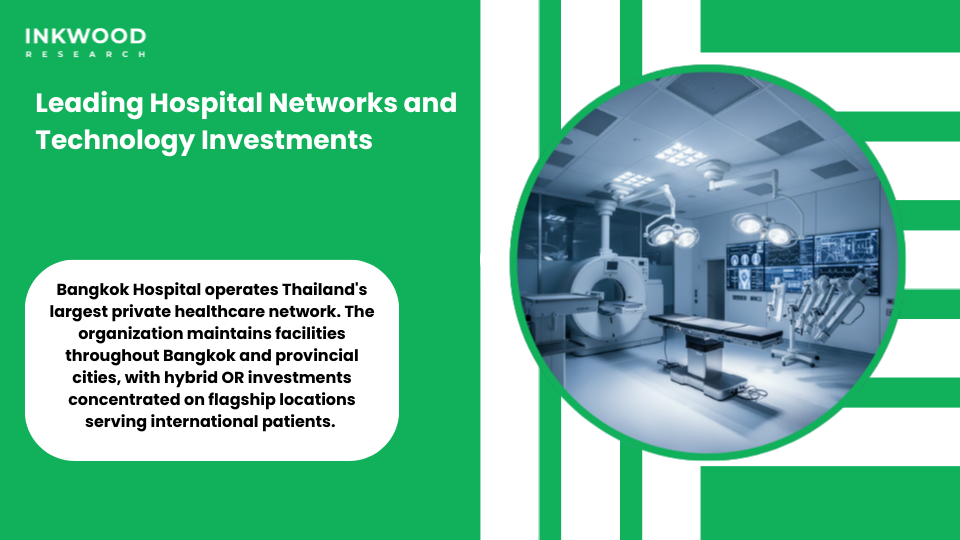
- Bangkok Hospital operates Thailand’s largest private healthcare network. The organization maintains facilities throughout Bangkok and provincial cities, with hybrid OR investments concentrated on flagship locations serving international patients. Moreover, the network leverages scale advantages for equipment procurement. This strategy reduces hybrid OR implementation costs significantly.
MedPark Hospital Showcases Advanced Capabilities
- MedPark Hospital features prominently within Thailand’s hybrid OR landscape. The facility operates over 10 JCI-standard operating rooms, including dedicated hybrid suites. Equipment includes X-ray machines integrated directly into operating tables. This configuration eliminates patient movement during imaging procedures. Subsequently, surgical efficiency improves while maintaining sterility protocols.
- Chulabhorn Hospital demonstrates hybrid OR applications within academic settings. The facility serves both clinical and research purposes. Surgeons collaborate with technology developers, refining hybrid OR workflows. This environment accelerates innovation in surgical techniques. Additionally, medical students gain exposure to cutting-edge technology.
Surgical Specialties Driving Hybrid OR Demand

- Cardiovascular surgery represents the primary driver for hybrid OR adoption, with coronary interventions requiring real-time fluoroscopy throughout procedures. Angiography systems enable minimally invasive approaches, reducing patient trauma. Thailand’s cardiovascular specialists perform thousands of procedures annually. This volume justifies substantial hybrid OR investments.
- Neurosurgery applications demonstrate hybrid OR versatility effectively. Brain tumor resections benefit from intraoperative imaging confirmation. CT scanners verify complete lesion removal before closing. This capability reduces reoperation rates dramatically. Furthermore, spine surgery procedures utilize real-time imaging for implant placement accuracy.
- Orthopedic and trauma surgery increasingly adopts hybrid OR technology. Complex fracture repairs require precise implant positioning. Fluoroscopy confirms alignment before permanent fixation. Additionally, joint replacement procedures also benefit from advanced imaging guidance. Surgeons achieve optimal implant placement, improving long-term outcomes.
Thoracic and General Surgery Applications Expand
- Thoracic surgery procedures leverage hybrid OR capabilities increasingly. Lung tumor localizations utilize CT scanning during minimally invasive approaches. This technology eliminates traditional open surgical techniques. Consequently, patient recovery periods shorten substantially. Hospitals report higher patient satisfaction scores following thoracic procedures.
- General surgery applications continue to develop within hybrid operating rooms. Complex abdominal procedures benefit from real-time imaging guidance. Audiovisual display systems present anatomical information throughout operations. Surgical teams coordinate more effectively with integrated technology. This collaborative environment enhances overall surgical performance.
Strategic Advantages for International Patients
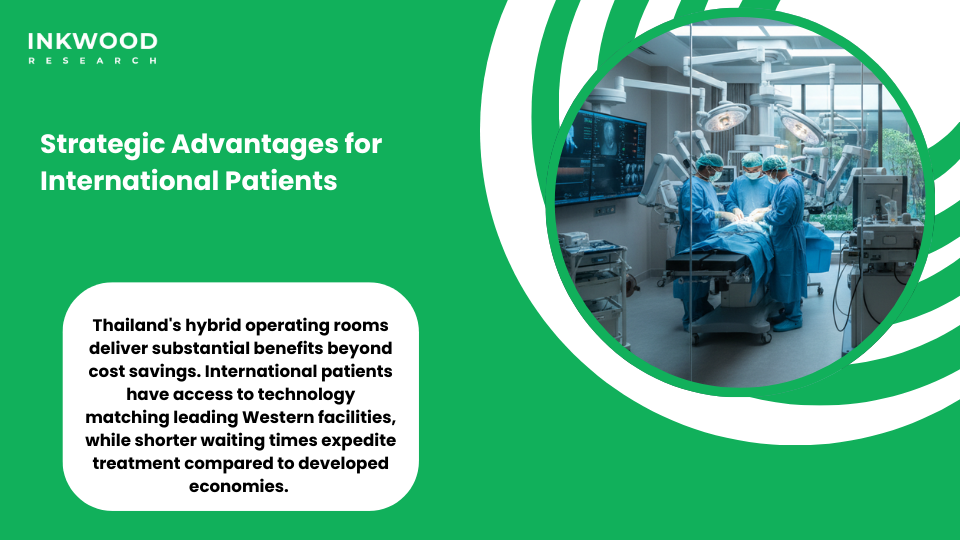
Thailand’s hybrid operating rooms deliver substantial benefits beyond cost savings. International patients have access to technology matching leading Western facilities, while shorter waiting times expedite treatment compared to developed economies. JCI accreditation provides quality assurance for overseas patients. These factors combine to create compelling value propositions.
English-speaking medical staff eliminates communication barriers effectively. Hospitals employ international patient coordinators, facilitating treatment logistics. Additionally, Thailand’s tourism infrastructure supports patient families accompanying travelers. This comprehensive service approach distinguishes the destination. Medical tourists receive clinical excellence alongside hospitality.
Post-operative recovery environments enhance healing outcomes significantly. Private hospital rooms offer hotel-like amenities. Furthermore, Thailand’s climate provides pleasant recuperation conditions. Patients combine medical treatment with vacation experiences. This holistic approach supports both physical and emotional recovery.
Technology Access Expands Treatment Options
Hybrid OR availability enables procedures unavailable in patients’ home countries. Certain minimally invasive techniques require integrated imaging capabilities. Thailand’s hospitals offer these advanced options at accessible prices. Consequently, patients travel internationally seeking optimal surgical approaches. Technology democratizes access to cutting-edge healthcare.
Surgical outcomes data support Thailand’s reputation for clinical excellence. Complication rates compare favorably with international standards. Furthermore, infection control protocols meet rigorous JCI requirements. International patients receive world-class care within state-of-the-art facilities. This performance record sustains Thailand’s medical tourism growth trajectory.
Key Takeaways
- Thailand’s hybrid operating room market projects growth from $20.18 million in 2026 to $58.58 million by 2034, reflecting a 14.25% CAGR driven by medical tourism expansion and advanced surgical technology adoption.
- Leading hospitals, including Bumrungrad International, Samitivej, and Bangkok Hospital, invest strategically in integrated operating room systems featuring angiography systems, CT scanners, and MRI equipment.
- Cardiovascular surgery, neurosurgery, and orthopedic trauma procedures drive hybrid OR adoption, requiring real-time imaging capabilities that traditional operating rooms cannot provide effectively.
- Thailand maintains 62 JCI-accredited facilities as of 2024, demonstrating international quality standards that attract patients from developed economies seeking complex surgical procedures.
- Government initiatives, including the Thailand Board of Investment incentives and the Medical Hub Project, support healthcare infrastructure modernization, creating favorable conditions for technology investments.
- Cost advantages ranging from 50-70% below Western prices, combined with world-class technology and shorter waiting times, position Thailand competitively against regional medical tourism destinations.
Conclusion:
Thailand’s hybrid operating room market demonstrates remarkable momentum, supporting medical tourism leadership. Advanced surgical technology investments transform healthcare infrastructure nationwide. Hospital networks recognize hybrid ORs as essential competitive differentiators. Moreover, government policies create favorable investment environments. These factors converge, accelerating market growth through 2034.
International patients increasingly choose Thailand for complex surgical procedures. Hybrid operating rooms enable minimally invasive approaches previously unavailable. Furthermore, JCI accreditation validates quality standards globally. Cost-effectiveness remains compelling alongside technological sophistication. This combination sustains Thailand’s position as Southeast Asia’s premier medical tourism destination.
The integrated operating room market expansion reflects broader healthcare sector evolution. Surgical specialists demand advanced capabilities matching Western standards. Meanwhile, equipment manufacturers support infrastructure development actively. This ecosystem maturation benefits all stakeholders. Consequently, Thailand strengthens its reputation for delivering exceptional surgical outcomes.
Looking forward, hybrid OR adoption will intensify across Thailand’s hospital networks. Provincial facilities will expand capabilities beyond Bangkok’s concentration. Additionally, new surgical applications will emerge leveraging integrated imaging technology. Market growth projections appear conservative given underlying demand fundamentals. Thailand’s trajectory toward medical tourism dominance continues to accelerate.
For organizations seeking deeper insights into Thailand’s hybrid operating room market or Southeast Asian healthcare technology trends, Inkwood Research offers comprehensive intelligence and strategic consulting services.
Contact our team to explore how these developments align with your investment objectives and operational strategies.
Frequently Asked Questions
What makes Thailand's hybrid operating rooms attractive for international patients?
Thailand combines world-class hybrid OR technology with costs 50-70% below Western prices. JCI-accredited hospitals maintain international standards while offering shorter waiting times. English-speaking staff and comprehensive patient coordination services eliminate barriers. Additionally, Thailand’s tourism infrastructure supports family accompaniment during treatment. This comprehensive approach delivers clinical excellence alongside hospitality.
Which surgical specialties benefit most from Thailand's hybrid operating rooms?
Cardiovascular surgery leads to hybrid OR utilization requiring real-time angiography systems. Neurosurgery benefits from intraoperative CT and MRI imaging capabilities. Orthopedic trauma procedures utilize fluoroscopy for precise implant placement. Additionally, thoracic surgery adopts hybrid technology for lung tumor localizations. These specialties require integrated imaging unavailable in traditional operating rooms.
How does Thailand's hybrid OR market compare regionally?
Thailand’s 62 JCI-accredited facilities exceed regional competitors significantly. Market growth projections at 14.25% CAGR outpace Singapore and Malaysia. Cost advantages distinguish Thailand while maintaining technology parity. Furthermore, medical tourism volumes support infrastructure investments at scale. Government support through the Thailand Board of Investment incentives strengthens competitive positioning sustainably.