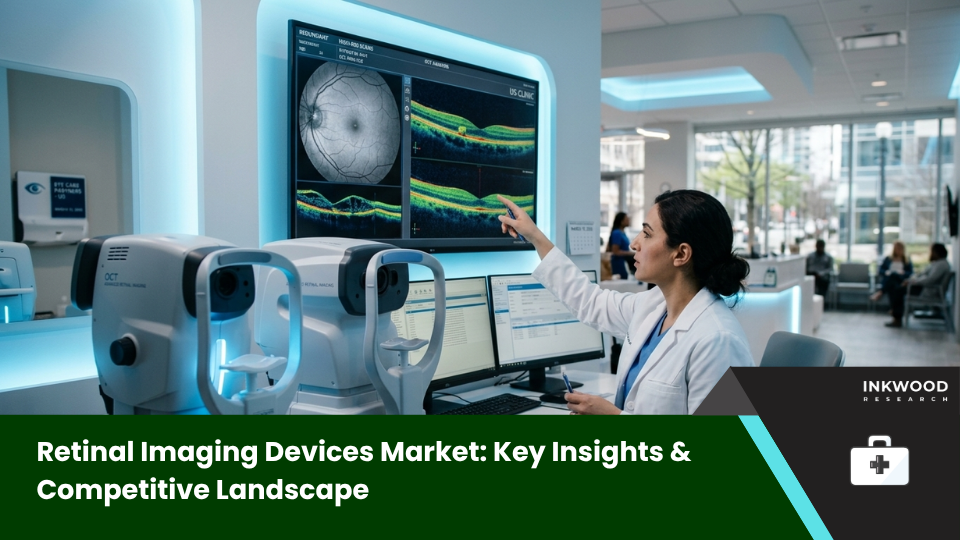
The increasing prevalence of eye diseases, particularly among aging populations, has significantly accelerated demand for retinal imaging devices worldwide. Moreover, advancements in AI, machine learning, and portable ophthalmic imaging devices have fundamentally transformed diagnostic capabilities across clinical settings.
Based on our research, the global retinal imaging devices market is valued at US$4,344.61 million in 2026 and projected to reach US$7,934.97 million by 2034, growing at a CAGR of 7.82% during the forecast period 2026–2034.
This blog examines the competitive landscape of the global retinal imaging devices market, covering key strategic developments, AI-driven innovations, and emerging opportunities across fundus cameras, OCT retinal imaging systems, and widefield retinal imaging platforms.
Strategic Developments by Key Retinal Camera Manufacturers
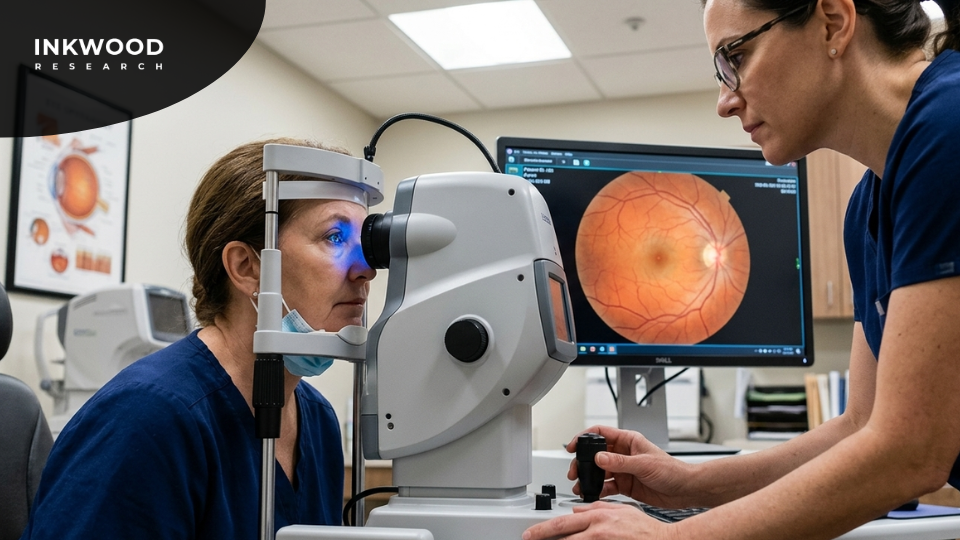
Leading retinal camera manufacturers and ophthalmology imaging system providers continue to redefine industry standards. Their innovations set new benchmarks for diagnostic precision, workflow efficiency, and device accessibility across hospitals, clinics, and community health programs.
- ZEISS: AI-Integrated OCT and Widefield Retinal Imaging Systems
ZEISS continues advancing retinal diagnostic equipment through its expanding ZEISS Retina Workflow, a fully connected, data-driven ecosystem spanning diagnostics, surgery, and post-operative care. At the American Academy of Ophthalmology (AAO) annual meeting in October 2025, ZEISS showcased several significant additions to its retinal imaging systems portfolio.
Most notably, the CIRRUS PathFinder, now CE mark approved and available across CIRRUS 500, 5000, and 6000 devices, introduces AI-powered clinical decision support directly within OCT workflows. Leveraging deep learning algorithms, PathFinder automatically identifies abnormal macular OCT B-scans, streamlining large-volume image review and accelerating surgical planning in high-throughput ophthalmology practices.
Additionally, the CLARUS 700 with ICGA, now with 510(k) clearance and CE approval, delivers high-resolution ultra-widefield imaging with standalone ICG, simultaneous FA-ICG capture, and a new movie mode across all angiography modalities.
Furthermore, the ZEISS CIRRUS 6000 OCT retinal imaging platform, featuring 100,000 A-scans per second and the largest OCT reference database in the US market, provides instantaneous dense data cubes and sub-10-second widefield OCT Angiography capability. These developments reinforce ZEISS’s position as a defining force across high-resolution retinal imaging systems for ophthalmology practices globally.
- Topcon Corporation: AI-Powered Retinal Screening Through Strategic Acquisitions
Topcon Healthcare has made several landmark moves to expand its AI-powered retinal imaging capabilities, anchored by its ‘Healthcare from the Eye’ initiative, a connected care ecosystem that applies AI-powered disease detection to non-invasive retinal imaging.
In a significant 2025 development, Topcon acquired Intelligent Retinal Imaging Systems (IRIS), a US-based provider of cloud-based, camera-agnostic retinal screening technology with an FDA-cleared AI platform. Since its founding in 2012, IRIS has enabled over 1.8 million screenings and identified more than 279,000 cases of diabetic retinopathy across 650+ healthcare organizations. The integration strengthens Topcon’s Harmony platform, unifying imaging, clinical insights, and AI analytics across primary care and eye care settings.
Earlier in May 2025, Topcon also acquired RetInSight GmbH, a Vienna-based innovator in OCT-based AI algorithms for monitoring geographic atrophy, neovascular AMD, diabetic macular edema, and retinal vein occlusion. These strategic moves position Topcon as a dominant force in retinal imaging devices for diabetic retinopathy and teleophthalmology applications.
- NIDEK: High-Speed OCT with Deep Learning Analytics
NIDEK CO., LTD. launched the RS-1 Glauvas Optical Coherence Tomography system in June 2024, targeting high-volume retinal and glaucoma practices. The RS-1 Glauvas delivers a scan speed of up to 250kHz, significantly reducing capture time while addressing patient fixation errors.
Deep learning segmentation, developed in collaboration with Kagoshima University, generates a Structural Normality Map (SN Map) that aids clinicians in detecting minute retinal changes at a glance. This enhances early disease detection accuracy while reducing false positives and unnecessary follow-up visits.
Additionally, the device’s enhanced OCT-Angiography option provides clearer widefield chorioretinal microvasculature imaging, a meaningful advancement for retinal screening devices deployed in community health programs and glaucoma monitoring workflows.
Furthermore, NIDEK’s AFC-330 Non-Mydriatic Auto Fundus Camera has been deployed as part of an active diabetic retinopathy screening project in Vietnam, launched in July 2024 in partnership with Orbis International. By August 2025, over 14,463 patients had been screened across six project sites, with AI identifying signs of referable retinal disease in nearly 25% of cases. This initiative highlights the real-world impact of non-mydriatic retinal imaging devices for rural and underserved population screening.
AI-Powered Retinal Imaging: The New Competitive Frontier
What Diseases Can Retinal Imaging Detect?
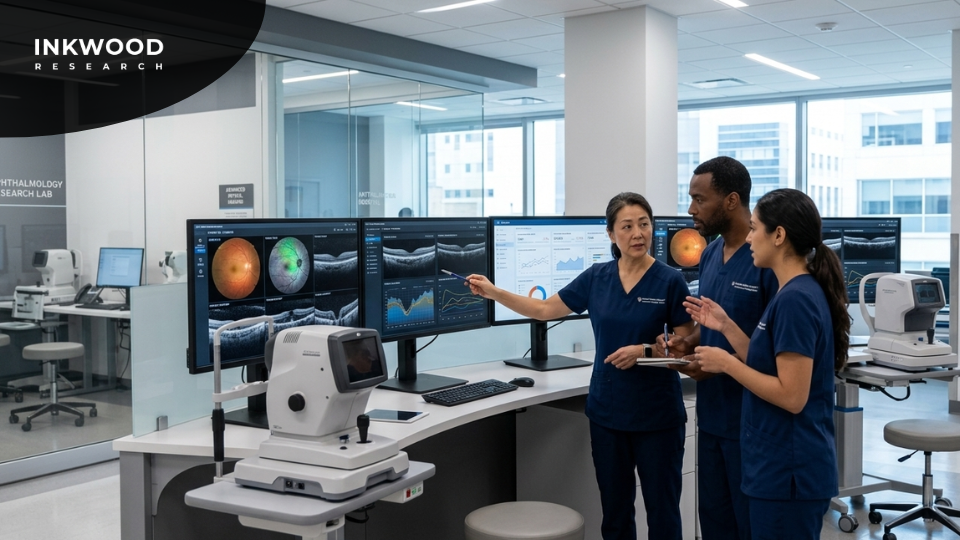
Retinal imaging devices detect a wide spectrum of conditions, including diabetic retinopathy, glaucoma, age-related macular degeneration, hypertensive retinopathy, and inherited retinal diseases. Consequently, AI-powered retinal imaging systems are transforming how clinicians screen, diagnose, and monitor these conditions at scale.
AI Integration Across Retinal Imaging Device Companies
Machine learning algorithms are increasingly embedded within digital fundus cameras, OCT retinal imaging platforms, and non-mydriatic retinal imaging devices. These integrations automate image analysis, improve pattern recognition, and reduce diagnostic errors.
Furthermore, AI-powered retinal imaging systems are enabling early diabetic retinopathy detection, glaucoma screening, and population-level retinal screening programs, particularly valuable for community health programs and primary care clinics serving underserved regions.
Key Segments in the Retinal Imaging Devices Market
- Optical Coherence Tomography (OCT) Devices
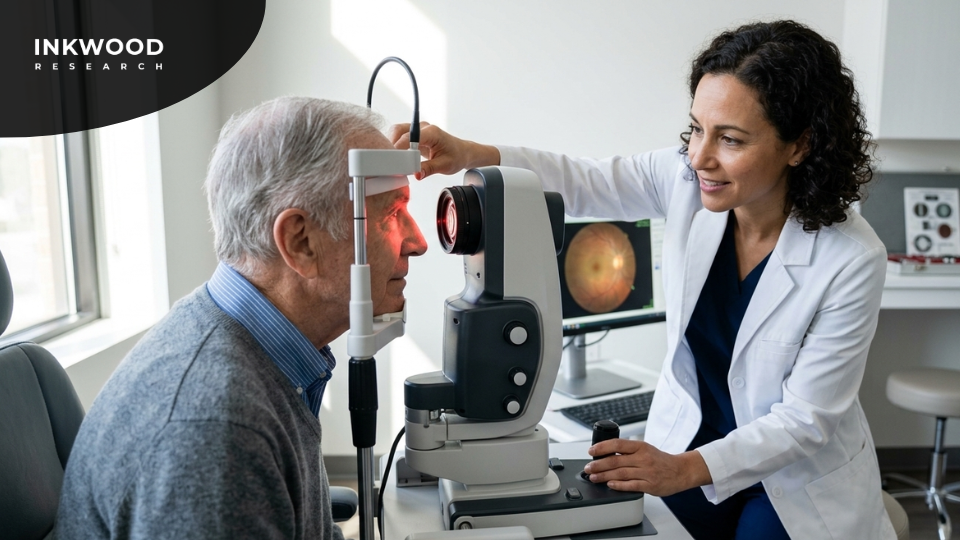
Optical coherence tomography devices represent one of the fastest-growing segments within the global retinal imaging devices industry analysis. OCT retinal imaging provides high-resolution cross-sectional views of retinal layers, enabling precise monitoring of macular degeneration, glaucoma, and diabetic macular edema. Additionally, OCT machine price points have grown more accessible, supporting broader adoption across mid-sized ophthalmology practices and diagnostic imaging centers.
- Fundus Cameras & Digital Fundus Cameras
Fundus cameras, particularly digital fundus cameras, form the backbone of retinal diagnostic equipment in hospital and clinic settings. Based on our analysis, demand for non-mydriatic retinal imaging devices continues rising, as they eliminate pupil dilation requirements and streamline patient flow. Fundus camera price comparison across key retinal camera manufacturers reflects a broad spectrum, from portable fundus cameras for remote screening to high-resolution retinal imaging systems for tertiary care institutions.
- Widefield Retinal Imaging Systems
Widefield retinal imaging systems are gaining significant traction across hospitals and specialized ophthalmology practices. These systems capture a much broader view of the retina compared to conventional devices. Furthermore, widefield retinal imaging for diabetic retinopathy detection and glaucoma monitoring is becoming a preferred modality among retinal imaging device companies targeting high-volume screening programs.
- Portable & Handheld Retinal Imaging Devices
Handheld retinal imaging devices for screening represent a pivotal segment in expanding access across rural clinics and community health programs. Low-cost retinal imaging devices for rural clinics are particularly critical in the Asia-Pacific and African healthcare markets. Portable retinal camera price points are declining as manufacturing efficiencies improve, enabling broader adoption among primary care providers and teleophthalmology platforms.
Retinal Imaging Technology Advancements & Market Trends

- Teleophthalmology & Remote Diagnostics
Retinal imaging devices for teleophthalmology are increasingly integrated with cloud-based platforms and electronic health record systems. This convergence enables remote consultation, real-time image transmission, and asynchronous review by specialist ophthalmologists. Therefore, retinal imaging systems market forecast models consistently highlight teleophthalmology as a primary growth catalyst through 2034.
- Retinal Imaging Device Reimbursement Policies
Favorable retinal imaging device reimbursement policies across North America and Europe are accelerating clinical adoption. Medicare and private insurers increasingly cover OCT and digital fundus imaging procedures. Moreover, regulatory frameworks, including retinal imaging device regulatory approval pathways, continue evolving to support faster market entry for innovative devices.
- How Much Does a Retinal Imaging Device Cost?
The cost of a retinal imaging machine varies widely based on modality and feature set. Entry-level portable retinal cameras for remote screening may range from approximately $5,000 to $15,000. Mid-range digital fundus cameras typically cost between $15,000 and $40,000. Advanced OCT retinal imaging platforms and high-resolution retinal imaging systems for hospitals can exceed $100,000. Buyers evaluating retinal imaging device prices should weigh the total cost of ownership, including software subscriptions, service contracts, and integration costs.
Competitive Landscape: Retinal Imaging Device Suppliers & Key Players
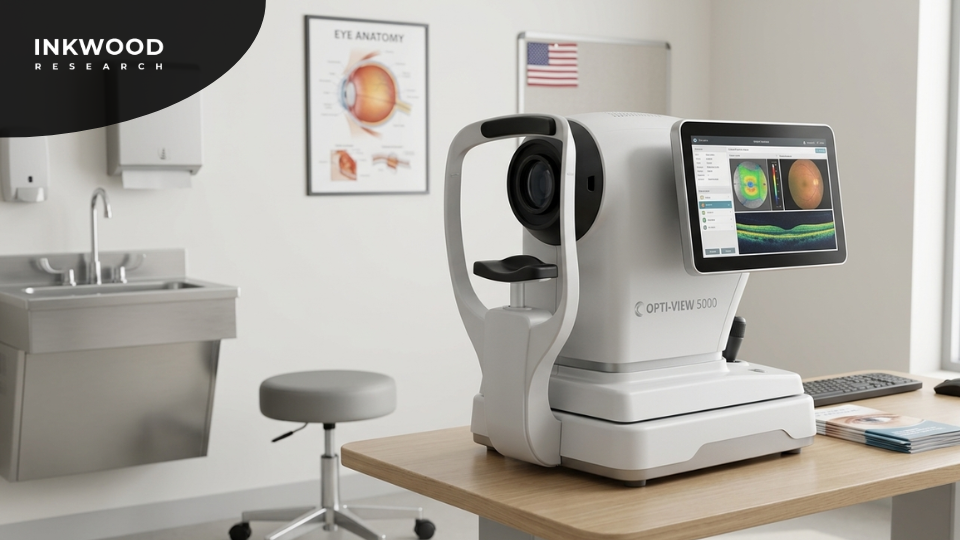
The retinal imaging devices market competitive landscape features a dynamic mix of established global leaders and specialized innovators. Product differentiation increasingly centers on AI diagnostics integration, portability, widefield capability, and seamless EHR connectivity.
Key retinal imaging device companies shaping competitive positioning include Carl Zeiss Meditec AG, Optos Plc, Heidelberg Engineering GmbH, Topcon Corporation, and Nidek Co., Ltd. These players drive retinal imaging technology advancements through sustained R&D investment, strategic acquisitions, and expanding global distribution networks.
Strategic product launches, AI-integrated platforms, and geographic expansion into emerging markets define the current competitive battleground across retinal imaging equipment market trends.
All in All
Key players and emerging innovators continue to redefine the global retinal imaging devices market’s competitive landscape. As lucrative trends and opportunities unfold, from AI-powered retinal imaging systems to portable fundus cameras for remote screening, the future of retinal diagnostics promises improved patient outcomes, broader accessibility, and enhanced early detection capabilities across ophthalmology. For stakeholders across healthcare, investment, and medical technology, staying current with the retinal imaging devices industry analysis is essential for driving progress and delivering quality eye care.
By Akhil Nair
Frequently Asked Questions (FAQs)
A retinal imaging device is specialized ophthalmic diagnostic equipment that captures detailed images of the retina, optic nerve, and posterior eye structures. Common types include fundus cameras, digital fundus cameras, OCT devices, and widefield retinal imaging systems.
Retinal imaging systems direct controlled light into the eye and capture reflected images using high-resolution sensors. OCT devices use low-coherence light waves to generate cross-sectional retinal maps, while fundus cameras use direct or indirect illumination to photograph the posterior eye segment.
Retinal imaging devices detect diabetic retinopathy, glaucoma, age-related macular degeneration, hypertensive retinopathy, inherited retinal diseases, and other posterior segment conditions. AI-powered retinal imaging systems further enhance early disease detection accuracy.
Yes. Retinal imaging devices for diabetic retinopathy detection, including non-mydriatic digital fundus cameras and AI-integrated screening platforms, are widely deployed in diabetes management programs and community health screening initiatives globally.
Fundus cameras capture two-dimensional surface photographs of the retina, while optical coherence tomography devices generate three-dimensional cross-sectional images of retinal layers. OCT retinal imaging provides greater structural detail, making it essential for macular disease and glaucoma monitoring.
Major retinal imaging device companies include Carl Zeiss Meditec AG, Optos Plc, Heidelberg Engineering GmbH, Topcon Corporation, and Nidek Co., Ltd. Their commitment to R&D and global market presence contributes to their leadership in the retinal imaging devices industry.
Based on our analysis, the global retinal imaging devices market is valued at US$4,344.61 million in 2026 and projected to reach US$7,934.97 million by 2034, growing at a CAGR of 7.82% during the forecast period 2026–2034, driven by rising eye disease prevalence, AI integration, and expanding teleophthalmology adoption.