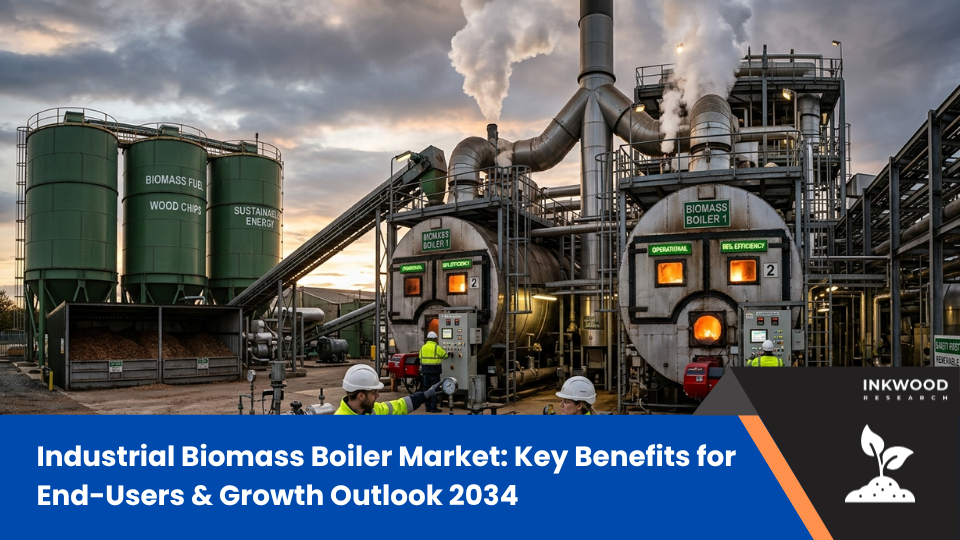
Governments across regions are reinforcing this trend. Supportive regulatory frameworks, renewable energy subsidies, and industrial decarbonization policies continue driving the adoption of biomass thermal energy systems globally.
How Does the Industrial Biomass Boiler Market Benefit Major End-Users?

Paper and Pulp Industry
- The IEA states that the paper and pulp industry accounts for approximately 5% of global industrial power consumption. Additionally, the agency confirms that a significant percentage of the industry’s heating needs are met using bioenergy with solid biomass, the highest share among all fuels.
- Solid biomass remains the dominant renewable energy source in the EU. Consequently, demand for biomass steam boiler market solutions in this sector remains robust, driven by efficiency gains and CO₂ reduction targets.
- Plant owners continue replacing legacy equipment with high-performance biomass-fired boilers, accelerating market renewal cycles. China’s provincial policies, aligned with the 14th Five-Year Plan (2021–2025), mandate the rebuilding or elimination of outdated boilers in paper and pulp mills. This policy directive alone creates substantial near-term demand within the biomass boiler market in the Asia-Pacific.
Biorefineries
- Biorefineries convert a single biomass source into multiple value-added outputs, biofuels, biodiesel, biomass power, and industrial heat, mirroring integrated petroleum refinery models. The EU Renewable Energy Directive (RED II) requires at least 70% GHG savings for solid or gaseous biomass pathways compared to fossil fuels, increasing to 80% after January 2026.
- The biorefinery segment continues expanding through strategic joint ventures and private investment. In February 2023, PBF Energy Inc and Eni Sustainable Mobility announced the formation of St. Bernard Renewables LLC (SBR), a joint venture where each partner committed $835 million alongside additional project-specific funding, demonstrating significant private capital confidence in industrial biomass thermal energy systems.
- Additionally, the waste-to-energy systems trend is reshaping the biorefinery landscape. Instead of disposing of agricultural or organic residues, industries are recognizing their value as clean combustion fuel sources. This dual benefit, waste reduction and renewable heat generation, strengthens the long-term business case for biomass energy boiler market adoption.
Sugar Mills & Food Processing
- Beyond pulp and paper, biomass steam boiler market adoption is accelerating in sugar mills, food processing plants, and textile facilities. Bagasse biomass boiler systems, which utilize sugarcane residue as fuel, are gaining particular traction across Latin America and the Asia-Pacific, where agricultural residues are abundantly available.
The food and beverage sector, with significant heating requirements for cooking, sterilization, and pasteurization, is increasingly transitioning to biomass-fuelled solutions. Furthermore, this shift aligns with broader industrial decarbonization goals while reducing energy procurement costs meaningfully.
Stay up-to-date with what’s trending in the Global Industrial Biomass Boiler Market
Industrial Biomass Boiler Market Trends & Growth Drivers
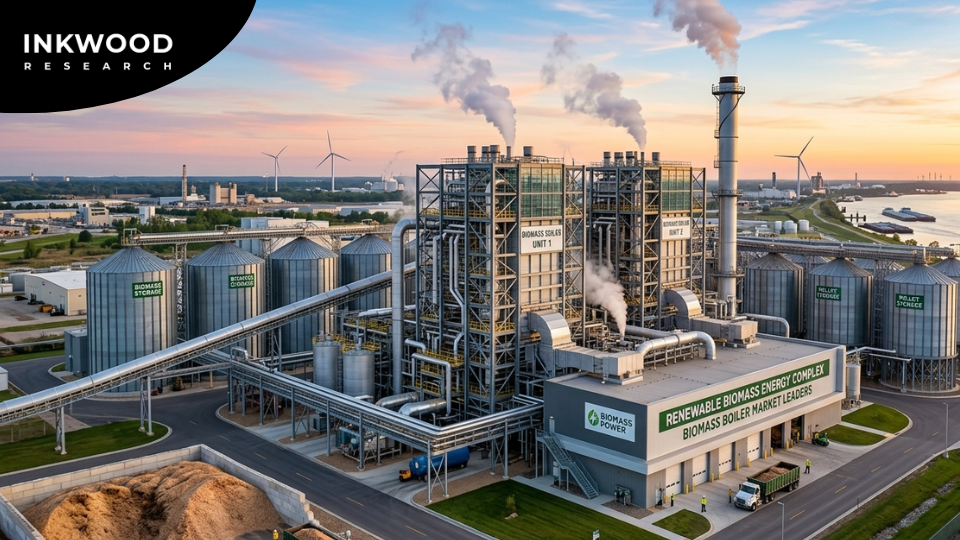
Regulatory Pressure Accelerating Biomass Adoption
Stricter environmental compliance requirements are among the most powerful drivers of biomass-fired boiler market demand. In 2024, the U.S. EPA mandated that coal and gas power plants implement Carbon Capture and Storage (CCS) technologies, with compliance timelines beginning in June 2025. This compels energy producers to accelerate clean technology adoption, directly benefiting industrial biomass heating systems market participants.
Similarly, in 2025, the European Commission introduced the Clean Industrial Deal, a strategic framework designed to simultaneously advance industrial competitiveness and decarbonization. This initiative reinforces Europe’s regulatory commitment to biomass thermal systems market growth, particularly across Germany and the broader EU.
Government Investment Fueling Demand
Public sector investment is reinforcing private market momentum. In 2024, Canada invested US$6.6 million through the Bioindustrial Innovation Canada (BIC) program to advance bioenergy, biofuels, and biomaterials, promoting sustainable heating solutions and clean combustion systems at an industrial scale.
Meanwhile, Brazil unveiled its National Energy Transition Policy in 2024, targeting US$400 billion in green investments over the next decade. This initiative is positioning Latin America as an emerging hub for biomass energy boiler market expansion, with agro-industrial applications at the forefront.
Latest Product Developments & Key Player Innovations
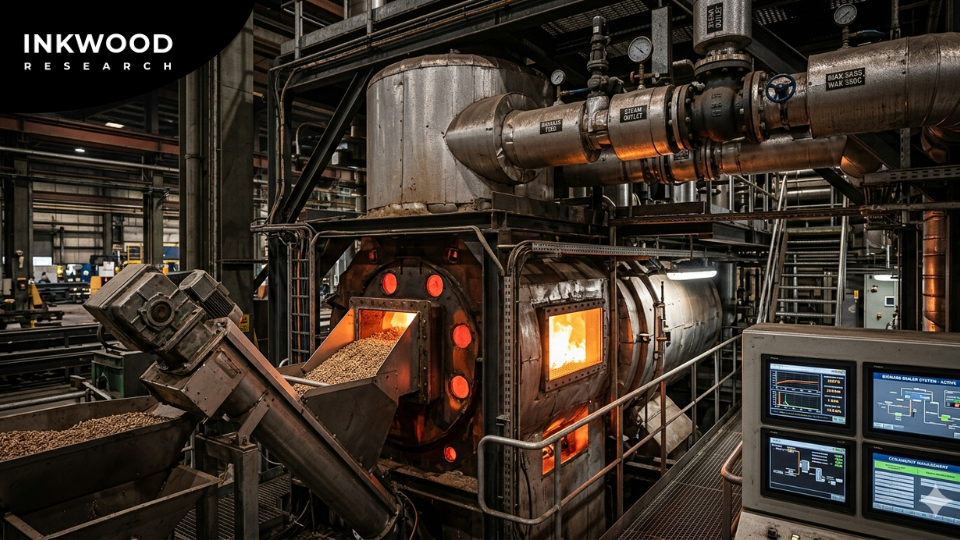
Product innovation within the industrial biomass power boiler market has accelerated significantly, with key manufacturers advancing combustion efficiency, fuel flexibility, and digital integration.
- In March 2025, ANDRITZ delivered and commissioned a complete biomass power and steam plant for Hungrana, a Hungarian sugar processor. The project, covering all design, manufacture, and construction, featured a boiler system rated at 32 tonnes/hour of steam at 12 bar using wood chips as fuel. This signals a broader industry shift toward full EPC and lifecycle delivery models for industrial biomass combustion systems.
- In May 2025, ANDRITZ secured a contract to supply a recovery boiler, evaporation plant, and power boiler to Green Bay Packaging’s pulp mill in Morrilton, Arkansas. The scope includes high-efficiency steam generation and flue-gas treatment, reinforcing the pulp and paper industry’s growing reliance on biomass boilers for process steam generation.
- In September 2024, Boccard acquired Leroux & Lotz Technologies (LLT), a leading French industrial boiler manufacturer, positioning itself as a European leader in renewable thermal energy. This merger combines Boccard’s industrial equipment expertise with LLT’s biomass and waste recovery system capabilities, reflecting the wave of strategic consolidation driving the biomass-fired boiler market forward.
Additionally, leading players, including Babcock & Wilcox, Valmet, Thermax, and Hurst Boiler & Welding, continue advancing automation-driven combustion systems, emission control technologies, and biomass heating equipment market solutions. According to industry analysis, developments in automation and advanced combustion systems have improved efficiency levels by nearly 35%, making these systems compelling for long-term capital investment.
Industrial Biomass Boiler Market Regional Outlook
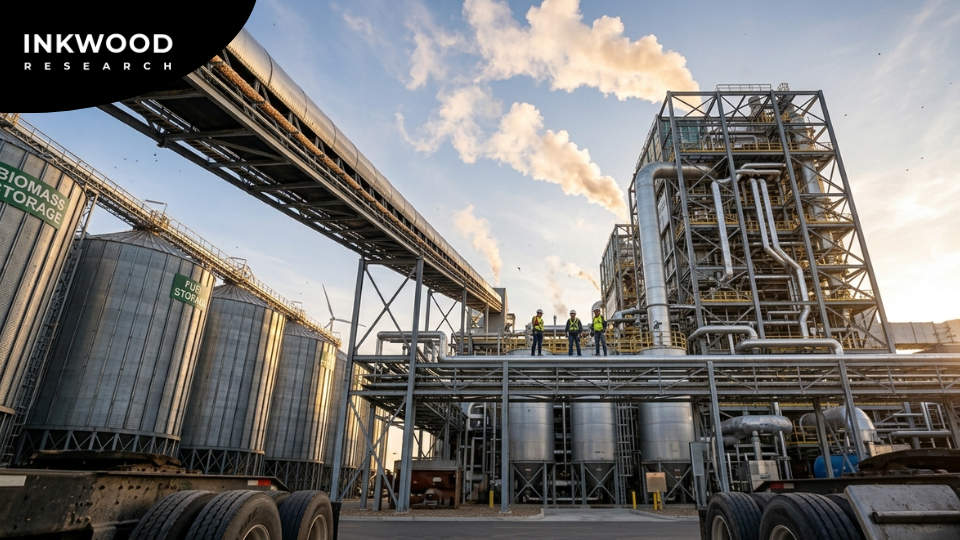
Asia-Pacific, Fastest-Growing Region
Based on our research, the Asia-Pacific region represents the most dynamic growth frontier within the industrial biomass boiler market, rising from US$5,059.05 million in 2026 to US$11,858.11 million by 2034, at an 11.24% CAGR. India leads regional momentum, with its industrial biomass boiler segment forecast to expand from US$1,020.51 million (2026) to US$2,485.41 million (2034) at an 11.77% CAGR, the highest country-level growth rate globally.
Government-backed rural energy access programs, expanding climate-smart agriculture initiatives, and rising demand for wood biomass boiler solutions are collectively driving this trajectory. Furthermore, the development of corrosion-resistant biomass boiler technologies is enhancing product viability across the region’s diverse industrial environments.
Europe, Policy-Driven Stability
Europe remains a foundational market for the biomass heating equipment market, valued at US$5,639.60 million in 2026 and projected to reach US$10,916.90 million by 2034 at an 8.61% CAGR. Germany anchors regional demand with its industrial biomass boiler segment growing from US$1,237.56 million (2026) to US$2,374.11 million (2034) at an 8.48% CAGR.
The EU’s Clean Industrial Deal (2025) and renewable energy directives provide a stable regulatory foundation supporting biomass thermal systems market growth. Additionally, progressive district heating expansion and strong policy alignment create durable demand across the UK, France, and Nordic markets.
North America, Infrastructure Investment Driving Growth
North America’s industrial biomass heating systems market is projected to grow from US$4,605.64 million (2026) to US$9,509.32 million (2034), at a 9.49% CAGR. The U.S. leads regional adoption, driven by EPA compliance mandates, strong industrial biomass boiler demand in manufacturing, and growing combined heat and power (CHP) project pipelines. Canada’s bioenergy investment programs further reinforce the regional outlook.
Emerging Markets, Costa Rica & South Africa
Notably, Costa Rica demonstrates exceptional growth potential within the industrial biomass boiler market, expanding from US$27.98 million (2026) to US$77.68 million (2034) at a 13.61% CAGR, the highest globally. South Africa follows closely, growing from US$68.04 million (2026) to US$181.83 million (2034) at a 13.07% CAGR. Both markets reflect strengthening agro-industrial biomass boiler adoption and green energy policy frameworks across emerging economies.
Key Market Challenges

Despite strong growth prospects, the industrial biomass boiler industry faces notable operational headwinds:
- Skilled workforce shortages continue to affect biomass combustion system operations, particularly in emerging markets. AI-enabled automation and digital monitoring solutions are increasingly addressing this gap.
- Fuel supply chain reliability remains a concern, especially for agricultural residue biomass boiler systems dependent on seasonal feedstock availability.
- High initial capital costs persist compared to conventional fossil fuel boilers, though favorable government incentives and demonstrable long-term ROI are progressively narrowing this gap.
- Emission compliance complexity adds operational burden, though advances in clean combustion systems and integrated flue-gas treatment are enabling operators to meet increasingly stringent standards.
Key Takeaways
- The global industrial biomass boiler market is set to grow from US$16,368.81 million (2026) to US$34,831.27 million (2034) at a 9.90% CAGR, reflecting robust demand for sustainable industrial heating solutions.
- Asia-Pacific leads growth at an 11.24% CAGR, with India recording the highest country-level expansion at 11.77% CAGR through 2034.
- Regulatory mandates, including the U.S. EPA’s CCS requirements and the EU’s Clean Industrial Deal, are actively accelerating industrial adoption of biomass thermal energy systems.
- Key players, including ANDRITZ, Babcock & Wilcox, Valmet, Thermax, and Hurst Boiler, continue driving innovation in combustion efficiency, fuel flexibility, and emission control.
- Emerging economies, particularly Costa Rica and South Africa, offer the highest growth rates globally, creating new strategic opportunities for market participants.
Conclusion
Industrial biomass boilers have evolved from niche sustainability initiatives into strategic infrastructure priorities for energy-intensive industries worldwide. Based on our analysis, the combination of tightening environmental regulations, advancing combustion technologies, and expanding government investment creates highly favorable conditions for sustained biomass energy boiler market growth through 2034.
As decarbonization imperatives intensify and industrial operators seek proven clean combustion systems, biomass thermal energy systems are positioned to become a cornerstone of modern industrial energy strategy.
If you require personalized consultation, contact us today!
Be sure to explore our in-depth research reports or request a FREE sample tailored to your specific business needs.
By Sukanya Mukherjee