Table of Contents

TLDR
Indonesia’s facial care market dominates the Indonesian skin care market with a significant market share, driving exceptional growth through innovative face masks and advanced skincare products. The skincare industry demonstrates remarkable expansion as consumers embrace comprehensive skin care routine practices targeting tropical climate skincare needs. Moreover, rising beauty consciousness and digital beauty influence accelerate facial skincare trends adoption, creating unprecedented opportunities for brands addressing Indonesian consumer preferences across diverse demographic segments and price points.
Product managers developing facial care products, brand strategists targeting Southeast Asian markets, and retail executives optimizing skincare market positioning benefit from this comprehensive analysis. Marketing professionals focusing on face mask trends, research analysts evaluating beauty industry growth, and international brands planning Indonesian expansion strategies gain valuable insights for successful facial skincare market penetration and growth optimization.
Facial Care Market Dominance
The facial care market establishes clear leadership within Indonesia’s skincare industry, capturing the largest share of consumer attention and spending across diverse demographic segments. Among Indonesian skincare product types, facial care takes center stage in skincare market trends, commanding a significant share of approximately 57%.
Furthermore, this dominance reflects sophisticated consumer understanding of facial skincare importance and willingness to invest in a comprehensive skin care routine development that addresses specific concerns and lifestyle needs.
According to our research, facial skincare products command a significant market share while experiencing accelerated growth driven by social media influence, beauty consciousness, and improved product accessibility across Indonesia’s diverse archipelago.
Moreover, the convergence of traditional beauty wisdom with contemporary skincare science creates compelling opportunities for brands developing products that resonate with Indonesian consumer preferences. Additionally, digital transformation enables unprecedented market reach and consumer education that amplifies facial care trends adoption across demographic segments.
Market Share and Growth Dynamics
The Indonesian skin care market demonstrates exceptional facial skincare products performance through sustained growth rates that outpace other skincare categories. Moreover, consumers prioritize facial care investment over body care alternatives, creating concentrated market opportunities for brands developing innovative face-focused solutions. This dominance underscores the enduring importance of facial skincare routines among Indonesian consumers. Factors such as easy accessibility to information and an expanding array of facial care products catering to diverse skin needs further bolster the segment’s prominence.
Additionally, the market value expansion reflects increasing consumer sophistication and willingness to experiment with multiple facial care products within comprehensive beauty routines. Consequently, brands successfully capturing the facial care market share achieve superior revenue growth and market positioning advantages.
However, intense competition within the facial care segment requires continuous innovation and authentic consumer engagement to maintain market leadership positions. Subsequently, successful brands invest heavily in product development, consumer education, and digital marketing strategies that build sustainable competitive advantages.
Category Performance Analysis
Different facial care product categories demonstrate varying growth patterns and consumer preferences that create strategic opportunities for targeted market development. Furthermore, cleansers and moisturizers maintain consistent demand while serums and treatments experience accelerated growth driven by increased beauty consciousness. The skincare market evolution shows consumers embracing multi-step routines that incorporate specialized products for enhanced results.
Moreover, premium facial care categories outperform mass market alternatives as consumers increasingly prioritize quality and efficacy over price considerations alone. Similarly, innovative formulations targeting specific concerns, including dry skin, acne, and anti-aging, achieve superior market performance through differentiated positioning.
The category analysis reveals opportunities for brands to develop comprehensive facial care systems that address multiple consumer needs through coordinated product portfolios. Therefore, companies successfully building integrated facial care solutions capture a larger share of consumer spending and achieve enhanced brand loyalty.
Face Mask Revolution and Innovation

The face masks category experiences revolutionary growth within Indonesia’s facial care market as consumers embrace convenient, effective treatments that deliver immediate visible results and enhance daily skin care routine experiences. Moreover, innovation in mask formulations, delivery systems, and ingredient technologies creates compelling differentiation opportunities for brands seeking premium positioning. According to our research, the face mask segment demonstrates exceptional growth potential through social media influence and consumer desire for spa-like experiences at home.
Mask Format Innovation
Traditional sheet masks evolve alongside innovative formats, including hydrogel masks, sleeping masks, and wash-off treatments that address diverse consumer preferences and lifestyle needs. Furthermore, facial skincare product innovation focuses on enhanced ingredient delivery through advanced mask technologies that improve absorption and efficacy. The products for skincare development emphasize convenience and performance optimization that appeals to time-conscious Indonesian consumers.
Additionally, multi-functional masks combining treatment benefits with hydration, brightening, or anti-aging properties are gaining popularity among consumers seeking comprehensive solutions. Consequently, brands developing innovative mask formats achieve differentiation and premium pricing opportunities within competitive markets.
However, mask innovation requires balancing novelty with proven efficacy to ensure consumer satisfaction and repeat purchase behavior. Subsequently, successful mask development incorporates consumer feedback and clinical testing to validate performance claims and build market credibility.
Ingredient and Technology Advancement
Advanced face masks incorporate cutting-edge ingredients, including peptides, hyaluronic acid, and botanical extracts that address specific skin concerns through targeted delivery systems. Moreover, technology integration enables personalized mask selection and application guidance through digital platforms and skin analysis tools. The skincare industry benefits from continuous ingredient innovation that enhances mask performance and consumer experience.
Furthermore, natural and organic mask formulations gain traction among environmentally conscious consumers seeking clean beauty alternatives without compromising effectiveness. Similarly, halal-certified masks address religious requirements while maintaining competitive performance standards.
The ingredient advancement creates opportunities for brands to develop proprietary formulations and sustainable sourcing practices that differentiate products within crowded markets. Therefore, companies investing in ingredient innovation and technology integration achieve competitive advantages and consumer preference leadership.
Consumer Behavior and Routine Development
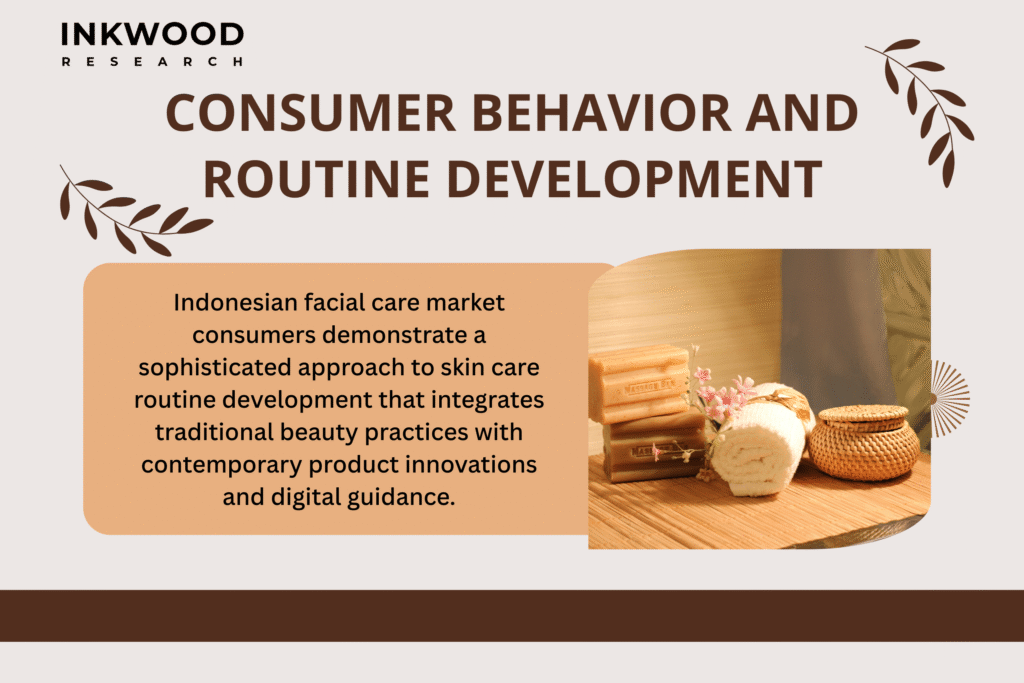
Indonesian facial care market consumers demonstrate a sophisticated approach to skin care routine development that integrates traditional beauty practices with contemporary product innovations and digital guidance. Furthermore, social media influence significantly shapes consumer expectations and product trial behaviors across demographic segments. The skincare products adoption patterns reveal increasing willingness to invest time and resources in comprehensive facial care regimens that deliver measurable results and enhanced confidence.
Multi-Step Routine Adoption
The influence of K-beauty trends drives the adoption of multi-step facial care routines that incorporate cleansing, treatment, and protection phases through specialized product applications. Moreover, Indonesian consumers adapt international skincare approaches to local climate conditions and skin type requirements while maintaining routine consistency. The influence of beauty influencers, K-beauty trends, and social media content significantly impacts purchasing decisions, particularly among Gen Z and millennial demographics.
Additionally, routine customization based on skin concerns, seasonal changes, and lifestyle factors demonstrates sophisticated consumer understanding of skincare science and ingredient benefits. Consequently, brands providing education and guidance for routine development achieve enhanced consumer loyalty and increased product usage.
However, routine complexity may overwhelm some consumers, creating opportunities for simplified systems that deliver results without excessive steps. Subsequently, successful brands balance routine effectiveness with practical application considerations that support sustained consumer engagement.
Social Influence and Education
Digital beauty influence shapes consumer knowledge, product expectations, and routine development through influencer content, peer reviews, and brand education initiatives. Furthermore, social media platforms enable real-time sharing of skincare results and experiences that build a community around facial care practices. The facial skincare trends spread rapidly through digital networks that amplify product awareness and trial intentions.
Moreover, beauty influencers and dermatologist content creators provide credible guidance for product selection and application techniques that enhance consumer confidence. Similarly, user-generated content showcasing skincare transformations creates social proof that influences purchasing decisions and brand preferences.
The social influence integration requires authentic brand engagement and transparent communication about product benefits and limitations. Therefore, brands successfully leveraging social platforms for education and community building achieve superior market penetration and consumer trust.
Climate-Adapted Formulations
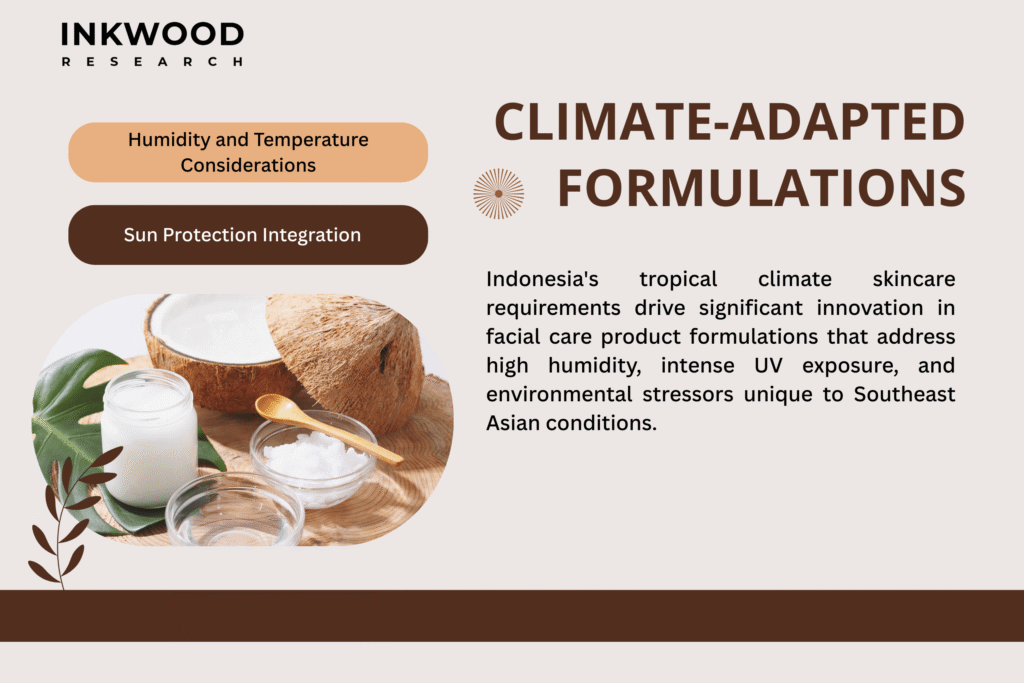
Indonesia’s tropical climate skincare requirements drive significant innovation in facial care product formulations that address high humidity, intense UV exposure, and environmental stressors unique to Southeast Asian conditions. Moreover, successful skincare products must deliver effective performance while remaining comfortable and stable in challenging climate conditions throughout the year. According to our research, climate adaptation creates competitive advantages for brands that understand local environmental factors and consumer lifestyle needs.
Humidity and Temperature Considerations
High humidity levels require facial skincare product formulations that absorb quickly without leaving sticky residues or interfering with makeup application throughout long, humid days. Furthermore, lightweight textures and fast-absorbing formulations become essential for consumer satisfaction and routine adherence in tropical climates. The skin care routine products must balance hydration needs with comfort and practicality considerations that support daily usage.
Additionally, temperature stability ensures product integrity and performance consistency despite storage and transportation challenges in tropical environments. Consequently, brands developing climate-adapted formulations achieve superior consumer satisfaction and market performance compared to standard international products.
However, climate adaptation requires specialized formulation expertise and local testing to ensure optimal performance under actual usage conditions. Subsequently, successful climate-adapted product development represents significant competitive advantages and consumer preference leadership.
Sun Protection Integration
Intense tropical sun exposure creates exceptional demand for facial care products incorporating advanced UV protection technologies that prevent sun damage while providing skincare benefits. While facial care maintains its stronghold, the sun protection category emerges as the fastest-growing segment. Moreover, multifunctional products combining sun protection with moisturization, anti-aging, and other benefits appeal to consumers seeking simplified routines.
Furthermore, education about sun protection drives consumer awareness and product adoption across age groups and skin types. The tropical climate skincare market benefits from consistent year-round demand for protective formulations rather than seasonal usage patterns.
Advanced sun protection technologies, including mineral filters, antioxidants, and DNA repair enzymes, create opportunities for premium product positioning and differentiation. Therefore, brands successfully developing innovative sun protection solutions capture significant market opportunities while addressing critical consumer health needs.
Digital Influence and Social Commerce
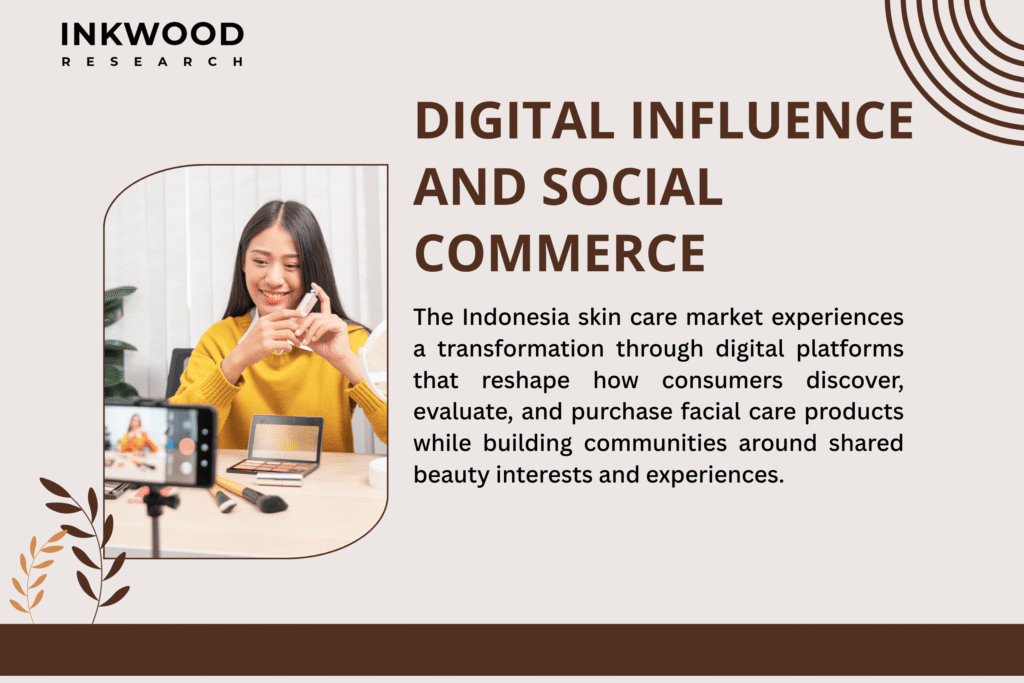
The Indonesia skin care market experiences a transformation through digital platforms that reshape how consumers discover, evaluate, and purchase facial care products while building communities around shared beauty interests and experiences. Moreover, social media integration creates seamless shopping experiences that combine entertainment, education, and commerce in innovative ways. According to our research, digital influence drives product adoption rates that significantly exceed traditional marketing channels across all demographic segments.
Platform-Specific Strategies
Different social media platforms require tailored approaches for facial skincare product marketing that align with user behaviors and content preferences on Instagram, TikTok, and YouTube. Furthermore, short-form video content showcasing product application and results generates exceptional engagement and conversion rates among younger consumers. The digital beauty influence varies by platform, requiring sophisticated content strategies that maximize reach and effectiveness.
Additionally, live streaming and real-time interaction create authentic connections between brands and consumers that build trust and purchase intent. Consequently, brands developing platform-specific content strategies achieve superior engagement metrics and customer acquisition costs compared to generic approaches.
However, maintaining an authentic brand voice across multiple platforms while adapting to format requirements challenges marketing teams and resource allocation. Subsequently, successful digital strategies require dedicated expertise and consistent investment in content creation and community management.
Influencer Partnership Evolution
Beauty influencers and content creators shape facial care trends through authentic product reviews, tutorial content, and lifestyle integration that resonates with their audiences. Several key drivers fuel the growth of the Indonesian skincare market, with the widespread adoption of social media playing a pivotal role.
The exponential rise in social media users has significantly heightened consumer awareness and engagement in the beauty sphere. Moreover, micro-influencers often achieve higher engagement rates and conversion results compared to macro-influencers due to stronger community connections and perceived authenticity.
Furthermore, long-term partnerships enable deeper product integration and more credible endorsements that build sustained consumer interest and brand loyalty. Similarly, educational content that combines product promotion with genuine skincare advice creates value-added experiences that consumers appreciate and share.
The influencer partnership evolution requires careful selection of creators whose values and audiences align with brand positioning and target demographics. Therefore, brands successfully building authentic influencer relationships achieve cost-effective marketing results and enhanced brand credibility within competitive markets.
Premium and Mass Market Dynamics
The Indonesia skin care market demonstrates sophisticated consumer segmentation where both premium and mass market facial care products achieve success through targeted positioning and value proposition differentiation. Moreover, Indonesian consumers show increasing willingness to invest in higher-priced products that deliver proven results and enhanced experiences. According to our research, the expanding middle class creates unprecedented opportunities for premium beauty products while maintaining strong demand for accessible mass market alternatives.
Premium Segment Growth
Premium facial skincare products experience accelerated growth as consumers prioritize quality, efficacy, and brand prestige over price considerations alone within their skin care routine investments. Furthermore, sophisticated consumers research ingredients, read reviews, and seek professional recommendations before making premium purchases, creating educated demand for high-performance formulations. The skincare industry benefits from premiumization trends that increase average selling prices and profit margins across product categories.
Additionally, premium positioning requires exceptional product quality, innovative packaging, and superior customer service that justifies higher price points through enhanced value delivery. Consequently, brands successfully executing premium strategies achieve superior profitability and market positioning advantages within competitive landscapes.
However, premium market success requires sustained investment in product development, marketing, and brand building that smaller companies may struggle to maintain. Subsequently, premium market leadership often concentrates among established brands with resources for comprehensive market development initiatives.
Value and Accessibility Focus
Mass market products for skincare remain essential for reaching price-sensitive consumers and building broad market penetration across Indonesia’s diverse economic segments. Moreover, value positioning emphasizes affordability without compromising basic efficacy and safety standards that maintain consumer trust and satisfaction. The market size expansion depends significantly on accessible products that enable routine adoption across demographic boundaries.
Furthermore, mass market innovation focuses on essential benefits delivery through cost-effective formulations and efficient manufacturing processes that maintain competitive pricing. Similarly, broad distribution networks ensure product accessibility in both urban and rural markets throughout Indonesia’s extensive archipelago.
The value segment requires operational efficiency and scale advantages that enable competitive pricing while maintaining acceptable profit margins. Therefore, successful mass market brands leverage manufacturing expertise and distribution capabilities to serve diverse consumer needs effectively.
Distribution Innovation and Accessibility
Indonesia’s facial care market benefits from innovative distribution approaches that address the archipelago’s geographic challenges while maximizing consumer access to skincare products across diverse retail environments. Moreover, omnichannel strategies combining traditional retail with digital platforms create comprehensive market coverage that serves varying consumer preferences and shopping behaviors. The expansive reach of health and beauty retailers in Indonesia further catalyzes market growth. Retail giants like Watsons, Guardian, Sociolla, and BeautyHaul continuously expand their footprint.
E-commerce Leadership
Digital platforms, including Tokopedia, Shopee, and specialized beauty retailers, revolutionize facial skincare products accessibility through comprehensive online product selection and convenient delivery services. Furthermore, e-commerce enables detailed product information sharing, consumer reviews, and comparison shopping that support informed purchasing decisions. The skincare market evolution shows consumers increasingly preferring online shopping for beauty products due to convenience and product variety.
Additionally, mobile commerce optimization ensures seamless shopping experiences across Indonesia’s smartphone-dominant digital landscape and supports impulse purchase behaviors. Consequently, brands investing in e-commerce excellence achieve superior market reach and customer acquisition compared to traditional retail-only approaches.
However, online shopping requires robust logistics networks and customer service capabilities to ensure positive consumer experiences and repeat purchases. Subsequently, successful e-commerce strategies demand significant technology and operational investments that smaller brands may find challenging.
Traditional Retail Evolution
Pharmaceutical stores, department stores, and specialty beauty retailers adapt to serve evolving facial care trends through enhanced product assortments, staff training, and consumer education initiatives. Moreover, traditional retail channels provide tactile product experiences and professional consultation services that complement digital shopping research. The products for the skincare category benefit from in-store testing opportunities and immediate product availability that online channels cannot match.
Furthermore, retail partnerships enable brands to access established customer bases and benefit from retailer marketing support and prime shelf positioning. Similarly, traditional retail maintains importance for consumers preferring personal interaction and immediate product gratification.
The traditional retail evolution requires continuous adaptation to digital-influenced consumer expectations and omnichannel shopping behaviors. Therefore, successful retail partnerships combine traditional strengths with modern consumer service expectations for optimal market performance.
Key Takeaways
- Indonesia’s facial care market demonstrates exceptional growth potential through sophisticated consumer behavior, innovative product development, and digital transformation that create unprecedented opportunities for brands embracing local market needs and preferences.
- Moreover, climate-adapted formulations and multi-step routine adoption drive sustained market expansion across demographic segments. Our research reveals that successful facial care brands balance premium innovation with accessible mass market offerings while leveraging digital platforms for consumer engagement and education.
- Furthermore, face masks and specialized treatments experience accelerated growth as consumers prioritize effective, convenient solutions that deliver immediate visible results within comprehensive skin care routine practices.
- Similarly, social media influence and beauty consciousness drive product adoption rates that exceed traditional marketing channel effectiveness.
- The Indonesia skin care market rewards brands successfully integrating tropical climate requirements with contemporary skincare science while maintaining authentic consumer connections through digital platforms and community building.
- Therefore, companies investing in facial care innovation, climate adaptation, and omnichannel distribution strategies will capture the most significant growth opportunities within Indonesia’s dynamic beauty landscape.
Conclusion: Facial Care Market Evolution
Indonesia’s facial care market represents the epicenter of skincare industry innovation, where consumer sophistication meets tropical climate challenges to drive unprecedented product development and market growth opportunities.
Moreover, the convergence of traditional beauty practices with digital influence creates compelling consumer experiences that transcend simple product transactions. Our analysis indicates that facial care leadership within the broader Indonesian skin care market will continue strengthening through sustained consumer investment and brand innovation.
Furthermore, the facial skincare trends evolution demonstrates how local market understanding combined with global beauty science creates authentic competitive advantages and sustainable market positioning. Similarly, digital platform integration enables unprecedented consumer education and community building that amplifies brand reach and loyalty development.
The future of Indonesia’s facial care products market depends on continued innovation in climate-adapted formulations, consumer-centric product development, and authentic digital engagement that serves Indonesian consumers with respect and cultural sensitivity.
Therefore, brands successfully embracing Indonesia’s unique facial care opportunity while delivering exceptional performance and value will define the next chapter of Southeast Asian beauty market evolution.
Make sure you check out our in-depth research reports or request a FREE sample customized as per your requirements.
Frequently Asked Questions (FAQs)
Facial care commands a 57% market share due to heightened beauty consciousness, social media influence, and tropical climate needs requiring specialized face-focused solutions. Consumers prioritize facial investment over body care, driving concentrated market opportunities for innovative brands.
Indonesia’s high humidity and intense UV exposure require fast-absorbing, non-sticky formulations with integrated sun protection. Climate-adapted products must remain stable in challenging conditions while delivering comfort and efficacy throughout humid days.
Social media drives exceptional product adoption through beauty influencer content, peer reviews, and real-time result sharing. Platforms like Instagram and TikTok create communities around skincare practices, with influencer partnerships achieving higher conversion rates than traditional marketing channels.