Table of Contents
TLDR
Indonesia’s halal skincare market revolutionizes the skincare industry with Islamic beauty principles driving extraordinary growth toward $3 billion industry expansion. The Indonesia skin care market demonstrates sophisticated consumer behavior prioritizing ethical formulations and religious compliance through certified halal beauty products. Moreover, younger demographics embrace skincare products combining traditional Islamic values with modern skin care routine innovations, creating unprecedented opportunities for brands addressing Muslim consumer preferences in Southeast Asia’s largest beauty market.
Beauty industry executives targeting Muslim consumer segments, halal certification specialists, and international brands planning Indonesian market entry strategies benefit from this comprehensive analysis. Regulatory compliance teams, product development managers creating halal cosmetics, and marketing strategists addressing Islamic beauty trends gain valuable insights for successful Indonesian beauty market penetration and growth optimization.
The Rise of Halal Beauty Consciousness
Indonesia’s halal skincare market emergence reflects profound cultural shifts where religious consciousness intersects with modern beauty aspirations. Furthermore, the world’s largest Muslim-majority nation drives unprecedented demand for products for skincare that align with Islamic principles while delivering contemporary performance. According to our analysis, the Indonesia skin care market is anticipated to grow with a 6.10% CAGR during the period 2025-2032, generating a revenue of $4.64 billion by 2032.
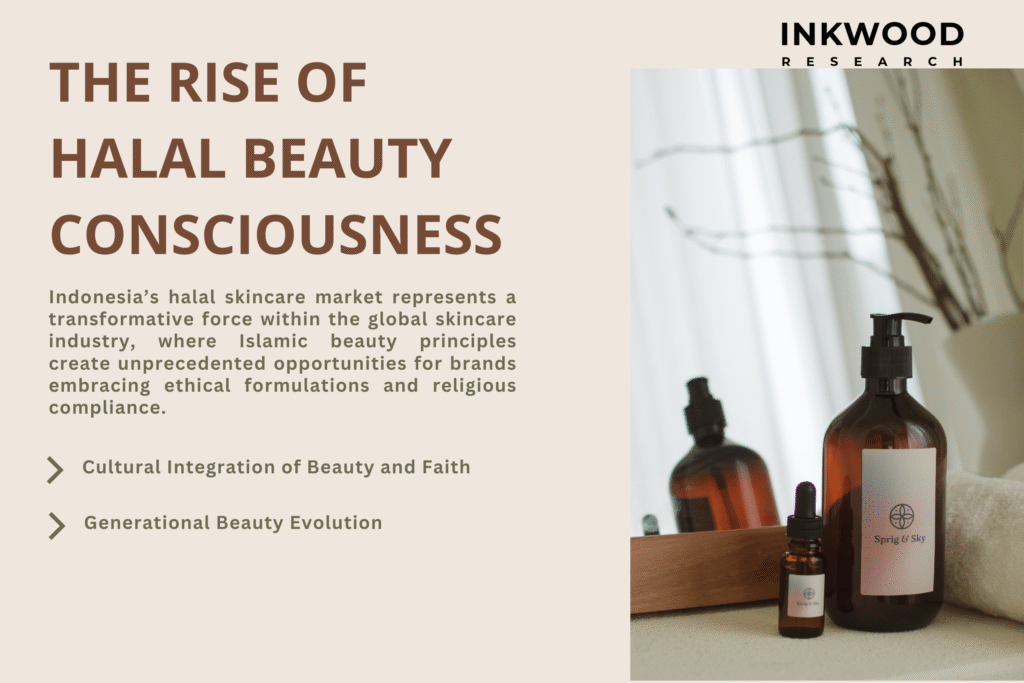
Indonesia’s halal skincare market represents a transformative force within the global skincare industry, where Islamic beauty principles create unprecedented opportunities for brands embracing ethical formulations and religious compliance. Furthermore, the Indonesia skin care market demonstrates remarkable sophistication as consumers seamlessly blend traditional values with modern beauty science. According to our research, halal cosmetics achieve extraordinary growth momentum, with the market projected to reach significant milestones driven by Indonesia’s predominantly Muslim population and their evolving beauty consciousness.
Moreover, this dynamic landscape showcases how skincare products can successfully address both spiritual requirements and contemporary aesthetic needs. Additionally, the integration of Islamic beauty standards with innovative formulations creates compelling market differentiation that resonates deeply with Indonesian consumers across diverse demographic segments.
Cultural Integration of Beauty and Faith
The sophisticated Indonesian consumer base demonstrates a remarkable ability to integrate spiritual values with aesthetic pursuits through halal beauty products that respect religious requirements. Moreover, this integration transcends simple ingredient compliance to encompass entire brand philosophies and marketing approaches. The Muslim consumer preferences extend beyond product formulation to include ethical sourcing, cruelty-free testing, and transparent supply chain practices.
Additionally, younger demographics particularly embrace this holistic approach to beauty that allows personal expression while maintaining religious integrity. Consequently, brands successfully addressing both spiritual and aesthetic needs capture significant market share while building authentic consumer relationships.
However, achieving authentic halal positioning requires a deep understanding of Islamic principles and a genuine commitment to compliance rather than superficial marketing adjustments. Subsequently, brands investing in comprehensive halal strategies gain competitive advantages through consumer trust and community endorsement.
Generational Beauty Evolution
The evolution of Islamic beauty trends demonstrates how different generations approach halal beauty with varying priorities and expectations. Furthermore, millennial and Gen Z consumers drive innovation by demanding products that combine religious compliance with cutting-edge formulations and sustainable practices. The rise in purchasing power among the Muslim population, as well as the desire of young Muslim women to align their interest in fashion and makeup with their Islamic values, are also contributing to the growth of the halal cosmetics market.
Moreover, these younger consumers utilize social media platforms to share halal beauty recommendations and create communities around ethical consumption practices. Similarly, their purchasing decisions significantly influence family and peer networks, amplifying the impact of halal beauty adoption across broader demographic segments.
The generational approach to skin care routine development incorporates both traditional Islamic beauty wisdom and modern skincare science for comprehensive solutions. Therefore, brands successfully addressing generational diversity while maintaining halal authenticity achieve sustainable market growth and community acceptance.
Market Dynamics and Growth Drivers
The Indonesia skin care market dynamics reveal a sophisticated interplay between religious requirements, economic development, and consumer sophistication that drives exceptional market value growth. Moreover, multiple converging factors create unprecedented opportunities for halal cosmetics expansion within Southeast Asia’s largest beauty market. According to our analysis, government initiatives, demographic trends, and cultural shifts combine to accelerate halal beauty adoption across diverse consumer segments.
Economic and Social Catalysts
- Indonesia’s expanding middle class provides substantial purchasing power for premium halal skincare products that combine quality with religious compliance. Furthermore, rising disposable incomes enable consumers to prioritize ethical consumption and premium formulations over purely price-driven decisions. The skincare market benefits from urbanization trends that increase beauty consciousness and product accessibility through expanded retail networks.
- Additionally, social media influence accelerates halal beauty awareness through influencer partnerships and peer recommendations that build community trust. Consequently, brands leveraging social proof and community engagement achieve rapid market penetration and sustained growth momentum.
- Government support for halal certification and domestic manufacturing creates favorable business conditions while reducing compliance barriers for international brands. Therefore, companies investing in Indonesia’s halal beauty ecosystem gain operational advantages and regulatory support for market expansion strategies.
Digital Transformation Impact
- E-commerce platforms revolutionize halal beauty products accessibility through online marketplaces that connect consumers with diverse product portfolios and authentic reviews. Moreover, digital channels enable detailed product information sharing that supports informed purchasing decisions about ingredient compliance and brand authenticity. The products for the skincare category particularly benefit from online education content that builds consumer confidence in halal formulations.
- Furthermore, social commerce integration creates seamless shopping experiences that combine content consumption with immediate purchasing opportunities. Similarly, mobile-first shopping behaviors align perfectly with Indonesia’s smartphone-dominant digital landscape and young demographic preferences.
- Digital marketing strategies enable precise targeting of halal-conscious consumers while building authentic brand communities around shared values and lifestyle preferences. Subsequently, brands successfully executing digital-first approaches achieve cost-effective customer acquisition and enhanced brand loyalty within the halal beauty segment.
Consumer Behavior and Religious Compliance
Indonesian halal skincare market consumers demonstrate a sophisticated understanding of religious requirements combined with modern beauty expectations that shape purchasing decisions and brand loyalty. Furthermore, these consumers actively research ingredient compliance, certification validity, and brand authenticity before making purchase commitments. The Muslim consumer preferences extend beyond surface-level halal claims to include comprehensive brand values and ethical business practices.
Ingredient Scrutiny and Transparency
Halal-conscious consumers exhibit exceptional diligence in evaluating skincare products’ ingredient lists and manufacturing processes to ensure complete religious compliance. Moreover, they seek detailed information about sourcing, testing methods, and certification processes that validate halal claims throughout product development cycles. The skin care routine selection process incorporates both efficacy expectations and strict adherence to Islamic dietary and lifestyle principles.
Additionally, community networks and religious authorities influence purchasing decisions through endorsements and recommendations that build consumer confidence. Consequently, brands achieving authentic halal positioning through transparent communication and community engagement establish strong competitive advantages.
However, any compromise in halal integrity or misleading claims can severely damage brand reputation within close-knit Muslim communities. Subsequently, maintaining an unwavering commitment to halal principles becomes essential for sustained success in this market segment.
Multi-Generational Influence Patterns
Family and community influence patterns significantly shape halal beauty products adoption across different age groups and household decision-making processes. Furthermore, traditional Islamic values regarding modesty and natural beauty intersect with contemporary skincare trends to create unique consumption patterns. The Islamic beauty trends reflect a careful balance between personal enhancement and religious observance that varies across generational perspectives.
Moreover, peer recommendations and social proof within Muslim communities carry exceptional weight in brand selection and product trial decisions. Similarly, religious leaders and community influencers play crucial roles in validating halal beauty brands and practices.
The integration of traditional Islamic beauty practices with modern skincare industry innovations creates opportunities for products that honor cultural heritage while delivering contemporary performance. Therefore, brands successfully navigating these cultural dynamics gain authentic market positioning and sustained consumer loyalty.
Leading Halal Skincare Brands

Indonesia’s halal skincare market features dynamic competition between established local brands and international players, adapting to halal requirements through strategic positioning and product development. Moreover, successful brands demonstrate an authentic commitment to Islamic principles while maintaining competitive performance standards and market innovation. Key players operating in the Indonesian halal cosmetics market include Paragon Technology and Innovation, PHB Ethical Beauty, and Clara International Beauty Group.
Domestic Brand Leadership
Wardah emerges as Indonesia’s pioneering halal beauty brand, establishing market leadership through authentic Islamic values and comprehensive product portfolios addressing diverse skin care needs. Furthermore, the brand’s success demonstrates how local understanding of Muslim consumer preferences creates sustainable competitive advantages over international competitors.
Wardah brand from Paragon offers skincare products like facial washes, toners, moisturizers, serums, eye creams, face scrubs, face masks, essences, micellar water, cleansers, sunscreens, face mists, and sleeping masks.
Additionally, Wardah’s marketing approach emphasizes modest beauty ideals and family values that resonate deeply with Indonesian Muslim consumers across demographic segments. Consequently, the brand achieves market leadership through authentic cultural alignment rather than superficial halal positioning.
Other domestic brands, including Sariayu, leverage traditional Indonesian botanical knowledge with halal certification to create unique market positioning that international brands struggle to replicate. Therefore, local brands maintain competitive advantages through cultural authenticity and deep consumer understanding.
International Brand Adaptation
Global skincare industry leaders, including L’Oréal, Unilever, and Procter & Gamble, invest significantly in halal certification and product adaptation to capture Indonesian market opportunities. Moreover, these companies leverage extensive R&D capabilities to develop halal-compliant formulations without compromising product efficacy or brand positioning. The market size expansion creates compelling business cases for international halal beauty investment.
Furthermore, international brands bring advanced technology and global best practices to enhance halal cosmetics performance and consumer experience. Similarly, their distribution networks and marketing expertise accelerate halal product accessibility across Indonesia’s diverse geographic markets.
However, achieving authentic halal positioning requires genuine cultural understanding and long-term commitment rather than opportunistic market entry strategies. Subsequently, international brands succeeding in halal beauty demonstrate sustained investment in community engagement and religious compliance.
Product Innovation and Formulation Trends
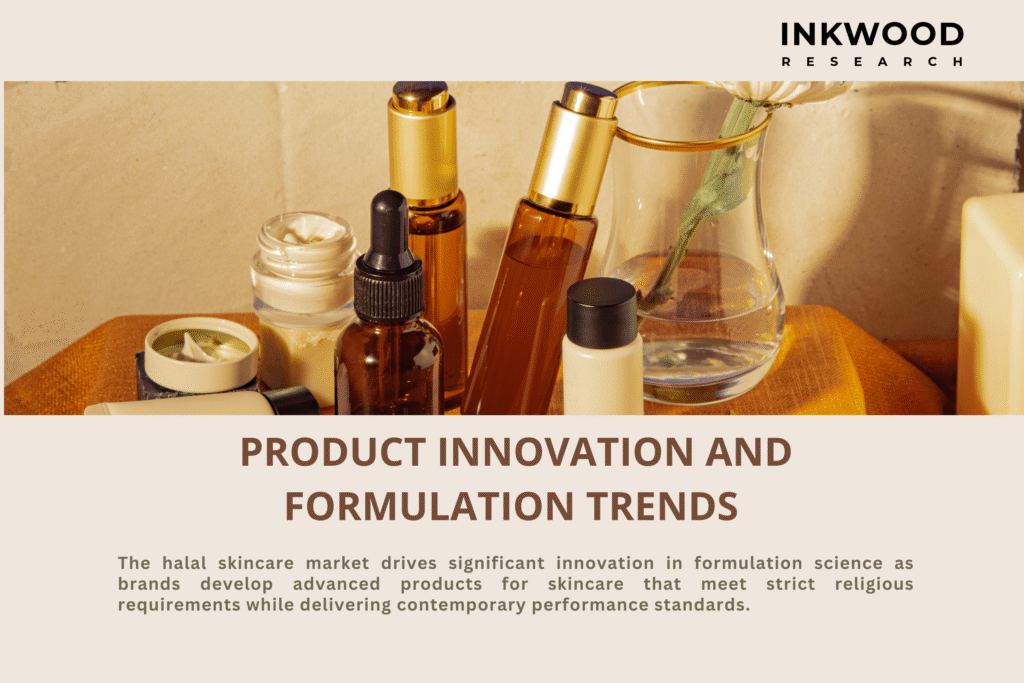
The halal skincare market drives significant innovation in formulation science as brands develop advanced products for skincare that meet strict religious requirements while delivering contemporary performance standards. Moreover, halal compliance constraints inspire creative ingredient selection and manufacturing processes that often result in cleaner, more natural formulations. According to our research, innovation focus areas include natural alternatives to prohibited ingredients and enhanced efficacy through plant-based actives.
Halal-Compliant Ingredient Innovation
Advanced skincare products development incorporates a sophisticated understanding of halal requirements with cutting-edge cosmetic science to create formulations that excel in both compliance and performance. Furthermore, brands invest heavily in sourcing plant-based alternatives to animal-derived ingredients while maintaining or improving product efficacy. The skin care routine products benefit from increased focus on natural botanical extracts and synthetic alternatives that align with halal principles.
Additionally, fermentation technologies enable the creation of advanced active ingredients through halal-compliant processes that deliver superior skincare benefits. Consequently, halal formulation requirements often drive innovation that benefits broader consumer markets through cleaner, more sustainable product development.
However, achieving optimal performance with halal-compliant ingredients requires extensive R&D investment and specialized formulation expertise. Subsequently, brands successfully navigating these challenges gain competitive advantages through proprietary formulation capabilities and consumer trust.
Traditional and Modern Integration
Indonesian halal beauty products increasingly incorporate traditional Islamic and Indonesian botanical knowledge with modern skincare science to create unique market positioning. Moreover, ingredients like turmeric, coconut oil, and other traditional beauty components gain renewed relevance through halal certification and scientific validation. The Islamic beauty trends reflect growing appreciation for ancestral beauty wisdom combined with contemporary performance expectations.
Furthermore, traditional Islamic beauty practices, including hijab-friendly formulations and modest beauty approaches, influence product development and marketing strategies. Similarly, seasonal and ritual beauty needs create opportunities for specialized product lines that serve religious observances and cultural celebrations.
The integration approach enables brands to differentiate through cultural authenticity while meeting modern consumer expectations for efficacy and convenience. Therefore, successful traditional-modern integration creates compelling brand stories and consumer connections that transcend pure product performance.
Distribution Channels and Market Access
The Indonesia skin care market distribution landscape demonstrates remarkable evolution as traditional retail channels adapt to halal consumer preferences while digital platforms create new market access opportunities. Moreover, successful halal skincare product distribution requires an understanding of Muslim consumer shopping behaviors and community influence patterns. According to our analysis, omnichannel strategies that combine traditional retail with digital engagement achieve optimal market penetration and consumer satisfaction.
Traditional Retail Evolution
Pharmaceutical stores and traditional beauty retailers increasingly emphasize halal cosmetics sections and staff training to serve religiously-conscious consumers effectively. Furthermore, these channels benefit from consumer trust in professional recommendations and product authenticity verification. The skincare market distribution through pharmacies particularly appeals to consumers seeking therapeutic benefits alongside halal compliance.
Additionally, department stores and specialty beauty retailers create dedicated halal sections that enable convenient product comparison and discovery. Consequently, traditional retail channels maintain importance while adapting to serve evolving consumer preferences and religious requirements.
However, retail partner education about halal requirements and consumer needs becomes essential for effective product promotion and customer service. Subsequently, brands investing in retail partner training achieve superior market performance through improved consumer experiences and authentic positioning.
Digital Commerce Leadership
E-commerce platforms, including Tokopedia, Shopee, and specialized beauty retailers like Sociolla, revolutionize halal beauty products accessibility through comprehensive online product information and consumer reviews. Moreover, digital channels enable detailed ingredient disclosure and certification verification that builds consumer confidence in halal claims. The products for the skincare category particularly benefit from online education content and community discussions about halal compliance.
Furthermore, social commerce integration creates seamless shopping experiences that combine content consumption with immediate purchasing opportunities. Similarly, mobile-first shopping behaviors align perfectly with Indonesia’s smartphone-dominant digital landscape and young demographic preferences.
Digital marketing strategies enable precise targeting of halal-conscious consumers while building authentic brand communities around shared values and lifestyle preferences. Therefore, brands successfully executing digital-first approaches achieve cost-effective customer acquisition and enhanced brand loyalty within the halal beauty segment.
Regulatory Framework and Certification
Indonesia’s halal skincare market operates within sophisticated regulatory frameworks that ensure consumer protection while supporting Islamic compliance requirements through comprehensive certification processes.
Moreover, government initiatives, including BPOM (National Agency of Drug and Food Control) oversight and halal certification requirements, create a structured market environment that builds consumer trust.
The government has taken steps to improve access to halal certification for local products, particularly in the cosmetics sector. A significant reduction in the halal certification registration fee for local products has been cut to USD 3.
Certification Process and Requirements
Halal cosmetics certification involves a comprehensive evaluation of ingredients, manufacturing processes, and supply chain compliance with Islamic principles throughout product development cycles. Furthermore, certification bodies, including MUI (Indonesian Ulema Council), provide authoritative halal validation that consumers trust for religious compliance verification. The skincare industry benefits from standardized certification processes that reduce compliance uncertainty while ensuring authentic halal positioning.
Additionally, ongoing certification maintenance requires continuous monitoring and documentation of halal compliance throughout manufacturing and distribution processes. Consequently, brands achieving halal certification demonstrate sustained commitment to Islamic principles that build long-term consumer trust and market credibility.
However, certification costs and complexity may challenge smaller brands while creating competitive advantages for companies investing in comprehensive halal compliance systems. Subsequently, regulatory framework understanding becomes essential for successful Indonesia skin care market entry and expansion strategies.
Government Support Initiatives
Indonesian government initiatives actively support halal beauty products development through reduced certification fees, expedited approval processes, and domestic manufacturing incentives. It has sped up the process, which allows cosmetic companies to complete halal registration in only fifteen days.
This effort seeks to create more effective and affordable halal certification procedures that promote broader compliance in the cosmetics industry. Moreover, these initiatives recognize the halal beauty industry’s potential for economic development and export market expansion.
Furthermore, government support includes trade promotion, international market access facilitation, and technology transfer programs that strengthen domestic halal beauty capabilities. Similarly, educational initiatives improve industry understanding of halal requirements and certification processes.
The supportive regulatory environment creates favorable conditions for both domestic and international brands investing in Indonesia’s halal beauty ecosystem. Therefore, companies leveraging government support programs gain competitive advantages through reduced compliance costs and enhanced market access opportunities.
Key Takeaways
- Indonesia’s halal skincare market demonstrates exceptional growth potential through the authentic integration of Islamic values with modern beauty innovation, creating unprecedented opportunities for brands embracing religious compliance and cultural sensitivity.
- Moreover, successful market participation requires genuine commitment to halal principles rather than superficial positioning adjustments. Our research reveals that companies achieving authentic halal positioning through comprehensive certification and community engagement establish sustainable competitive advantages.
- Furthermore, the Muslim consumer preferences drive innovation in formulation science, ingredient sourcing, and marketing approaches that often benefit broader consumer segments through cleaner, more ethical product development. Similarly, digital transformation accelerates halal beauty accessibility while enabling precise targeting and community building around shared values.
- The Indonesia skin care market rewards brands successfully balancing religious requirements with contemporary performance expectations through sustained investment in halal compliance, consumer education, and authentic brand positioning.
- Therefore, companies embracing Indonesia’s halal beauty opportunity with genuine cultural understanding and long-term commitment will capture the most significant growth potential within this dynamic market landscape.
Conclusion: The Future of Halal Beauty
Indonesia’s halal skincare market represents a transformative opportunity where Islamic principles inspire innovation rather than limiting possibilities within the global skincare industry. Moreover, the market demonstrates how religious consciousness can drive sophisticated consumer behavior that demands both spiritual integrity and contemporary performance. Our analysis indicates that halal beauty success requires authentic commitment to Islamic values combined with investment in advanced formulation science and consumer engagement.
Furthermore, the Islamic beauty trends influence extends beyond Indonesia’s borders as global Muslim populations seek authentic halal alternatives and ethical consumption choices. Similarly, the integration of traditional wisdom with modern science creates compelling product differentiation that resonates with diverse consumer segments worldwide.
The future of halal cosmetics depends on continued innovation, authentic brand positioning, and sustained commitment to serving Muslim consumers with dignity and respect throughout their beauty journeys. Therefore, brands successfully embracing halal beauty principles while delivering exceptional performance will define the next chapter of inclusive beauty industry evolution.
If you need customized consultation contact us now.
Frequently Asked Questions (FAQs)
Indonesia’s halal skincare market is driven by the world’s largest Muslim population (87%), rising middle-class purchasing power, and government support, reducing halal certification fees to $3. Young consumers increasingly align beauty choices with Islamic values while demanding modern performance.
Wardah dominates as the pioneering local halal brand, while international players like L’Oréal, Unilever, and P&G invest heavily in halal certification. Local brands maintain advantages through cultural authenticity, while global brands leverage advanced R&D and distribution networks.
Halal certification requires comprehensive ingredient evaluation, manufacturing process compliance, and supply chain monitoring. While adding complexity and costs, it often drives innovation toward cleaner, plant-based formulations that benefit broader consumer segments beyond Muslim markets.