Table of Contents
This analysis is brought to you by Inkwood Research, a leading market intelligence firm specializing in South Asian medical technology, affordable healthcare innovations, and emerging market dynamics. Our research team combines extensive experience analyzing the India retinal imaging devices market, smartphone-based diagnostic platforms, and AI integration across primary care settings in developing economies. Based on our proprietary research methodologies and strategic partnerships with Indian medical device manufacturers, hospital networks, government health programs, and technology startups, we deliver actionable insights that empower strategic decision-making for global enterprises navigating India’s healthcare innovation ecosystem and retinal imaging market expansion.
TLDR
India’s homegrown medical device innovators transform global eye care through affordable, portable retinal imaging devices that bring diagnostics to underserved populations. Companies like Forus Health, Remidio, and Eyestem demonstrate that innovation thrives when addressing real-world accessibility challenges. Their smartphone-based fundus cameras cost one-fifth the price of conventional systems while maintaining clinical accuracy. Additionally, offline AI capabilities enable diabetic retinopathy screening in areas with limited internet connectivity, expanding access to millions who previously lacked specialist care.
Medical device investors evaluating emerging market opportunities, healthcare administrators seeking cost-effective diagnostic solutions, ophthalmology clinic operators in resource-limited settings, and telehealth program managers expanding retinal screening coverage will find this invaluable. Furthermore, healthcare policy makers designing national screening programs, social impact investors supporting healthcare access, and clinical researchers studying portable imaging effectiveness benefit from understanding India’s approach to democratizing eye care through indigenous innovation.
India’s Retinal Imaging Innovation Ecosystem
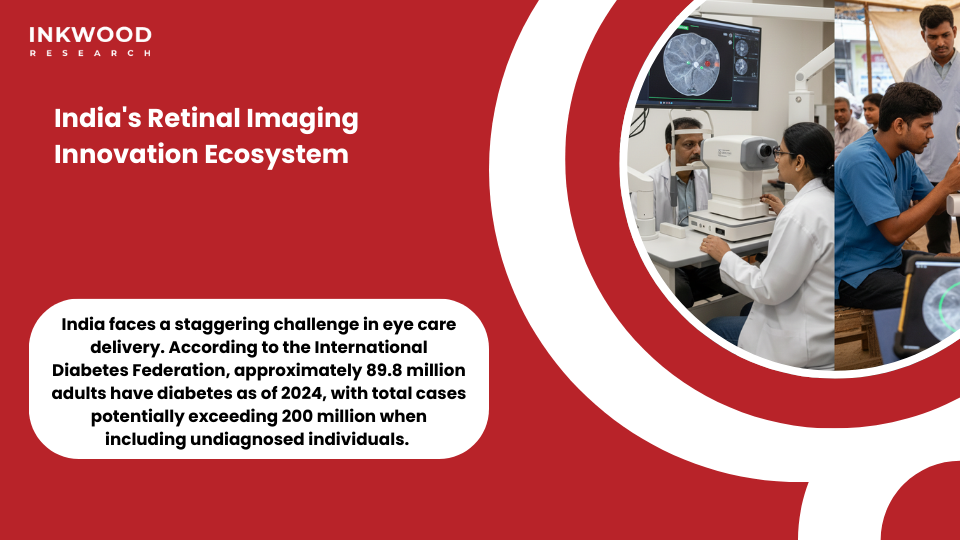
India faces a staggering challenge in eye care delivery. According to the International Diabetes Federation, approximately 89.8 million adults have diabetes as of 2024, with total cases potentially exceeding 200 million when including undiagnosed individuals. Meanwhile, a November 2025 AIIMS survey reports only 20,944 ophthalmologists nationwide—approximately 15 per million population—with even fewer trained as retina specialists.
This critical shortage, compounded by severe urban-rural distribution imbalances where most specialists concentrate in cities, drives innovation in portable retinal imaging devices designed for primary care settings. Moreover, geographical barriers and limited awareness prevent millions from accessing traditional hospital-based diagnostics, making early detection technologies essential for preventing diabetic retinopathy-related blindness.
The Access Challenge
Traditional tabletop retinal imaging systems present multiple obstacles in Indian contexts. These devices cost upwards of five times more than innovative alternatives, placing them beyond reach for most rural clinics. Additionally, their size and weight requirements demand dedicated spaces that small health centers cannot provide. Consequently, patients must travel long distances to urban hospitals for basic screenings.
Indian innovators recognized these systemic barriers and developed solutions specifically addressing local needs. For instance, Remidio Fundus on Phone’s (FOP) handheld retinal imaging devices weigh one-twentieth the size of conventional systems while delivering comparable image quality. This dramatic reduction in cost and complexity transforms where and how screenings occur.
Furthermore, India’s National Program for Prevention & Control of Blindness (NPCB) catalyzes state-level device procurements. Government support through this program accelerates the adoption of indigenous technologies across public health networks. According to official health data, diabetic retinopathy remains the leading cause of preventable blindness, making early screening interventions critical for preserving vision.
Forus Health: Pioneering Affordable Diagnostics
Company Background and Mission
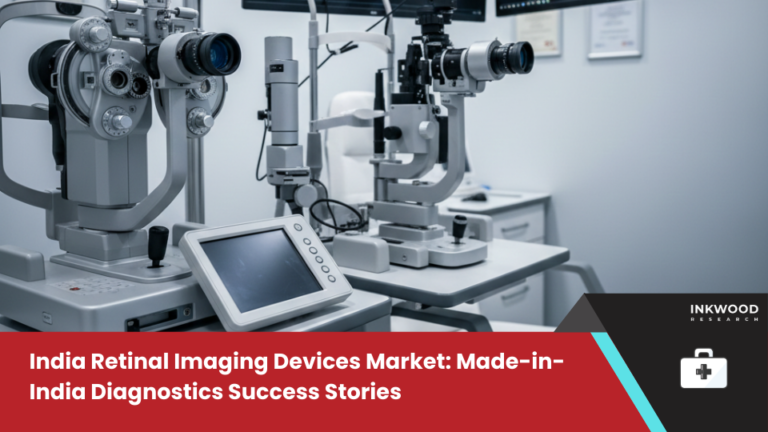
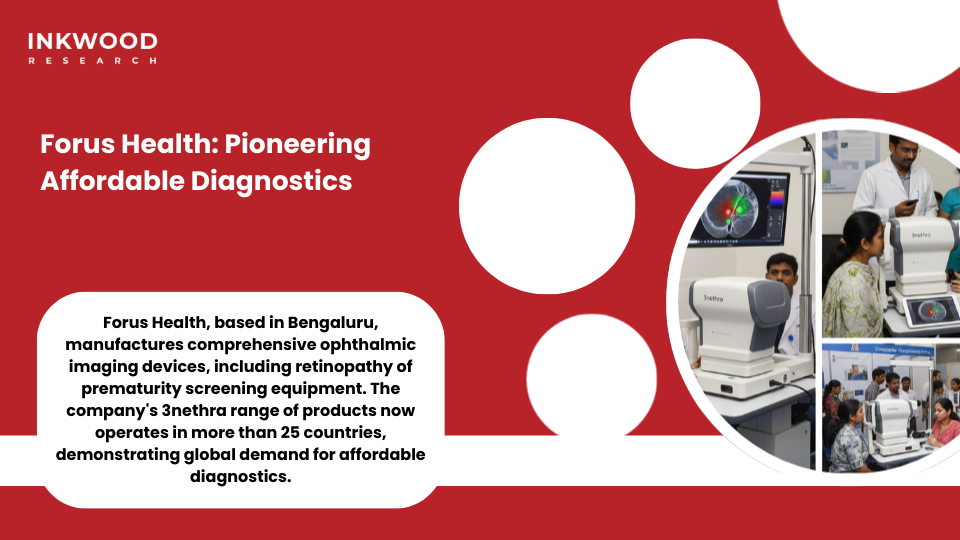
Forus Health, based in Bengaluru, manufactures comprehensive ophthalmic imaging devices, including retinopathy of prematurity screening equipment. The company’s 3nethra range of products now operates in more than 25 countries, demonstrating global demand for affordable diagnostics. Their corporate eye screening programs focus on enhancing employee health through on-site examinations using advanced diagnostic technology.
The company’s philosophy centers on making eye care accessible rather than exclusive. Traditional equipment manufacturers often prioritize features for specialized hospitals, creating affordability gaps. Conversely, Forus designs products specifically for mass screening applications where cost-per-examination drives adoption decisions.
Technology and Innovation
Forus Health’s patented technologies shape the future of accessible diagnostics. Moreover, their integrated apparatus for visual function testing combines multiple assessment modalities into unified platforms. This consolidation reduces equipment needs while improving workflow efficiency in busy clinics.
The 3nethra fundus camera, mentioned in NCBI clinical references, represents table-top imaging designed for Indian healthcare contexts. These devices balance affordability with diagnostic capability, making them suitable for district hospitals and larger primary care centers. Accordingly, image quality meets international standards while pricing reflects local economic realities.
Global Expansion Strategy
Donny Thomas, who joined Forus Health in 2012, played a vital role in developing international sales programs. In just four years, he successfully introduced the 3nethra range to more than 25 countries. Subsequently, he led the establishment of Forus Health’s US subsidiary in 2016, laying the foundations for North American market presence.
This global footprint validates the universal applicability of India’s affordability-focused design philosophy. Ambulatory surgical center retinal imaging equipment needs similar solutions worldwide, not just in emerging markets. Forus demonstrates that addressing India’s challenges creates products competitive in any market.
Remidio: Smartphone Revolution

Fundus on Phone Technology
Remidio Innovative Solutions disrupted retinal imaging with their Fundus on Phone (FOP) device. This smartphone-based imaging system mates with commercially available smartphones to acquire retinal photographs. The annular illumination design eliminates corneal reflection, a common challenge in portable imaging.
The FOP provides a 45-degree field of view for fundus photography systems, operating in both handheld mode and slit lamp configurations. This flexibility allows clinicians to adapt the device to different clinical scenarios. Four-field imaging captures macula-centered, disc-centered, and temporal quadrant views comprehensively.
Clinical Validation and Accuracy
Published research demonstrates the FOP’s clinical effectiveness. A comparative study evaluated sensitivity and specificity against conventional tabletop cameras. Graders reported sensitivity of 93.1% to 94.3% and specificity of 89.1% to 94.5% for detecting diabetic retinopathy. These results match or exceed traditional equipment performance.
Image quality assessments revealed surprising findings. Graders classified significantly fewer images as ungradable from the Remidio FOP (1.7%-2.1%) compared to Topcon devices (2.6%-4.3%). Moreover, they rated more images as excellent from the FOP (59%-74%) versus tabletop systems (52%-61%). These metrics indicate the smartphone-based approach doesn’t compromise diagnostic quality.
AI Integration and Offline Capabilities
Remidio’s Medios DR AI algorithm represents a breakthrough for resource-limited settings. This AI-powered diagnostic system detects referable diabetic retinopathy in less than seven seconds without internet connectivity. Offline operation eliminates dependency on reliable broadband, which often proves unavailable in rural areas.
The Central Drugs Standard Control Organisation (CDSCO) approved Medios DR AI in October 2024, permitting nationwide commercial rollout. This regulatory clearance validates the technology’s clinical reliability. Subsequently, Remidio secured CDSCO approval for AI modules targeting glaucoma and age-related macular degeneration in May 2025, expanding their regulatory-cleared portfolio.
Strategic Partnerships
Intelligent Retinal Imaging Systems (IRIS) partnered with Remidio in October 2019 to bring their innovative non-mydriatic fundus camera to the U.S. market. This collaboration couples IRIS’s software and services program with affordable, high-quality handheld cameras. Accordingly, service providers can successfully adopt telemedicine programs without significant capital investments.
Kerala launched Nayanamritham 2.0 in February 2025, India’s first state-wide AI eye-disease screening network. Remidio partnered with state health authorities to deploy this comprehensive program. The initiative demonstrates how smartphone-based imaging scales to population-level screening.
Eyestem: Cell Therapy Breakthrough
Beyond Imaging to Treatment
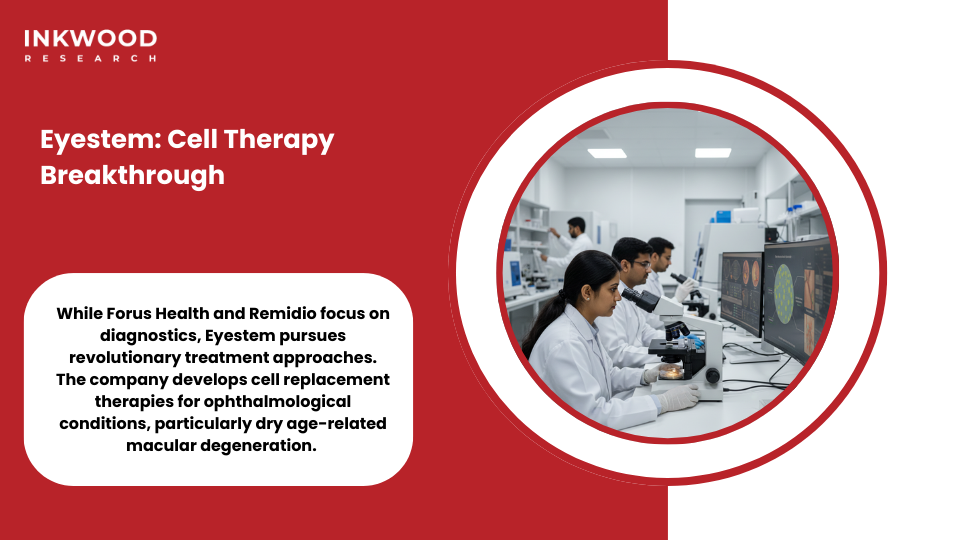
While Forus Health and Remidio focus on diagnostics, Eyestem pursues revolutionary treatment approaches. The company develops cell replacement therapies for ophthalmological conditions, particularly dry age-related macular degeneration. Their Eyecyte-RPE product contains retinal pigment epithelium cells derived from human induced pluripotent stem cells.
This therapy aims to replace damaged RPE cells in the retina, which play critical roles in dry AMD progression. Current treatments offer limited effectiveness for this condition. Consequently, Eyestem’s approach represents a potential breakthrough therapy for millions facing irreversible vision loss.
Technology Platform
Eyestem’s research spans multiple areas of ophthalmology. Studies on AI classification and segmentation of age-related macular degeneration demonstrate their commitment to integrating diagnostic and therapeutic innovations. Additionally, systematic studies of deep learning architectures analyze glaucoma and hypertensive retinopathy.
The company’s work on interferometry video frames for dry eye analysis showcases broader ophthalmic applications. Furthermore, regression-based approaches to diabetic retinopathy diagnosis using EfficientNet highlight machine learning integration. In all, these research initiatives position Eyestem as a comprehensive eye care innovator.
Clinical Development Path
Cell therapy development requires extensive clinical validation before widespread adoption. Eyestem’s approach to arresting and reversing vision loss in dry AMD patients represents ambitious goals. However, successful development could transform treatment paradigms for one of ophthalmology’s most challenging conditions.
The company’s presence in India’s startup ecosystem demonstrates the nation’s capabilities beyond medical devices. Biotechnology and regenerative medicine innovations complement hardware developments, creating a holistic eye care innovation cluster. This diversity strengthens India’s position in global ophthalmology markets.
Market Growth and Projections
Market Size and Trajectory
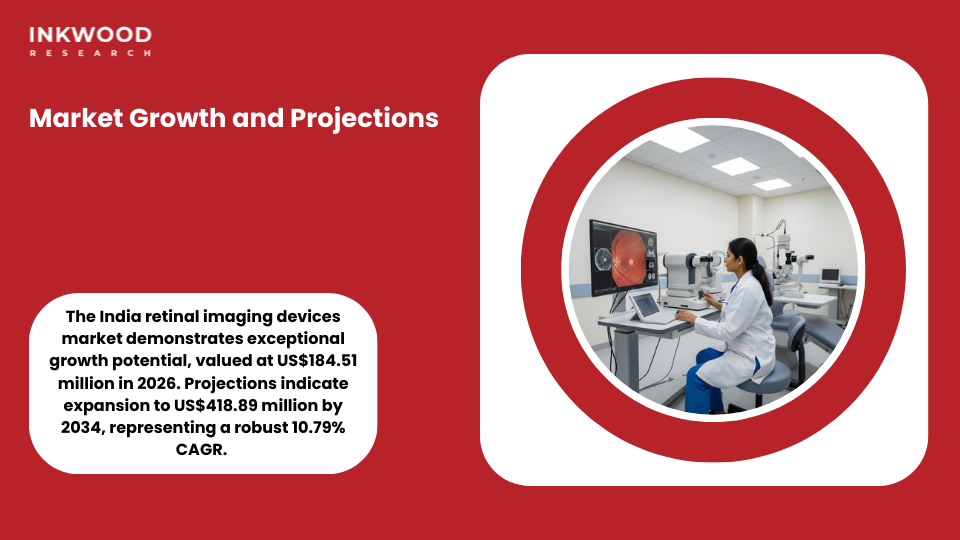
The India retinal imaging devices market demonstrates exceptional growth potential, valued at US$184.51 million in 2026. Projections indicate expansion to US$418.89 million by 2034, representing a robust 10.79% CAGR. This growth rate outpaces many developed markets, reflecting rapid healthcare infrastructure development.
Several factors drive this impressive trajectory. First, rising diabetes prevalence creates expanding screening populations requiring regular retinal examinations. Second, government health programs increasingly prioritize preventive care over reactive treatment. Third, declining device costs through indigenous manufacturing improve accessibility across income levels.
Segment Analysis
Diagnostic and monitoring devices, including portable OCT scanners, smartphone-linked fundus cameras, and home tonometry kits, blend affordability with clinical precision. Regulatory acceptance of offline AI, illustrated by CDSCO’s approval of Remidio’s Medios DR AI in 2024, enhances clinician confidence.
Investment flows into cloud platforms that analyze imaging data, trading upfront hardware margins for subscription revenues. This shift toward service-based models aligns with Indian healthcare economics. Clinics prefer lower initial investments with predictable ongoing costs rather than large capital outlays.
Competitive Dynamics
Indigenous contenders led by Remidio, Sankara Health Innovation, and Forus Health deliver smartphone-integrated retinal cameras and AI screening engines operating offline. Industry analysis indicates Remidio’s $25 million venture funding round in 2024 elevated its valuation to $67.5 million. This investment accelerates product development and market expansion.
Domestic innovation unlocks price points that Tier-III clinics can afford without sacrificing diagnostic accuracy. This pulls latent demand into formal channels as previously unserved populations gain access. International brands react by exploring licensing or co-manufacturing deals to maintain relevance across the Indian market.
Recent Developments and Milestones
Regulatory Achievements (2024-2025)
May 2025 marked significant regulatory progress when Remidio received CDSCO approval for AI modules targeting glaucoma and age-related macular degeneration. This expanded their regulatory-cleared portfolio beyond diabetic retinopathy screening. Multiple condition detection from single imaging sessions improves efficiency while reducing patient burden.
Dr. Mohan’s Diabetes Specialities Center deployed an in-house AI algorithm in April 2025 that flags early retinal lesions during routine diabetes check-ups. This integration raised screening coverage for their 350,000 patient base. Early detection capabilities improve treatment outcomes while demonstrating AI’s practical value in high-volume clinical settings.
State-Level Initiatives
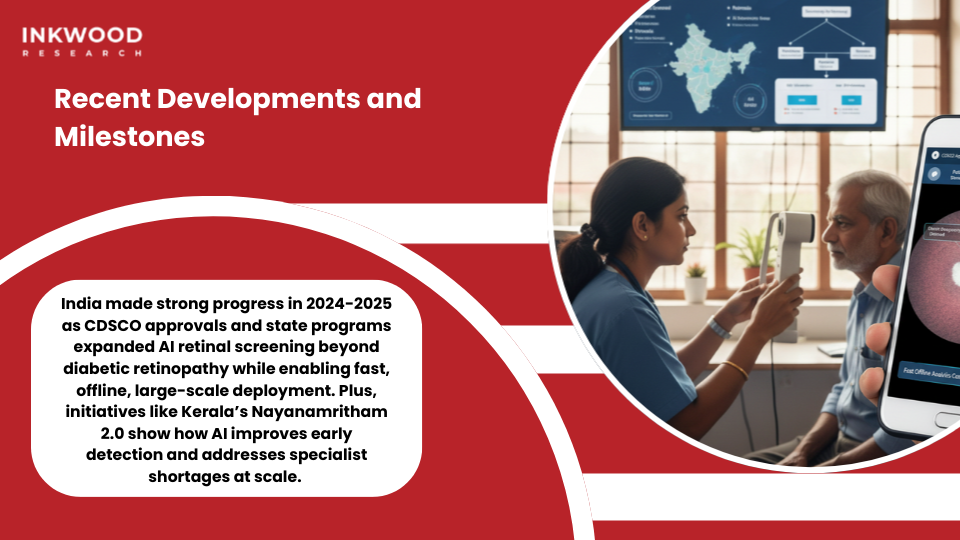
Kerala’s Nayanamritham 2.0 launch in February 2025 represents India’s first state-wide AI eye-disease screening network. Partnership between Remidio and state health authorities demonstrates successful public-private collaboration. This model potentially replicates across other Indian states, multiplying impact.
The program’s emphasis on AI-powered screening addresses specialist shortages effectively. Non-ophthalmologist healthcare workers can conduct screenings with AI providing diagnostic support. Positive cases receive referrals to specialists, optimizing limited expert resources.
Technology Advancements
Remidio’s Medios DR AI secured CDSCO clearance in October 2024 as an offline diabetic-retinopathy solution. This permit allows nationwide commercial rollout without connectivity requirements. The seven-second analysis time makes mass screening practical in busy primary care settings.
Studies published in Nature Eye Journal demonstrate very high sensitivity for detecting diabetic retinopathy (95.8%) and sight-threatening DR (99.1%) using Remidio’s FOP device combined with EyeArt AI. These performance metrics validate smartphone-based approaches as clinically equivalent to traditional methods.
Key Takeaways
- India’s retinal imaging innovation demonstrates how resource constraints drive creative solutions with global applicability. The smartphone-based approach pioneered by Remidio reduces costs by 80% while maintaining clinical accuracy. This affordability breakthrough enables screening programs that were previously economically unfeasible.
- Offline AI capabilities represent critical innovations for emerging markets. Internet connectivity remains unreliable in many areas requiring screening services. Technologies that function independently of broadband infrastructure expand accessible care dramatically. This design philosophy should inform medical device development worldwide.
- Public-private partnerships accelerate technology adoption and impact. Kerala’s Nayanamritham 2.0 program shows how state governments can leverage private sector innovations for population health. Similarly, NPCB’s procurement programs provide market certainty that encourages domestic manufacturing investment.
- The global retinal imaging devices market benefits from Indian innovations that prove affordability and quality are not mutually exclusive. Indigenous manufacturers demonstrate that addressing developing market needs creates globally competitive products. This reverses traditional technology transfer patterns where developed markets innovate for emerging markets to adopt.
Conclusion:
Made-in-India success stories in retinal imaging provide blueprints for healthcare innovation in resource-limited contexts. Forus Health, Remidio, and Eyestem approach different aspects of eye care with a shared commitment to accessibility. Their combined impact reaches millions who previously lacked access to specialist diagnostics.
The India retinal imaging devices market continues its impressive growth trajectory as indigenous innovations gain domestic and international recognition. Moreover, regulatory support through CDSCO approvals and government procurement programs creates favorable conditions for continued innovation. The 10.79% CAGR through 2034 reflects both market maturation and expanding addressable populations.
These companies demonstrate that emerging markets can lead rather than follow in medical technology development. By solving India’s unique challenges, they create products applicable worldwide. This positions India as an exporter of healthcare innovation rather than merely an importer of developed market technologies.
Interested in understanding how Indian innovations can inform your market strategy?
Our team at Inkwood Research provides comprehensive analysis of emerging market medical device sectors, competitive intelligence on indigenous manufacturers, and strategic recommendations for entering or expanding in South Asian markets. Contact us today to discover how affordability-focused innovations reshape global ophthalmology imaging devices dynamics.
Frequently Asked Questions
How do smartphone-based fundus cameras compare in image quality to traditional systems?
Clinical studies show smartphone-based devices like Remidio’s Fundus on Phone achieve a sensitivity of 93-94% and a specificity of 89-95% for diabetic retinopathy detection. Notably, these devices produce fewer ungradable images (1.7-2.1%) compared to traditional tabletop cameras (2.6-4.3%), while graders rate more images as excellent quality. The annular illumination design eliminates corneal reflections that plague other portable systems.
What makes offline AI capability important for retinal screening in India?
Many Indian rural and semi-urban areas lack reliable broadband internet connectivity, making cloud-based AI impractical for mass screening. Offline AI algorithms like Remidio’s Medios DR process images locally in under seven seconds without internet dependency. This enables screening in primary health centers, mobile clinics, and community settings where connectivity is intermittent or unavailable, dramatically expanding access.
Can Indian manufacturers compete with established global brands in export markets?
Indian companies increasingly compete globally by offering equivalent diagnostic performance at significantly lower price points. Remidio’s partnership with IRIS for U.S. market entry and Forus Health’s presence in 25+ countries demonstrate export success. Their products attract attention in developed markets seeking cost-effective telehealth solutions, particularly for primary care and home health applications where traditional systems prove impractical.