Table of Contents
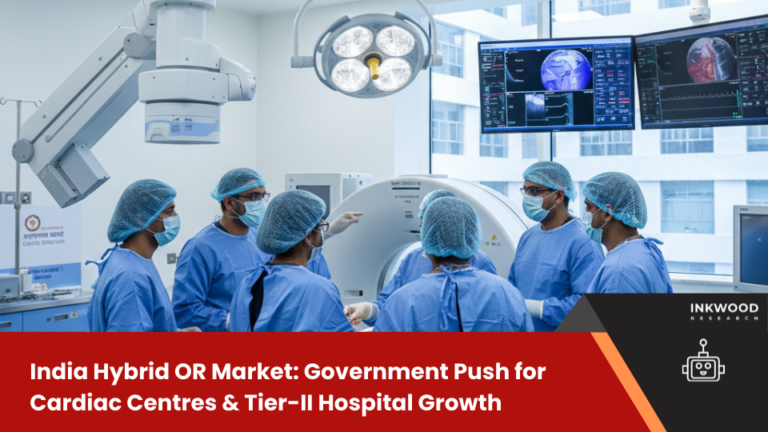
This analysis is brought to you by Inkwood Research, a leading market intelligence firm specializing in Indian healthcare infrastructure development, tertiary care expansion programs, and medical technology adoption patterns across metropolitan and emerging urban markets. Our research team combines extensive experience analyzing India’s hospital sector dynamics, government healthcare initiatives, and surgical technology integration within public and private healthcare systems. Based on our proprietary research methodologies and strategic partnerships with Indian hospital chains, medical equipment distributors, and healthcare policy institutions, we deliver actionable insights that empower strategic decision-making for enterprises navigating India’s rapidly evolving hybrid operating room landscape.
TLDR
India’s integrated operating room market reached US$82.57 million in 2026 and projects growth to US$268.18 million by 2034 at 15.87% CAGR. Government initiatives expand cardiac surgery capacity across Tier-II cities through strategic hospital development programs. Major private hospital chains, including Apollo, Fortis, Narayana Health, and Medanta, invest substantially in hybrid OR infrastructure. Public sector institutions like AIIMS introduce hybrid cardiac operating rooms nationwide. Cardiovascular disease accounts for 28% of Indian mortality according to the WHO, driving urgent hybrid OR adoption for advanced cardiac interventions.
Hospital administrators in Tier-II cities, cardiac surgery program directors, healthcare investors targeting Indian markets, medical equipment suppliers, government healthcare policy planners, private hospital chain executives, cardiovascular surgeons, interventional cardiologists, and healthcare infrastructure developers will gain valuable insights into India’s hybrid/integrated operating room market expansion patterns, government initiatives, investment opportunities, and strategic considerations for establishing advanced surgical capabilities in emerging urban markets.
India’s Hybrid Operating Room Market: Addressing Cardiovascular Care Gaps
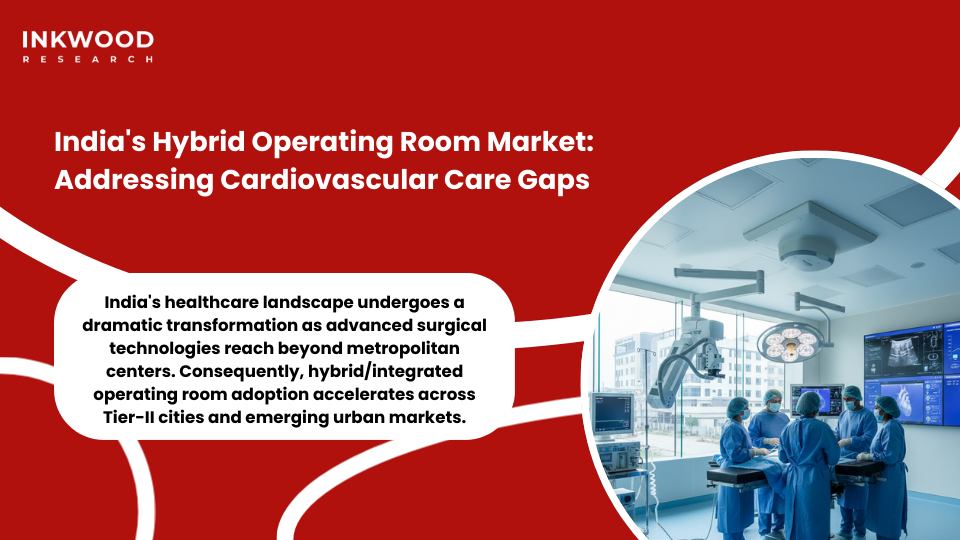
India’s healthcare landscape undergoes a dramatic transformation as advanced surgical technologies reach beyond metropolitan centers. Consequently, hybrid/integrated operating room adoption accelerates across Tier-II cities and emerging urban markets. These sophisticated surgical environments address critical gaps in cardiovascular care delivery throughout the country.
Market Size and Growth Projections
Based on our analysis, India’s integrated/hybrid operating room market demonstrates an exceptional growth trajectory through 2034. Market valuation reached US$82.57 million in 2026, according to industry research. Projections indicate substantial expansion to US$268.18 million by 2034, representing a robust 15.87% compound annual growth rate during this forecast period.
Moreover, this growth rate significantly exceeds the global hybrid OR market expansion pace. India’s accelerated adoption reflects both substantial unmet healthcare demand and aggressive infrastructure investment programs. Furthermore, rising health insurance penetration through schemes like Ayushman Bharat makes advanced cardiac procedures financially accessible for broader population segments. Consequently, hybrid OR implementation becomes economically viable across more hospitals nationwide.
The Cardiovascular Disease Burden Driving Adoption
Cardiovascular diseases represent a leading cause of mortality in India. According to WHO data, cardiovascular conditions account for 31% of deaths nationwide. This substantial disease burden creates urgent demand for advanced cardiac surgical capabilities across the country. Meanwhile, traditional cardiac surgery infrastructure remains concentrated in major metropolitan areas.
Nevertheless, patients from smaller cities historically traveled hundreds of kilometers to access specialized cardiac care in metros. This geographic disparity results in treatment delays, increased costs, and preventable complications. Therefore, expanding hybrid OR capacity into Tier-II cities addresses critical healthcare equity issues while capturing growing market demand for advanced cardiovascular interventions.
Government Initiatives Expanding Cardiac Surgery Capacity
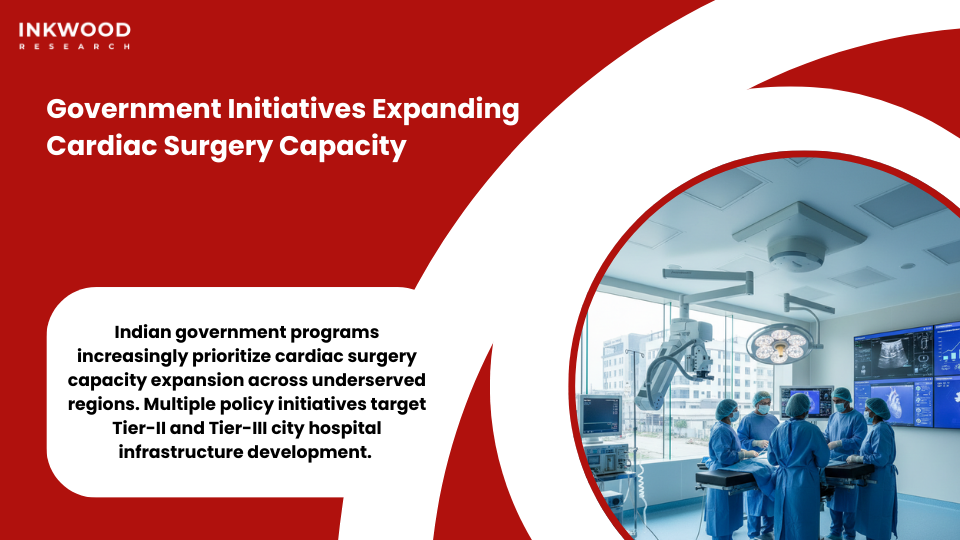
Indian government programs increasingly prioritize cardiac surgery capacity expansion across underserved regions. Multiple policy initiatives target Tier-II and Tier-III city hospital infrastructure development. These strategic programs aim to reduce geographic disparities in specialized surgical care access.
AIIMS Expansion and Hybrid OR Implementation
The All India Institute of Medical Sciences network expansion represents a cornerstone government initiative. Currently, 19 AIIMS facilities operate across India as of early 2023. Many of these institutions serve Tier-II cities previously lacking tertiary care infrastructure. Additionally, five more AIIMS facilities are anticipated to open by the end of 2025, further extending advanced surgical capabilities nationwide.
Furthermore, AIIMS institutions increasingly adopt hybrid operating room technology for cardiac programs. AIIMS Bhopal announced plans to introduce hybrid cardiac operating rooms in December 2024. This strategic investment enables the institution to perform complex cardiovascular procedures combining surgical and interventional approaches. Moreover, AIIMS Delhi conducted India’s first successful heart transplant in 1994, establishing public sector leadership in advanced cardiac care.
Ayushman Bharat and Healthcare Infrastructure Investment
Ayushman Bharat represents India’s flagship health insurance program, expanding coverage for low-income populations. This initiative fundamentally transforms healthcare economics by providing government-funded insurance for eligible families. Consequently, hospitals serving Ayushman Bharat beneficiaries can justify investments in advanced surgical infrastructure like hybrid ORs.
Additionally, the program creates demand-side pressure for quality cardiac surgery capacity across smaller cities. Beneficiaries increasingly seek specialized care rather than settling for basic treatments. Therefore, hospitals must upgrade capabilities to capture this expanding patient volume. Government initiatives like Pradhan Mantri Swasthya Suraksha Yojana complement Ayushman Bharat by funding infrastructure improvements at public hospitals.
Public-Private Partnership Models
State governments increasingly employ public-private partnership models to expand specialty hospital capacity. Punjab successfully built super-specialty PPP hospitals, transforming healthcare landscapes in Mohali and Bathinda. These collaborative arrangements leverage private sector expertise while maintaining public healthcare objectives. Moreover, government land allocation and regulatory support reduce barriers for private hospital development.
Furthermore, several states provide incentives for establishing cardiac surgery centers in underserved regions. Punjab offers seamless policy support through Invest Punjab, plus incentives for digital systems and PPP projects. Such programs accelerate hybrid OR adoption by reducing financial risks for private healthcare investors targeting Tier-II markets.
Private Hospital Chains Driving Tier-II Market Expansion
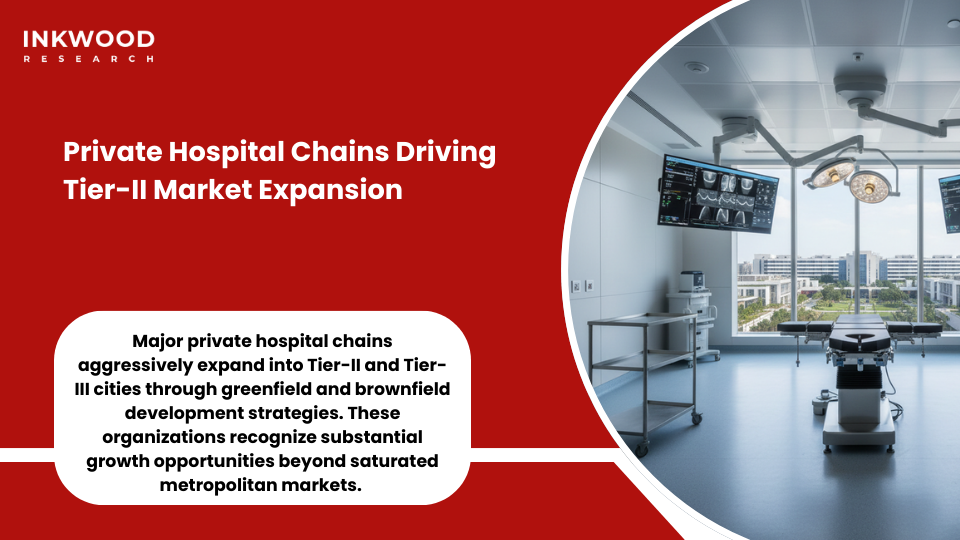
Major private hospital chains aggressively expand into Tier-II and Tier-III cities through greenfield and brownfield development strategies. These organizations recognize substantial growth opportunities beyond saturated metropolitan markets. Consequently, hybrid OR investments feature prominently in their expansion plans to support advanced cardiac surgery programs.
Apollo Hospitals Network Expansion
Apollo Hospitals maintains India’s largest private hospital network with 74 facilities and over 10,400 beds. The organization leads hybrid OR adoption through continuous infrastructure upgrades across its network.
Moreover, Apollo targets expansion into metro-adjacent and non-metro regions for new projects. Some facilities aim for 1,000+ new beds alongside allied medical colleges. Additionally, Apollo Hospitals announced plans in 2025 to add more beds and expand into additional metros. These expansion initiatives incorporate hybrid OR capabilities to support advanced cardiovascular, neurosurgical, and orthopedic programs.
Fortis Healthcare Strategic Investments
Fortis Healthcare adds 2,000 beds through brownfield expansions in Noida, Faridabad, and Gurugram while integrating facilities across Punjab. The organization operates in Ludhiana, Amritsar, Mohali, and Jalandhar. Fortis Memorial Research Institute in Gurgaon features unique hybrid operating suites supporting robotic heart surgery and minimally invasive techniques.
Furthermore, Fortis Escorts Heart Institute in New Delhi maintains nine operating theaters in the cardiology department equipped with ultra-modern infrastructure. The facility performs complex procedures, including Percutaneous Valve Therapies, Redo Operations, and Transmyocardial Laser Revascularization, routinely. Fortis reports that oncology contributes over 16% of revenue, indicating a diversified specialty focus beyond cardiac care.
Medanta and Narayana Health Innovations
Medanta – The Medicity in Gurgaon operates 1,250 beds across 29 super-specialty units. The hospital features nine modular operating theaters for cardiac surgeries, including a unique hybrid operating suite. Additionally, Medanta became India’s first hospital offering robotic surgeries in cardiac, urology, and gynecology specialties simultaneously in 2010.
Meanwhile, Narayana Health carved a niche in cardiac and pediatric care at affordable costs compared to metro-centric hospitals. This value proposition proves particularly attractive for middle-income families requiring quality cardiac surgery without astronomical expenses. Narayana Institute of Cardiac Sciences in Bangalore performs complex procedures, including heart transplants, offering high-volume cardiac surgery capabilities.
Regional Hospital Chains Targeting Underserved Markets
Regional hospital chains like Ujala Cygnus aggressively expand into underserved Tier-II and Tier-III cities. Ujala Cygnus acquired Amandeep Hospitals for Rs. 500 crore, bringing super-specialty care, including cardiac services, to Amritsar, Pathankot, and Firozpur. The organization plans to expand to the farthest corners of North India with 30 units by 2025.
Furthermore, Ujala Cygnus introduces specialty domains like cardiac surgery and organ transplants in hospitals across 20+ locations. The organization installs best-in-class operating theater suites to scale up cardiac surgery services. Districts like Jaunpur with populations exceeding 5 million lack adequate tertiary healthcare facilities, creating substantial market opportunities for regional chains.
Cardiac Surgery Applications Driving Hybrid OR Demand
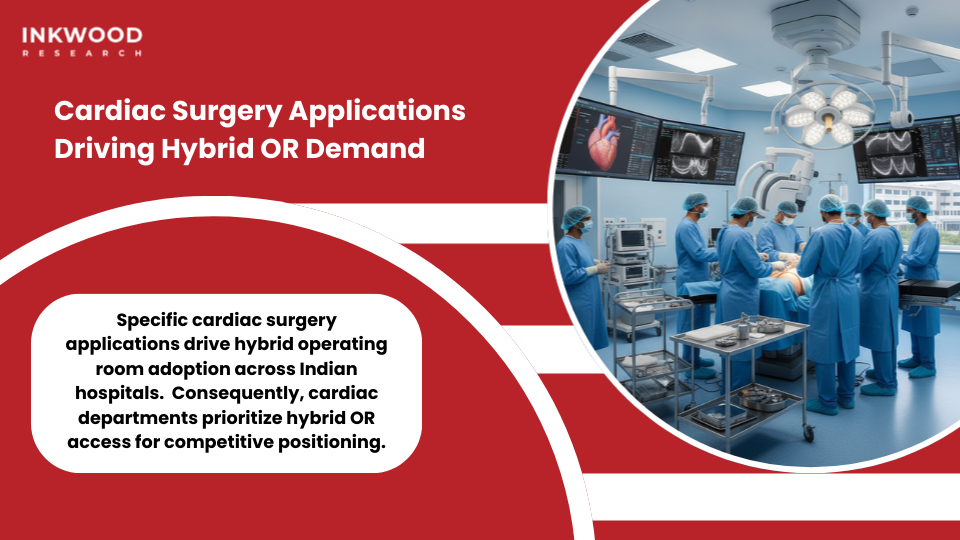
Specific cardiac surgery applications drive hybrid operating room adoption across Indian hospitals. Transcatheter valve procedures, complex aortic surgeries, and coronary interventions all benefit substantially from integrated imaging capabilities. Consequently, cardiac departments prioritize hybrid OR access for competitive positioning.
Transcatheter Aortic Valve Replacement Programs
Transcatheter Aortic Valve Implantation (TAVI) represents a transformative procedure requiring hybrid OR environments. Fortis Escorts Heart Institute performed India’s first TAVI procedure, pioneering this advanced technique domestically. Similarly, Medanta – The Medicity became a pioneering TAVR center in India for percutaneous transcatheter aortic valve replacement.
Moreover, these minimally invasive valve procedures enable treatment for patients deemed too high-risk for traditional open-heart surgery. Elderly patients with multiple comorbidities particularly benefit from TAVI approaches. However, successful programs require hybrid OR capabilities combining surgical backup with interventional catheterization facilities. Therefore, hospitals seeking TAVI program development must invest in appropriate hybrid infrastructure.
Complex Coronary Revascularization Procedures
Coronary artery bypass grafting remains one of India’s most common cardiac operations. Annual volumes increased from 10,000 procedures in the 1990s to more than 60,000 currently. Nevertheless, patients referred for surgery increasingly present with diffuse triple vessel disease, small coronaries, poor ventricular function, and poorly controlled diabetes with comorbidities.
Consequently, hybrid coronary revascularization combining surgical bypass with percutaneous interventions addresses these complex anatomies effectively. Hybrid ORs enable cardiac surgeons and interventional cardiologists to collaborate during single procedures. This integrated approach optimizes revascularization strategies while minimizing patient morbidity compared to staged procedures in separate locations.
Pediatric Cardiac Surgery Advancements
India performed its first pediatric heart transplantation in the early 2000s, expanding treatment options for children with end-stage heart failure. Additionally, hybrid approaches prove particularly valuable for congenital heart defects requiring combined surgical and catheter-based interventions. Percutaneous approaches can challenge pediatric patients due to low body weight, poor vascular access, and hemodynamic instability.
Nevertheless, hybrid operating rooms enable pediatric cardiac teams to address these challenges through collaborative intervention strategies. Surgeons provide vascular access and hemodynamic support while interventionalists perform catheter-based procedures. Moreover, this integrated approach reduces cumulative anesthesia exposure for vulnerable pediatric patients compared to staged procedures in separate facilities.
Infrastructure Challenges and Implementation Barriers
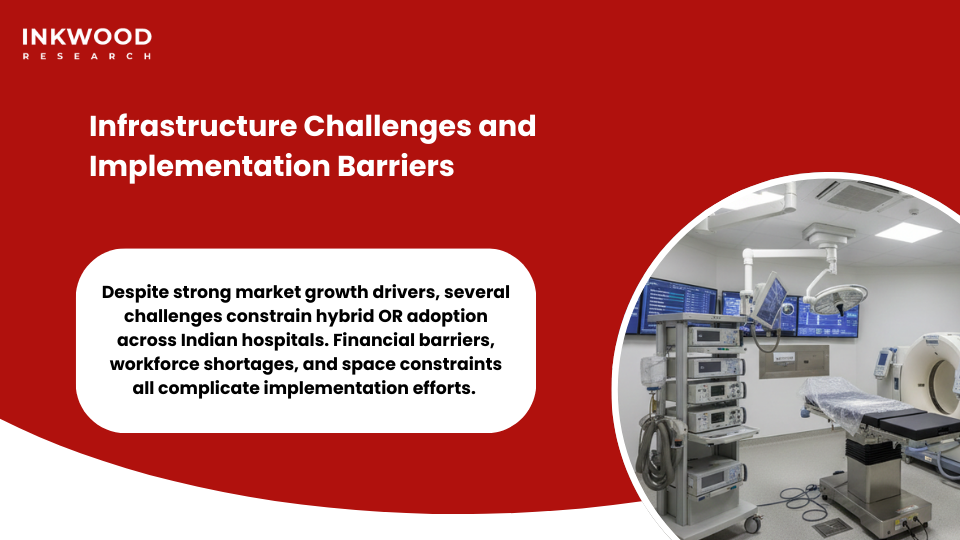
Despite strong market growth drivers, several challenges constrain hybrid OR adoption across Indian hospitals. Financial barriers, workforce shortages, and space constraints all complicate implementation efforts. Understanding these obstacles proves essential for realistic expansion planning.
Capital Investment Requirements
Hybrid operating room installations demand substantial capital investments ranging into multiple crores. Advanced imaging equipment, including angiography systems, CT scanners, and supporting infrastructure, comprises major expense categories. Additionally, specialized operating room fixtures, surgical instruments, and audiovisual display systems add significant costs.
Furthermore, construction modifications for increased space and radiation shielding require substantial budgets. Many existing hospitals lack adequate floor space or ceiling heights for hybrid OR equipment. Therefore, institutions must weigh hybrid OR benefits against alternative capital allocation priorities. Consequently, detailed financial modeling becomes critical before committing to these investments.
Skilled Workforce Availability
Approximately 80% of medical specialists reside in metropolitan areas, according to industry research. Tier-II and Tier-III cities need better retention schemes and training programs for healthcare workers. This workforce concentration creates challenges for hospitals establishing advanced surgical programs in emerging markets.
Moreover, hybrid OR operations require specialized skills beyond traditional surgical or imaging expertise. Operating room personnel must understand both surgical workflows and complex imaging equipment operation. Therefore, comprehensive training programs become essential but add implementation costs and timelines. Additionally, retaining trained staff in smaller cities presents ongoing challenges as metro hospitals offer competitive compensation.
Regulatory and Accreditation Considerations
Quality accreditation becomes increasingly important as hospitals compete for patient volumes and insurance contracts. NABH accreditation ensures quality care standards that patients and payers value. Additionally, international accreditations like JCI enhance a hospital’s reputation for medical tourism and corporate health programs.
Nevertheless, maintaining accreditation standards while implementing new hybrid OR programs requires substantial administrative effort. Regulatory compliance for radiation safety, infection control, and quality assurance adds complexity. Therefore, hospitals must balance rapid capacity expansion with maintaining rigorous quality and safety standards throughout implementation processes.
Strategic Opportunities for Market Participants

India’s hybrid operating room market presents substantial opportunities for various stakeholder categories. Medical equipment manufacturers, hospital operators, and healthcare investors can all capitalize on expanding demand. However, success requires understanding market-specific dynamics and local implementation challenges.
Equipment Manufacturers and Distribution Strategies
Leading manufacturers, including Siemens Healthineers, Philips Healthcare, and GE Healthcare, compete actively in India’s growing hybrid OR market. These organizations must adapt product offerings and pricing strategies for Indian healthcare economics. Additionally, developing strong local distribution networks and service capabilities proves essential for market success.
Furthermore, manufacturers can differentiate through financing solutions and turnkey implementation support. Many Indian hospitals require equipment financing arrangements to manage capital constraints. Moreover, comprehensive training programs and ongoing technical support add substantial value for hospital customers navigating complex technology adoption. Therefore, manufacturers emphasizing service and support capabilities often achieve competitive advantages.
Hospital Investment and Expansion Strategies
Hospital chains must strategically select Tier-II city markets offering optimal growth potential. Factors including population size, existing healthcare infrastructure, economic demographics, and competitive landscape all influence location decisions. Additionally, hospitals should align expansion strategies with government healthcare priorities to access policy support and public-private partnership opportunities.
Moreover, specialty-focused hospitals targeting cardiac, oncology, or orthopedic services offer higher revenue potential than general hospitals. Cardiovascular surgery programs generate substantial Average Revenue Per Occupied Bed (ARPOB) when supported by appropriate hybrid OR infrastructure. Therefore, hospitals emphasizing cardiac surgery capabilities alongside hybrid OR investments typically achieve stronger financial returns.
Healthcare Investment and Private Equity Opportunities
Private equity investment in Indian healthcare surged to Rs. 4,900 crore across 33 deals in Q2 2025. This investment momentum reflects strong sector fundamentals, including demographic trends, rising incomes, and expanding insurance coverage. Additionally, hospital infrastructure investments offer attractive long-term returns given India’s substantial unmet healthcare demand.
Furthermore, investors should target hospital chains with proven management capabilities and scalable expansion strategies. Organizations demonstrating strong operational metrics, including occupancy rates, ARPOB growth, and Return on Capital Employed, warrant premium valuations. Moreover, timing proves important as pre-empting capacity constraints in less-penetrated Tier-II towns offers early-mover advantages before markets become competitive.
Key Takeaways
- India’s integrated/hybrid operating room market reached US$82.57 million in 2026, with robust projections to US$268.18 million by 2034, representing a 15.87% CAGR substantially exceeding global market growth rates.
- Cardiovascular diseases account for 31% of Indian mortality according to WHO data, creating urgent demand for advanced cardiac surgery capabilities across underserved Tier-II and Tier-III cities.
- Government initiatives, including AIIMS network expansion, Ayushman Bharat insurance coverage, and public-private partnership programs, actively drive cardiac surgery capacity development beyond metropolitan centers.
- Major private hospital chains, including Apollo, Fortis, Medanta, and Narayana Health, aggressively expand into Tier-II cities with hybrid OR-equipped cardiac surgery programs, capturing growing patient volumes.
- Transcatheter aortic valve replacement procedures and complex coronary revascularization applications specifically drive hybrid OR adoption, with Indian hospitals pioneering TAVI programs domestically.
- Implementation barriers, including substantial capital requirements, skilled workforce shortages with 80% of specialists concentrated in metros, and regulatory compliance challenges, constrain the adoption pace.
- Regional hospital chains like Ujala Cygnus target underserved markets with 30-unit expansion plans, addressing populations exceeding 5 million in districts lacking adequate tertiary cardiac care.
- Equipment manufacturers must adapt pricing strategies, develop strong local distribution networks, and provide comprehensive financing and training support to succeed in India’s price-sensitive market.
- Private equity investment surged to Rs. 4,900 crore in Q2 2025, with investors targeting hospital chains demonstrating strong operational metrics and scalable Tier-II city expansion strategies.
Conclusion:
India’s hybrid/integrated operating room market stands at a critical inflection point as government initiatives and private sector investments converge to expand advanced cardiac surgery capacity nationwide. The substantial 15.87% projected CAGR through 2034 reflects both enormous unmet healthcare demand and strategic policy support accelerating infrastructure development beyond traditional metropolitan centers.
Moreover, cardiovascular disease burden, affecting 31% of Indian mortality, creates urgent imperatives for improving cardiac care access across underserved regions. Consequently, hybrid OR adoption enables hospitals to deliver sophisticated procedures previously available only in major metros. This geographic expansion addresses critical healthcare equity issues while capturing substantial commercial opportunities in rapidly growing Tier-II markets.
Nevertheless, successful implementation requires navigating substantial challenges, including capital constraints, workforce availability, and regulatory compliance requirements. Organizations approaching these investments strategically, through phased implementation, comprehensive training programs, and strong government partnership alignments, position themselves optimally to capture India’s exceptional hybrid OR market growth.
For organizations seeking deeper insights into India’s hybrid operating room market dynamics or strategic entry planning guidance, Inkwood Research offers comprehensive market intelligence and consulting services tailored to Indian healthcare infrastructure opportunities. Contact our team to explore how these market trends align with your institutional objectives and investment strategies.
Frequently Asked Questions
Why does India's hybrid OR market grow faster than global averages?
India’s 15.87% CAGR exceeds global rates due to substantial baseline capacity deficits, aggressive government healthcare infrastructure programs, and rapid Tier-II city hospital expansion. Additionally, rising health insurance coverage through Ayushman Bharat makes advanced cardiac procedures financially accessible for broader populations. Furthermore, cardiovascular disease, which accounts for significant mortality, creates urgent clinical demand, while private hospital chains aggressively invest in cardiac surgery capabilities to capture growing patient volumes across previously underserved markets.
Which government initiatives most significantly impact hybrid OR adoption?
AIIMS network expansion, establishing 19 operational institutions with five more planned by 2025, directly increases hybrid OR capacity in Tier-II cities. Ayushman Bharat health insurance coverage enables patients to access advanced cardiac procedures, justifying hospital investments in hybrid infrastructure. Additionally, Pradhan Mantri Swasthya Suraksha Yojana funds public hospital infrastructure improvements.
What distinguishes successful Tier-II market hybrid OR implementations?
Successful Tier-II implementations require specialty-focused strategies emphasizing cardiac, oncology, or orthopedic programs generating higher revenue per bed than general hospitals. Organizations must develop robust workforce recruitment and retention programs addressing the challenge that 80% of specialists concentrate in metros.