Table of Contents
This analysis is brought to you by Inkwood Research, a leading market intelligence firm specializing in Middle Eastern energy transformation, megaproject development, and renewable hydrogen production technologies. Our research team combines extensive experience analyzing large-scale electrolyzer deployments, solar and wind power integration, and green ammonia production across Saudi Arabia and broader Gulf Cooperation Council markets. Based on our proprietary research methodologies and strategic partnerships with regional energy developers, technology providers, and government entities, we deliver actionable insights that empower strategic decision-making for enterprises navigating the Middle East’s green hydrogen revolution.
TLDR
The Saudi Arabia green hydrogen market expands from US$202.55 million in 2026 to US$3,429.19 million by 2034 at 42.42% CAGR. NEOM’s $8.4 billion Oxagon facility produces 600 tonnes daily of carbon-free hydrogen through advanced PEM electrolysis powered by four gigawatts of solar and wind power. This renewable source integration enables 1.2 million tonnes of annual green ammonia production for global export markets. Construction progress demonstrates how renewable energy green hydrogen projects achieve unprecedented scale through innovative power green hydrogen technologies and electrolysis green hydrogen systems.
International hydrogen importers evaluating supply sources, megaproject developers planning large-scale facilities, ammonia producers seeking green alternatives, renewable energy investors analyzing Middle Eastern opportunities, shipping companies exploring clean maritime fuels, electrolyzer manufacturers tracking major deployments, and policy makers studying export-oriented hydrogen strategies will gain critical insights into how ambitious projects transform regional energy landscapes while establishing new international trade patterns for carbon-free industrial feedstocks.
Saudi Arabia Green Hydrogen Market: What is NEOM?
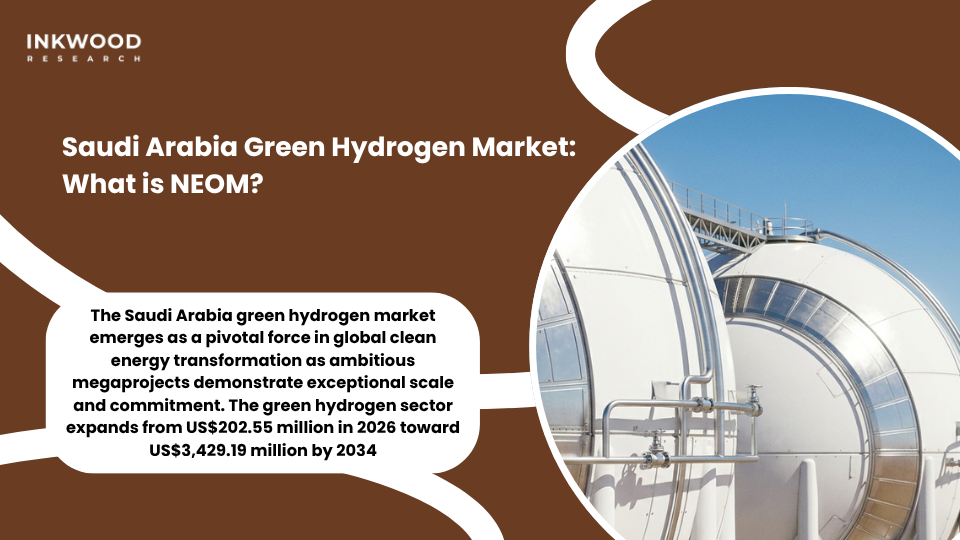
The Saudi Arabia green hydrogen market emerges as a pivotal force in global clean energy transformation as ambitious megaprojects demonstrate exceptional scale and commitment. According to our analysis, the green hydrogen sector expands from US$202.55 million in 2026 toward US$3,429.19 million by 2034, achieving an impressive 42.42% compound annual growth. This expansion reflects how strategic hydrogen investments combine with abundant renewable energy resources, enabling world-leading production capabilities.
Moreover, advanced PEM electrolysis technologies convert renewable source electricity from solar and wind power into massive volumes of clean hydrogen energy. Additionally, electrolysis green hydrogen production through renewable energy green power sources establishes export capabilities serving international markets demanding carbon-free industrial feedstocks.
NEOM’s green hydrogen facility represents the world’s largest commercially-based renewable hydrogen project under development. The $8.4 billion investment signals Saudi Arabia’s determination to lead global hydrogen markets. Furthermore, the project’s integration with NEOM’s broader sustainable city vision demonstrates comprehensive planning connecting energy, industry, and urban development. This holistic approach differentiates NEOM from conventional energy infrastructure projects.
Construction progress demonstrates how visionary megaprojects transition from concept through implementation phases. International partnerships bring together leading technology providers, engineering firms, and operational expertise. Consequently, NEOM establishes blueprints for future large-scale hydrogen facilities worldwide. Lessons learned will inform subsequent projects as the global hydrogen economy matures through the coming decades.
Understanding the Saudi Arabia Green Hydrogen Market Trajectory
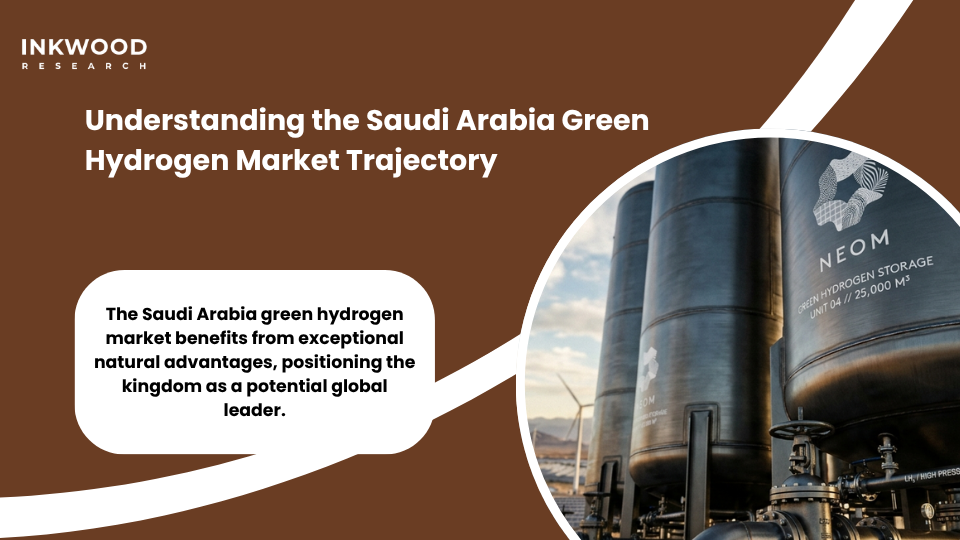
The Saudi Arabia green hydrogen market benefits from exceptional natural advantages, positioning the kingdom as a potential global leader. Solar irradiation levels rank among the world’s highest, enabling cost-effective photovoltaic generation. Additionally, wind resources along coastal regions provide complementary renewable capacity. These abundant resources create favorable economics for hydrogen production through electrolysis powered entirely by clean electricity.
Strategic Vision Driving Market Development
Saudi Arabia’s Vision 2030 framework prioritizes economic diversification beyond petroleum exports. Green hydrogen represents a strategic pathway to maintain energy sector leadership while transitioning toward sustainable resources. This approach leverages existing oil and gas expertise applied to new clean energy markets. Moreover, established international relationships with energy importers facilitate hydrogen trade network development.
Based on our research, the kingdom’s investment capacity enables ambitious projects that might prove challenging elsewhere. Sovereign wealth resources support long-term infrastructure development without immediate return requirements. This patient capital approach allows pioneering deployments, establishing market positions before competition intensifies. Consequently, Saudi Arabia can capture first-mover advantages in emerging hydrogen trade networks.
Export-Oriented Strategy and Global Demand
Saudi hydrogen strategy focuses primarily on export markets rather than domestic consumption. Asian economies, including Japan, South Korea, and Singapore, represent key target customers seeking clean energy imports. European markets pursuing decarbonization also offer substantial demand potential. These international relationships enable large-scale project development justified by confirmed offtake commitments.
According to our findings, ammonia serves as the primary hydrogen carrier for international transport. This approach leverages existing ammonia shipping infrastructure while avoiding pure hydrogen transport challenges. Destination facilities reconvert ammonia to hydrogen for end-use applications. Such practical considerations address logistical barriers that might otherwise constrain trade development.
NEOM Green Hydrogen Project: Scale and Investment Overview
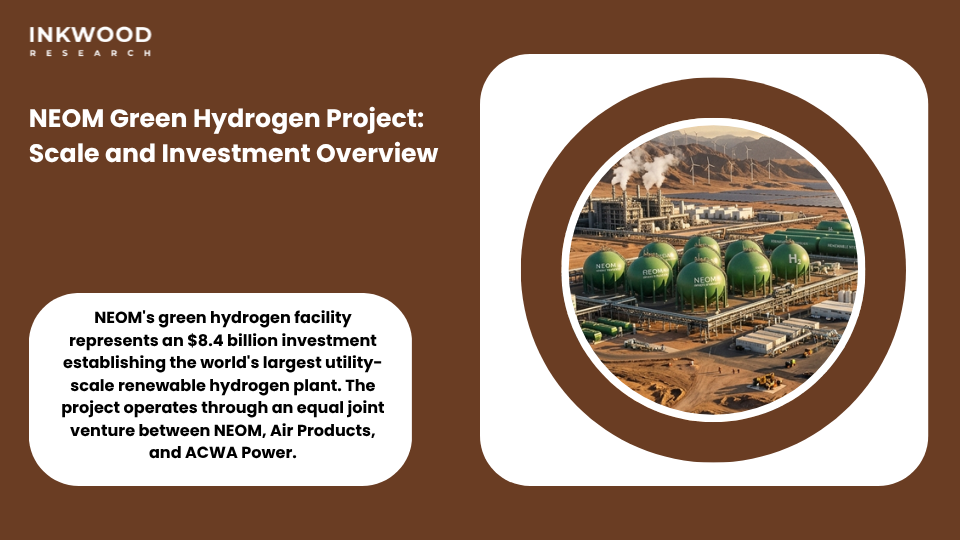
NEOM’s green hydrogen facility represents an $8.4 billion investment establishing the world’s largest utility-scale renewable hydrogen plant. The project operates through an equal joint venture between NEOM, Air Products, and ACWA Power. This partnership combines NEOM’s development resources, Air Products’ hydrogen technology leadership, and ACWA Power’s renewable energy expertise. Together, these partners bring complementary capabilities essential for successful megaproject execution.
Located within NEOM’s Oxagon industrial zone along the Red Sea coast, the facility benefits from excellent port access for equipment delivery and future export operations. The site’s geography provides abundant space for extensive solar arrays and wind turbine installations. Moreover, proximity to planned industrial consumers creates opportunities for domestic hydrogen sales, supplementing export revenue streams.
Project Components and Infrastructure
The integrated facility comprises four major components working in concert. First, renewable power generation through combined solar and wind installations totaling four gigawatts of capacity. Second, electrolyzer systems convert clean electricity into hydrogen through water splitting. Third, air separation units produce nitrogen for ammonia synthesis. Fourth, ammonia production facilities combining hydrogen and nitrogen into transportable green ammonia.
This comprehensive integration optimizes overall efficiency while minimizing energy losses between process stages. Colocation reduces transportation infrastructure requirements that would add costs and complexity. Furthermore, centralized operations enable shared facilities for water treatment, power management, and operational support. Such integration demonstrates sophisticated engineering, maximizing both technical performance and economic returns.
Environmental Impact and Carbon Mitigation
Based on our analysis, NEOM’s facility will mitigate 5 million metric tonnes of carbon dioxide emissions annually when fully operational. This substantial impact results from replacing fossil-derived hydrogen and fuels across multiple applications. The project’s scale enables meaningful contributions toward global climate objectives while demonstrating commercial viability for large renewable hydrogen facilities.
Beyond direct emissions avoidance, the project catalyzes broader hydrogen economy development. Demonstrated success will encourage additional investments both within Saudi Arabia and internationally. Technology cost reductions achieved through scale benefits subsequent projects worldwide. These multiplier effects amplify NEOM’s environmental contributions beyond its immediate operations.
Renewable Power Integration: Four Gigawatts of Solar and Wind
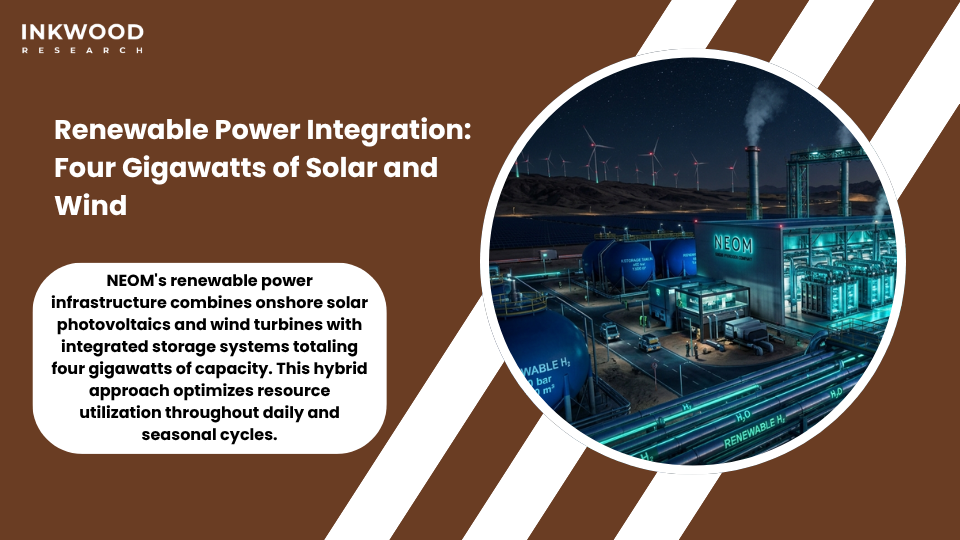
NEOM’s renewable power infrastructure combines onshore solar photovoltaics and wind turbines with integrated storage systems totaling four gigawatts of capacity. This hybrid approach optimizes resource utilization throughout daily and seasonal cycles. Solar generation peaks during midday hours when irradiation reaches maximum intensity. Wind resources complement solar patterns, often providing stronger output during evening and nighttime periods.
Storage systems smooth power delivery to electrolyzers despite variable renewable generation patterns. Battery installations handle short-duration fluctuations, maintaining steady electrolyzer operations. This integration ensures consistent hydrogen production rates, maximizing facility utilization factors. Higher capacity factors improve project economics by spreading fixed costs across greater output volumes.
Site Selection and Resource Assessment
According to our research, NEOM’s coastal location provides excellent wind resources from Red Sea maritime influences. The site’s desert environment offers exceptional solar potential with minimal cloud cover throughout most months. Comprehensive resource assessments verified these advantages before project commitments. Such due diligence ensures actual performance matches projections underlying financial models.
Water availability represents another critical consideration for desert-based hydrogen production. NEOM utilizes desalination facilities producing fresh water for electrolysis while serving broader development needs. This dual-purpose approach shares infrastructure costs across multiple applications. Moreover, seawater proximity enables an unlimited feedwater supply, eliminating constraints that might affect inland locations.
Grid Independence and Reliability
The facility operates independently from Saudi Arabia’s national power grid, relying entirely on dedicated renewable installations. This independence ensures hydrogen production maintains fully renewable credentials essential for premium export markets. Certification requirements in importing countries often demand strict renewable energy sourcing documentation. Direct connection between generation and consumption simplifies compliance with these emerging standards.
Grid independence also provides operational autonomy beneficial for export-oriented projects. Production schedules respond to international market demands rather than domestic power system requirements. This flexibility enhances commercial value by optimizing output timing with customer needs. Furthermore, independent operations avoid potential conflicts between hydrogen production and domestic electricity priorities during supply constraints.
PEM Electrolysis Technology Producing 600 Tonnes Daily
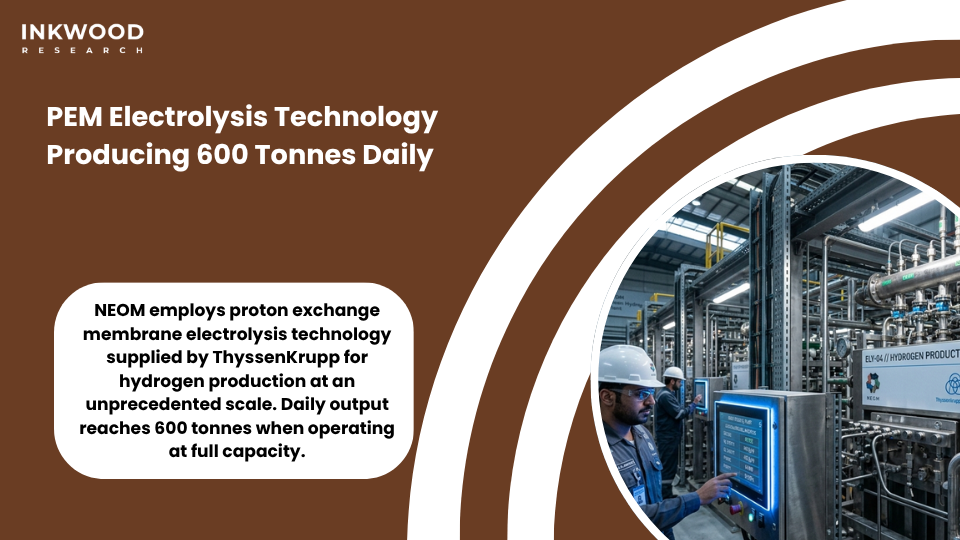
NEOM employs proton exchange membrane electrolysis technology supplied by ThyssenKrupp for hydrogen production at an unprecedented scale. Daily output reaches 600 tonnes when operating at full capacity. This production volume exceeds most existing hydrogen facilities by orders of magnitude. The scale demonstrates how megaprojects can accelerate hydrogen economy development through bold deployment approaches.
PEM technology selection reflects operational requirements for renewable-powered systems. These electrolyzers respond rapidly to variable power inputs from solar and wind installations. Fast ramping capabilities enable efficient utilization of intermittent renewable generation. Additionally, PEM systems produce high-purity hydrogen suitable for demanding applications without extensive purification processing.
Technology Provider Partnerships
Based on our findings, thyssenkrupp’s electrolyzer supply represents one of the largest single orders in the technology’s commercial history. This partnership demonstrates confidence in PEM technology’s readiness for gigawatt-scale deployments. Manufacturer guarantees and performance warranties provide assurance supporting project financing. Such commitments from established technology providers reduce technical risks that might otherwise concern lenders.
Air Products brings operational expertise in managing hydrogen production facilities worldwide. Their involvement ensures that best practices from existing operations inform NEOM’s design and operations. Knowledge transfer from experienced operators accelerates the learning curve for new entrants. This expertise proves particularly valuable for pioneering projects operating at unprecedented scales.
Operational Efficiency and Maintenance Strategies
According to our analysis, electrolyzer uptime directly impacts project economics through utilization factor effects on output volumes. Preventive maintenance programs minimize unplanned downtime, preserving production reliability. Redundant systems for critical components enable continued operations during maintenance or equipment failures. These strategies ensure maximum hydrogen output, supporting both technical performance and financial return objectives.
Remote monitoring capabilities enable real-time performance tracking and predictive maintenance scheduling. Data analytics identify potential issues before they cause failures. This proactive approach reduces maintenance costs while improving overall reliability. Furthermore, operational data from NEOM will inform future facility designs, contributing to industry-wide knowledge advancement.
Green Ammonia Production for Global Export Markets
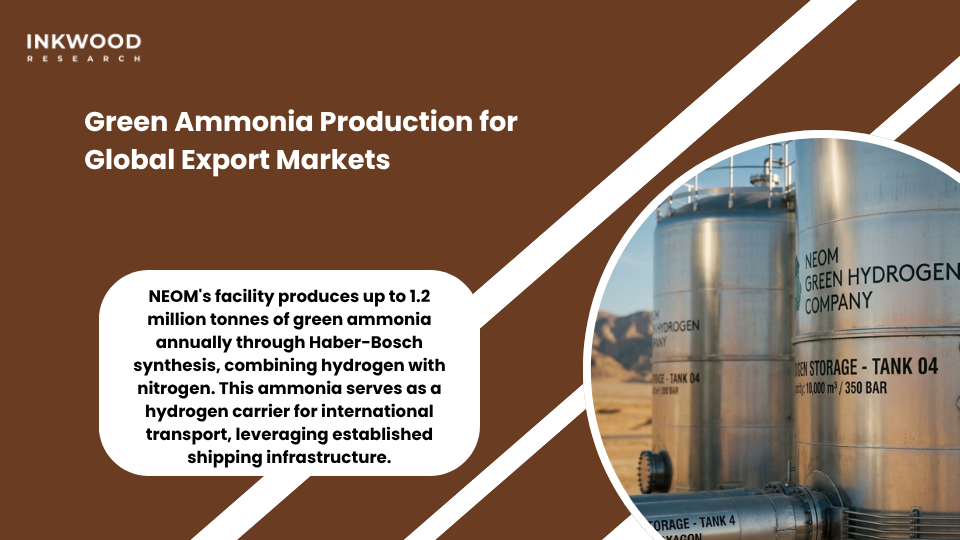
NEOM’s facility produces up to 1.2 million tonnes of green ammonia annually through Haber-Bosch synthesis, combining hydrogen with nitrogen. This ammonia serves as a hydrogen carrier for international transport, leveraging established shipping infrastructure. Destination facilities reconvert ammonia to hydrogen for end-use applications requiring pure hydrogen. Alternatively, ammonia itself serves as a maritime fuel or chemical feedstock depending on customer requirements.
Ammonia conversion enables practical long-distance transport, addressing pure hydrogen’s storage and shipping challenges. Ammonia remains liquid under moderate pressure at ambient temperatures. This property allows the use of conventional tanks and vessels with modest modifications from traditional ammonia trade infrastructure. Consequently, ammonia-based transport proves more economically viable than alternative hydrogen carriers for intercontinental shipments.
Export Markets and Customer Agreements
Based on our research, NEOM targets Asian markets as primary export destinations for green ammonia production. Japan leads global efforts in importing hydrogen, supporting domestic decarbonization objectives. South Korea similarly pursues hydrogen imports as part of comprehensive clean energy strategies. These countries’ commitments provide market certainty justifying NEOM’s substantial investment.
Long-term offtake agreements with international customers provide revenue stability essential for project financing. These contracts specify volumes, pricing mechanisms, and delivery schedules over multi-year periods. Such certainty enables debt financing supporting capital-intensive infrastructure development. Moreover, committed customers often participate in facility design, ensuring output specifications match their technical requirements.
Maritime Applications and Shipping Decarbonization
According to our findings, maritime shipping explores ammonia as a direct fuel for vessels, eliminating conversion back to hydrogen. This approach simplifies supply chains while reducing total system costs. Several shipbuilders develop ammonia-capable engines suitable for various vessel types. NEOM’s production could supply bunkering facilities serving Red Sea shipping routes, creating additional market opportunities beyond pure hydrogen carriers.
International Maritime Organization regulations, tightening emissions standards, accelerate demand for clean shipping fuels. Ammonia represents one of the few practical options for long-distance maritime transport. NEOM’s location along major shipping lanes provides strategic advantages supplying vessels traversing between Asia, Europe, and Africa. This geographic positioning enhances project value through proximity to potential customers.
Construction Progress and Commissioning Timeline
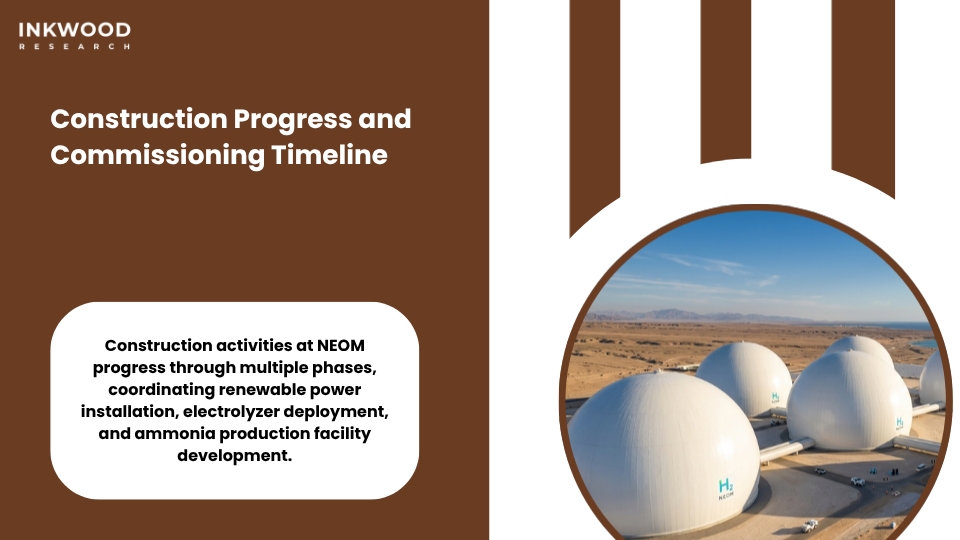
Construction activities at NEOM progress through multiple phases, coordinating renewable power installation, electrolyzer deployment, and ammonia production facility development. Site preparation began following project approvals, establishing foundations and infrastructure supporting subsequent equipment installation. Civil works proceed alongside equipment manufacturing, ensuring components arrive at sites ready for installation.
Commissioning targets 2027 operational status, representing ambitious timelines for projects of this magnitude. Phased approaches enable portions to operate before complete facility finalization. This strategy generates early revenues while construction continues on the remaining components. Moreover, operating experience from initial phases informs final construction activities, incorporating lessons learned into completing sections.
Workforce Development and Local Content
Based on our analysis, NEOM’s construction phase creates thousands of jobs supporting Saudi Arabia’s employment objectives. Workforce development programs train local personnel in specialized skills required for hydrogen facility operations. This capacity building extends benefits beyond immediate project employment toward long-term industry development. Trained workforces enable subsequent projects to access qualified personnel locally rather than importing expertise.
Local content requirements encourage domestic supplier participation in equipment and services provision. Saudi manufacturers develop capabilities to produce components for hydrogen facilities. These industrial development goals align economic diversification strategies with energy transition objectives. Consequently, NEOM contributes toward broader Vision 2030 objectives beyond its specific hydrogen production targets.
Quality Assurance and Safety Standards
According to our research, international safety standards govern hydrogen facility design and operations. Comprehensive protocols address hydrogen’s unique characteristics, including low ignition energy and wide flammability ranges. Multiple redundant safety systems prevent incidents, while emergency response procedures minimize consequences should failures occur. These precautions ensure world-class safety performance, protecting personnel, facilities, and surrounding communities.
Quality assurance programs verify that equipment and construction meet design specifications. Independent inspections validate compliance with applicable codes and standards. Such rigorous oversight prevents defects that might compromise long-term performance or safety. Moreover, documented quality assurance satisfies insurance requirements and financing covenants supporting project operations.
Strategic Partnerships Enabling Project Success
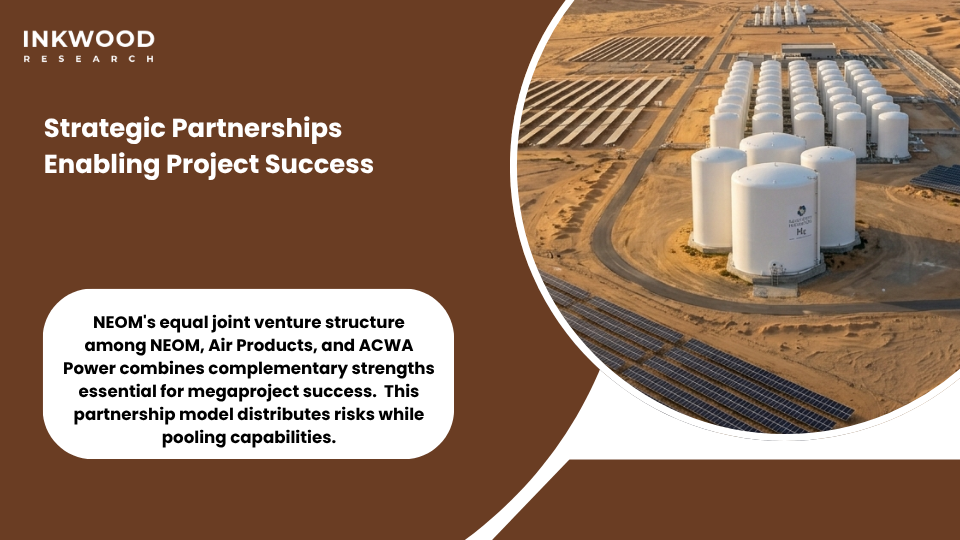
NEOM’s equal joint venture structure among NEOM, Air Products, and ACWA Power combines complementary strengths essential for megaproject success. NEOM provides development resources, land access, and government coordination. Air Products contributes hydrogen technology expertise and global customer relationships. ACWA Power brings renewable energy development capabilities and regional operational experience. This partnership model distributes risks while pooling capabilities.
Each partner’s involvement strengthens overall project credibility with lenders, customers, and other stakeholders. Air Products’ technology guarantees assure performance meeting contract specifications. ACWA Power’s renewable energy track record demonstrates execution capabilities. NEOM’s governmental backing provides policy stability essential for long-term investments. Together, these factors create compelling packages attracting necessary financing.
Technology Provider Ecosystem
Based on our findings, numerous technology providers beyond core partners contribute specialized equipment and services. thyssenkrupp supplies electrolyzer systems. Air Products provides air separation and ammonia synthesis technologies. Solar and wind turbine manufacturers deliver renewable generation equipment. This ecosystem demonstrates how megaprojects create opportunities across extensive supply chains, benefiting diverse participants.
Engineering, procurement, and construction firms manage project execution, coordinating thousands of individual activities. Their experience with large industrial facilities prevents common pitfalls that plague complex projects. Established methodologies ensure systematic progression from design through commissioning. Such professional management proves essential to achieving timeline and budget objectives for capital-intensive developments.
Financial Structuring and Investment Partnerships
According to our analysis, the $8.4 billion investment combines equity from joint venture partners with substantial debt financing from international lenders. Development banks and commercial banks provide project finance structures typical for large infrastructure developments. These arrangements allocate risks appropriately among parties best positioned to manage specific uncertainties. Sophisticated financial engineering enables projects that might prove infeasible without creative structuring.
Export credit agencies from equipment-supplying countries often participate through guarantees, reducing lender risks. These mechanisms facilitate technology exports while supporting borrower access to competitive financing terms. Such government involvement demonstrates hydrogen’s strategic importance beyond purely commercial considerations. Multilateral support accelerates deployment timelines that market forces alone might not achieve.
Key Takeaways
- The Saudi Arabia green hydrogen market expands at 42.42% annually, reaching US$3,429.19 million by 2034 as megaprojects establish export capabilities.
- NEOM’s $8.4 billion facility represents the world’s largest utility-scale renewable hydrogen plant producing 600 tonnes daily. Four gigawatts of combined solar and wind power with storage systems provide fully renewable electricity for PEM electrolysis operations.
- thyssenkrupp-supplied electrolyzer technology enables a rapid response to variable renewable generation patterns. The facility produces 1.2 million tonnes annually of green ammonia serving as a hydrogen carrier for international exports.
- Strategic partnerships between NEOM, Air Products, and ACWA Power combine complementary capabilities essential for project success.
- Commissioning scheduled for 2027 establishes operational timelines for world-scale renewable hydrogen production. When complete, the project will mitigate 5 million metric tonnes of annual carbon emissions while serving Asian and European export markets.
- NEOM’s success will catalyze additional hydrogen investments across Saudi Arabia and globally, demonstrating commercial viability for ambitious clean energy megaprojects.
Conclusion
According to our research, NEOM’s green hydrogen facility represents a transformative development in global clean energy markets. The project’s scale demonstrates how an ambitious vision combined with strategic partnerships can achieve unprecedented deployments. Saudi Arabia’s resource advantages and investment capacity enable leadership positions in emerging hydrogen trade networks.
Construction progress validates technical approaches for large-scale renewable hydrogen production. Lessons learned will inform subsequent facilities worldwide as the industry matures. Moreover, NEOM establishes benchmarks for project scale, integration sophistication, and export-oriented strategies that others can reference when developing their own initiatives.
Success will accelerate global hydrogen economy development by proving commercial viability at scales necessary for meaningful impact. International customers gain confidence that clean hydrogen supplies can meet their decarbonization needs. Consequently, NEOM’s implications extend far beyond its immediate production volumes toward catalyzing comprehensive energy system transformations worldwide.
Frequently Asked Questions (FAQs)
NEOM Green Hydrogen Project is the world’s largest green hydrogen facility, producing 600 tonnes per day using 4 gigawatts of dedicated solar and wind power integrated with large scale electrolysis and green ammonia production
NEOM converts hydrogen into green ammonia for export because ammonia liquefies at moderate pressure, uses existing global shipping infrastructure, reduces transport costs, and can be reconverted into hydrogen at destination markets
NEOM operates fully off grid with dedicated renewable energy assets, ensuring hydrogen production relies exclusively on solar and wind power, meeting strict international green hydrogen certification and carbon free lifecycle standards
The NEOM project is developed by ACWA Power, Air Products, and NEOM, combining renewable energy, industrial gas expertise, and large scale infrastructure capabilities
The NEOM green hydrogen facility is expected to begin commercial operations in 2027, supplying green ammonia to global markets targeting decarbonization in heavy industry and transportation sectors
NEOM’s green ammonia exports will support decarbonization in steel production, shipping fuel, power generation, fertilizer manufacturing, and other hard to abate industrial sectors seeking low carbon energy alternatives