Table of Contents
This analysis represents Inkwood Research’s specialized expertise in European healthcare technology ecosystems and Germany’s integrated operating room infrastructure. Our research team combines a deep understanding of German healthcare policy, advanced surgical technology adoption patterns, and medical device market dynamics. Through strategic partnerships with European hospital networks and medical technology providers, we deliver authoritative perspectives on Germany’s leadership in hybrid operating room innovation and clinical excellence.
TLDR
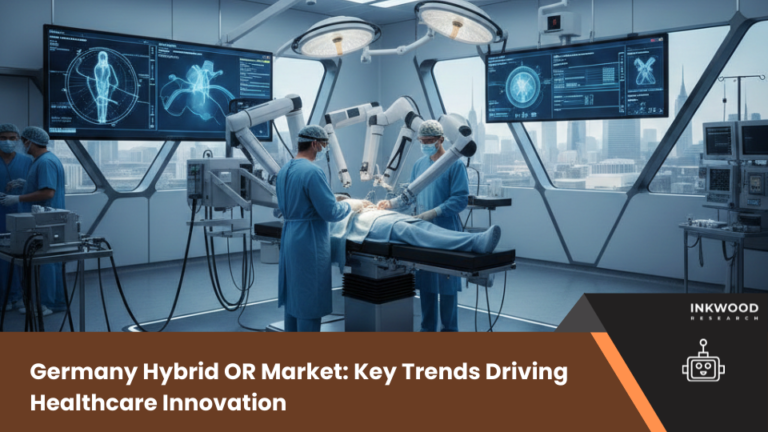
Germany’s hybrid operating room market demonstrates mature sophistication unmatched across Europe. Advanced surgical technologies integrate seamlessly within rigorous healthcare frameworks. University hospitals lead innovation through clinical research initiatives. Cardiovascular and neurosurgical applications drive infrastructure investments substantially. Market valuations reach $136.67 million in 2026, projecting $287.63 million by 2034. Siemens Healthineers, Brainlab, and Karl Storz anchor domestic medical technology leadership. Robotic-assisted surgical systems enhance precision continuously. Multidisciplinary teams leverage hybrid OR capabilities for complex procedures. Germany’s reputation for engineering excellence extends into surgical innovation.
Healthcare infrastructure investors, medical device manufacturers, hospital administrators, cardiovascular surgeons, neurosurgical specialists, and healthcare policy analysts gain critical insights into Germany’s hybrid OR evolution. European medical technology distributors, clinical researchers, healthcare quality officers, and surgical training program directors discover strategic intelligence on adopting advanced operating room technologies within rigorous regulatory environments for informed planning.
Germany’s Healthcare System Foundations Support Innovation
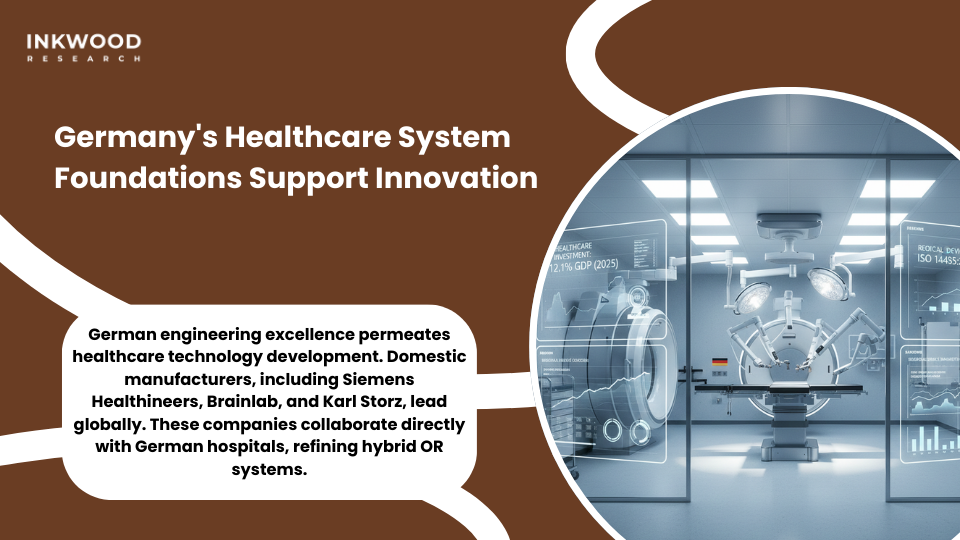
Germany’s healthcare infrastructure represents Europe’s most sophisticated medical ecosystem. The statutory health insurance system covers approximately 88% of the population. According to the WHO European Observatory data, Germany allocated 12.7% of GDP to healthcare in 2022. This substantial investment creates favorable conditions for advanced technology adoption. Consequently, hospitals pursue cutting-edge surgical capabilities through hybrid operating rooms.
Germany’s integrated operating room market demonstrates remarkable maturity. Our market intelligence projects valuations reaching $136.67 million in 2026. Furthermore, forecasts extend to $287.63 million by 2034, representing 9.75% compound annual growth. These projections reflect established infrastructure upgrading rather than nascent market development.
German engineering excellence permeates healthcare technology development. Domestic manufacturers, including Siemens Healthineers, Brainlab, and Karl Storz, lead globally. These companies collaborate directly with German hospitals, refining hybrid OR systems. Moreover, rigorous quality standards ensure surgical technology reliability. Patients benefit from this comprehensive approach to healthcare innovation.
Regulatory Framework Ensures Quality Standards
Germany’s healthcare governance operates through complex regulatory mechanisms. Federal and state authorities oversee hospital operations simultaneously. Additionally, corporatist self-governance bodies influence healthcare delivery standards. This multilayered oversight maintains exceptional quality across facilities. Hybrid operating rooms must meet stringent safety requirements before clinical deployment.
Medical device approval processes follow European Union directives rigorously. Equipment manufacturers demonstrate safety and efficacy comprehensively. Furthermore, ongoing quality monitoring ensures sustained compliance. These regulatory requirements elevate Germany’s healthcare standards internationally. Patients receive assurance regarding hybrid OR technology safety.
Hybrid Operating Room Technology Integration
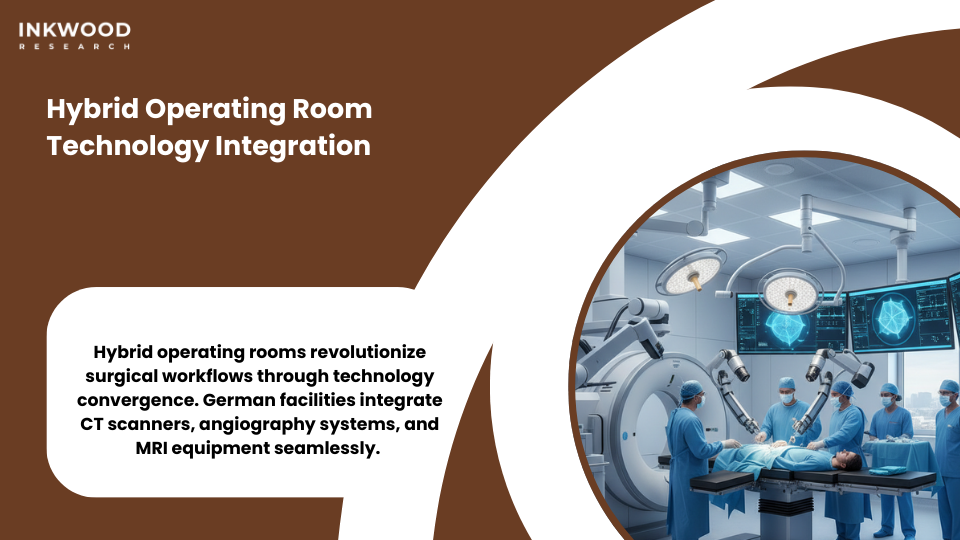
Hybrid operating rooms revolutionize surgical workflows through technology convergence. German facilities integrate CT scanners, angiography systems, and MRI equipment seamlessly. Unlike conventional theaters, these environments eliminate patient repositioning between imaging procedures. Consequently, surgical precision improves while operational efficiency increases. Vivantes Network Berlin exemplifies this technological sophistication.
Advanced imaging devices enable real-time surgical guidance continuously. Surgeons visualize anatomical structures with unprecedented clarity during procedures. Furthermore, three-dimensional imaging capabilities enhance spatial understanding significantly. This technological evolution transforms complex surgeries previously considered high-risk. Patient outcomes improve through enhanced visualization and precision.
Audiovisual display systems present critical information across multiple screens. Surgical teams access patient data, imaging results, and procedural protocols simultaneously. Moreover, operating room fixtures accommodate sophisticated equipment without compromising sterility. German engineering ensures seamless integration of diverse technological components. This comprehensive approach defines hybrid OR excellence.
Robotic-Assisted Surgical Systems Enhance Capabilities
Robotic surgical platforms are increasingly integrated within German hybrid operating rooms. These systems provide tremor-free manipulation and enhanced dexterity. Minimally invasive procedures benefit enormously from robotic precision. Additionally, surgeon ergonomics improve through console-based operations. Consequently, complex procedures become more accessible to specialized surgical teams.
Surgical instruments designed specifically for hybrid environments continue evolving. MRI-compatible tools prevent magnetic field interference during imaging. Operating tables feature motorized positioning accommodating various imaging angles. These specialized components increase hybrid OR construction costs substantially. However, clinical benefits justify investments through improved patient outcomes.
Market Growth Dynamics and Investment Patterns
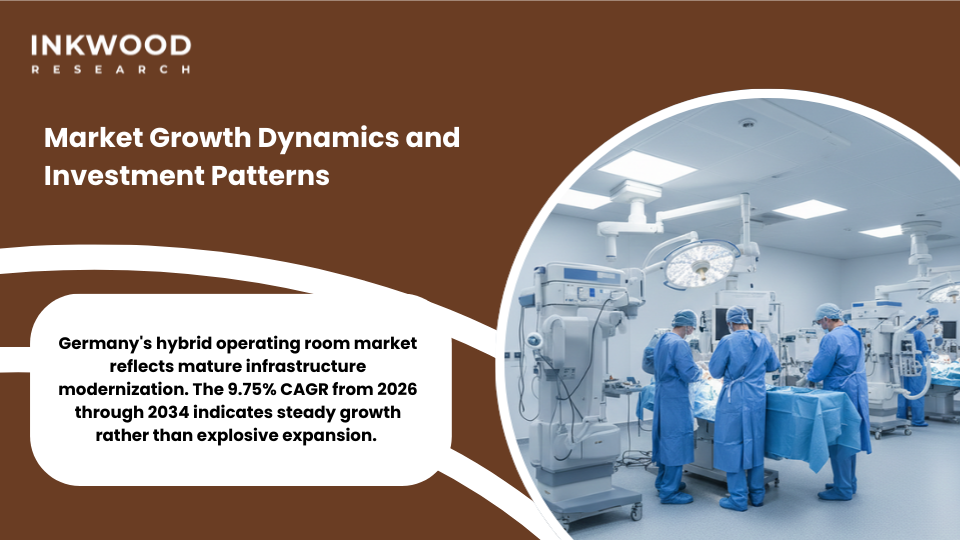
Germany’s hybrid operating room market reflects mature infrastructure modernization. The 9.75% CAGR from 2026 through 2034 indicates steady growth rather than explosive expansion. Hospital networks prioritize upgrading existing facilities strategically. Moreover, demographic pressures from an aging population intensify surgical demand. These factors sustain consistent hybrid OR investment patterns.
Healthcare expenditure exceeding 12% of GDP enables substantial technology investments. Germany spends approximately €5,832 per capita on healthcare annually. This financial capacity supports advanced surgical infrastructure comprehensively. Furthermore, insurance reimbursement structures accommodate hybrid OR procedures. Economic fundamentals favor continued market development.
University hospitals lead hybrid OR adoption through research-driven initiatives. These institutions prioritize advancing surgical techniques alongside patient care. Additionally, they collaborate with medical device manufacturers to refine technologies. Private hospitals follow university hospital innovations subsequently. This dynamic accelerates hybrid OR technology dissemination nationwide.
Hospital Reform Initiatives Shape Infrastructure Development
Germany’s government addresses hospital sector challenges through comprehensive reforms. The Government Commission for Modern and Needs-based Hospital Care recommends infrastructure improvements. These policy initiatives encourage hybrid OR investments meeting contemporary surgical demands. Moreover, reimbursement adjustments support technology adoption financially. Hospitals respond by modernizing operating theater capabilities.
Day treatment mandates shift procedures from inpatient to outpatient settings. This regulatory change influences hybrid OR utilization patterns significantly. Hospitals optimize surgical efficiency through advanced technology capabilities. Additionally, staffing considerations favor technology-enhancing workforce productivity. These interconnected factors drive the hybrid operating room market expansion.
Leading Medical Technology Companies and Innovations
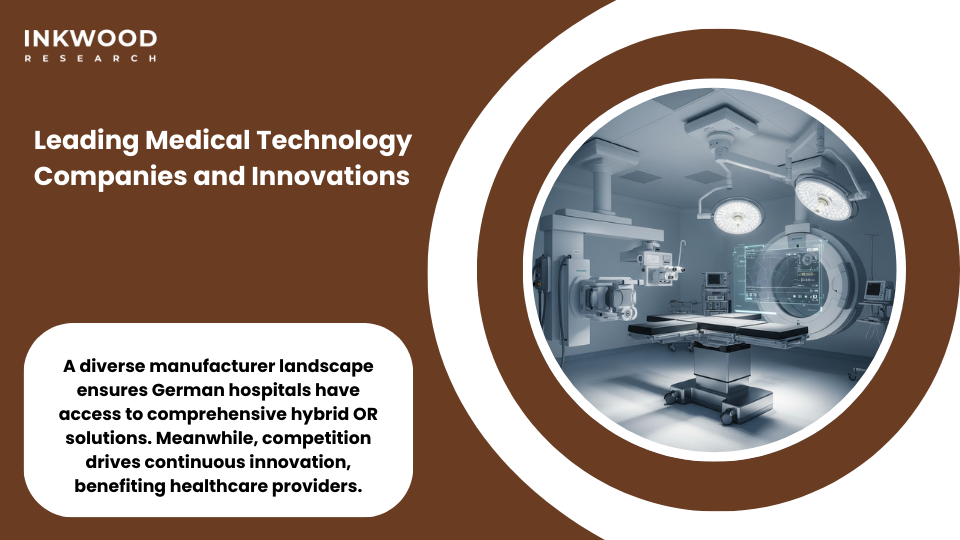
Siemens Healthineers dominates Germany’s hybrid operating room technology landscape. The company provides comprehensive imaging systems, including angiography, CT, and MRI platforms. According to company reports, over 80% of new generation hybrid ORs operate multidisciplinarily. Siemens collaborates closely with German hospitals, optimizing clinical workflows. This partnership approach accelerates hybrid OR technology refinement continuously.
Brainlab specializes in surgical navigation and imaging integration software. The Munich-based company develops solutions that enhance hybrid OR capabilities significantly. Their technologies enable augmented reality applications within operating theaters. Furthermore, self-learning algorithms support surgeons with real-time decision assistance. These innovations represent Germany’s leadership in surgical technology development.
Karl Storz contributes endoscopic equipment and visualization systems extensively. The company maintains a strong presence within Germany’s hybrid OR market. Their products integrate seamlessly with imaging platforms from various manufacturers. Additionally, Karl Storz provides comprehensive training supporting clinical adoption. This ecosystem approach benefits German hospitals implementing hybrid operating rooms.
International Manufacturers Complement Domestic Innovation
Philips Healthcare establishes a significant presence within Germany’s medical technology market. The company provides imaging systems and patient monitoring solutions. Moreover, Philips collaborates with German hospitals on hybrid OR implementations. GE Healthcare similarly contributes advanced imaging capabilities to the ecosystem. These international partnerships complement domestic technology leadership.
Getinge supplies operating room fixtures and surgical workflow solutions. The company maintains robust distribution networks across Germany. Additionally, STERIS Corporation contributes to infection prevention and surgical equipment. A diverse manufacturer landscape ensures German hospitals have access to comprehensive hybrid OR solutions. Meanwhile, competition drives continuous innovation, benefiting healthcare providers.
Clinical Applications Across Surgical Specialties
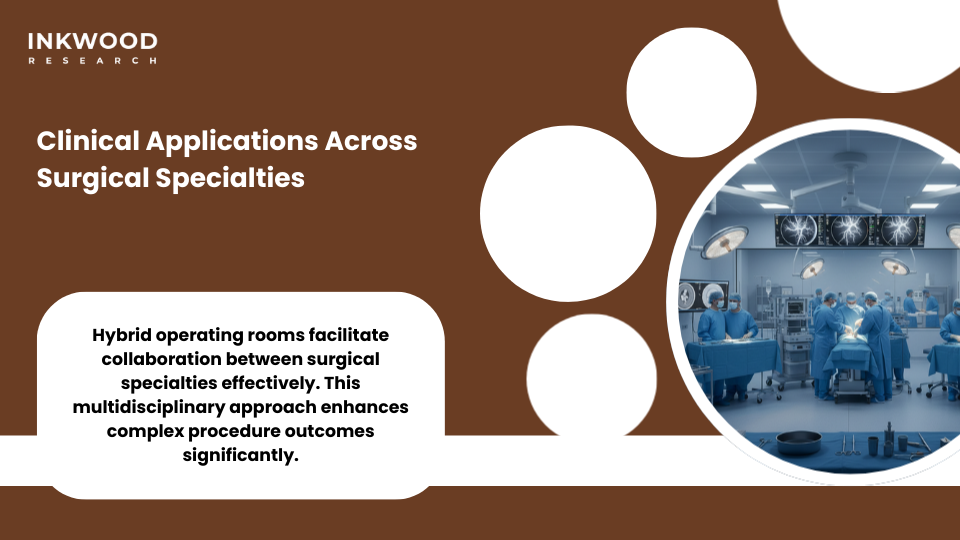
- Cardiovascular surgery represents the primary driver for Germany’s hybrid OR adoption. Coronary interventions require continuous fluoroscopic guidance throughout procedures. Angiography systems enable minimally invasive approaches, reducing patient trauma significantly. German cardiovascular specialists perform thousands of complex procedures annually. This volume justifies substantial infrastructure investments comprehensively.
- Neurosurgery applications demonstrate hybrid OR versatility remarkably. Brain tumor resections benefit from intraoperative MRI confirmation. Surgeons verify complete lesion removal before closing surgical sites. This capability reduces reoperation requirements substantially. Furthermore, spine surgery procedures utilize real-time CT imaging for implant placement accuracy.
- Orthopedic trauma surgery increasingly adopts hybrid operating room technology. Complex fracture repairs require precise anatomical restoration. Fluoroscopy confirms implant positioning before permanent fixation. Additionally, joint replacement procedures benefit from advanced imaging guidance. German orthopedic surgeons achieve optimal outcomes through technology-enhanced precision.
Multidisciplinary Teams Leverage Hybrid OR Capabilities
Hybrid operating rooms facilitate collaboration between surgical specialties effectively. Cardiovascular surgeons work alongside interventional radiologists seamlessly. This multidisciplinary approach enhances complex procedure outcomes significantly. Moreover, neurosurgeons collaborate with neurologists during advanced procedures. Teams coordinate more effectively within integrated technology environments.
Thoracic surgery applications expand within Germany’s hybrid operating rooms. Lung tumor localizations utilize CT scanning during minimally invasive approaches. This technology eliminates traditional open surgical techniques frequently. Consequently, patient recovery periods shorten substantially. Hospitals report higher satisfaction scores following thoracic hybrid OR procedures.
University Hospitals Drive Research and Adoption
- University Hospital Münster was pivotal in pioneering Germany’s hybrid operating room development. Professor Giovanni Torsello recognized hybrid technology early, and his vision anticipated minimally invasive procedures becoming standard practice. Moreover, the hospital established protocols optimizing hybrid OR workflows. This pioneering work influenced nationwide adoption patterns significantly.
- University of Ulm advances hybrid OR capabilities through comprehensive research programs. The institution integrates cutting-edge imaging systems with robotic surgical platforms. According to clinical reports, surgeons achieve the highest precision achievable for implant placement. Additionally, intraoperative verification eliminates postoperative imaging requirements. These advancements demonstrate Germany’s commitment to surgical excellence.
- Vivantes Network Berlin operates multiple hybrid operating rooms across facilities. Alfred Holzgreve directs clinical research initiatives exploring hybrid OR applications. The network emphasizes patient-centered care through technology integration. Furthermore, Berlin’s hospitals collaborate by sharing best practices widely. This knowledge transfer accelerates hybrid OR adoption regionally.
Training Programs Ensure Clinical Competency
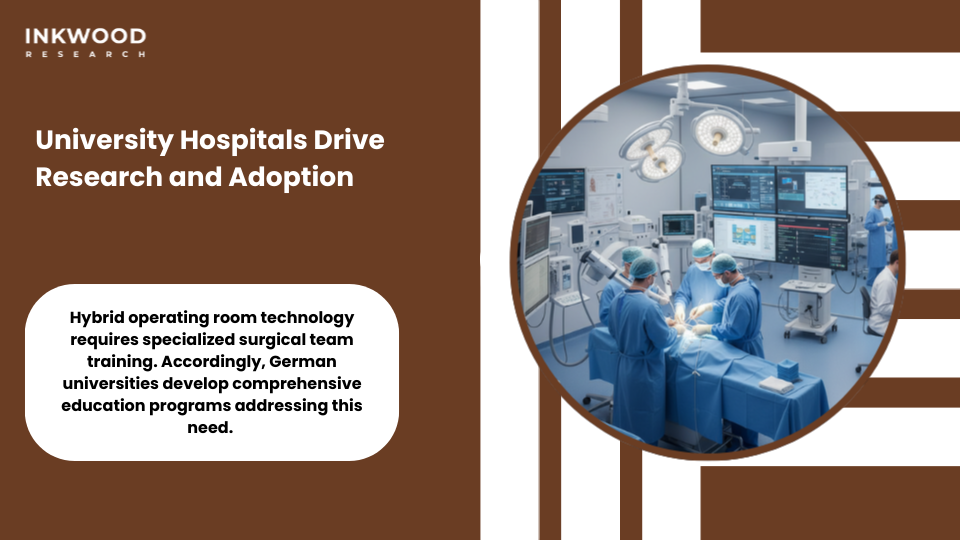
Hybrid operating room technology requires specialized surgical team training. Accordingly, German universities develop comprehensive education programs addressing this need. Siemens Healthineers offers customized training modules covering safety aspects. These programs reduce onboarding time while ensuring competency. Moreover, peer-to-peer learning accelerates skill development effectively.
Simulation environments prepare surgical teams before clinical deployments. Virtual reality platforms recreate hybrid OR scenarios realistically. Teams practice complex procedures within safe learning environments. Additionally, manufacturers provide ongoing support throughout equipment lifecycles. This comprehensive approach ensures optimal hybrid OR utilization.
Key Takeaways
- Germany’s hybrid operating room market projects growth from $136.67 million in 2026 to $287.63 million by 2034, reflecting a 9.75% CAGR driven by mature infrastructure modernization and demographic pressures.
- Healthcare expenditure exceeding 12% of GDP enables substantial technology investments, with Germany spending approximately €5,832 per capita, supporting advanced surgical infrastructure comprehensively.
- Siemens Healthineers, Brainlab, and Karl Storz lead domestic medical technology innovation, collaborating closely with German hospitals to refine hybrid OR systems and maintain global competitiveness.
- Cardiovascular surgery and neurosurgery applications drive hybrid OR adoption, requiring real-time imaging capabilities that traditional operating rooms cannot provide effectively for complex procedures.
- University hospitals, including Münster, Ulm, and Vivantes Network Berlin, pioneer hybrid OR research and clinical adoption, establishing protocols that influence nationwide implementation patterns.
- Regulatory frameworks ensure exceptional quality standards through multilayered oversight, maintaining Germany’s international reputation for healthcare excellence and surgical technology safety.
Conclusion:
Germany’s hybrid operating room market demonstrates sophisticated maturity reflecting decades of engineering excellence. Advanced surgical technologies integrate seamlessly within rigorous healthcare frameworks. University hospitals continue pioneering innovations subsequently adopted nationwide. Moreover, domestic medical technology manufacturers maintain global leadership positions. These factors position Germany as Europe’s hybrid OR technology benchmark.
Healthcare system fundamentals support sustained hybrid OR market expansion. Substantial GDP allocation toward healthcare enables continuous infrastructure modernization. Additionally, demographic pressures from aging populations intensify surgical demand. Insurance structures accommodate advanced technology adoption effectively. Consequently, Germany’s hybrid operating room trajectory remains positive through 2034.
Multidisciplinary surgical teams are leveraging hybrid OR capabilities increasingly. Cardiovascular specialists collaborate with interventional radiologists seamlessly. Furthermore, neurosurgeons benefit from intraoperative imaging confirmation. This collaborative approach enhances patient outcomes substantially. Germany’s commitment to surgical excellence strengthens through technology integration.
Looking forward, Germany will maintain hybrid OR technology leadership regionally. Domestic manufacturers continue innovating surgical platforms and imaging systems. Moreover, regulatory frameworks ensure quality standards remain exceptional. Research initiatives advance clinical applications continuously. Germany’s hybrid operating room market exemplifies healthcare innovation meeting practical clinical demands.
For organizations seeking comprehensive intelligence on Germany’s hybrid operating room market or European healthcare technology trends, Inkwood Research offers specialized expertise and strategic consulting services.
Contact our team to explore how these developments align with your market entry strategies, investment decisions, and operational planning initiatives.
Frequently Asked Questions
What distinguishes Germany's hybrid operating rooms from other European markets?
Germany combines sophisticated technology integration with rigorous quality standards unmatched regionally. Healthcare expenditure exceeding 12% of GDP enables substantial infrastructure investments. Domestic manufacturers, including Siemens Healthineers and Brainlab, lead globally. Furthermore, university hospitals pioneer clinical research advancing surgical applications. Regulatory frameworks ensure exceptional patient safety throughout implementations.
Which surgical specialties benefit most from Germany's hybrid operating rooms?
Cardiovascular surgery leads to hybrid OR utilization requiring continuous angiography guidance. Neurosurgery benefits from intraoperative MRI and CT imaging capabilities. Orthopedic trauma procedures utilize fluoroscopy for precise implant placement. Additionally, spine surgery applications advance through real-time imaging integration. These specialties demonstrate hybrid technology’s transformative impact on surgical outcomes.
How do university hospitals influence Germany's hybrid OR market development?
University hospitals pioneer hybrid OR research, establishing clinical protocols adopted nationwide. Institutions including Münster, Ulm, and Berlin advance surgical techniques through comprehensive research programs. They collaborate with medical technology manufacturers, refining equipment functionality. Moreover, university hospitals train surgical teams, ensuring widespread clinical competency. This leadership accelerates hybrid operating room adoption across Germany’s healthcare system.