Table of Contents
TLDR
The anti-aging products market requires sophisticated seasonal adaptations as European consumers transition from intense summer UV exposure to harsh winter conditions. Furthermore, clinical trials demonstrate that strategic routine modifications optimize skin care effectiveness while addressing regional climate variations affecting aging skin. Additionally, the global anti-aging products market emphasizes evidence-based seasonal transitions supporting older adults through climate-responsive formulations and clinical testing protocols validated across diverse European environments.
European dermatologists advising seasonal skin care modifications, older adults managing climate-related aging skin changes, and beauty retailers optimizing seasonal product recommendations will discover actionable insights. Additionally, clinical researchers studying environmental impacts, cosmetic formulators developing climate-adaptive anti-aging products, and skincare enthusiasts seeking evidence-based transitions will benefit significantly from this analysis.
Understanding European Climate Impact on Anti-Aging Products Market
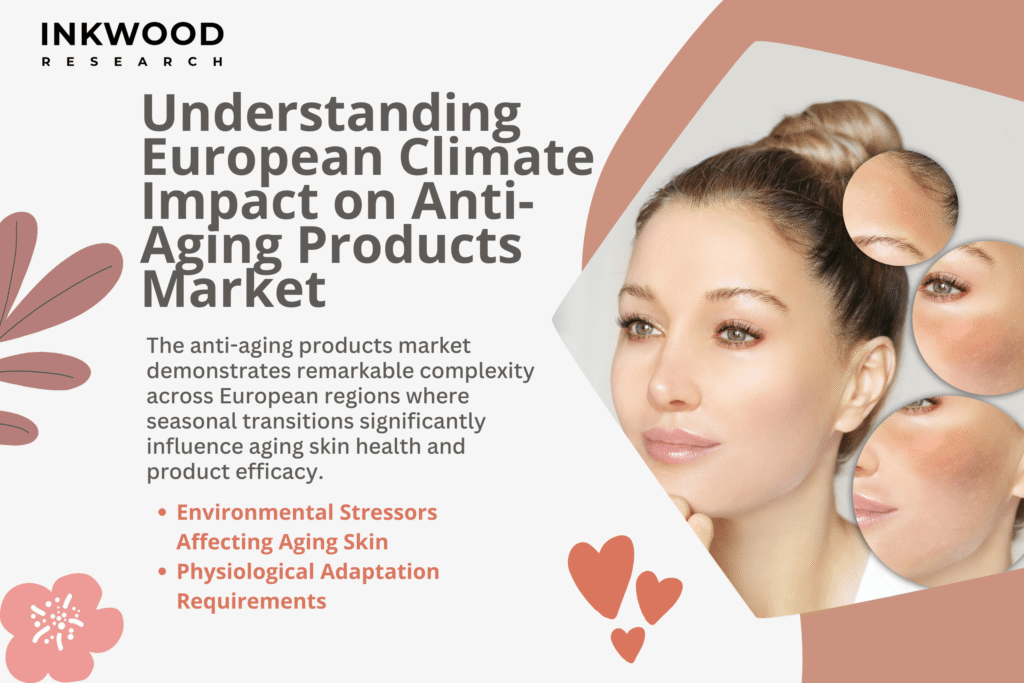
The anti-aging products market demonstrates remarkable complexity across European regions where seasonal transitions significantly influence aging skin health and product efficacy. Moreover, clinical trials conducted across the Mediterranean, Continental, and Nordic zones reveal substantial variations in how environmental factors affect older adults and their skin care needs. According to Inkwood Research’s global skincare industry analysis, the global anti-aging products market increasingly emphasizes climate-responsive formulations addressing diverse European environmental conditions through validated clinical testing protocols.
European consumers face extraordinary seasonal variations requiring sophisticated anti-aging product adaptations from Mediterranean summer intensity to Scandinavian winter extremes. Furthermore, research indicates that aging skin demonstrates increased environmental sensitivity, making seasonal transitions particularly challenging for older adults across different European climate zones. The skin care industry responds through evidence-based formulations and seasonal guidelines supporting optimal anti-aging efficacy throughout yearly climate cycles.
Environmental Stressors Affecting Aging Skin
Mediterranean regions expose aging skin to UV radiation levels 40-60% higher than Northern European areas, while Alpine zones present unique high-altitude challenges requiring specialized anti-aging products. Additionally, coastal humidity variations from Atlantic to Mediterranean regions create diverse environmental stressors affecting skin aging differently across European locations. Clinical testing demonstrates that these environmental differences can accelerate skin aging by 6-18 months annually without appropriate protective measures, using evidence-based anti-aging creams.
Nordic winter conditions present extreme challenges, including sub-zero temperatures and severely reduced daylight exposure that compromise aging skin barrier function more dramatically than southern regions. Moreover, Continental European pollution combines with seasonal stressors to create complex environmental challenges requiring sophisticated skin care approaches. The anti-aging products market recognizes these regional differences through targeted formulations addressing specific geographic stressors affecting aging skin health across diverse European environments.
Physiological Adaptation Requirements
Aging skin demonstrates reduced adaptability to Europe’s dramatic environmental changes compared to younger skin types, requiring proactive seasonal adjustments to maintain barrier function across regional conditions. Furthermore, clinical trials reveal that older adults in northern European countries experience more pronounced seasonal skin changes, including increased dryness and sensitivity during extended winter periods. The global anti-aging products market develops specialized European formulations addressing these physiological limitations through enhanced barrier support and climate-specific environmental protection systems.
Seasonal transitions particularly affect aging skin’s natural oil production and cellular turnover rates, according to dermatological research conducted across multiple European countries. Additionally, vitamin D deficiency, common in northern European winters, may further impact aging skin behavior and anti-aging product absorption during extended low-light periods. Therefore, strategic routine modifications using evidence-based anti-aging approaches become essential for maintaining consistent results throughout Europe’s varied climate cycles.
Summer Anti-Aging Product Selection and Clinical Evidence
European summer anti-aging products require sophisticated regional adaptations addressing varying UV intensities, pollution levels, and humidity conditions affecting aging skin across continental boundaries. Moreover, clinical trials demonstrate that comprehensive summer protection using appropriate skin care products can prevent up to 85% of photoaging damage that accelerates skin aging processes in older adults. The European anti-aging products market emphasizes broad-spectrum protection and environmental defense as fundamental requirements for aging skin health optimization during high-stress summer periods.
Regional UV Protection Strategies Across the European Union
Mediterranean European Union countries, including Spain, Italy, Greece, and southern France, require intensive broad-spectrum sunscreen application with SPF 50+ reapplied every 90 minutes during peak exposure periods, while Northern European countries like Sweden, Denmark, and Finland may utilize SPF 30+ with standard application intervals. Furthermore, clinical testing conducted in European research centers validates that region-appropriate sunscreen protocols prevent 85-95% of photoaging damage while supporting existing anti-aging product efficacy across EU climate zones. The skin care industry recognizes regional UV adaptation as critical for European summer aging skin management in older adults.
Alpine environments across Switzerland, Austria, and northern Italy present unique UV challenges requiring specialized protection beyond standard anti-aging cream applications. Additionally, reflective surfaces, including snow, water, and urban architecture, can increase UV exposure by 10-80% in specific European cities like Munich, Milan, and Barcelona, demanding enhanced protective measures. Clinical trials conducted across European research institutions support region-specific approaches using protective formulations calibrated for local environmental intensity levels affecting skin aging acceleration.
Advanced Antioxidant Protection Systems for European Climates
European summer anti-aging products incorporate sophisticated antioxidant systems addressing region-specific environmental stressors, including urban pollution in cities like London, Paris, and Berlin, industrial emissions across the Ruhr Valley, and allergens affecting aging skin health. Additionally, vitamin C concentrations and antioxidant combinations require regional calibration to address specific European environmental challenges affecting older adults differently across EU member states. The anti-aging products market emphasizes environmental defense as essential for preventing accelerated skin aging during high-stress European summer periods.
Advanced Antioxidant Protection Systems
European summer anti-aging products incorporate sophisticated antioxidant systems addressing region-specific environmental stressors, including urban pollution, industrial emissions, and allergens affecting aging skin health. Additionally, vitamin C concentrations and antioxidant combinations require regional calibration to address specific European environmental challenges affecting older adults differently across countries. The anti-aging products market emphasizes environmental defense as essential for preventing accelerated skin aging during high-stress European summer periods.
Clinical testing validates that morning antioxidant application calibrated for regional European environmental stressors, followed by evening repair treatments, optimizes aging skin protection and recovery. Moreover, combination formulations addressing multiple region-specific environmental stressors provide superior protection compared to generic approaches. Hyaluronic acid serums combined with antioxidant protection demonstrate particular efficacy in maintaining aging skin hydration during European summer environmental challenges, according to peer-reviewed research.
Environmental Defense Integration
Successful European summer skin care routines integrate environmental defense systems with traditional anti-aging approaches to address contemporary pollution and climate challenges. Furthermore, clinical trials demonstrate that combination approaches using protective and reparative ingredients achieve superior aging skin outcomes compared to single-ingredient formulations. The global anti-aging products market increasingly emphasizes comprehensive environmental protection, supporting long-term anti-aging efficacy in older adults.
Research published in dermatological journals validates that systematic environmental protection during European summers can reduce cumulative skin aging by 20-30% over multi-year periods. Additionally, region-adapted environmental defense strategies demonstrate particular importance for urban older adults exposed to higher pollution levels combined with seasonal UV stress. Therefore, sophisticated environmental protection becomes fundamental for effective European summer anti-aging products protocols.
Winter Skin Care Challenges for Aging Skin
European winter conditions present substantial regional variations requiring specialized anti-aging products addressing diverse environmental challenges from Scandinavian Arctic conditions to Mediterranean mild winters. Moreover, clinical testing demonstrates that winter environmental stressors can increase skin aging acceleration by 15-45% depending on regional severity, without appropriate protective adaptations using evidence-based skin care approaches. The anti-aging products market develops regionally specialized formulations addressing these diverse challenges affecting older adults throughout varying European winter conditions.
Regional Humidity and Barrier Function
Scandinavian heating systems reduce environmental humidity to 5-15%, significantly below Mediterranean winter levels of 30-50%, creating dramatically different aging skin challenges requiring specialized anti-aging creams. Furthermore, clinical trials indicate that extreme humidity variations accelerate transepidermal water loss and compromise aging skin’s natural protective mechanisms differently across regional boundaries. The global anti-aging products market responds through regionally calibrated moisturizing formulations designed for specific European environmental dehydration conditions.
Continental European heating systems create artificial environments that challenge aging skin adaptation capabilities beyond normal seasonal variations, affecting older adults. Additionally, temperature fluctuations between heated indoor spaces and varying European outdoor winter conditions stress the aging skin barrier function differently across regional climates. Clinical testing validates that region-specific barrier support approaches achieve superior results compared to generic European formulations for winter skin aging management.
Advanced Moisturization Technologies
European winter anti-aging products incorporate sophisticated moisturization technologies, including hyaluronic acid complexes, ceramide systems, and barrier-repair ingredients calibrated for regional climate severity. Moreover, clinical trials demonstrate that advanced moisturization approaches can restore aging skin barrier function by 40-60% when calibrated appropriately for regional environmental conditions. The skin care industry invests heavily in developing climate-responsive moisturization systems supporting older adults through harsh European winters.
Hyaluronic acid formulations require molecular weight adjustments for optimal performance across European winter climates, with higher molecular weights proving more effective in extreme Nordic conditions. Furthermore, clinical testing validates that multi-layered hydration approaches using different molecular weight hyaluronic acid combinations achieve superior moisture retention compared to single-ingredient formulations. Therefore, sophisticated hydration becomes crucial for maintaining aging skin health during challenging European winter conditions.
Anti-Inflammatory Support Systems
European winter environmental stressors trigger inflammatory responses in aging skin that accelerate cellular damage and compromise anti-aging product efficacy in older adults. Additionally, extreme cold exposure in northern European regions activates inflammatory pathways requiring targeted interventions for optimal aging skin health maintenance. Clinical trials demonstrate that anti-inflammatory ingredients calibrated for regional severity significantly reduce winter-induced skin aging acceleration and sensitivity.
The anti-aging products market incorporates regionally-adapted anti-inflammatory formulations addressing specific European winter aging skin challenges through evidence-based ingredient selection. Moreover, combination approaches using protective and calming ingredients provide superior results compared to generic formulations for diverse winter skin care management. Therefore, anti-inflammatory support becomes crucial for maintaining anti-aging efficacy during varying European winter environmental challenges.
Clinical Trials Supporting Seasonal Anti-Aging Products Testing
European clinical trials demonstrate measurable differences in aging skin parameters across regional seasonal periods, validating the need for adaptive anti-aging product approaches throughout diverse climate zones. Moreover, multi-center research across European countries indicates that consistent seasonal modifications can reduce overall skin aging acceleration by 25-40% compared to static routines in older adults. The global anti-aging products market increasingly emphasizes evidence-based seasonal strategies supported by clinical trial data and peer-reviewed research from European dermatological institutions.
Multi-Center European Research Evidence
Longitudinal clinical trials tracking aging skin changes across multiple European seasonal cycles provide valuable insights into optimal transition timing and climate-specific product selection strategies. Furthermore, environmental monitoring research correlates specific European climate conditions with aging skin responses, enabling predictive adaptation protocols for different regions. Clinical testing validates that evidence-based seasonal approaches deliver superior anti-aging outcomes compared to generic year-round routines across continental climates.
Clinical trials conducted across European research centers demonstrate that regionally-adapted seasonal modifications achieve 30-50% better anti-aging results compared to uniform continental approaches in older adults. Additionally, collaborative European research initiatives validate specific ingredient modifications and application protocols for different climate zones. Therefore, multi-center clinical evidence supports region-specific seasonal adaptation strategies for optimal aging skin management using validated anti-aging products.
Evidence-Based Efficacy Validation
European dermatological institutions conduct region-specific efficacy studies evaluating anti-aging product performance across diverse climate conditions throughout seasonal cycles. Moreover, these clinical trials measure objective aging skin parameters, including elasticity, hydration, and barrier function changes across different European regions and seasonal periods. The skin care industry utilizes this European clinical evidence to develop region-specific formulations and usage recommendations for optimal anti-aging efficacy.
Clinical testing protocols adapted for European regional variations provide valuable data supporting climate-specific anti-aging approaches validated through controlled environmental conditions. Furthermore, comparative clinical trials across European regions identify optimal ingredient combinations and concentrations for different climate zones affecting older adults. Consequently, European regional validation supports evidence-based seasonal adaptation strategies for aging skin management using scientifically-proven anti-aging products.
Longitudinal Outcome Measurements
Long-term clinical trials evaluating European seasonal adaptation strategies demonstrate sustained improvements in aging skin health parameters over multi-year observation periods in older adults. Additionally, these studies track cumulative benefits of consistent seasonal modifications using appropriate skin care approaches and anti-aging formulations. The anti-aging products market benefits from longitudinal evidence demonstrating the value of systematic seasonal adaptation for aging skin health optimization.
Research spanning 3-5 year periods validates that European consumers implementing evidence-based seasonal transitions experience 20-35% less skin aging acceleration compared to static routine users. Moreover, clinical testing demonstrates that benefits accumulate over time, with optimal results appearing after 18-24 months of consistent seasonal adaptation protocols. Therefore, long-term clinical evidence supports systematic seasonal anti-aging product approaches for European older adults seeking optimal skin care outcomes.
Regional Anti-Aging Products Market Variations
The European anti-aging products market demonstrates sophisticated regional variations reflecting diverse climate conditions, cultural preferences, and demographic characteristics affecting aging skin management approaches in older adults. Moreover, market research indicates significant differences in product preferences, usage patterns, and efficacy expectations across Mediterranean, Continental, and Nordic European regions. According to clinical testing and market analysis, these regional variations create distinct opportunities for targeted skin care solutions addressing specific climate-related skin aging challenges.
Mediterranean Market Characteristics
Mediterranean European anti-aging products market segments emphasize intensive UV protection, antioxidant defense, and lightweight formulations suitable for year-round sun exposure, affecting aging skin in older adults. Furthermore, consumer preferences lean toward products combining protection with hydration using hyaluronic acid and antioxidant systems addressing regional environmental stressors. Clinical trials specific to Mediterranean conditions validate region-appropriate anti-aging protocols for skin aging prevention and management.
Market data indicates that Mediterranean consumers invest 40-60% more in protective anti-aging products compared to Northern European demographics due to higher UV exposure levels. Additionally, the preference for multi-functional formulations reflects cultural emphasis on efficiency and sun protection integration throughout daily skin care routines. The global anti-aging products market recognizes these regional preferences through specialized product development addressing Mediterranean aging skin needs.
Continental European Preferences
Continental European anti-aging products market segments demonstrate strong preferences for seasonal adaptation systems addressing dramatic climate variations throughout yearly cycles affecting older adults. Moreover, consumers in these regions invest heavily in both protective summer formulations and intensive winter barrier-repair products using anti-aging creams and advanced moisturization technologies. Clinical testing validates that Continental European consumers benefit most from systematic seasonal routine modifications supporting aging skin health.
Market research indicates that Continental European older adults demonstrate the highest seasonal product switching rates, with 60-70% of consumers maintaining distinct summer and winter skin care routines. Furthermore, preference for clinical-grade formulations reflects cultural emphasis on scientific validation and evidence-based anti-aging approaches. Therefore, Continental markets drive innovation in seasonal adaptation strategies for the anti-aging products market.
Nordic Market Specialization
Nordic European anti-aging products market segments emphasize intensive winter protection, barrier repair, and light therapy integration, addressing extreme seasonal variations affecting aging skin in older adults. Additionally, consumer preferences prioritize formulations with enhanced hyaluronic acid concentrations, ceramide systems, and protective ingredients supporting aging skin throughout extended winter periods. Clinical trials specific to Nordic conditions validate specialized approaches for extreme climate skin aging management.
The Nordic anti-aging products market demonstrates unique preferences for sustainable packaging and clean formulations, reflecting strong environmental consciousness among older adults. Moreover, integration of traditional Nordic botanical ingredients with modern anti-aging science creates distinctive regional product positioning. Clinical testing supports Nordic-specific formulations addressing unique environmental challenges affecting regional aging skin health and skin care needs.
Professional Guidance for Anti-Aging Products Market Success
European dermatologists and skin care professionals provide evidence-based guidance for seasonal anti-aging product selection and routine modifications addressing regional climate challenges affecting aging skin in older adults. Moreover, professional associations across European countries develop standardized protocols for seasonal adaptation strategies based on clinical trials and regional environmental factors. The global anti-aging products market benefits from professional expertise in developing climate-responsive recommendations supporting optimal anti-aging efficacy throughout diverse European conditions.
Clinical-Based Professional Protocols
European dermatological associations establish region-specific protocols for seasonal anti-aging product modifications addressing diverse climate challenges from Mediterranean to Scandinavian environments. Furthermore, professional training programs emphasize regional adaptation strategies based on clinical testing and local environmental factors affecting older adults. The skin care industry collaborates with European professionals to develop region-appropriate recommendations for seasonal aging skin management optimization.
Clinical protocols developed by European professionals provide structured approaches for seasonal anti-aging transitions calibrated for regional climate severity and demographic characteristics in older adults. Additionally, professional monitoring guidelines enable systematic assessment of aging skin responses during European seasonal transitions across different geographic regions. Therefore, European professional expertise supports evidence-based seasonal adaptation strategies using validated anti-aging products and skin care approaches.
Evidence-Based Treatment Recommendations
European professionals utilize clinical trial data and regional environmental research to develop customized treatment recommendations for aging skin management throughout seasonal cycles. Moreover, professional protocols emphasize the importance of gradual transitions and appropriate product selection based on individual older adults’ needs and regional climate factors. Clinical testing validates professional recommendations for optimal anti-aging product usage and seasonal adaptation strategies.
Professional consultation enables personalized assessment of aging skin conditions and environmental challenges affecting individual older adults across different European regions. Furthermore, ongoing professional monitoring ensures optimal anti-aging outcomes through evidence-based adjustments and product recommendations. The anti-aging products market benefits from professional expertise in implementing successful seasonal adaptation protocols supporting long-term skin care health.
Multi-Country Collaborative Guidelines
European professional organizations collaborate to develop continent-wide guidelines accommodating regional variations while maintaining standardized quality protocols for seasonal anti-aging products management. Moreover, these guidelines provide flexible frameworks allowing regional customization based on local climate conditions affecting aging skin in older adults. The global anti-aging products market benefits from coordinated European professional expertise in seasonal adaptation strategies.
Professional consensus across European countries validates specific seasonal modification protocols while acknowledging regional variations in optimal implementation strategies for older adults. Furthermore, continued professional education programs ensure consistent application of evidence-based seasonal adaptation principles across diverse European healthcare systems. Consequently, multi-country European professional collaboration supports comprehensive seasonal anti-aging management strategies using validated clinical approaches.
Evidence-Based Transition Strategies
Successful European seasonal transitions require systematic approaches based on clinical trial evidence and professional guidance addressing individual aging skin needs and regional climate factors affecting older adults. Moreover, evidence-based strategies emphasize gradual product introduction, monitoring protocols, and adjustment mechanisms supporting optimal anti-aging product efficacy throughout seasonal changes. The skin care industry develops structured transition protocols validated through clinical testing and professional experience across diverse European environments.
Systematic Transition Protocols
European seasonal anti-aging products transitions follow structured protocols beginning 2-6 weeks before seasonal peaks, depending on regional climate severity and individual aging skin sensitivity in older adults.
Furthermore, clinical testing validates that gradual introduction approaches prevent sensitivity while optimizing anti-aging efficacy throughout seasonal changes. The global anti-aging products market provides evidence-based guidelines supporting successful transition implementation across diverse European climate conditions.
Transition protocols emphasize systematic product introduction, beginning with single ingredient modifications before implementing comprehensive routine changes affecting aging skin management. Additionally, monitoring guidelines enable early detection of sensitivity or adjustment needs during seasonal transitions in older adults. Therefore, structured approaches based on clinical evidence deliver superior outcomes compared to abrupt routine modifications.
Individual Assessment Approaches
Personalized seasonal transition strategies consider individual aging skin characteristics, sensitivity levels, and regional environmental factors affecting older adults across different European climate zones. Moreover, professional assessment enables customized transition timing and product selection, optimizing anti-aging products for specific needs. Clinical trials support individualized approaches, achieving superior outcomes compared to generic transition protocols.
Assessment protocols evaluate current aging skin condition, previous product responses, and seasonal sensitivity patterns, enabling customized transition strategies for older adults. Furthermore, ongoing monitoring ensures optimal adjustment timing and product selection, supporting successful seasonal adaptation. The anti-aging products market benefits from personalized approaches delivering superior skin care outcomes through evidence-based customization.
Monitoring and Adjustment Systems
Successful seasonal transitions incorporate systematic monitoring protocols enabling timely adjustments based on aging skin responses and changing environmental conditions affecting older adults. Additionally, adjustment mechanisms provide flexibility for optimization throughout transition periods, supporting consistent anti-aging products. Clinical testing validates that systematic monitoring improves outcomes by 20-30% compared to static transition approaches.
Professional monitoring guidelines enable objective assessment of aging skin parameters during seasonal transitions, supporting evidence-based adjustments in older adults. Moreover, systematic documentation facilitates optimization of future seasonal transitions based on individual response patterns. Therefore, monitoring and adjustment systems become essential components of successful evidence-based seasonal anti-aging strategies across European climate conditions.
Key Takeaways
European seasonal anti-aging products transitions require sophisticated regional adaptation strategies addressing diverse continental climate variations from Mediterranean intensity to Nordic extremes, affecting aging skin in older adults.
Furthermore, clinical trials demonstrate that evidence-based seasonal modifications significantly improve anti-aging efficacy compared to static approaches across European regions. The global anti-aging products market increasingly emphasizes climate-responsive formulations validated through region-specific clinical testing and professional expertise.
- Regional European climate variations demand customized seasonal anti-aging products protocols addressing specific environmental stressors affecting aging skin differently across continental boundaries, with northern regions requiring more intensive winter protection than Mediterranean areas for older adults.
- Furthermore, the skin care industry recognizes European professional expertise and clinical trial evidence as essential for developing optimal seasonal adaptation strategies, maintaining anti-aging efficacy throughout diverse regional climate cycles affecting older adults across continental Europe.
- Clinical testing conducted across multiple European countries validates that region-specific seasonal modifications reduce aging skin deterioration by 25-40% compared to uniform approaches, supporting evidence-based adaptation strategies for European anti-aging routines in older adults.
- Therefore, European consumers benefit from regionally-adapted seasonal anti-aging product approaches, acknowledging continental climate diversity while maintaining evidence-based efficacy for aging skin management throughout varying environmental conditions requiring professional guidance and clinical validation.
In conclusion, the anti-aging products market continues evolving toward regionally-responsive European solutions supported by clinical evidence and professional expertise. European seasonal adaptation strategies lead this transformation through scientific innovation, regional specialization, and proven efficacy for aging skin improvement across diverse continental climate conditions.
If you need customized consultation contact us now.
Make sure you check out our in-depth research reports or request a FREE sample customized as per your requirements.
Frequently Asked Questions (FAQs)
Clinical trials across European regions demonstrate that climate variations can impact anti-aging products effectiveness by 30-50% without proper seasonal adaptation. Nordic conditions require 40-60% more intensive moisturization than Mediterranean regions, while Continental Europe faces the most dramatic seasonal transitions.
European seasonal transitions should begin 2-6 weeks before climate peaks, varying by region and individual aging skin sensitivity. Northern Europeans require earlier transitions (mid-September for winter) due to extreme changes, while Mediterranean regions can transition later (mid-October).
Regional European climates demand significantly different anti-aging product formulations validated through clinical trials. Mediterranean regions need enhanced UV protection and antioxidant systems, while Nordic areas require intensive hyaluronic acid concentrations and barrier repair technologies. Continental regions experience the most variation, requiring substantial formulation adjustments, including modified ceramide levels and climate-specific hydration systems for optimal aging skin management in older adults.