TLDR
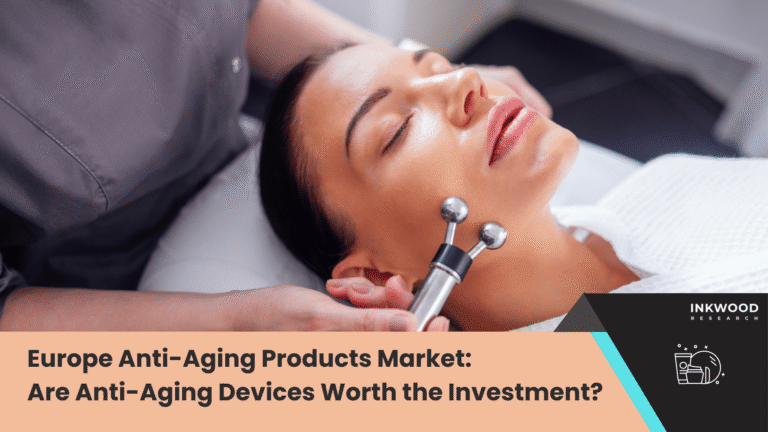
European anti-aging devices represent sophisticated technological advances in the global anti-aging products market, delivering clinical-grade treatments through innovative home-use solutions. However, these premium devices require substantial investment ranging from €500-€3,000, raising questions about cost-effectiveness versus traditional anti-aging products. Furthermore, regulatory approval through clinical trials ensures safety but doesn’t guarantee universal results for all skin types. Additionally, the aging skin treatment landscape increasingly favors device-based solutions over conventional anti-aging creams for long-term efficacy.
Skin care enthusiasts considering device investments, dermatology professionals evaluating treatment options, and older adults exploring advanced aging skin solutions will discover valuable insights. Additionally, beauty industry executives, clinical researchers studying anti-aging claims, and consumers seeking evidence-based approaches to skin aging will benefit from this comprehensive analysis.
The European Anti-Aging Device Revolution
The global anti-aging products market experiences unprecedented transformation as European manufacturers pioneer sophisticated devices that challenge traditional skin care approaches. Moreover, these innovative technologies deliver clinical-grade treatments through consumer-friendly formats, fundamentally reshaping how older adults approach aging skin management. According to our global skincare industry analysis, the anti-aging products market demonstrates exceptional growth driven by technological advancement and demographic aging trends.
European anti-aging devices emerge as premium alternatives to conventional anti-aging creams through advanced delivery systems and scientific innovation. Furthermore, companies like FOREO, Silk’n, and Tripollar lead technological development while maintaining rigorous safety standards through extensive clinical testing protocols. The skin care industry witnesses this evolution as consumers increasingly seek device-based solutions delivering measurable results beyond traditional topical applications.
Technology-Driven Market Transformation
The anti-aging products market undergoes fundamental changes as European device manufacturers integrate cutting-edge technologies into consumer-accessible formats. Additionally, these innovations address specific aging skin concerns through targeted energy delivery systems and precision application methods. Clinical trials consistently demonstrate superior efficacy compared to conventional anti-aging products when measuring long-term skin improvement outcomes.
European regulatory frameworks ensure comprehensive safety validation through mandatory clinical testing before market approval. Moreover, this rigorous oversight creates consumer confidence while establishing quality benchmarks that influence global anti-aging products market standards. Consequently, European devices command premium pricing justified by superior technology and proven clinical performance.
Scientific Innovation in Skin Care Devices
Advanced European anti-aging devices utilize multiple energy modalities, including radiofrequency, LED therapy, microcurrent, and ultrasound technologies. Furthermore, these sophisticated mechanisms target different aspects of skin aging through precise energy delivery and controlled treatment parameters. Clinical trials published in peer-reviewed journals demonstrate measurable improvements in skin elasticity, collagen production, and overall aging skin appearance following consistent device usage.
The skin care products market benefits from this technological evolution as devices complement traditional formulations rather than replacing them entirely. Additionally, combination approaches using devices alongside hyaluronic acid serums and specialized anti-aging creams achieve superior results compared to single-modality treatments. Therefore, European manufacturers position devices as essential components within comprehensive anti-aging regimens.
Clinical Evidence and Testing Standards
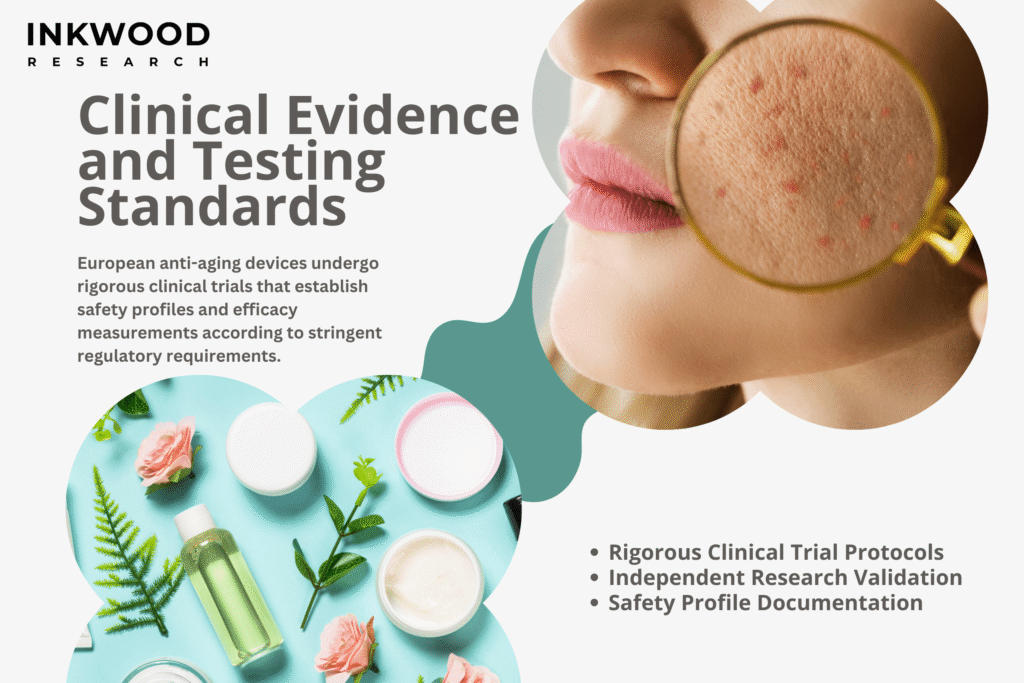
European anti-aging devices undergo rigorous clinical trials that establish safety profiles and efficacy measurements according to stringent regulatory requirements. Moreover, these comprehensive studies evaluate device performance across diverse demographic groups and aging skin conditions. According to research, clinical testing protocols for anti-aging devices must demonstrate statistically significant improvements over baseline measurements to support marketing claims.
Rigorous Clinical Trial Protocols
Clinical trials for European anti-aging devices follow established protocols that evaluate safety, efficacy, and optimal usage parameters through controlled study designs. Furthermore, these studies typically involve 100-300 participants across multiple demographic segments to ensure comprehensive data collection. The anti-aging products market benefits from this scientific approach as evidence-based claims enhance consumer confidence and regulatory compliance.
European manufacturers invest substantially in clinical testing to validate anti-aging claims through objective measurement techniques, including ultrasound imaging, dermascopy, and standardized photography. Additionally, these studies measure key aging skin parameters such as elasticity, hydration levels, and collagen density changes over treatment periods. Consequently, clinical evidence provides quantitative support for device efficacy beyond subjective consumer testimonials.
Independent Research Validation
Third-party clinical research institutions conduct independent studies evaluating European anti-aging devices to eliminate manufacturer bias and ensure objective results. Moreover, these independent validations enhance credibility within the skin care industry while supporting evidence-based treatment recommendations. Clinical trials published in dermatological journals provide peer-reviewed evidence supporting device efficacy for aging skin improvement.
The global anti-aging products market increasingly demands scientific validation as older adults become more discerning about treatment investments. Furthermore, independent research enables healthcare professionals to make informed recommendations based on clinical evidence rather than marketing claims. Therefore, European devices with robust clinical backing achieve stronger market positioning and professional endorsement.
Safety Profile Documentation
Comprehensive safety documentation through clinical testing ensures European anti-aging devices meet strict regulatory standards while protecting consumer welfare. Additionally, these studies identify potential contraindications and optimal usage guidelines for different skin types and aging conditions. The anti-aging products market benefits from transparent safety information that enables informed consumer decision-making.
Clinical trials systematically evaluate potential side effects, optimal treatment frequency, and appropriate candidate selection criteria for each device type. Moreover, long-term safety studies track participants over extended periods to identify any delayed reactions or cumulative effects. Consequently, European devices demonstrate superior safety profiles compared to unregulated alternatives in the global market.
Cost-Benefit Analysis for Consumers
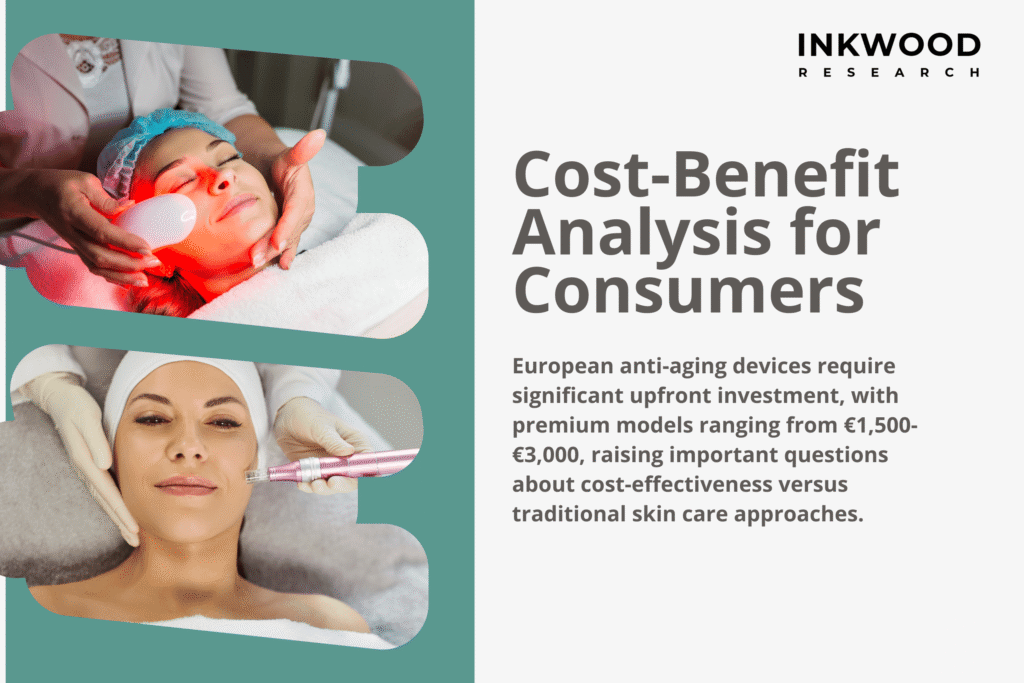
European anti-aging devices require significant upfront investment, with premium models ranging from €1,500-€3,000, raising important questions about cost-effectiveness versus traditional skin care approaches.
Moreover, consumers must evaluate long-term value propositions considering device longevity, treatment costs, and comparative efficacy against professional procedures. The European anti-aging products market demonstrates growing acceptance of premium-priced devices among affluent demographic segments seeking advanced aging skin solutions.
Investment vs. Traditional Treatments
Premium European anti-aging devices cost significantly more than conventional anti-aging creams but potentially offer superior long-term value through device longevity and treatment efficacy. Furthermore, high-quality devices typically provide 3-5 years of reliable operation with thousands of treatment sessions included in the initial purchase price. Clinical trials demonstrate that consistent device usage can deliver improvements comparable to professional treatments costing hundreds of euros per session.
The anti-aging products market shows increasing consumer willingness to invest in devices that deliver professional-grade results at home. Additionally, older adults particularly value the convenience and privacy of home treatments versus clinic visits for aging skin concerns. Therefore, devices appeal to demographics with sufficient disposable income and a preference for self-administered treatments.
Long-Term Economic Considerations
European anti-aging devices offer potential cost savings compared to ongoing professional treatments when calculated over multi-year usage periods. Moreover, devices eliminate recurring appointment costs, travel expenses, and time commitments associated with clinical treatments. The skin care industry recognizes this economic advantage as device manufacturers emphasize total cost of ownership in marketing communications.
Professional anti-aging treatments typically cost €150-€500 per session, with recommended maintenance schedules requiring 6-12 annual treatments. Furthermore, premium European devices can potentially replace or reduce professional treatment frequency while delivering comparable improvements in aging skin appearance. Consequently, devices may achieve cost neutrality within 1-2 years for consumers with regular professional treatment habits.
Value Proposition Assessment
European anti-aging devices must justify premium pricing through demonstrable superiority over conventional anti-aging products and alternative treatment options. Additionally, value assessment should consider treatment convenience, result sustainability, and overall user experience beyond pure efficacy measurements. Clinical testing provides objective data supporting value claims through standardized improvement measurements and comparison studies.
The global anti-aging products market increasingly emphasizes evidence-based value propositions as educated consumers demand scientific justification for premium investments. Moreover, European devices with comprehensive clinical backing and regulatory approval offer stronger value arguments compared to unverified alternatives. Therefore, device selection should prioritize clinical evidence and regulatory compliance over marketing claims or price considerations alone.
Device Technology Comparison
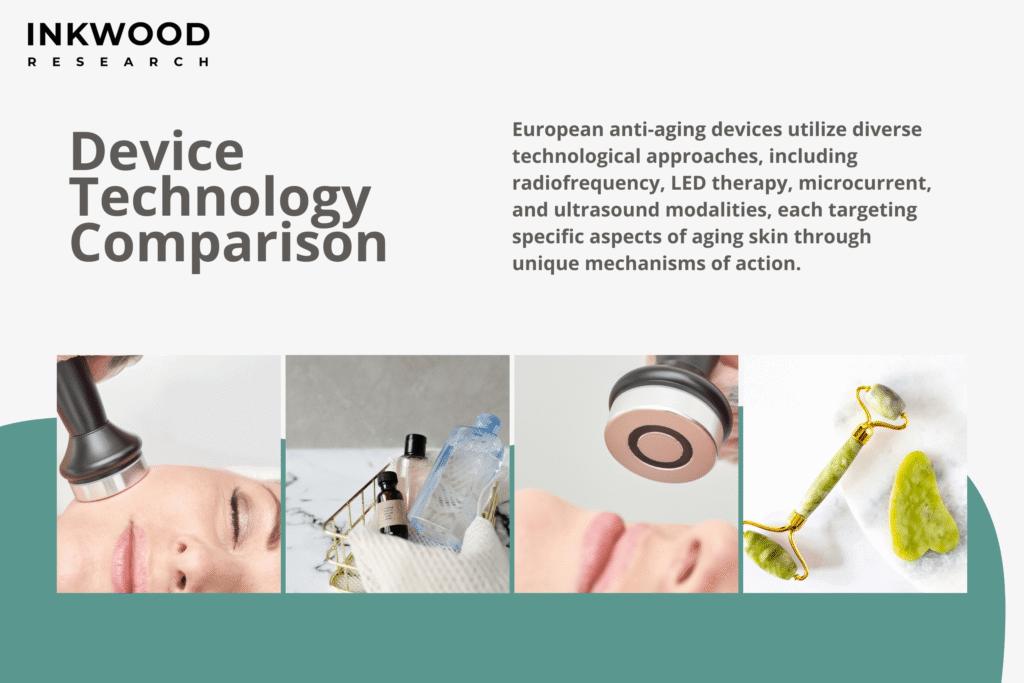
European anti-aging devices utilize diverse technological approaches, including radiofrequency, LED therapy, microcurrent, and ultrasound modalities, each targeting specific aspects of aging skin through unique mechanisms of action. Moreover, understanding these technological differences enables informed device selection based on individual aging concerns and treatment preferences. Clinical trials consistently demonstrate that different technologies excel in addressing specific aging skin manifestations, requiring careful matching between device capabilities and user needs.
Radiofrequency Technology Benefits
Radiofrequency devices deliver controlled thermal energy to deeper skin layers, stimulating collagen production and tissue tightening without surface damage. Furthermore, this technology demonstrates particular efficacy for skin laxity and texture improvement according to multiple clinical trials published in dermatological journals. The anti-aging products market recognizes radiofrequency as the gold standard for non-invasive skin tightening with proven safety profiles in older adults.
European manufacturers like Tripollar and Silk’n offer sophisticated radiofrequency devices with precise temperature control and safety monitoring systems. Additionally, these devices typically feature multiple energy levels and treatment heads designed for different facial areas and aging concerns. Clinical testing validates radiofrequency efficacy for collagen stimulation and gradual skin improvement over 3-6 month treatment periods.
LED Therapy Applications
LED therapy devices utilize specific light wavelengths to stimulate cellular regeneration and improve aging skin appearance through photobiomodulation mechanisms. Moreover, red and near-infrared light demonstrate clinical efficacy for wrinkle reduction and skin texture improvement without thermal damage or discomfort. The skin care industry increasingly recognizes LED therapy as a gentle yet effective approach suitable for sensitive aging skin conditions.
Clinical trials demonstrate that LED therapy enhances cellular energy production and promotes natural healing processes within aging skin tissue. Furthermore, combination LED devices offering multiple wavelengths can address diverse aging concerns, including hyperpigmentation, inflammation, and collagen degradation. Therefore, LED technology appeals to consumers seeking gentle treatments with minimal side effects and risks.
Microcurrent Stimulation
Microcurrent devices deliver low-level electrical stimulation that mimics natural bioelectrical signals, potentially improving muscle tone and skin firmness in aging faces. Additionally, this technology demonstrates particular benefits for facial contouring and definition according to clinical studies evaluating muscle stimulation effects. The anti-aging products market positions microcurrent as a non-invasive alternative to surgical facelifts for addressing facial aging concerns.
European microcurrent devices typically feature multiple intensity settings and specialized probe configurations for targeted facial muscle stimulation. Moreover, clinical testing validates microcurrent efficacy for immediate skin lifting effects and potential long-term improvement with consistent usage. Consequently, these devices appeal to consumers seeking visible results without downtime or invasive procedures.
Environmental Adaptation: Real-Time Responsive Formulations
Advanced AI platforms incorporate real-time environmental data to optimize anti-aging product formulations for current conditions that affect skin aging. Integration with weather databases, air quality monitors, and UV index measurements enables dynamic formulation adjustments that address environmental stressors affecting aging skin.
Climate-responsive formulations automatically adjust hydration levels based on humidity, increase antioxidant concentrations during high pollution periods, and modify UV protection factors according to seasonal changes. Also, this environmental intelligence ensures that anti-aging treatments remain optimally effective regardless of external conditions that can accelerate skin aging.
Further, seasonal adaptation algorithms recognize that aging skin has different needs throughout the year, modifying formulations to address winter dryness, summer UV exposure, and transitional period sensitivities. This dynamic approach maximizes treatment efficacy while preventing over-treatment or under-protection during varying environmental conditions.
The anti-aging products market increasingly demands solutions that adapt to real-world conditions affecting skin health. In this regard, AI-driven environmental adaptation represents a significant advancement in personalized skin care that addresses the complex interplay between aging skin and environmental factors.
Professional vs. Home-Use Efficacy
European home-use anti-aging devices deliver approximately 60-70% of professional treatment efficacy while offering significant advantages in convenience, cost, and treatment frequency. Moreover, clinical trials directly comparing professional and home treatments demonstrate that consistent home device usage can achieve comparable long-term results despite lower per-session intensity. The global anti-aging products market benefits from this efficacy balance as home devices expand treatment accessibility for aging skin concerns.
Treatment Intensity Differences
Professional anti-aging treatments utilize higher energy levels and more aggressive parameters compared to home-use devices due to trained operator supervision and immediate medical support availability. Furthermore, clinical testing protocols for professional devices allow stronger treatments that may cause temporary side effects requiring professional monitoring. The skin care industry recognizes these intensity differences while emphasizing that home devices prioritize safety over maximum efficacy.
Home-use European devices operate within strict safety parameters designed to prevent user error and minimize adverse reaction risks. Additionally, these devices typically feature automatic shut-off systems, skin temperature monitoring, and preset treatment protocols to ensure safe operation. Clinical trials demonstrate that lower-intensity treatments can achieve significant improvements in aging skin when applied consistently over extended periods.
Convenience and Compliance Advantages
Home anti-aging devices offer substantial convenience benefits that may enhance treatment compliance and overall outcomes compared to professional clinic visits. Moreover, the ability to perform treatments on flexible schedules without appointment constraints appeals particularly to busy older adults managing aging skin concerns. Clinical testing indicates that treatment frequency and consistency significantly impact overall efficacy regardless of individual session intensity.
The anti-aging products market recognizes convenience as a crucial factor in treatment success, as regular usage typically produces superior results compared to sporadic high-intensity treatments. Furthermore, home devices eliminate travel time, scheduling conflicts, and treatment anxiety that may reduce professional treatment compliance. Therefore, convenience advantages may offset intensity limitations through improved adherence to recommended treatment protocols.
Long-Term Outcome Comparison
Clinical trials evaluating long-term outcomes demonstrate that consistent home device usage can achieve results comparable to periodic professional treatments over 6-12 month evaluation periods. Additionally, the combination of home maintenance treatments with periodic professional sessions may deliver optimal aging skin improvement results. The skin care products market increasingly promotes hybrid approaches combining professional and home technologies for comprehensive anti-aging strategies.
European devices with robust clinical backing demonstrate sustained improvements in aging skin parameters when used according to manufacturer recommendations. Moreover, long-term studies indicate that home device benefits may accumulate over time, potentially exceeding single-modality professional treatment outcomes. Consequently, home devices represent viable alternatives for consumers committed to consistent anti-aging regimens.
Regulatory Landscape and Safety
European anti-aging devices operate under comprehensive regulatory frameworks, including CE marking requirements and medical device classifications that ensure safety and efficacy standards. Moreover, the Medical Device Regulation (MDR) implemented in 2021 strengthens oversight of anti-aging devices through enhanced clinical evidence requirements and post-market surveillance obligations.
CE Marking Requirements
European anti-aging devices must obtain CE marking through rigorous conformity assessment procedures that evaluate safety, performance, and quality management systems. Furthermore, this process requires comprehensive technical documentation, including clinical evidence, risk analysis, and manufacturing quality controls. The anti-aging products market relies on CE marking as a fundamental safety indicator for consumer protection and regulatory compliance.
Clinical testing requirements for CE marking have become more stringent under the updated Medical Device Regulation, demanding robust clinical evidence for safety and performance claims.
Additionally, manufacturers must maintain detailed post-market surveillance systems to monitor device performance and report adverse events. Therefore, CE-marked devices provide consumers with regulatory assurance regarding safety and efficacy standards.
Clinical Evidence Standards
European regulations require substantial clinical evidence supporting safety and performance claims for anti-aging devices before market authorization. Moreover, this evidence must demonstrate clinical benefits while establishing appropriate risk-benefit profiles for intended user populations. Clinical trials supporting regulatory submissions must follow Good Clinical Practice guidelines and statistical methodologies that ensure reliable results.
The skin care industry benefits from stringent evidence requirements as they eliminate unsubstantiated claims and promote evidence-based treatment decisions. Furthermore, regulatory authorities increasingly demand real-world evidence and post-market studies to validate continued safety and efficacy. Consequently, European devices with comprehensive clinical backing offer superior regulatory compliance and consumer protection.
Post-Market Surveillance
European anti-aging device manufacturers must implement comprehensive post-market surveillance systems to monitor device performance and identify potential safety issues. Additionally, these systems require systematic collection and analysis of user feedback, adverse event reports, and performance data. The anti-aging products market benefits from this ongoing monitoring as it ensures continued safety and enables rapid response to emerging issues.
Regulatory authorities conduct periodic inspections and market surveillance activities to verify compliance with safety standards and performance requirements. Moreover, non-compliant devices face immediate market withdrawal and manufacturer penalties to protect consumer welfare. Therefore, European regulatory oversight provides ongoing protection for anti-aging device users through systematic monitoring and enforcement mechanisms.
Market Growth and Consumer Adoption
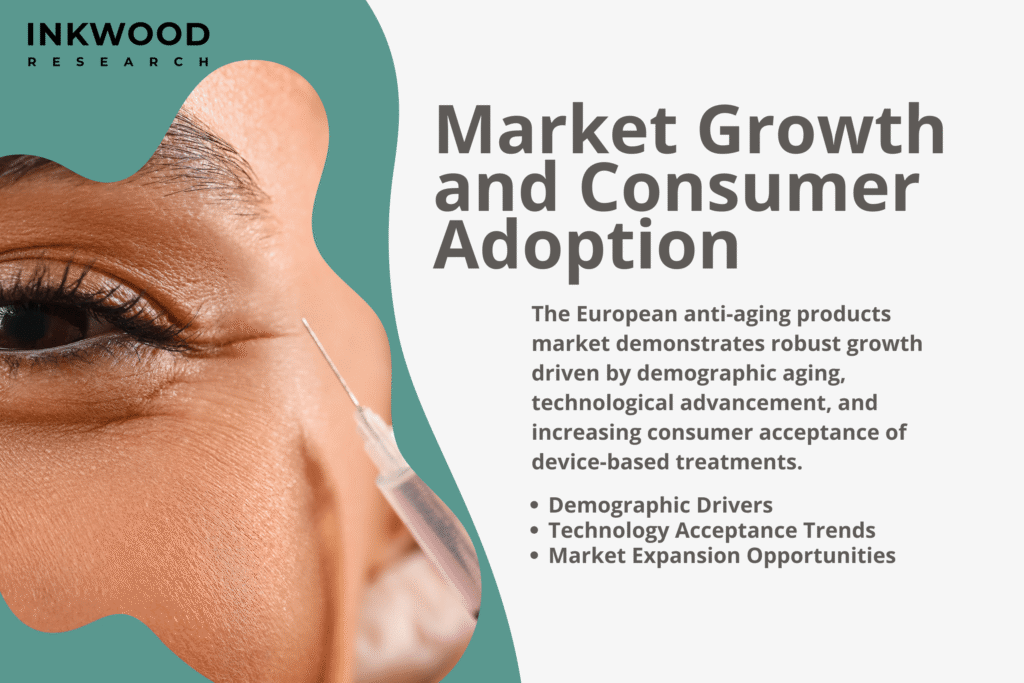
The European anti-aging products market demonstrates robust growth driven by demographic aging, technological advancement, and increasing consumer acceptance of device-based treatments. Moreover, market research indicates that European device sales grow 15-20% annually as older adults increasingly invest in advanced aging skin solutions. Clinical trials supporting device efficacy accelerate market adoption as evidence-based consumers gain confidence in technology-driven anti-aging approaches.
Demographic Drivers
Europe’s aging population creates expanding demand for effective anti-aging solutions as the 65+ demographic segment grows substantially over the next decade. Furthermore, this demographic demonstrates higher disposable income and willingness to invest in premium skin care technologies for aging skin management. The skin care industry recognizes demographic aging as a fundamental growth driver for anti-aging devices and related products.
Older adults increasingly prefer home-based treatments that provide privacy, convenience, and control over their aging skin care regimens. Additionally, clinical testing demonstrates that device treatments can be safely performed by consumers following proper training and adherence to manufacturer guidelines. Therefore, demographic preferences align with device capabilities to drive market expansion.
Technology Acceptance Trends
Consumer acceptance of anti-aging devices accelerates as clinical evidence validates efficacy and safety profiles through rigorous testing protocols. Moreover, positive user experiences and word-of-mouth recommendations drive adoption among demographics traditionally skeptical of technology-based treatments. The global anti-aging products market benefits from increasing technology literacy among older adult populations seeking advanced aging skin solutions.
European consumers demonstrate particular confidence in device technologies backed by clinical trials and regulatory approval through established oversight systems. Furthermore, professional endorsements from dermatologists and aesthetic practitioners enhance consumer confidence in device-based treatments. Consequently, evidence-based marketing approaches effectively communicate device benefits to target demographics.
Market Expansion Opportunities
European anti-aging device manufacturers identify significant expansion opportunities in emerging markets where aging populations seek proven anti-aging solutions. Additionally, technological improvements and cost reductions may expand device accessibility to broader demographic segments over time. Clinical testing continues to validate new applications and treatment protocols that may further expand market opportunities.
The skin care products market shows increasing integration between devices and traditional formulations as combination approaches deliver enhanced results. Moreover, subscription models and financing options may improve device accessibility for cost-conscious consumers interested in advanced aging skin treatments. Therefore, innovative business models may accelerate market penetration and consumer adoption rates.
Key Takeaways
European anti-aging devices represent a significant technological advancement in the global anti-aging products market, delivering clinical-grade treatments through sophisticated home-use systems. Moreover, rigorous clinical testing and regulatory oversight ensure safety while validating efficacy claims for aging skin improvement. The investment worthiness depends on individual factors, including budget capacity, treatment compliance, and specific aging skin concerns.
- Clinical trials demonstrate that European devices can deliver 60-70% of professional treatment efficacy while offering substantial convenience and long-term cost advantages for consistent users committed to regular treatment protocols.
- Furthermore, the skin care industry increasingly recognizes devices as essential components within comprehensive anti-aging regimens rather than standalone solutions, particularly when combined with targeted anti-aging creams and professional maintenance treatments.
- Regulatory frameworks ensure consumer protection through mandatory clinical evidence and ongoing safety monitoring, making European devices among the safest and most effective options in the global anti-aging products market for older adults seeking evidence-based aging skin solutions.
- Therefore, European anti-aging devices justify their premium pricing for consumers prioritizing clinical efficacy, regulatory compliance, and long-term value over initial cost considerations, particularly those committed to consistent treatment protocols validated through clinical testing.
The anti-aging products market continues evolving toward technology-driven solutions supported by clinical evidence and regulatory approval. European devices lead this transformation through scientific innovation, safety validation, and proven efficacy for aging skin improvement in home-use applications.
If you need customized consultation contact us now.
Make sure you check out our in-depth research reports or request a FREE sample customized as per your requirements.
Frequently Asked Questions (FAQs)
Clinical trials demonstrate that European anti-aging devices deliver 60-70% of professional treatment efficacy while traditional anti-aging creams provide surface-level benefits. However, optimal results require combination approaches using devices alongside targeted formulations. Devices excel at collagen stimulation and deep tissue treatment, while topical products support barrier function and ingredient delivery for comprehensive aging skin management.
Premium European devices costing €1,500-€3,000 typically achieve cost neutrality within 12-18 months compared to professional treatments. Professional sessions cost €150-€500 each with 6-12 annual treatments recommended, while quality devices provide 3-5 years of reliable operation. However, investment worthiness depends on consistent usage compliance and individual treatment response rates.
Technology selection depends on specific aging concerns and skin characteristics. Radiofrequency excels for skin tightening and collagen stimulation, LED therapy provides gentle cellular regeneration, while microcurrent offers immediate lifting effects. Clinical testing validates that combination devices addressing multiple concerns deliver superior results, though single-technology devices may suffice for targeted issues.