Table of Contents
This analysis is brought to you by Inkwood Research, a leading market intelligence firm specializing in European nutraceutical innovation, functional food ecosystems, and advanced delivery system technologies. Our research team draws on deep expertise in EFSA regulatory frameworks, bioavailability enhancement technologies, and nutraceutical market dynamics across Southern Europe. Through strategic partnerships with Italian and Spanish nutraceutical manufacturers, academic research institutions, and regulatory consultants, we deliver actionable intelligence for decision-makers navigating Europe’s evolving advanced nutraceutical delivery landscape.
TLDR
Europe’s advanced nutraceutical delivery market is undergoing a quiet revolution, and Italy and Spain are at the heart of it. Driven by EFSA’s evolving regulatory guidance and intensifying consumer demand for bioavailability-enhanced supplements, both nations are scaling innovations in nanoencapsulation, liposomal delivery, and controlled-release formulations. According to our analysis, the Italy advanced delivery nutraceuticals market is projected to grow from US$4,460.95 million in 2026 to US$8,529.29 million by 2034 at an 8.44% CAGR. Meanwhile, the Spain advanced delivery nutraceuticals market is set to expand from US$3,193.77 million to US$6,640.72 million, reflecting a 9.58% CAGR across the same period.
This blog is essential for nutraceutical executives, regulatory affairs professionals, and R&D directors navigating Europe’s advanced delivery nutraceuticals landscape. Additionally, investors assessing Spain and Italy’s functional food ecosystems, ingredient manufacturers seeking bioavailability enhancement partnerships, and healthcare strategists tracking the European nutraceutical delivery systems market trends will find rigorous, evidence-backed intelligence here to support informed market entry and product development decisions.
What Is Driving Italy’s Advanced Nutraceutical Delivery Innovation?
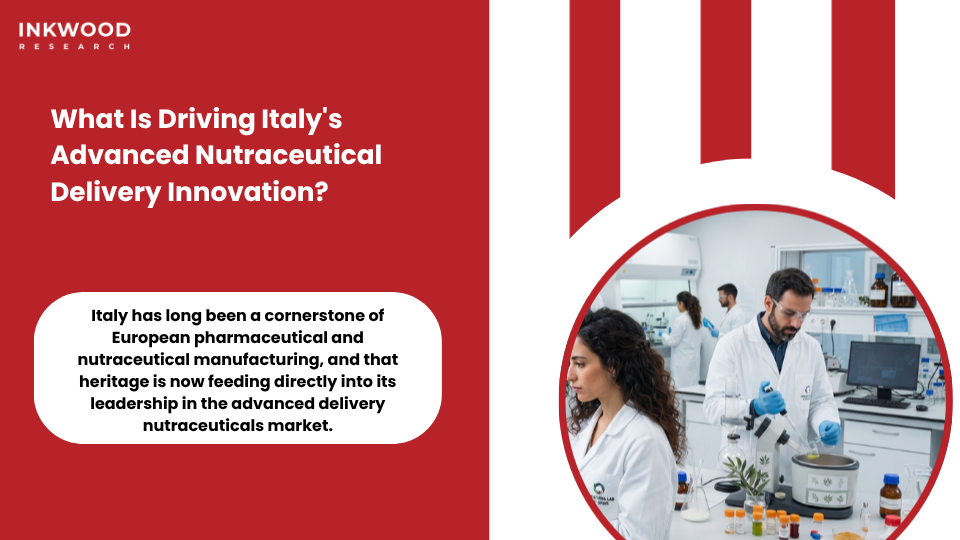
Italy has long been a cornerstone of European pharmaceutical and nutraceutical manufacturing, and that heritage is now feeding directly into its leadership in the advanced delivery nutraceuticals market. The country’s dense network of specialty chemical producers, academic research institutions, and contract manufacturers creates a uniquely fertile environment for nutraceutical delivery systems market innovation. Moreover, Italy’s aging population is driving sustained demand for high-absorption supplements targeting cardiovascular health, cognitive function, and joint mobility, categories where bioavailability enhancement nutraceuticals make the most measurable clinical difference.
According to our analysis, the Italy advanced delivery nutraceuticals market is set to grow from US$4,460.95 million in 2026 to US$8,529.29 million by 2034, reflecting an 8.44% CAGR. This trajectory is underpinned by strong domestic consumption and a robust export infrastructure that positions Italian producers as key suppliers across broader European markets. Furthermore, Italy’s deep expertise in phytosome technology nutraceuticals, developed by companies like Indena SpA, which pioneered phytosome complexation for botanical ingredients, gives the market a distinctive technological edge that few competing regions can replicate.
Italy’s Nutraceutical Export Infrastructure
Italy ranks among Europe’s leading exporters of botanical and functional ingredients, and this export orientation accelerates innovation in advanced nutraceutical formulations. Producers competing in sophisticated export markets face constant pressure to differentiate on bioavailability and efficacy, which in turn drives investment in microencapsulation nutraceutical applications and controlled-release nutraceutical formulations. Consequently, innovation in delivery technology is not simply a domestic preference, it is a competitive necessity that shapes the entire Italy advanced delivery nutraceuticals market ecosystem from R&D through commercialization.
How Does EFSA Shape Advanced Nutraceutical Delivery Systems in Southern Europe?
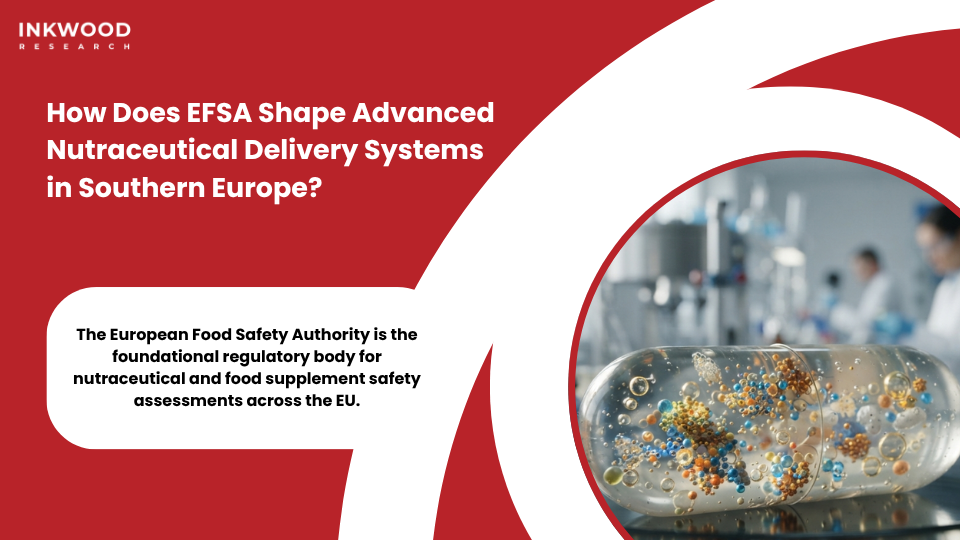
The European Food Safety Authority is the foundational regulatory body for nutraceutical and food supplement safety assessments across the EU. Its guidance directly influences how manufacturers in Italy and Spain approach advanced oral delivery systems nutraceuticals. EFSA’s health claim framework, established under
The European Food Safety Authority is the foundational regulatory body for nutraceutical and food supplement safety assessments across the EU, and its guidance directly influences how manufacturers approach advanced oral delivery systems for nutraceuticals. EFSA’s health claim framework, established under EC Regulation No 1924/2006, requires robust scientific substantiation for any claim linking a nutrient to a health benefit. This framework, while rigorous, creates a powerful incentive for manufacturers to invest in delivery systems that genuinely improve absorption and clinical outcomes, because only demonstrated efficacy can withstand regulatory scrutiny.
Additionally, EFSA’s ongoing novel food evaluations under Regulation (EU) 2015/2283 are shaping which delivery platforms gain market authorization first. Nanoencapsulation in the nutraceuticals market participants, for example, must navigate novel food assessments if their nanoparticle technologies fall within EFSA’s definition of engineered nanomaterials. This creates a regulatory dynamic where companies investing early in EFSA dossier preparation gain meaningful first-mover advantages in the European nutraceutical delivery systems market trends.
How EFSA Compliance Becomes Competitive Advantage
Interestingly, the rigor of EFSA’s process, while demanding, serves as a market quality signal for Italian and Spanish exporters targeting premium segments in Northern Europe, the UK, and North America. Manufacturers who have cleared EFSA’s evaluation process for novel delivery technologies can credibly market their products as clinically validated, which supports premium pricing and builds consumer trust. Furthermore, EFSA’s transparency in publishing scientific opinions provides the broader nutraceutical delivery systems market with a roadmap for acceptable evidence thresholds, effectively guiding R&D investment toward the most defensible delivery platforms.
Why Is Spain Emerging as a Hotspot for Nutraceutical Bioavailability Innovation?
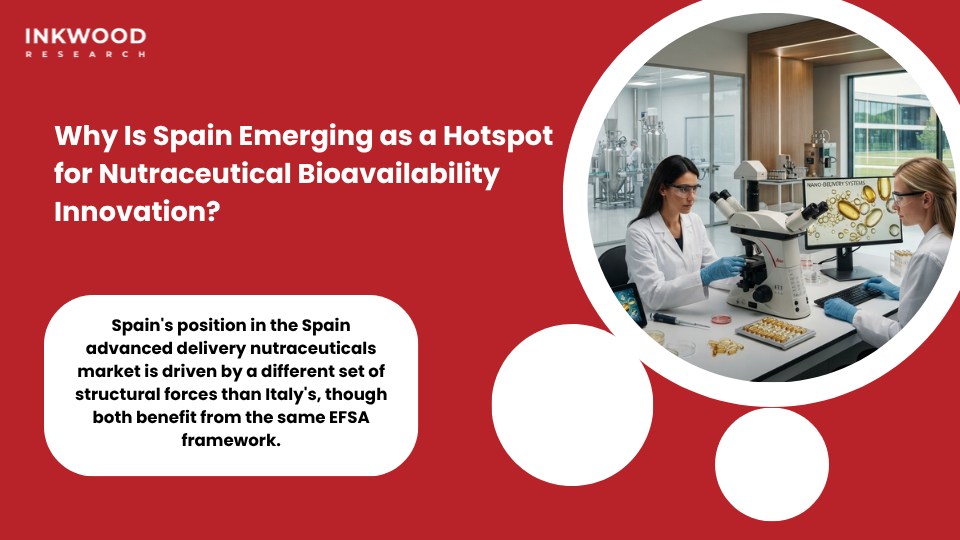
Spain’s position in the Spain advanced delivery nutraceuticals market is driven by a different set of structural forces than Italy’s, though both benefit from the same EFSA framework. Spain’s pharmaceutical sector, anchored in Barcelona and Madrid, has invested heavily in oral drug delivery research over the past two decades, and that expertise is increasingly transferring into the nutraceutical space. Moreover, Spain’s vibrant functional food culture, where olive oil, polyphenol-rich ingredients, and Mediterranean dietary staples are already embedded in consumer habits, creates natural receptivity to advanced nutraceutical formulations that enhance the bioavailability of familiar ingredients.
According to our analysis, the Spain advanced delivery nutraceuticals market is projected to reach US$6,640.72 million by 2034, growing at a 9.58% CAGR from US$3,193.77 million in 2026, one of the strongest growth rates among the markets examined in this report. This acceleration reflects both the maturity of Spain’s R&D infrastructure and the rapid uptake of personalized nutraceutical delivery systems market insights by Spanish health and wellness brands targeting European and Latin American consumers simultaneously.
Spain’s Research Ecosystem and Delivery Technology Pipeline
Spain’s publicly funded research network, particularly institutions affiliated with the Spanish National Research Council (CSIC), has produced significant foundational work on solid lipid nanoparticles nutraceuticals, lipid-based nutraceutical delivery systems, and nanotechnology in dietary supplements. This academic foundation is translating into commercial applications as startups and mid-size nutraceutical companies license university-developed delivery platforms. Consequently, the Spain advanced delivery nutraceuticals market benefits from a growing pipeline of technically differentiated products that align well with European regulatory standards and international premium market expectations.
Which Technologies Are Transforming the Advanced Delivery Nutraceuticals Market in Europe?
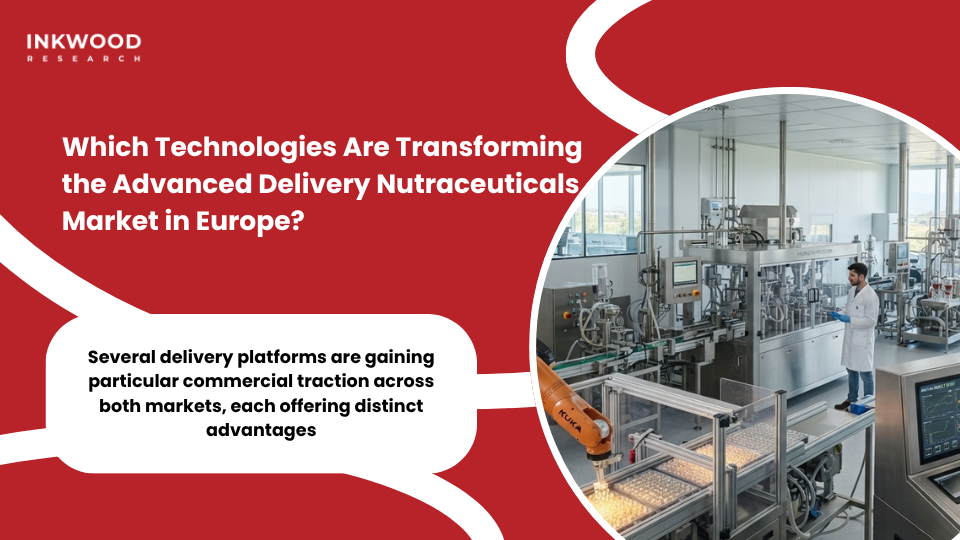
Both Italy and Spain are active participants in a broader European technological evolution within the advanced delivery nutraceuticals market. Several delivery platforms are gaining particular commercial traction across both markets, each offering distinct advantages in terms of bioavailability enhancement nutraceuticals performance and regulatory tractability:
- Liposomal nutraceutical delivery systems: Phospholipid-based vesicles that encapsulate active ingredients for improved cellular absorption are gaining adoption across vitamin C, glutathione, and curcumin categories. Their bioavailability advantages over conventional supplements are well-documented in peer-reviewed literature, making them defensible under EFSA’s evidence requirements.
- Nanoencapsulation technology in nutraceuticals: Engineered nanocarriers, including polymeric nanoparticles and nanoemulsions, offer precise controlled release and targeted delivery. While EFSA’s novel food pathway requires careful navigation, manufacturers who complete the process gain substantial competitive positioning in the encapsulated nutraceuticals market.
- Microencapsulation nutraceutical applications: More established than nanoencapsulation, microencapsulation is widely used in Italy and Spain for protecting sensitive ingredients like probiotics, omega-3 fatty acids, and plant polyphenols from oxidation and gastrointestinal degradation.
- Phytosome technology nutraceuticals: Developed by Italian innovators, phytosome complexation binds botanical actives to phospholipids, dramatically improving absorption of ingredients like silymarin, quercetin, and resveratrol, a technology that has become synonymous with Italy’s contribution to global nutraceutical delivery innovation.
- Sustained release nutraceutical formulations: Time-released delivery matrices extend the absorption window for ingredients like magnesium, B vitamins, and coenzyme Q10, improving clinical relevance and consumer compliance across the functional nutraceuticals market growth.
- Clean label delivery systems nutraceuticals: Plant-derived encapsulation materials, including modified starches and pea protein matrices, are gaining traction as European consumers demand transparency in ingredient sourcing without sacrificing delivery performance.
The competitive landscape of the European nutraceutical delivery systems market features a diverse mix of vertically integrated manufacturers, specialty ingredient suppliers, and technology licensing companies. Together, these players are defining what advanced oral delivery systems nutraceuticals look like in practice across Southern Europe:
- Indena SpA (Italy): A global leader in phytosome technology nutraceuticals, Indena’s proprietary delivery platform is licensed to nutraceutical and pharmaceutical brands worldwide. The company’s EFSA-substantiated botanical extracts position it at the high-efficacy end of the advanced delivery nutraceuticals market, with decades of published bioavailability data supporting their commercial claims.
- BIONAP (Italy): This Sicilian ingredient specialist focuses on polyphenol-rich botanical extracts with enhanced bioavailability, targeting functional nutraceuticals market growth in cardiovascular and metabolic health categories with well-characterized delivery formats.
- Lipoid GmbH (Germany/Spain operations): A leading phospholipid manufacturer supplying the liposomal nutraceutical delivery systems sector across Europe, with significant commercial presence in Spanish and Italian contract manufacturing networks.
- Nektium (Spain): Based in Gran Canaria, Nektium produces standardized botanical extracts with documented bioavailability data, serving nutraceutical brands across Europe and North America, and representing Spain’s growing contribution to the global advanced delivery nutraceuticals market.
- Provital Group (Spain): A Barcelona-based active ingredient specialist combining botanical extraction expertise with advanced delivery encapsulation capabilities for both nutraceutical and cosmeceutical applications.
The past two years have brought several consequential developments to the advanced delivery nutraceuticals market across Italy and Spain. Together, these shifts are accelerating the transition from conventional supplement formats toward scientifically validated, high-bioavailability delivery systems:
- EFSA novel food assessments accelerating: Following full implementation of Regulation (EU) 2015/2283, EFSA has been processing novel food applications, including those involving advanced delivery systems, with updated guidance and procedural improvements introduced in 2025–2026 aimed at greater transparency and predictability.
- Spanish CDMO encapsulation expansion: Multiple Spanish contract manufacturers have expanded production capacities in microencapsulation and related formulation technologies, reflecting sustained demand from domestic and international clients targeting European nutraceutical markets.
- Italian phytosome licensing expanding internationally: Indena has continued to extend commercial applications of its Phytosome® platform into categories such as cognitive health, metabolic balance, and sports/wellness nutrition, broadening the technology’s reach across the European nutraceutical delivery systems market.
- Clean label innovation gaining commercial traction: Both Italian and Spanish manufacturers are actively developing plant-based encapsulation systems, using materials like modified starches and rice-derived matrices, to meet clean label demands from health-conscious European consumers.
- Personalized nutraceutical platforms emerging in Spain: Early-stage companies in Barcelona and Madrid are combining AI-driven formulation tools with advanced delivery systems to develop personalised nutraceutical offerings tailored to individual health profiles, positioning Spain at the frontier of innovation in the European advanced delivery nutraceuticals market.
Key Takeaways
- The Italy advanced delivery nutraceuticals market grows from US$4,460.95 million (2026) to US$8,529.29 million (2034) at an 8.44% CAGR, supported by phytosome technology leadership and a strong botanical ingredient export infrastructure.
- The Spain advanced delivery nutraceuticals market expands at a 9.58% CAGR, the strongest rate in this analysis, driven by pharmaceutical R&D spillover, functional food consumer culture, and growing Latin American export linkages.
- EFSA’s health claim and novel food frameworks are the definitive regulatory forces shaping the advanced nutraceutical delivery systems market investment in Southern Europe, simultaneously constraining and incentivizing innovation.
- Key technologies gaining commercial traction include liposomal delivery, nanoencapsulation, microencapsulation, phytosome complexation, sustained-release formulations, and clean label encapsulation systems.
- Both Italy and Spain benefit from strong academic-industry technology transfer pipelines, positioning them as global leaders in functional nutraceuticals market growth and bioavailability enhancement nutraceuticals development.
- Personalized nutraceutical delivery platforms represent the next wave of differentiation, particularly in Spain, where AI-driven formulation tools are beginning to integrate with advanced delivery technologies.
Conclusion:
Italy and Spain are not merely participating in the global advanced delivery nutraceuticals market; they are actively defining its technological and regulatory standards. EFSA’s rigorous framework, far from being purely a constraint, is functioning as an innovation engine that rewards manufacturers who invest in genuinely efficacious delivery systems.
The phytosome pioneers of Italy and the pharmaceutical-to-nutraceutical innovators of Spain together represent a formidable force in the European nutraceutical delivery systems market trends, and their influence will continue to shape global standards for years ahead. For nutraceutical executives, investors, and R&D leaders seeking to navigate this landscape with confidence, deep market intelligence is essential.
Inkwood Research delivers the analytical depth and regional expertise needed to turn these market dynamics into a strategic advantage.
Connect with our team to explore how our insights can support your positioning in the Italy advanced delivery nutraceuticals market and the Spain advanced delivery nutraceuticals market.
Frequently Asked Questions
What is the size of the Italy advanced delivery nutraceuticals market?
The market is valued at US$4,460.95 million in 2026, projected to reach US$8,529.29 million by 2034 at an 8.44% CAGR, driven by phytosome technology leadership and strong domestic demand.
How does EFSA regulate advanced nutraceutical delivery systems in Europe?
EFSA evaluates health claims under EC Regulation 1924/2006 and novel food applications under EU Regulation 2015/2283, covering nanoencapsulation, liposomal, and engineered delivery technologies.
Which advanced delivery technologies are growing fastest in Italy and Spain?
Liposomal nutraceutical delivery systems, phytosome complexation, nanoencapsulation technology, microencapsulation, and controlled-release formulations are gaining the strongest commercial traction.
Why is Spain's nutraceutical delivery market growing faster than Italy's?
Spain benefits from pharmaceutical R&D expertise, a Mediterranean functional food culture, CSIC academic partnerships, and strong Latin American export linkages, collectively supporting its 9.58% CAGR.
What does clean label mean in the context of nutraceutical delivery?
Clean label delivery uses plant-derived encapsulation materials, such as starches and pea protein, avoiding synthetic additives while maintaining bioavailability enhancement performance.
How is personalized nutrition changing advanced nutraceutical delivery in Spain?
Spanish innovators are integrating AI formulation tools with advanced delivery platforms to create biomarker-driven, personalized nutraceutical delivery systems tailored to individual health profiles and absorption needs.