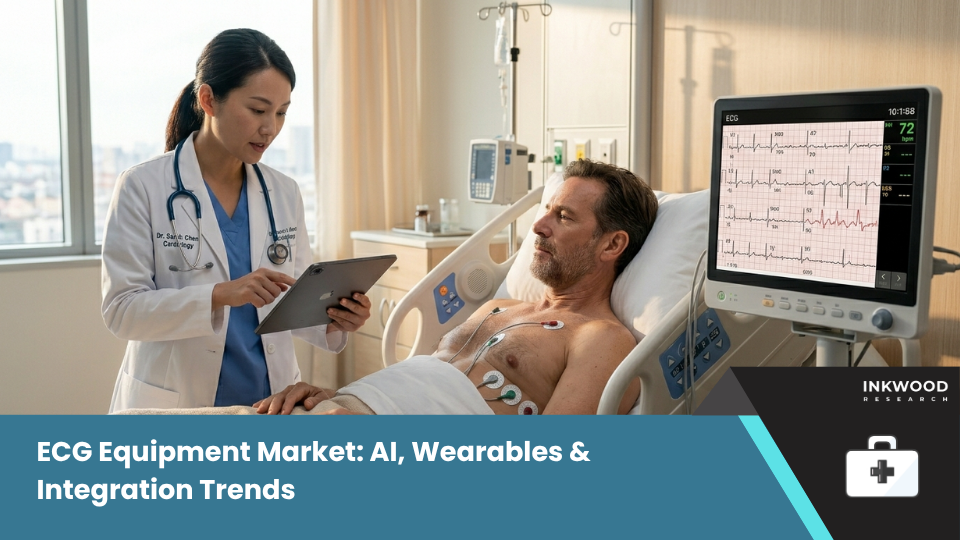
Data has an indispensable role in healthcare. Accordingly, healthcare providers are increasingly focusing on solutions that enhance data sharing and elevate care delivery standards. In the case of electrocardiogram (ECG) technology, integrations with wearable devices like fitness trackers and smartwatches are actively reshaping how clinicians access cardiac data. Based on our research, the global ECG equipment market is projected to reach $16094.39 million by 2034, recording a CAGR of 6.54% during the forecast period, 2026-2034.
Combining ECG data with wearable biometrics allows healthcare providers to build a holistic picture of patient health. Sleep patterns, physical activity metrics, and continuous heart rhythm monitoring converge into actionable clinical intelligence. This drives both the efficiency of ECG data analysis and the quality of patient outcomes across ambulatory and hospital settings.
A GE Healthcare article on electrocardiogram integration captures this challenge vividly. The author describes being unable to complete a cardiology consultation because ECG records weren’t accessible through the electronic medical record (EMR) during a referral workflow.
“Even though I was on the same EMR as his PCP, the lack of integrated ECGs and EMRs had left me unable to complete my clinical workflow, provide an accurate diagnosis, offer a management plan, and complete the visit in a timely manner.” (Source)
This blog examines the most consequential integrations shaping the ECG equipment market today, from AI-powered diagnostics to next-generation wearable monitoring systems.
Artificial Intelligence in ECG Diagnostic Equipment
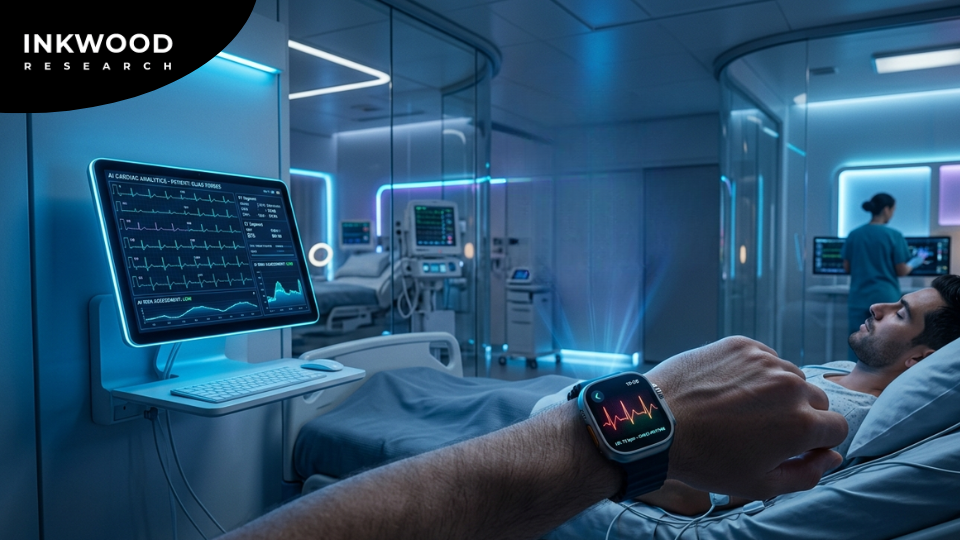
AI-Based ECG Monitoring: From Pattern Recognition to Clinical Decision Support
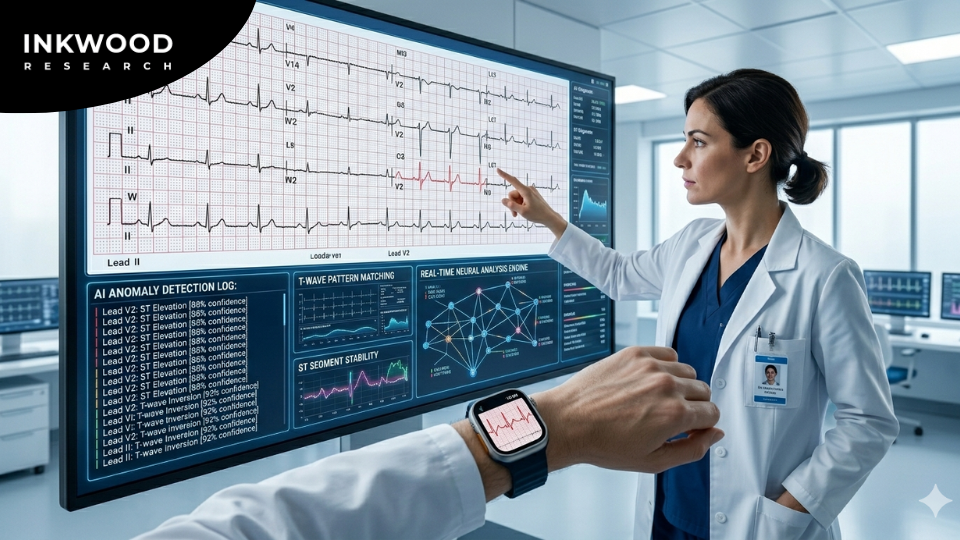
AI algorithms are fundamentally transforming how ECG diagnostic equipment interprets cardiac signals. Machine learning models now detect arrhythmias, cardiac anomalies, and mortality risk indicators with increasing precision. Furthermore, these algorithms continuously improve through exposure to larger ECG datasets, enhancing electrocardiography equipment market capabilities over time.
A landmark study from the University of Alberta illustrates this potential clearly. Researchers built and trained deep learning models using 1.6 million ECGs from 244,077 patients in northern Alberta between 2007 and 2020. The Nature Digital Medicine study demonstrated that ECG-based deep learning models can reliably identify high-risk patients for short- and long-term mortality.
Padma Kaul, Professor of Medicine and co-director of the Canadian VIGOUR Centre, noted that these findings illustrate how machine learning can convert routine clinical data into point-of-care decision support tools. (Source)
Beyond diagnostics, AI integration within the ECG machines market delivers measurable operational benefits:
- Reduces radiologist and cardiologist workload by automating routine signal interpretation
- Enables earlier arrhythmia detection, improving intervention timelines
- Lowers diagnostic costs while improving patient throughput in hospital and ambulatory settings
- Supports remote cardiac monitoring workflows through real-time algorithmic analysis
These capabilities collectively reinforce AI-based ECG monitoring devices as a defining segment within the electrocardiogram equipment market growth narrative.
Wearable ECG Devices Market: Interoperability Through Wearability
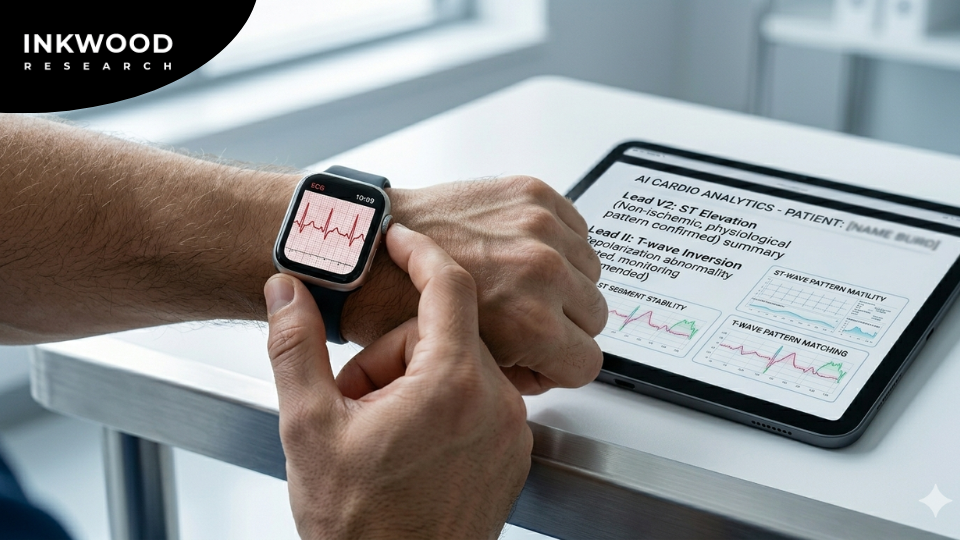
Portable ECG Devices Redefining Ambulatory Cardiac Monitoring
Wearable ECG devices are portable, compact systems worn continuously on the body to monitor cardiac activity in real time. Such devices enable convenient, uninterrupted monitoring, detecting potential issues early, and improving patient outcomes across home-based and ambulatory care environments.
Modern wireless wearable ECG solutions operate across a spectrum of computational complexity. Chest straps, smart vests, and adhesive patches represent leading form factors within the IoT-enabled ECG monitoring equipment industry. These devices analyze ECG signals at the edge, identifying irregularities like atrial fibrillation and arrhythmia within seconds.
Moreover, sensor-level signal processing has matured significantly. Recent advancements allow wearable cardiac sensors to deliver clinical-grade ECG data without tethering patients to stationary equipment. Consequently, adoption within the home-based ECG monitoring devices segment continues to accelerate alongside telehealth infrastructure growth.
Vivalink: 14-Day Continuous ECG Streaming
Vivalink announced the latest version of its multi-parameter wearable ECG patch. With continuous 14-day live stream capabilities, this patch enables prolonged remote ECG monitoring through a single application, meaningfully reducing the burden on both patients and clinicians.
Key features of the 14-day ECG patch include:
- 14-Day Continuous Wear with water-resistant adhesive
- Posture Detection for contextual cardiac assessment
- Movement Intensity Measurement for activity-correlated analysis
- Step Count Tracking for integrated wellness monitoring
Jiang Li, CEO of Vivalink, explained that advancements in digital healthcare technologies are enabling entirely new application classes, including acute patient monitoring and virtual hospital models. (Source)
ECG Machine Market Trends: The Compact Device Revolution
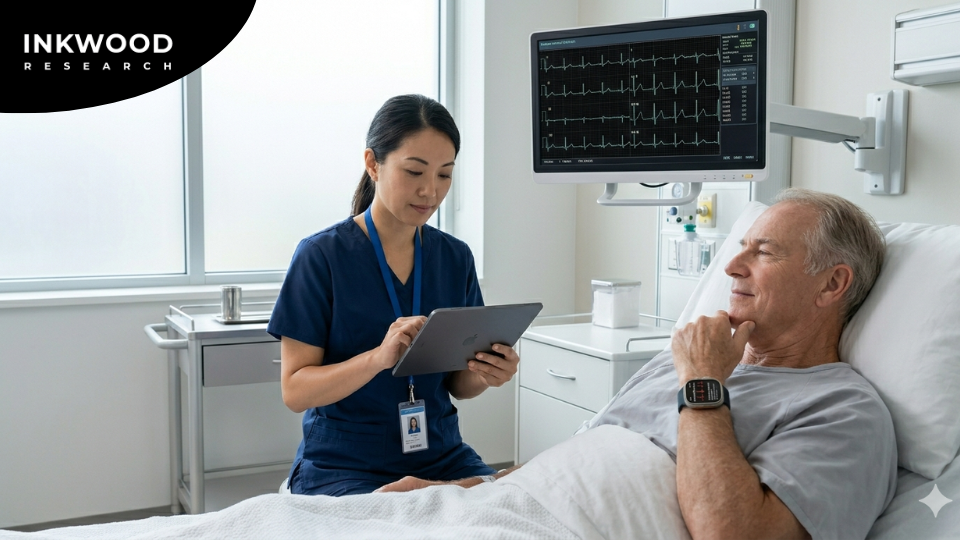
Portable ECG Devices Reshaping the Cardiac Monitoring Devices Market
Conventional ECG stress test systems are being systematically miniaturized. Growing demand for portable ECG devices, paired with rapid technological development, is reshaping how ECG monitoring equipment reaches patients outside of clinical settings.
AliveCor launched the KardiaMobile Card, currently the most compact personal ECG device commercially available, engineered to the dimensions of a standard credit card. Its underlying algorithm draws from the company’s AI-enabled Kardia platform, validated across more than 170 peer-reviewed studies.
Priya Abani, CEO of AliveCor, articulated the device’s vision: delivering sophisticated AI-driven ECG analysis in the most accessible form factor ever, effectively positioning AliveCor as a 24/7 virtual cardiologist for patients between clinical visits. (Source)
The broader implication for the ECG diagnostic equipment market is significant. As portability converges with AI precision, the traditional boundary between hospital ECG equipment and consumer cardiac monitoring devices continues to blur.
ECG Equipment Market Growth Drivers & Key Trends
What’s Fueling Electrocardiography Equipment Market Expansion?
Several structural forces are accelerating ECG equipment market growth across global healthcare systems. Based on our analysis, the most impactful drivers include:
- Rising cardiovascular disease burden: Heart disease remains the leading cause of mortality worldwide, sustaining a persistent demand for cardiac diagnostic equipment across hospital and outpatient settings
- Aging global population: Older demographics require more frequent cardiac monitoring, expanding addressable volume for both resting ECG devices and Holter monitor markets
- Telemedicine integration: Remote cardiac monitoring infrastructure is driving demand for cloud-connected ECG systems capable of real-time data transmission
- Reimbursement expansion: Favorable policy shifts across North America and Europe are broadening coverage for ambulatory ECG monitoring and home-based cardiac monitoring devices
- AI adoption acceleration: Healthcare providers are integrating AI-based ECG analysis into diagnostic workflows, improving throughput and clinical accuracy simultaneously
Furthermore, the shift toward value-based care models incentivizes early detection, a dynamic that directly benefits the electrocardiogram machines market by increasing routine monitoring frequency.
ECG Monitoring Equipment Industry Growth: Segment Outlook
Within the broader electrocardiography devices market, several product segments demonstrate particularly strong momentum:
- Monitoring ECG Systems represent the fastest-growing product type, driven by demand for continuous cardiac surveillance in ICU and step-down units
- Holter Monitor Market expansion reflects growing ambulatory care adoption, particularly for arrhythmia detection in outpatient settings
- Event Monitoring ECG Devices address episodic arrhythmia capture needs that standard resting ECG devices cannot fulfill
- ECG Telemetry Systems are gaining traction within hospital networks, investing in centralized cardiac monitoring infrastructure
Future ECG Equipment Market Outlook
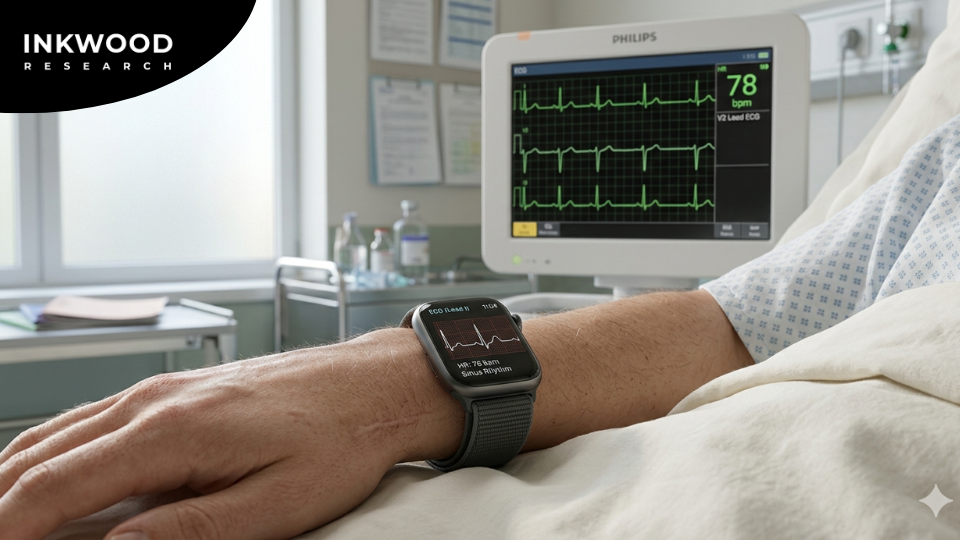
Integrated developments, spanning AI diagnostics, wearable cardiac sensors, compact ECG devices, and EMR interoperability, are collectively defining the ECG equipment market trajectory through 2034. Furthermore, continued convergence with digital health platforms will accelerate adoption across hospital, ambulatory, and home-care environments.
Based on our research, strategic investment in portable ECG devices, AI-based monitoring systems, and seamless EHR integration will determine competitive positioning within this evolving cardiac diagnostic equipment market.
Contact us today for a personalized consultation, or request a FREE sample report tailored to your business needs.
By Akhil Nair