By Sukanya Mukherjee
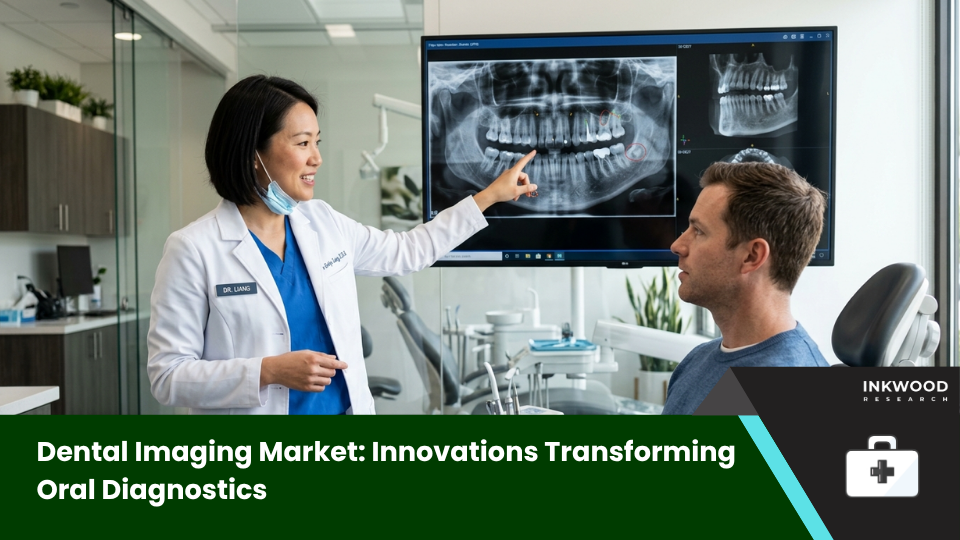
Dental imaging helps make a thorough and well-informed diagnosis and treatment for oral and dental concerns that cater to individual needs. Over the decades, the technology and its benefits have improved manifold. Currently, various imaging methods, including X-rays, cone beam CT, and intraoral scanners, detect oral abnormalities and diseases such as cavities, oral cancer, bone loss, and hidden dental structures.
Based on our research, the global dental imaging market size is valued at $3550.66 million as of 2026 and is expected to reach $6674.96 million by 2034, growing at a CAGR of 8.21% during the forecast period 2026-2034. This growth trajectory reflects accelerating adoption of digital dental imaging systems, AI-integrated diagnostics, and rising demand for precision oral healthcare globally.
Furthermore, cosmetic dentistry continues to propel demand for dental imaging devices. Procedures such as implant placement, orthodontic alignment, and teeth whitening require precise imaging for successful outcomes. Moreover, according to the FDI World Dental Federation, over 530 million children worldwide suffer from tooth decay, underscoring the persistent, large-scale need for reliable dental diagnostic imaging.
Key Trends | Leading Segments of the Dental Imaging Systems Market
Cone Beam CT (CBCT) Imaging: Fastest-Growing Segment
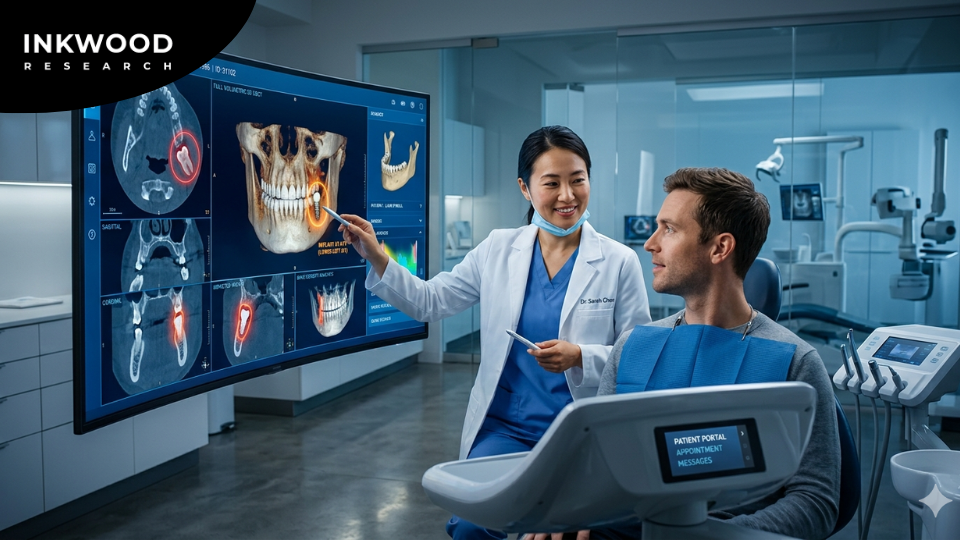
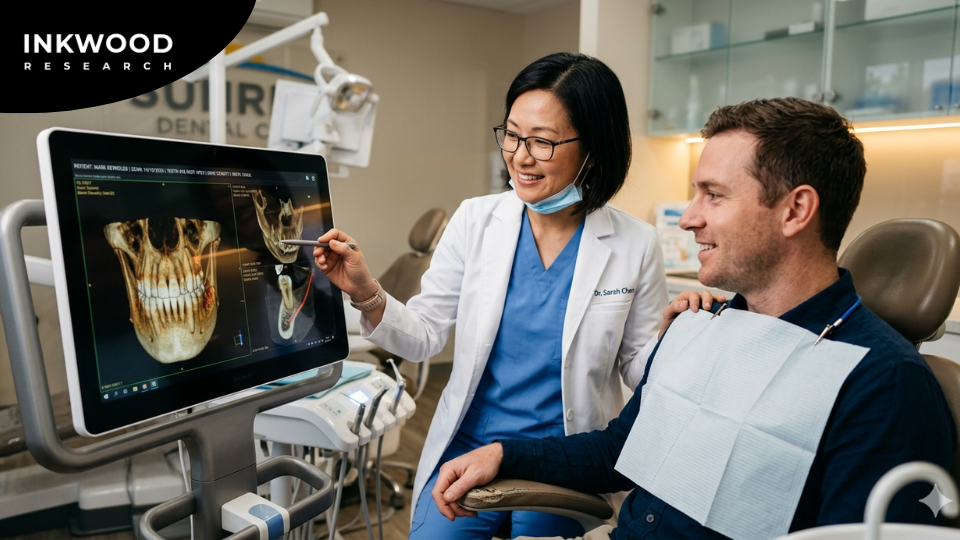
Cone-beam computed tomography represents the fastest-growing product segment within the dental CBCT imaging market. CBCT was rapidly absorbed into dental settings due to its compact design and lower radiation dose versus conventional CT procedures. Additionally, it generates 3D data from 2D image sets, fundamentally advancing oral and maxillofacial radiology.
Recent developments continue to accelerate this trend.
- In March 2025, Planmeca introduced its ProX GO, the company’s first handheld intraoral X-ray device, targeting traditional clinics, mobile dental units, and nursing home environments.
- Furthermore, VATECH released its Green X portable hybrid CBCT system, offering panoramic and 3D imaging on a single platform with significantly improved energy efficiency and faster scanning.
These developments reinforce the dental CBCT imaging market’s momentum globally.
Intraoral Imaging Systems: Dominant Revenue Contributor
Intraoral imaging systems captured the largest share of dental imaging market revenue in 2025, reflecting their entrenched role in routine diagnostics across general and specialty practices. Digital sensors and phosphor storage plates have improved image clarity while reducing radiation exposure. Consequently, intraoral X-ray systems remain essential to dental diagnostic imaging workflows.
The digital dental imaging market is further supported by cloud-based solutions.
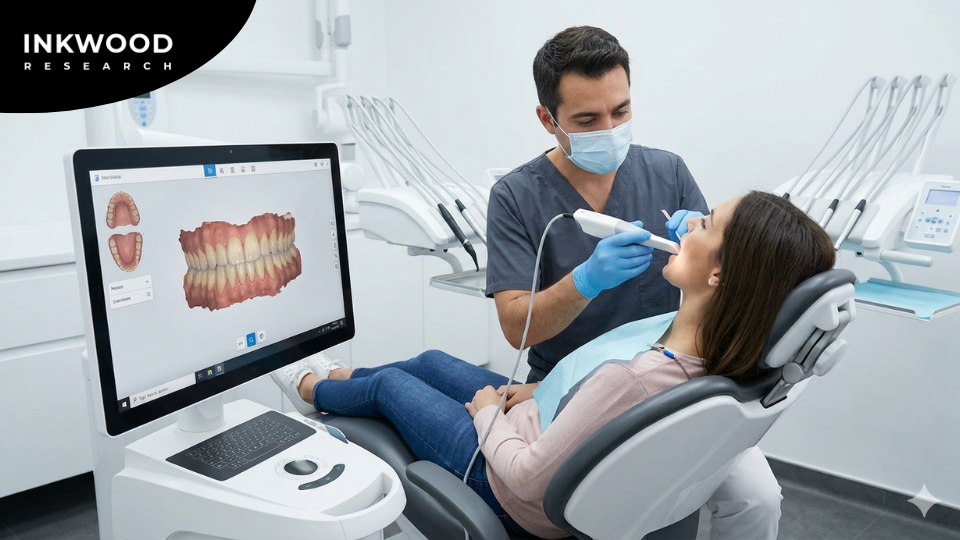
- In September 2024, Dentsply Sirona introduced Primescan 2, a cloud-native wireless intraoral scanner enabling direct-to-cloud scanning from any internet-connected device.
- Additionally, Envista Holdings launched the DEXIS Digital and DEXIS Ti2 intraoral scanners in 2024, reinforcing workflow efficiency within the dental imaging systems market analysis.
Diagnostic Applications: Leading End-Use Segment
Diagnostics remains the leading application segment of the global dental imaging market, driven by rising dental disease rates across aging and pediatric populations. Higher rates of dental caries, periodontitis, and oral cancer demand frequent and accurate imaging. Furthermore, this segment is projected to register the fastest CAGR in the Asia-Pacific region during the forecast period.
Medical tourism across several Asia-Pacific nations continues to boost the manufacturing and purchase of dental imaging devices regionally. Cost-effective, high-quality dental care drives both patient demand and institutional investment in advanced dental radiography equipment.
Latest Product Developments & Competitive Landscape Analysis
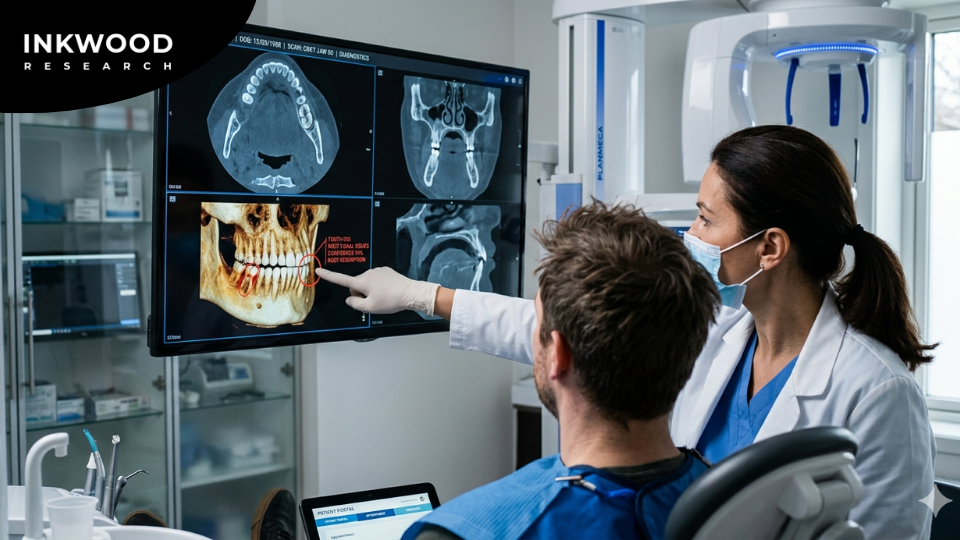
Product innovation intensity has accelerated significantly across the global dental imaging devices market. Key manufacturers are introducing solutions that balance diagnostic precision, AI integration, and workflow efficiency, reshaping competitive positioning throughout the industry.
1. Dentsply Sirona
Dentsply Sirona drives dental radiology equipment market growth through sustained R&D investment. In September 2024, the company launched Primescan 2, a cloud-native intraoral scanner enabling direct wireless scanning to any internet-connected device. Moreover, in June 2024, Dentsply Sirona and Siemens Healthineers jointly unveiled the MAGNETOM Free.Max Dental Edition, the world’s first MRI system designed specifically for dental applications, offering radiation-free imaging capabilities.
2. Envista Holdings (DEXIS)
Envista Holdings Corporation, through its flagship brand DEXIS, maintains a leading position in the intraoral imaging systems market and 3D CBCT systems. The 2024 launches of the DEXIS Digital and DEXIS Ti2 intraoral scanners reinforce connectivity-driven workflow efficiency. Additionally, in September 2024, DEXIS expanded its digital ecosystem with three new solutions aimed at streamlining dental diagnostic imaging workflows for clinicians and practice managers.
3. VATECH
VATECH continues advancing the dental imaging technology market through AI-enhanced solutions. In March 2025, VATECH partnered with Pearl to integrate Pearl’s AI-driven pathology detection into VATECH’s imaging software, setting a new benchmark in dental diagnostic imaging precision. Furthermore, VATECH introduced advanced 3D CBCT segmentation features for teeth, roots, and nerves, alongside image enhancement capabilities including noise reduction and resolution improvements.
4. Planmeca
Planmeca demonstrates consistent innovation across extraoral dental imaging and portable diagnostics. In February 2024, Planmeca partnered with Benevis, a network spanning 120 dental offices across 13 U.S. states, to deploy advanced imaging technologies. Moreover, in March 2025, Planmeca launched its ProX GO handheld intraoral X-ray system, addressing underserved mobile dental clinic segments and emergency diagnostic scenarios.
5. Midmark Corporation
Midmark Corporation continues strengthening its dental imaging systems portfolio through innovation and workflow-focused design. Their extraoral imaging systems support 2D panoramic and 3D CBCT capabilities, serving dental clinics and hospital-based oral surgery units. Consequently, Midmark remains a key participant in the hospital dental imaging systems market and institutional end-user segment.
Dental Imaging Market Trends & Growth Opportunities
· AI Integration: Transforming Dental Diagnostic Imaging
Artificial intelligence is fundamentally reshaping the dental imaging technology market. VideaHealth’s FDA-cleared AI pathology detection engine lifts clinically actionable findings by 26% over conventional visual inspection, directly improving diagnostic confidence for caries and periodontal disease detection. Furthermore, AI-integrated imaging technologies have gained adoption in over 46% of dental institutions globally, reflecting the accelerating integration of digital dental radiography into standard clinical workflows.
Deep learning models and convolutional neural networks improve image classification and segmentation across CBCT and intraoral modalities. Additionally, natural language processing solutions now automate report generation and dental image analysis, reducing administrative burden while enhancing documentation accuracy. These advances are particularly impactful in dental health professional shortage areas; according to the CDC, approximately 57 million Americans reside in such regions, with 67% located in rural communities.
· Rising Dental Disease Burden & Aging Demographics
The growing global burden of dental disorders continues driving demand for advanced dental imaging devices. According to NCBI studies (2025), dental caries prevalence remains high among older populations, with 91% of adults aged 20 to 64 having dental cavities, and approximately 27% remaining undiagnosed. Consequently, healthcare systems increasingly depend on dental diagnostic imaging systems for early detection and preventive intervention.
Aging demographics directly amplify demand across multiple dental imaging market segments. Implant planning requires detailed 3D CBCT imaging, while orthodontic and oral surgery applications rely on high-resolution extraoral dental imaging platforms. Moreover, geriatric populations in developed markets benefit from expanded insurance coverage, particularly in the U.S. and Canada, further accelerating dental imaging market growth.
· Cosmetic Dentistry & Digital Workflow Expansion
The growing popularity of cosmetic and aesthetic dental procedures continues to propel the digital dental imaging market. Procedures such as orthodontic alignment, veneers, and implants require precise imaging for planning and outcome simulation. Additionally, the shift from conventional film-based systems to cloud-integrated digital imaging platforms has accelerated substantially, with over 65% digital system adoption reported globally.
These trends reflect the broader shift toward integrated digital dentistry technology ecosystems, where dental imaging devices, practice management software, and AI diagnostics converge into unified workflow solutions.
Dental Imaging Market Growth: Regional Outlook
- North America dominates the global dental imaging market, accounting for a significant share in 2025. Advanced healthcare infrastructure, favorable reimbursement policies, and high adoption of 3D dental imaging technology support the region’s leadership.
- Asia-Pacific is projected to register the fastest CAGR in the dental imaging systems industry outlook, driven by expanding healthcare infrastructure, rising oral disease rates in China and India, and growing government support for preventive dental care. Additionally, the introduction of portable dental imaging devices and mobile diagnostic solutions is expanding market reach to previously underserved populations.
- Europe maintains steady growth, supported by universal healthcare coverage and aging demographic trends in Germany, the UK, and France. Moreover, regulatory alignment with digital health standards facilitates broader adoption of advanced dental radiology equipment across EU markets.
Conclusion
Introducing new products and digital workflows incentivizes the global dental imaging market through constant upgradation to modern innovations. Several rural regions in developing countries are in dire need of dental healthcare solutions. Ongoing innovations in portable dental imaging devices and AI-assisted diagnostics are making access easier, more affordable, and more efficient, with minimum resource requirements.
In addition, dental treatments are now recognized as essential healthcare requirements and are covered by several insurance providers globally. Furthermore, per capita income growth across emerging markets is enabling higher spending on dental hygiene and preventive care. All these factors create sustained opportunities for dental imaging devices, dental diagnostic imaging systems, and the broader dental radiology equipment market across global healthcare systems.
If you require personalized consultation, contact us today!
Be sure to explore our in-depth research reports or request a FREE sample tailored to your specific business needs.