Table of Contents
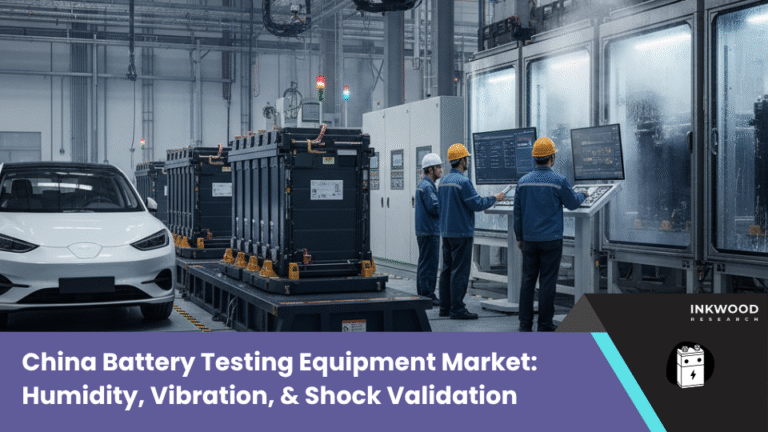
This analysis is brought to you by Inkwood Research, a leading market intelligence firm specializing in China’s battery manufacturing ecosystem, electric vehicle supply chains, and environmental testing protocol implementations. Our research team combines extensive experience analyzing China’s battery testing equipment market dynamics, GB standard developments, and gigafactory quality assurance methodologies. Based on our proprietary research frameworks and strategic partnerships with Chinese battery manufacturers, including CATL and BYD, government standardization agencies, environmental testing laboratories, and automotive validation facilities, we deliver actionable insights empowering strategic decision-making for global enterprises navigating China’s comprehensive battery testing requirements and world-leading manufacturing infrastructure.
TLDR
China’s battery testing equipment market dominates global manufacturing with over 75% of worldwide lithium-ion battery production capacity. Stringent GB 38031-2020 environmental standards mandate comprehensive humidity testing, vibration testing, and shock testing protocols exceeding international requirements. Major manufacturers, including CATL and BYD, drive unprecedented testing infrastructure investments across gigafactory operations. However, these rigorous environmental validation requirements create substantial equipment demands while ensuring superior battery reliability under extreme conditions. Understanding China’s comprehensive testing frameworks becomes essential for manufacturers navigating the world’s largest electric vehicle market.
This comprehensive analysis serves battery manufacturers establishing gigafactory operations in China, requiring GB standard compliance. Testing laboratory operators implementing environmental validation protocols benefit from detailed technical insights. Additionally, automotive OEMs sourcing batteries from Chinese suppliers gain critical quality assurance understanding. Equipment suppliers entering China’s testing market find strategic positioning guidance. Furthermore, quality engineers developing environmental test procedures receive actionable frameworks supporting GB 38031-2020 compliance and international standard harmonization efforts.
Understanding GB 38031-2020 Environmental Requirements
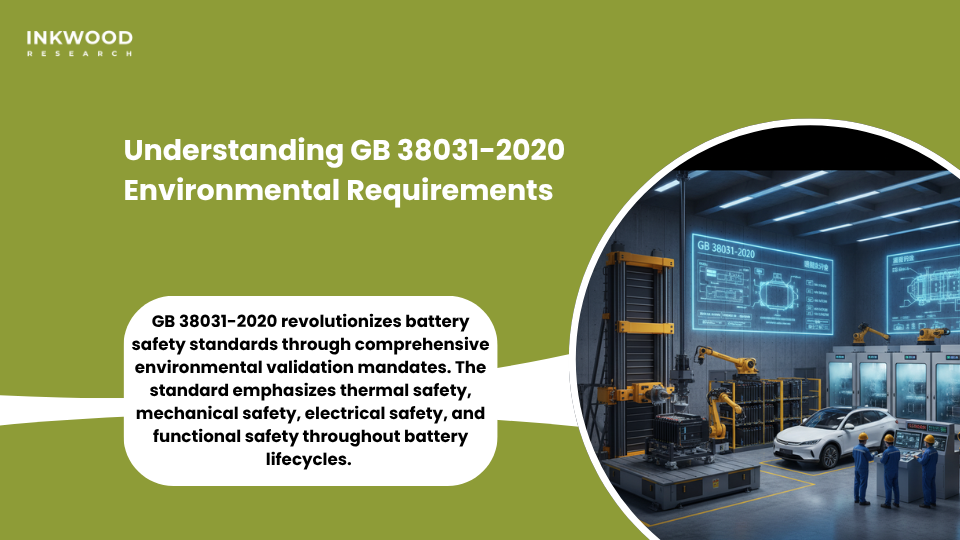
China’s battery testing equipment market establishes unprecedented standards for environmental validation protocols. The nation produces over 75% of global lithium-ion batteries, according to International Energy Agency analysis. Consequently, rigorous testing infrastructure ensures battery reliability under extreme operating conditions worldwide.
Environmental testing encompasses a comprehensive evaluation across temperature, humidity, vibration, and mechanical stress scenarios. GB 38031-2020 standards implemented in January 2021 mandate stringent protocols exceeding many international requirements. Furthermore, manufacturers including CATL and BYD invest heavily in advanced testing capabilities supporting both domestic and export markets.
GB 38031-2020 revolutionizes battery safety standards through comprehensive environmental validation mandates. The standard emphasizes thermal safety, mechanical safety, electrical safety, and functional safety throughout battery lifecycles. Moreover, test protocols cover thermal diffusion, external fire, mechanical impact, simulated collision, and environmental stress conditions.
According to Obelis Group analysis, China became the first country to make thermal propagation testing binding from January 2021. This requirement mandates that batteries not catch fire or explode within five minutes after cell thermal runaway. Consequently, occupants gain sufficient time for safe vehicle evacuation during emergencies.
Comprehensive Environmental Testing Framework
GB 38031-2020 significantly enhances environmental testing compared to previous standards. Vibration testing requirements now align with actual vehicle operating conditions throughout battery lifecycles. Additionally, humidity testing protocols account for diverse Chinese climate zones spanning tropical to arctic conditions.
The standard introduces thermal cycling requirements, validating battery performance under repeated temperature excursions. Furthermore, water immersion testing ensures adequate sealing protection against moisture ingress. Moreover, salt spray testing evaluates corrosion resistance for batteries destined for coastal deployment regions.
According to comparative analysis, testing methods for vibration, crush, altitude, thermal propagation, and water immersion show the greatest differences between Chinese and international standards. Therefore, equipment manufacturers must accommodate unique Chinese requirements beyond conventional capabilities.
Integration with International Standards
GB 38031-2020 references internationally accepted UNECE R100 Rev.2 and UNGTR 20 frameworks. However, Chinese standards often exceed international baseline requirements. Consequently, batteries meeting GB specifications typically satisfy global market demands without additional validation.
Nevertheless, specific test parameter differences require careful attention. Vibration testing frequencies, amplitudes, and duration vary between standards. Additionally, humidity testing cycles and temperature ranges differ across regulatory frameworks. Therefore, a comprehensive understanding prevents costly re-testing when entering multiple markets.
Equipment capable of accommodating diverse standard requirements provides significant competitive advantages. Manufacturers serving both domestic and export markets benefit from unified testing platforms. Furthermore, modular systems enable configuration changes supporting different protocol specifications efficiently.
Humidity Testing Protocols and Equipment
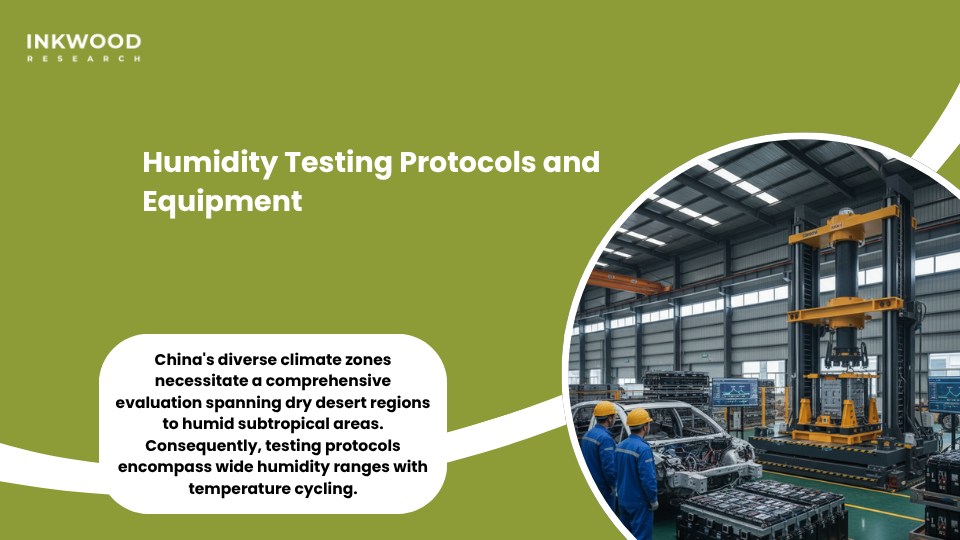
Humidity testing validates battery performance under moisture exposure, representing real-world operating environments. China’s diverse climate zones necessitate a comprehensive evaluation spanning dry desert regions to humid subtropical areas. Consequently, testing protocols encompass wide humidity ranges with temperature cycling.
Damp heat cycling tests according to GB 38031-2020 expose batteries to controlled humidity environments while monitoring performance degradation. These protocols evaluate seal integrity, corrosion resistance, and electrical insulation maintenance. Furthermore, testing identifies potential moisture-induced failure mechanisms before production deployment.
Thermal Humidity Cycling Requirements
Thermal humidity cycles combine temperature variations with controlled moisture exposure. Batteries experience repeated transitions between high-temperature/high-humidity and low-temperature/low-humidity conditions. This challenging protocol accelerates degradation mechanisms, revealing long-term reliability issues.
According to GB standard analysis, thermal humidity cycling requirements underwent significant revisions in GB 38031-2020. Test methods now better simulate actual operating conditions batteries encounter throughout service lives. Moreover, acceptance criteria became more stringent, ensuring superior quality.
Environmental chambers performing humidity testing must maintain precise control across wide parameter ranges. Temperature control within ±2°C becomes essential alongside humidity regulation within ±3% RH. Additionally, rapid transition capabilities between conditions reduce overall test duration while maintaining protocol validity.
Advanced Humidity Testing Technologies
Modern environmental chambers incorporate sophisticated humidity generation and control systems. Ultrasonic humidification provides rapid moisture delivery without temperature disturbances. Meanwhile, desiccant-based dehumidification enables low humidity conditions essential for complete cycling protocols.
Real-time monitoring systems track battery performance throughout humidity testing cycles. Voltage, current, temperature, and impedance measurements identify degradation trends. Consequently, engineers gain insights into failure mechanisms supporting design improvements.
Automated testing platforms handle multiple battery samples simultaneously, improving throughput. Robotic handling systems move batteries between environmental chambers and electrical testing stations. Furthermore, integrated data management systems compile comprehensive test reports meeting regulatory documentation requirements.
Vibration Testing Methodologies
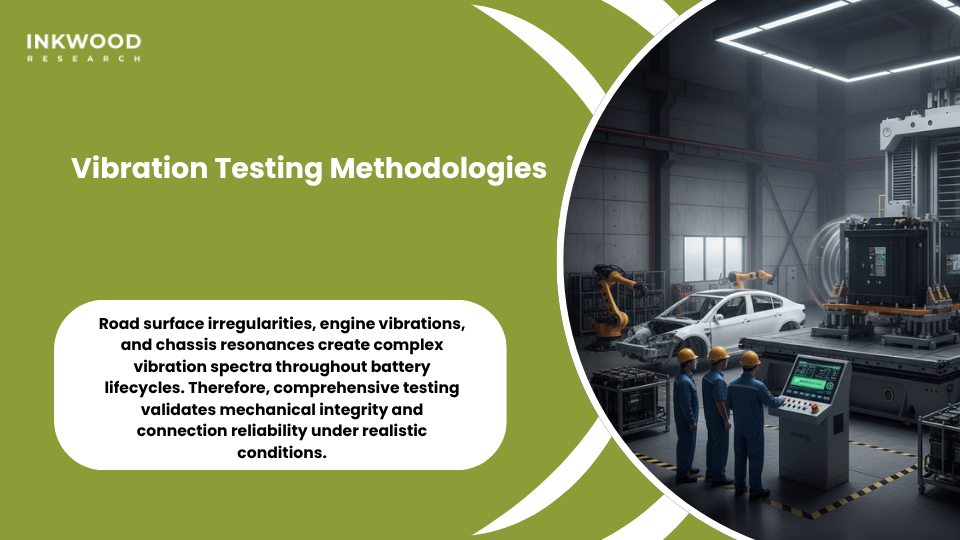
Vibration testing simulates the mechanical stresses batteries experience during vehicle operation. Road surface irregularities, engine vibrations, and chassis resonances create complex vibration spectra throughout battery lifecycles. Therefore, comprehensive testing validates mechanical integrity and connection reliability under realistic conditions.
GB 38031-2020 mandates vibration testing protocols referencing GB/T 2423.43 and GB/T 2423.56 standards. These specifications define frequency ranges, acceleration levels, and test durations. Additionally, requirements address mounting configurations representing actual vehicle installations.
Broadband Random Vibration Testing
Random vibration testing provides superior real-world correlation compared to sinusoidal approaches. Broadband random excitation encompasses multiple frequency components simultaneously. Consequently, testing reveals resonances and fatigue mechanisms more effectively than single-frequency sweeps.
According to the testing standard comparison, GB/T 31486 categorizes vibration resistance as performance testing. This approach recognizes vibration impacts battery capacity, internal resistance, and long-term reliability. Moreover, acceptance criteria consider both mechanical integrity and electrical performance degradation.
Vibration testing equipment requires precise control across wide frequency ranges. Electrodynamic shakers generate vibration profiles matching specified power spectral densities. Meanwhile, advanced control systems maintain acceleration levels within tight tolerances throughout test durations.
Multi-Axis Vibration Simulation
Batteries experience vibration in three orthogonal axes during vehicle operation. Therefore, comprehensive testing evaluates performance under X, Y, and Z-axis excitation. Furthermore, some protocols require simultaneous multi-axis vibration, representing complex real-world scenarios.
Multi-axis shaker systems provide sophisticated testing capabilities beyond single-axis platforms. These advanced systems reproduce realistic vibration environments with superior fidelity. However, equipment costs and facility requirements increase substantially compared to conventional approaches.
Test fixtures securely mounting batteries become critical for valid results. Fixtures must represent actual vehicle mounting configurations while withstanding severe vibration environments. Additionally, instrumentation monitoring battery responses throughout testing provides valuable diagnostic information.
Mechanical Shock and Impact Validation
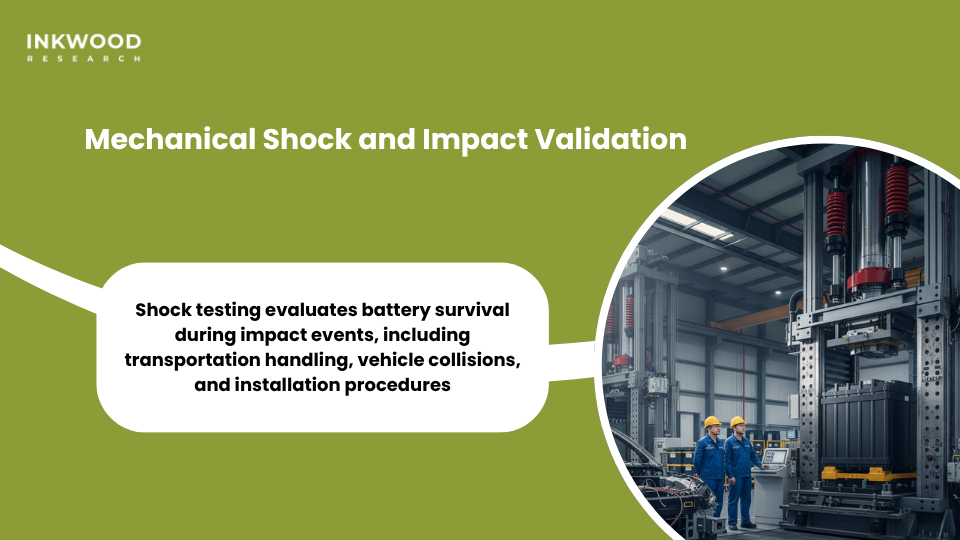
Shock testing evaluates battery survival during impact events, including transportation handling, vehicle collisions, and installation procedures. GB 38031-2020 introduced comprehensive mechanical shock requirements ensuring battery integrity under severe acceleration environments. Consequently, testing protocols validate both immediate failure resistance and long-term reliability after shock exposure.
Mechanical impact testing according to GB 38031-2020 requirements simulates collision scenarios. Batteries experience controlled deceleration pulses representing vehicle crash conditions. Furthermore, acceptance criteria mandate no fire, explosion, or hazardous material leakage following impact events.
Transportation Shock Testing
Batteries encounter significant shock loads during transportation and handling operations. Drop testing simulates package impacts during shipping and warehouse operations. Meanwhile, vibration plus shock combinations represent realistic transportation environments.
According to industry standards, transportation shock testing follows specified drop heights and impact surfaces. Test specimens experience shocks in multiple orientations representing various handling scenarios. Additionally, post-shock inspection and performance validation confirm battery integrity.
Packaging design plays a critical role in protecting batteries during transportation. Testing evaluates complete package systems rather than isolated battery components. Consequently, packaging engineers optimize protection systems based on comprehensive validation data.
Simulated Collision Testing
GB 38031-2020 mandates simulated collision testing for battery packs. This protocol exposes batteries to controlled deceleration pulses representing vehicle crash scenarios. Moreover, testing validates crush resistance when structural deformation compresses battery enclosures.
Advanced test equipment generates precise acceleration profiles matching specified collision severities. Hydraulic impact systems deliver controlled energy levels, ensuring test repeatability. Furthermore, high-speed data acquisition captures battery responses throughout impact events.
Safety monitoring during shock testing becomes paramount. Environmental controls contain potential thermal runaway events. Additionally, real-time temperature and voltage monitoring identify dangerous conditions, enabling rapid test termination if necessary.
Leading Chinese Manufacturers and Testing Capabilities
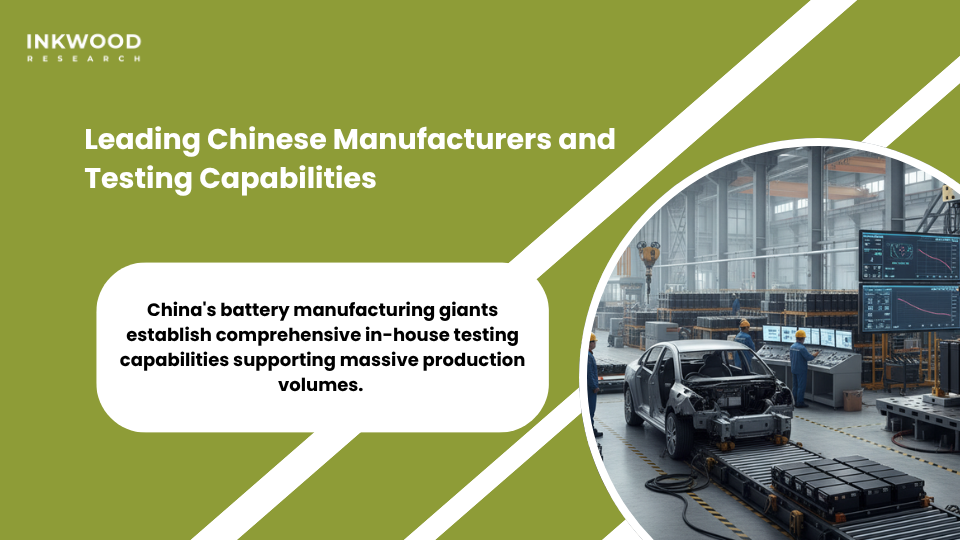
China’s battery manufacturing giants establish comprehensive in-house testing capabilities supporting massive production volumes. CATL achieved 37.9% global market share with 339.3 GWh installed capacity in 2024. Meanwhile, BYD leverages vertical integration, controlling battery production from raw materials through finished vehicles.
These manufacturers invest billions in testing infrastructure, ensuring product quality and safety compliance. Automated testing lines validate millions of cells monthly through comprehensive protocols. Furthermore, dedicated R&D facilities develop next-generation testing methodologies supporting emerging technologies.
CATL Testing Infrastructure
CATL operates thirteen battery manufacturing plants worldwide, incorporating state-of-the-art testing facilities. The company’s Ningde headquarters includes expansive environmental testing laboratories. Moreover, each gigafactory maintains comprehensive quality assurance capabilities, validating production output.
According to recent data, CATL produced 25.32 GWh of batteries in October 2024. This massive scale necessitates an extensive automated testing infrastructure. Consequently, inline testing equipment validates electrical performance, mechanical integrity, and environmental resilience throughout production processes.
CATL’s testing capabilities extend beyond mandatory compliance validation. Advanced characterization equipment supports battery development programs. Furthermore, long-term reliability testing predicts performance throughout extended service lives.
BYD Vertical Integration Advantages
BYD’s unique vertical integration strategy encompasses battery manufacturing through vehicle assembly. This comprehensive approach enables optimized testing protocols throughout supply chains. Additionally, close collaboration between battery and vehicle engineering teams ensures superior integration.
The company achieved 135.02 GWh installed capacity in 2024, according to industry reports. Furthermore, lithium iron phosphate battery installations exceeded 100 GWh, demonstrating technology leadership. Consequently, specialized testing protocols validate LFP chemistry characteristics effectively.
BYD’s testing infrastructure supports both internal vehicle production and external battery sales. This dual market focus requires flexible testing capabilities accommodating diverse customer specifications. Moreover, comprehensive validation ensures batteries meet stringent automotive requirements regardless of application.
Testing Equipment Technologies and Innovations
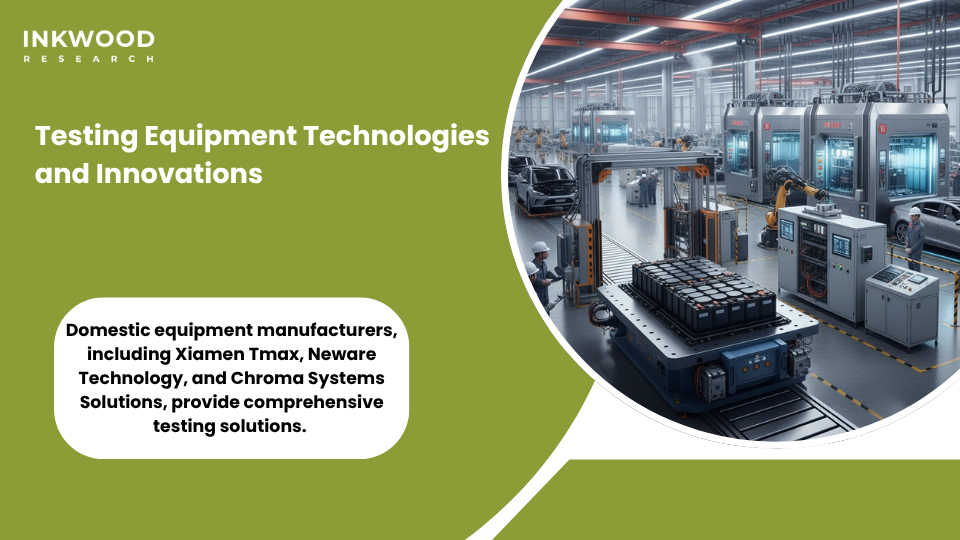
China’s battery testing equipment market drives global innovation through advanced technology development. Domestic equipment manufacturers, including Xiamen Tmax, Neware Technology, and Chroma Systems Solutions, provide comprehensive testing solutions. Furthermore, these companies compete effectively against international suppliers through cost advantages and local support.
Modern testing equipment integrates sophisticated control systems, data acquisition platforms, and safety monitoring capabilities. Consequently, comprehensive validation occurs efficiently while maintaining stringent quality standards. Moreover, automated platforms reduce testing costs through improved throughput and consistency.
Environmental Chamber Technologies
Advanced environmental chambers enable precise control across extreme parameter ranges. Temperature regulation from -40°C to +85°C accommodates diverse testing protocols. Meanwhile, humidity control from 10% to 98% RH supports comprehensive moisture exposure validation.
Rapid transition capabilities between conditions reduce overall test durations. Modern chambers achieve 3°C per minute temperature ramps without overshoot. Additionally, sophisticated refrigeration systems maintain stability during sustained high-temperature exposures.
Large-capacity chambers accommodate battery pack testing rather than isolated cell validation. This approach provides superior real-world correlation. Furthermore, walk-in chambers enable testing on complete battery systems, including thermal management infrastructure.
Vibration Testing System Advancements
Electrodynamic shaker technology continues advancing, supporting higher force outputs and broader frequency ranges. Modern systems generate 50kN+ force levels, enabling full battery pack testing. Meanwhile, frequency response extending to 3000Hz captures high-frequency resonances.
Digital control systems provide precise vibration profile generation and monitoring. Real-time spectral analysis ensures test accuracy throughout durations. Additionally, feedback control compensates for fixture and load dynamics, maintaining specified acceleration levels.
Integrated safety systems protect expensive test specimens and equipment. Automatic shutdown upon detecting excessive responses prevents damage. Furthermore, comprehensive monitoring identifies potential issues before catastrophic failures occur.
Automated Testing Platform Integration
Comprehensive battery validation requires coordinating multiple test equipment types. Automated platforms integrate environmental chambers, vibration systems, and electrical testing stations. Consequently, sequential protocols execute without manual intervention, improving efficiency.
Robotic handling systems transport batteries between test stations. This automation reduces labor requirements while improving consistency. Moreover, automated systems operate continuously, maximizing equipment utilization.
Centralized data management platforms compile results from diverse test equipment. This integration enables comprehensive analysis and reporting. Additionally, statistical process control monitors trends, identifying systematic issues early.
Key Takeaways
- GB 38031-2020 establishes world-leading environmental testing standards mandating comprehensive humidity testing, vibration testing, and shock validation exceeding many international requirements.
- China produces over 75% of global lithium-ion batteries, with major manufacturers CATL and BYD driving unprecedented testing infrastructure investments across gigafactory operations.
- Humidity testing protocols validate battery performance across diverse Chinese climate zones through thermal cycling combined with controlled moisture exposure.
- Vibration testing employs broadband random excitation and multi-axis simulation representing realistic vehicle operating conditions throughout battery lifecycles.
- Shock testing requirements include transportation impact validation and simulated collision scenarios, ensuring battery integrity under severe mechanical stress.
Conclusion: Excellence Through Comprehensive Environmental Testing
China’s battery testing equipment market establishes global benchmarks for environmental validation rigor. Stringent GB 38031-2020 requirements ensure batteries withstand extreme conditions throughout their service lives. Consequently, Chinese manufacturers produce highly reliable products serving both domestic and international markets.
Major manufacturers, including CATL and BYD, demonstrate commitment to quality through extensive testing infrastructure investments. Furthermore, domestic equipment suppliers provide sophisticated technologies supporting comprehensive validation protocols. These capabilities position China as a world leader in battery testing methodologies.
Organizations entering the Chinese battery market must understand comprehensive environmental testing requirements. Inkwood Research provides strategic intelligence supporting the successful navigation of China’s complex regulatory landscape. Contact our team to discuss how our expertise accelerates your success in the world’s largest battery testing equipment market.
Frequently Asked Questions
How does GB 38031-2020 thermal humidity cycling differ from international standards?
GB 38031-2020 thermal humidity cycling includes more extreme temperature ranges and longer duration requirements than many international standards. Consequently, testing better represents diverse Chinese climate conditions from tropical to arctic zones.
What vibration testing frequencies are most critical for battery validation?
Critical frequencies typically range from 10-200 Hz, representing vehicle chassis resonances and road surface excitation. However, comprehensive testing extends to 2000+ Hz, capturing high-frequency components affecting electrical connections and welds.
Why does China require both vibration and shock testing for battery qualification?
Vibration testing evaluates fatigue resistance under sustained oscillatory loads while shock testing validates survival during impact events. Together, these protocols ensure batteries withstand both normal operating conditions and accident scenarios effectively.