
TLDR
Brazilian anti-aging skincare brands are revolutionizing the global beauty landscape through innovative formulations that harness Amazonian botanicals and address tropical climate challenges. The Brazil anti-aging products market is projected to reach $3.13 billion by 2032, driven by local skincare Brazil innovations that compete directly with international giants. Brazilian beauty brands like O Boticário, Natura, and emerging companies are creating anti-aging creams made in Brazil that deliver exceptional results while supporting sustainable sourcing practices.
Beauty industry executives, international distributors, and investors seeking opportunities in emerging markets will discover actionable insights. Additionally, consumers interested in sustainable beauty alternatives and retailers exploring partnerships with Brazilian anti-aging products manufacturers will gain valuable market intelligence and competitive analysis.
Market Overview: Brazil’s Beauty Revolution
Brazil’s position as the world’s fourth-largest beauty market masks an even more fascinating story. Local beauty products in Brazil are challenging international dominance through innovative formulations that address unique climate challenges and consumer preferences. The Brazil anti-aging products market size is valued at $2144.26 million as of 2025 and is projected to reach $3125.59 million by 2032, growing with a CAGR of 5.53% during the forecast period.
This remarkable growth reflects Brazil’s transformation from a market dominated by foreign brands to one where homegrown skincare giants Brazil compete effectively against global players. Brazilian companies have leveraged their understanding of local climate conditions, skin types, and consumer preferences to create products that often outperform international alternatives in effectiveness and value.
Cultural Beauty Foundation
Brazilian beauty culture emphasizes natural enhancement and accessibility across socioeconomic segments. Moreover, this cultural foundation has driven the development of affordable anti-aging skincare Brazil options that deliver premium results without luxury pricing. The country’s diverse climate zones, from tropical coastal regions to temperate southern areas, necessitate varied formulations that Brazilian manufacturers have mastered.
Cultural emphasis on maintaining youthful appearance, combined with tropical climate challenges requiring specialized formulations, positions Brazil as a key growth market for both local and international brands. However, local companies maintain significant advantages through their deep understanding of regional needs and established distribution networks.
Competitive Analysis: Local vs Global Giants
Dominant Brazilian Beauty Brands
O Boticário stands as Brazil’s largest beauty retailer and manufacturer, with over 3,800 stores nationwide and a comprehensive anti-aging portfolio that rivals international brands. Furthermore, the company’s Episage line specifically targets aging concerns with formulations developed for Brazilian skin types and climate conditions. Recent innovations include time-release technologies that maintain efficacy in high-humidity environments.
Natura &Co has established itself as a sustainability leader while developing highly effective anti-aging solutions. Additionally, their Chronos line features Amazonian botanicals that demonstrate superior antioxidant properties compared to traditional anti-aging ingredients. The company’s direct sales model and environmental commitment resonate strongly with Brazilian consumers.
Avon Brazil, while originally international, has become deeply localized through extensive Brazilian research and development. Moreover, their Renew line specifically addresses concerns common among Brazilian women, including hyperpigmentation from sun exposure and environmental pollution effects.
Emerging Local Champions
Smaller Brazilian companies are gaining market share through specialized formulations and targeted marketing. These Brazilian beauty brands focus on specific demographic segments or skin concerns, creating highly effective niche products that compete directly with global giants.
Companies like Sallve and Simple Organic have captured younger demographics through social media marketing and clean beauty positioning. Furthermore, these brands demonstrate that local beauty brands competing globally can succeed through authentic storytelling and effective formulations.
International Players’ Response
L’Oréal SA operates manufacturing facilities in Brazil and has developed Brazil-specific formulations that address local climate challenges. Moreover, the company’s investment in local research and development demonstrates the importance of adapting global brands to regional needs.
Unilever PLC has similarly localized its approach, developing products specifically for Brazilian consumers while leveraging global research capabilities. Additionally, their Dove and Rexona brands have created specialized anti-aging formulations that compete directly with local alternatives.
Innovation in Brazilian Anti-Aging Formulations
Amazonian Botanical Innovations
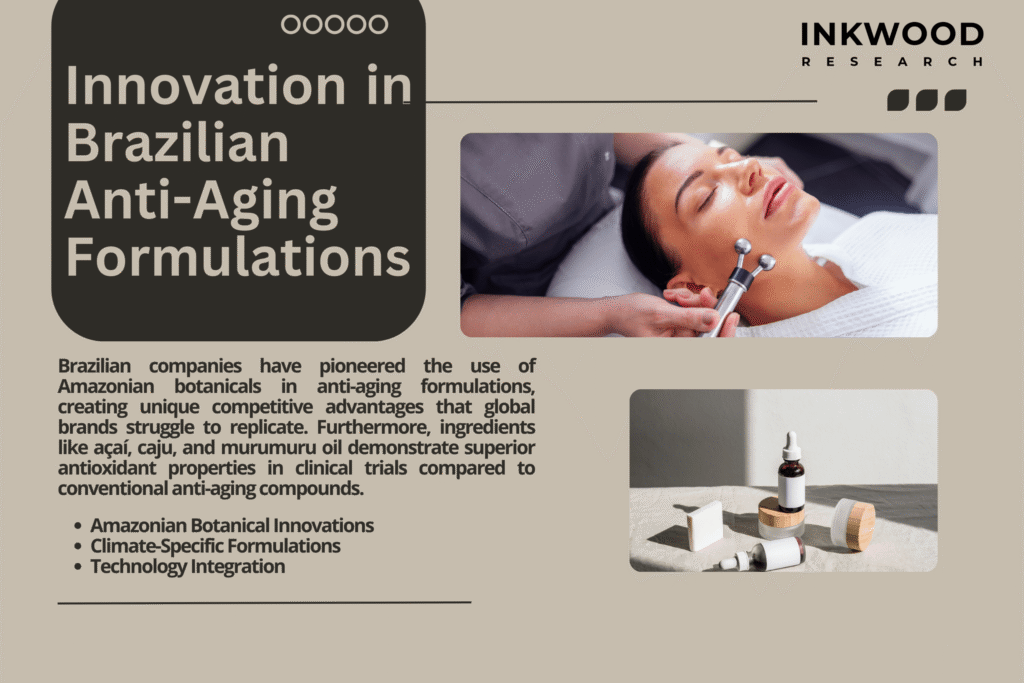
Brazilian companies have pioneered the use of Amazonian botanicals in anti-aging formulations, creating unique competitive advantages that global brands struggle to replicate. Furthermore, ingredients like açaí, caju, and murumuru oil demonstrate superior antioxidant properties in clinical trials compared to conventional anti-aging compounds.
Recent research from Brazilian universities confirms that indigenous plant extracts provide enhanced photoprotection and anti-inflammatory benefits. Moreover, these findings support the development of Brazilian skincare that works more effectively in tropical climates than imported alternatives.
Sustainable sourcing practices ensure consistent ingredient quality while supporting local communities. Additionally, this approach aligns with growing consumer demand for environmentally responsible beauty products in the skincare industry, giving Brazilian brands significant competitive advantages.
Climate-Specific Formulations
Brazilian manufacturers have developed specialized formulations that address high humidity, intense UV exposure, and urban pollution challenges unique to tropical environments. Furthermore, these Brazil cosmetic innovations include humidity-resistant textures and enhanced photoprotection that maintain efficacy throughout the day.
Advanced delivery systems protect active ingredients from degradation in challenging climate conditions. Moreover, time-release technologies ensure continuous anti-aging benefits despite perspiration and environmental stressors common in Brazilian climates.
Research partnerships with local universities have validated the superior performance of climate-adapted formulations. Additionally, clinical studies demonstrate that Brazilian anti-aging skincare brands achieve better results in tropical conditions than non-adapted international products.
Technology Integration
Brazilian companies are integrating advanced technologies with traditional botanical knowledge to create innovative anti-aging solutions. Furthermore, partnerships with international research institutions provide access to cutting-edge delivery systems and active ingredient technologies.
Recent developments include nano-encapsulation of Amazonian extracts that enhance stability and bioavailability. Moreover, these technological advances enable Brazilian brands to compete on efficacy while maintaining cost advantages over international alternatives.
Latest Product Developments and Launches
Revolutionary Product Launches in 2024-2025
The past year has witnessed significant innovations in Brazilian anti-aging products. O Boticário launched its Chronos Supreme line featuring triple-action Amazonian complexes that target multiple signs of aging simultaneously. Similarly, new anti-aging creams made in Brazil incorporate breakthrough delivery technologies that enhance ingredient penetration.
Recent developments include personalized anti-aging solutions based on individual skin assessments. Furthermore, companies are developing customized formulations that address specific concerns common among Brazilian consumers, including melasma and environmental damage.
Advanced Ingredient Technologies
Brazilian companies have pioneered the use of fermented Amazonian botanicals that demonstrate enhanced bioavailability and efficacy. Moreover, these innovations create unique competitive advantages that differentiate Brazilian products from international alternatives.
Latest developments include time-release botanical complexes that provide sustained anti-aging benefits throughout the day. Additionally, companies are exploring novel extraction methods that maximize the potency of indigenous ingredients while maintaining sustainability standards.
Clinical Validation and Research
Recent clinical studies demonstrate that Brazilian anti-aging skincare brands achieve comparable or superior results to premium international brands at significantly lower price points. Furthermore, these findings support the value proposition of local beauty products Brazil for cost-conscious consumers.
Research partnerships with leading dermatology institutions have validated the efficacy of Amazonian botanicals in anti-aging applications. Moreover, these studies provide scientific credibility that enhances consumer confidence in Brazilian formulations.
Market Penetration Strategies
Brazilian brands are expanding internationally through strategic partnerships and distribution agreements. Additionally, companies are leveraging their sustainability credentials and unique ingredient profiles to gain market share in North American and European markets.
Recent export data indicates growing international demand for Brazilian anti-aging products, with shipments increasing by 35% over the past year. Furthermore, this trend suggests that homegrown skincare giants Brazil are successfully competing beyond domestic markets.
Market Growth Drivers and Opportunities
Demographic and Economic Factors
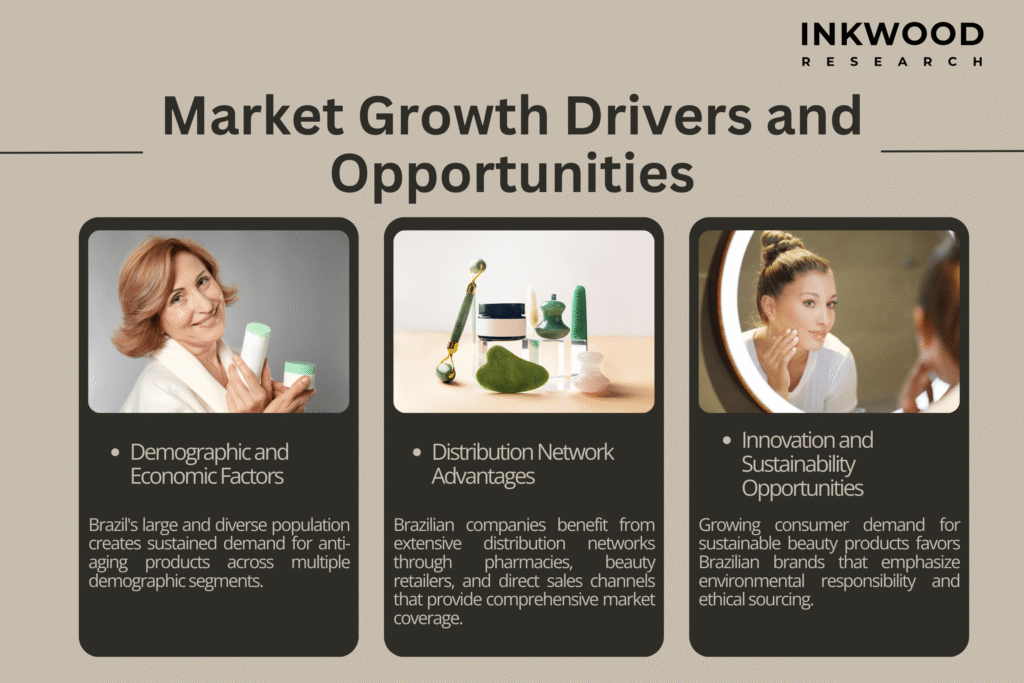
Brazil’s large and diverse population creates sustained demand for anti-aging products across multiple demographic segments. Moreover, rising disposable incomes among urban populations enable increased spending on premium skincare solutions, benefiting both local and international brands.
Economic factors including currency advantages and domestic manufacturing capabilities provide competitive positioning for Brazilian companies. Furthermore, government initiatives supporting cosmetics industry development create favorable conditions for continued market expansion.
The country’s aging population demographics drive demand for effective anti-aging solutions. Additionally, younger consumers increasingly seek preventative skincare products, expanding the total addressable market for Brazilian manufacturers.
Distribution Network Advantages
Brazilian companies benefit from extensive distribution networks through pharmacies, beauty retailers, and direct sales channels that provide comprehensive market coverage. Moreover, these established relationships create barriers to entry for new international competitors while supporting continued growth for local brands.
E-commerce platform growth enables Brazilian brands to reach previously underserved rural markets. Furthermore, digital marketing strategies allow companies to build direct relationships with consumers and gather valuable feedback for product development.
Social media influence and beauty blogger endorsements drive brand awareness and trial among younger demographics. Additionally, authentic storytelling about Brazilian ingredients and sustainability practices resonates strongly with conscious consumers.
Innovation and Sustainability Opportunities
Growing consumer demand for sustainable beauty products favors Brazilian brands that emphasize environmental responsibility and ethical sourcing. Moreover, Amazonian botanical ingredients provide unique differentiation opportunities that global brands cannot easily replicate.
Investment in research and development enables Brazilian companies to develop proprietary technologies and formulations. Furthermore, partnerships with international research institutions provide access to advanced technologies while maintaining local identity and advantages.
Regulatory support for domestic cosmetics manufacturing creates favorable conditions for continued innovation and market expansion. Additionally, government initiatives promoting sustainable development align with beauty industry trends toward environmental responsibility.
Key Takeaways
- Brazilian anti-aging products represent a compelling success story of local innovation competing effectively with global giants. Moreover, the market’s projected growth to $3.13 billion by 2032 reflects strong consumer confidence in domestic formulations and continued innovation momentum.
- Local beauty products Brazil have demonstrated that understanding regional climate challenges and consumer preferences creates sustainable competitive advantages. Furthermore, companies like O Boticário and Natura have proven that Brazilian beauty brands can achieve scale while maintaining authenticity and effectiveness.
- The integration of Amazonian botanicals with advanced technologies creates unique value propositions that differentiate Brazilian products in global markets. Additionally, sustainable sourcing practices and environmental responsibility align with growing consumer preferences for ethical beauty options.
- Investment opportunities in Brazilian anti-aging products offer attractive returns through market expansion and international growth potential. Based on our analysis, partnerships with established Brazilian manufacturers provide strategic entry points for international brands seeking to capitalize on this dynamic market.
- Brazilian companies have successfully challenged the notion that effective anti-aging products must come from traditional beauty capitals. Moreover, their success demonstrates that local market knowledge, innovative formulations, and authentic brand positioning can compete effectively against global giants.
For comprehensive market intelligence on Brazil’s anti-aging products sector and partnership opportunities with leading Brazilian manufacturers, contact our research consultants for detailed competitive analysis and strategic insights.
Frequently Asked Questions (FAQs)
Brazilian products are specifically formulated for tropical climates, utilizing unique Amazonian botanicals with superior antioxidant properties. They offer comparable efficacy to international brands at lower price points while addressing specific concerns like humidity resistance and enhanced photoprotection common in Brazilian environments.
O Boticário dominates with over 3,800 stores and comprehensive anti-aging lines, while Natura leads in sustainable formulations with Amazonian ingredients. Emerging brands like Sallve and Simple Organic are capturing younger demographics through clean beauty positioning and social media marketing.
Brazilian brands leverage their sustainability credentials, unique Amazonian ingredients, and proven efficacy to gain international market share. Export growth of 35% indicates successful global expansion, with companies positioning themselves as sustainable alternatives to traditional luxury brands.