Table of Contents

TLDR
Australia’s skincare industry value chain demonstrates sophisticated integration from raw material sourcing through retail distribution, with the Australia skin care market valued at $3.61 billion in 2025. The supply network emphasizes native ingredient sourcing, sustainable packaging innovation, and digital commerce integration. Australian-made skin care products leverage local botanical resources while addressing dry skin concerns through climate-adapted formulations. Regulatory oversight ensures consumer protection while supporting market value growth across diverse distribution channels.
Supply chain managers, procurement specialists, retail strategists, and manufacturing executives will gain valuable insights into Australia’s skincare distribution networks. Brand managers planning market entry, logistics coordinators optimizing distribution channels, and sustainability officers implementing eco-friendly practices benefit from a comprehensive value chain analysis. Investment analysts evaluating skin care market opportunities will find strategic intelligence for informed decision-making.
Raw Material Sourcing and Native Ingredients
Australia’s skincare market value chain represents a sophisticated ecosystem connecting raw material sourcing with consumer delivery through integrated supply networks. Furthermore, the skin care market demonstrates remarkable efficiency while maintaining a sustainability focus and regulatory compliance.
According to our research, the value chain emphasizes local ingredient utilization, advanced manufacturing capabilities, and omnichannel distribution strategies. Moreover, understanding these complex relationships provides strategic insights for brands seeking market penetration and operational optimization within Australia’s dynamic beauty landscape.
Australia’s skincare products value chain begins with sophisticated raw material sourcing strategies that emphasize native botanical ingredients and sustainable harvesting practices. Moreover, the continent’s unique flora provides exceptional opportunities for Australian-made skin care products development through indigenous plant extracts and marine-derived compounds. According to our analysis, local sourcing reduces transportation costs while supporting environmental sustainability goals and community economic development.
Native Botanical Sourcing Networks
Australian native ingredients, including kakadu plum, tea tree oil, and eucalyptus, create distinctive product positioning within the global skin care industry. Furthermore, sustainable harvesting partnerships with indigenous communities provide authentic ingredient sourcing while supporting traditional land management practices. The native botanical sector demonstrates remarkable growth potential as international consumers increasingly seek unique, naturally-derived skincare solutions.
Additionally, advanced extraction technologies maximize ingredient potency while maintaining sustainable harvesting volumes and ecological balance. Similarly, quality control systems ensure consistent ingredient purity and efficacy throughout complex supply chain operations.
However, seasonal availability challenges require strategic inventory management and long-term supplier relationships to maintain consistent production schedules. Subsequently, brands successfully managing native ingredient sourcing gain competitive advantages through authentic product differentiation and sustainable business practices.
International Ingredient Integration
While native ingredients provide unique positioning, Australian skincare products also incorporate premium international ingredients to address diverse consumer needs and product categories. Moreover, global sourcing strategies ensure access to proven active ingredients, including retinoids, peptides, and specialized botanical extracts from other continents. The integration of local and international ingredients creates comprehensive formulations addressing Australian climate conditions and consumer preferences.
Furthermore, supplier diversification strategies reduce supply chain risks while maintaining ingredient quality standards and cost effectiveness. Consequently, successful brands balance local authenticity with international ingredient innovation to create compelling product portfolios.
International sourcing relationships require careful management of quality standards, regulatory compliance, and transportation logistics to maintain product integrity. Therefore, brands investing in robust supplier partnerships achieve consistent product quality while minimizing supply chain disruptions.
Manufacturing and Production Networks

Australia’s skincare industry manufacturing landscape combines local production capabilities with strategic international partnerships to serve domestic and export markets effectively. Moreover, domestic manufacturing facilities emphasize quality control, regulatory compliance, and efficient production processes that support market value growth. According to our research, local production provides supply chain control while reducing lead times and transportation costs for domestic market distribution.
Domestic Manufacturing Capabilities
Australian manufacturing facilities demonstrate advanced production technologies and quality management systems that ensure consistent product quality and regulatory compliance. Additionally, domestic production supports local employment while reducing environmental impact through shortened supply chains and reduced transportation requirements. The Australian skin care market benefits from local manufacturing expertise and proximity to raw material sources.
Furthermore, flexible production capabilities enable rapid response to market demand changes and seasonal fluctuations in consumer preferences. Similarly, local manufacturing supports product customization and small-batch production for niche market segments and premium product categories.
However, manufacturing capacity constraints may require strategic partnerships or capacity expansion investments to support market growth objectives. Subsequently, brands successfully balancing domestic production with strategic outsourcing achieve optimal cost structures while maintaining quality control.
Contract Manufacturing Relationships
Strategic partnerships with specialized contract manufacturers provide access to advanced production technologies and scalable manufacturing capacity without significant capital investments. Moreover, contract manufacturing relationships enable brands to focus resources on core competencies, including product development, marketing, and distribution, while leveraging external production expertise. The contract manufacturing sector demonstrates sophisticated capabilities addressing diverse product categories and quality requirements.
Furthermore, these partnerships provide flexibility for market expansion and product line extensions without internal capacity constraints. Consequently, brands successfully managing contract manufacturing relationships achieve cost-effective production while maintaining product quality standards.
Contract manufacturing selection requires careful evaluation of quality systems, regulatory compliance capabilities, and production capacity to ensure successful long-term partnerships. Therefore, brands investing in strong contract manufacturing relationships gain operational flexibility and scalability advantages.
Australia Skin Care Market Research and Development Innovation
The skin care market value chain emphasizes continuous innovation through sophisticated research and development initiatives addressing evolving consumer needs and scientific advances. Furthermore, R&D investment drives product differentiation and competitive positioning within Australia’s dynamic beauty landscape. Our analysis reveals that successful brands allocate significant resources to formulation development, efficacy testing, and consumer insight research to maintain market leadership positions.
Formulation Development Excellence
Advanced formulation capabilities enable skincare products that address specific Australian climate conditions, including high UV exposure, varying humidity levels, and environmental stressors. Additionally, specialized formulations targeting dry skin concerns through advanced moisture retention technologies and barrier repair ingredients demonstrate market responsiveness.
Moreover, ingredient innovation focuses on stability, efficacy, and sensory experience optimization to ensure consumer satisfaction and repeat purchase behavior. Similarly, regulatory compliance considerations influence formulation strategies to ensure market access and consumer safety throughout product lifecycles.
However, formulation development timelines require strategic planning to balance innovation speed with thorough testing and regulatory approval processes. Subsequently, brands successfully managing R&D timelines achieve competitive advantages through timely market introductions of innovative products.
Consumer Research Integration
Comprehensive consumer research programs inform product development strategies and ensure market relevance throughout innovation cycles. Furthermore, consumer insights guide ingredient selection, packaging design, and marketing positioning strategies that resonate with target demographic segments. The research process incorporates quantitative market data with qualitative consumer feedback to create evidence-based development strategies.
Additionally, ongoing consumer research enables rapid response to evolving preferences and emerging trends within the dynamic skincare industry landscape. Consequently, brands successfully integrating consumer insights into R&D processes achieve higher product success rates and market acceptance.
Consumer research methodologies must balance research costs with insight quality to ensure cost-effective innovation strategies and optimal resource allocation. Therefore, brands investing in sophisticated consumer research capabilities gain competitive intelligence advantages and market responsiveness.
Packaging and Sustainability Integration
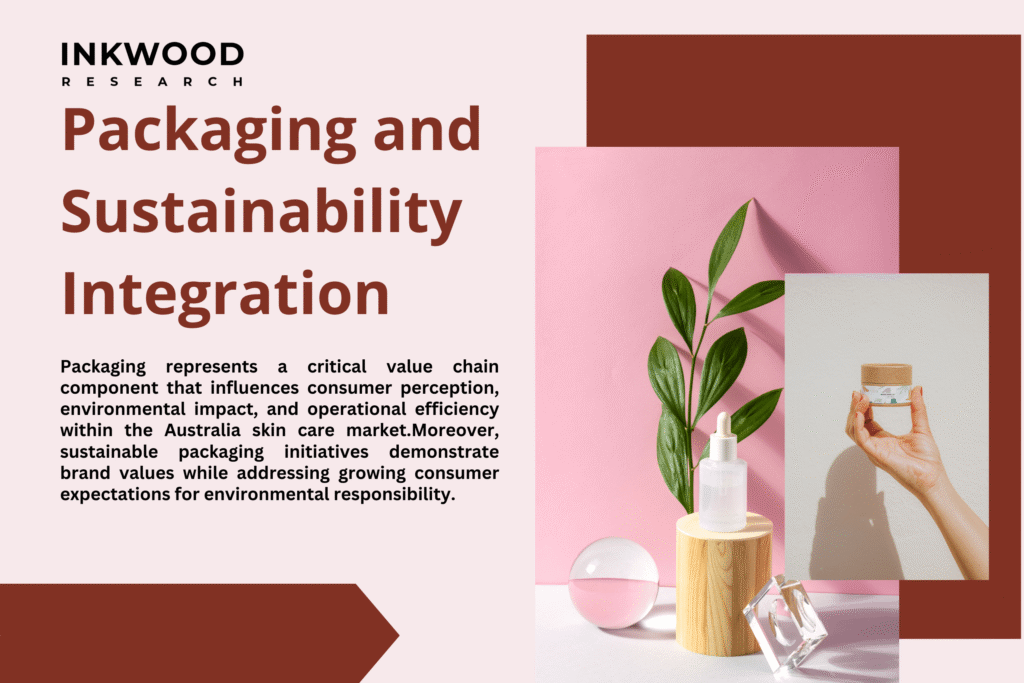
Packaging represents a critical value chain component that influences consumer perception, environmental impact, and operational efficiency within the Australia skin care market. Moreover, sustainable packaging initiatives demonstrate brand values while addressing growing consumer expectations for environmental responsibility. According to our research, packaging innovation focuses on recyclable materials, reduced plastic usage, and innovative design solutions that minimize environmental impact while maintaining product protection and aesthetic appeal.
Sustainable Packaging Technologies
Advanced packaging technologies enable reduced environmental impact through biodegradable materials, refillable containers, and minimalist design approaches that eliminate unnecessary packaging components. Furthermore, sustainable packaging solutions demonstrate authentic brand commitment to environmental responsibility while appealing to environmentally conscious consumer segments. The packaging innovation process balances sustainability goals with functional requirements, including product protection and shelf life maintenance.
Additionally, local packaging suppliers support supply chain sustainability through reduced transportation distances and supporting domestic manufacturing capabilities. Similarly, packaging design optimization reduces material usage while maintaining structural integrity and consumer appeal through innovative engineering solutions.
However, sustainable packaging costs may exceed traditional packaging solutions, requiring careful cost-benefit analysis and strategic pricing considerations. Subsequently, brands successfully implementing sustainable packaging strategies achieve differentiation advantages while supporting long-term environmental goals.
Consumer Experience Enhancement
Packaging design significantly influences consumer experience through functionality, aesthetic appeal, and convenience factors that drive purchase decisions and brand loyalty. Moreover, innovative dispensing systems and user-friendly designs enhance product usage experience while minimizing waste and ensuring consistent product application. The packaging development process considers consumer feedback and usage patterns to optimize design solutions.
Furthermore, premium packaging positioning supports higher price points and brand prestige while justifying investment in advanced packaging technologies and materials. Consequently, brands that successfully balance functionality with aesthetic appeal achieve competitive advantages and consumer satisfaction.
Packaging testing ensures durability, safety, and performance across diverse storage and transportation conditions throughout complex distribution networks. Therefore, brands investing in comprehensive packaging development achieve product integrity and consumer confidence throughout product lifecycles.
Distribution Channel Dynamics

The skincare industry distribution landscape demonstrates remarkable complexity through multiple channel strategies serving diverse consumer segments and shopping preferences. Furthermore, omnichannel distribution approaches integrate online commerce with traditional retail channels to maximize market reach and consumer accessibility. Our analysis indicates that successful distribution strategies balance channel partner relationships with direct-to-consumer initiatives to optimize market penetration and profitability.
Traditional Retail Channel Management
Established retail channels, including pharmacies, department stores, and specialty beauty retailers, remain important distribution partners for skincare products reaching diverse consumer demographics. Additionally, these channels provide professional consultation services and product education opportunities that support consumer confidence and purchasing decisions. The traditional retail sector demonstrates stability while adapting to digital commerce integration and evolving consumer expectations.
Moreover, retail partner relationships require ongoing support through training programs, marketing materials, and promotional strategies that drive sell-through performance and customer satisfaction. Similarly, inventory management systems ensure product availability while minimizing overstock situations and supporting healthy channel partner relationships.
However, retail channel margins and promotional requirements may impact profitability, requiring strategic negotiation and performance monitoring to ensure mutually beneficial partnerships. Subsequently, brands successfully managing retail relationships achieve broad market access while maintaining sustainable business models.
E-commerce Platform Integration
Digital commerce platforms provide direct consumer access while enabling personalized shopping experiences and comprehensive product information delivery. Furthermore, e-commerce capabilities support market expansion beyond traditional geographic constraints while reducing distribution costs and inventory requirements. The digital commerce sector demonstrates rapid growth and innovation that transforms consumer shopping behaviors and brand relationships.
Additionally, integrated e-commerce systems enable real-time inventory management, customer service capabilities, and data collection that inform business decision-making and marketing strategies. Consequently, brands successfully implementing e-commerce strategies achieve market share growth and direct consumer relationships.
E-commerce platform management requires technical expertise, customer service capabilities, and logistics coordination to ensure positive consumer experiences and operational efficiency. Therefore, brands investing in e-commerce infrastructure gain competitive advantages and market access opportunities.
Retail Integration and Consumer Access
Consumer access strategies within the Australian skin care market emphasize convenience, education, and personalized service delivery through integrated retail experiences. Moreover, successful retail integration balances product accessibility with brand positioning and consumer education opportunities that drive purchase decisions and loyalty. According to our research, retail excellence requires sophisticated inventory management, staff training, and consumer engagement strategies that optimize sales performance and customer satisfaction.
Pharmacy Channel Excellence
Pharmacy distribution channels provide trusted professional consultation services and health-focused positioning that appeals to consumers seeking therapeutic skincare products and professional recommendations. Furthermore, pharmacist expertise adds credibility to product recommendations while addressing specific skin concerns, including dry skin management and sensitivity issues. The pharmacy channel demonstrates consistent performance while adapting to consumer preferences for professional guidance and quality assurance.
Additionally, pharmacy partnerships enable education programs and promotional activities that increase consumer awareness and product trial opportunities. Similarly, prescription skincare integration creates comprehensive treatment approaches that address medical and cosmetic skin concerns through coordinated care strategies.
However, pharmacy channel requirements, including professional training, regulatory compliance, and inventory management, may require additional resource investments and ongoing support programs. Subsequently, brands successfully supporting pharmacy partners achieve professional credibility and consumer trust advantages.
Department Store Positioning
Premium department store placement provides brand prestige and luxury positioning that justifies higher price points and attracts affluent consumer segments seeking quality products for skincare. Moreover, department store environments enable comprehensive product demonstrations, personalized consultation services, and luxury retail experiences that differentiate premium brands from mass market alternatives. The department store channel supports brand building while providing access to high-value consumer segments.
Furthermore, department store partnerships enable strategic marketing initiatives, including exclusive product launches, seasonal promotions, and influencer events that generate consumer excitement and media attention. Consequently, brands successfully leveraging department store partnerships achieve premium positioning and market visibility.
Department store partnerships require significant investment in staff training, promotional support, and inventory management to ensure successful retail performance and partner satisfaction. Therefore, brands committed to department store excellence gain luxury market access and brand elevation opportunities.
Supply Chain Challenges and Solutions
The skin care market value chain faces diverse challenges, including supply disruptions, cost pressures, and regulatory changes that require strategic management and innovative solutions. Moreover, supply chain resilience becomes increasingly important as market competition intensifies and consumer expectations rise. Our analysis reveals that successful companies develop comprehensive risk management strategies and operational flexibility that ensure consistent market service and business continuity.
Supply Disruption Management
Global supply chain disruptions impact ingredient availability, packaging materials, and transportation logistics, requiring contingency planning and supplier diversification strategies. Additionally, inventory management strategies must balance carrying costs with stockout risks while maintaining product freshness and quality standards. The supply chain management process emphasizes visibility, flexibility, and rapid response capabilities that minimize disruption impact.
Furthermore, strategic supplier relationships provide early warning systems and collaborative problem-solving approaches that reduce disruption severity and duration. Similarly, local sourcing initiatives reduce dependency on international suppliers while supporting domestic economic development and supply chain sustainability.
However, supply chain investments, including safety stock, supplier diversification, and technology systems, require significant capital allocation and ongoing management attention. Subsequently, brands successfully investing in supply chain resilience achieve competitive advantages through consistent market service and operational stability.
Cost Management Optimization
Rising raw material costs, transportation expenses, and regulatory compliance requirements create pressure on profit margins and pricing strategies within the competitive skincare industry. Moreover, cost management initiatives must balance expense reduction with quality maintenance and consumer value delivery. The cost management process requires a comprehensive analysis of value chain components and strategic optimization opportunities.
Additionally, operational efficiency improvements, including automation, process optimization, and waste reduction, provide sustainable cost advantages while maintaining product quality and service levels. Consequently, brands successfully implementing cost management strategies achieve improved profitability and pricing competitiveness.
Cost management strategies must consider long-term sustainability and market positioning implications to ensure strategic alignment with brand values and consumer expectations. Therefore, brands that balance cost efficiency with quality investment gain sustainable competitive advantages and market leadership positions.
Key Takeaways
Australia’s skincare industry value chain demonstrates exceptional integration and sophistication that support sustainable market growth and operational excellence. Moreover, successful value chain optimization requires strategic coordination across all components from native ingredient sourcing through consumer delivery systems.
- Our research indicates that companies mastering value chain complexity achieve significant competitive advantages and market leadership positions.
- Furthermore, sustainable packaging innovation and native ingredient utilization create differentiation opportunities while supporting environmental responsibility and consumer values.
- Similarly, omnichannel distribution strategies and advanced manufacturing capabilities enable market responsiveness and operational efficiency that drive market value growth.
- The evolving Australian skin care market rewards organizations investing in value chain resilience, sustainability integration, and consumer-focused innovation.
- Therefore, companies successfully optimizing supply chain performance while maintaining quality standards and cost competitiveness will dominate Australia’s dynamic skincare landscape.
Conclusion: Optimizing Value Chain Performance
Australia’s skincare industry value chain demonstrates remarkable sophistication through integrated supply networks that support the Australian skin care market’s continued growth and innovation.
Moreover, successful value chain management requires strategic coordination across all components from raw material sourcing through consumer delivery. Our analysis indicates that companies optimizing value chain performance achieve sustainable competitive advantages while supporting market expansion and consumer satisfaction.
Furthermore, the evolving skin care market rewards organizations embracing sustainability, innovation, and operational excellence throughout complex supply networks. Similarly, value chain optimization enables brands to respond rapidly to market changes while maintaining quality standards and cost competitiveness in dynamic business environments.
The future success of Australia’s skincare value chain depends on continued investment in sustainability, technology integration, and consumer-focused innovation that addresses evolving market needs and expectations. Therefore, companies successfully optimizing value chain performance will capture the most significant opportunities within Australia’s expanding and sophisticated skincare market landscape.
Make sure you check out our in-depth research reports or request a FREE sample customized as per your requirements.
Frequently Asked Questions (FAQs)
Pros: Unique product differentiation, premium positioning, sustainable community partnerships, and reduced transport costs. Cons: Seasonal availability, limited supply volumes, and higher extraction costs requiring strategic inventory management and long-term supplier relationships.
TGA requirements increase operational costs through safety testing, documentation, and quality monitoring. However, compliance creates consumer trust, premium positioning opportunities, and export advantages to markets recognizing Australian quality standards.
E-commerce enables direct consumer relationships, personalized experiences, and geographic expansion while reducing distribution costs and inventory requirements. Success requires technology investment, customer service capabilities, and logistics coordination across Australia’s vast geography.