Table of Contents

TLDR
Australia’s skin care market is experiencing remarkable expansion, driven by demographic shifts including an aging population demanding anti-aging solutions and Gen Z consumers prioritizing sustainable, ethical skincare products. The Australian skin care market demonstrates sophisticated consumer behavior with high awareness about sun protection due to the elevated Australia skin cancer rates. Diversifying demographics creates demand for inclusive product ranges addressing various skin types, while male grooming acceptance expands market opportunities significantly across all age groups.
This comprehensive analysis benefits skincare brand strategists, market researchers, product developers, and retail executives seeking insights into Australia’s evolving consumer landscape. Marketing professionals targeting demographic segments, investment analysts evaluating skin care market opportunities, and international brands planning Australian market entry will find valuable data-driven insights for strategic decision-making and market positioning.
Demographics Reshaping Market Dynamics
Australia’s skin care market represents a fascinating convergence of demographic evolution and consumer sophistication. Moreover, the nation’s expanding consumer base demonstrates remarkable purchasing power growth, with the Australian skin care market valued at $3.61 billion in 2025 and projected to reach $5.67 billion by 2032.
According to our research, demographic transformations create unprecedented opportunities for the skincare industry innovation. Furthermore, these shifts fundamentally reshape how brands approach product development, marketing strategies, and consumer engagement across diverse population segments.
Australia’s population transformation creates compelling market opportunities within the skin care market. Consequently, demographic shifts drive sophisticated consumer demands that challenge traditional product categories and marketing approaches. Based on our analysis, the aging population represents approximately 20% of consumers by 2066, creating substantial demand for anti-aging solutions and skin repair products.
Population Age Distribution Impact
Demographic analysis reveals significant implications for skincare products’ demand patterns across various age groups. Additionally, younger consumers demonstrate distinct purchasing behaviors compared to established demographic segments. The expanding middle-aged population seeks preventive skincare solutions, while senior consumers prioritize corrective treatments addressing age-related skin concerns.
Furthermore, these demographic transitions influence care for skin routine complexity and product preferences. Similarly, each age group demonstrates unique spending patterns that shape market value distribution across premium and economic price ranges.
Regional Population Centers
- Urban concentration patterns significantly impact Australia’s skincare products distribution strategies and retail channel performance.
- Meanwhile, metropolitan areas demonstrate higher premium product adoption rates compared to rural regions.
- Regional population centers create unique opportunities for targeted marketing campaigns addressing specific demographic concentrations and lifestyle preferences.
However, digital commerce bridges geographical gaps, enabling consistent product access across diverse population centers. Subsequently, e-commerce platforms facilitate market penetration into previously underserved demographic segments and regional communities.
The Aging Population’s Anti-Aging Demand
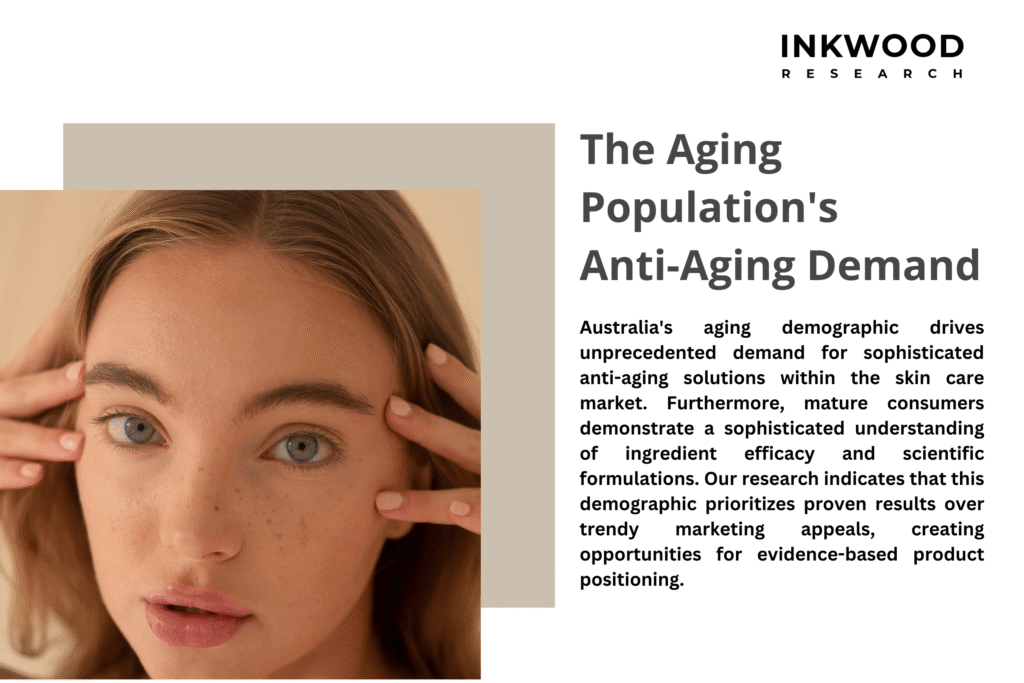
Australia’s aging demographic drives unprecedented demand for sophisticated anti-aging solutions within the skin care market. Furthermore, mature consumers demonstrate a sophisticated understanding of ingredient efficacy and scientific formulations. Our research indicates that this demographic prioritizes proven results over trendy marketing appeals, creating opportunities for evidence-based product positioning.
Advanced Skincare Technology Adoption
Mature consumers readily embrace innovative skincare products featuring advanced delivery systems and clinically-proven ingredients. Additionally, this demographic invests heavily in premium formulations addressing specific aging concerns, including fine lines, pigmentation, and skin firmness. The aging population seeks comprehensive skin care routine solutions that deliver measurable results through consistent usage.
Moreover, technological integration appeals to tech-savvy seniors who appreciate personalized skincare recommendations and digital skin analysis tools. Consequently, brands successfully combining traditional efficacy with modern convenience capture significant market share among mature consumers.
Healthcare-Integrated Skincare Approaches
The mature demographic increasingly integrates skincare with overall health management strategies. Furthermore, dermatologists’ recommendations heavily influence purchasing decisions among aging consumers seeking professional guidance. This approach creates opportunities for products for skincare positioned as health-focused rather than purely cosmetic solutions.
Similarly, pharmaceutical channel distribution gains importance as mature consumers trust medical professionals’ product endorsements. Therefore, brands establishing credibility through healthcare professional partnerships effectively reach this valuable demographic segment.
Australia Skin Care Market: Gen Z’s Sustainable Beauty Revolution
Gen Z consumers fundamentally transform skincare industry expectations through sustainability priorities and ethical purchasing decisions. Moreover, this demographic demonstrates a willingness to pay premium prices for environmentally responsible skincare products. According to our analysis, Gen Z drives demand for transparent ingredient sourcing, cruelty-free testing, and sustainable packaging solutions.
Ethical Consumption Patterns
Young consumers prioritize brands demonstrating an authentic commitment to environmental responsibility and social impact. Additionally, this demographic researches brand values extensively before making purchasing decisions, creating accountability pressures on skincare companies. Gen Z seeks Australian-made skin care products that reflect local environmental consciousness and ethical manufacturing practices.
Furthermore, social media influences purchasing decisions as young consumers share sustainability-focused brand recommendations with peer networks. Consequently, brands authentically embracing sustainable practices gain significant competitive advantages through organic social media promotion and word-of-mouth marketing.
Digital-First Shopping Behaviors
Gen Z demonstrates sophisticated digital shopping capabilities that reshape skin care industry retail dynamics. Moreover, this demographic utilizes multiple online platforms for product research, price comparison, and peer review analysis before purchasing. Social commerce integration creates seamless shopping experiences that align with Gen Z communication preferences and consumption habits.
Similarly, influencer marketing effectiveness remains high among young consumers who value authentic product demonstrations and honest reviews from trusted social media personalities. Therefore, brands successfully engaging Gen Z through authentic digital storytelling and transparent communication strategies capture long-term customer loyalty.
Male Grooming Market Expansion
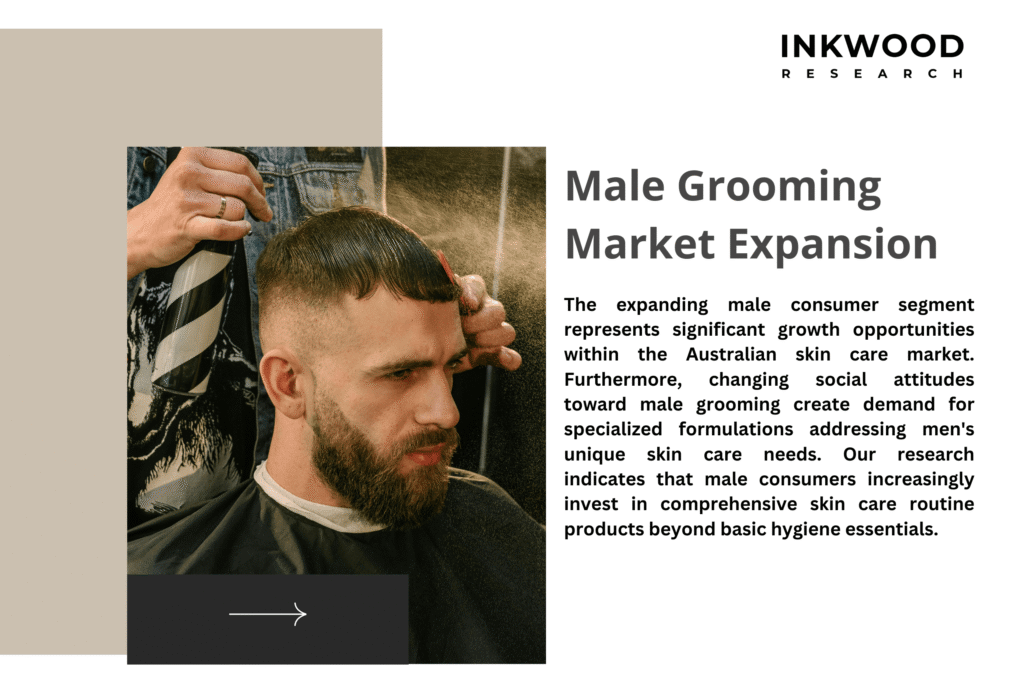
The expanding male consumer segment represents significant growth opportunities within the Australian skin care market. Furthermore, changing social attitudes toward male grooming create demand for specialized formulations addressing men’s unique skin care needs. Our research indicates that male consumers increasingly invest in comprehensive skin care routine products beyond basic hygiene essentials.
Specialized Product Development
Male consumers seek skincare products specifically formulated for men’s skin characteristics, including oilier skin types and larger pores. Additionally, simplified routine approaches appeal to time-conscious male consumers who prefer multifunctional products delivering multiple benefits. The male segment demonstrates growing acceptance of advanced skincare treatments, including serums, exfoliants, and specialized moisturizers.
Moreover, packaging design preferences differ significantly between male and female consumers, creating opportunities for gender-specific product positioning and marketing strategies. Subsequently, brands successfully addressing male aesthetic preferences while maintaining product efficacy capture expanding market share.
Marketing Strategy Evolution
Traditional masculine marketing approaches evolve to embrace vulnerability and self-care messaging that resonates with modern male consumers. Furthermore, male influencers and celebrity endorsements effectively reach target audiences through authentic testimonials and lifestyle integration examples. The male grooming segment benefits from educational content addressing skincare concerns and routine development guidance.
Similarly, retail channel preferences vary as male consumers demonstrate comfort with pharmacy and online purchasing over traditional beauty store environments. Therefore, distribution strategies must accommodate male shopping preferences while maintaining product accessibility across diverse retail channels.
Cultural Diversity Driving Product Innovation in the Australia Skin Care Market
Australia’s multicultural population creates demand for inclusive skincare products addressing diverse skin types and cultural beauty preferences. Moreover, different ethnic backgrounds demonstrate varying skincare concerns requiring specialized formulations and ingredient approaches. According to our research, inclusive product ranges capture broader market segments while addressing previously underserved consumer needs.
Inclusive Formulation Strategies
Diverse skin tones require specialized care for skin formulations addressing hyperpigmentation, melanin-related concerns, and cultural skincare traditions. Additionally, ingredient preferences vary across cultural groups, creating opportunities for brands to incorporate diverse botanical extracts and traditional skincare wisdom. The multicultural market demands extensive shade ranges and culturally sensitive product development approaches.
Furthermore, cultural celebrations and seasonal skincare needs create opportunities for limited-edition product releases and culturally-aware marketing campaigns. Consequently, brands successfully embracing cultural diversity through authentic product development gain competitive advantages and community loyalty.
Community-Centered Marketing
Cultural communities influence purchasing decisions through family recommendations and community leader endorsements. Moreover, culturally-specific social media platforms and communication channels require targeted marketing strategies addressing language preferences and cultural values. Diverse representation in advertising and brand messaging demonstrates an authentic commitment to inclusive beauty standards.
Similarly, community events and cultural celebrations provide marketing opportunities for brands seeking authentic engagement with diverse consumer segments. Therefore, brands investing in community relationships and cultural competency gain sustainable competitive advantages within multicultural markets.
Digital-Native Consumer Behaviors
Digital-native consumers transform skin care market dynamics through sophisticated online shopping behaviors and technology integration expectations. Furthermore, these consumers seamlessly blend online research with in-store experiences, creating omnichannel shopping journeys. Our analysis reveals that digital-native consumers drive demand for personalized product recommendations and virtual consultation services.
Technology-Enhanced Shopping
Advanced consumers expect AI-powered skin analysis tools and personalized product matching services that enhance shopping experiences. Additionally, virtual try-on capabilities and augmented reality features appeal to consumers seeking confident purchasing decisions for skincare products. Digital-native consumers appreciate seamless integration between mobile apps, websites, and physical retail locations.
Moreover, subscription services and automated reordering appeal to convenience-focused consumers seeking simplified routine maintenance and consistent product availability. Subsequently, brands successfully implementing technology-enhanced shopping experiences capture customer loyalty and increase repeat purchase rates.
Social Proof and Review Culture
Digital consumers heavily rely on peer reviews, social media testimonials, and influencer recommendations when evaluating products for skincare. Furthermore, authentic user-generated content significantly influences purchasing decisions through relatable experiences and honest product assessments. The review culture creates accountability pressures on brands while providing valuable consumer feedback for product improvement.
Similarly, social media shopping features enable instant purchasing decisions during content consumption, reducing friction between product discovery and purchase completion. Therefore, brands that optimize social commerce capabilities effectively capture impulse purchases and trend-driven consumer behavior.
Sun Protection Awareness Across Demographics
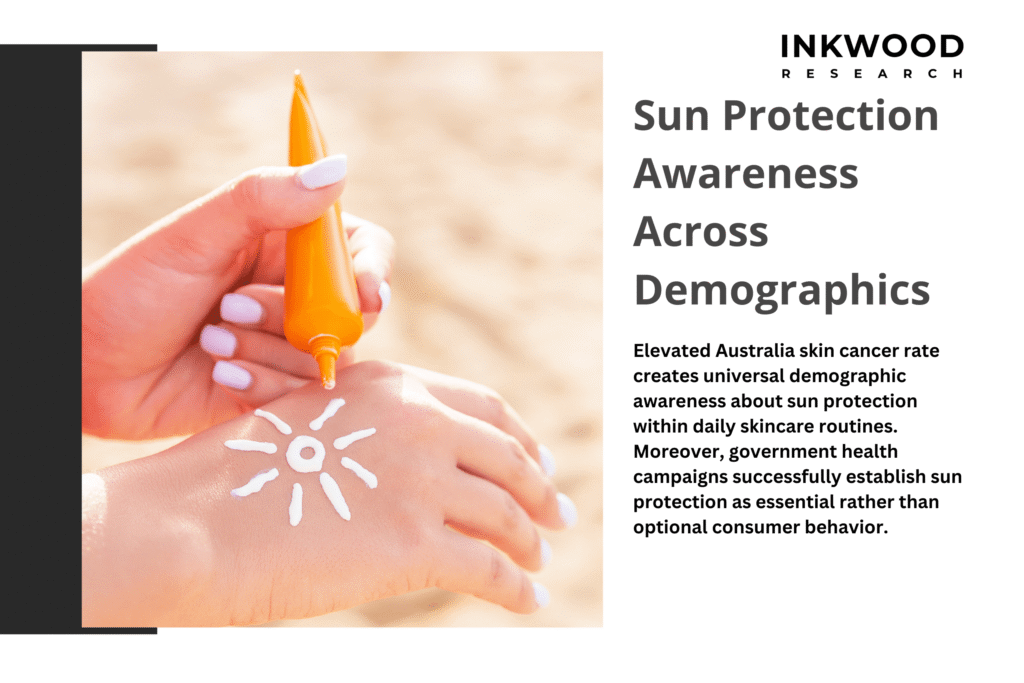
Elevated Australia skin cancer rate creates universal demographic awareness about sun protection within daily skincare routines. Moreover, government health campaigns successfully establish sun protection as essential rather than optional consumer behavior. According to our research, all demographic segments prioritize UV protection, creating consistent demand for sunscreen-integrated skincare products.
Multi-Demographic Sun Safety
Different age groups approach sun protection through varying product preferences and application methods, yet maintain a consistent commitment to UV defense. Additionally, outdoor lifestyle culture reinforces sun protection habits across demographic boundaries, creating universal market demand for protective formulations. The skin care market benefits from consistent consumer education about sun damage prevention and skin cancer awareness.
Furthermore, seasonal demand patterns remain strong year-round due to Australia’s intense UV exposure levels and outdoor recreation culture. Consequently, sun protection products maintain stable market performance while supporting overall skincare category growth.
Innovation in Protective Formulations
Advanced sun protection technology appeals to consumers seeking elegant, non-greasy formulations that integrate seamlessly into daily routines. Moreover, multifunctional products combining UV protection with skincare benefits address consumer preferences for simplified routines with comprehensive protection.
Similarly, specialized formulations addressing different skin types and sensitivities ensure broad market accessibility while maintaining protective efficacy. Therefore, brands successfully balancing protection, comfort, and aesthetic appeal capture significant market share across all demographic segments.
Key Takeaways
- Australia’s demographic transformation creates unprecedented opportunities within the skin care market through strategic consumer segment targeting. Moreover, successful brands must adapt product portfolios and marketing approaches to address diverse demographic needs while maintaining brand authenticity.
- Furthermore, the aging population drives premium anti-aging product demand, while Gen Z consumers prioritize sustainability and ethical practices in purchasing decisions. Similarly, male grooming expansion and cultural diversity create new market segments requiring specialized product development and inclusive marketing strategies.
- The Australia skin care market rewards brands that successfully integrate demographic insights with operational excellence and consumer-focused innovation. Therefore, companies investing in demographic understanding and responsive product development will capture the most significant growth opportunities within Australia’s expanding consumer landscape.
Conclusion : Demographic-Driven Growth Strategies in the Australian Skin Care Market
Australia’s expanding consumer base creates exceptional opportunities for strategic skin care market growth through demographic-focused approaches. Moreover, successful brands recognize that different demographic segments require specialized product development, marketing strategies, and distribution channels. Our analysis demonstrates that companies addressing diverse demographic needs while maintaining authentic brand values achieve sustainable competitive advantages.
In conclusion, the Australia skin care market benefits from sophisticated consumers who invest in quality products delivering proven results across all demographic segments. Similarly, demographic diversity drives innovation while creating multiple growth pathways for brands seeking market expansion and customer base development.
If you need customized consultation contact us now.
Make sure you check out our in-depth research reports or request a FREE sample customized as per your requirements.
Frequently Asked Questions (FAQs)
Australia’s aging demographic (20% by 2066) drives premium anti-aging product demand. Mature consumers prioritize proven efficacy over marketing, willingly paying higher prices for clinically-backed formulations addressing age-related concerns like fine lines and pigmentation.
Gen Z demands authentic sustainability, not green marketing. They research brand ethics extensively and share recommendations socially. Success requires transparent sourcing, eco-friendly packaging, and verifiable environmental impact rather than superficial claims.
Male grooming represents exceptional growth as self-care acceptance increases. Men seek specialized formulations for oilier skin and prefer simplified, multifunctional products. Marketing must embrace authentic self-care messaging while accommodating male shopping preferences.