Table of Contents
TLDR
Asia-Pacific leads the global shift toward non-invasive anti-aging treatments, with the anti-aging products market reaching $29.5 billion by 2032. Non-surgical beauty treatments revolutionize skincare through laser skin rejuvenation APAC, advanced dermal treatments, and innovative Botox alternatives Asia-Pacific. Natural anti-aging alternatives APAC demonstrate how consumers achieve youthful skin with non-invasive methods. Top non-invasive beauty treatments, including LED therapy and ultrasonic procedures, transform wrinkle treatment alternatives without surgical intervention.
Dermatologists, cosmetic practitioners, skincare industry operators, and beauty entrepreneurs exploring APAC cosmetic trends will gain valuable insights. Additionally, consumers seeking anti-aging without surgery, medical device distributors, and investors evaluating non-invasive cosmetic procedures market opportunities will discover strategic intelligence for informed decision-making and business development.
Non-Invasive Revolution: Transforming APAC Beauty Landscape
Market Growth and Consumer Demand
The Asia-Pacific region experiences unprecedented growth in non-invasive anti-aging treatments APAC. According to Inkwood Research, the anti-aging products market demonstrates robust expansion driven by consumer preference for non-surgical beauty treatments. Furthermore, technological advancements enable effective alternatives to traditional surgical procedures.
Consumer awareness increases regarding treatment safety and minimal downtime benefits. Additionally, social media influence drives the adoption of non-invasive cosmetic procedures. Therefore, skincare treatments without surgery become mainstream choices for aging prevention and correction. These trends reshape the entire APAC cosmetic trends landscape significantly.
Safety and Efficacy Advantages
Non-surgical wrinkle treatments offer superior safety profiles compared to invasive procedures. Moreover, patients experience minimal downtime and reduced complication risks. Subsequently, healthcare providers increasingly recommend these alternatives for appropriate candidates seeking anti-aging solutions.
Advanced technologies deliver measurable results without surgical intervention. Furthermore, combination treatments enhance overall efficacy while maintaining safety standards. Consequently, youthful skin with non-invasive methods becomes achievable for diverse patient populations across different age groups and skin types.
Regulatory Approval and Clinical Validation
Government health authorities across the Asia-Pacific strengthen regulatory frameworks for non-invasive treatments. Additionally, clinical studies demonstrate long-term safety and efficacy data. Therefore, medical professionals gain confidence in recommending these treatment options to patients.
Professional training programs ensure proper treatment protocols and patient safety. Meanwhile, certification requirements maintain high standards across treatment providers. Subsequently, regulatory oversight supports market growth while protecting consumer interests and treatment quality standards.
Advanced Laser and Light-Based Technologies
Fractional Laser Systems for Skin Rejuvenation
Laser skin rejuvenation APAC technologies advance rapidly through innovative fractional systems. Furthermore, these devices target specific skin layers while preserving surrounding tissue. Therefore, patients achieve significant improvement with reduced recovery time compared to traditional laser treatments.
Multiple laser wavelengths address different aging concerns simultaneously. Additionally, fractional delivery systems create controlled thermal zones for optimal healing. Consequently, top non-invasive beauty treatments include various laser options for comprehensive anti-aging results.
LED Light Therapy and Photodynamic Treatments
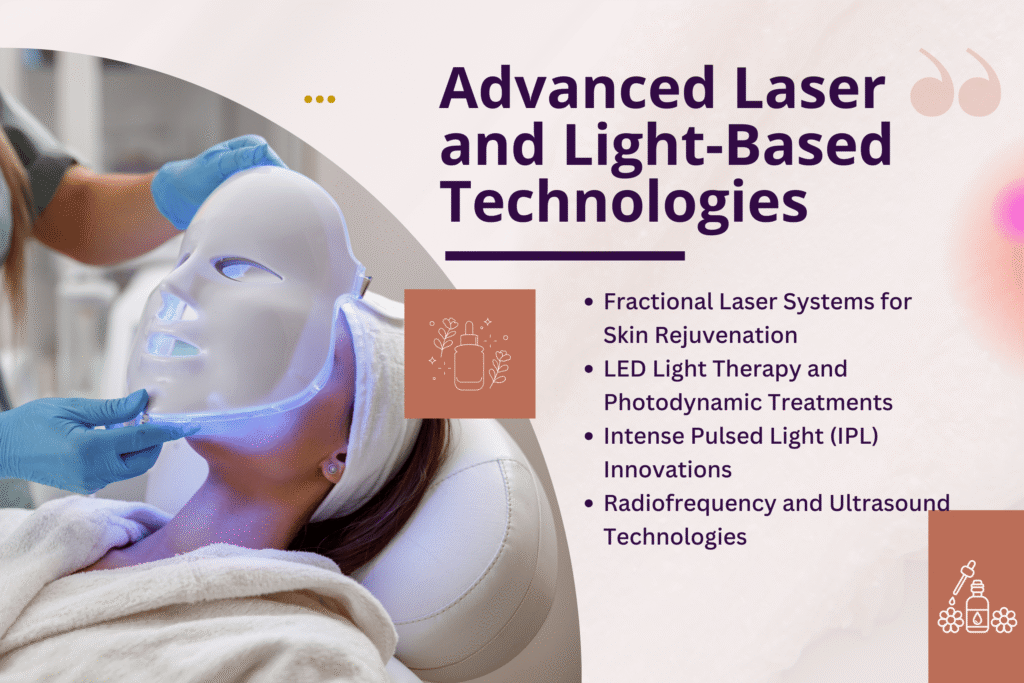
LED therapy emerges as a popular non-invasive option for anti-aging treatment. Moreover, different wavelengths target specific cellular processes related to aging. Red light stimulates collagen production while blue light addresses acne concerns.
Professional-grade LED systems deliver superior results compared to consumer devices. Furthermore, treatment protocols customize wavelength combinations for individual needs. Subsequently, LED therapy becomes an essential component of comprehensive anti-aging treatment plans.
Intense Pulsed Light (IPL) Innovations
IPL technologies address multiple aging signs, including pigmentation, vascular lesions, and texture irregularities. Additionally, advanced IPL systems feature improved cooling mechanisms and treatment precision. Therefore, patients experience enhanced comfort during treatment sessions.
Combination IPL treatments with other modalities amplify anti-aging results. Meanwhile, newer systems reduce treatment time while maintaining efficacy. Consequently, IPL remains a cornerstone of non-surgical beauty treatments across the Asia-Pacific markets.
Radiofrequency and Ultrasound Technologies
Radiofrequency devices stimulate deep tissue remodeling for skin tightening effects. Furthermore, microneedling radiofrequency combines mechanical and thermal stimulation. These innovations represent significant advances in wrinkle treatment alternatives.
High-intensity focused ultrasound (HIFU) provides non-surgical lifting capabilities. Additionally, ultrasonic facial treatments improve skin texture and tone. Subsequently, these technologies offer effective alternatives to surgical facelifts for appropriate candidates.
Injectable Alternatives and Dermal Treatments
Advanced Hyaluronic Acid Formulations
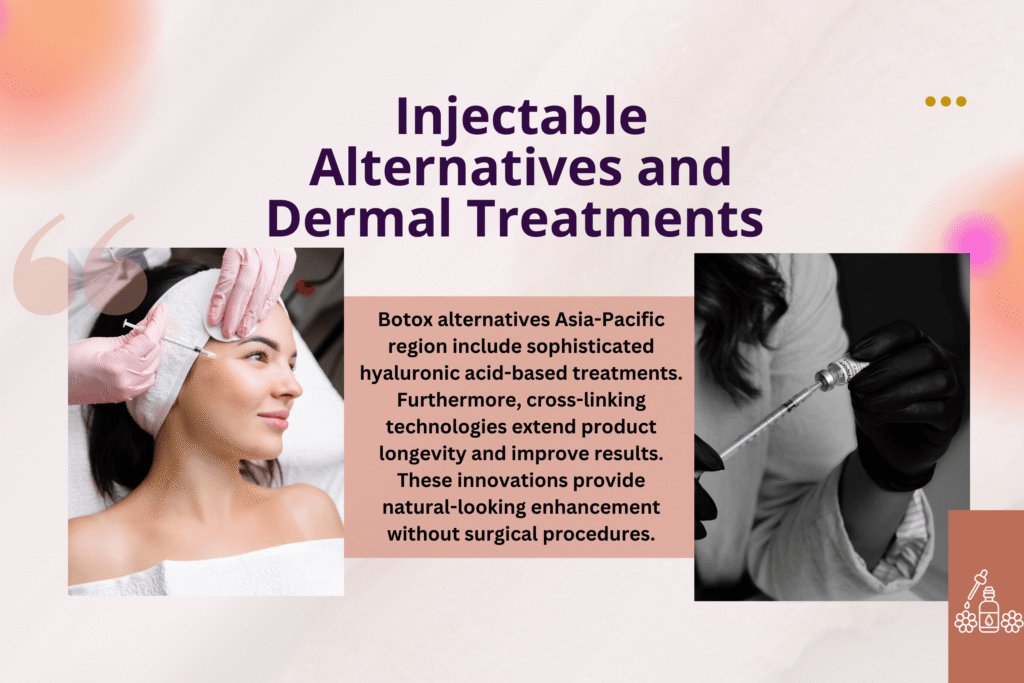
Botox alternatives Asia-Pacific region include sophisticated hyaluronic acid-based treatments. Furthermore, cross-linking technologies extend product longevity and improve results. These innovations provide natural-looking enhancement without surgical procedures.
Different molecular weights target specific treatment areas and concerns. Additionally, specialized formulations address tear troughs, cheeks, and jawline definition. Therefore, injectable treatments achieve comprehensive facial rejuvenation through strategic placement techniques.
Platelet-Rich Plasma (PRP) Therapies
PRP treatments utilize patients’ own growth factors for natural rejuvenation. Moreover, centrifugation techniques concentrate healing proteins for optimal results. Subsequently, natural anti-aging alternatives APAC include autologous treatments with minimal reaction risks.
Combination PRP with microneedling enhances treatment efficacy significantly. Furthermore, hair restoration applications expand PRP treatment options. Consequently, regenerative medicine approaches are gaining popularity among patients seeking natural anti-aging solutions.
Polynucleotides and Bio-Remodeling Agents
Advanced bio-remodeling treatments stimulate natural collagen and elastin production. Additionally, polynucleotide injections improve skin quality and hydration. These innovative approaches represent the evolution of non-invasive anti-aging treatments APAC.
Multiple treatment sessions achieve progressive improvement in skin quality. Meanwhile, minimal downtime allows patients to maintain normal activities. Subsequently, bio-remodeling becomes an attractive option for preventive anti-aging care.
Thread Lift Alternatives
Non-surgical thread lifts provide temporary lifting effects without incisions. Furthermore, absorbable threads stimulate collagen production during dissolution. Therefore, these treatments offer surgical alternatives for mild to moderate facial sagging.
Different thread materials and placement techniques customize treatment outcomes. Additionally, combination approaches integrate threads with other non-invasive modalities. Consequently, non-surgical facelift Asia-Pacific options expand significantly through technological innovation.
At-Home Non-Invasive Device Market Expansion
Consumer Device Innovation and Accessibility
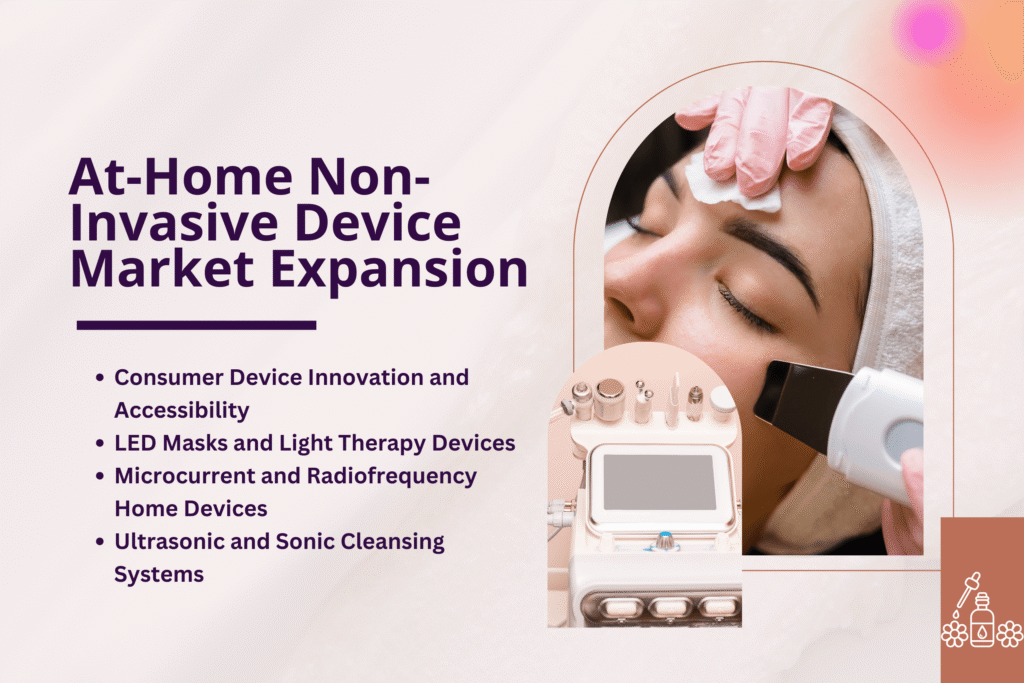
At-home beauty devices democratize access to professional-grade treatments. Furthermore, technological miniaturization enables effective home-use systems. According to our analysis, consumer demand drives rapid innovation in portable anti-aging devices.
FDA and regulatory approvals ensure device safety for consumer use. Additionally, user-friendly interfaces enable proper treatment protocols. Therefore, top non-invasive beauty treatments extend beyond clinical settings into home environments.
LED Masks and Light Therapy Devices
Home-use LED masks gain popularity across Asia-Pacific markets. Moreover, wireless designs and rechargeable batteries enhance user convenience. Subsequently, consistent home treatment protocols achieve measurable anti-aging results.
Different LED wavelengths address various skin concerns simultaneously. Furthermore, treatment tracking applications monitor progress and optimize protocols. Consequently, personalized home therapy becomes accessible and effective for anti-aging maintenance.
Microcurrent and Radiofrequency Home Devices
Microcurrent devices provide non-invasive muscle stimulation for facial toning. Additionally, at-home radiofrequency systems deliver controlled thermal energy. These technologies enable youthful skin with non-invasive methods through regular home treatments.
Safety features prevent overuse and ensure appropriate energy delivery. Meanwhile, guided treatment applications optimize device usage. Subsequently, professional-quality results become achievable through consistent home care routines.
Ultrasonic and Sonic Cleansing Systems
Advanced cleansing technologies enhance skincare product absorption and effectiveness. Furthermore, ultrasonic devices remove impurities while promoting circulation. Therefore, these systems support overall anti-aging treatment protocols.
Combination cleansing and treatment devices maximize time efficiency. Additionally, smart sensors adjust treatment intensity based on skin conditions. Consequently, comprehensive home care systems integrate multiple anti-aging technologies effectively.
Regional Market Analysis and Growth Opportunities
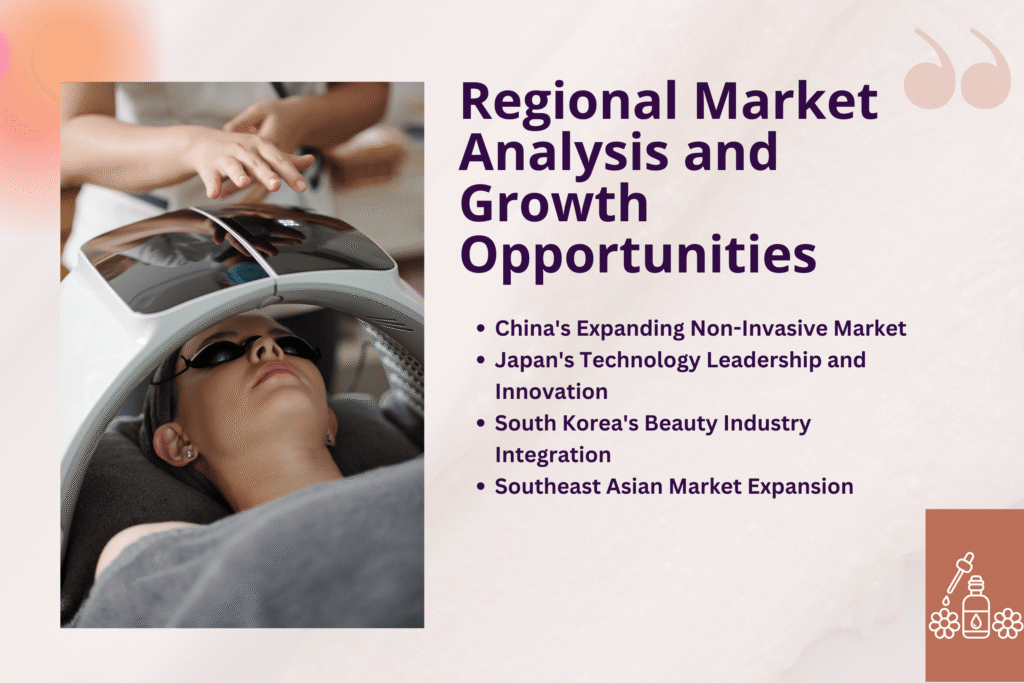
China’s Expanding Non-Invasive Market
China represents the largest opportunity for non-invasive anti-aging treatments within the Asia-Pacific. Furthermore, rapid economic development and urbanization drive premium treatment demand. According to market analysis, Chinese consumers demonstrate a sophisticated understanding of anti-aging technologies.
E-commerce platforms revolutionize device distribution and consumer education. Additionally, social media influencers promote awareness of non-surgical options. Therefore, digital marketing becomes essential for market penetration and consumer engagement strategies.
Japan’s Technology Leadership and Innovation
Japan leads technological innovation in non-invasive anti-aging treatments. Moreover, precision engineering and quality standards ensure superior device performance. Subsequently, Japanese companies export advanced technologies throughout Asia-Pacific markets.
Aging demographics create sustained demand for effective anti-aging solutions. Furthermore, cultural emphasis on natural beauty supports non-invasive treatment preferences. Consequently, Japan serves as both an innovation center and a significant market for these technologies.
South Korea’s Beauty Industry Integration
Korean beauty companies integrate non-invasive technologies with traditional skincare approaches. Additionally, K-beauty influence promotes global awareness of innovative treatments. Therefore, South Korea becomes a key market for both domestic and international device manufacturers.
Advanced manufacturing capabilities support cost-effective device production. Meanwhile, export-oriented strategies expand global market reach. Subsequently, Korean innovations influence international beauty industry standards and consumer expectations.
Southeast Asian Market Expansion
Emerging Southeast Asian markets present significant growth opportunities for non-invasive treatments. Furthermore, rising disposable incomes enable premium beauty spending. Additionally, young populations adopt preventive anti-aging approaches early.
Infrastructure development supports clinic expansion and device distribution. Moreover, medical tourism drives demand for advanced treatment options. Consequently, Southeast Asia becomes an increasingly important market for anti-aging innovations.
Consumer Preferences Driving Non-Surgical Trends
Safety and Minimal Downtime Priorities
Asian consumers prioritize treatment safety over dramatic immediate results. Furthermore, busy lifestyles require minimal recovery time and treatment interruption. Therefore, non-invasive options align perfectly with modern consumer preferences and lifestyle demands.
Professional consultation ensures appropriate treatment selection for individual needs. Additionally, gradual improvement approaches maintain a natural appearance. Subsequently, consumer satisfaction increases through realistic expectation management and proper treatment planning.
Natural-Looking Results and Gradual Improvement
Preference for subtle enhancement drives demand for non-invasive alternatives. Moreover, consumers seek maintenance rather than dramatic transformation. Therefore, skincare treatments without surgery provide ideal solutions for aging prevention and correction.
Multiple treatment sessions allow for gradual improvement and adjustment. Furthermore, combination approaches customize results for individual preferences. Consequently, natural anti-aging alternatives APAC satisfy diverse consumer expectations and aesthetic goals.
Cost-Effectiveness and Treatment Accessibility
Non-invasive treatments often provide better long-term value compared to surgical procedures. Additionally, treatment packages and maintenance protocols spread costs over time. Therefore, financial accessibility supports broader market adoption.
Insurance coverage considerations influence treatment selection decisions. Meanwhile, payment plan options enable access to premium treatments. Subsequently, affordability becomes a key factor in treatment planning and provider selection.
Technology Integration and Personalization
Smart devices and AI integration enhance treatment personalization and outcomes. Furthermore, data tracking enables protocol optimization for individual responses. Therefore, technology adoption supports improved treatment efficacy and patient satisfaction.
Virtual consultations expand access to specialist expertise. Additionally, remote monitoring ensures optimal treatment progression. Consequently, technology integration becomes essential for modern anti-aging treatment delivery and management.
European home-use anti-aging devices deliver approximately 60-70% of professional treatment efficacy while offering significant advantages in convenience, cost, and treatment frequency. Moreover, clinical trials directly comparing professional and home treatments demonstrate that consistent home device usage can achieve comparable long-term results despite lower per-session intensity. The global anti-aging products market benefits from this efficacy balance as home devices expand treatment accessibility for aging skin concerns.
Treatment Intensity Differences
Professional anti-aging treatments utilize higher energy levels and more aggressive parameters compared to home-use devices due to trained operator supervision and immediate medical support availability. Furthermore, clinical testing protocols for professional devices allow stronger treatments that may cause temporary side effects requiring professional monitoring. The skin care industry recognizes these intensity differences while emphasizing that home devices prioritize safety over maximum efficacy.
Home-use European devices operate within strict safety parameters designed to prevent user error and minimize adverse reaction risks. Additionally, these devices typically feature automatic shut-off systems, skin temperature monitoring, and preset treatment protocols to ensure safe operation. Clinical trials demonstrate that lower-intensity treatments can achieve significant improvements in aging skin when applied consistently over extended periods.
Convenience and Compliance Advantages
Home anti-aging devices offer substantial convenience benefits that may enhance treatment compliance and overall outcomes compared to professional clinic visits. Moreover, the ability to perform treatments on flexible schedules without appointment constraints appeals particularly to busy older adults managing aging skin concerns. Clinical testing indicates that treatment frequency and consistency significantly impact overall efficacy regardless of individual session intensity.
The anti-aging products market recognizes convenience as a crucial factor in treatment success, as regular usage typically produces superior results compared to sporadic high-intensity treatments. Furthermore, home devices eliminate travel time, scheduling conflicts, and treatment anxiety that may reduce professional treatment compliance. Therefore, convenience advantages may offset intensity limitations through improved adherence to recommended treatment protocols.
Long-Term Outcome Comparison
Clinical trials evaluating long-term outcomes demonstrate that consistent home device usage can achieve results comparable to periodic professional treatments over 6-12 month evaluation periods. Additionally, the combination of home maintenance treatments with periodic professional sessions may deliver optimal aging skin improvement results. The skin care products market increasingly promotes hybrid approaches combining professional and home technologies for comprehensive anti-aging strategies.
European devices with robust clinical backing demonstrate sustained improvements in aging skin parameters when used according to manufacturer recommendations. Moreover, long-term studies indicate that home device benefits may accumulate over time, potentially exceeding single-modality professional treatment outcomes. Consequently, home devices represent viable alternatives for consumers committed to consistent anti-aging regimens.
Technology Integration and Future Innovations
Artificial Intelligence and Machine Learning
AI-powered skin analysis tools enable precise treatment planning and outcome prediction. Furthermore, machine learning algorithms optimize treatment protocols based on individual responses. Therefore, personalized anti-aging approaches achieve superior results through data-driven methodologies.
Predictive modeling identifies optimal treatment timing and combinations. Additionally, outcome tracking enables continuous protocol refinement. Subsequently, AI integration transforms anti-aging treatment from art to science.
Nanotechnology and Advanced Delivery Systems
Nanotechnology enables targeted delivery of active compounds without invasive procedures. Moreover, nanoparticles enhance ingredient penetration and efficacy. Therefore, advanced delivery systems represent the future of non-invasive anti-aging treatments APAC.
Controlled-release formulations extend treatment benefits over time. Furthermore, biocompatible materials ensure safety and effectiveness. Consequently, nanotechnology applications expand treatment options while maintaining non-invasive approaches.
Regenerative Medicine Integration
Stem cell therapies and growth factor treatments advance non-invasive regenerative approaches. Additionally, exosome therapy shows promise for natural tissue rejuvenation. Therefore, regenerative medicine represents the cutting edge of anti-aging innovation.
Combination regenerative and traditional treatments amplify anti-aging results. Meanwhile, research continues to develop novel regenerative applications. Subsequently, these innovations will reshape future anti-aging treatment paradigms significantly.
Biotechnology and Genetic Therapies
Gene therapy applications enable targeted aging intervention at the cellular level. Furthermore, personalized treatments based on genetic profiles optimize outcomes. Therefore, biotechnology represents revolutionary advances in anti-aging medicine.
Epigenetic modifications influence aging processes through non-invasive interventions. Additionally, nutrigenomics principles guide personalized treatment protocols. Consequently, biotechnology integration creates unprecedented anti-aging possibilities while maintaining safety profiles.
The evolution toward youthful skin with non-invasive methods reflects broader healthcare trends emphasizing prevention, safety, and personalization. Through continued innovation and technology integration, non-invasive anti-aging treatments will dominate future beauty and medical aesthetics markets across Asia-Pacific.
Advanced wrinkle treatment alternatives and non-surgical beauty treatments demonstrate how the medical and cosmetic industries converge to create effective, safe, and accessible anti-aging solutions. These innovations position Asia-Pacific as the global leader in non-invasive cosmetic procedures and technology development.
Key Takeaways
Market Leadership and Growth Trajectory
- Asia-Pacific dominates the global non-invasive anti-aging treatments market with unprecedented growth momentum. Furthermore, the region demonstrates a 6.57% CAGR through 2032, reaching $29.5 billion market value. Therefore, investors and healthcare providers recognize APAC as the primary opportunity for anti-aging innovation and expansion.
- Consumer preferences increasingly favor safety and minimal downtime over dramatic surgical interventions. Additionally, technological advancement enables superior results through non-surgical beauty treatments. Subsequently, market demand accelerates across all demographic segments seeking effective wrinkle treatment alternatives.
Technology Integration Drives Innovation
- Advanced laser skin rejuvenation APAC technologies revolutionize treatment efficacy and patient experience. Moreover, LED therapy, radiofrequency systems, and ultrasonic devices provide comprehensive anti-aging solutions. Therefore, technology integration becomes essential for competitive advantage in evolving markets.
- AI-powered personalization enhances treatment outcomes through data-driven protocol optimization. Furthermore, at-home device accessibility democratizes professional-quality anti-aging care. Consequently, technology convergence creates unprecedented opportunities for scalable business models and consumer engagement.
Regional Market Differentiation
- China leads market expansion through a massive population scale and rising premium beauty spending. Meanwhile, Japan drives innovation through precision engineering and scientific research excellence. Subsequently, South Korea leverages K-beauty influence for global market penetration and brand recognition.
- Southeast Asian emerging markets present significant untapped potential for non-invasive cosmetic procedures. Additionally, regulatory frameworks are strengthening across regions, supporting safe treatment delivery. Therefore, strategic market entry requires understanding regional preferences and regulatory compliance requirements.
Preventive anti-aging approaches are gaining popularity among younger demographics seeking early intervention strategies. Furthermore, male grooming segments expand rapidly across professional and personal care categories. Therefore, market expansion requires targeting diverse consumer segments with customized treatment protocols.
Natural anti-aging alternatives APAC appeal to environmentally conscious consumers prioritizing sustainable beauty practices. Additionally, combination treatment approaches maximize results while maintaining safety profiles. Subsequently, comprehensive treatment offerings become competitive necessities for market success.
Interested in non-invasive anti-aging market opportunities?
Partner with Inkwood Research for comprehensive market analysis, competitive intelligence, and strategic insights.
We help you drive successful business development in the rapidly expanding Asia-Pacific non-invasive treatments market.
Frequently Asked Questions (FAQs)
LED light therapy, laser skin rejuvenation, and advanced injectable treatments like hyaluronic acid fillers lead effectiveness rankings. Additionally, radiofrequency devices and ultrasonic treatments provide excellent results for skin tightening. Combination therapies often achieve superior outcomes compared to single-treatment approaches, with minimal downtime and reduced risks.
Professional treatments deliver more intensive results through higher energy levels and advanced technologies. However, at-home devices offer convenience and cost-effectiveness for maintenance protocols. Many consumers successfully combine professional treatments quarterly with daily at-home device usage for optimal anti-aging outcomes and sustained improvements.
Safety concerns, minimal downtime requirements, and cost-effectiveness drive adoption across the region. Additionally, social media influence promotes awareness while technological advances improve treatment efficacy. Rising disposable incomes in emerging markets and aging populations in developed countries create sustained demand for accessible anti-aging solutions.