Table of Contents
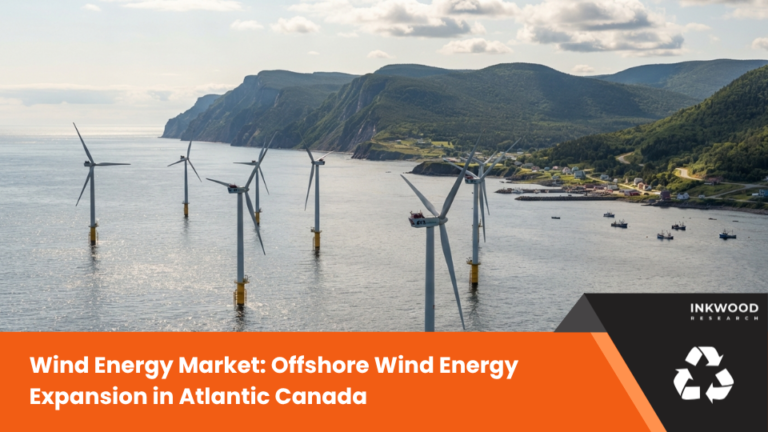
This analysis is brought to you by Inkwood Research, a leading market intelligence firm specializing in North American renewable energy development, Atlantic maritime energy resources, and offshore wind regulatory frameworks. Our research team combines extensive experience analyzing wind turbine technologies, provincial energy policies, and marine resource management across Nova Scotia, Newfoundland and Labrador, Prince Edward Island, and New Brunswick. Based on our proprietary research methodologies and strategic partnerships with Canadian energy developers, federal regulators, and Atlantic provincial governments, we deliver actionable insights that empower strategic decision-making for enterprises navigating Canada’s offshore wind emergence and Atlantic coast energy transformation.
TLDR
Canada’s Atlantic provinces are positioning themselves at the forefront of North American offshore wind development with ambitious targets exceeding 5 gigawatts by 2030. Nova Scotia leads this transformation through progressive regulatory frameworks and strategic lease area designations that could accommodate up to 6 gigawatts of capacity. The Canada Offshore Renewable Energy Regulations provide a comprehensive legal framework governing development in federal waters. However, challenges, including transmission infrastructure limitations, harsh marine environments, and workforce development requirements, must be addressed. Successfully executing Atlantic Canada’s offshore wind strategy could establish the region as a clean energy exporter while creating thousands of jobs across maritime provinces.
Renewable energy developers, Canadian provincial energy planners, transmission infrastructure investors, and international offshore wind companies seeking North American market entry will benefit from this comprehensive analysis. Additionally, Atlantic Canadian businesses, workforce development organizations, and maritime construction firms evaluating offshore wind supply chain opportunities will find strategic insights valuable for positioning themselves within this emerging sector.
Why Is Nova Scotia Leading Canada’s Offshore Wind Development?
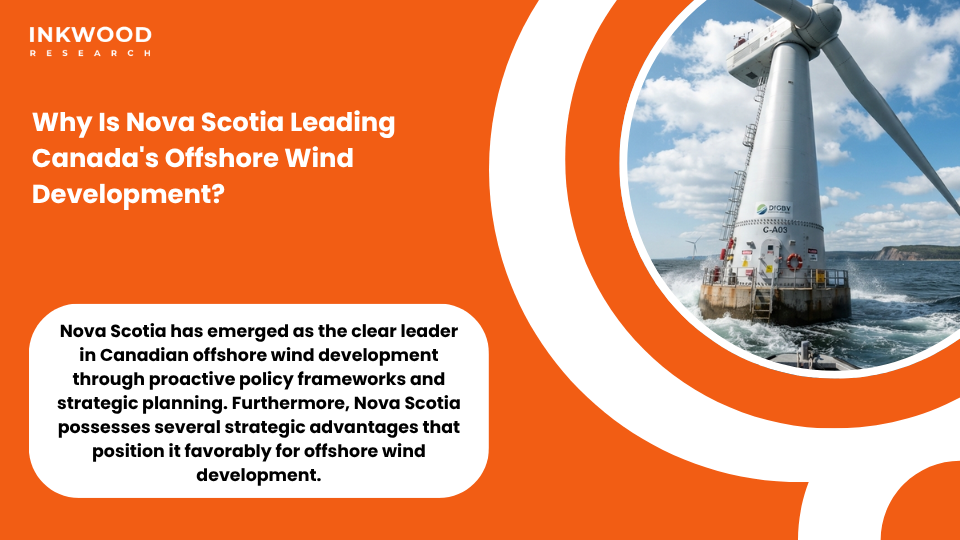
Nova Scotia has emerged as the clear leader in Canadian offshore wind development through proactive policy frameworks and strategic planning. The provincial government released a discussion paper identifying five offshore wind energy areas with combined potential exceeding 6 gigawatts of capacity. These designated zones underwent preliminary environmental assessments and stakeholder consultations before being made available for development interest.
Furthermore, Nova Scotia possesses several strategic advantages that position it favorably for offshore wind development. The province has extensive maritime industry experience from the oil and gas, fishing, and shipping sectors. This existing expertise can be adapted to offshore wind construction and operations. Moreover, ports like Halifax and Sydney possess infrastructure that could be upgraded to support offshore wind staging and manufacturing.
Additionally, Nova Scotia’s electricity market characteristics make offshore wind particularly attractive. The province currently relies heavily on imported electricity and fossil fuel generation. Developing domestic offshore wind resources would improve energy security while reducing greenhouse gas emissions. Consequently, provincial policymakers view offshore wind as addressing multiple policy objectives simultaneously.
Strategic Lease Areas and Resource Potential
The five offshore wind energy areas identified by Nova Scotia span diverse geographic locations and water depths. Some areas feature shallow waters suitable for fixed-bottom turbines, while others require floating platform technologies. This diversity allows developers to select sites matching their technical capabilities and project economics.
Moreover, the designated areas avoid conflicts with established uses, including shipping lanes, fishing grounds, and military operations. This strategic site selection reduces stakeholder conflicts and accelerates approval processes. Nevertheless, ongoing consultation with fishing communities, Indigenous groups, and other ocean users remains essential for maintaining social license.
How Canada’s Offshore Renewable Energy Regulations Enable Development
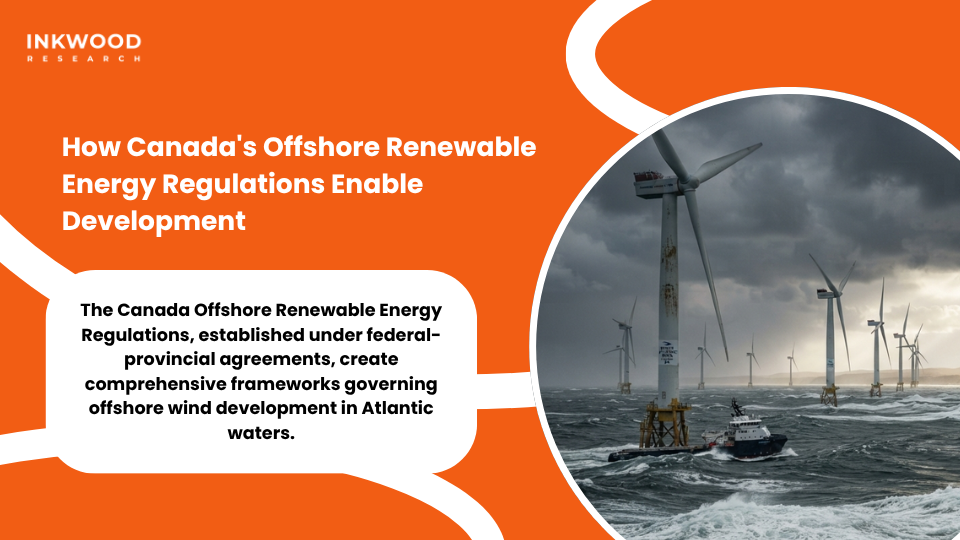
The Canada Offshore Renewable Energy Regulations, established under federal-provincial agreements, create comprehensive frameworks governing offshore wind development in Atlantic waters. These regulations address permitting processes, environmental assessments, safety standards, and benefit-sharing arrangements. They also provide clarity and predictability that developers require for making multi-billion-dollar investment decisions.
Furthermore, the regulatory framework leverages existing offshore petroleum governance structures while adapting them for renewable energy characteristics. This approach utilizes proven regulatory expertise while acknowledging important differences between oil extraction and wind generation. Moreover, it establishes clear jurisdictional boundaries between federal and provincial authorities, reducing administrative uncertainty.
Environmental Assessment Requirements for Canada Wind Energy Market
Environmental assessment requirements under the regulations ensure a thorough evaluation of potential impacts before project approval in the Canada wind energy market. Developers must assess effects on marine ecosystems, fisheries, seabirds, marine mammals, and other environmental values. Additionally, cumulative impact assessments consider how multiple offshore wind projects might collectively affect regional ecosystems.
Moreover, the regulations require ongoing environmental monitoring throughout project lifecycles. This adaptive management approach allows regulators to identify unanticipated impacts and require corrective actions. Furthermore, public consultation processes ensure that Indigenous communities, fishing organizations, and environmental groups can meaningfully participate in regulatory decisions.
What Transmission Challenges Face Offshore Wind in Atlantic Canada?
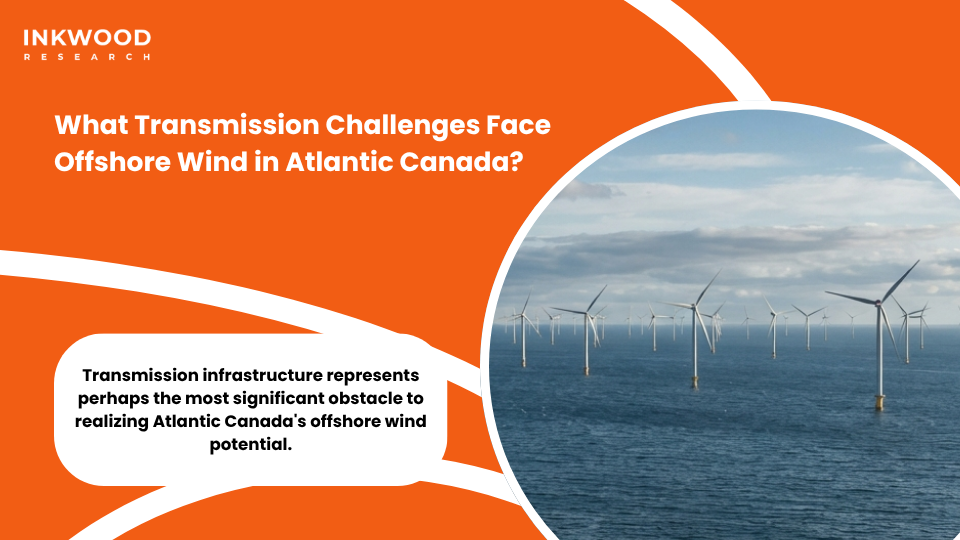
Transmission infrastructure represents perhaps the most significant obstacle to realizing Atlantic Canada’s offshore wind potential. The region’s electricity grids were designed primarily to serve local consumption rather than export large quantities of power. Consequently, adding gigawatts of offshore wind generation would overwhelm existing transmission capacity without substantial upgrades.
Furthermore, Atlantic Canada’s geography complicates transmission development. The Maritime provinces are relatively isolated from larger electricity markets in Quebec and Ontario. Building transmission lines across hundreds of kilometers of challenging terrain requires enormous capital investment. Additionally, underwater cables connecting offshore platforms to onshore substations must withstand harsh marine conditions, including ice, storms, and strong currents.
Integration Studies and Grid Planning
Recognizing these challenges, governments and utilities have commissioned comprehensive integration studies. The Atlantic Canada Offshore Wind Integration and Transmission Study examines how offshore wind can be incorporated into regional grids while maintaining reliability. These analyses identify necessary infrastructure investments and optimal sequencing strategies.
Moreover, transmission planning must consider multiple scenarios, including domestic consumption, interprovincial exports, and potential green hydrogen production. Different end-uses require different infrastructure configurations. Therefore, flexible planning approaches that accommodate evolving market conditions will prove most resilient over time.
Can the Region Develop the Necessary Workforce and Supply Chains?
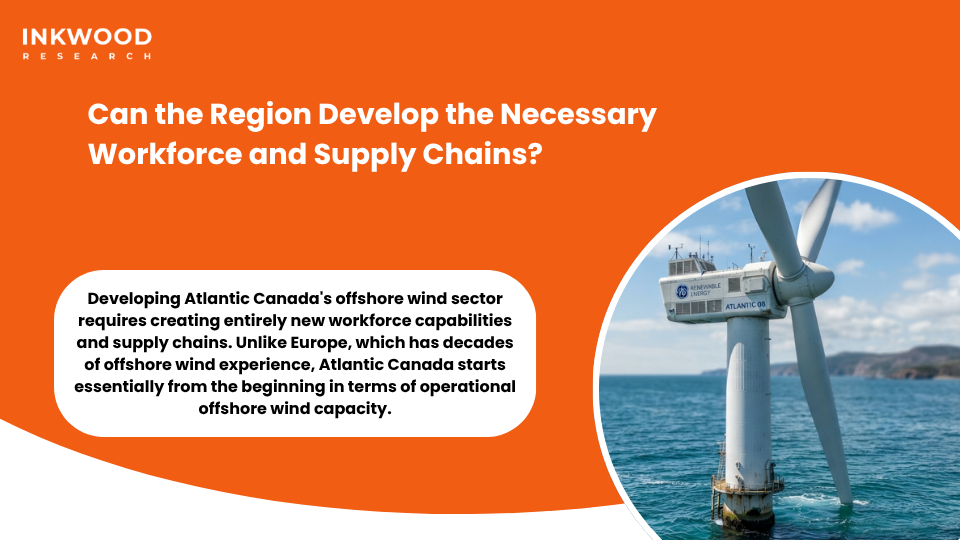
Developing Atlantic Canada’s offshore wind sector requires creating entirely new workforce capabilities and supply chains. Unlike Europe, which has decades of offshore wind experience, Atlantic Canada starts essentially from the beginning in terms of operational offshore wind capacity. Consequently, workforce training programs must develop expertise across turbine installation, subsea cabling, offshore operations, and specialized maintenance.
However, the region possesses relevant transferable skills from oil and gas, shipbuilding, and maritime industries. Workers experienced with offshore operations, vessel operations, and harsh marine environments can apply these capabilities to wind farm construction and maintenance. Moreover, educational institutions across Atlantic Canada are developing specialized offshore wind training programs.
Supply Chain Development Opportunities
Atlantic Canada offshore wind jobs will span manufacturing, installation, operations, and maintenance activities. Foundation fabrication facilities could be established in ports with existing heavy industry infrastructure. Additionally, turbine component manufacturing might develop if sufficient scale materializes to justify capital investment.
Furthermore, specialized vessel operations represent significant employment opportunities. Installation vessels, crew transfer boats, and maintenance platforms will require skilled operators. Moreover, these maritime jobs align well with existing workforce capabilities in the fishing and shipping sectors, potentially creating transition pathways for workers from declining traditional industries.
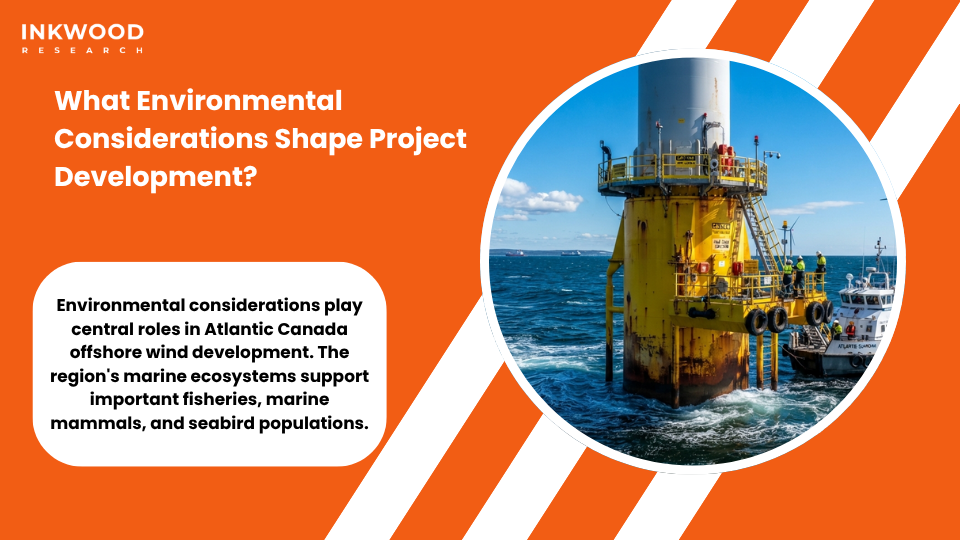
Environmental considerations play central roles in Atlantic Canada offshore wind development. The region’s marine ecosystems support important fisheries, marine mammals, and seabird populations. Therefore, project developers must carefully assess potential impacts and implement mitigation measures.
Specifically, concerns about the negative effects of offshore wind farms include potential disruption to fish migration patterns, collision risks for seabirds, and noise impacts on marine mammals during construction. However, growing international research suggests that well-designed offshore wind farms can coexist with healthy marine ecosystems. Moreover, some studies indicate that turbine foundations may actually enhance local fish populations by providing artificial reef habitat.
Fisheries Coordination and Ocean Co-Use
Fishing represents Atlantic Canada’s most economically significant marine industry. Therefore, ensuring offshore wind development accommodates fishing activities remains essential. Developers are engaging with fishing organizations to understand seasonal patterns, important fishing grounds, and operational concerns.
Moreover, some offshore wind configurations may actually benefit certain fishing activities. Turbine exclusion zones could provide de facto marine protected areas where fish stocks can replenish. Additionally, careful project design can maintain transit corridors for fishing vessels while accommodating wind farm operations.
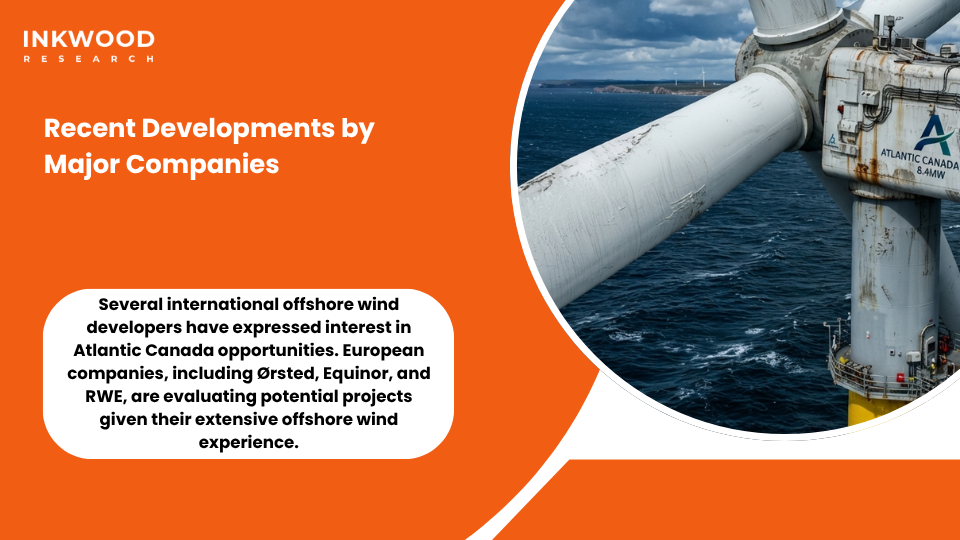
Several international offshore wind developers have expressed interest in Atlantic Canada opportunities. European companies, including Ørsted, Equinor, and RWE, are evaluating potential projects given their extensive offshore wind experience. These developers bring proven technical capabilities and access to capital required for gigawatt-scale projects.
Additionally, Canadian utilities, including Nova Scotia Power and Emera, are exploring offshore wind development either independently or through partnerships with international developers. These utilities possess deep knowledge of regional electricity markets and existing grid infrastructure. Moreover, their involvement ensures projects align with provincial energy planning objectives.
Furthermore, turbine manufacturers are monitoring Atlantic Canada market development closely. While initial projects may utilize imported equipment, successful sector establishment could justify domestic manufacturing facilities. Companies like GE Renewable Energy, Vestas, and Siemens Gamesa have indicated interest in potential Canadian operations.
Key Takeaways
- The Canada wind energy market is projected to grow from US$3,283.42 million in 2026 to US$5,974.30 million by 2034, representing a compound annual growth rate of 7.77% as offshore wind deployment accelerates.
- Nova Scotia leads Canadian offshore wind development with five designated energy areas capable of accommodating over 6 gigawatts of capacity through strategic planning and progressive regulatory frameworks.
- Canada offshore renewable energy regulations provide comprehensive governance frameworks addressing permitting, environmental assessment, safety standards, and benefit-sharing arrangements for Atlantic waters.
- Transmission infrastructure limitations represent significant challenges requiring billions in investment to connect offshore generation to consumption centers and enable interprovincial electricity exports.
- Workforce development and supply chain creation from minimal existing capacity demand coordinated efforts across government, industry, and educational institutions to build necessary capabilities.
Conclusion:
Atlantic Canada stands at the threshold of potentially transformative offshore wind development. The region possesses exceptional wind resources, progressive regulatory frameworks, and growing political will to support sector emergence. Moreover, offshore wind aligns with multiple policy objectives, including energy security, economic development, and climate mitigation.
Nevertheless, realizing this potential requires addressing substantial challenges across transmission infrastructure, workforce development, and stakeholder coordination. Success depends on sustained commitment from governments, developers, and communities. However, international experience demonstrates that these obstacles can be overcome with strategic planning and collaborative approaches.
For businesses and investors evaluating Atlantic Canada’s offshore wind opportunities, understanding regional dynamics and regulatory frameworks is essential. Inkwood Research provides comprehensive market analysis and strategic consulting to help organizations navigate this emerging sector. Contact our team to explore how Canada’s offshore wind development aligns with your strategic objectives.
Frequently Asked Questions
What is Canada's offshore wind target for 2030?
While federal targets remain under development, Atlantic provinces collectively aim for approximately 5 gigawatts of offshore wind capacity by 2030, with Nova Scotia leading deployment efforts.
Which province leads Canadian offshore wind development?
Nova Scotia leads with five designated offshore wind energy areas capable of accommodating over 6 gigawatts through strategic planning and progressive regulatory frameworks supporting development.
What do Canada offshore renewable energy regulations cover?
These regulations establish comprehensive governance for permitting, environmental assessment, safety standards, benefit-sharing, and jurisdictional coordination in federal-provincial Atlantic waters.
What transmission challenges face Atlantic Canada offshore wind?
Limited existing grid capacity, geographic isolation from major markets, and harsh marine cable environments require billions in infrastructure investment to deliver offshore generation.
How many jobs will offshore wind create in Atlantic Canada?
Successful sector development could create thousands of jobs across manufacturing, installation, operations, and maintenance, though specific employment projections depend on deployment scale and domestic content.
What environmental impacts do offshore wind farms have?
Potential impacts include fish migration disruption, seabird collisions, and marine mammal noise, though research suggests well-designed projects can coexist with healthy ecosystems.