Table of Contents
This analysis is brought to you by Inkwood Research, a leading market intelligence firm specializing in global renewable energy transitions, wind power manufacturing ecosystems, and Asia-Pacific clean energy policy frameworks. Based on our proprietary research methodologies and strategic partnerships with international wind associations, turbine manufacturers, and government energy agencies, we deliver actionable insights that empower strategic decision-making for enterprises navigating China’s unprecedented wind energy expansion.
TLDR
China’s Beijing Declaration 2.0 establishes unprecedented 120 GW annual wind installation targets through 2030. Over 1,000 industry leaders have committed to reaching 1.3 TW cumulative capacity by decade’s end while accelerating offshore wind development. Domestic manufacturers Goldwind, Envision, and Mingyang now dominate global turbine production rankings. This strategic expansion reshapes international renewable supply chains and sets new competitive benchmarks. China’s wind energy trajectory now influences worldwide decarbonization strategies.
Global renewable energy executives tracking competitive market dynamics will gain comprehensive strategic insights. Equipment manufacturers assessing international expansion opportunities can discover detailed competitive intelligence. Policy analysts evaluating national energy strategies will assess critical infrastructure development frameworks. Institutional investors seeking renewable infrastructure opportunities will find actionable market positioning analysis across China’s transformative wind sector.
Introduction: China Wind Energy Market
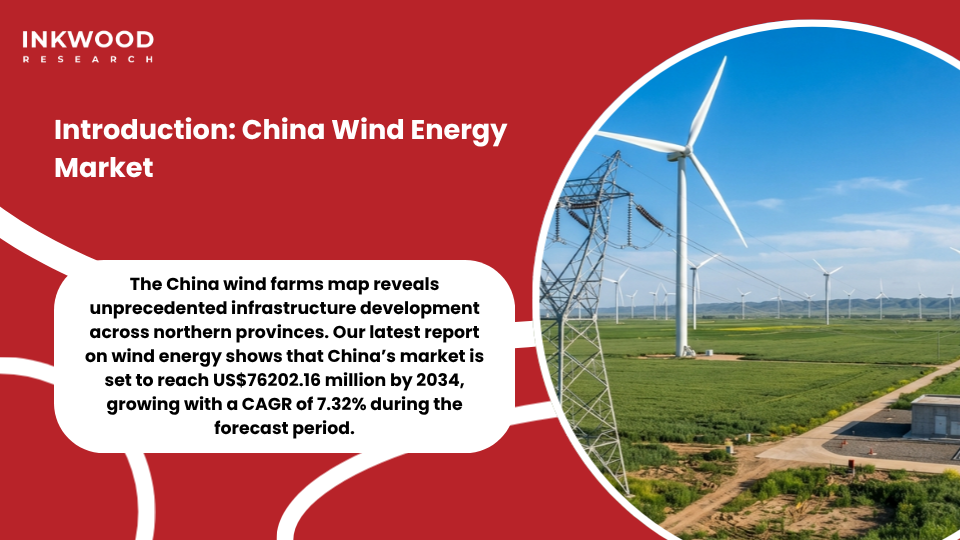
The China wind farms map reveals unprecedented infrastructure development across northern provinces. GWEC analysis highlights China’s growing market dominance, while GWEC offshore wind projections indicate accelerating deep-water installations. Our latest report on wind energy shows that China’s market is set to reach US$76202.16 million by 2034, growing with a CAGR of 7.32% during the forecast period. Further, the GWEC report confirms China leads global renewable transitions. Beijing Declaration 2.0 establishes ambitious benchmarks reshaping international wind power development.
Industry commitments signal strong confidence in sustained market expansion. For instance, over 1,000 wind companies collectively endorsed the Beijing Declaration 2.0 during the China Wind Power 2025 conference. This unified approach demonstrates coordinated planning across manufacturers, developers, and government agencies.
Policy frameworks establish clear pathways for achieving unprecedented installation volumes. These targets exceed previous commitments by substantial margins while addressing grid integration challenges. As a result, comprehensive planning now encompasses generation, transmission, and storage infrastructure development.
What Does Beijing Declaration 2.0 Mean for Global Wind Energy Markets?
The Beijing Declaration 2.0 establishes transformative capacity targets exceeding previous global benchmarks. Over 1,000 industry participants are committed to installing a minimum of 120 GW annually from 2026 through 2030, representing more than doubling the original 50 GW annual goal set in 2020.
According to the GWEC Beijing Declaration, cumulative capacity will reach 1.3 TW by 2030. While long-term projections target 2 TW by 2035 and 5 TW by 2060, these commitments align with China’s carbon neutrality objectives.
China Wind Energy Strategic Positioning
Manufacturing dominance positions China as a global renewable infrastructure leader. Domestic turbine producers supply over 95% of new installations within China while expanding their international market presence. Moreover, vertical integration across supply chains delivers cost advantages over international competitors.
Technology leadership emerges through continuous innovation in turbine design and offshore capabilities. In this regard, Chinese manufacturers unveiled 27 new turbine models at recent industry events, establishing competitive differentiation globally.
How Will China’s 120 GW Annual Target Reshape Manufacturing Capacity?
Production infrastructure must expand substantially to support doubled installation volumes. Manufacturers have invested billions in blade fabrication facilities, nacelle assembly plants, and tower production capabilities. These capacity additions enable sustained high-volume deployments throughout the decade. The top manufacturers collectively control over 60% of the Chinese turbine supply.
Report on Wind Energy Manufacturing Evolution
Component localization strengthens supply chain resilience across turbine production. Domestic producers now manufacture blades, generators, control systems, and power electronics indigenously. This vertical integration reduces costs while improving delivery timelines.
- Export competitiveness emerges as Chinese manufacturers secure international orders across multiple continents.
- Cost advantages approximate 20% below Western competitors while maintaining quality standards.
- Global market penetration accelerates across Asia, Africa, and Latin America.
Why Does GWEC Offshore Wind Development Accelerate Now?
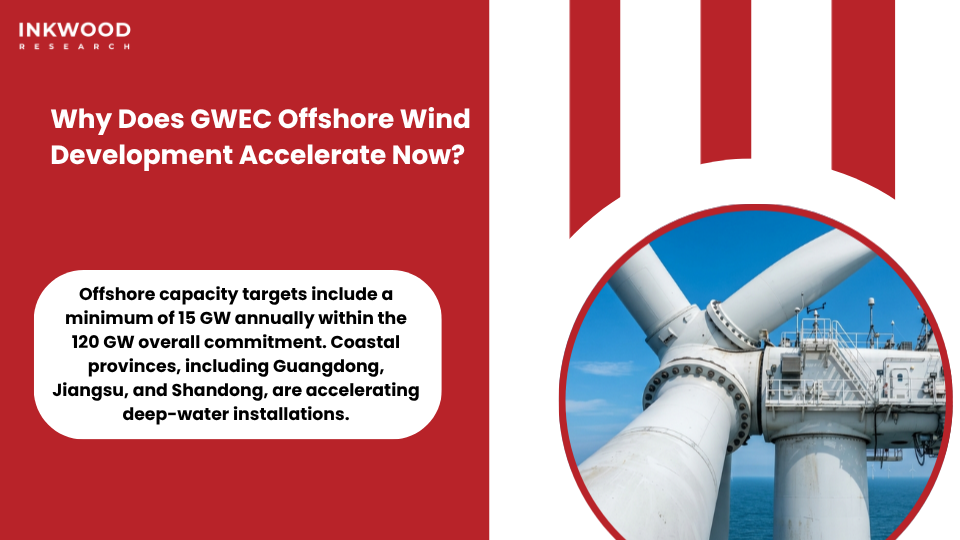
Offshore capacity targets include a minimum of 15 GW annually within the 120 GW overall commitment. Coastal provinces, including Guangdong, Jiangsu, and Shandong, are accelerating deep-water installations. Aligning with this, offshore wind has reached 42.7 GW cumulative capacity with 28 GW currently under construction.
According to reports, floating turbine technologies enable installations in deeper waters where wind resources prove superior. As typhoon-resistant designs address regional weather challenges, these engineering innovations expand viable installation locations significantly.
GWEC Offshore Wind Technology Advances
- Turbine capacity scaling reaches unprecedented levels with 16 MW units entering commercial operation.
- Manufacturers have announced 22 MW prototypes scheduled for installation in 2025.
- Larger rotors capture energy more efficiently in offshore environments.
- Installation vessel capabilities advance through specialized marine equipment development.
- Subsea cable technologies improve grid connection reliability for distant offshore installations.
- Comprehensive infrastructure development supports ambitious offshore expansion plans.
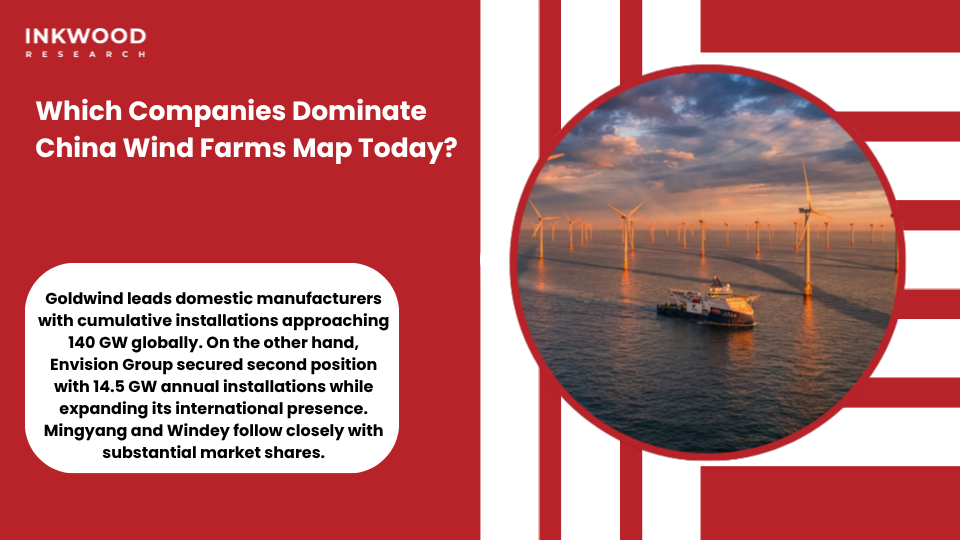
Goldwind leads domestic manufacturers with cumulative installations approaching 140 GW globally. The company maintains first position in global turbine supplier rankings for the third consecutive year. Moreover, Goldwind has delivered over 3,000 hybrid towers, demonstrating technological leadership.
On the other hand, Envision Group secured second position with 14.5 GW annual installations while expanding its international presence. Mingyang and Windey follow closely with substantial market shares. As a result, Chinese manufacturers now occupy four of the global top five supplier positions.
China Wind Farms Map Competitive Analysis
- Technological differentiation emerges through specialized turbine designs for diverse wind conditions.
- Manufacturers optimize platforms for low-wind regions while developing ultra-large capacity offshore units.
- Product portfolios address varied customer requirements comprehensively.
- Recent developments include Goldwind’s 22 MW offshore turbine announcement and CRRC’s floating platform innovations.
- Mingyang advances typhoon-resistant designs for challenging marine environments.
- Continuous innovation cycles maintain competitive advantages globally.
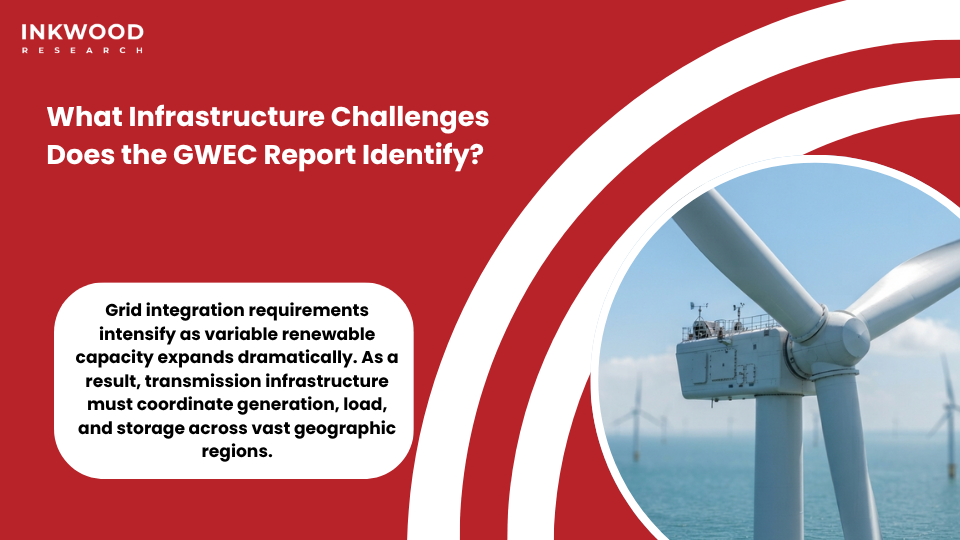
Grid integration requirements intensify as variable renewable capacity expands dramatically. As a result, transmission infrastructure must coordinate generation, load, and storage across vast geographic regions. Grid flexibility improvements become more critical for accommodating fluctuating wind power.
Western provinces experience curtailment challenges where transmission capacity lags generation growth. While inflexible coal baseload operations limit grid absorption of renewable electricity, storage deployment and transmission expansion address these integration bottlenecks.
Report on Wind Energy Grid Solutions
- Energy storage systems complement wind generation through demand-balancing capabilities.
- Battery installations accelerate alongside renewable capacity additions.
- Hydrogen production utilizes excess wind electricity for industrial applications.
- Market mechanisms evolve to support renewable integration through dynamic pricing structures.
- Grid modernization investments reached record levels, exceeding USD 88 billion annually.
- Comprehensive infrastructure development enables sustained renewable expansion.
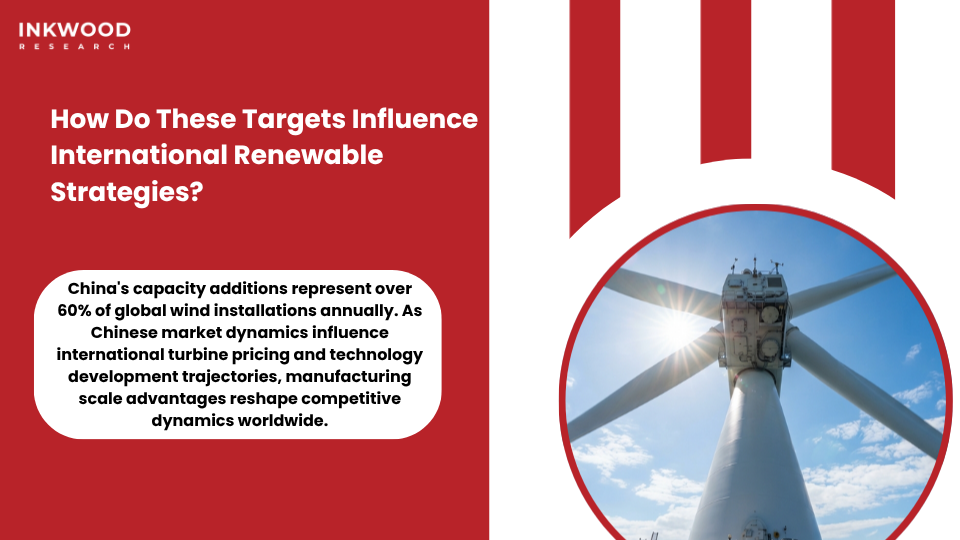
China’s capacity additions represent over 60% of global wind installations annually. As Chinese market dynamics influence international turbine pricing and technology development trajectories, manufacturing scale advantages reshape competitive dynamics worldwide.
Technology transfer accelerates as Chinese manufacturers establish overseas production facilities. Aligning with this, export volumes increase across emerging markets seeking cost-effective renewable solutions as global supply chains adapt to Chinese manufacturing dominance.
GWEC Global Market Implications
- Western manufacturers adapt strategies through restructuring and Asian outsourcing initiatives.
- European policy frameworks respond with domestic content requirements and supply chain resilience programs.
- Competitive pressures accelerate innovation across international manufacturers.
- Climate commitments worldwide benefit from cost reductions driven by Chinese manufacturing scale.
- Technology advances pioneered in China’s massive market diffuse globally.
- Collective progress toward decarbonization accelerates through shared innovation ecosystems.
Key Takeaways
- Beijing Declaration 2.0 establishes 120 GW annual installation targets through 2030, doubling previous commitments.
- Over 1,000 industry participants endorsed cumulative capacity goals reaching 1.3 TW by 2030.
- Offshore wind includes a minimum of 15 GW annual additions addressing coastal energy demands.
- Chinese manufacturers Goldwind, Envision, and Mingyang dominate global turbine production rankings.
- Manufacturing capacity supports both domestic installations and expanding international exports.
- Grid integration challenges require transmission expansion and storage deployment across regions.
- Market mechanisms evolve to support renewable electricity absorption. Comprehensive infrastructure investments enable sustained capacity growth trajectories.
Conclusion:
China’s Beijing Declaration 2.0 demonstrates an unprecedented commitment to renewable infrastructure expansion. Strategic coordination across manufacturers, developers, and government agencies enables ambitious capacity targets. As a result, technological leadership positions China as a global wind energy transformation driver.
Manufacturing dominance reshapes international competitive dynamics while accelerating global decarbonization progress. Plus, continuous innovation cycles advance turbine capabilities and reduce deployment costs. China’s wind energy evolution influences worldwide renewable adoption strategies.
Organizations navigating Asia-Pacific renewable markets benefit from Inkwood Research’s specialized intelligence. Our expert analysts deliver comprehensive insights supporting strategic positioning and investment decisions.
Contact our team to discuss how targeted research capabilities advance your renewable energy initiatives.
Frequently Asked Questions
What does the Beijing Declaration 2.0 target for wind energy capacity?
The declaration commits to a minimum of 120 GW annual installations from 2026 through 2030. Cumulative capacity targets reach 1.3 TW by 2030 and 2 TW by 2035.
How does GWEC offshore wind development factor into these targets?
Offshore installations include a minimum of 15 GW annually within the 120 GW total commitment. Floating turbine technologies enable deep-water developments with superior wind resources.
Which manufacturers dominate the China wind farms map currently?
Goldwind leads with 140 GW global installations, while Envision and Mingyang follow. Chinese manufacturers occupy four of the global top five supplier positions.
What challenges does the GWEC report identify for grid integration?
Transmission capacity limitations and inflexible baseload operations create curtailment issues. Storage deployment and grid flexibility improvements address renewable absorption challenges.
How do these targets influence international renewable markets?
Chinese manufacturing scale advantages reshape global pricing and technology development. Export expansion delivers cost-effective solutions to emerging markets worldwide.
What innovations appear in the recent report on wind energy developments?
Manufacturers announced 22 MW offshore turbines and floating platform technologies. Hybrid tower systems and typhoon-resistant designs advance installation capabilities.