Table of Contents
This analysis is brought to you by Inkwood Research, a leading market intelligence firm specializing in North American battery technology innovations, startup ecosystems, university research commercialization, and venture capital investment trends. Our research team combines extensive experience analyzing American entrepreneurial ecosystems, government funding programs, academic-industry partnerships, and technology commercialization pathways. Based on our proprietary research methodologies and strategic partnerships with venture capital firms, university technology transfer offices, national laboratories, and startup accelerators, we deliver actionable insights that empower strategic decision-making for global enterprises navigating America’s battery technology innovation and entrepreneurial leadership in sustainable energy transformation.
TLDR
The United States graphene battery market represents a dynamic ecosystem of startup innovation, university research, and venture capital investment. The market is driven by the electrification of vehicles and advancements in consumer electronics. Graphene battery development centers on entrepreneurial companies like Nanotech Energy, which raised $64 million in Series D funding at a $550 million valuation and announced plans to inaugurate its 150 MW production plant. Moreover, the U.S. Department of Energy announced $125 million in funding for two Energy Innovation Hub teams led by Argonne National Laboratory and Stanford University for next-generation battery technology research. Strategic partnerships between universities, national laboratories, and private companies position America as a global leader in sustainable transportation and energy storage innovation for automotive industry transformation.
Venture capital investors evaluating battery technology opportunities, startup founders seeking funding strategies, university researchers commercializing innovations, and technology transfer officers will gain critical insights. Corporate strategy directors monitoring competitive threats, policy analysts studying American innovation ecosystems, and manufacturing strategists planning domestic production facilities will discover actionable intelligence for strategic decision-making in America’s evolving graphene battery ecosystem, supporting lithium-ion batteries advancement and automotive industry electrification.
Startup Innovation and Entrepreneurial Leadership
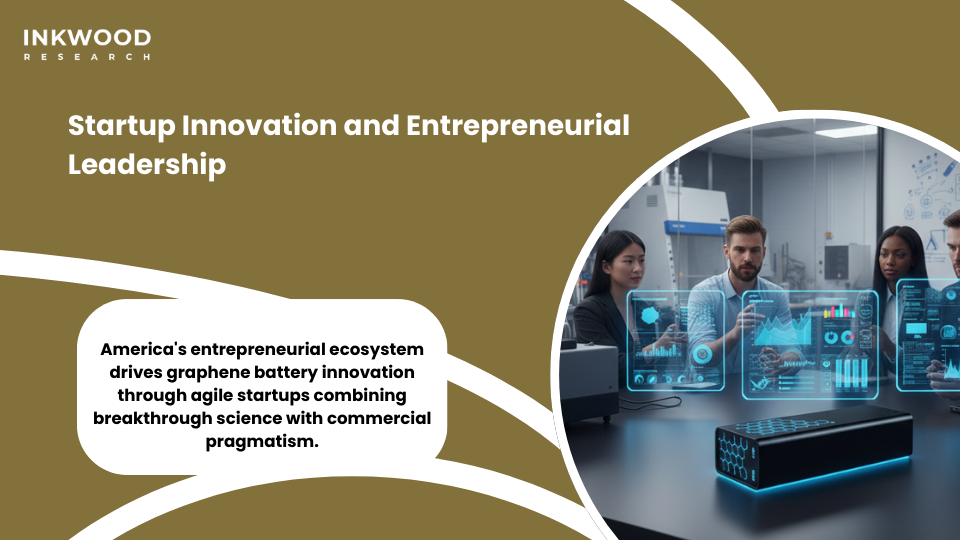
America’s entrepreneurial ecosystem drives graphene battery innovation through agile startups combining breakthrough science with commercial pragmatism. Specifically, American startups leverage risk capital, university partnerships, and talent mobility to accelerate technology development cycles dramatically. Moreover, entrepreneurial culture embracing calculated risks enables faster iteration than established corporations. Therefore, startup-driven innovation positions America competitively in global battery technology markets.
Nanotech Energy’s Production Plans
Los Angeles-based Nanotech Energy raised $64 million in Series D funding in August 2021 at a $550 million valuation, with total funding reaching $94.9 million from investors including Multiverse Investment Fund, Fubon Financial Group, and Volkswagen. Additionally, Nanotech produces 98% monolayer graphene, breaking the 50% content barrier, demonstrating technical leadership. Moreover, in October 2022, Nanotech announced it would supply more than 1 GWh of battery energy storage systems (BESS) to Athens-headquartered Smile Energy through 2028 for Greece and the surrounding regions. Consequently, Nanotech exemplifies American startup scale-up potential.
Non-Flammable Battery Innovations
Nanotech Energy’s graphene battery uses proprietary electrodes with a thermally stable separator and non-flammable electrolyte that is said to be inexpensive to manufacture. Specifically, according to the technical data sheet for Nanotech Energy Nonflammable GOC18650A batteries, it has a cycle life of 1200 cycles before degrading to 88%, with a gravimetric density of 215 Wh/kg and volumetric density of 557 Wh/l. Moreover, the operating temperature range spans -20 to 60 degrees Celsius, enabling diverse application environments. Additionally, safety improvements address critical lithium-ion battery concerns that previously limited adoption in sensitive applications. Therefore, non-flammable technology differentiates American innovation in global markets.
Emerging Technology Companies
Key US companies include Nanotech Energy, Global Graphene Group, XG Sciences, Vorbeck Materials, and Cabot Corporation, each pursuing distinct commercialization strategies. Furthermore, these companies leverage American strengths in intellectual property protection, capital markets access, and talent recruitment. Meanwhile, some startups focus on materials innovation while others emphasize manufacturing process improvements. Additionally, strategic positioning varies from pure-play graphene specialists to diversified materials companies. Consequently, American startup diversity creates a robust competitive ecosystem.
University Research and Academic Excellence
American universities conduct fundamental research advancing battery technology understanding while training future industry talent. Aligning with this, the U.S. Department of Energy announced $125 million in funding for two Energy Innovation Hub teams ($62.5 million to each) for up to five years to develop next-generation technologies beyond lithium-ion batteries. Moreover, faculty commercialize discoveries through technology transfer offices, creating pathways from laboratory to marketplace. Additionally, university-industry partnerships facilitate knowledge exchange and research translation. Therefore, academic excellence provides an essential foundation for American innovation leadership.
Department of Energy Research Hubs
The two Energy Innovation Hub teams are the Energy Storage Research Alliance (ESRA), led by Argonne National Laboratory, and the Aqueous Battery Consortium (ABC), led by Stanford University. Specifically, ESRA brings together nearly 50 researchers from three national laboratories and 12 universities to provide scientific underpinning for battery challenges, including safety, high energy density, and long-duration batteries made from inexpensive, abundant materials. Furthermore, participating universities include California State University Long Beach, Florida A&M/Florida State, North Carolina State, Oregon State, San Jose State, UCLA, UC-San Diego, UC-Santa Barbara, University of Maryland, and University of Texas at Austin. Additionally, these multi-institution teams prioritize Earth-abundant materials to mitigate supply chain risks. Consequently, coordinated research accelerates scientific breakthroughs significantly.
Rice University Graphene Innovation
Rice University researchers have developed flash Joule heating processes to make graphene from various waste materials, including plastic waste, coal fly ash, and electronic waste. Moreover, a Rice graduate student launched Pattern Materials in January to commercialize proprietary laser-induced graphene and flash graphene technologies, creating graphene and carbon nanotube-like patterns in a single, rapid step. Additionally, Rice’s Materials Science and Nano Engineering Department is chaired by world-leading material scientist Professor Pulickel Ajayan, providing exceptional research leadership. Furthermore, Rice’s work demonstrates how academic research creates entrepreneurial opportunities. Therefore, university innovations seed commercial applications continuously (source).
Stanford Battery Technology Leadership
Stanford University leads the Aqueous Battery Consortium (ABC), focusing on establishing the scientific foundation for large-scale development and deployment of aqueous batteries for long-duration grid storage technologies. Additionally, Stanford researchers have slashed battery testing times – a key barrier to longer-lasting, faster-charging batteries for electric vehicles – by nearly fifteenfold using artificial intelligence. Moreover, Stanford’s battery research encompasses wireless charging, lithium-based electrolytes, and safety improvements. Furthermore, close proximity to Silicon Valley facilitates rapid technology transfer and startup formation. Consequently, Stanford maintains a preeminent position in battery innovation.
Government Funding and Policy Support
Federal investment in battery technology research demonstrates a strategic commitment to American innovation leadership and clean energy transition. Moreover, government funding de-risks early-stage research that private investors typically avoid. Additionally, policy frameworks incentivize domestic manufacturing and supply chain development. Therefore, coordinated government support accelerates technology maturation timelines.
Department of Energy Battery Initiatives
DOE’s Energy Innovation Hub program provides the scientific foundation needed to seed and accelerate next generation technologies beyond today’s generation of lithium-ion batteries. Specifically, selected teams will develop scientific concepts and understanding to impact the decarbonization of transportation and the incorporation of clean energy into the electricity grid. Moreover, emerging applications require greater energy storage capabilities, safer operation, lower costs, and diversity of materials to manufacture batteries. Additionally, both hub teams comprise multiple institutions, including Historically Black Colleges and Universities (HBCUs) and other Minority Serving Institutions (MSIs). Therefore, inclusive research strategies strengthen American innovation ecosystems.
Manufacturing Incentives and Policies
Federal policies incentivize domestic battery technology manufacturing through tax credits, grants, and loan programs. Moreover, the Inflation Reduction Act provisions support American battery production and electric vehicle adoption. Additionally, strategic focus on supply chain resilience encourages domestic sourcing of critical materials. Furthermore, regulatory frameworks balance innovation encouragement with safety and environmental protection. Therefore, policy support creates favorable conditions for commercial deployment.
Venture Capital Investment Landscape
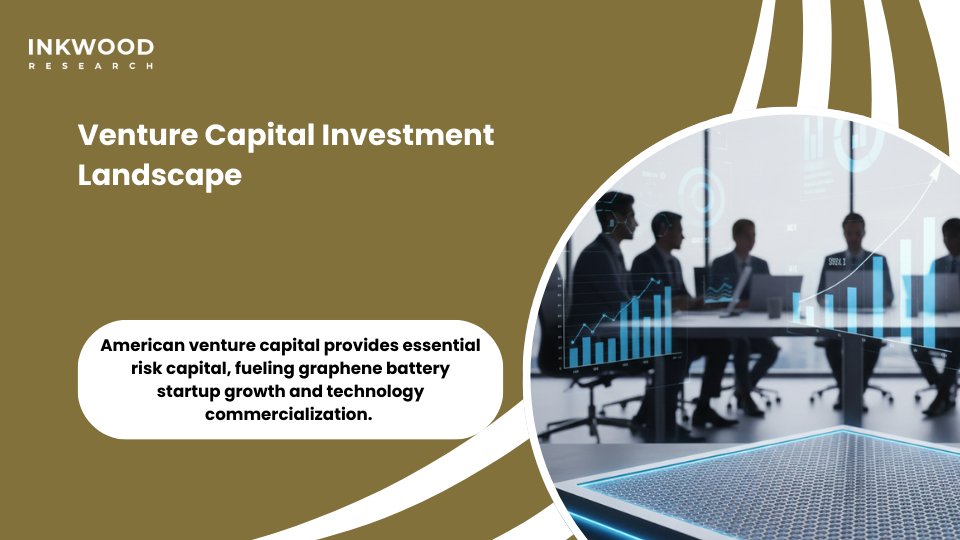
American venture capital provides essential risk capital, fueling graphene battery startup growth and technology commercialization. Total venture capital and corporate investment in battery technology reached $3.7 billion in 2024, part of the broader $19.9 billion deployed across all energy storage companies. Specifically, investors evaluate technology readiness, market potential, and management team capabilities when allocating capital. Moreover, staged funding models enable iterative development while managing risk exposure. Therefore, sophisticated capital markets differentiate American innovation ecosystems.
Major Funding Rounds and Patterns
Battery technology startups raised a record $19.9 billion in 2024, with venture capital alone accounting for $3.7 billion of that total. Additionally, stage distribution heavily favors later rounds, with Series B and beyond capturing approximately 80% of total funding, indicating investor preference for companies with proven technology and clear manufacturing pathways. Moreover, geographic distribution shows approximately 70% of funding flowing to US companies, reflecting investor preference and regulatory environments. Consequently, American companies dominate global battery technology investment.
Investor Preferences and Trends
Investors prioritize companies demonstrating technical differentiation, scalable manufacturing processes, and clear market entry strategies. Specifically, later-stage companies with validated technology attract larger investments than early research-stage ventures. Moreover, strategic corporate investors complement financial investors by providing industry expertise and market access. Additionally, syndicated rounds with multiple investors reduce individual risk while increasing due diligence quality. Furthermore, successful exits through acquisitions or public offerings create returns, enabling continued ecosystem funding. Therefore, mature investment infrastructure supports sustained startup formation.
Strategic Corporate Investments
Volkswagen participated in Nanotech Energy’s funding round, demonstrating automotive industry interest in advanced battery technologies. Furthermore, corporate strategic investments provide validation beyond financial capital, offering industry credibility and potential customer relationships. Meanwhile, corporate venture arms enable established companies to monitor emerging technologies and potential competitive threats. Additionally, strategic partnerships often follow initial investments, accelerating commercial deployment. Consequently, corporate participation strengthens startup commercialization pathways.
Technology Commercialization Pathways
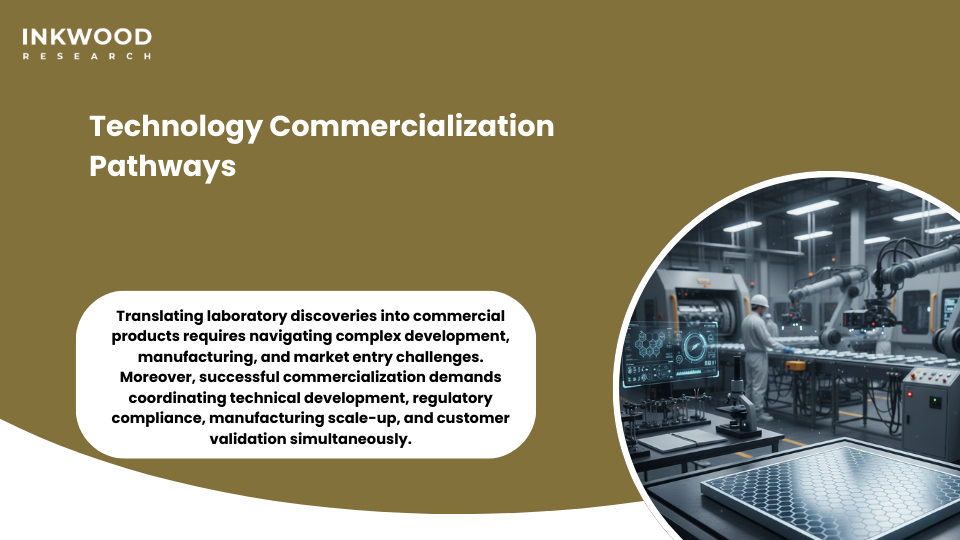
Translating laboratory discoveries into commercial products requires navigating complex development, manufacturing, and market entry challenges. The global graphene battery market size is estimated at $331.85 million in 2026 and is projected to reach $2169.17 million by 2034, growing at a CAGR of 26.45% from 2026 to 2034. Moreover, successful commercialization demands coordinating technical development, regulatory compliance, manufacturing scale-up, and customer validation simultaneously. Additionally, technology transfer offices facilitate patent licensing and startup formation from university discoveries. Therefore, structured commercialization processes accelerate market entry timelines.
Intellectual Property Strategy
The American patent system provides strong intellectual property protection, enabling technology commercialization. Moreover, strategic patent portfolios create competitive moats protecting startup innovations from larger competitors. Additionally, licensing arrangements enable technology dissemination while generating revenue for continued research. Furthermore, patent publications establish priority and technical leadership in competitive fields. Therefore, sophisticated IP strategies support commercialization success.
Market Entry and Customer Acquisition
Companies pursue diverse market entry strategies targeting applications that value specific graphene battery advantages. Specifically, automotive applications dominated the global market, accounting for a significant revenue share in 2025, driven by electric vehicle demands for longer range and faster charging. Moreover, consumer electronics applications value compact form factors and extended lifespans. Additionally, energy storage systems prioritize safety and durability for grid applications. Therefore, tailored market approaches optimize commercialization success rates.
Manufacturing Scale-Up Challenges
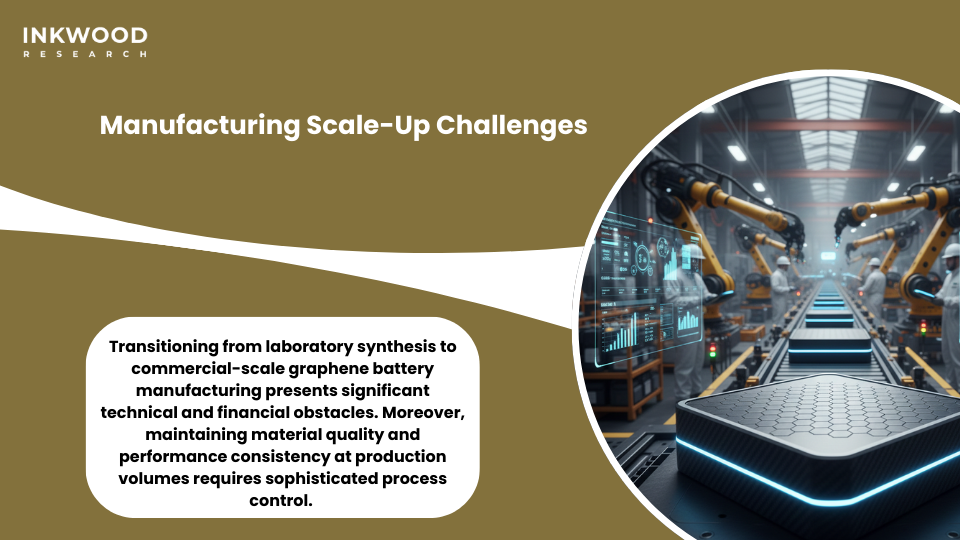
Transitioning from laboratory synthesis to commercial-scale graphene battery manufacturing presents significant technical and financial obstacles. Moreover, maintaining material quality and performance consistency at production volumes requires sophisticated process control. Additionally, manufacturing capital requirements often exceed startup fundraising capacities, necessitating strategic partnerships. Furthermore, supply chain establishment for specialized materials and equipment demands extensive coordination. Therefore, manufacturing scale-up represents a critical commercialization bottleneck.
Production Cost Reduction
Initial graphene production costs significantly exceed conventional materials, limiting commercial viability. Specifically, economies of scale through volume production enable substantial cost reductions over time. Moreover, process optimization and automation reduce labor costs and improve yields. Additionally, vertical integration strategies reduce supplier margins and ensure material consistency. Furthermore, continuous improvement methodologies drive incremental efficiency gains. Consequently, cost reduction trajectories determine commercialization timelines.
Quality Control and Consistency
Commercial applications demand material specifications tighter than laboratory-scale production typically achieves. Moreover, statistical process control systems monitor production parameters continuously, detecting deviations before they affect product quality. Additionally, non-destructive testing methods verify specifications without consuming finished products. Furthermore, traceability systems enable rapid root cause analysis when quality issues emerge. Therefore, robust quality systems ensure customer satisfaction and regulatory compliance.
Supply Chain Development
Nanotech produces its own graphene, which allows it to be vertically integrated, providing control over critical material supplies. Additionally, qualified supplier networks ensure reliable component availability and pricing stability. Meanwhile, dual-sourcing strategies reduce risks from individual supplier disruptions. Furthermore, supplier development programs help partners meet evolving specifications and volume requirements. Consequently, resilient supply chains enable reliable manufacturing operations.
Strategic Partnerships and Collaborations
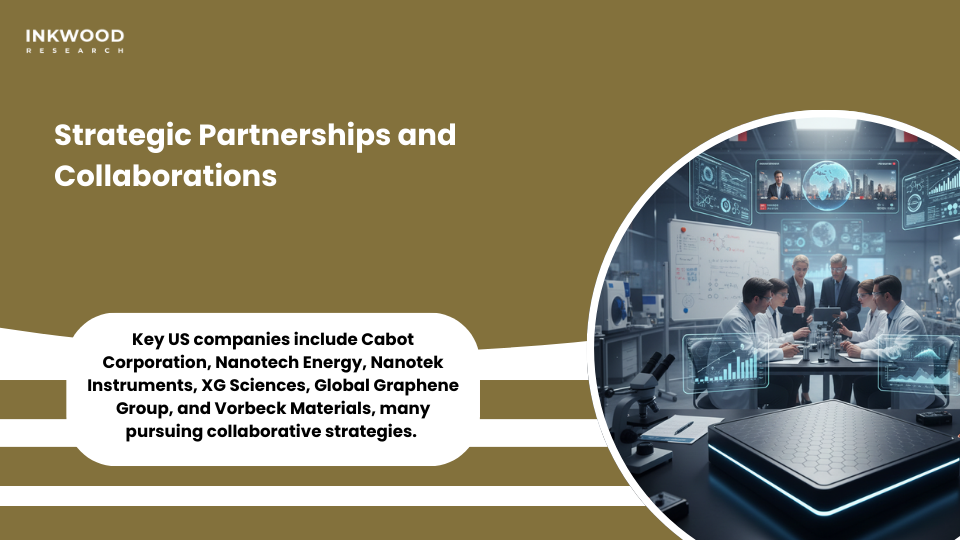
Partnerships between startups, universities, national laboratories, and established corporations accelerate battery technology development and commercialization. Key US companies include Cabot Corporation, Nanotech Energy, Nanotek Instruments, XG Sciences, Global Graphene Group, and Vorbeck Materials, many pursuing collaborative strategies. Moreover, partnerships provide complementary capabilities unavailable within individual organizations. Additionally, risk sharing through collaborations enables larger, more ambitious projects than participants could pursue independently. Therefore, strategic partnerships create competitive advantages for American innovation.
University-Industry Partnerships
University partnerships provide access to cutting-edge research, specialized equipment, and talented graduate students. Meanwhile, industry partnerships give universities practical application contexts and funding for research programs. Additionally, successful collaborations often spawn startup companies commercializing joint discoveries. Consequently, university-industry partnerships strengthen regional innovation ecosystems.
Corporate Strategic Alliances
Established corporations partner with startups, accessing innovative technologies while startups gain credibility, resources, and market access. Moreover, joint development agreements enable technology validation in application-specific contexts. Additionally, licensing arrangements provide startups with revenue while corporations access innovations. Furthermore, an acquisition provides exit opportunities for venture investors and startup founders. Therefore, corporate partnerships accelerate commercialization substantially.
International Research Collaborations
American institutions collaborate with international partners, advancing global battery technology knowledge while maintaining competitive advantages. Moreover, international partnerships provide access to complementary expertise and unique facilities. Additionally, collaborative research publications establish scientific leadership and attract top talent. Furthermore, global networks facilitate technology dissemination and market expansion. Consequently, international collaboration strengthens American innovation leadership.
Energy Storage System Deployment
Grid-scale energy storage systems enable renewable energy integration and grid stability improvements. Moreover, distributed energy resources require local storage to manage generation variability. Additionally, commercial and industrial facilities adopt battery systems for peak shaving and backup power. Furthermore, residential energy storage adoption increases as costs decline and reliability concerns grow. Therefore, energy storage represents a substantial market opportunity beyond transportation applications.
Consumer Electronics Evolution
Smartphones, laptops, wearables, and IoT devices continuously demand improved battery performance. Specifically, form factor constraints require higher energy density, enabling smaller batteries with equivalent capacity. Moreover, fast charging capabilities provide competitive differentiation in consumer markets. Additionally, extended lifespans reduce replacement frequency and environmental impacts. Furthermore, safety improvements address consumer concerns about lithium-ion battery risks. Consequently, consumer electronics drive sustained battery technology innovation.
Conclusion:
America’s graphene battery sector exemplifies the nation’s innovation strengths: entrepreneurial startups, world-class university research, substantial government funding, and sophisticated venture capital markets. Unlike other regions emphasizing manufacturing scale, America prioritizes breakthrough innovation and rapid commercialization through risk capital and entrepreneurial talent.
Strategic investments by the Department of Energy, partnerships between universities and national laboratories, and substantial private sector funding demonstrate coordinated commitment to battery technology leadership. Moreover, companies like Nanotech Energy validate commercial viability while university researchers push scientific boundaries. As electric vehicle adoption accelerates and energy storage demands expand, America’s innovation ecosystem positions the nation to capture substantial value in global battery markets.
Partner with Inkwood Research to navigate America’s battery technology landscape. Our customized market intelligence and strategic consulting services provide the insights you need for informed decision-making in this dynamic innovation ecosystem.
Frequently Asked Questions
What distinguishes America's graphene battery development approach?
America emphasizes entrepreneurial innovation and rapid commercialization through venture capital funding and university partnerships. Moreover, the U.S. leads in electric vehicle production and consumer electronics, with industries prioritizing longer range and faster charging, making graphene batteries increasingly attractive. Additionally, government funding like the DOE’s $125 million for Energy Innovation Hubs supports foundational research.
Which American companies lead graphene battery commercialization?
Nanotech Energy raised $64 million in Series D funding at $550 million valuation and announced a 150 MW production plant by early 2024. Furthermore, other key players include Global Graphene Group, XG Sciences, Vorbeck Materials, and Cabot Corporation, each pursuing distinct commercialization strategies with varying technology focuses.
How do university research programs contribute to commercial development?
Stanford University leads the DOE-funded Aqueous Battery Consortium, focusing on long-duration grid storage, while Rice University developed flash Joule heating processes enabling graphene production from waste materials. Moreover, DOE hubs bring together nearly 50 researchers from three national laboratories and 12 universities, accelerating technology transfer to industry.