Table of Contents
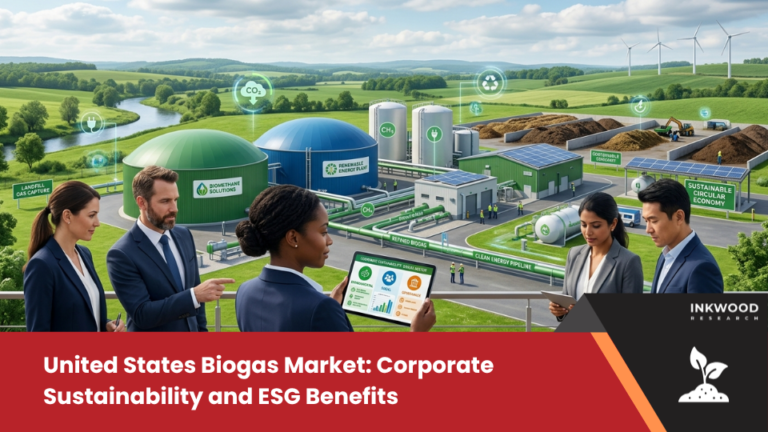
This analysis is brought to you by Inkwood Research, a leading market intelligence firm specializing in North American renewable energy transitions, corporate ESG strategy development, and sustainable biogas ecosystems. Our research team combines extensive experience analyzing the United States biogas market dynamics, emissions reduction methodologies, and corporate sustainability frameworks. Based on our proprietary research methodologies and strategic partnerships with American renewable energy corporations, environmental reporting agencies, and biogas technology providers, we deliver actionable insights empowering strategic decision-making for enterprises navigating ESG commitments and sustainable biogas investment opportunities.
TLDR
The United States biogas market reaches US$18,325.39 million in 2026, growing to US$23,415.32 million by 2034 with a 3.11% CAGR. Renewable energy investments deliver quantifiable ESG benefits through emissions reduction, waste circularity, and community impact. Corporations leverage upgraded biogas for cooking gas, vehicle fuel, electricity heat applications, supporting decarbonization targets. Environmental, social, and governance frameworks integrate biogas projects into sustainability reporting. PlanET Biogas, Air Liquide, and Biogas Fuels International advance market maturity. Measurable environmental value creation strengthens stakeholder relationships.
Corporate sustainability officers, ESG investment managers, renewable energy project developers, environmental reporting specialists, agriculture industry executives, food processing companies, municipal waste managers, carbon credit traders, institutional investors, sustainability consultants, and Fortune 500 corporations exploring United States biogas market opportunities will gain critical insights into ESG value creation, emissions quantification methodologies, stakeholder engagement strategies, and sustainable investment frameworks within America’s expanding biogas ecosystem.
Understanding ESG Value Creation in the United States Biogas Market
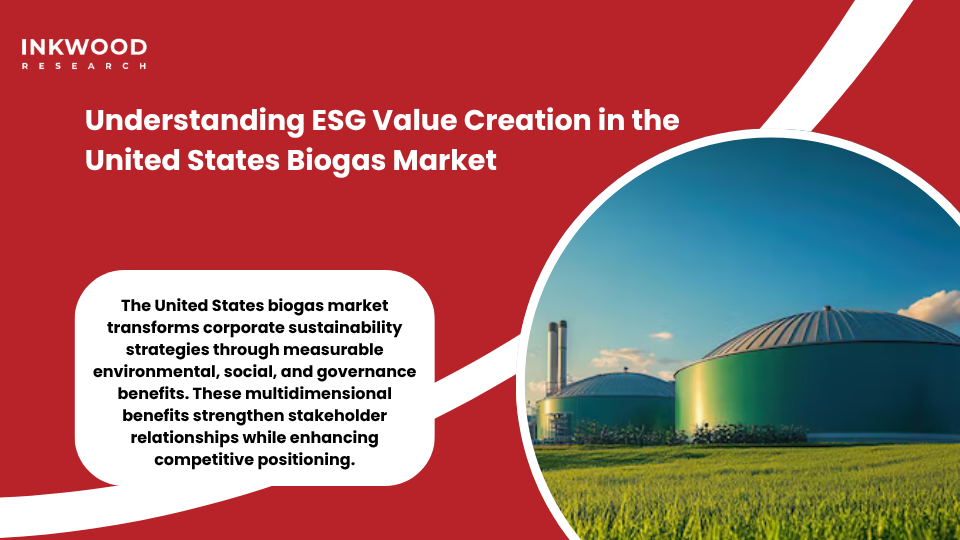
The United States biogas market transforms corporate sustainability strategies through measurable environmental, social, and governance benefits. Market valuation reaches US$18,325.39 million in 2026, expanding to US$23,415.32 million by 2034 with a steady 3.11% CAGR. Consequently, biogas investments deliver quantifiable ESG value beyond traditional renewable energy portfolios.
Moreover, corporations leverage upgraded biogas across cooking gas, vehicle fuel, and electricity heat applications, demonstrating comprehensive decarbonization commitments. These multidimensional benefits strengthen stakeholder relationships while enhancing competitive positioning.
Market Maturity and ESG Integration
American biogas infrastructure achieves sophisticated maturity levels supporting enterprise-scale sustainability programs. Leading corporations integrate biogas projects into comprehensive ESG frameworks addressing climate risks and stakeholder expectations. Furthermore, standardized measurement methodologies enable transparent reporting of environmental benefits.
Investment-grade project structures attract institutional capital seeking sustainable returns. Therefore, biogas participation signals a serious corporate commitment to environmental stewardship beyond symbolic gestures.
Regulatory Landscape Supporting Sustainability
Federal and state policies create favorable conditions for biogas market expansion. Renewable fuel standards mandate increasing renewable content in transportation fuels. Meanwhile, renewable energy credits provide revenue streams supplementing biogas production economics.
Additionally, carbon pricing mechanisms increasingly recognize biogas contributions to emissions reduction. According to the Environmental Protection Agency, anaerobic digestion prevents methane emissions equivalent to removing millions of vehicles from roadways annually. These regulatory frameworks align corporate sustainability objectives with profitable business opportunities.
Environmental Benefits: Quantifying Emissions Reduction and Decarbonization
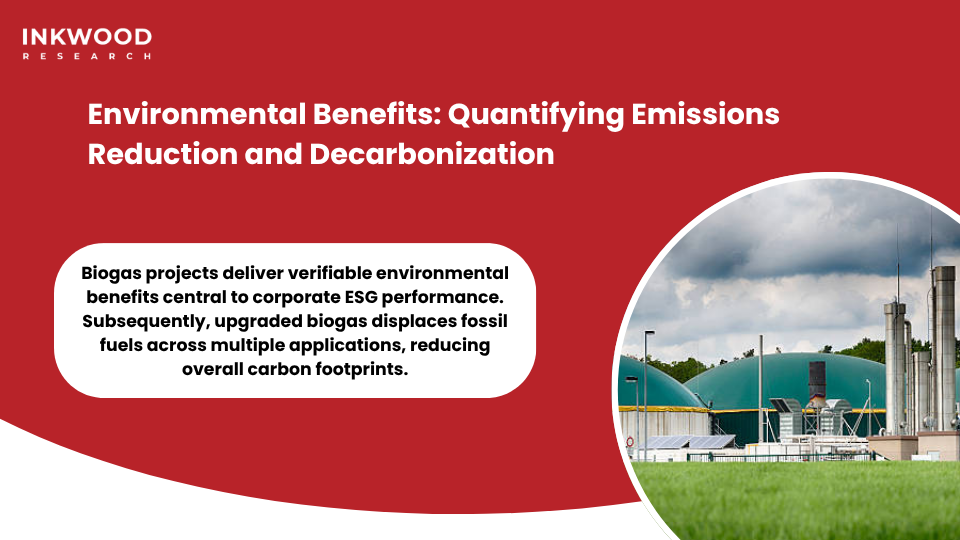
Biogas projects deliver verifiable environmental benefits central to corporate ESG performance. Methane capture from organic waste prevents potent greenhouse gas emissions 25 times more powerful than carbon dioxide. Subsequently, upgraded biogas displaces fossil fuels across multiple applications, reducing overall carbon footprints.
Companies track these reductions through rigorous monitoring protocols satisfying investor scrutiny. Moreover, third-party verification ensures the credibility of environmental claims, strengthening stakeholder confidence.
· Greenhouse Gas Emissions Quantification
Sophisticated modeling calculates precise emissions reductions attributable to biogas systems. Baseline scenarios establish conventional waste management greenhouse gas profiles. Conversely, biogas scenarios demonstrate dramatic reductions through methane capture and fossil fuel displacement.
Life cycle assessments account for upstream and downstream impacts, providing comprehensive environmental accounting. These quantified benefits populate sustainability reports, demonstrating tangible progress toward corporate climate commitments.
· Renewable Energy Integration Across Operations
Corporations integrate biogas across diverse operational needs, maximizing environmental impact. Manufacturing facilities adopt biogas-powered combined heat and power systems, reducing grid electricity consumption.
Meanwhile, vehicle fleets transition to renewable natural gas derived from upgraded biogas. Food processing operations utilize on-site biogas generation, transforming waste management costs into renewable energy assets. These integrated approaches amplify emissions reductions while demonstrating comprehensive sustainability strategies.
· Water Quality and Ecosystem Protection
Biogas systems improve water quality through enhanced manure and organic waste management. Traditional waste storage contributes to nutrient runoff, degrading aquatic ecosystems. Conversely, anaerobic digestion contains organic materials, preventing environmental contamination.
Digestate outputs undergo controlled application, optimizing agricultural benefits while minimizing environmental impacts. Therefore, biogas projects support comprehensive environmental stewardship beyond greenhouse gas reductions alone.
Social Impact: Community Development and Stakeholder Engagement
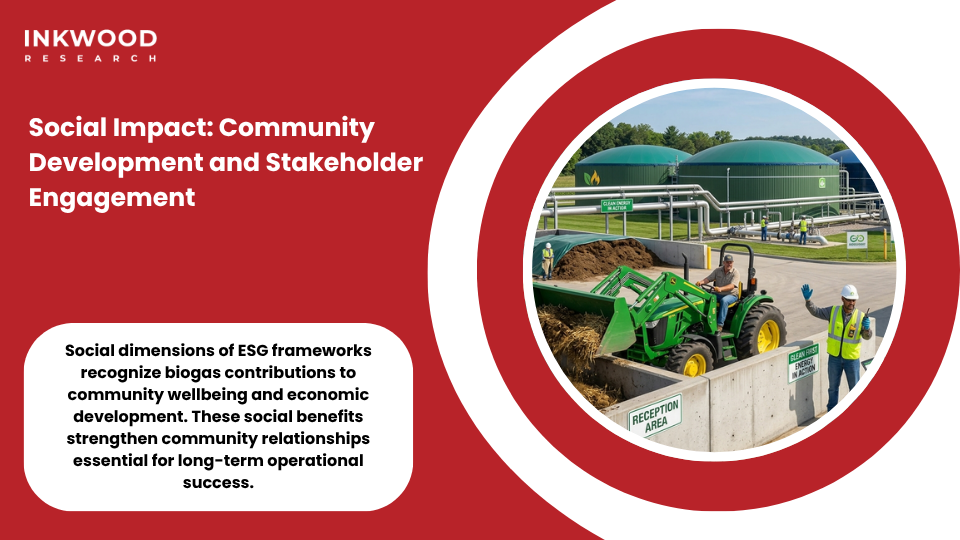
Social dimensions of ESG frameworks recognize biogas contributions to community wellbeing and economic development. Rural biogas projects create local employment opportunities, supporting agricultural community prosperity.
Furthermore, reduced odors and improved waste management enhance the quality of life for nearby residents. Corporate biogas investments demonstrate commitment to stakeholder welfare beyond shareholder returns. These social benefits strengthen community relationships essential for long-term operational success.
Rural Economic Development
Biogas infrastructure investments stimulate rural economies through construction employment, operational jobs, and agricultural income diversification. Farmers develop additional revenue streams by converting waste products into valuable energy commodities. Meanwhile, local equipment suppliers and service providers benefit from ongoing biogas operations.
These economic multipliers extend beyond direct project investments, creating broader community prosperity. Consequently, biogas projects enhance corporate reputations as responsible community partners.
Environmental Justice Considerations
Biogas projects address environmental justice concerns by reducing pollution burdens in disadvantaged communities. Improved waste management decreases odor complaints and air quality impacts. Similarly, reduced truck traffic from traditional waste hauling improves safety and quality of life.
Corporations advancing biogas in underserved areas demonstrate commitment to equitable environmental outcomes. These efforts align with growing investor emphasis on social equity within ESG frameworks.
Stakeholder Engagement and Transparency
Successful biogas projects require meaningful engagement with diverse stakeholder groups. Community consultation processes address concerns while identifying shared benefits. Similarly, transparent communication about project impacts builds trust with local residents.
Educational programs demonstrate biogas environmental benefits, fostering broader community support. Therefore, stakeholder engagement excellence enhances both project success and corporate ESG performance.
Governance Excellence: Corporate Transparency and Accountability
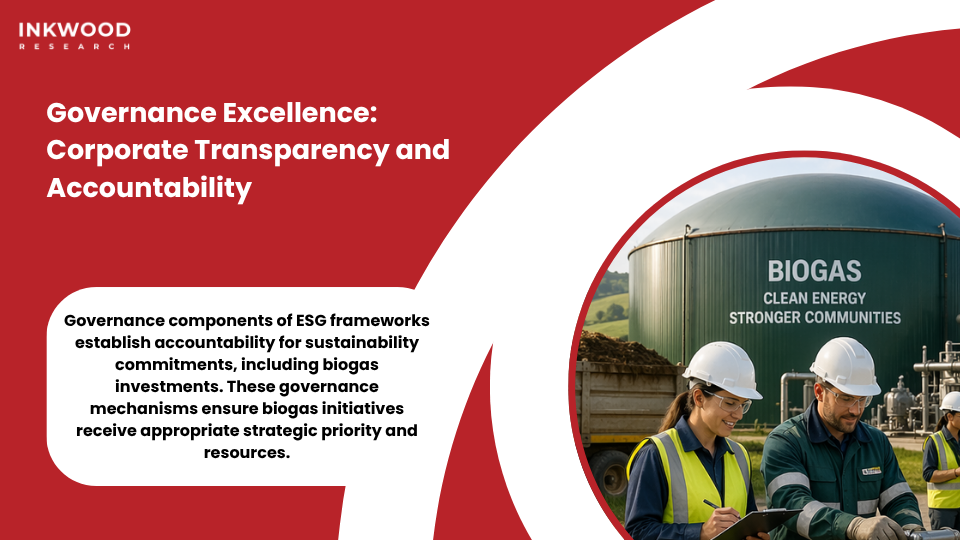
Governance components of ESG frameworks establish accountability for sustainability commitments, including biogas investments. Corporate boards increasingly oversee climate strategy implementation and environmental performance metrics.
Furthermore, executive compensation structures linked to sustainability targets incentivize biogas project development. Transparent reporting through established frameworks satisfies investor expectations for rigorous ESG disclosure. These governance mechanisms ensure biogas initiatives receive appropriate strategic priority and resources.
Board Oversight and Strategic Direction
Corporate boards establish sustainability committees providing oversight for renewable energy investments, including biogas projects. These governance structures ensure appropriate risk assessment and strategic alignment.
Moreover, regular board reporting tracks biogas performance against established environmental targets. Independent directors bring external expertise, strengthening strategic decision-making. Therefore, governance excellence translates sustainability commitments into operational reality.
ESG Reporting Frameworks and Standards
Corporations report biogas initiatives through standardized frameworks, including GRI, SASB, and TCFD guidelines. These frameworks ensure consistent, comparable ESG disclosures satisfying investor requirements.
Biogas projects contribute measurable data across environmental, social, and governance dimensions. Third-party assurance enhances the credibility of reported metrics. Consequently, rigorous reporting demonstrates corporate commitment to transparency and accountability.
Risk Management Integration
Biogas investments integrate into enterprise risk management frameworks, addressing climate-related financial risks. Scenario analysis evaluates biogas contributions to climate resilience strategies.
Meanwhile, transition risk assessments examine biogas roles in decarbonization pathways. These comprehensive risk evaluations inform capital allocation decisions supporting long-term value creation. Therefore, governance processes ensure biogas strategies align with broader corporate risk management.
Corporate Case Studies: ESG Leadership Through Biogas Investment
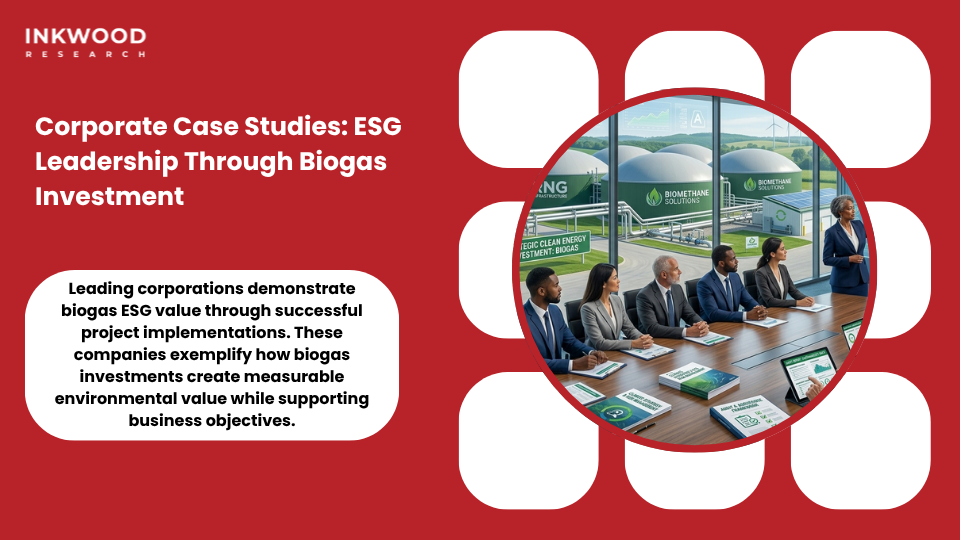
Leading corporations demonstrate biogas ESG value through successful project implementations.
- PlanET Biogas partners with agricultural operations to develop on-farm renewable energy systems.
- Similarly, Air Liquide advances gas upgrading technologies enabling biomethane integration into existing infrastructure.
- Biogas Fuels International expands waste-to-energy projects across multiple sectors.
These companies exemplify how biogas investments create measurable environmental value while supporting business objectives.
Food Industry Sustainability Leadership
Major food processors install biogas systems, converting organic waste into renewable energy, powering manufacturing operations. These closed-loop systems reduce waste disposal costs while generating valuable cooking gas and electricity.
Companies publicly report emissions reductions attributable to biogas projects, demonstrating sustainability progress. Furthermore, biogas initiatives strengthen corporate reputations among environmentally conscious consumers. Therefore, food industry biogas adoption accelerates, driven by both environmental and business benefits.
Agricultural Sector Innovation
Dairy and livestock operations partner with biogas developers, monetizing manure through renewable natural gas production. These projects transform environmental liabilities into revenue-generating assets. Moreover, digestate fertilizer outputs reduce chemical fertilizer requirements, supporting sustainable agriculture.
Cooperative business models enable smaller farms to access biogas benefits through shared infrastructure. Consequently, agricultural biogas demonstrates win-win outcomes for environmental performance and farm economics.
Municipal Waste Management Excellence
Cities incorporate anaerobic digestion into integrated waste management strategies, reducing landfill dependence. Municipal biogas facilities process food waste, yard waste, and wastewater solids, generating renewable energy.
These operations reduce methane emissions from landfills while producing valuable vehicle fuel for municipal fleets. Public-private partnerships facilitate project development, combining government environmental objectives with private sector efficiency. Therefore, municipal biogas advances demonstrate scalable sustainability solutions.
Financial Performance and Sustainability Returns
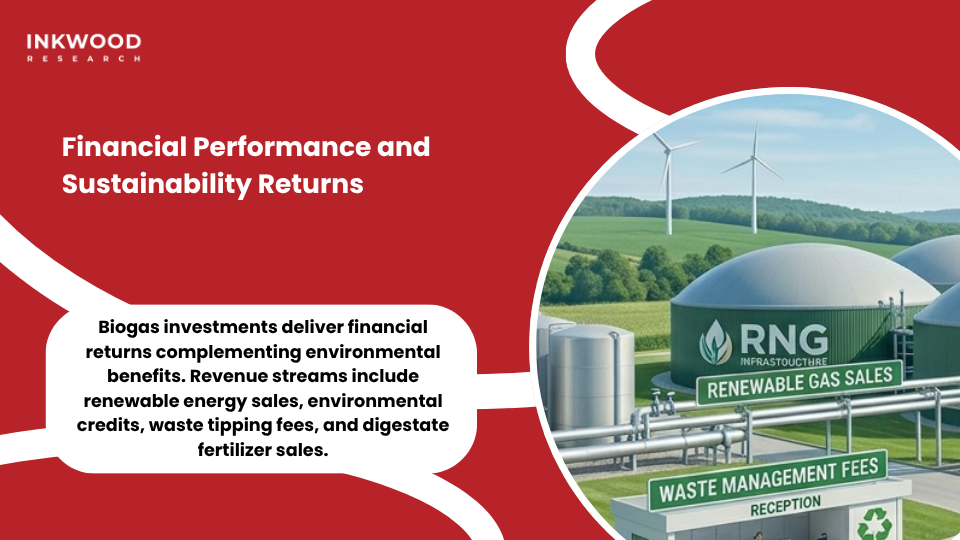
Biogas investments deliver financial returns complementing environmental benefits. Revenue streams include renewable energy sales, environmental credits, waste tipping fees, and digestate fertilizer sales.
Meanwhile, operational cost reductions result from displaced purchased energy and reduced waste disposal expenses. These combined financial benefits create attractive investment economics supporting sustainable growth. Consequently, biogas projects demonstrate that environmental responsibility aligns with financial performance.
Revenue Diversification Strategies
Sophisticated biogas operators optimize returns across multiple revenue streams. Renewable electricity generation captures capacity payments and energy sales. Upgraded biogas serves premium markets, including vehicle fuel and renewable cooking gas applications.
Environmental attributes generate renewable energy credits and carbon offset revenues. These diversified income sources reduce revenue volatility, improving overall project economics. Therefore, financial optimization enhances investment attractiveness.
Risk-Adjusted Returns and Capital Access
Biogas projects attract favorable financing terms reflecting stable cash flows and policy support. Long-term offtake agreements reduce revenue risks, improving debt financing availability.
Meanwhile, institutional investors increasingly allocate capital toward sustainable infrastructure, including biogas facilities. Green bonds finance biogas development at competitive rates. These financial market developments support continued United States biogas market expansion.
ESG Rating Impact and Investor Attraction
Strong biogas programs improve corporate ESG ratings, influencing investor perceptions and capital allocation. Rating agencies recognize renewable energy investments as positive environmental indicators.
Subsequently, improved ratings attract ESG-focused investment funds managing trillions in assets. Companies with superior ESG performance often experience lower capital costs and higher valuations. Therefore, biogas investments create financial value through enhanced investor appeal.
Key Takeaways
- The United States biogas market delivers comprehensive ESG value supporting corporate sustainability objectives. Market growth from US$18,325.39 million in 2026 to US$23,415.32 million by 2034 reflects increasing recognition of biogas’ environmental and financial benefits.
- Renewable energy applications across cooking gas, vehicle fuel, electricity, and heat demonstrate versatility, addressing diverse corporate needs. Consequently, biogas investments strengthen ESG performance while creating measurable business value.
- Environmental benefits include quantifiable emissions reduction, renewable energy generation, and ecosystem protection. Social impacts encompass rural economic development, community engagement, and environmental justice advancement.
- Governance excellence manifests through board oversight, transparent reporting, and risk management integration. These multidimensional benefits position biogas as a strategic sustainability investment.
- Leading corporations, including PlanET Biogas, Air Liquide, and Biogas Fuels International, demonstrate successful ESG integration through biogas projects. Food processors, agricultural operations, and municipal governments achieve sustainability targets while improving operational performance.
- Financial returns complement environmental benefits through diversified revenue streams and favorable financing conditions. Therefore, biogas investments align profit motives with sustainability imperatives.
- Success requires strategic integration across environmental, social, and governance dimensions. Companies must establish clear measurement frameworks quantifying biogas contributions to ESG objectives.
- Stakeholder engagement ensures community support and social license to operate. Transparent reporting through standardized frameworks satisfies investor expectations. Consequently, comprehensive ESG strategies maximize biogas value creation for all stakeholders.
Conclusion
Biogas investments represent strategic opportunities for corporations pursuing authentic sustainability leadership. The United States biogas market provides proven pathways toward decarbonization while delivering measurable ESG value. Companies integrating biogas into comprehensive sustainability strategies strengthen stakeholder relationships, improve financial performance, and demonstrate environmental stewardship.
Environmental benefits extend beyond greenhouse gas reductions to include water quality protection and ecosystem enhancement. Social impacts support rural communities through economic development and improved quality of life. Governance frameworks ensure accountability and transparency, satisfying investor expectations. These combined benefits create compelling value propositions for biogas investment.
Looking forward, biogas will continue gaining prominence within corporate sustainability portfolios. Strengthening policy support, technological advancement, and increasing investor focus on ESG performance drive continued market expansion. Companies establishing biogas capabilities today position themselves advantageously for future sustainability requirements and stakeholder expectations.
For organizations seeking deeper insights into the United States biogas market opportunities or ESG strategy development, Inkwood Research offers comprehensive market intelligence and consulting services. Contact our team to explore how biogas investments can advance your sustainability objectives while creating measurable business value.
Frequently Asked Questions (FAQs)
In the United States biogas market, projects deliver measurable ESG value through methane emissions reduction, renewable natural gas production, landfill diversion, rural job creation, and verified carbon credit generation
Biogas in the United States supports corporate net zero strategies by converting agricultural and landfill waste into renewable natural gas, enabling scope 1 and scope 2 emissions reductions across transport, power, and heat
Companies should report renewable natural gas output, methane capture volumes, lifecycle greenhouse gas reductions, and community impact metrics using GRI, SASB, and TCFD aligned ESG disclosure standards
Federal and state programs such as the Renewable Fuel Standard, Low Carbon Fuel Standard credits, and investment tax incentives drive renewable natural gas project development and improve long term returns
Transportation fleets, utilities, food and beverage processors, wastewater treatment facilities, and large scale dairy operations are key demand drivers for renewable natural gas and biogas infrastructure
Investment challenges include feedstock supply agreements, interconnection delays, credit price volatility under RFS and LCFS programs, permitting timelines, and high upfront capital expenditure requirements