Table of Contents
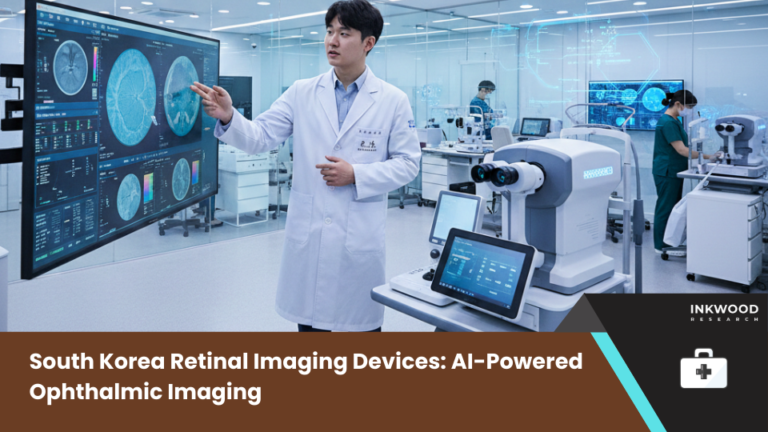
This analysis is brought to you by Inkwood Research, a leading market intelligence firm specializing in Asia-Pacific medical technology, ophthalmic diagnostic innovations, and healthcare AI ecosystems. Our research team combines extensive experience analyzing retinal imaging systems market dynamics, regulatory frameworks, and artificial intelligence integration across South Korea, Japan, China, and emerging Asian markets. Based on our proprietary research methodologies and strategic partnerships with medical device manufacturers, hospital networks, government healthcare agencies, and AI technology providers, we deliver actionable insights that empower strategic decision-making for global enterprises navigating Asia-Pacific’s digital health revolution and retinal imaging market expansion.
TLDR
South Korea transforms eye care through cutting-edge AI-powered retinal imaging devices that enable faster, more accurate disease detection. The nation’s streamlined regulatory framework, robust R&D infrastructure, and early technology adoption create an ecosystem where optical coherence tomography systems and fundus cameras integrate seamlessly with artificial intelligence. Moreover, South Korean innovations in handheld retinal imaging devices and ultra-widefield imaging technology position the country as a global leader in ophthalmic diagnostics. These advancements reduce approval times from over a year to just 80 days, accelerating the deployment of life-saving screening technologies.
Healthcare executives evaluating AI integration strategies, ophthalmology clinic administrators seeking advanced diagnostic equipment, medical device procurement specialists researching Asian market trends, and healthcare policy analysts studying regulatory innovation models will find this essential. Additionally, investment analysts tracking medical technology sectors, clinical decision-makers implementing screening programs, and healthcare innovators exploring teleophthalmology solutions benefit from these insights into South Korea’s approach to retinal imaging excellence.
South Korea’s AI Healthcare Leadership
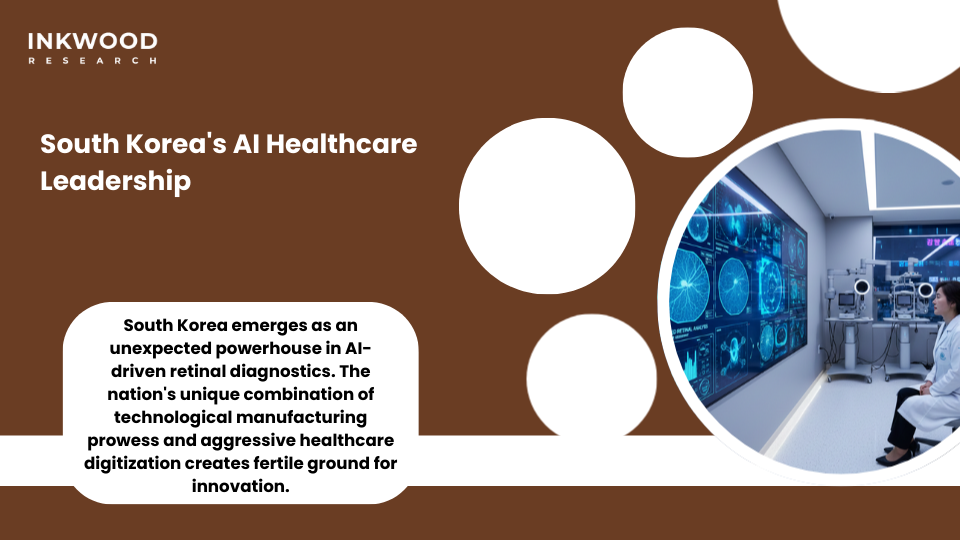
South Korea emerges as an unexpected powerhouse in AI-driven retinal diagnostics. The nation’s unique combination of technological manufacturing prowess and aggressive healthcare digitization creates fertile ground for innovation. Furthermore, government support through substantial R&D funding accelerates breakthrough developments in the ophthalmic imaging devices market solutions.
Strategic Government Initiatives
The South Korean government’s “Digital Healthcare Innovation Strategy” demonstrates an unwavering commitment to AI integration. Notably, this initiative includes funding of approximately $300 million to support research and development. These resources enhance data sharing among healthcare providers while establishing comprehensive regulatory frameworks. Consequently, medical institutions gain access to cutting-edge diagnostic tools that were previously unavailable.
Hospital networks rapidly adopt AI-powered retinal imaging systems market technologies, driven by competitive healthcare dynamics. University hospitals and specialized eye clinics serve as early testing grounds for innovative solutions. This creates a valuable feedback loop where clinicians identify needs, engineers develop solutions, and technologies integrate quickly into patient care.
Regulatory Innovation Accelerates Market Growth
Streamlined Approval Processes
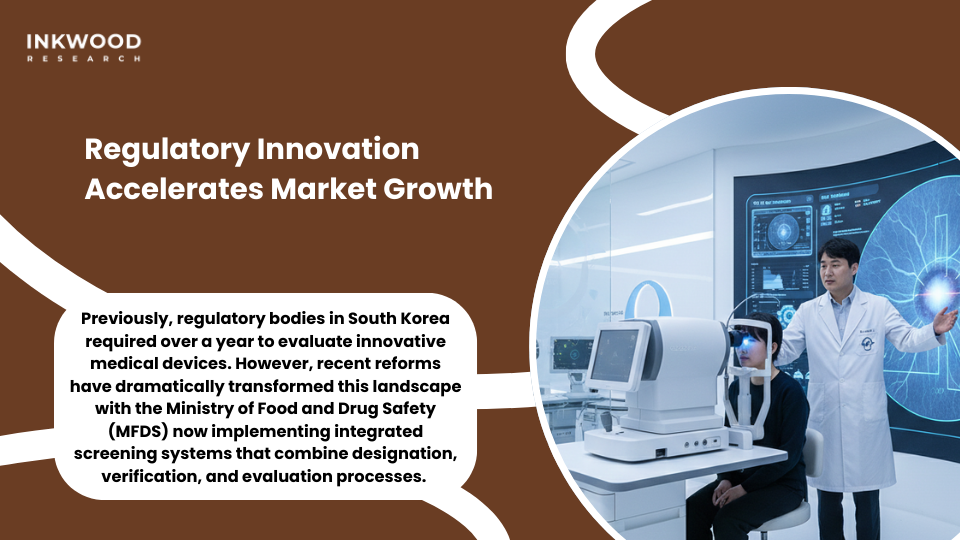
Previously, regulatory bodies in South Korea required over a year to evaluate innovative medical devices. However, recent reforms have dramatically transformed this landscape with the Ministry of Food and Drug Safety (MFDS) now implementing integrated screening systems that combine designation, verification, and evaluation processes. Additionally, the approval period shortens from 250 days to approximately 80 days.
According to the National Committee for Quality Assurance, these changes enable AI and digital technologies to become available for three to five years as non-reimbursable devices. This grace period allows manufacturers to build evidence while maintaining market access. Subsequently, companies can gather sufficient clinical data for full reimbursement approval.
Evidence-Building Framework
The National Evidence-based Healthcare Collaborating Agency pioneered a groundbreaking approach to medical device evaluation. Further, this agency grants grace periods for evidence-building, addressing the chicken-and-egg problem that previously plagued new technologies. Healthcare providers now have incentives to use novel AI products while developers accumulate necessary clinical cases.
Advanced Retinal Imaging Technologies

Ultra-Widefield Imaging Innovations
Korean innovators advance ultra-widefield (UWF) fundus cameras that provide comprehensive views of the retinal periphery. These widefield retinal imaging devices eliminate the need for pupil dilation, making screening faster and more comfortable. Also, patients appreciate the non-invasive approach while clinicians benefit from enhanced diagnostic capabilities.
UWF Fundus Autofluorescence (FAF) highlights the health of retinal pigment epithelium, a critical cell layer. This specialized mode proves invaluable for tracking age-related macular degeneration and inherited retinal dystrophies. Meanwhile, UWF OCT Angiography (OCTA) maps retinal blood vessels without injectable dyes.
OCT Technology Integration
Optical coherence tomography (OCT) devices represent cornerstone technologies in South Korean ophthalmology practices. AI-powered OCT transforms standard imaging into predictive diagnostic powerhouses. These systems analyze micrometer-resolution images in seconds, detecting subtle early-stage disease signs that human observers might miss.
Standard OCT provides detailed views of distinct retinal layers. When augmented with AI algorithms trained on millions of scans, these devices achieve unprecedented accuracy rates. Clinical studies demonstrate sensitivity levels reaching 96.9% for certain applications, surpassing traditional diagnostic methods.
Market Dynamics and Growth Drivers

Market Size and Projections
The South Korea retinal imaging devices market demonstrates robust expansion, valued at US$122.86 million in 2026. Projections indicate growth to US$238.01 million by 2034, representing an 8.62% CAGR. This growth trajectory reflects increasing demand for advanced diagnostic equipment across hospital systems and specialty clinics.
Several factors drive this impressive expansion. First, South Korea’s aging population requires more frequent retinal examinations for age-related conditions. Second, rising diabetes prevalence increases demand for diabetic retinopathy imaging devices. Third, technological advancements make screening more accessible and affordable.
Technology Adoption Patterns
Korean ophthalmologists embrace new technologies faster than their global counterparts. This early adoption stems from a healthcare market that values precision and advanced diagnostic capabilities. Moreover, the integration of AI and software development expertise directly benefits ophthalmology applications.
High clinical adoption rates create a self-reinforcing cycle of innovation. Manufacturers receive rapid feedback from sophisticated users, enabling quick product improvements. This dynamic environment attracts international companies while supporting domestic innovation ecosystems.
Competitive Landscape: Major Players
Mediwhale: AI-Powered Screening Pioneer
Mediwhale emerges as a standout innovator in retinal AI technology. The company’s screening platform detects cardiovascular, kidney, and eye diseases through non-invasive retinal scans. Founded by Kevin Choi, who lost half his vision to glaucoma at age 26, Mediwhale brings personal passion to clinical innovation.
Mediwhale’s technology operates primarily in South Korea, with international expansion to Dubai, Italy, and Malaysia. In September 2024, the company raised $12 million in Series A2 funding led by Korea Development Bank. This investment accelerates the development of AI-powered retinal screening imaging systems that bypass traditional procedures like blood tests and CT scans.
VUNO: Cardiac and Retinal AI Solutions
VUNO, another South Korean AI firm, achieved a significant regulatory milestone. The company’s cardiac arrest prediction algorithm became the first AI product to receive a three-year evidence-building grace period in May 2022. Clinical use began in August 2022, demonstrating the effectiveness of South Korea’s reformed regulatory framework.
While VUNO focuses primarily on cardiac applications, its success paves the way for retinal AI products. The company’s experience navigating regulatory pathways provides valuable lessons for other ophthalmic diagnostic imaging equipment developers seeking market approval.
Global Technology Providers
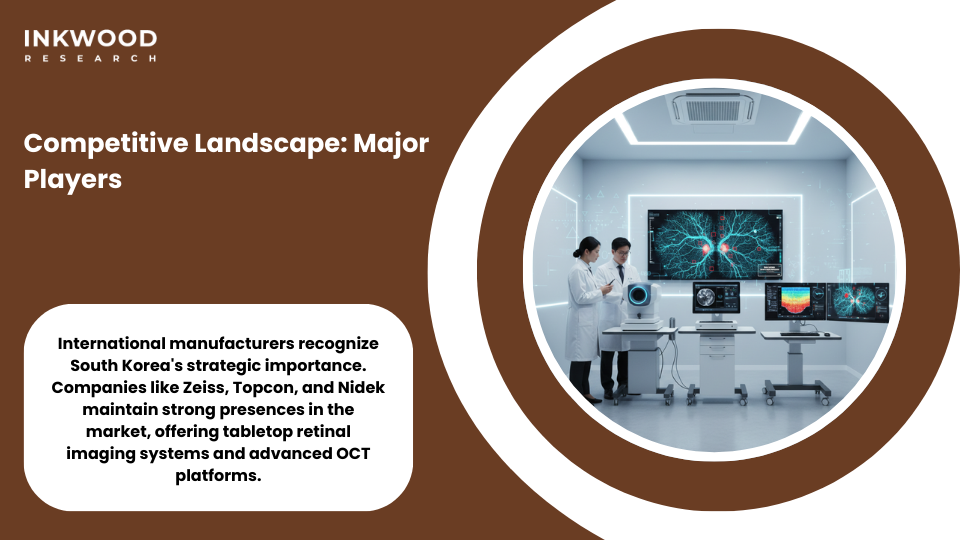
International manufacturers recognize South Korea’s strategic importance. Companies like Zeiss, Topcon, and Nidek maintain strong presences in the market, offering tabletop retinal imaging systems and advanced OCT platforms. Moreover, these established players compete with emerging Korean startups, creating a dynamic competitive environment.
However, domestic innovators possess unique advantages as they understand local regulatory requirements, maintain relationships with key hospital networks, and can iterate products quickly based on clinical feedback. This positions South Korean companies to capture growing market share.
Latest Product Developments

Recent Innovations (2024-2025)
South Korea’s medical technology sector announced several groundbreaking developments over the past year. The government committed $652 million over seven years for cutting-edge medical device R&D, signaling long-term support for innovation. This funding targets advanced imaging technologies, including scanning laser ophthalmoscopy technology and next-generation OCT systems.
Severance Hospital showcased medical AI technology to top health officials from Japan and the WHO in December 2025. The demonstration highlighted how AI-powered fundus cameras transform routine screenings into comprehensive health assessments. These systems detect not only diabetic retinopathy but also neurological conditions through retinal biomarkers.
AI Algorithm Advancements
Researchers from Yonsei University Health System developed AI models for ADHD diagnosis using retinal fundus photographs. Additionally, these machine learning models achieved accuracy rates up to 96.9%, demonstrating retinal imaging’s potential beyond traditional ophthalmology applications. Such innovations expand the market for retinal diagnostic imaging market technologies.
Moreover, the integration of AI enables non-mydriatic retinal imaging systems to provide instant analysis without internet connectivity. Offline capabilities prove particularly valuable in community health settings where bandwidth limitations might otherwise prevent AI deployment. This technological advancement democratizes access to sophisticated diagnostics.
Infrastructure Investments
South Korea’s ambitious GPU targets underline the urgency of AI development. Reports cite efforts to secure 10,000 GPUs by year-end, with plans to deploy 15,000 advanced GPUs across national computing centers by 2027. Moreover, this infrastructure supports AI model training for clinical imaging and population screening pilots.
Parallely, R&D efforts include the KRW 403.1 billion K-Cloud project, which aims to harden domestic AI-semiconductor stacks. These investments create robust foundations for digital retinal imaging technology that can process vast datasets rapidly and accurately.
Key Takeaways
- South Korea’s approach to AI-powered retinal screening offers valuable lessons for global healthcare systems. The nation’s success stems from coordinated government support, streamlined regulatory processes, and robust R&D infrastructure. Moreover, early clinical adoption creates feedback loops that accelerate innovation cycles.
- The global retinal imaging devices market benefits from South Korean technological advances that push the boundaries of diagnostic capabilities. Ultra-widefield imaging, AI-powered OCT, and portable screening devices demonstrate what’s possible when regulatory innovation meets technological expertise. Healthcare systems worldwide can adapt these approaches to improve patient outcomes while controlling costs.
- Investment in computing infrastructure proves critical for AI deployment at scale. South Korea’s GPU acquisition targets and cloud computing projects provide the backbone for processing millions of retinal images efficiently. This infrastructure investment pays dividends through faster disease detection and reduced healthcare burden.
Conclusion:
South Korea’s leadership in AI-powered retinal screening demonstrates how coordinated policy, investment, and clinical adoption transform healthcare delivery. The retinal imaging equipment market continues evolving as new technologies emerge from Korean laboratories and startups. Furthermore, regulatory reforms that reduce approval times from over a year to 80 days show what’s possible when governments prioritize innovation.
Healthcare organizations globally can learn from South Korea’s model. By streamlining regulatory processes, investing in computing infrastructure, and fostering collaboration between clinicians and engineers, other nations can accelerate their own diagnostic capabilities. The future of retinal screening lies in AI-powered systems that detect disease earlier, more accurately, and more affordably than ever before.
Ready to transform your organization’s approach to retinal diagnostics?
Our team at Inkwood Research provides comprehensive market intelligence, competitive analysis, and strategic recommendations tailored to your specific needs. Contact us today to discover how South Korea’s innovations can inform your investment decisions and operational strategies in the rapidly evolving ophthalmology imaging devices market.
Frequently Asked Questions
How does AI improve retinal screening accuracy compared to traditional methods?
AI algorithms trained on millions of retinal images can detect subtle disease patterns that human observers might miss. Studies show AI-powered systems achieve sensitivity rates up to 99.1% for sight-threatening diabetic retinopathy, surpassing general ophthalmologists while maintaining specificity above 80%. These systems analyze images in seconds, enabling faster diagnosis and treatment initiation.
What makes South Korea's regulatory framework unique for medical device approval?
South Korea reduced medical device approval times from over 250 days to approximately 80 days through integrated screening systems. The government combines designation, verification, and evaluation processes that previously operated sequentially. Additionally, a three-year evidence-building grace period allows manufacturers to gather clinical data while maintaining market access, solving the chicken-and-egg problem of requiring evidence before use.
Can portable retinal imaging devices match the quality of traditional tabletop systems?
Recent comparative studies demonstrate that advanced handheld devices achieve equivalent image acquisition success and quality to traditional tabletop cameras. Devices utilizing infrared guidance systems and optimized flash timing produce diagnostic-quality images without pupil dilation. However, proper training remains essential for operators to consistently capture high-quality images with portable systems.