Table of Contents
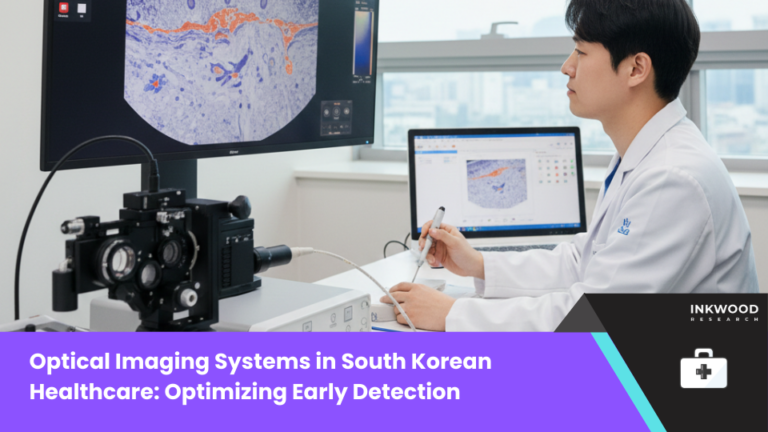
This analysis is brought to you by Inkwood Research, a leading market intelligence firm specializing in Asia-Pacific healthcare innovation, digital health transformation, and medical device market intelligence. Our research team combines extensive expertise in analyzing South Korea’s Ministry of Food and Drug Safety (MFDS) regulatory pathways, portable optical imaging systems deployment, and preclinical optical imaging systems utilization across Korean research institutions and healthcare facilities. Based on our proprietary research methodologies and strategic partnerships with Asian medical technology innovators, we deliver actionable insights enabling informed strategic decision-making.
TLDR
South Korea emerges as a global leader in deploying optical imaging systems for early disease detection through strategic government support, rapid technology adoption, and innovative healthcare delivery models. The South Korea optical imaging systems market is projected to surge from US$85.89 million in 2026 to US$229.23 million by 2034, achieving an impressive 13.05% CAGR through aggressive investments in preventive healthcare and digital transformation. Furthermore, South Korea’s Ministry of Food and Drug Safety (MFDS) streamlined regulatory framework, including Real-World Evidence acceptance since 2023, accelerates deployment of wearable optical imaging systems, portable optical imaging, and AI-enhanced diagnostic technologies. Consequently, Korean healthcare institutions pioneer innovative screening programs that detect diseases earlier, improve treatment outcomes, and reduce overall healthcare costs.
Medical device companies targeting Asia-Pacific markets will gain critical intelligence on South Korea’s accelerated approval pathways and technology adoption patterns. Additionally, healthcare technology investors evaluating digital health opportunities, hospital administrators planning preventive care programs, and policy analysts studying successful healthcare innovation models will benefit significantly. Moreover, researchers developing preclinical optical imaging systems, entrepreneurs creating point-of-care optical imaging solutions, and regulatory consultants navigating MFDS requirements can leverage these insights for strategic planning and market entry optimization.
South Korea’s Healthcare Innovation Ecosystem
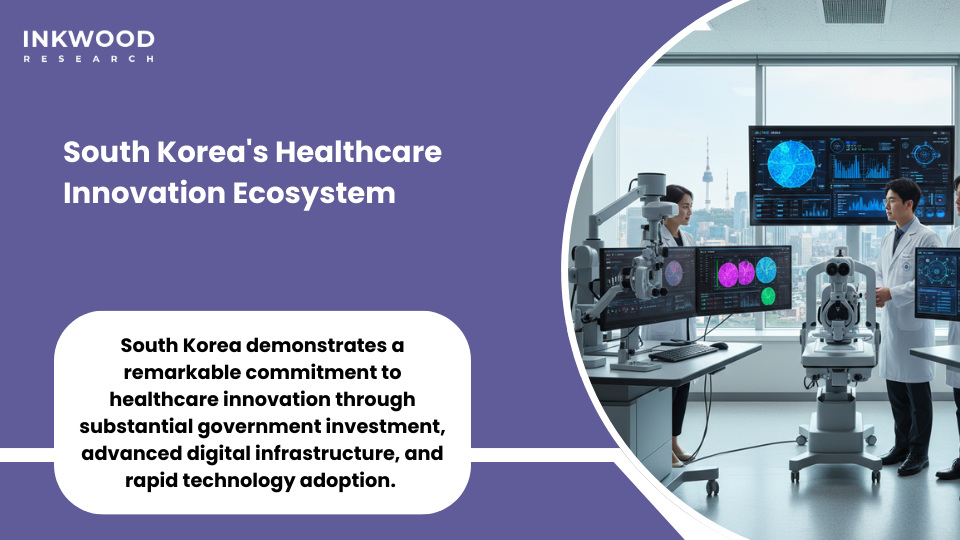
South Korea demonstrates a remarkable commitment to healthcare innovation through substantial government investment, advanced digital infrastructure, and rapid technology adoption. Therefore, the nation serves as both an attractive market and a strategic innovation hub for medical device manufacturers worldwide.
Why South Korea Leads in Early Detection
Korean healthcare policy emphasizes preventive care and early disease detection as cost-effective strategies for managing chronic disease burden. Accordingly, national health insurance programs provide comprehensive coverage for screening services across multiple disease categories. Moreover, South Korea’s tech-savvy population readily embraces digital health solutions and advanced diagnostic technologies.
The country’s aging population drives an urgent need for efficient screening and monitoring systems. Consequently, healthcare providers increasingly adopt optical imaging systems enabling non-invasive, rapid assessment of disease risk across large populations. Additionally, Korea’s world-class IT infrastructure facilitates integration of imaging data with electronic health records and AI-powered analytics platforms.
According to recent market analyses, South Korea’s medical device market is expected to grow exponentially over the next decade, driven by aging demographics, government support for digital healthcare, and rising adoption of AI-driven medical technologies.
MFDS Regulatory Framework and Acceleration
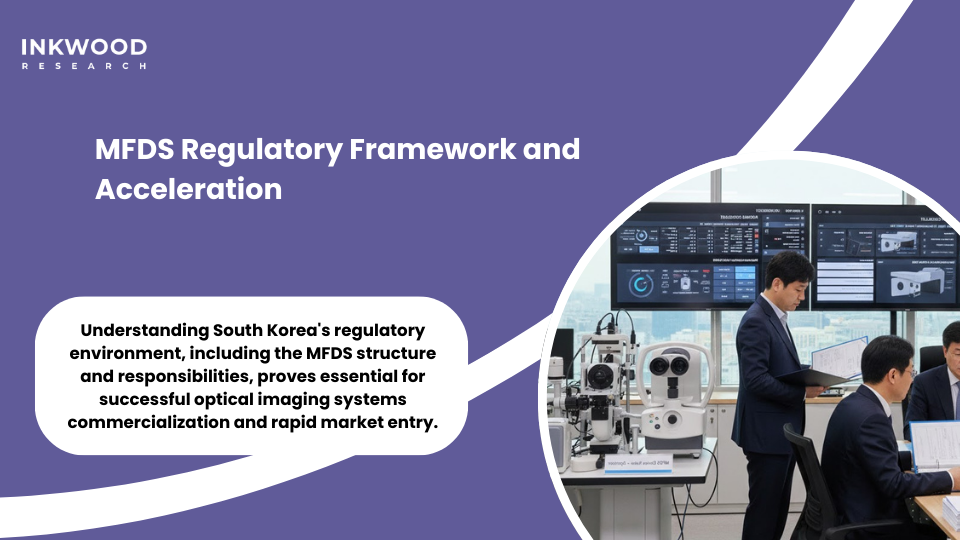
Understanding South Korea’s regulatory environment, including the MFDS structure and responsibilities, proves essential for successful optical imaging systems commercialization and rapid market entry.
MFDS Structure and Responsibilities
The Ministry of Food and Drug Safety regulates medical devices through comprehensive frameworks based on the Medical Devices Act and related enforcement regulations. Importantly, MFDS categorizes devices into four risk-based classes with corresponding regulatory requirements. Class I devices require simple registration, while Classes II through IV demand increasingly rigorous certification or approval processes.
According to MFDS approval guidelines, Class III and IV devices require direct MFDS approval with detailed technical documentation. Meanwhile, Class II devices typically receive certification from the National Institute of Medical Device Safety Information (NIDS), though certain digital healthcare devices must obtain MFDS approval regardless of classification.
Korean Good Manufacturing Practices
Manufacturers of Class II, III, and IV devices must secure Korean Good Manufacturing Practices (K-GMP) certification before product registration. Unlike other regulatory systems, ISO 13485 certification alone cannot satisfy Korean QMS requirements. Instead, on-site audits verify manufacturing facility compliance with Korea-specific standards.
Third-party auditors conduct initial K-GMP audits to assess compliance, with re-certification required every three years. Additionally, change audits become necessary when manufacturing facilities relocate or undergo significant modifications affecting quality systems.
Real-World Evidence Acceptance
A groundbreaking development occurred in 2023 when MFDS began accepting Real-World Evidence (RWE) as valid clinical data for digital medical devices. This policy change significantly accelerates approval timelines for AI-based products and innovative optical imaging technologies. Consequently, manufacturers can leverage existing clinical experience rather than conducting lengthy prospective trials.
Furthermore, international regulatory harmonization initiatives improve market access efficiency. The 2023 agreement between MFDS and FDA promotes standardization for AI medical devices, facilitating simultaneous development programs targeting multiple markets.
Streamlined Approval Pathways
MFDS offers expedited approval routes for devices demonstrating substantial equivalence to previously approved products. The “Recognized Substantial Equivalent” designation applies to Class II devices approved multiple times with equivalent predicate devices. Accordingly, manufacturers can reference these recognized SE devices for faster certification pathways.
For truly novel devices without equivalent predicates, clinical trial data becomes mandatory. However, recent regulatory flexibility allows low-risk AI medical devices to bypass clinical trials in certain circumstances, while higher-risk devices may use non-MFDS-approved trial sites.
Early Detection Programs and National Health Initiatives
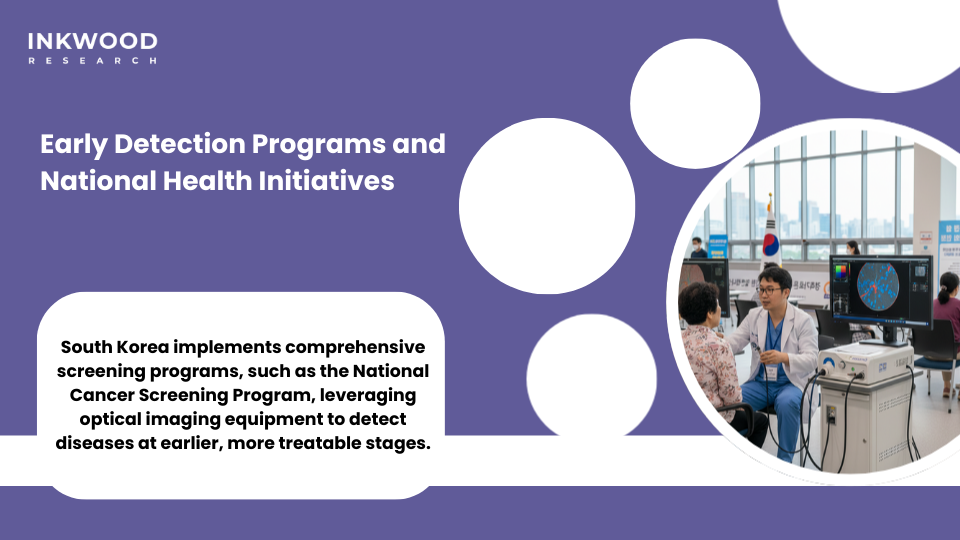
South Korea implements comprehensive screening programs, such as the National Cancer Screening Program, leveraging optical imaging equipment to detect diseases at earlier, more treatable stages.
National Cancer Screening Program
Korea’s National Cancer Screening Program provides subsidized screening for stomach, liver, colorectal, breast, and cervical cancers. Advanced endoscopic optical imaging technologies, including narrow-band imaging and blue-light imaging, enhance gastric cancer detection during screening endoscopies. Consequently, Korea maintains among the world’s highest gastric cancer survival rates through early detection and treatment.
Similarly, optical imaging modalities improve colorectal cancer screening through enhanced polyp detection and characterization. Confocal laser endomicroscopy enables real-time histological assessment, reducing unnecessary biopsies while improving diagnostic accuracy.
Diabetic Retinopathy Screening
With rising diabetes prevalence, Korea expanded diabetic retinopathy screening programs utilizing portable optical imaging systems for increased accessibility. Mobile screening units equipped with fundus cameras and portable OCT devices visit community health centers, workplaces, and remote areas. Therefore, patients can receive comprehensive eye examinations without traveling to specialized ophthalmology clinics.
AI-powered automated screening platforms analyze retinal images, flagging high-risk patients for ophthalmologist review. Also, this approach enables efficient large-scale screening while optimizing specialist resources.
Cardiovascular Risk Assessment
Korean preventive medicine programs incorporate optical imaging for cardiovascular risk stratification. For instance, carotid intima-media thickness measurement using high-resolution ultrasound combined with optical plethysmography assesses arterial health. Additionally, research institutions investigate optical coherence tomography for non-invasive coronary artery disease screening.
Technology Integration and Digital Health Platforms
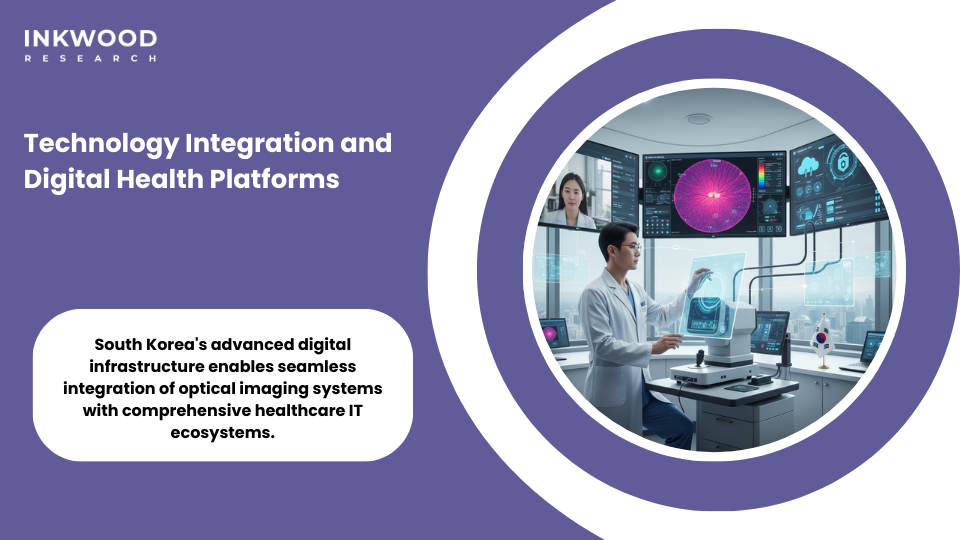
South Korea’s advanced digital infrastructure enables seamless integration of optical imaging systems with comprehensive healthcare IT ecosystems.
Electronic Health Record Integration
Korean hospitals implement sophisticated EHR systems incorporating optical imaging data alongside traditional medical records. Consequently, clinicians access comprehensive patient imaging histories supporting longitudinal disease monitoring and treatment optimization. Moreover, standardized data formats facilitate image sharing across healthcare institutions and enable population health analytics.
Cloud-based image storage and management systems provide secure, scalable solutions for growing imaging datasets. Therefore, healthcare providers can implement advanced optical imaging without substantial on-site IT infrastructure investments.
Telemedicine and Remote Consultation
Korea’s telemedicine framework enables remote specialist consultation using optical imaging data transmitted from peripheral healthcare facilities. For example, community clinics perform retinal imaging with interpretation provided by distant ophthalmologists through secure telehealth platforms. Similarly, gastroenterologists review endoscopy images from multiple sites, improving diagnostic consistency and reducing geographic disparities.
Particularly relevant during pandemic responses, telemedicine capabilities maintained screening program continuity despite social distancing requirements. Additionally, remote monitoring reduces patient travel burden while expanding specialist access to underserved populations.
Artificial Intelligence Integration
Korean healthcare institutions aggressively adopt AI-powered medical imaging analysis, reflecting the nation’s technological sophistication. Deep learning algorithms trained on large Korean patient datasets detect diseases with accuracy matching or exceeding human experts. Furthermore, AI systems highlight suspicious findings, quantify disease severity, and predict progression risk, supporting clinical decision-making.
Government initiatives provide funding, data sharing frameworks, and regulatory support, accelerating AI medical device development and deployment. Consequently, Korea emerges as a leading AI medical imaging market with substantial growth potential.
Clinical Applications Across Disease Categories
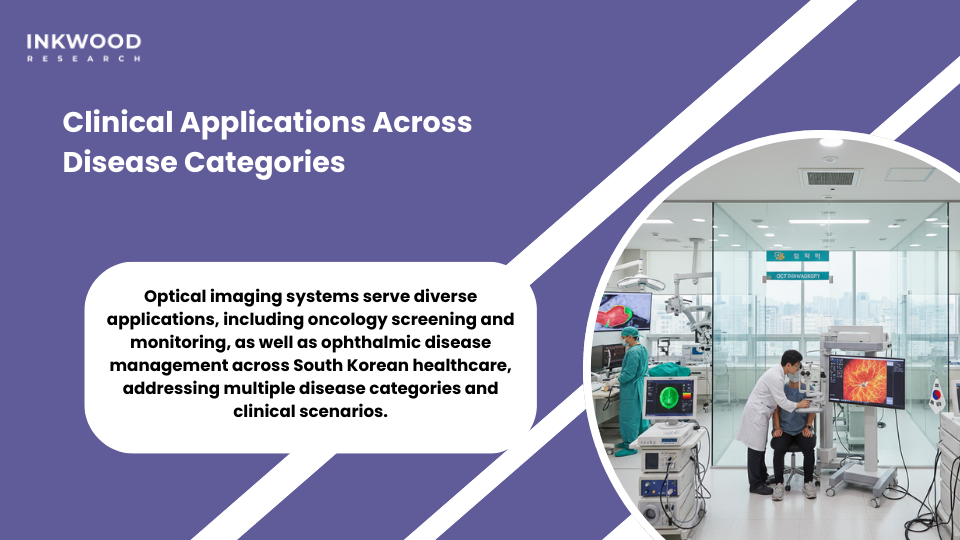
Optical imaging systems serve diverse applications, including oncology screening and monitoring, as well as ophthalmic disease management across South Korean healthcare, addressing multiple disease categories and clinical scenarios.
Oncology Screening and Monitoring
- Korean cancer centers utilize multimodal optical imaging for early detection, treatment planning, and response monitoring. Fluorescence endoscopy improves early gastric and colorectal cancer detection during screening procedures. Meanwhile, preclinical optical imaging systems accelerate cancer drug development through non-invasive tumor monitoring in research models.
- Intraoperative fluorescence imaging guides surgical resection in hospitals performing complex oncologic procedures. For instance, near-infrared imaging using indocyanine green helps surgeons identify sentinel lymph nodes, assess tissue perfusion, and verify complete tumor removal. Consequently, surgical outcomes improve through enhanced visualization capabilities.
Ophthalmic Disease Management
- Korean ophthalmology practices lead Asia in adopting advanced OCT technologies for comprehensive eye examinations. Multimodal imaging platforms combining OCT, fundus photography, and OCT angiography enable efficient workflow management of high patient volumes. Additionally, portable devices extend screening programs beyond traditional clinical settings.
- Research collaborations between Korean ophthalmologists and device manufacturers accelerate technology development, addressing Asian-specific eye diseases. For example, myopia progression monitoring systems serve Korea’s high myopia prevalence population through specialized imaging protocols.
Dermatology and Skin Cancer Detection
- Korean dermatology clinics implement confocal optical imaging and dermoscopy for skin cancer screening and cosmetic applications. Reflectance confocal microscopy provides non-invasive cellular-resolution imaging supporting diagnosis without biopsy. Furthermore, multi-spectral imaging systems assess pigmentation disorders, vascular conditions, and treatment responses.
- Korea’s large medical aesthetics market drives demand for optical imaging technologies quantifying skin quality, treatment efficacy, and aging indicators. Therefore, both medical and cosmetic dermatology applications contribute to market growth.
Cardiovascular Disease Assessment
- Interventional cardiology programs at major Korean hospitals utilize intravascular OCT during complex coronary interventions. High-resolution imaging enables optimal stent selection, deployment verification, and complication detection.
- Additionally, research initiatives explore optical imaging for peripheral vascular disease assessment and carotid plaque characterization.
Competitive Landscape and Market Dynamics
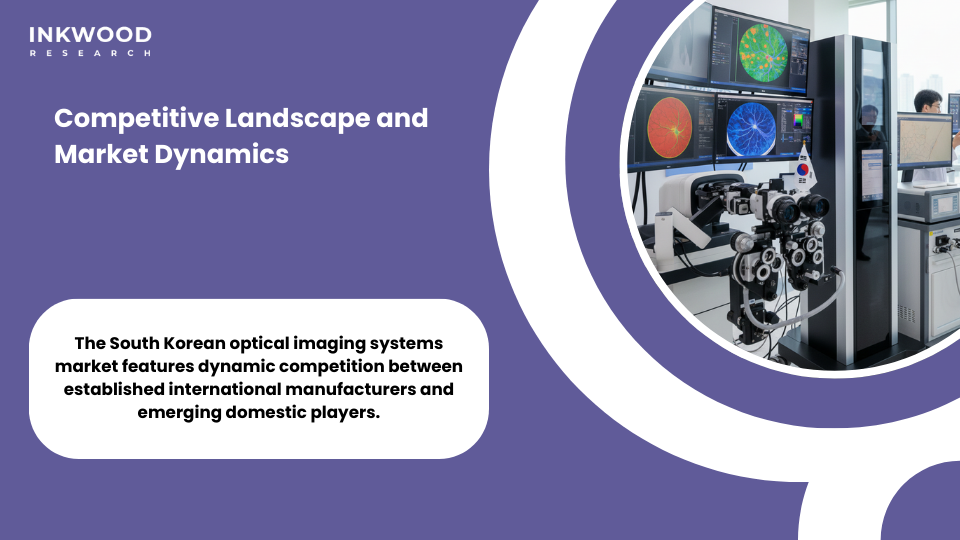
The South Korean optical imaging systems market features dynamic competition between established international manufacturers and emerging domestic players.
International Medical Device Leaders
Global ophthalmology companies, including Carl Zeiss Meditec, Heidelberg Engineering, Topcon, and Nikon, maintain strong positions in Korean markets through superior technology, extensive clinical validation, and local distribution networks. These manufacturers provide comprehensive product portfolios, technical support, and training programs supporting widespread adoption.
Similarly, endoscopy leaders like Olympus, Fujifilm, and Pentax dominate gastroenterology markets through established relationships with Korean hospitals and advanced imaging technologies addressing local clinical needs.
Domestic Korean Manufacturers
Korean medical device companies increasingly develop competitive optical imaging solutions leveraging local manufacturing capabilities and deep market understanding. For instance, Lutronic Corporation produces aesthetic lasers and imaging devices serving dermatology applications. Meanwhile, companies like DongWoo Science and Technology develop specialized microscopy and imaging systems for research and clinical markets.
Domestic manufacturers benefit from proximity to customers, responsive technical support, and potentially faster regulatory approval through local MFDS relationships. Additionally, the Korean government procurement preferences may favor domestic suppliers when technical capabilities match international alternatives.
Samsung and Technology Giants
Samsung’s entry into medical imaging through Samsung Medison brings substantial resources, technological expertise, and brand recognition. Their ultrasound systems incorporate advanced imaging modes and AI capabilities, reflecting Samsung’s broader technology leadership. Moreover, Samsung’s ecosystem integration strategies may create synergies between medical devices, smartphones, and digital health platforms.
Other Korean technology companies explore medical imaging opportunities leveraging display technologies, semiconductor capabilities, and AI expertise. Therefore, market dynamics may shift as technology giants increasingly recognize healthcare’s strategic importance.
Research Institutions and Startups
Korean universities and research institutes actively develop novel optical imaging technologies, transitioning to commercialization through startup companies and licensing agreements. Government support programs provide funding, mentorship, and commercialization assistance, accelerating technology translation.
For example, Korea Advanced Institute of Science and Technology (KAIST) researchers develop innovative microscopy techniques, photoacoustic imaging systems, and portable diagnostic devices. Subsequently, startup companies like Celltrion and others commercialize these innovations, targeting both domestic and international markets.
Recent Innovations and Product Launches
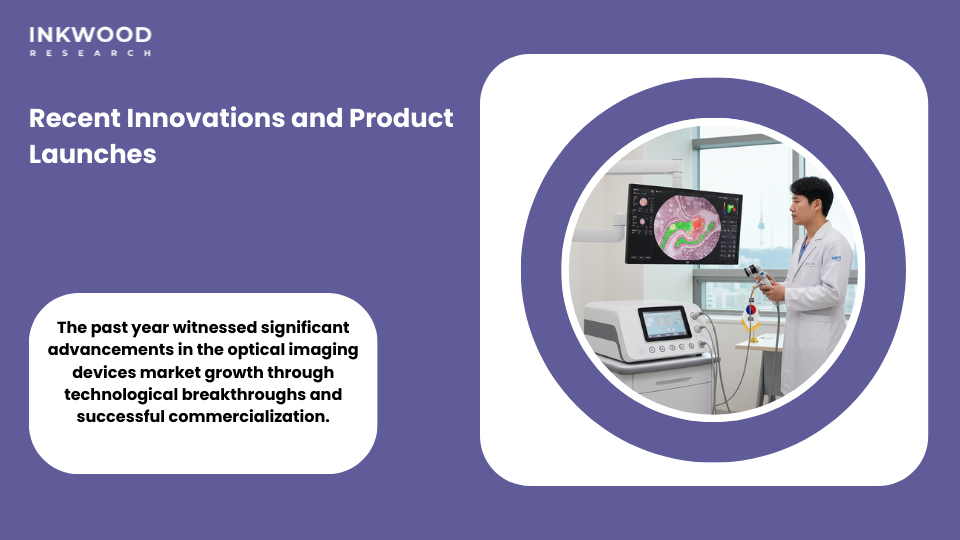
The past year witnessed significant advancements in the optical imaging devices market growth through technological breakthroughs and successful commercialization.
AI-Enhanced Diagnostic Platforms
Multiple Korean companies launched AI-powered optical imaging analysis platforms during 2024-2025. For instance, deep learning algorithms for diabetic retinopathy screening received MFDS approval, enabling automated analysis of fundus photographs and OCT images. Consequently, primary care physicians can perform retinal screening without specialist expertise.
Similarly, AI-enhanced endoscopy systems detect polyps, classify lesions, and provide real-time guidance during procedures. Korean gastroenterologists participating in clinical trials reported improved detection rates and reduced examination times using AI assistance.
Portable Screening Solutions
Manufacturers introduced compact, portable optical imaging devices, expanding the screening program’s reach beyond traditional clinical settings. Handheld fundus cameras weighing under one kilogram enable retinal photography in community health centers, nursing homes, and workplace screening programs.
Meanwhile, portable OCT devices provide point-of-care imaging during home visits and mobile clinic operations. These technologies align perfectly with Korea’s push toward community-based preventive healthcare and elder care programs. Therefore, adoption accelerates, driven by both clinical benefits and policy support.
Wearable Health Monitoring
Wearable optical imaging systems emerged as an exciting innovation area combining photoplethysmography, spectroscopy, and miniaturized optics for continuous health monitoring. Smart watches and fitness bands already incorporate basic optical sensors measuring heart rate and oxygen saturation. However, next-generation devices may enable glucose monitoring, hydration assessment, and other metabolic parameters through advanced optical techniques.
Korean electronics companies possess ideal capabilities for developing sophisticated wearable health devices integrating optical imaging with smartphones, cloud analytics, and AI interpretation. Consequently, this segment may experience dramatic growth as technologies mature and regulatory pathways clarify.
Molecular Imaging Agents
Research collaborations between Korean universities, pharmaceutical companies, and imaging device manufacturers advance fluorescent probe development for molecular optical imaging. For example, targeted fluorescent tracers binding specific tumor markers may improve surgical guidance beyond what structural imaging alone achieves.
Additionally, fluorescent antibodies enable immune cell tracking, inflammation monitoring, and treatment response assessment across various diseases. While primarily research applications currently, clinical translation may accelerate through Korea’s streamlined regulatory pathways and RWE acceptance.
Future Trajectory and Growth Drivers
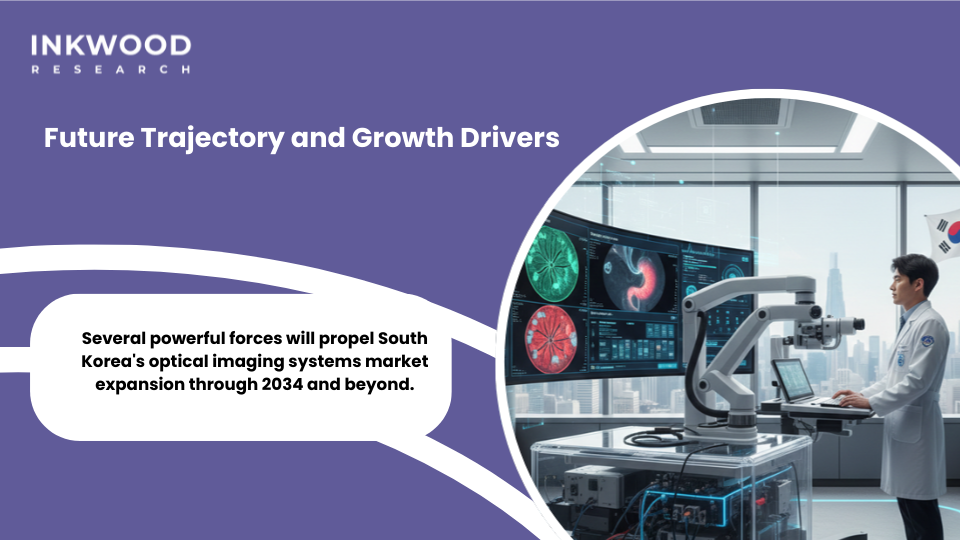
Several powerful forces will propel South Korea’s optical imaging systems market expansion through 2034 and beyond.
Demographic Imperatives
Korea faces one of the world’s most rapidly aging populations, creating unprecedented healthcare challenges and opportunities. Age-related diseases, including macular degeneration, glaucoma, cancers, and cardiovascular conditions, demand efficient screening and monitoring systems. Therefore, optical imaging technologies enabling early detection and longitudinal tracking have become an essential healthcare infrastructure.
Moreover, declining birth rates and workforce constraints necessitate productivity enhancements through automation, AI assistance, and efficient diagnostic workflows. Consequently, advanced optical imaging systems offering rapid, accurate assessments without extensive specialist involvement gain strategic importance.
Government Policy Support
The Korean government prioritizes healthcare innovation through substantial research funding, favorable regulatory policies, and reimbursement frameworks supporting advanced diagnostics. For instance, national health insurance coverage expands for proven screening technologies demonstrating cost-effectiveness through early disease detection.
Additionally, smart healthcare initiatives integrate optical imaging with big data analytics, AI platforms, and personalized medicine approaches. Government investment in digital health infrastructure creates an enabling environment for innovative technology deployment.
Technology Convergence
Optical imaging increasingly converges with other technologies, creating enhanced diagnostic capabilities. For example, photoacoustic imaging combines optical and ultrasound principles for improved tissue characterization. Meanwhile, multimodal platforms integrating optical imaging with other modalities provide comprehensive assessments through unified devices.
Furthermore, integration with genomics, proteomics, and metabolomics data enables precision medicine approaches guided by both molecular and imaging biomarkers. Korean researchers actively pursue these convergent technologies through interdisciplinary collaborations.
International Market Access
Korean manufacturers increasingly pursue international markets, leveraging technology capabilities, competitive pricing, and successful domestic adoption as market validation. FDA and European regulatory approvals open major markets, while partnerships with multinational distributors facilitate global commercialization.
Conversely, international manufacturers recognize Korea’s strategic importance as an Asian market gateway and innovation hub. Therefore, bidirectional technology flow accelerates as companies establish local presence through acquisitions, partnerships, and R&D facilities.
Key Takeaways
Our comprehensive analysis of South Korea’s optical imaging systems industry trends reveals several critical insights:
- Exceptional Growth Trajectory: South Korea’s market will expand from US$85.89 million in 2026 to US$229.23 million by 2034, achieving 13.05% CAGR—the highest among major markets through strategic focus on early detection and digital health.
- Regulatory Innovation: MFDS’s acceptance of Real-World Evidence since 2023 dramatically accelerated approval timelines for innovative optical imaging technologies, particularly AI-enhanced and digital health devices.
- Prevention Focus: National health policy emphasis on early detection creates sustained demand for optical imaging technologies, enabling efficient population screening across multiple disease categories.
- Technology Leadership: Korea’s electronics and IT capabilities, combined with healthcare innovation ambitions, position the nation as both a major market and strategic innovation hub for advanced optical imaging systems.
- Ecosystem Integration: Successful adoption requires integration with digital health infrastructure, including EHRs, telemedicine platforms, and AI analytics, rather than standalone device deployment.
Conclusion:
South Korea’s optical imaging systems market represents an exceptional growth opportunity driven by favorable demographics, progressive healthcare policy, regulatory innovation, and technological sophistication. The nation’s strategic focus on preventive care and early disease detection aligns perfectly with optical imaging’s core value proposition of non-invasive, accurate, real-time diagnostics.
Healthcare providers increasingly recognize these technologies as essential infrastructure supporting population health management rather than optional advanced capabilities. Meanwhile, regulatory acceleration through RWE acceptance and international harmonization reduces market entry barriers for innovative products.
Organizations seeking success in Korean markets must understand that rapid technology adoption reflects sophisticated evaluation frameworks rewarding genuine clinical value and seamless ecosystem integration. Therefore, comprehensive strategies addressing regulatory compliance, clinical validation, reimbursement pathways, and digital integration prove essential.
Ready to capitalize on South Korea’s optical imaging opportunity?
Inkwood Research provides customized market intelligence, competitive analysis, and regulatory guidance, helping organizations navigate this dynamic market. Our insights support strategic planning, partnership development, and commercialization optimization. Contact our consulting team to discuss how we can accelerate your success in Korea’s rapidly evolving optical imaging landscape.
Frequently Asked Questions
What makes South Korea's optical imaging market particularly attractive?
South Korea combines rapid growth (13.05% CAGR), a progressive regulatory framework accepting Real-World Evidence, comprehensive national screening programs, advanced digital infrastructure, and government commitment to healthcare innovation. Additionally, a strategic position provides Asian market access.
How does MFDS approval compare to FDA processes?
MFDS approval timelines vary by classification, but are increasingly competitive through RWE acceptance and streamlined pathways. The 2023 FDA-MFDS harmonization agreement for AI devices facilitates parallel development programs. However, K-GMP certification and Korean documentation requirements add unique considerations.
Which optical imaging applications show the strongest growth potential?
Early detection screening applications across diabetic retinopathy, gastrointestinal cancers, and cardiovascular disease lead adoption. Additionally, portable devices, AI-enhanced platforms, and wearable systems address Korea’s preventive healthcare priorities and digital transformation initiatives.