Table of Contents
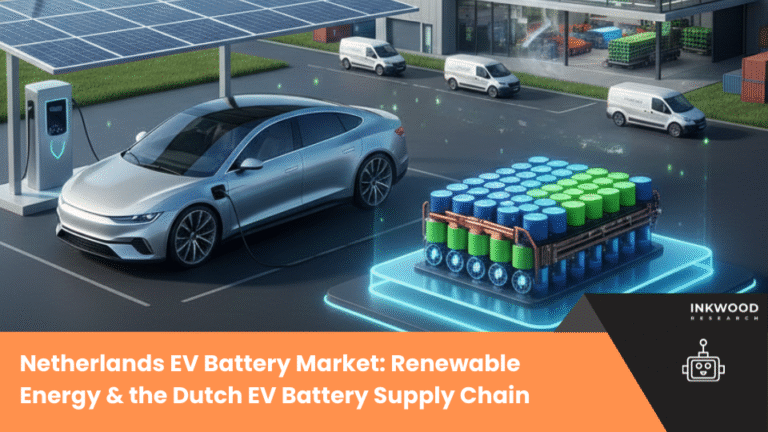
This analysis is brought to you by Inkwood Research, a leading market intelligence firm specializing in European renewable energy integration, battery energy storage systems, and sustainable transportation ecosystems. Our research team combines extensive experience analyzing offshore wind power development, grid infrastructure modernization, and electric vehicle supply chain sustainability across the Netherlands, Germany, Belgium, and the Nordic regions. Based on our proprietary research methodologies and strategic partnerships with Dutch energy operators, battery storage developers, automotive manufacturers, and renewable energy providers, we deliver actionable insights that empower strategic decision-making for global enterprises navigating the Netherlands’ electric vehicle battery market transformation and clean energy transition.
TLDR
The Netherlands electric vehicle battery market achieves sustainable growth through renewable energy integration, reaching US$977.71 million in 2025, projected to US$2.15 billion by 2032. Electric vehicle battery market sustainability advances through offshore wind power, battery energy storage systems, and grid modernization. Dutch EV battery supply chain incorporates 50% renewable energy in domestic production. Sustainable EV battery solutions leverage wind and solar power, reducing carbon footprints. EV battery manufacturing processes integrate clean energy infrastructure supporting global electric vehicle battery market decarbonization goals.
This sustainability-focused analysis benefits renewable energy investment analysts, automotive sustainability officers, battery supply chain managers, grid infrastructure planners, and environmental policy strategists. Clean technology investors evaluating Dutch market opportunities, energy storage system developers, automotive procurement teams prioritizing sustainable EV battery solutions, and corporate sustainability directors implementing decarbonization strategies will gain critical intelligence on renewable energy integration within EV battery production ecosystems.
The Dutch Renewable Energy Revolution: Setting the Stage
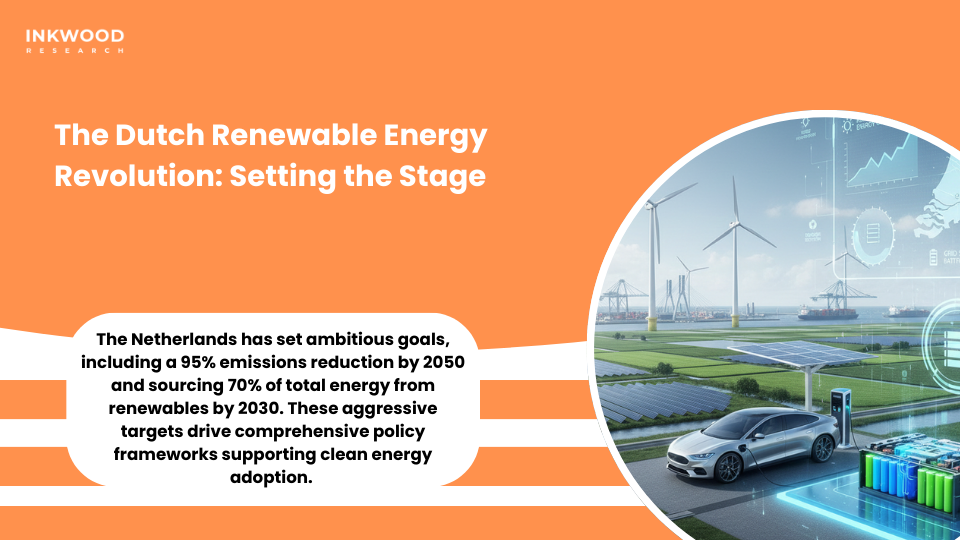
The Netherlands positions itself at the forefront of Europe’s clean energy transition. The Netherlands electric vehicle battery market reached US$977.71 million in 2025, projected to achieve US$2.15 billion by 2032 at 11.95% CAGR. This growth trajectory reflects sustainable energy integration throughout automotive supply chains.
Ambitious Renewable Energy Targets
The Netherlands has set ambitious goals, including a 95% emissions reduction by 2050 and sourcing 70% of total energy from renewables by 2030. These aggressive targets drive comprehensive policy frameworks supporting clean energy adoption. Consequently, battery manufacturing and EV charging infrastructure increasingly utilize renewable sources.
In the first half of 2024, renewables made up more than 50% of domestic energy production, with 32.3 billion kWh reported. Wind power, especially offshore installations, dominates renewable generation. Solar capacity expands rapidly across agricultural and commercial properties. Meanwhile, biomass provides consistent baseload renewable energy.
EV Market Growth and Sustainability
In Q1 2025, EV sales in the Netherlands showed significant growth, with projections indicating 174,400 units for the year, up from 157,680 in 2024. This growth stems from increased consumer purchasing power and government sustainability commitments. Tax benefits and subsidies continue driving consumer adoption rates substantially.
Dutch consumers demonstrate strong environmental consciousness, influencing purchasing decisions. The alignment between renewable energy availability and EV adoption creates synergistic benefits. Vehicles charged with clean electricity maximize environmental advantages. Furthermore, government policies ensure continued support for both renewable energy and electric transportation.
Integration Challenges and Solutions
The Netherlands faces complex challenges with grid congestion more pronounced than in other European countries. Rapid renewable buildout outpaces grid infrastructure development. Battery energy storage systems address these integration challenges effectively. Moreover, demand-side flexibility programs optimize energy consumption patterns.
Renewable energy intermittency requires sophisticated balancing mechanisms. Wind and solar generation fluctuate with weather conditions. Consequently, storage systems buffer supply variability, ensuring grid stability. Advanced forecasting tools predict generation patterns, improving system management. Additionally, international grid connections provide backup capacity during shortfalls.
Offshore Wind Power: Backbone of Clean EV Battery Production
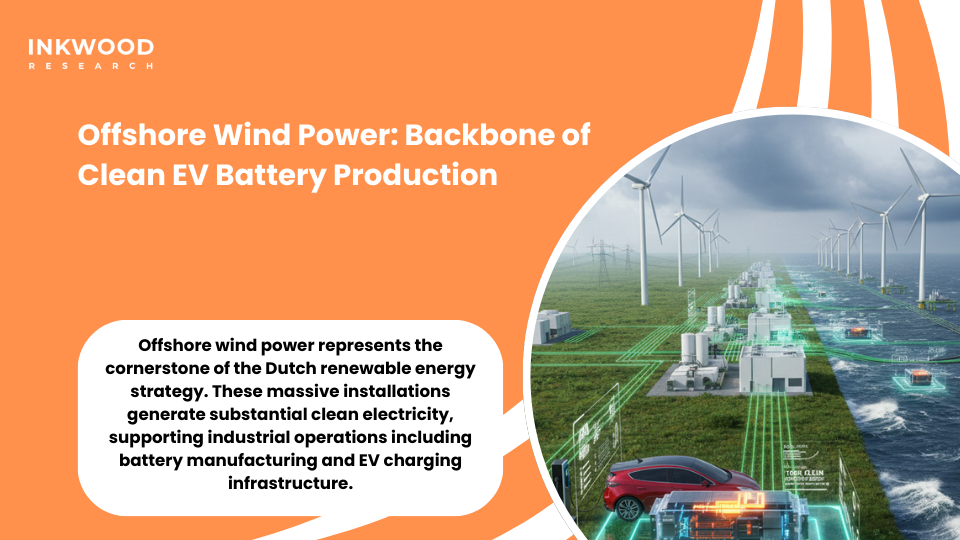
Offshore wind power represents the cornerstone of the Dutch renewable energy strategy. These massive installations generate substantial clean electricity, supporting industrial operations including battery manufacturing and EV charging infrastructure.
Offshore Wind Capacity Growth
The Netherlands invests heavily in offshore wind farm development. North Sea installations benefit from consistent wind resources and proximity to major consumption centers. Government auctions allocate seabed space to developers systematically. Subsequently, capacity increases dramatically year over year.
Multiple gigawatt-scale projects currently operate or are under construction. These installations generate enough electricity to power millions of homes and businesses. Industrial consumers, including automotive manufacturers, increasingly contract directly with wind farms. Power purchase agreements provide cost certainty while supporting renewable development.
OranjeWind Project Integration
OranjeWind, the Dutch offshore wind project by RWE and TotalEnergies, establishes new ways to integrate intermittent renewable generation into the energy system. The project incorporates electrolyzers, smart charging stations, and battery storage systems. This comprehensive approach maximizes renewable energy utilization.
System integration solutions ensure wind power reaches end users efficiently. Battery storage buffers generation variability, maintaining grid stability. Smart charging stations adjust EV charging rates based on renewable availability. Meanwhile, electrolyzers convert excess electricity into hydrogen for storage. These complementary technologies optimize overall system efficiency substantially.
Direct Industrial Power Agreements
Battery manufacturers increasingly secure direct power purchase agreements with offshore wind developers. These contracts provide renewable electricity at competitive prices. Moreover, they offer long-term cost predictability supporting business planning. Corporate sustainability goals drive renewable energy procurement strategies.
Green power purchase agreements ensure electricity originates from renewable sources verifiably. Certificates track renewable generation and consumption matching requirements. Consequently, battery manufacturers demonstrate supply chain sustainability credibly. European regulations increasingly mandate carbon footprint disclosure, making renewable sourcing essential.
Future Offshore Expansion Plans
Dutch authorities plan substantial offshore wind capacity additions through 2030. New auction rounds allocate additional seabed areas to developers. Technology improvements reduce costs while increasing generation efficiency. Floating offshore wind platforms enable installations in deeper waters, expanding available resources.
Integration with hydrogen production creates additional flexibility mechanisms. Excess wind generation converts to hydrogen, avoiding curtailment. Subsequently, hydrogen serves transportation, industrial processes, and long-term energy storage. This sector coupling maximizes renewable energy value comprehensively.
Battery Energy Storage Systems: Balancing Renewable Intermittency
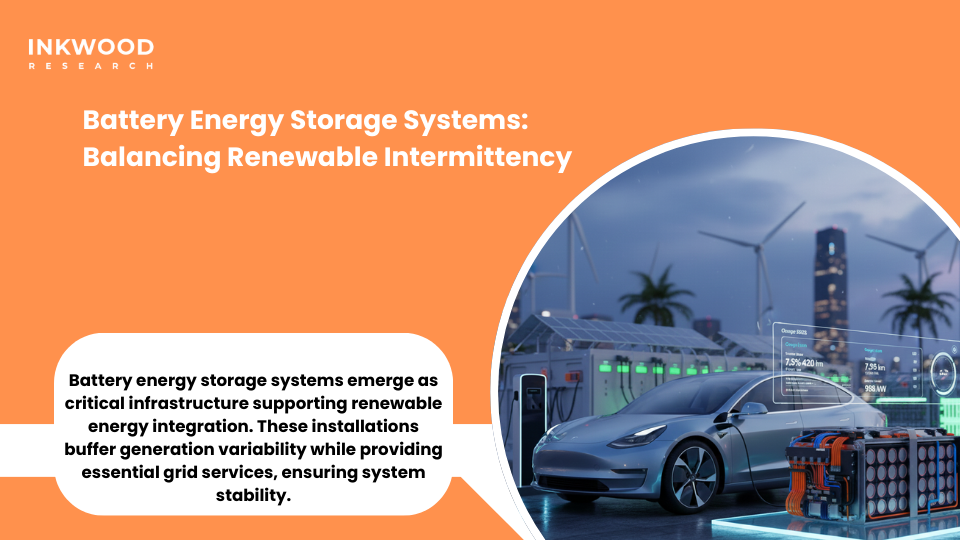
Battery energy storage systems emerge as critical infrastructure supporting renewable energy integration. These installations buffer generation variability while providing essential grid services, ensuring system stability.
Explosive Storage Capacity Growth
- At the end of 2024, the Netherlands counted 84 large-scale battery storage systems (≥1 MWh), totaling 350 MW capacity and 620 MWh storage. This represents more than doubling from 40 systems in 2023. Storage capacity increased 81 percent from 343 to 620 MWh annually.
- Growth trajectories suggest continued rapid expansion through 2030. Dutch grid operators developed scenarios projecting 5.2 GW to 12.7 GW grid-scale battery storage by 2030, expanding to 8 GW to 19.5 GW by 2035. These ambitious targets reflect system integration requirements as renewable penetration increases.
Major Storage Projects
- Dispatch Energy announced plans to build the Netherlands’ largest standalone 45 MW/90 MWh battery storage system in Dordrecht. The facility, consisting of 144 Fluence cubes, stores energy equivalent to 21,500 households daily. Eneco will optimize the system across various power markets.
- Rotterdam-based S4 Energy commissioned a 10 MW/40 MWh battery system in Rilland, marking the first four-hour duration system in the country. This longer discharge capability distinguishes it from shorter-duration frequency regulation systems. Four-hour batteries enable full-stack energy market participation.
Grid Stabilization Services
- Battery storage provides multiple grid services simultaneously. Frequency regulation maintains system stability by responding to instantaneous imbalances. Voltage support ensures power quality across transmission networks. Additionally, congestion management alleviates bottlenecks in constrained areas.
- RWE’s ultra-fast battery storage system with 7.5 MW capacity provides grid-forming functionality, taking over important functions traditionally performed by conventional power plants. This capability becomes increasingly critical as renewable penetration grows. Battery systems ensure grid reliability without fossil fuel generation.
Revenue Optimization Strategies
- The Netherlands joined PICASSO, Europe’s cross-border balancing platform for aFRR, in October 2024. This integration saw a significant reduction in imbalance price volatility. However, opportunities exist for sophisticated revenue diversification strategies. Battery operators stack multiple revenue streams, maximizing economic returns.
- Energy arbitrage capitalizes on price differentials between high and low demand periods. Ancillary services provide consistent revenue supporting system operations. Capacity markets compensate reliability contributions. Moreover, bilateral contracts with large consumers offer additional income streams. This diversification improves project economics substantially.
Grid Infrastructure Modernization Supporting EV Charging
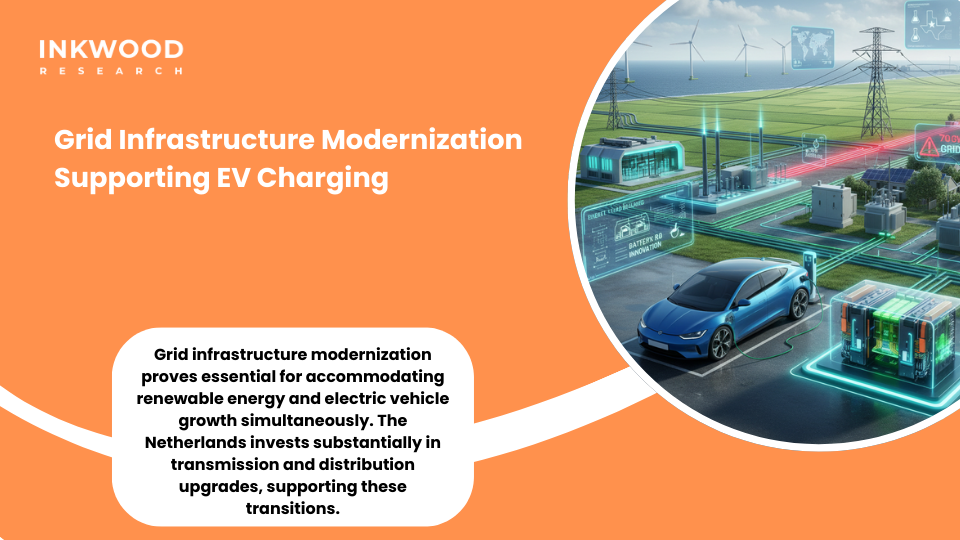
Grid infrastructure modernization proves essential for accommodating renewable energy and electric vehicle growth simultaneously. The Netherlands invests substantially in transmission and distribution upgrades, supporting these transitions.
Grid Congestion Challenges
Up to 70 GW of battery systems are on the waiting list for grid connection in the Netherlands, an astonishing number even considering potential duplications. This backlog demonstrates infrastructure constraints limiting renewable and storage deployment. Consequently, grid expansion becomes a critical priority.
Congestion particularly affects industrial areas and renewable generation zones. Connection delays frustrate developers and slow energy transition progress. TenneT decided to allocate 9 GW via off-peak capacity contracts, incentivizing heavy consumers to shift usage to low-demand periods. This demand-side management partially alleviates congestion pressures.
Transmission System Operator Initiatives
TenneT, the Dutch transmission system operator, implements comprehensive grid modernization programs. High-voltage transmission lines expand, connecting offshore wind farms to consumption centers. Substations upgrade accommodating bidirectional power flows. Moreover, digital control systems optimize network operations dynamically.
International interconnections enhance system flexibility substantially. Connections with Germany, Belgium, and the United Kingdom enable cross-border electricity trading. Excess renewable generation exports to neighboring markets. Conversely, imports supplement domestic generation during shortfalls. These interconnections improve overall system reliability.
Smart Charging Infrastructure
Technological innovations, particularly in battery technology, have been pivotal, with collaborations between Dutch and Texan companies developing next-generation systems. Integration of renewable energy into EV charging infrastructure aligns with national sustainability goals.
Smart charging stations adjust power delivery based on grid conditions and renewable availability. During high wind or solar generation periods, charging rates increase, maximizing clean energy utilization. Conversely, charging slows during peak demand, protecting grid stability. Vehicle-to-grid technology enables EVs to discharge electricity back to the networks. This bidirectional capability provides valuable flexibility services.
Distribution Network Upgrades
Local distribution networks require substantial upgrades supporting EV charging proliferation. Residential areas install numerous charging points, stressing existing infrastructure. Transformers upgrade handling increased electrical loads. Additionally, voltage regulation equipment ensures power quality remains acceptable.
Planning processes incorporate EV adoption forecasts projecting future infrastructure requirements. Proactive upgrades prevent bottlenecks from limiting deployment. Furthermore, coordination between network operators and municipal governments ensures efficient implementation. These collaborative approaches accelerate infrastructure development substantially.
Sustainable Supply Chain Integration: From Materials to Manufacturing
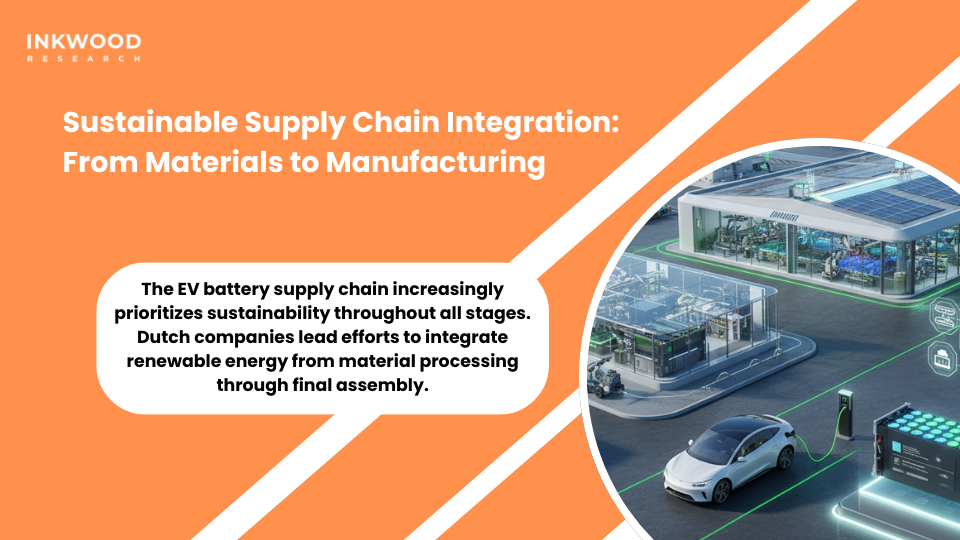
The EV battery supply chain increasingly prioritizes sustainability throughout all stages. Dutch companies lead efforts to integrate renewable energy from material processing through final assembly.
Import Dependency and Sustainability
The Netherlands continues to rely heavily on imports to meet growing demand for EV batteries. Strategic trade position and advanced logistics infrastructure facilitate efficient import management. However, reliance on imports challenges domestic manufacturing sustainability goals.
Dutch ports serve as major entry points for battery components and raw materials. Rotterdam’s extensive facilities handle bulk shipments efficiently. Subsequently, materials are distributed throughout European manufacturing networks. This logistics advantage positions the Netherlands strategically within European supply chains.
Renewable Energy in Manufacturing
Battery manufacturers operating in or supplying the Netherlands increasingly use renewable electricity. European regulations mandate carbon footprint disclosure, encouraging clean energy adoption. Consequently, manufacturers secure green power purchase agreements demonstrating sustainability credentials.
Production facilities install on-site solar panels to supplement grid electricity. Combined heat and power systems improve overall energy efficiency. Meanwhile, waste heat recovery reduces total energy consumption. These integrated approaches minimize carbon footprints comprehensively.
Circular Economy Initiatives
The focus on sustainability is evident in initiatives for battery recycling and second-life applications. Used EV batteries retain 70-80% capacity, suitable for stationary storage. These applications extend battery lifespans before recycling becomes necessary.
Recycling facilities recover valuable materials, including lithium, cobalt, and nickel. Advanced processes achieve 95% recovery rates. Subsequently, recycled materials reduce mining requirements and associated environmental impacts. Circular economy principles minimize waste while conserving resources effectively.
Regulatory Drivers
Government policies and environmental regulations significantly influence EV battery market dynamics. Ambitious emission reduction targets drive market growth. Regulatory support for charging infrastructure expansion facilitates EV adoption. Moreover, sustainability requirements shape supply chain practices.
European battery regulations mandate carbon footprint labeling and recycled content requirements. These standards push manufacturers toward cleaner production processes. Additionally, due diligence requirements ensure responsible material sourcing. Consequently, sustainability becomes a competitive differentiator within markets.
Renewable-Powered Charging Infrastructure Expansion
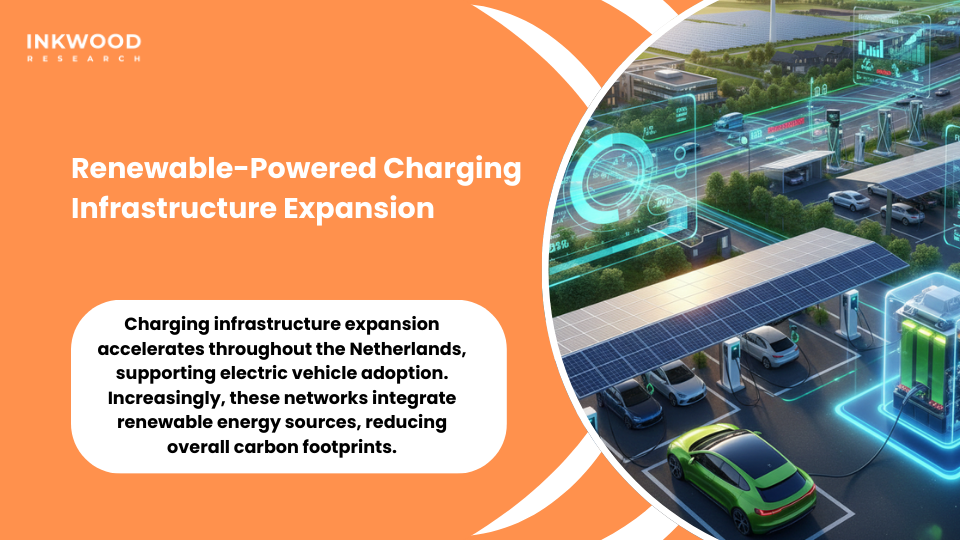
Charging infrastructure expansion accelerates throughout the Netherlands, supporting electric vehicle adoption. Increasingly, these networks integrate renewable energy sources, reducing overall carbon footprints.
Public Charging Network Growth
The Netherlands boasts one of Europe’s densest public charging networks. Thousands of charging points are distributed across urban and rural areas. Government support accelerates deployment, ensuring adequate coverage. Meanwhile, private operators compete by offering various service levels and pricing structures.
Fast charging corridors connect major cities, facilitating long-distance travel. High-power chargers reduce charging times significantly, improving user experience. Strategic placement along highways ensures convenient access. Furthermore, amenities at charging locations enhance overall customer satisfaction.
Solar-Powered Charging Stations
Many charging stations incorporate on-site solar generation. Canopy-mounted panels provide shade while generating electricity. This distributed generation reduces grid dependence and transmission losses. Moreover, solar integration demonstrates a visible sustainability commitment.
Battery storage buffers solar intermittency, ensuring consistent charging availability. Energy management systems optimize between solar generation, battery storage, and grid supply. Consequently, renewable energy utilization maximizes throughout daily cycles. These integrated systems showcase clean technology synergies effectively.
Smart Charging Technologies
Advanced charging systems adjust power delivery based on multiple factors simultaneously. Grid congestion signals trigger load modulation, preventing infrastructure overload. Renewable generation forecasts optimize charging schedules, maximizing clean energy utilization. Additionally, electricity price signals encourage cost-effective charging behaviors.
Vehicle-to-grid capabilities enable bidirectional power flows supporting grid services. Parked EVs provide valuable flexibility resources during peak demand periods. This aggregated capacity substitutes for conventional generation resources. Furthermore, vehicle owners earn revenue by providing these services, creating win-win scenarios.
Workplace and Residential Charging
Workplace charging installations proliferate as employers support employee EV adoption. These systems typically charge during business hours, coinciding with solar generation peaks. Consequently, renewable energy utilization rates improve substantially. Moreover, convenient workplace charging alleviates range anxiety concerns.
Residential charging infrastructure expands rapidly in new housing developments. Building codes increasingly require EV-ready electrical installations. Existing properties retrofit charging capabilities driven by consumer demand. Home charging provides convenience while typically utilizing lower-cost electricity during off-peak periods.
Competitive Landscape: Dutch Energy and Automotive Players
The Netherlands electric vehicle battery market features diverse players spanning energy operators, technology providers, and automotive manufacturers. These companies collaborate to create integrated ecosystems supporting sustainable transportation.
Eneco: Leading Energy Storage Operator
Eneco emerges as a major battery storage operator optimizing systems across power markets. They will optimize the 45 MW/90 MWh Dordrecht facility, maintaining grid balance without increasing local congestion. Their expertise in energy trading maximizes storage system revenues.
Eneco’s renewable energy portfolio includes substantial wind and solar generation capacity. This vertical integration enables sophisticated energy management strategies. Battery storage complements renewable generation, addressing intermittency challenges. Moreover, their market knowledge ensures optimal system utilization.
RWE: Innovation in Grid Services
RWE builds ultra-fast battery storage systems with grid-forming functionality on its Moerdijk power plant site. Their 7.5 MW/11 MWh system provides instantaneous reserve power. Additionally, it demonstrates advanced inertia services supporting grid stability.
RWE’s involvement in the OranjeWind offshore project showcases integrated renewable development. Their battery storage complements wind generation, optimizing overall system performance. Furthermore, their international experience accelerates Dutch market development. Technology transfers from other markets benefit local deployments.
S4 Energy: Pioneering Long-Duration Storage
Rotterdam-based S4 Energy operates the first four-hour duration battery system in the Netherlands. Their 10 MW/40 MWh installation distinguishes itself from shorter-duration alternatives. Management notes grid strain from growing demand and renewable-demand mismatches.
S4 Energy anticipates market shifts toward full-stack energy participation. Four-hour systems capture broader market opportunities beyond ancillary services. Their strategic positioning provides first-mover advantages as markets evolve. Moreover, operational experience informs future project development.
Automotive Manufacturers
Major automotive brands serve the Dutch market with expanding EV portfolios. Tesla maintains a strong presence with its supercharger network and vehicle sales. Meanwhile, European manufacturers, including Volkswagen, BMW, and Mercedes-Benz, offer diverse model ranges.
Manufacturers increasingly emphasize sustainability throughout vehicle lifecycles. Supply chain carbon footprint disclosure becomes a competitive differentiator. Consequently, partnerships with renewable energy providers strengthen brand positioning. Dutch consumers particularly value environmental credentials, influencing purchasing decisions.
Latest Battery Storage and Renewable Energy Projects
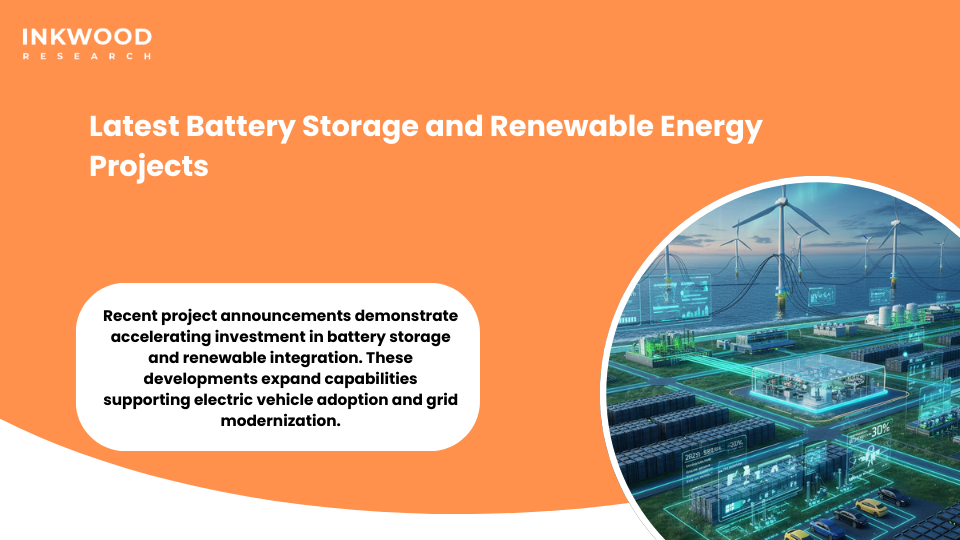
Recent project announcements demonstrate accelerating investment in battery storage and renewable integration. These developments expand capabilities supporting electric vehicle adoption and grid modernization.
Major Battery Storage Deployments
Multiple gigawatt-hour-scale battery projects entered operation recently. Storage capacity increased from 343 to 620 MWh in 2024, with installed capacity rising from 229 MW to 350 MW. This 53 percent capacity increase demonstrates rapid market development.
Project pipelines indicate continued strong growth through 2025 and beyond. Developers secure financing and grid connections for numerous installations. Technology costs decline, improving project economics. Meanwhile, regulatory frameworks increasingly support storage deployment.
Offshore Wind Farm Additions
Several major offshore wind farms reached commercial operation or advanced construction stages. These projects collectively add gigawatts of renewable generation capacity. Government auction results confirm continued offshore development through 2030.
Technology improvements reduce levelized costs, making offshore wind highly competitive. Larger turbines capture more energy per installation. Additionally, floating platforms enable deeper water deployments, expanding resource availability. These advancements ensure offshore wind remains a cornerstone of the Dutch energy strategy.
Smart Grid Technology Deployments
TenneT implements advanced grid management systems, optimizing network operations. Digital substations enable real-time monitoring and control. Machine learning algorithms predict demand and generation patterns. Subsequently, automated systems respond to changing conditions instantaneously.
Pilot projects test vehicle-to-grid technologies in real-world conditions. Results inform broader deployment strategies. Meanwhile, smart meter rollouts provide granular consumption data. This information enables sophisticated demand response programs to optimize system efficiency.
Hydrogen Integration Projects
Electrolyzer installations convert excess renewable electricity into hydrogen. This sector coupling provides long-term energy storage, complementing batteries. Hydrogen serves multiple applications, including industrial processes and heavy transportation.
Pilot projects demonstrate technical feasibility at scale. Economic analyses evaluate cost competitiveness against alternatives. Government support accelerates commercialization timelines. Moreover, hydrogen infrastructure development creates additional clean energy pathways.
Key Takeaways
- The Netherlands electric vehicle battery market reached US$977.71 million in 2025, growing to US$2.15 billion by 2032 at a 11.95% CAGR
- Renewables constituted more than 50% of domestic energy production in the first half of 2024, with 32.3 billion kWh generated
- Large-scale battery storage systems doubled from 40 (2023) to 84 (2024), with capacity increasing 81% to 620 MWh
- Grid operators project 5.2 GW to 12.7 GW battery storage by 2030, expanding to 8 GW to 19.5 GW by 2035
- EV sales projected at 174,400 units in 2025, up from 157,680 in 2024, demonstrating sustained growth
- The Netherlands joined the PICASSO cross-border balancing platform in October 2024, reducing imbalance price volatility
- Up to 70 GW of battery systems await grid connections, highlighting infrastructure expansion urgency
- Four-hour duration battery systems enable full-stack energy market participation beyond ancillary services
- Offshore wind farms provide a clean electricity backbone supporting industrial operations and EV charging
- Battery recycling and second-life applications advance circular economy principles, minimizing environmental impacts
Conclusion:
The Netherlands demonstrates how renewable energy integration transforms electric vehicle battery markets toward sustainability. Offshore wind power provides a clean electricity backbone supporting manufacturing and charging infrastructure. Battery energy storage systems address intermittency challenges while delivering essential grid services.
Grid infrastructure modernization accommodates renewable energy and electric vehicle growth simultaneously. Smart charging systems optimize energy flows, maximizing clean electricity utilization. Meanwhile, circular economy initiatives minimize environmental impacts through recycling and second-life applications.
Dutch energy operators, including Eneco, RWE, and S4 Energy, pioneer innovative storage solutions. Their projects showcase technology capabilities while generating valuable operational experience. Automotive manufacturers increasingly emphasize supply chain sustainability, responding to consumer preferences and regulatory requirements.
Looking forward, continued offshore wind expansion and battery storage deployment will strengthen renewable integration. Hydrogen technologies provide complementary long-term storage options. Together, these elements create comprehensive clean energy ecosystems supporting electric transportation transitions.
Are you ready to leverage renewable energy opportunities within EV battery supply chains? Inkwood Research provides a comprehensive analysis of Dutch energy markets, storage technologies, and automotive sustainability trends.
Our expert analysts deliver actionable insights on renewable integration strategies and competitive positioning. Contact us today for a consultation on optimizing your sustainable energy and transportation investments.
Frequently Asked Questions
How does renewable energy support Netherlands' EV battery supply chain?
Renewables constituted more than 50% of domestic energy production in 2024, with offshore wind providing clean electricity for manufacturing and charging infrastructure. Battery storage systems totaling 620 MWh buffer intermittency while smart charging optimizes renewable utilization, reducing supply chain carbon footprints significantly.
What battery storage capacity growth is projected in the Netherlands?
Large-scale battery systems doubled from 40 to 84 units in 2024, with capacity increasing 81% to 620 MWh. Grid operators project 5.2-12.7 GW by 2030, expanding to 8-19.5 GW by 2035. Four-hour duration systems enable full energy market participation beyond frequency regulation services.
How do Dutch companies integrate sustainability into EV battery supply chains?
Manufacturers secure green power purchase agreements using renewable electricity. Recycling initiatives recover 95% of battery materials while second-life applications extend useful lifespans. European regulations mandate carbon footprint disclosure, driving clean energy adoption throughout supply chains comprehensively.