Table of Contents
This analysis is brought to you by Inkwood Research, a leading market intelligence firm specializing in Asia-Pacific medical imaging technologies, cardiac diagnostics innovation, and magnetic resonance imaging systems ecosystems. Our research team combines extensive experience analyzing cardiac MRI adoption patterns, mobile imaging services market dynamics, and healthcare modernization programs across Australia, New Zealand, Japan, and Southeast Asia. Based on our proprietary research methodologies and strategic partnerships with Australian healthcare providers, medical device manufacturers, and cardiac care specialists, we deliver actionable insights that empower strategic decision-making for global enterprises navigating Australia’s precision cardiac imaging revolution and magnetic resonance imaging systems market expansion.
TLDR
Cardiac magnetic resonance imaging (MRI) systems have emerged as the definitive diagnostic tool for heart conditions across Australia and New Zealand in 2026. Australia’s mobile imaging services market is projected to reach US$112.54 million in 2026, growing to US$222.36 million by 2034 at a CAGR of 8.89%. Furthermore, advanced cardiac MRI technologies are transforming how clinicians diagnose arrhythmogenic right ventricular cardiomyopathy, myocarditis, and complex cardiac conditions throughout the region.
Healthcare executives, cardiologists, radiologists, and hospital administrators in Australia and New Zealand will find actionable insights here. Additionally, medical device procurement specialists, cardiac care center directors, and diagnostic imaging managers seeking to understand cardiac MRI adoption trends benefit significantly. Health insurance providers, policy makers, and mobile imaging services investors evaluating cardiac diagnostics infrastructure expansion also gain strategic intelligence from this analysis.
Australia MRI Systems Market: The Cardiac Imaging Revolution Down Under
Heart disease remains the leading cause of death across Australia, with coronary heart disease claiming 18,600 lives in 2022 and representing 9.8% of all deaths nationwide. In this regard, cardiac magnetic resonance imaging (MRI) systems are revolutionizing diagnostic capabilities today. These advanced systems deliver unparalleled tissue characterization without radiation exposure.
Australian hospitals have embraced cardiac MRI as the gold standard, with patients benefiting from superior diagnostic accuracy compared to traditional imaging methods. However, access remains challenging across rural region and as a result, mobile imaging services are expanding rapidly throughout the continent.
The Australia mobile imaging services market demonstrates remarkable growth trajectory with technological advancements continuing to push diagnostic boundaries forward. Meanwhile, Medicare coverage expansion has made cardiac MRI more accessible across the region.
Australia’s Cardiac MRI Landscape: Current State and Future Trajectory
Rapid Market Expansion
Australia’s magnetic resonance imaging (MRI) systems market is experiencing unprecedented expansion. Specifically, the Australia mobile imaging services market reached US$112.54 million in 2026. Moreover, projections indicate growth to US$222.36 million by 2034. This represents a compound annual growth rate of 8.89% during the forecast period.
Healthcare spending continues rising across the continent and hospitals are investing heavily in advanced cardiac imaging infrastructure. While cardiac MRI adoption accelerates as clinical evidence strengthens, patient demand for radiation-free diagnostics increases steadily.
Current Installation Base
Major cities house the majority of cardiac MRI systems currently with Sydney, Melbourne, and Brisbane leading in installation numbers. However, regional centers are catching up quickly as Perth and Adelaide add multiple units recently.
Tertiary referral hospitals dominate the cardiac MRI landscape. Based on research from Australian hospitals, 85.7% of surveyed facilities scan MR-conditional cardiac implantable electronic devices. Nevertheless, only three sites offer MRI for patients with non-MR-conditional devices and this limitation highlights ongoing access challenges.
Regional Distribution Challenges
Geographic disparities persist across Australia’s vast territory. Urban areas enjoy multiple cardiac MRI options, and conversely, rural regions face significant access barriers. Patients often travel hundreds of kilometers for scans.
Mobile imaging services are addressing this imbalance with these units bringing advanced diagnostics directly to underserved communities. Furthermore, telehealth integration enables remote specialist consultations and as a result, diagnostic efficiency improves dramatically.
Why Cardiac MRI Dominates: Clinical Superiority and Diagnostic Precision
Unmatched Tissue Characterization
Cardiac magnetic resonance imaging (MRI) systems provide superior soft tissue contrast. Unlike computed tomography, MRI uses no ionizing radiation. Additionally, cardiac MRI distinguishes viable from scarred myocardium precisely. This capability proves invaluable for treatment planning.
Myocarditis diagnosis represents a key strength, with cardiac MRI detecting inflammation patterns invisible to other modalities. Late gadolinium enhancement reveals fibrosis distribution accurately. Subsequently, clinicians make more informed treatment decisions.
Comprehensive Functional Assessment
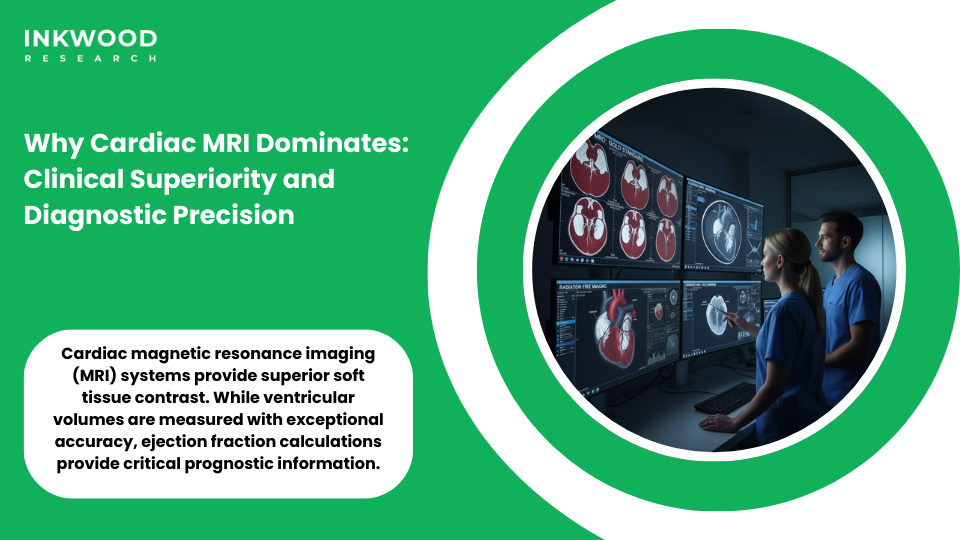
Cardiac MRI evaluates both structure and function simultaneously. While ventricular volumes are measured with exceptional accuracy, ejection fraction calculations provide critical prognostic information. Plus, valve function assessment complements these measurements beautifully.
Stress perfusion imaging identifies ischemia without invasive procedures and therefore, patients avoid unnecessary cardiac catheterization. Additionally, viability studies guide revascularization decisions effectively.
Medicare Coverage: Breaking Down Access Barriers
Expanding Medicare Benefits Schedule Items
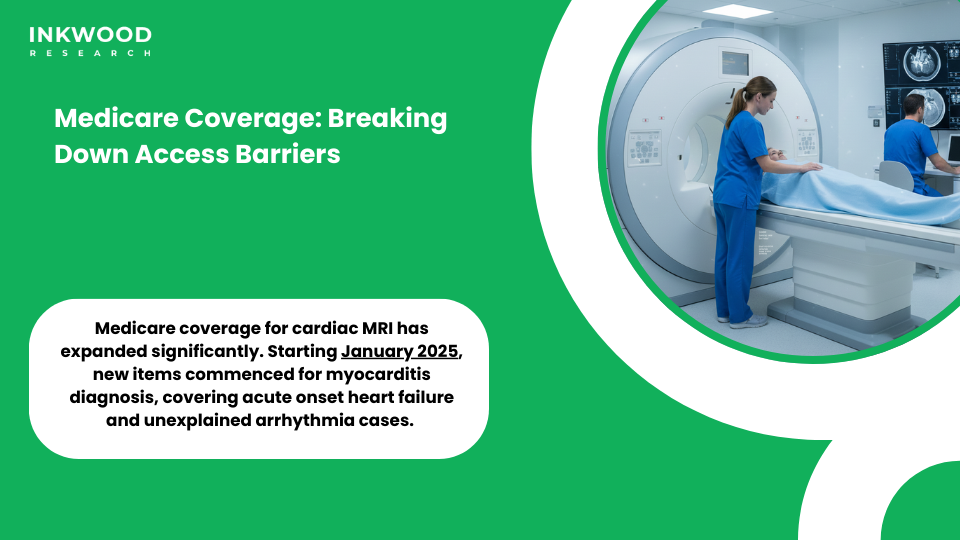
Medicare coverage for cardiac MRI has expanded significantly. Starting January 2025, new items commenced for myocarditis diagnosis, covering acute onset heart failure and unexplained arrhythmia cases. Additionally, suspected drug-induced myocarditis qualifies for coverage.
Eligible specialists must hold Conjoint Committee certification. General practitioners cannot request these specialized cardiac MRI services. Nevertheless, specialist referrals ensure appropriate patient selection. Subsequently, healthcare resources are utilized efficiently.
Reimbursement Frequency Limitations
Medicare imposes specific frequency restrictions on cardiac MRI claims. While benefits for certain items are payable once per patient annually, other items allow claims once every 36 months. These limitations balance access with cost containment effectively.
Cardiac implantable electronic device patients face additional considerations, with many centers excluding thoracic MR scans for these patients. However, protocols are evolving as technology improves. Meanwhile, patient safety remains the paramount concern.
Equipment Eligibility Requirements
Medicare benefits require eligible MRI units only. Facilities must obtain either full or partial Medicare eligibility and this requirement ensures quality standards across providers. Additionally, equipment specifications meet stringent safety criteria.
Operators must demonstrate appropriate training credentials. Advanced Cardiac Life Support certification is mandatory at 80% of surveyed facilities. Furthermore, specialized cardiac MRI protocols require additional expertise. Therefore, workforce development remains crucial.
Technology Leaders: Major Players Shaping the Market
Siemens Healthineers: Market Leadership
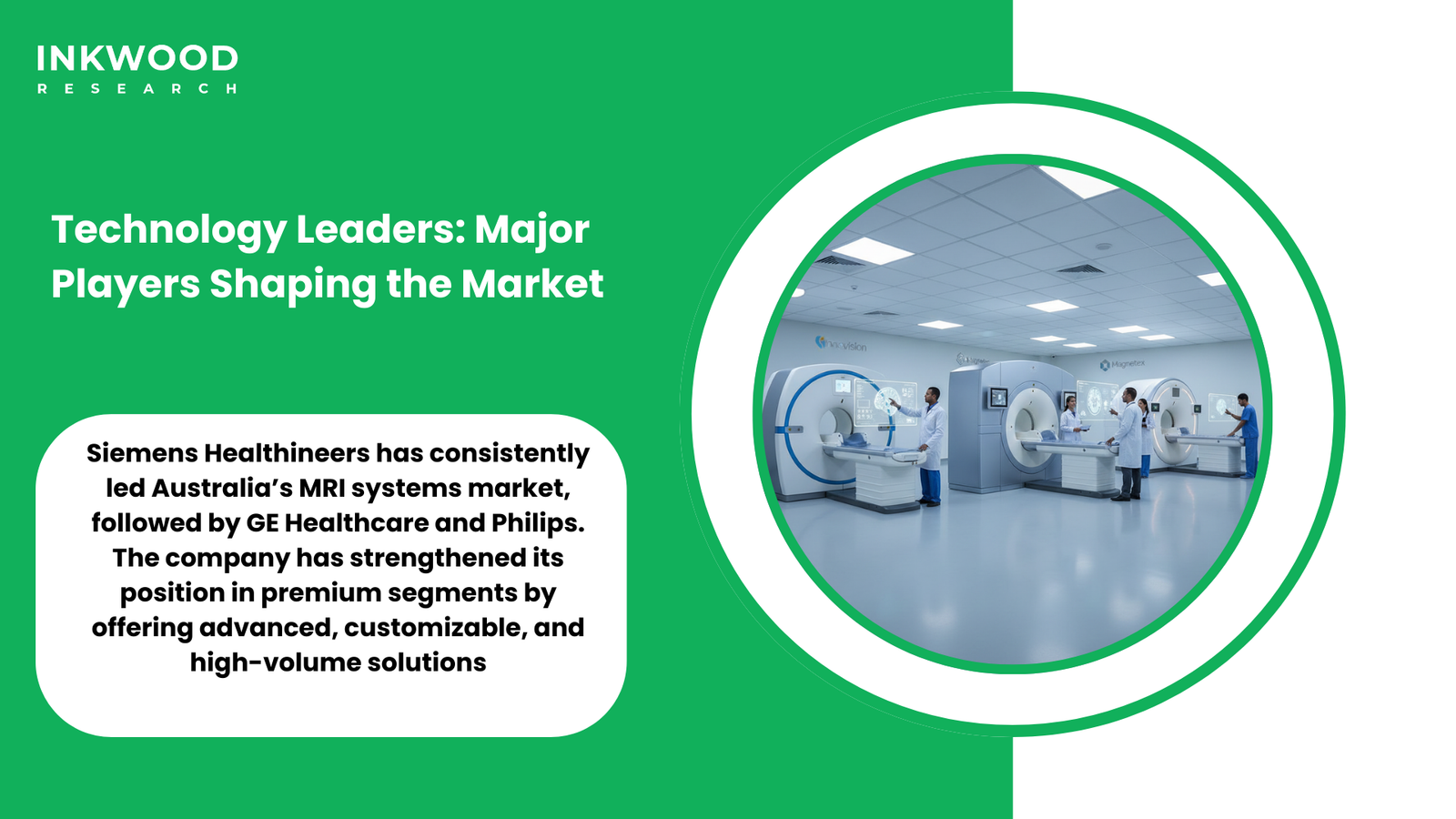
Siemens Healthineers has consistently led Australia’s MRI systems market, followed by GE Healthcare and Philips. The company has strengthened its position in premium segments by offering advanced, customizable, and high-volume solutions to diagnostic imaging providers like I-MED Radiology.
Their advanced cardiac imaging platforms set industry benchmarks. Moreover, Siemens expanded its market share globally by bolstering its premium MRI segment presence, and in this regard, the MAGNETOM portfolio offers comprehensive cardiac solutions.
Australian hospitals prefer Siemens for reliability, with service networks extending across major cities and regional centers. Additionally, helium-reduced technologies lower operational costs significantly. Subsequently, the total cost of ownership decreases substantially.
GE Healthcare: Innovation Pioneer
GE Healthcare maintains a strong competitive positioning nationwide. The company’s cardiac MRI systems integrate artificial intelligence capabilities. Furthermore, GE HealthCare and Siemens together comprise 74% of the MR installed base globally. SIGNA platforms, on the other hand, deliver exceptional image quality consistently.
Service accessibility represents a key advantage. Parts availability ensures minimal downtime. Moreover, engineers receive comprehensive training on GE systems. Therefore, maintenance costs remain manageable.
Philips: Helium-Free Technology Leader
Philips revolutionized MRI with BlueSeal magnet technology. These systems operate with only seven liters of liquid helium. Conversely, traditional magnets require over 1500 liters, and this innovation dramatically reduces operational complexity.
Australian facilities appreciate helium independence, with refills regarded as unnecessary for the entire magnet lifespan. Additionally, environmental impact decreases substantially as sustainability goals align with operational efficiency.
Canon Medical Systems and Fujifilm
Canon Medical Systems provides reliable mid-tier options. Their systems balance performance with affordability effectively. Meanwhile, Fujifilm’s acquisition of Hitachi Medical expanded its cardiac MRI portfolio. Both manufacturers serve specific market segments successfully.
Price competitiveness attracts smaller hospitals and imaging centers. However, service network density remains less comprehensive. Therefore, facility location influences manufacturer selection significantly.
United Imaging: Emerging Challenger
United Imaging challenges established players with competitive pricing. Their FDA-cleared 5T system demonstrates technological capability. While Australian market penetration remains limited currently, nevertheless, future expansion appears likely.
Mobile Imaging Revolution: Bringing Cardiac MRI to Rural Australia
Addressing Geographic Disparities
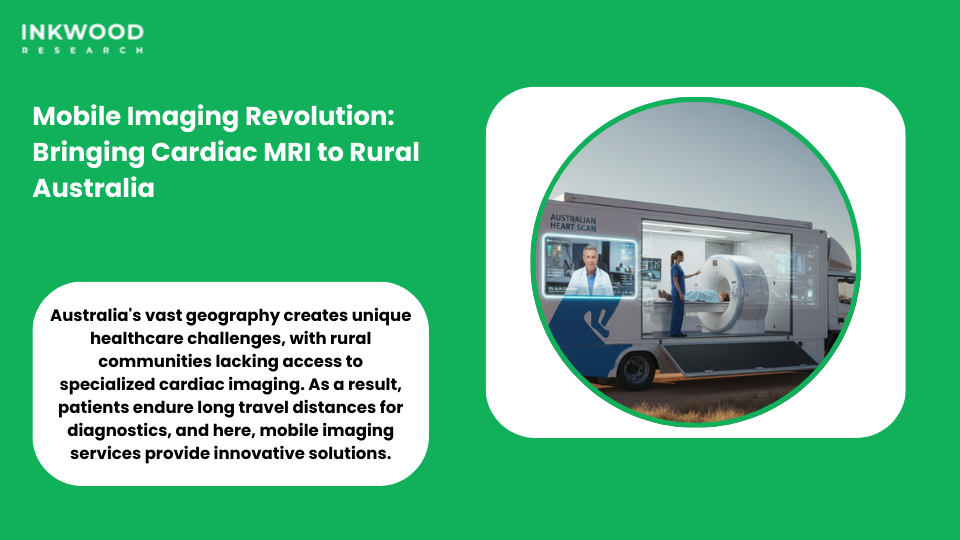
Australia’s vast geography creates unique healthcare challenges, with rural communities lacking access to specialized cardiac imaging. As a result, patients endure long travel distances for diagnostics, and here, mobile imaging services provide innovative solutions.
These specialized trucks carry complete MRI systems. Equipment quality matches stationary installations. Additionally, trained technologists accompany each unit. Therefore, diagnostic standards remain consistently high.
Market Growth Trajectory
The Australia mobile imaging services market demonstrates robust expansion, reaching US$112.54 million in 2026, with growth accelerating steadily. Moreover, projections indicate US$222.36 million by 2034. This 8.89% CAGR reflects strong demand.
Cardiac MRI represents a growing service segment, with mobile units increasingly offering specialized cardiac protocols. Furthermore, Medicare coverage expansion supports this growth. Subsequently, rural patients access gold-standard diagnostics locally.
Operational Excellence
Mobile imaging services require sophisticated logistics, and scheduling optimization ensures efficient route planning. Additionally, maintenance protocols guarantee equipment reliability. Meanwhile, quality assurance matches hospital standards.
While telehealth integration enhances service delivery significantly, specialists review images remotely and provide immediate consultations. Consequently, diagnostic turnaround times decrease dramatically. Therefore, patient outcomes improve measurably.
New Zealand Market Parallels
New Zealand faces similar geographic challenges. Mobile imaging services expand across both the North and South Islands. Furthermore, cross-Tasman collaboration shares best practices. Subsequently, both nations benefit from innovation exchange.
Innovation Pipeline: Next-Generation Cardiac MRI Technologies
Artificial Intelligence Integration
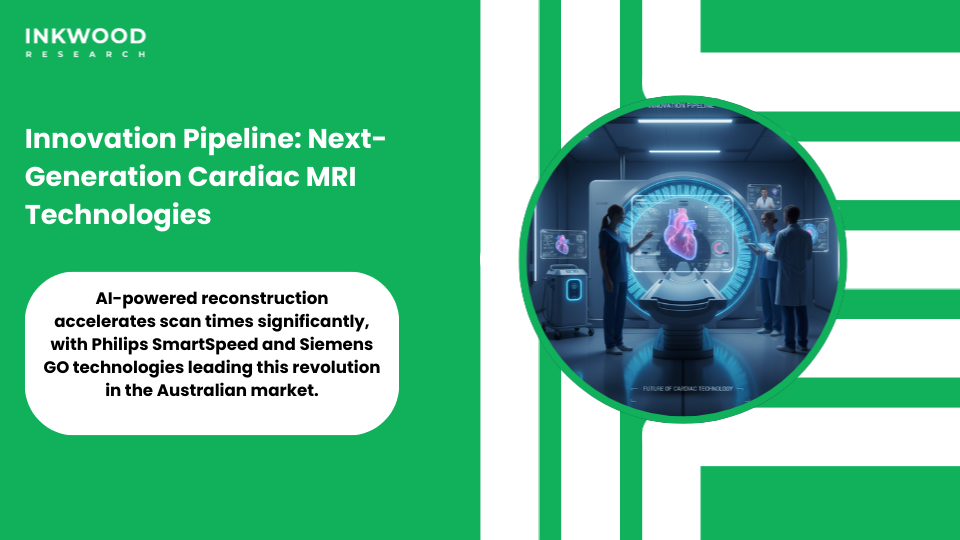
AI-powered reconstruction accelerates scan times significantly, with Philips SmartSpeed and Siemens GO technologies leading this revolution in the Australian market. Moreover, automated image analysis reduces interpretation time. Subsequently, radiologist productivity increases substantially.
Deep learning algorithms continually enhance image quality continually and on the other hand, noise reduction improves without extending acquisition times. Additionally, AI identifies subtle pathologies physicians might miss. Therefore, diagnostic accuracy improves systematically.
Ultra-High Field Systems
Seven-tesla magnetic resonance imaging systems push resolution boundaries, and these systems deliver unprecedented anatomical detail. However, clinical cardiac applications remain predominantly research-focused currently. Nevertheless, translation to clinical practice accelerates.
Australian research institutions operate ultra-high field scanners, with collaborations between universities and hospitals driving innovation forward. Furthermore, federal research funding supports cardiac imaging advancement. Subsequently, Australia maintains global competitiveness.
Portable and Point-of-Care MRI
Hyperfine introduced bedside MRI technology recently. These portable systems reimagine cardiac imaging accessibility. Although image quality differs from high-field systems, clinical utility remains valuable, and particularly, intensive care unit applications show promise.
Australian hospitals evaluate portable MRI technology actively. In this regard, emergency departments could benefit significantly. Moreover, cost considerations make this approach attractive, and therefore, adoption may accelerate in the coming years.
Photon-Counting CT Competition
While cardiac MRI dominates, photon-counting CT emerges as a competitor. Siemens commercialized this technology recently, with superior temporal resolution benefiting cardiac imaging. However, radiation concerns favor MRI for many applications.
Market dynamics will evolve as both technologies advance. Complementary roles rather than direct competition seem likely, and consequently, comprehensive cardiac imaging programs utilize multiple modalities. Subsequently, patient care quality maximizes.
Key Takeaways
- Cardiac magnetic resonance imaging (MRI) systems have established themselves as the gold standard across Australia and New Zealand.
- Moreover, the Australia mobile imaging services market demonstrates an impressive 8.89% CAGR growth through 2034.
- Medicare coverage expansion continues to improve access to specialized cardiac diagnostics nationwide.
- Additionally, technology leaders like Siemens Healthineers, GE Healthcare, and Philips drive innovation relentlessly.
- Mobile imaging services successfully address geographic disparities affecting rural communities.
- AI integration and ultra-high field systems represent the exciting innovation frontier. Subsequently, Australian cardiac care quality will continue to advance significantly.
Conclusion:
Australia and New Zealand have positioned cardiac magnetic resonance imaging (MRI) systems at the forefront of cardiovascular diagnostics. The combination of Medicare support, technological innovation, and mobile service expansion creates unprecedented access. Moreover, market growth projections reflect strong confidence in cardiac MRI’s clinical value.
Healthcare providers must continue investing in advanced imaging infrastructure. Additionally, workforce development ensures optimal technology utilization. Meanwhile, partnerships between manufacturers and healthcare facilities drive continuous improvement.
The future of cardiac imaging in Australia appears remarkably bright, with patient outcomes continuing to improve as technology advances.
Ready to explore how cardiac MRI can transform your facility’s diagnostic capabilities?
Contact Inkwood Research today for comprehensive market analysis and strategic guidance tailored to your specific needs. Our team provides actionable insights that drive successful cardiac imaging program development.
Frequently Asked Questions
What makes cardiac MRI the gold standard in Australia?
Cardiac MRI provides superior tissue characterization without radiation exposure. Moreover, it evaluates both cardiac structure and function simultaneously. Additionally, diagnostic accuracy exceeds other imaging modalities for many conditions.
How much does cardiac MRI cost in Australia?
Medicare coverage significantly reduces patient costs for eligible indications. However, out-of-pocket expenses vary by facility and specific examination type. Therefore, patients should verify coverage details before scheduling.
Are mobile cardiac MRI services as accurate as hospital-based scans?
Yes, mobile units maintain identical quality standards to hospital installations. Furthermore, equipment specifications match stationary systems precisely. Additionally, trained technologists ensure diagnostic excellence consistently.