Table of Contents
This analysis is brought to you by Inkwood Research, a leading market intelligence firm specializing in South Asian healthcare infrastructure, diagnostic imaging entrepreneurship, and regulatory compliance strategies. Our research team combines extensive experience analyzing India’s medical device regulations, AERB licensing procedures, and mobile diagnostic service markets across urban and rural healthcare ecosystems. Based on our proprietary research methodologies and strategic partnerships with Indian diagnostic centers, medical equipment suppliers, and healthcare regulatory consultants, we deliver actionable insights that empower strategic decision-making for entrepreneurs and healthcare organizations navigating India’s rapidly expanding mobile imaging opportunities and regulatory frameworks.
TLDR
Starting a mobile X-ray business in India presents extraordinary entrepreneurial opportunities as healthcare demand surges nationwide. The India mobile imaging services market reaches US$619.58 million in 2026, projecting remarkable expansion to US$1,240.00 million by 2034 at a robust 9.06% CAGR. However, success requires navigating complex AERB regulatory requirements, securing appropriate equipment from approved manufacturers, and developing sustainable business models serving underserved populations. Moreover, understanding licensing procedures, infrastructure requirements, and operational best practices proves essential for mobile diagnostic entrepreneurs entering this high-growth market segment.
Healthcare entrepreneurs planning diagnostic service ventures, medical equipment distributors exploring business opportunities, and diagnostic center owners considering mobile expansion will discover comprehensive startup guidance in this analysis. Additionally, radiologists exploring independent practice options, healthcare investors evaluating Indian diagnostic markets, and business consultants advising medical startups can leverage our regulatory navigation insights. Medical students considering entrepreneurship, hospital administrators planning outreach programs, and government healthcare officials designing accessibility initiatives will also benefit from our detailed mobile X-ray business development framework.
Understanding India’s Mobile Diagnostic Imaging Opportunity
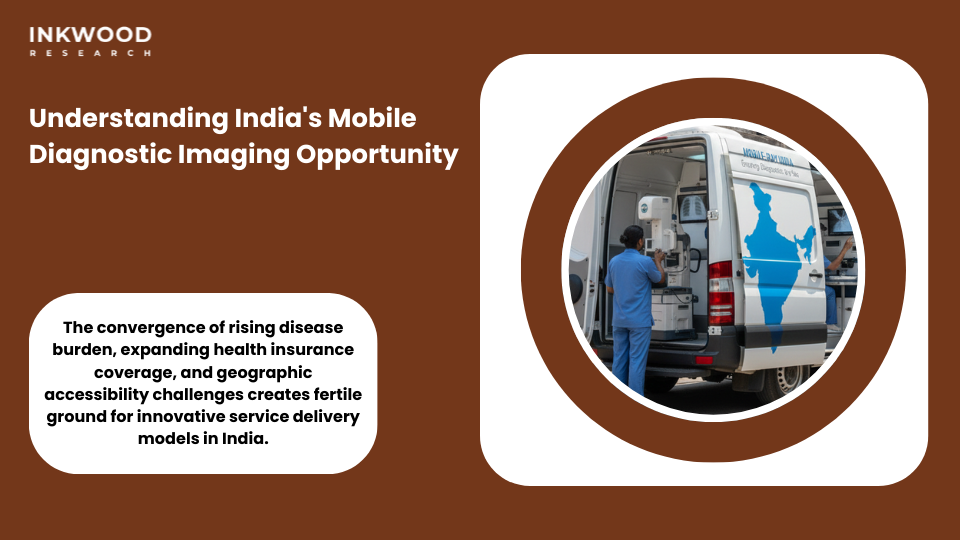
India’s healthcare landscape presents unprecedented opportunities for mobile diagnostic imaging entrepreneurs. The convergence of rising disease burden, expanding health insurance coverage, and geographic accessibility challenges creates fertile ground for innovative service delivery models in India.
Market Growth Fundamentals
According to our analysis, India mobile imaging services market demonstrates an exceptional growth trajectory. The sector achieves US$619.58 million valuation in 2026, subsequently expanding to US$1,240.00 million by 2034. This represents a remarkable CAGR of 9.06% throughout the forecast period.
What drives this extraordinary expansion? Several fundamental factors converge simultaneously. First, India’s population exceeds 1.4 billion, with significant unmet diagnostic imaging needs. Second, chronic disease prevalence rises dramatically across all socioeconomic segments. Third, government healthcare expenditure increases substantially as policymakers prioritize universal health coverage.
Furthermore, India’s hospital industry projects growth to INR 8.6 trillion by FY 2022, from INR 4 trillion in FY 2017. This massive expansion creates demand for diagnostic imaging services far exceeding existing infrastructure capacity. Mobile solutions address this supply-demand imbalance efficiently.
Geographic Accessibility Challenges
India’s geographic diversity creates unique healthcare delivery challenges. Rural areas covering over 65% of the population often lack basic diagnostic imaging facilities. Patients frequently travel hundreds of kilometers seeking X-ray services in urban centers. This accessibility gap represents a massive entrepreneurial opportunity.
Meanwhile, urban areas face different challenges. Overcrowded hospitals and long wait times frustrate patients seeking timely diagnostic services. Mobile X-ray units operating in residential neighborhoods provide convenient alternatives to hospital visits. This model particularly appeals to elderly patients and those with mobility limitations.
Additionally, India’s aging population drives diagnostic service demand upward. Chronic conditions requiring regular imaging monitoring become increasingly prevalent. Accordingly, mobile X-ray services offering home-based diagnostics address this demographic trend effectively while building loyal customer bases.
Regulatory Framework Evolution
India’s Atomic Energy Regulatory Board (AERB) regulates diagnostic X-ray equipment throughout its lifecycle. The regulatory framework ensures radiation safety while enabling healthcare innovation. Understanding these requirements proves essential for mobile X-ray entrepreneurs.
Recent regulatory developments favor entrepreneurship through streamlined e-LORA online licensing systems. This digital transformation reduces bureaucratic friction while maintaining safety standards. However, navigating regulatory requirements still demands careful attention and professional guidance.
Moreover, Indian government initiatives actively promote diagnostic accessibility through various schemes. Programs supporting rural healthcare infrastructure and diagnostic service subsidies create favorable business environments. Entrepreneurs aligning services with government priorities access additional market opportunities and potential partnerships.
AERB Licensing and Regulatory Compliance Requirements

Pre-Licensing Requirements
Before applying for operational licenses, entrepreneurs must complete several foundational steps.
- First, identify a qualified Radiological Safety Officer (RSO) possessing appropriate credentials and AERB-recognized training certificates. The RSO assumes critical safety oversight responsibilities throughout business operations.
- Second, procure AERB-approved X-ray equipment from authorized suppliers only. AERB maintains lists of licensed manufacturers and suppliers meeting regulatory standards. Equipment purchased from unauthorized sources faces rejection during licensing inspections regardless of technical specifications.
- Third, arrange personnel monitoring services through AERB-recognized thermoluminescent dosimeter (TLD) providers. All radiation workers require continuous monitoring and documenting of exposure levels. TLD badges must be worn during all X-ray operations and exchanged quarterly for analysis.
- Fourth, secure an appropriate facility infrastructure meeting radiation safety standards. Although mobile units operate across multiple locations, base facility housing, equipment storage, and administrative functions must comply with AERB requirements. Radiation shielding, warning signage, and safety equipment storage all require proper setup.
E-LORA Application Process
AERB’s e-LORA system streamlines licensing through online application submission. The platform guides applicants through required documentation and fee payments. Nevertheless, thoroughness and accuracy prove essential for avoiding application rejections and delays.
The registration process begins with the employer and licensee designation. The employer represents the organization operating the equipment while the licensee assumes direct operational responsibility. Both parties must complete detailed information, including qualifications, experience, and safety training certifications.
Subsequently, applicants submit equipment-specific information, including manufacturer details, model specifications, and intended use descriptions. Mobile X-ray units require particular attention to operational territory definitions. Movement restrictions typically limit mobile equipment to specific institutions or defined geographic areas.
Furthermore, applicants must upload supporting documentation, including RSO qualifications, radiation worker credentials, and personnel monitoring arrangements. Quality assurance reports from AERB-authorized agencies prove mandatory for equipment validation. Layout sketches showing equipment storage and operational areas, and complete application packages.
Inspection and Approval Timeline
Following application submission, AERB reviews documentation comprehensively. Complete and accurate applications typically receive approval within 15-30 working days. However, deficiencies trigger deficiency letters requiring corrections before processing continues.
AERB may conduct facility inspections verifying compliance with radiation safety standards. Inspectors examine shielding adequacy, safety equipment availability, and operational procedures. Mobile units must demonstrate compliance even though they operate across multiple locations. Base facility inspections prove particularly important.
Once AERB confirms all requirements are met, the agency issues registration or a license through the e-LORA platform. Applicants download certificates electronically and can commence legal operations immediately. Certificates must be displayed prominently at facilities and available during mobile operations.
Ongoing Compliance Obligations
Licensing represents only the initial compliance step. Ongoing obligations include biennial quality assurance testing by AERB-authorized agencies. These periodic evaluations verify that equipment maintains safety and performance standards throughout operational life.
Additionally, operators must submit periodic safety status reports per AERB-specified formats and frequencies. Any radiation incidents or excessive exposures require immediate notification. Equipment modifications or relocations necessitate amended licenses before implementation.
Finally, licenses require renewal before expiration dates. Applications should be submitted at least three months prior to validity expiration. Continuous compliance with safety protocols and documentation requirements ensures smooth renewal processes.
Equipment Selection and Procurement Strategies
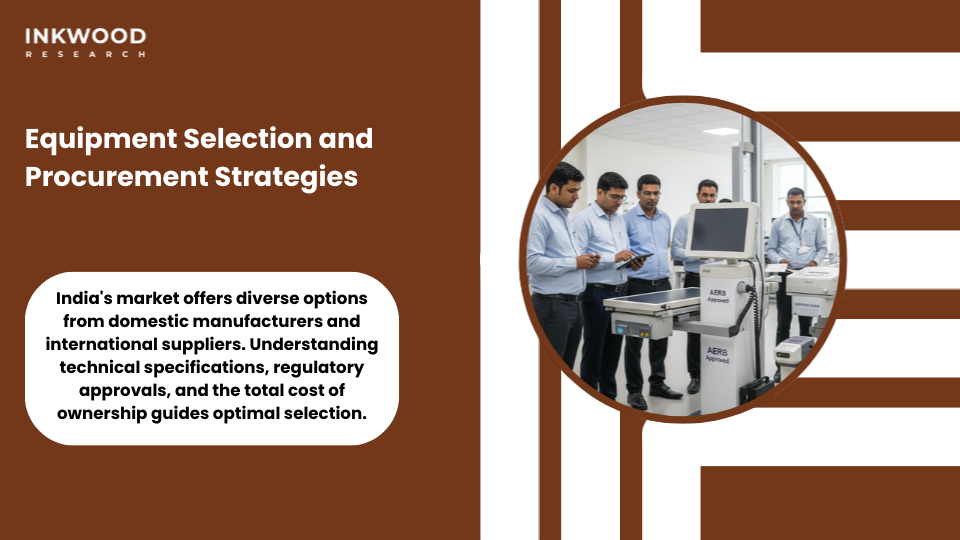
Choosing appropriate mobile X-ray equipment fundamentally determines business success. India’s market offers diverse options from domestic manufacturers and international suppliers. Understanding technical specifications, regulatory approvals, and the total cost of ownership guides optimal selection.
Portable X-Ray Technology Options
Modern mobile X-ray systems fall into three primary categories. First, traditional film-based radiography systems represent legacy technology still prevalent in cost-sensitive markets. These systems require chemical processing facilities and generate physical film records. Their simplicity and low initial costs appeal to budget-conscious entrepreneurs.
Second, computed radiography (CR) systems digitize X-ray images using phosphor imaging plates. These plates replace traditional film while maintaining familiar workflow patterns. CR represents intermediate technology offering digital advantages without requiring full infrastructure overhauls. Mobile CR units suit operations serving facilities with existing film-based infrastructure.
Third, digital radiography (DR) systems provide direct digital image capture without intermediate steps. These advanced systems deliver superior image quality, immediate results, and minimal radiation exposure. DR technology increasingly dominates mobile X-ray markets despite higher initial investments. Patient preference for immediate results and enhanced diagnostic capabilities justifies premium pricing.
Indian Manufacturers and Suppliers
India hosts several established X-ray equipment manufacturers offering competitive products.
- Allengers Medical Systems represents India’s largest domestic manufacturer with a comprehensive product portfolio spanning analog to advanced digital systems. The company maintains extensive service networks supporting equipment throughout operational life.
- StarNuke Technologies emerges as an innovative player emphasizing portable diagnostic solutions. Their Min-X handheld portable X-ray unit specifically targets mobile applications, rural accessibility, and point-of-care diagnosis. Lightweight design and battery power enable true mobile operations reaching underserved populations.
- BPL Medical Technologies manufactures diverse medical equipment, including diagnostic radiography systems. Their established reputation and competitive pricing appeal to entrepreneurs seeking reliable equipment from trusted domestic sources. BPL provides financing arrangements facilitating equipment acquisition for startups.
Additionally, international manufacturers, including GE Healthcare, Siemens Healthineers, and Philips Healthcare, maintain a strong Indian presence. These companies offer premium equipment with advanced features, justifying higher price points. Their global service networks and technology leadership attract quality-focused entrepreneurs targeting high-end market segments.
Procurement Considerations and Financing
Equipment procurement requires careful evaluation beyond initial purchase prices. Total cost of ownership includes maintenance contracts, spare parts availability, consumables expenses, and eventual replacement costs. Domestic manufacturers often provide advantages in ongoing service costs and parts accessibility.
Furthermore, AERB approval requirements mandate purchasing from authorized suppliers only. Verify supplier authorization before committing to purchases. Unauthorized equipment faces licensing rejection regardless of technical capabilities or cost advantages.
Financing options significantly impact startup capital requirements. Equipment manufacturers and specialized medical equipment financing companies offer various arrangements. Leasing alternatives reduce upfront investments while providing equipment upgrade flexibility. Carefully evaluate financing terms, including interest rates, maintenance inclusions, and upgrade provisions.
Additionally, consider warranty coverage and service level agreements carefully. Mobile operations demand reliable equipment with minimal downtime. Comprehensive warranties and rapid service response prove essential for maintaining customer satisfaction and revenue continuity.
Infrastructure Development and Operational Setup
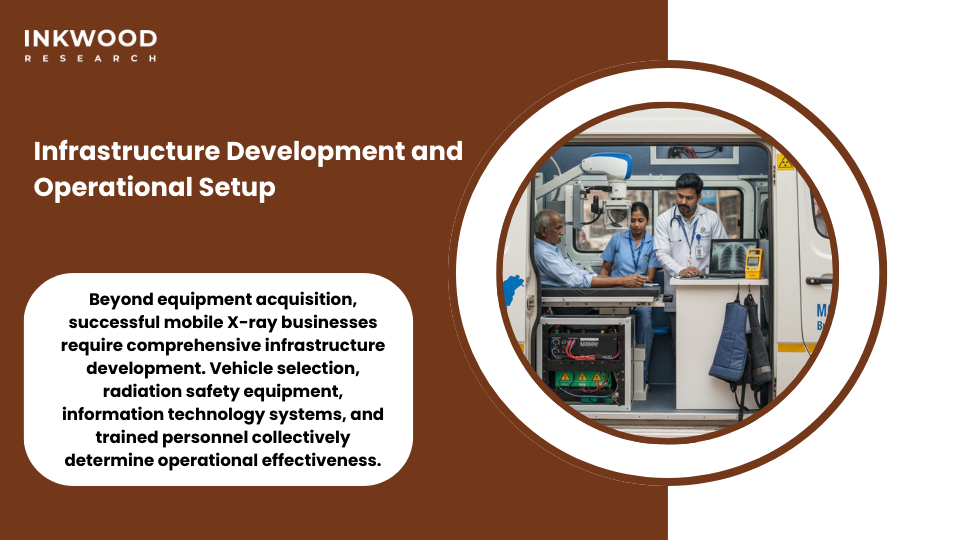
Beyond equipment acquisition, successful mobile X-ray businesses require comprehensive infrastructure development. Vehicle selection, radiation safety equipment, information technology systems, and trained personnel collectively determine operational effectiveness.
Mobile Unit Vehicle Selection
Appropriate vehicle selection proves critical for mobile X-ray operations. The vehicle must accommodate equipment securely while providing patient examination space and operator protection. Additionally, vehicles require sufficient electrical power generation for equipment operation during field deployments.
Light commercial vehicles like the Tata Ace or Mahindra Supro suit basic mobile radiography operations in urban environments. These compact vehicles navigate narrow streets effectively while offering adequate space for portable X-ray systems. Custom interior modifications create functional diagnostic spaces meeting operational requirements.
For comprehensive mobile imaging services, larger vehicles like the Tata 407 or Ashok Leyland Dost provide enhanced capabilities. These platforms accommodate multiple imaging modalities simultaneously, along with changing rooms and patient waiting areas. Larger vehicles particularly suit rural operations where facilities may lack appropriate examination spaces.
Furthermore, vehicles require reliable electrical systems supporting the X-ray equipment’s power demands. Battery banks with inverters or dedicated generators provide the necessary power. Ensure electrical systems meet equipment specifications while maintaining safety standards. Improper electrical infrastructure causes equipment malfunctions and potential safety hazards.
Radiation Safety Infrastructure
Radiation protection equipment represents non-negotiable infrastructure requirements. Lead aprons, thyroid shields, and protective eyewear protect operators from scatter radiation during examinations. AERB requires periodic verification of shielding adequacy for all protective devices.
Mobile units must carry radiation warning signage displayed prominently during operations. Permanent radiation symbols and pregnancy warnings alert bystanders to potential exposure risks. Proper signage placement ensures public safety while demonstrating regulatory compliance.
Additionally, mobile operations require portable radiation monitoring equipment. Survey meters verify shielding effectiveness and measure scatter radiation levels. Documentation of radiation measurements demonstrates ongoing safety compliance during AERB inspections.
Furthermore, establish clear operational protocols minimizing unnecessary radiation exposure. Distance, shielding, and time principles guide safe X-ray operations. Training all personnel in radiation safety fundamentals proves essential for maintaining compliant and safe practices.
Information Technology Systems
Modern mobile X-ray businesses demand robust IT infrastructure. Digital radiography systems generate large image files requiring secure storage and efficient transmission. Cloud-based picture archiving and communication systems (PACS) enable remote image access by referring physicians.
Moreover, practice management software streamlines scheduling, billing, and reporting functions. Mobile operations serving multiple locations benefit tremendously from centralized administrative systems. Automated appointment reminders and digital report delivery enhance customer experience substantially.
Additionally, telemedicine capabilities expand service offerings beyond basic imaging. Remote radiologist interpretation services enable operations in areas lacking local expertise. Secure telecommunications infrastructure meeting healthcare privacy requirements proves essential for teleradiology implementation.
Personnel Recruitment and Training
Qualified radiographers represent the business operational foundation. Indian radiographer qualifications require a minimum one-year course, including diagnostic radiology field training. Additionally, AERB mandates radiation protection training from authorized agencies for all radiation workers.
Recruit radiographers demonstrating technical competence alongside customer service orientation. Mobile operations require personnel comfortable working independently across diverse environments. Interpersonal skills prove equally important as technical capabilities when serving patients in home settings.
Furthermore, continuous training ensures personnel maintain current knowledge and skills. Regular safety refresher courses reinforce proper protocols while addressing emerging best practices. Investing in personnel development builds capable teams delivering consistent service quality.
Market Entry Strategies and Competitive Positioning
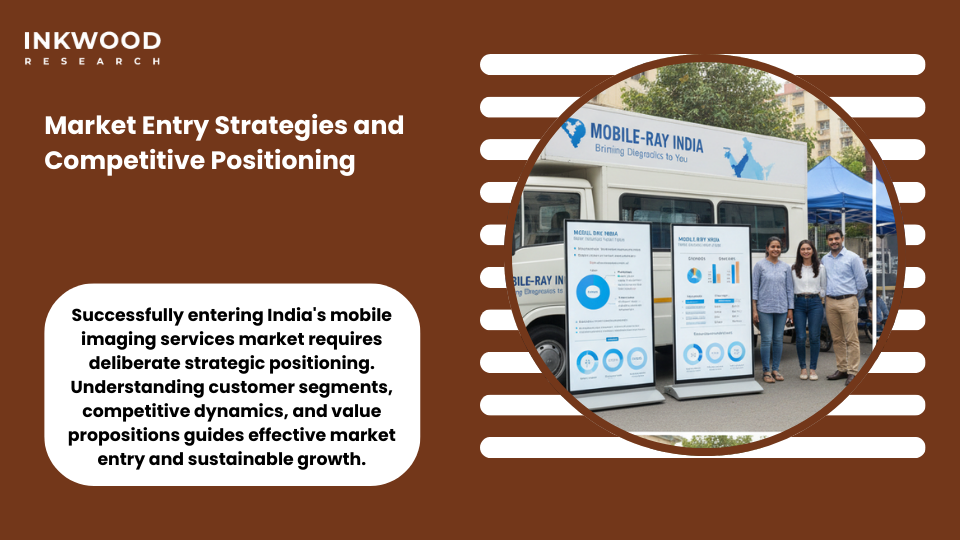
Successfully entering India’s mobile imaging services market requires deliberate strategic positioning. Understanding customer segments, competitive dynamics, and value propositions guides effective market entry and sustainable growth.
Target Customer Segmentation
Mobile X-ray services address multiple distinct customer segments. First, hospitals and diagnostic centers require temporary or supplemental imaging capacity during equipment breakdowns or demand surges. These institutional customers value reliability, quality consistency, and responsive service.
Second, nursing homes and long-term care facilities need regular diagnostic services for elderly residents with limited mobility. Mobile units eliminate patient transport challenges while delivering quality imaging. This segment particularly values convenience and patient-centric service approaches.
Third, corporate wellness programs seek occupational health screening services, including chest X-rays. Large employers conducting periodic health assessments for thousands of employees represent significant volume opportunities. Competitive pricing and efficient high-volume processing capabilities win these contracts.
Fourth, direct-to-consumer home healthcare services target affluent urban families seeking convenience. Elderly patients, chronically ill individuals, and busy professionals willing to pay premium prices for home-based diagnostics represent this growing segment. Superior customer experience and rapid report delivery justify premium positioning.
Finally, government healthcare programs and rural health initiatives offer partnership opportunities. Mobile units can extend diagnostic access to underserved populations while fulfilling government healthcare objectives. These programs often provide stable long-term contracts, albeit at modest reimbursement rates.
Competitive Differentiation Strategies
India’s mobile diagnostic market features numerous competitors ranging from established networks to individual entrepreneurs. Differentiation proves essential for sustainable competitive advantage. Several strategies create defensible market positions.
Technology leadership represents one differentiation path. Investing in the latest digital radiography systems with AI-enhanced interpretation capabilities delivers superior diagnostic quality. Technology advantages particularly resonate with quality-conscious institutional customers and premium consumer segments.
Service excellence offers another differentiation avenue. Exceptional customer experience through prompt scheduling, courteous technologists, and rapid report delivery builds loyal customer bases. In service-oriented businesses, operational excellence often matters more than technical capabilities.
Geographic specialization enables focused market development. Concentrating operations in specific districts or cities allows deep market penetration and operational efficiency. Local market knowledge and relationship development create competitive moats against dispersed competitors.
Finally, vertical integration opportunities exist through radiologist partnerships. Mobile imaging businesses collaborating with radiologists for interpretation services offer comprehensive diagnostic solutions. This integration increases customer value while improving business margins through professional fee capture.
Pricing Strategies and Revenue Models
Pricing strategies fundamentally impact business viability and market positioning. Cost-plus pricing ensures profitability while value-based pricing captures willingness to pay for superior services. Understanding customer price sensitivity across segments guides optimal pricing approaches.
Institutional customers typically demand competitive pricing given their negotiating leverage and volume. Nevertheless, reliability and quality justify modest premiums over competitors. Transparent pricing with clear service level commitments builds trust with institutional buyers.
Direct consumer segments demonstrate higher price elasticity with greater willingness to pay for convenience and quality. Premium pricing strategies work effectively when paired with a superior customer experience. Home-based services commanding 30-50% premiums over clinic-based alternatives remain economically attractive for target customers.
Revenue diversification across multiple customer segments reduces business risk. Balancing institutional volume with premium consumer services creates stable revenue streams. Additionally, ancillary services like ECG, ultrasound, and laboratory testing expand revenue per customer interaction.
Major Players Shaping India's Mobile Imaging Landscape
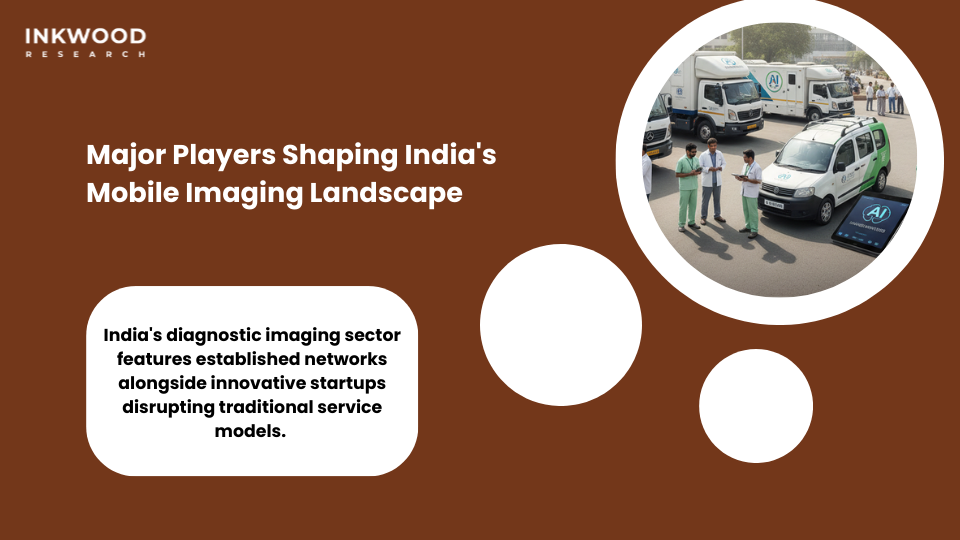
India’s diagnostic imaging sector features established networks alongside innovative startups disrupting traditional service models. Understanding competitive landscape provides strategic intelligence for market entry and positioning decisions.
Established Diagnostic Center Networks
HealthMap Diagnostics, the diagnostic division of Manipal Group, operates extensive imaging networks across India. The organization provides comprehensive diagnostic services, including CT, MRI, PET-CT, and X-ray capabilities. HealthMap’s scale and reputation create competitive advantages while its mobile capabilities extend geographic reach.
Dr. Lal PathLabs represents another major diagnostic service provider with nationwide presence. Although primarily laboratory-focused, the company increasingly integrates imaging services into comprehensive diagnostic offerings. Their established customer relationships and distribution networks facilitate imaging service expansion.
Thyrocare Technologies specializes in thyroid function testing but operates broader diagnostic services, including imaging. The company’s logistics expertise and technology platform enable efficient mobile service delivery. Thyrocare demonstrates how established diagnostic companies leverage existing capabilities into imaging markets.
AI-Powered Diagnostic Innovators
Qure.ai revolutionizes medical imaging through artificial intelligence solutions. The Mumbai-based company develops deep learning algorithms analyzing X-rays, CT scans, and ultrasounds for tuberculosis, stroke, and pulmonary disease detection. Qure.ai’s technology enhances diagnostic accuracy while enabling rapid screening of large populations.
Although Qure.ai primarily provides AI software rather than mobile imaging services directly, its technology increasingly powers mobile diagnostic operations. Partnerships between mobile X-ray providers and AI companies create differentiated service offerings combining convenience with advanced interpretation capabilities.
5C Network develops AI and deep learning solutions, enhancing diagnostic accuracy through its Prodigi PASS platform. The company focuses on improving diagnostic service accessibility, including teleradiology applications. Their technology enables mobile imaging providers to deliver specialist-level interpretation without local radiologist availability.
Emerging Mobile Imaging Startups
Numerous startups enter India’s mobile diagnostic market with innovative service models. These emerging companies often target underserved niches or leverage technology to create competitive advantages over established players.
Home healthcare platforms increasingly integrate diagnostic imaging into comprehensive service offerings. Companies providing nursing care, physiotherapy, and medical equipment rental naturally expand into mobile diagnostics. This integration creates customer convenience while improving business economics through cross-selling.
Additionally, telemedicine platforms incorporate diagnostic imaging as an essential service component. Virtual consultations often require diagnostic testing for accurate assessment. Mobile imaging partnerships or captive services support telemedicine clinical workflows effectively.
Equipment Manufacturers as Market Enablers
Indian and international equipment manufacturers actively support mobile imaging market development. Allengers Medical Systems provides not only equipment but also business development support for startup diagnostic centers. Their financing arrangements and training programs reduce entrepreneurship barriers.
Prognosys Medical Systems offers similar support services alongside equipment sales. The company’s understanding of Indian market dynamics helps entrepreneurs navigate regulatory requirements and operational challenges. Manufacturer support programs significantly improve startup success rates.
International manufacturers, including GE Healthcare and Siemens Healthineers, increasingly focus on the Indian market given its growth potential. These companies provide technology leadership while adapting product offerings to local market requirements, including pricing constraints and service infrastructure limitations.
Latest Technology Innovations Driving Market Evolution
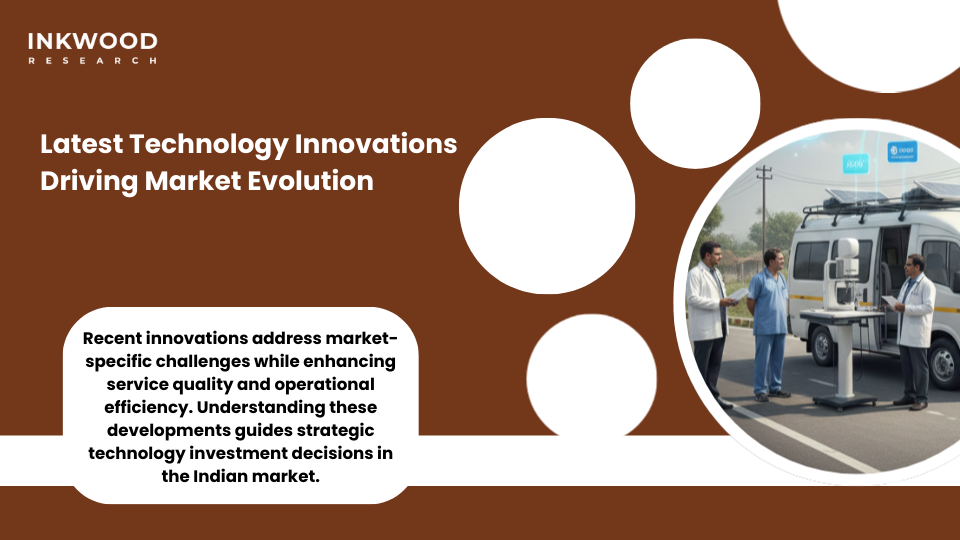
India’s mobile diagnostic imaging sector experiences rapid technological advancement. Recent innovations address market-specific challenges while enhancing service quality and operational efficiency. Understanding these developments guides strategic technology investment decisions in the Indian market.
Portable Digital Radiography Advancements
Digital radiography technology continues evolving toward increased portability and functionality. Recent innovations emphasize battery-powered operation, enabling true mobile diagnostics independent of electrical infrastructure. This capability proves particularly valuable in rural areas with unreliable power supply.
StarNuke Technologies’ Min-X portable X-ray system exemplifies this trend. The lightweight, battery-powered unit delivers hospital-quality images while fitting into compact transport cases. Such systems enable individual practitioners to offer mobile diagnostic services without requiring dedicated vehicles.
Furthermore, wireless digital detector panels eliminate cumbersome cables previously constraining mobile operations. Technologists can position detectors freely while maintaining wireless connectivity with X-ray generators. This freedom improves examination efficiency while enhancing patient comfort.
Additionally, dose reduction technologies advance significantly across all equipment categories. Modern digital systems require substantially less radiation compared to legacy film-based or early digital equipment. Lower doses improve patient safety while enabling more frequent monitoring for chronic conditions.
AI Integration Enhances Diagnostic Capabilities
Artificial intelligence increasingly augments human radiologist interpretation. AI algorithms detect patterns invisible to human observation while flagging critical findings requiring urgent attention. This technology particularly benefits mobile operations serving areas with limited radiologist availability.
Qure.ai’s chest X-ray algorithms detect tuberculosis, pneumonia, and other pulmonary conditions with accuracy approaching or exceeding human radiologists. Mobile screening programs targeting high-risk populations benefit tremendously from AI-powered automated interpretation, enabling rapid results.
Moreover, AI reduces interpretation time substantially. Radiologists can review pre-analyzed images, focusing attention on cases AI flags as concerning. This efficiency improvement enables individual radiologists to support multiple mobile units simultaneously through teleradiology arrangements.
Additionally, quantitative imaging capabilities emerge through AI analysis. Automated measurements of cardiac size, bone density, and soft tissue characteristics provide objective assessments supporting clinical decision-making. These capabilities add value beyond traditional qualitative interpretation.
Teleradiology Infrastructure Expansion
Cloud-based teleradiology platforms democratize specialist expertise access across India. Mobile X-ray units can transmit images immediately to remote radiologists for interpretation, regardless of geographic location. This capability eliminates traditional barriers limiting mobile operations to areas with local radiologist coverage.
Several Indian companies, including 5C Network, provide comprehensive teleradiology solutions specifically designed for local market needs. These platforms emphasize affordability and ease of use while maintaining international quality standards. Integration with mobile X-ray equipment streamlines workflow from image acquisition through report delivery.
Furthermore, smartphone-compatible viewing enables radiologists to provide preliminary interpretations from anywhere. While not replacing workstation-based final reads, mobile viewing facilitates rapid communication of critical findings. This responsiveness proves valuable for emergency cases and time-sensitive clinical situations.
Integrated Health Information Systems
Modern mobile diagnostic services increasingly integrate with broader health information ecosystems. India’s Ayushman Bharat Digital Mission promotes interoperability, enabling seamless health data exchange across providers. Mobile imaging companies participating in these initiatives access larger patient populations while contributing to national healthcare digitization.
Electronic health records integration eliminates duplicate data entry while ensuring imaging results reach appropriate clinical decision-makers. Patients benefit from consolidated health information accessible across different providers. This integration particularly helps chronic disease management requiring coordination across multiple specialties.
Additionally, digital payment integration streamlines revenue collection from individual patients. Mobile wallets, UPI, and digital payment platforms reduce cash handling while improving financial transparency. These systems particularly benefit high-volume consumer-facing operations.
Key Takeaways
Starting a mobile X-ray business in India requires comprehensive preparation across regulatory, operational, and strategic dimensions. Aspiring entrepreneurs should internalize these critical insights:
- Regulatory compliance proves non-negotiable. AERB licensing requirements demand meticulous attention throughout the business lifecycle. Engaging experienced regulatory consultants accelerates approval processes while avoiding costly mistakes. Budget adequate time and resources for comprehensive compliance.
- Equipment selection determines business capabilities. Choose technology appropriate for target market segments and service geography. Balance initial investment against operational costs and service quality requirements. Prioritize AERB-approved equipment from authorized suppliers exclusively.
- Market segmentation drives strategic focus. India’s diverse healthcare landscape offers multiple customer segments with distinct needs and economics. Concentrate on specific segments rather than attempting universal service. Develop competitive advantages through specialization and operational excellence.
- Technology adoption creates differentiation. Digital radiography, AI interpretation, and teleradiology capabilities distinguish modern operations from traditional competitors. Technology investments pay dividends through superior service quality and operational efficiency.
- Partnerships accelerate market entry. Collaborations with radiologists, referral sources, and technology providers reduce startup challenges. Strategic partnerships provide capabilities difficult to develop independently while sharing business risks.
- Growth requires geographic and service expansion. Initial market entry focuses narrowly on operational efficiency. Subsequently, expand systematically into adjacent geographies and complementary services. Diversification across customer segments and diagnostic modalities reduces business risk.
Conclusion:
India’s mobile X-ray business opportunity reflects the broader healthcare transformation sweeping the nation. The sector’s projected growth from US$619.58 million in 2026 to US$1,240.00 million by 2034 demonstrates fundamental demand strength supporting entrepreneurial ventures.
Nevertheless, success demands more than recognizing opportunity. Regulatory navigation, operational excellence, and strategic positioning separate thriving businesses from struggling competitors. Entrepreneurs must approach mobile imaging ventures with professionalism and commitment matching traditional healthcare businesses.
The roadmap outlined in this analysis provides a comprehensive foundation for informed decision-making. However, local market dynamics, competitive situations, and individual capabilities ultimately determine optimal strategies. Prospective entrepreneurs should conduct thorough due diligence before committing resources.
India’s mobile diagnostic imaging sector will continue evolving rapidly. Technology advances, regulatory changes, and competitive dynamics create both challenges and opportunities. Organizations maintaining flexibility while executing fundamentals effectively will build sustainable businesses serving critical healthcare needs.
Ready to launch your mobile X-ray business in India?
Contact Inkwood Research today for customized market intelligence, regulatory guidance, and strategic consulting tailored to your specific entrepreneurial objectives and local market conditions.
Frequently Asked Questions
What licenses are required to start a mobile X-ray business in India?
AERB registration or license for equipment operation represents the primary requirement under the Atomic Energy (Radiation Protection) Rules 2004. Additionally, business registration, GST registration, and local municipal permits are necessary. Qualified Radiological Safety Officer and trained radiographers with appropriate certifications are mandatory personnel requirements.
How much capital investment does a mobile X-ray startup require?
Initial investment varies substantially based on equipment selection and operational scope. Basic portable X-ray setup costs approximately INR 15-25 lakhs, including vehicle modification and safety equipment. Comprehensive digital radiography systems with vehicles cost INR 50-75 lakhs. Budget additional working capital for regulatory compliance, marketing, and operations.
What are profitable customer segments for mobile X-ray services?
Home healthcare for elderly and chronically ill patients offers premium pricing opportunities. Corporate wellness programs provide high-volume contracts with stable revenue. Nursing homes and long-term care facilities need regular diagnostic services. Hospital partnerships for temporary capacity supplementation generate institutional volume. Rural healthcare initiatives offer social impact alongside modest profitability.