Table of Contents
This analysis is brought to you by Inkwood Research, a leading market intelligence firm specializing in North American automotive supply chains, battery technology adoption patterns, and nearshoring dynamics across the United States, Canada, and Mexico. Our research team combines extensive experience analyzing manufacturing location decisions, technology transition management, consumer behavior evolution, and environmental regulations shaping automotive battery markets throughout North America. Based on our proprietary research methodologies and strategic partnerships with Mexican battery manufacturers, automotive OEMs, USMCA trade specialists, and industry associations, we deliver actionable insights that empower strategic decision-making for enterprises navigating Mexico’s rapidly evolving automotive battery landscape.
TLDR
Mexico’s automotive battery market undergoes a transformation as AGM technology gains momentum over traditional flooded lead-acid solutions. This shift reflects evolving vehicle technologies, start-stop system proliferation, and North American manufacturing integration. Furthermore, nearshoring trends position Mexico strategically within continental supply chains while premium battery demand increases among quality-conscious consumers. Consequently, understanding AGM advantages and flooded battery cost benefits helps stakeholders navigate Mexico’s transitioning automotive battery landscape effectively.
This analysis benefits Mexican automotive aftermarket distributors optimizing inventory strategies, vehicle owners evaluating replacement options, battery manufacturers assessing market opportunities, automotive engineers designing vehicles for Mexican conditions, investment analysts tracking nearshoring trends, and procurement professionals sourcing battery supplies. Additionally, environmental consultants and recycling operators addressing battery lifecycle management will discover valuable market intelligence.
Mexico’s Automotive Battery Market Fundamentals
Market Size and Growth Trajectory
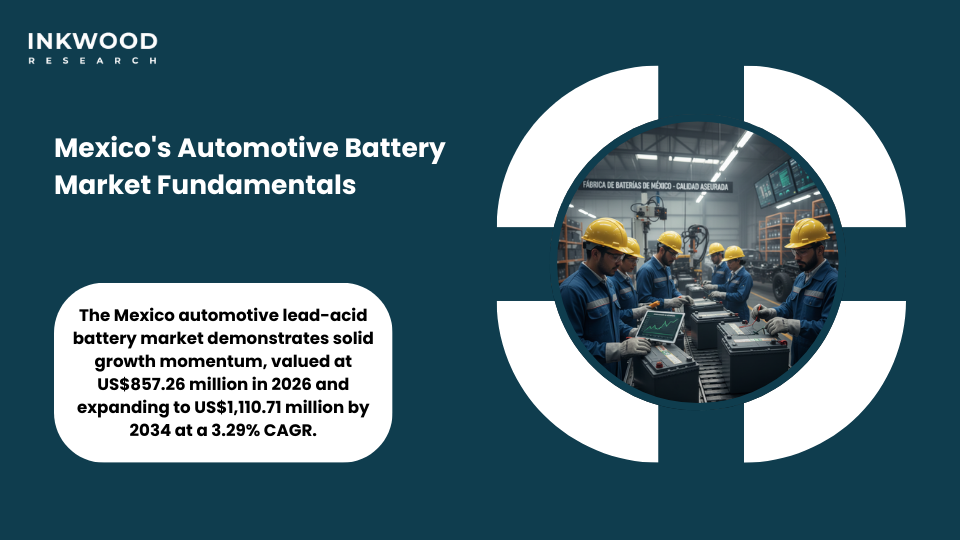
The Mexico automotive lead-acid battery market demonstrates solid growth momentum, valued at US$857.26 million in 2026 and expanding to US$1,110.71 million by 2034 at a 3.29% CAGR. This measured expansion reflects Mexico’s position as a major automotive manufacturing hub with substantial replacement demand complementing OEM supply requirements. Moreover, market dynamics increasingly favor premium battery technologies supporting advanced vehicle features.
Additionally, Mexico’s strategic location within North American automotive supply chains creates unique market characteristics. Manufacturing operations serving U.S. and Canadian markets influence product mix and technology standards adopted domestically. Subsequently, Mexican battery markets often adopt North American trends earlier than other Latin American countries, despite income differences affecting consumer purchasing behavior.
Vehicle Fleet Composition
Mexico’s automotive fleet encompasses diverse vehicle categories from economy passenger cars to heavy commercial trucks. Light vehicles dominate overall sales, with SUVs and pickups particularly popular, reflecting consumer preferences and terrain requirements. These larger vehicles increasingly feature start-stop technology and advanced electronics demanding premium battery solutions beyond conventional flooded alternatives.
Furthermore, commercial vehicle segments, including delivery fleets, construction equipment, and agricultural machinery, require robust battery performance under demanding operating conditions. These applications typically prioritize reliability and durability over initial cost considerations. Therefore, premium battery technologies gain faster acceptance in commercial segments compared to price-sensitive passenger vehicle markets.
Regulatory Environment Evolution
Mexican environmental regulations increasingly align with U.S. standards through USMCA (United States-Mexico-Canada Agreement) harmonization initiatives. Although battery-specific regulations remain less stringent than European standards, regulatory trends favor improved recycling infrastructure and environmental management. These evolving requirements create opportunities for companies offering comprehensive battery lifecycle solutions.
Moreover, the Mexican government’s National Strategy for Electric Mobility (ENME) announced in May 2023 targets 50% zero-emissions vehicle sales by 2030. While ambitious considering current market conditions, this strategy signals policy direction potentially affecting future battery technology requirements. Nevertheless, conventional lead-acid batteries will serve Mexico’s vast existing fleet for decades, supporting continued market vitality.
AGM Technology: The Premium Evolution
Technical Advantages Explained
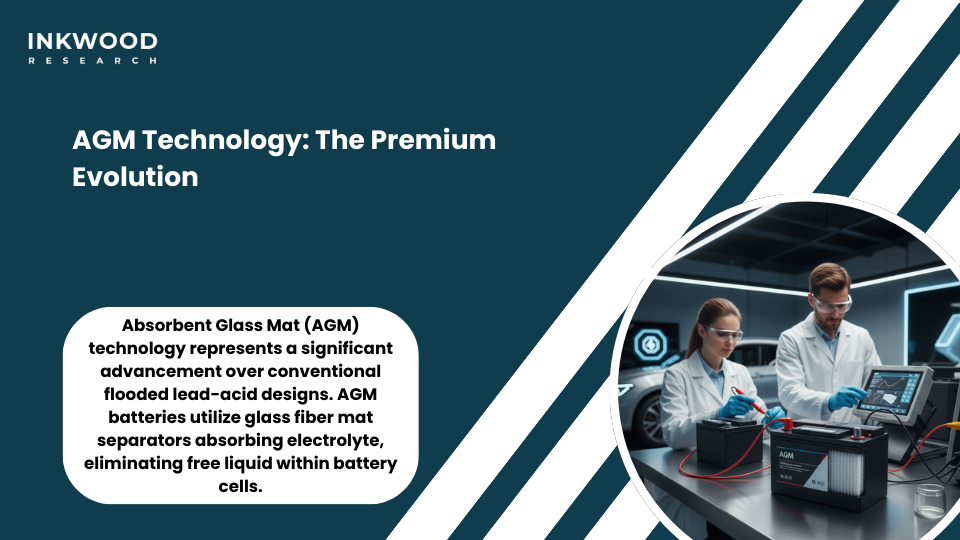
Absorbent Glass Mat (AGM) technology represents a significant advancement over conventional flooded lead-acid designs. AGM batteries utilize glass fiber mat separators absorbing electrolyte, eliminating free liquid within battery cells. This sealed construction provides multiple performance advantages, including faster charging acceptance, deeper discharge tolerance, and superior vibration resistance, particularly valuable for Mexican road conditions.
Furthermore, AGM batteries demonstrate excellent cold-cranking performance despite Mexico’s generally warm climate. This capability matters for northern regions experiencing occasional temperature drops and high-altitude locations where reduced oxygen affects engine starting. Additionally, AGM technology supports three times more charge-discharge cycles compared to conventional flooded batteries, delivering superior lifecycle value despite higher initial costs.
Start-Stop System Requirements
Modern vehicles equipped with start-stop systems require batteries withstanding frequent engine restarts without performance degradation. Conventional flooded batteries fail prematurely under these conditions due to plate sulfation from repeated partial discharge cycles. AGM batteries specifically address these demands through design optimizations supporting start-stop functionality reliably.
Moreover, start-stop systems are increasingly becoming standard equipment rather than premium features across Mexican vehicle markets. Major automakers, including GM, Ford, and Stellantis, integrate start-stop technology in Mexico-produced vehicles, meeting fuel efficiency requirements. Consequently, AGM battery demand grows proportionally with the start-stop-equipped vehicle population expansion throughout Mexican fleets.
Application Suitability Analysis
AGM batteries excel in applications with extensive electronic accessories, frequent short trips, or limited alternator charging time. Modern vehicles with advanced infotainment systems, multiple cameras, and sophisticated safety features impose sustained electrical loads requiring robust battery capacity and charge acceptance. AGM technology addresses these demands effectively while maintaining sealed construction, simplifying installation and maintenance.
However, AGM batteries require proper charging voltage regulation, preventing overcharging damage. Older vehicles with basic charging systems lacking voltage control may not suit AGM technology without electrical system upgrades. Therefore, AGM adoption concentrates initially in newer vehicle segments featuring sophisticated battery management systems designed for advanced battery technologies.
Cost-Performance Considerations
AGM batteries typically cost 150-200% more than equivalent capacity flooded alternatives, representing a substantial investment for consumers. This price premium challenges widespread adoption in Mexico’s price-sensitive automotive markets despite clear performance advantages. Nevertheless, total lifecycle costs often favor AGM through extended service life and reduced maintenance requirements, offsetting higher initial expenditure.
Additionally, AGM batteries deliver value beyond simple cost calculations through improved reliability and convenience. Consumers avoiding roadside failures and battery-related service visits increasingly recognize these benefits, justifying premium prices. Subsequently, AGM market share gradually increases as consumer awareness grows and price-performance ratios improve through manufacturing scale economies.
Flooded Batteries: Proven Reliability
Enduring Market Dominance
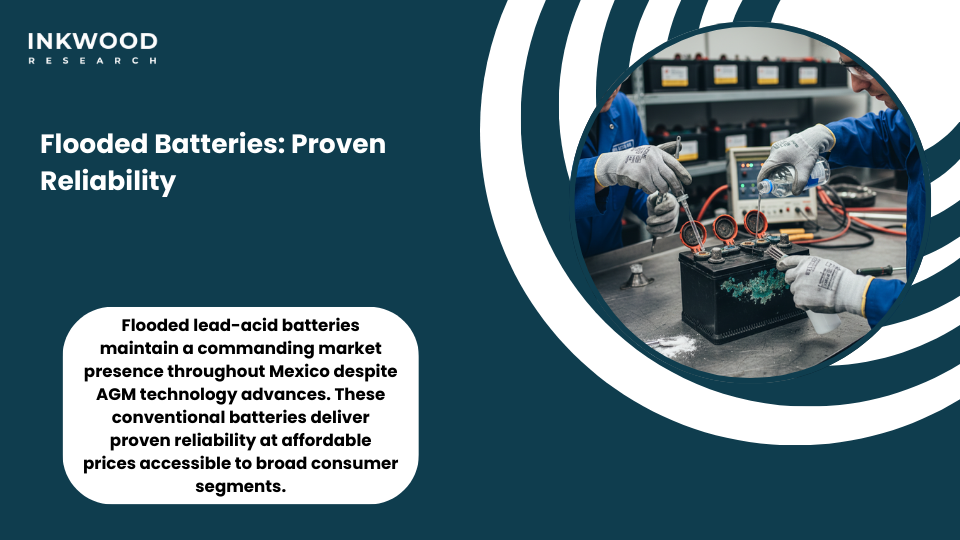
Flooded lead-acid batteries maintain a commanding market presence throughout Mexico despite AGM technology advances. These conventional batteries deliver proven reliability at affordable prices accessible to broad consumer segments. Moreover, established distribution networks and service infrastructure support flooded battery maintenance requirements through readily available parts and technical expertise.
Additionally, flooded battery performance adequately serves most conventional vehicle applications without start-stop systems or extensive electronic loads. Basic transportation vehicles prioritizing economy over advanced features continue using traditional flooded batteries meeting fundamental starting, lighting, and ignition requirements. Therefore, flooded technology remains relevant despite premium alternatives offering superior capabilities.
Maintenance Requirements and Realities
Flooded batteries require periodic electrolyte level monitoring and distilled water additions, compensating for evaporation during operation. Although manufacturers specify monthly maintenance intervals, actual consumer practices often fall short, causing premature failures from plate exposure. Nevertheless, proper maintenance delivers a reliable service life of 2-4 years under typical Mexican operating conditions.
Furthermore, terminal corrosion represents a common maintenance challenge affecting flooded battery performance. Mexico’s climate variations from humid coastal regions to arid interior areas influence corrosion rates significantly. Regular terminal cleaning and protective measures extend battery life while maintaining proper electrical connections. However, many consumers neglect these basic procedures, contributing to avoidable failures and unnecessary replacements.
Cost Advantages and Market Accessibility
Flooded batteries occupy the economy to mid-range price segments, making automotive electrical power accessible across socioeconomic groups. AGM batteries command significantly higher prices than flooded alternatives, often 40-100% premium, making them concentrated in newer vehicles with start-stop systems, while economy segments maintain flooded battery preference. This substantial price difference matters significantly for budget-conscious consumers prioritizing immediate affordability over lifecycle costs.
Moreover, used vehicle markets and older fleet applications strongly favor flooded batteries through established replacement patterns and price expectations. Aftermarket distributors maintain extensive flooded battery inventories serving these segments, where premium technologies face resistance from cost-sensitive consumers. Subsequently, flooded batteries will continue dominating volume sales despite declining market share percentages as premium segments grow.
Technology Improvements Within the Flooded Category
Battery manufacturers continuously improve flooded technology, addressing performance limitations through enhanced plate designs, improved separators, and optimized electrolyte formulations. These incremental advances extend service life and improve charge acceptance, partially closing performance gaps with premium technologies. Enhanced flooded batteries (EFB) represent this evolution, offering improved characteristics at moderate price premiums.
Nevertheless, fundamental flooded battery limitations, including maintenance requirements and sealed construction advantages, remain. Therefore, technology improvements extend conventional battery relevance rather than eliminating premium technology competitive advantages. This situation creates market segmentation where different technologies serve distinct applications and consumer preferences optimally.
Start-Stop Systems Driving Technology Adoption
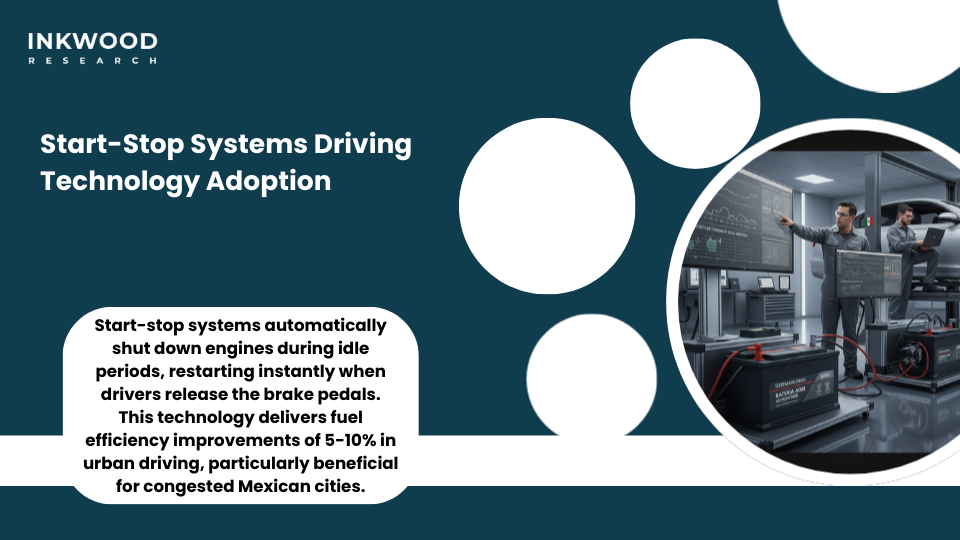
Technology Implementation in the Mexican Market
Start-stop systems automatically shut down engines during idle periods, restarting instantly when drivers release the brake pedals. This technology delivers fuel efficiency improvements of 5-10% in urban driving, particularly beneficial for congested Mexican cities. Major automakers increasingly standardize start-stop functionality across vehicle lineups produced in Mexican manufacturing facilities serving North American markets.
Furthermore, emission regulations and corporate fuel economy standards accelerate start-stop adoption despite requiring premium battery technologies. Consequently, Mexican vehicle markets experience faster technology transition than might occur through organic consumer demand alone. This regulatory-driven adoption creates sustained AGM battery demand growth, supporting market evolution toward premium technologies.
Battery Technology Requirements
Start-stop systems impose severe demands on automotive batteries through thousands of engine restart cycles annually. Conventional flooded batteries deteriorate rapidly under start-stop conditions. AGM batteries deliver a 5-8 year average service life, while enhanced flooded batteries typically last 4-6 years despite demanding operating conditions.
Additionally, start-stop systems require rapid charge acceptance, recovering energy during deceleration and braking events. AGM batteries excel in this capability, charging 4-5 times faster than conventional flooded alternatives. This rapid charge acceptance proves essential for maintaining battery state-of-charge in urban driving with limited high-speed operation for alternator charging.
Consumer Awareness and Education
Many consumers remain unaware that start-stop-equipped vehicles require specialized batteries. This knowledge gap leads to inappropriate replacement battery selections, causing premature failures and system malfunctions. Battery retailers and automotive service providers face the responsibility for educating consumers about proper battery specifications, preventing costly mistakes.
Moreover, vehicle manufacturers sometimes inadequately communicate battery requirements in owner documentation. Subsequently, consumers selecting incorrect batteries based solely on physical size and voltage specifications experience disappointing results. Therefore, improved consumer education represents a critical success factor for appropriate battery technology adoption, supporting start-stop system reliability.
Aftermarket Supply Chain Challenges
Mexican aftermarket distribution channels historically focused on conventional flooded battery inventory meeting traditional replacement demand. Start-stop vehicle proliferation requires supply chain adaptation, stocking appropriate AGM and EFB products meeting specialized application requirements. However, higher unit costs and slower inventory turnover create financial challenges for distributors transitioning product mix.
Furthermore, technical training requirements for retail staff explaining battery technology differences and application specifications demand investment and time. Distributors lacking proper technical support risk inappropriate recommendations, damaging customer relationships, and brand reputations. Therefore, successful battery distributors prioritize staff education and technical capabilities, differentiating service offerings in increasingly complex markets.
Nearshoring Impact on Manufacturing and Supply Chains
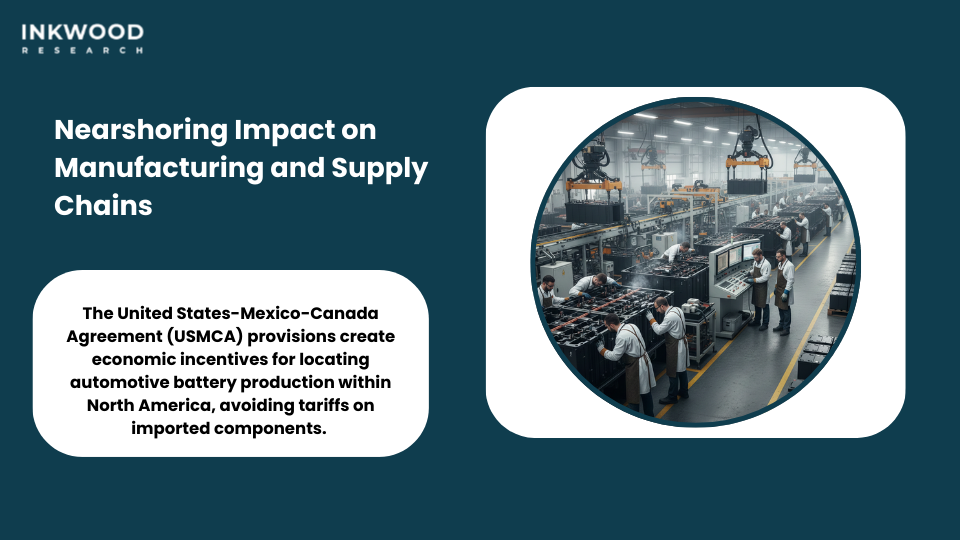
USMCA Trade Agreement Implications
The United States-Mexico-Canada Agreement (USMCA) establishes trade frameworks encouraging regional manufacturing and supply chain integration. These provisions create economic incentives for locating automotive battery production within North America, avoiding tariffs on imported components. Subsequently, Mexico attracts substantial manufacturing investment from international battery producers seeking USMCA compliance benefits.
Additionally, regional content requirements for automotive parts influence sourcing decisions throughout supply chains. Battery manufacturers establishing Mexican operations position themselves advantageously for supplying North American automotive production while accessing lower labor costs compared to U.S. facilities. This strategic positioning drives capacity expansion, supporting both export markets and growing domestic Mexican demand.
Manufacturing Investment Trends
International battery manufacturers increasingly view Mexico as an attractive manufacturing location, balancing cost competitiveness with market access and skilled workforce availability. In October 2022, Bombardier Recreational Products (BRP) announced a USD 65 million investment for the Querétaro manufacturing facility, producing EV batteries and electric motorcycles. This investment exemplifies nearshoring trends positioning Mexico within continental supply chains.
Furthermore, automotive OEMs localizing battery production alongside vehicle assembly reduce logistics costs and improve supply chain responsiveness. BMW’s April 2024 announcement of an 80,000+ square meter battery factory in San Luis Potosí with USD 540 million investment demonstrates the automaker’s commitment to Mexican manufacturing infrastructure. These substantial investments signal confidence in Mexico’s long-term automotive sector competitiveness.
Supply Chain Resilience Benefits
Recent global supply chain disruptions highlighted risks from excessive geographic concentration and extended logistics networks. Nearshoring manufacturing to Mexico reduces supply chain vulnerabilities through shorter transportation distances and simplified customs procedures under USMCA provisions. Additionally, time zone alignment facilitates coordination between Mexican facilities and North American customers, improving responsiveness.
Moreover, geopolitical considerations increasingly influence supply chain design decisions. Companies diversifying away from Asian manufacturing concentration view Mexico as a viable alternative offering political stability and established trade relationships. Therefore, battery manufacturing nearshoring reflects broader industry trends toward supply chain resilience and risk management prioritization.
Technology Transfer and Innovation
Manufacturing investment in Mexico facilitates technology transfer and innovation ecosystem development. International battery manufacturers establishing Mexican operations typically implement advanced production technologies and quality management systems. Local engineers and technicians gain valuable experience accelerating domestic capabilities in battery manufacturing and research.
Furthermore, Mexican universities and research institutions increasingly collaborate with industry partners on battery technology development. These partnerships strengthen innovation capabilities while addressing specific regional market needs and operating conditions. Subsequently, Mexico develops technical expertise supporting a competitive automotive battery industry beyond pure manufacturing and assembly functions.
Consumer Preferences and Market Segmentation
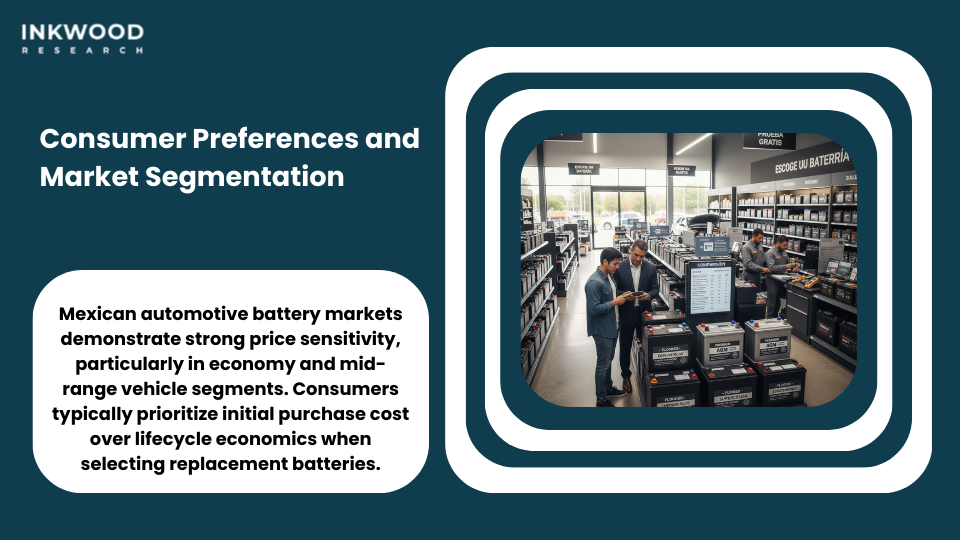
Price Sensitivity Across Segments
Mexican automotive battery markets demonstrate strong price sensitivity, particularly in economy and mid-range vehicle segments. Consumers typically prioritize initial purchase cost over lifecycle economics when selecting replacement batteries. This behavior reflects income constraints and immediate budget pressures outweighing long-term value considerations for many vehicle owners.
Nevertheless, premium vehicle owners and commercial fleet operators increasingly recognize the total cost of ownership benefits from quality batteries. These consumers willingly pay premium prices for extended warranties, superior reliability, and reduced downtime risks. Therefore, market segmentation intensifies with distinct consumer groups exhibiting fundamentally different purchasing priorities and battery technology preferences.
Brand Loyalty and Trust Factors
Established battery brands, including Clarios (formerly Johnson Controls), Exide, and East Penn Manufacturing, command strong positions in Mexican markets through reputation and distribution reach. Consumers often select familiar brands perceived as reliable, even at premium prices compared to unknown alternatives. This brand loyalty creates barriers for new entrants, requiring substantial marketing investment to establish market presence.
Moreover, warranty terms significantly influence purchasing decisions, with consumers viewing extended warranties as quality indicators. Batteries offering 36-48 month warranties command consumer confidence, justifying higher prices compared to 12-24 month warranty economy products. However, warranty claim settlement experiences affect future brand preferences, with poor service damaging long-term customer relationships.
Service Network Importance
Comprehensive service networks, including authorized dealers and warranty service facilities, strongly influence consumer battery brand preferences. Mexican consumers value convenient access to technical support and warranty service, particularly in regions with limited automotive service infrastructure. Battery manufacturers investing in distributor networks and service training gain competitive advantages beyond product specifications alone.
Additionally, installer relationships matter significantly for battery sales through professional recommendations influencing consumer choices. Automotive service shops and installers typically maintain relationships with preferred battery suppliers offering reliable product quality and responsive technical support. These business-to-business relationships drive substantial sales volumes, making distributor management critical for manufacturer success.
Regional Market Variations
Mexican battery markets vary regionally, reflecting economic development differences, climate conditions, and vehicle population characteristics. Northern border regions demonstrate closer alignment with U.S. market preferences, including higher AGM adoption rates. Meanwhile, central and southern regions maintain stronger conventional flooded battery dominance through price sensitivity and established distribution patterns.
Furthermore, urban versus rural distinctions affect battery technology preferences and availability. Major cities offer complete product ranges, including premium AGM batteries, while rural areas may have limited options, forcing consumers toward conventional flooded alternatives. These regional variations require manufacturers and distributors to develop market-specific strategies addressing diverse local conditions effectively.
Key Takeaways
- Mexico’s automotive battery market evolves toward premium technologies driven by start-stop system proliferation and advanced vehicle features. Market growth from US$857.26 million in 2026 to US$1,110.71 million by 2034 at a 3.29% CAGR reflects both new vehicle production and replacement demand, supporting sustainable industry development.
- AGM technology gains market share through superior performance characteristics supporting modern vehicle electrical demands and start-stop functionality. However, cost premiums limit adoption primarily to premium vehicle segments and consumers prioritizing performance over immediate affordability.
- Flooded batteries maintain market dominance through proven reliability and accessible pricing, serving economy vehicle segments and price-sensitive consumers. Continuous technology improvements extend conventional battery competitiveness despite fundamental limitations compared to sealed alternatives.
- Nearshoring trends position Mexico strategically within North American automotive supply chains, attracting substantial manufacturing investment. USMCA trade provisions create economic incentives for regional battery production, supporting both export opportunities and domestic market growth.
- Consumer preferences demonstrate strong market segmentation with distinct groups exhibiting different priorities, balancing price sensitivity against performance requirements and lifecycle economics. Successful market participants develop diverse product portfolios addressing segmented needs across premium, mid-range, and economy categories.
Conclusion:
Mexico’s automotive battery market undergoes a significant transformation reflecting technology evolution, manufacturing investment, and changing consumer preferences. The gradual shift from conventional flooded to advanced AGM technology mirrors broader automotive industry trends toward electrification and enhanced vehicle capabilities. However, this transition occurs unevenly across market segments, with price sensitivity maintaining conventional technology relevance for the foreseeable future.
Looking forward, continued nearshoring investment will strengthen Mexico’s position within North American automotive supply chains while supporting domestic market development. Battery manufacturers successfully navigating this evolution will balance technology advancement against market realities, offering diverse products meeting segmented consumer needs effectively.
If you’re seeking a comprehensive analysis of Mexican automotive battery markets, technology transition strategies, or nearshoring opportunities, contact Inkwood Research for customized research supporting strategic planning, investment decisions, and market entry initiatives across North American automotive sectors.
Frequently Asked Questions
When should Mexican vehicle owners choose AGM over flooded batteries?
Select AGM batteries for vehicles with start-stop systems, extensive electronic accessories, or if you prioritize long service life over initial cost. AGM technology delivers superior performance for vehicles spending significant time in traffic, where frequent engine restarts occur. Additionally, AGM suits drivers valuing maintenance-free convenience and willing to invest in premium products. Choose flooded batteries for conventional vehicles without start-stop systems when immediate cost savings outweigh lifecycle considerations.
How does nearshoring affect Mexican battery prices and availability?
Nearshoring manufacturing to Mexico potentially improves product availability through shorter supply chains and increased local production capacity. However, price impacts remain complex, with manufacturing investment costs potentially offsetting transportation savings initially. Long-term, increased competition from additional manufacturers should benefit consumers through improved pricing and product options. USMCA trade benefits also reduce tariff costs on regional trade, supporting competitive pricing.
What battery technology will dominate Mexico's future automotive market?
Market evolution likely continues toward gradual AGM adoption in premium segments, while flooded batteries maintain an economy market presence. Start-stop system proliferation accelerates AGM demand, but price sensitivity limits rapid transition across the entire vehicle population. Enhanced flooded batteries (EFB) may capture middle-market segments offering improved start-stop capability at moderate cost premiums. Complete market transformation appears unlikely within the next decade, given Mexico’s economic conditions and diverse vehicle fleet composition.