Table of Contents
This analysis is brought to you by Inkwood Research, a leading market intelligence firm specializing in United States healthcare technology markets, medical device certification pathways, and diagnostic imaging equipment ecosystems. Our research team combines extensive experience analyzing FDA regulatory frameworks, hospital procurement patterns, and medical display technology innovations across American healthcare systems. Based on our proprietary research methodologies and strategic partnerships with U.S. hospital networks, medical device manufacturers, and healthcare technology associations, we deliver actionable insights that empower strategic decision-making for enterprises navigating America’s medical display monitor market and healthcare technology landscape.
TLDR
The United States medical display monitors market demonstrates steady expansion, projected to grow from $1,064.38 million in 2026 to $1,601.03 million by 2034 at a 5.24% CAGR. Furthermore, diagnostic accuracy requirements, FDA regulatory standards, and healthcare technology innovation drive market evolution. Consequently, hospitals prioritize certified medical-grade displays from established manufacturers offering proven clinical performance. Leading brands balance premium imaging quality, regulatory compliance, and comprehensive service networks across American healthcare systems.
Hospital procurement officers comparing medical display vendors, radiology directors evaluating equipment replacement cycles, healthcare technology consultants advising facility upgrades, and clinical engineering managers selecting PACS infrastructure benefit from manufacturer comparisons. Additionally, medical imaging center administrators planning diagnostic equipment investments, healthcare investment analysts tracking industry trends, and regulatory affairs professionals understanding FDA clearance processes, gain valuable insights.
United States Medical Display Market Overview
Market Size and Growth Trajectory
The United States medical display monitors market reaches $1,064.38 million in 2026, expanding to $1,601.03 million by 2034 at a compound annual growth rate of 5.24%. This growth reflects sustained healthcare infrastructure investments and diagnostic technology modernization. Moreover, American hospitals replace aging display equipment while expanding imaging capacity to serve growing patient populations.
Healthcare facilities increasingly recognize that diagnostic accuracy fundamentally depends on display quality and proper calibration. Consequently, investments shift from consumer-grade monitors toward FDA-cleared medical display systems that meet DICOM standards. This transition occurs across radiology departments, surgical suites, emergency departments, and specialty clinics throughout integrated healthcare networks.
The mature American market demonstrates steady growth rather than explosive expansion, contrasting with emerging markets experiencing simultaneous infrastructure development and technology adoption. However, technological innovation, regulatory evolution, and clinical workflow optimization drive continuous equipment replacement cycles. Therefore, leading manufacturers maintain robust market presence through product innovation and comprehensive service offerings.
Healthcare System Requirements Drive Specifications
American healthcare delivery emphasizes diagnostic accuracy, clinical efficiency, and regulatory compliance simultaneously. These priorities translate into demanding technical specifications for medical display monitors. Radiology practices require high-resolution displays meeting minimum 3-megapixel standards for general imaging and 5-megapixel specifications for mammography. Additionally, displays must maintain consistent calibration throughout operational lifecycles.
Surgical applications demand different performance characteristics, prioritizing color accuracy, high brightness levels, and video connectivity options. Operating rooms require displays capable of handling 4K video streams from endoscopic and laparoscopic equipment. Furthermore, fanless cooling systems maintain sterile environments while ensuring reliable operation. These diverse requirements create segmented markets serving distinct clinical applications.
Top 10 Medical Display Monitor Brands in the US
Barco – Premium Diagnostic Imaging Leader
Barco dominates American medical display markets through exceptional image quality and comprehensive clinical validation. The Belgian manufacturer’s Coronis line sets industry standards for diagnostic radiology, while its surgical displays excel in operating room applications. Barco’s market leadership stems from decades of clinical collaboration, extensive FDA clearances, and established relationships with major healthcare systems.
The company’s recent innovations include the Nexxis aVNA solution, enabling 4K video distribution across hospital networks with minimal latency. This system supports up to 1,000 connected devices, transforming surgical visualization workflows. Additionally, Barco’s quality assurance software provides automated calibration monitoring across distributed display networks, ensuring consistent performance throughout healthcare enterprises.
EIZO – Uncompromising Quality Standards
EIZO commands premium market segments through superior color accuracy, product longevity, and reliability. The Japanese manufacturer’s RadiForce line delivers industry-leading performance across diagnostic, clinical review, and surgical applications. EIZO’s reputation for exceptional build quality and minimal failure rates makes it a preferred choice for institutions prioritizing long-term value over initial purchase price.
The RadiForce RX670, launched in late 2024, represents cutting-edge diagnostic display technology with 30-inch 6-megapixel resolution and 1200 cd/m² brightness. This specification enables radiologists to detect subtle abnormalities that lower-resolution displays might obscure. Moreover, EIZO’s Digital Uniformity Equalizer technology maintains consistent brightness across display surfaces, addressing common LCD limitations.
Sony – Surgical Visualization Excellence
Sony leverages extensive consumer electronics expertise to deliver industry-leading surgical displays with superior color reproduction and video processing. The company’s medical monitors excel in operating room applications requiring accurate tissue differentiation and 4K video clarity. Sony’s competitive advantage includes advanced image enhancement technologies like noise reduction and sharpness adjustment.
American hospitals appreciate Sony’s comprehensive product support and established distribution networks throughout the United States. The manufacturer maintains regional service centers, ensuring rapid response times for equipment issues. Furthermore, Sony’s displays integrate seamlessly with existing surgical equipment from multiple vendors, simplifying operating room technology management.
LG – Innovation and Value Balance
LG brings advanced LCD panel technology from its consumer electronics leadership into medical display applications. The Korean manufacturer secured FDA 510(k) clearance for its 21.3-inch 5-megapixel diagnostic monitor in early 2024, followed by clearance for its 32HS710S 4K surgical monitor in September 2025. These approvals demonstrate LG’s commitment to regulatory compliance and clinical validation.
LG’s displays offer competitive pricing compared to traditional medical display leaders while maintaining the quality standards required for clinical applications. This value proposition resonates particularly strongly with community hospitals and imaging centers managing budget constraints. Additionally, LG’s extensive distribution network provides accessible local support across American markets.
NDS Surgical Imaging – Operating Room Specialists
NDS Surgical Imaging focuses exclusively on surgical display applications, developing specialized solutions for operating room environments. The company’s displays feature sealed enclosures preventing contamination, fanless cooling systems maintaining sterile environments, and membrane control interfaces enabling operation without compromising sterility. This specialization enables NDS to serve demanding surgical applications effectively.
American surgical centers appreciate NDS’s deep operating room expertise and tailored product designs. The manufacturer collaborates closely with surgical equipment vendors, ensuring seamless integration with endoscopic systems, video routers, and recording devices. Furthermore, NDS provides comprehensive training programs helping surgical teams maximize display technology benefits.
FSN Medical Technologies – Cost-Effective Solutions
FSN Medical Technologies delivers certified medical displays, balancing quality with competitive pricing. The Korean manufacturer targets cost-sensitive market segments, including community hospitals, urgent care centers, and physician practices. FSN’s displays meet FDA requirements and DICOM standards while offering significant price advantages compared to premium brands.
The company’s product line spans diagnostic review, clinical applications, and surgical displays across various screen sizes and resolution specifications. FSN emphasizes reliability and serviceability, recognizing that healthcare facilities require consistent performance without premium maintenance costs. Consequently, FSN gains market share among institutions prioritizing cost-effectiveness alongside regulatory compliance.
Quest International – Specialized Applications
Quest International serves niche medical display applications with specialized product offerings. The company provides solutions for pathology, mammography, and interventional radiology requiring specific performance characteristics. Quest’s focused approach enables deep expertise in specialized clinical workflows and technical requirements.
American healthcare facilities appreciate Quest’s application-specific expertise and customized solutions addressing unique departmental needs. The manufacturer provides extensive technical consultation during equipment selection and implementation phases. Additionally, Quest maintains strong relationships with imaging equipment vendors, facilitating integrated system deployments.
Double Black Imaging – Innovative Technology
Double Black Imaging brings innovative approaches to medical display technology, emphasizing advanced calibration systems and quality assurance tools. The company’s solutions address enterprise-wide display management challenges, enabling healthcare systems to monitor and maintain display performance across distributed networks. This capability becomes increasingly important as healthcare organizations standardize on certified medical displays throughout clinical environments.
The manufacturer’s software platforms provide centralized calibration management, automated quality testing, and compliance documentation. These tools reduce administrative burden on clinical engineering teams while ensuring consistent display performance. Consequently, Double Black gains traction among large healthcare systems seeking comprehensive display fleet management solutions.
Advantech – Clinical Review Focus
Advantech specializes in clinical review displays serving hospital-wide PACS access requirements. The company’s medical monitors provide DICOM compliance at accessible price points for applications tolerating slightly lower specifications than primary diagnostic reading. This positioning enables Advantech to serve emergency departments, intensive care units, and specialty clinics requiring reliable image viewing capabilities.
The company emphasizes ease of integration with electronic health record systems and PACS platforms prevalent in American healthcare. Advantech’s displays feature standardized connectivity options and universal mounting configurations, simplifying deployment across diverse clinical environments. Furthermore, the manufacturer provides extensive technical documentation supporting information technology teams managing display infrastructure.
Jusha Medical – Emerging Competitor
Jusha Medical, a Chinese manufacturer, is increasingly penetrating American markets through competitive pricing and improving product quality. The company offers comprehensive display portfolios spanning diagnostic, clinical review, and surgical applications. Jusha’s market entry strategy emphasizes FDA clearance attainment and establishing American distribution partnerships.
While not yet matching the market penetration of established brands, Jusha demonstrates commitment to quality improvement and regulatory compliance. The manufacturer’s growing presence indicates increasing competition in American medical display markets. Healthcare facilities evaluating Jusha products should consider clinical validation evidence, service network capabilities, and long-term product support commitments alongside pricing advantages.
FDA Clearance and Regulatory Considerations
Understanding FDA 510(k) Clearance Process
Medical display devices intended for diagnostic radiology require FDA 510(k) clearance under 21 CFR 892.2050. This regulatory pathway requires manufacturers to demonstrate substantial equivalence to legally marketed predicate devices. The process evaluates display performance characteristics, DICOM compliance, luminance specifications, and clinical validation evidence.
The FDA’s updated quality system regulation, effective February 2026, incorporates ISO 13485:2016 standards for medical device quality management. These requirements ensure manufacturers maintain robust production controls, traceability systems, and post-market surveillance capabilities. Healthcare facilities purchasing medical displays should verify FDA clearance status through the Devices@FDA database before procurement decisions.
DICOM Compliance and Calibration Standards
DICOM Part 14 establishes grayscale display function standards, ensuring consistent image presentation across different display devices. Medical displays must demonstrate compliance with these specifications through comprehensive testing and documentation. Additionally, displays require periodic calibration to maintain performance throughout operational lifecycles.
Quality assurance programs typically mandate monthly calibration checks and annual comprehensive calibration procedures. Automated calibration systems simplify this requirement while ensuring consistent display performance. Healthcare facilities should evaluate manufacturer-provided calibration tools and quality assurance software during equipment selection processes.
Clinical Applications and Specifications
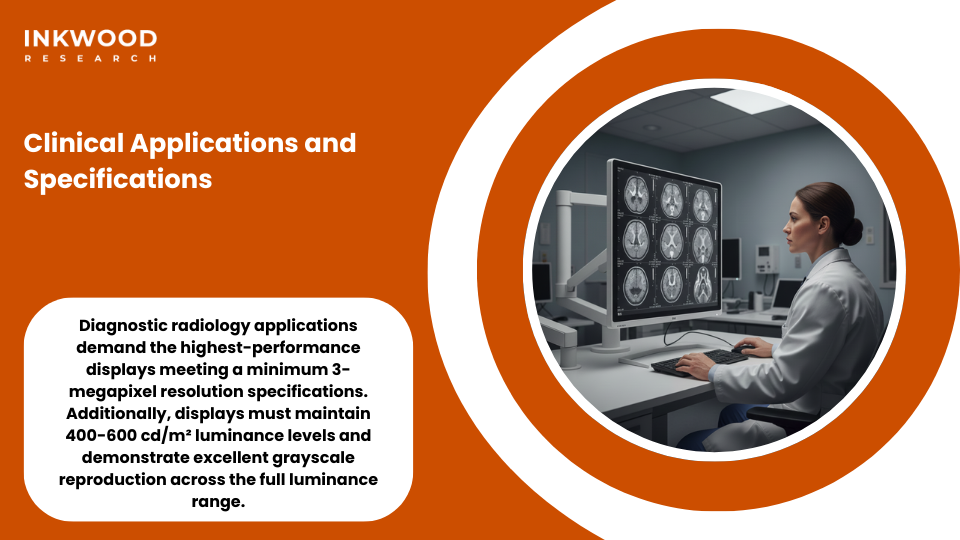
Radiology and Diagnostic Imaging Requirements
Diagnostic radiology applications demand the highest-performance displays meeting a minimum 3-megapixel resolution specifications. Mammography applications require 5-megapixel or higher resolution, enabling detection of subtle calcifications and tissue abnormalities. Additionally, displays must maintain 400-600 cd/m² luminance levels and demonstrate excellent grayscale reproduction across the full luminance range.
Radiologists spend extended hours interpreting complex imaging studies, making display ergonomics critically important. Anti-glare coatings reduce eye strain during extended viewing sessions. Furthermore, portrait mode support enables optimal viewing of full-length radiographs and spinal imaging studies. These ergonomic considerations directly impact radiologist productivity and diagnostic confidence.
Surgical Display Specifications
Operating room displays prioritize color accuracy, high brightness levels, and video connectivity over grayscale performance. Surgeons require displays capable of handling 4K video streams from endoscopic equipment with minimal latency. Additionally, displays must function reliably in ambient operating room lighting conditions, necessitating brightness levels exceeding typical diagnostic displays.
Sterile environment requirements influence surgical display design fundamentally. Fanless cooling systems prevent airborne contamination while maintaining reliable operation. Sealed membrane control interfaces enable display adjustment without compromising sterility. Furthermore, displays must resist cleaning agents used in operating room environments, including alcohol-based disinfectants.
Clinical Review and Emergency Applications
Emergency departments and intensive care units require DICOM-compliant displays for reliable image interpretation outside radiology departments. These applications tolerate specifications slightly below primary diagnostic reading requirements while maintaining clinical accuracy. Clinical review displays typically feature 2-megapixel resolution and 300-400 cd/m² brightness levels.
Integration with electronic health record systems and PACS platforms becomes paramount in enterprise-wide display deployments. Displays must support standard connectivity protocols and mounting configurations, simplifying installation across diverse clinical environments. Additionally, displays should provide intuitive controls enabling clinical staff to adjust settings without extensive training.
Pricing and Total Cost of Ownership
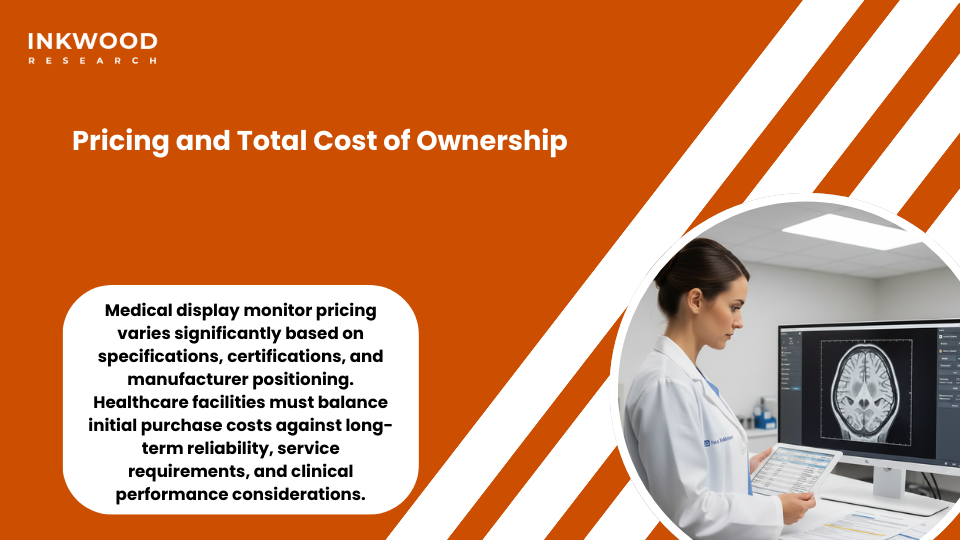
Initial Purchase Price Ranges
Medical display monitor pricing varies significantly based on specifications, certifications, and manufacturer positioning. Premium diagnostic displays from Barco and EIZO typically range from $8,000 to $15,000 for 3-megapixel models, with 5-megapixel mammography displays exceeding $20,000. Mid-range manufacturers like LG and FSN offer diagnostic displays in $4,000 to $8,000 range, while clinical review displays start around $2,000 to $4,000.
Surgical displays demonstrate similar pricing tiers, with premium 4K models from Sony and Barco commanding $10,000 to $18,000 price points. Budget-conscious surgical displays from FSN and Advantech range from $4,000 to $8,000. Healthcare facilities must balance initial purchase costs against long-term reliability, service requirements, and clinical performance considerations.
Long-Term Ownership Considerations
Total cost of ownership extends well beyond initial purchase prices, encompassing calibration requirements, service contracts, and replacement cycles. Premium displays from EIZO and Barco often demonstrate lower long-term costs through superior reliability and extended operational lifecycles exceeding seven years. Conversely, budget displays may require more frequent replacement despite lower initial costs.
Calibration and quality assurance represent ongoing operational expenses. Automated calibration systems reduce labor costs while ensuring consistent performance. Healthcare facilities should evaluate manufacturer-provided calibration tools, quality assurance software, and technical support capabilities during equipment selection. Additionally, warranty terms and service network coverage significantly impact long-term ownership costs.
Future Technology Trends
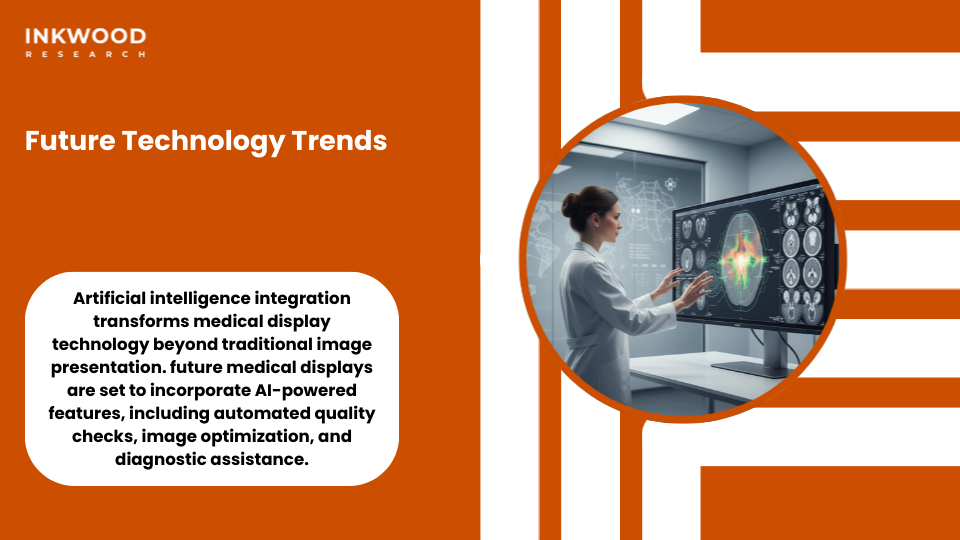
AI Integration and Enhanced Diagnostics
Artificial intelligence integration transforms medical display technology beyond traditional image presentation. The FDA cleared over 900 new AI algorithms specifically for radiological image analysis over the last two years, according to industry reports. These AI tools require high-quality displays to present enhanced imagery effectively. Consequently, future medical displays are set to incorporate AI-powered features, including automated quality checks, image optimization, and diagnostic assistance.
Display manufacturers increasingly collaborate with AI software developers to ensure optimal presentation of AI-generated overlays, heat maps, and diagnostic highlights. These integrations require careful attention to color accuracy, contrast ratios, and refresh rates. Moreover, displays must support high-bandwidth data transmission for real-time AI processing without introducing latency that disrupts clinical workflows.
8K Resolution and Beyond
While 4K displays currently represent premium offerings, 8K technology emerges on the horizon for specialized applications. Ultra-high resolution enables unprecedented detail visualization for complex surgical procedures and pathology applications. However, 8K adoption faces practical limitations, including file size management, network bandwidth requirements, and computational processing demands.
Display manufacturers evaluate 8K feasibility for specific clinical applications where additional resolution provides meaningful diagnostic or therapeutic advantages. Surgical subspecialties like ophthalmology, neurosurgery, and microsurgery may benefit from ultra-high resolution capabilities. Nevertheless, widespread 8K adoption remains years away due to ecosystem requirements extending beyond display technology alone.
Cloud-Based Display Management
Healthcare organizations increasingly adopt cloud-based systems for managing distributed display infrastructure. These platforms provide centralized calibration monitoring, automated quality assurance testing, and compliance documentation across enterprise networks. Cloud connectivity enables proactive maintenance, identifying potential display issues before they impact clinical operations.
Manufacturers develop cloud-native display management solutions offering remote diagnostics, software updates, and performance optimization. These capabilities reduce on-site technical support requirements while improving overall system reliability. Furthermore, cloud platforms facilitate regulatory compliance through automated documentation and audit trail generation, simplifying quality assurance program administration.
Key Takeaways
- The United States medical display monitors market grows from $1,064.38 million in 2026 to $1,601.03 million by 2034 at a 5.24% CAGR. The mature market demonstrates steady expansion driven by equipment replacement cycles and technology modernization rather than infrastructure growth.
- Barco, EIZO, and Sony dominate premium market segments through superior image quality, comprehensive FDA clearances, and established clinical validation. Mid-market brands like LG, FSN, and NDS offer competitive alternatives, balancing quality with cost-effectiveness for budget-conscious healthcare facilities.
- FDA 510(k) clearance under 21 CFR 892.2050 represents a mandatory requirement for diagnostic display devices. DICOM Part 14 compliance ensures consistent grayscale reproduction across different display systems, fundamental for reliable diagnostic interpretation.
- Diagnostic radiology applications require a minimum 3-megapixel resolution, while mammography necessitates 5-megapixel specifications. Surgical displays prioritize color accuracy, high brightness, and 4K video processing over grayscale performance. Clinical review applications tolerate lower specifications while maintaining DICOM compliance.
- Total cost of ownership considerations extend beyond initial purchase prices, encompassing calibration requirements, service contracts, and operational lifecycles. Premium displays often demonstrate lower long-term costs through superior reliability despite higher initial investments.
- Future technology trends include AI integration for enhanced diagnostics, potential 8K resolution adoption in specialized applications, and cloud-based display management platforms enabling enterprise-wide quality assurance and compliance documentation.
Conclusion:
American medical display monitor markets demonstrate mature dynamics characterized by steady growth, regulatory sophistication, and diverse manufacturer competition. Healthcare facilities benefit from comprehensive product offerings spanning budget-conscious options to premium performance solutions. Moreover, robust FDA regulatory frameworks ensure consistent quality standards protecting patient safety and diagnostic accuracy.
Selecting appropriate medical displays requires careful evaluation of clinical application requirements, regulatory compliance, total ownership costs, and vendor support capabilities. Premium manufacturers like Barco and EIZO justify higher initial costs through superior reliability and clinical validation. Meanwhile, emerging competitors provide viable alternatives for cost-sensitive applications, maintaining regulatory compliance.
Technology evolution continues transforming medical display capabilities through AI integration, resolution advancements, and cloud-based management platforms. Healthcare organizations should evaluate these emerging capabilities against current clinical needs and budget realities. Strategic partnerships with experienced display technology vendors enable facilities to navigate complex equipment selection while optimizing clinical and operational outcomes.
For expert guidance on medical display monitor selection tailored to your healthcare organization’s specific requirements and budget parameters, consult with Inkwood Research’s healthcare technology specialists.
Frequently Asked Questions
What FDA clearance do medical display monitors require?
Medical display devices for diagnostic radiology require FDA 510(k) clearance under 21 CFR 892.2050, demonstrating substantial equivalence to predicate devices. Additionally, displays must comply with DICOM Part 14 grayscale standards and maintain consistent calibration throughout operational lifecycles.
How much do medical display monitors cost in the United States?
Premium diagnostic displays from Barco and EIZO range from $8,000 to $15,000 for 3-megapixel models, while 5-megapixel mammography displays exceed $20,000. Mid-range options from LG and FSN cost $4,000 to $8,000, and clinical review displays start around $2,000 to $4,000.
Which brand offers the best medical display monitor value?
Value depends on specific clinical applications and budget constraints. Barco and EIZO provide premium performance, justifying higher costs through reliability and clinical validation. LG and FSN offer competitive alternatives, balancing quality with cost-effectiveness. Healthcare facilities should evaluate total ownership costs beyond initial purchase prices.