Table of Contents
This analysis is brought to you by Inkwood Research, a leading market intelligence firm specializing in Asia-Pacific automotive technologies, advanced battery systems, and electronics manufacturing innovations. Our research team combines extensive experience analyzing Japan’s precision manufacturing capabilities, electric vehicle development programs, and collaborative research initiatives across automotive manufacturers, electronics companies, and university laboratories. Based on our proprietary research methodologies and strategic partnerships with Japanese technology firms, industry associations, and government research institutions, we deliver actionable insights that empower strategic decision-making for global enterprises navigating Japan’s graphene and battery technology evolution in future mobility transformation.
TLDR
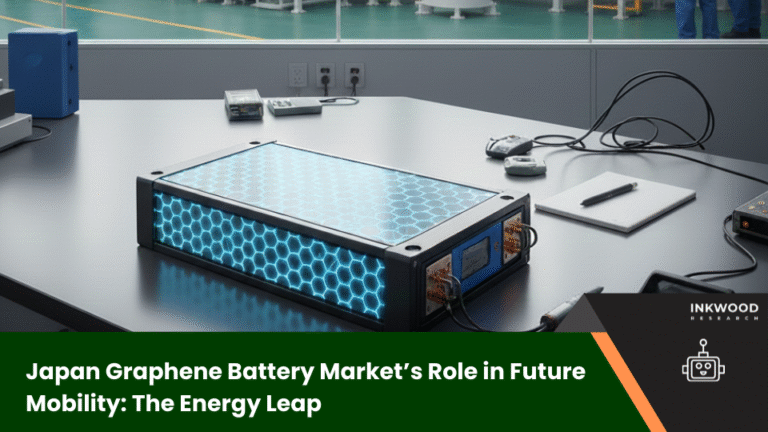
Japan’s graphene battery sector represents a critical evolution in the nation’s renowned automotive and electronics industries. Japan graphene battery market developments center on precision manufacturing and quality control excellence. Automotive leaders Toyota, Honda, and Nissan integrate advanced battery technologies into next-generation electric vehicles while electronics giants like Panasonic revolutionize consumer devices. Strategic partnerships with international graphene manufacturers and substantial R&D investments position Japan as a global innovation hub for advanced lithium-ion batteries and future sustainable transportation solutions.
Automotive industry executives planning EV technology roadmaps, electronics manufacturers seeking competitive advantages through advanced battery technology, policy analysts evaluating Japan’s energy transition strategies, and technology investors identifying opportunities in Asia-Pacific markets will gain valuable insights. Supply chain strategists, product development managers at consumer electronics firms, and sustainability directors implementing clean energy storage solutions will discover actionable intelligence for strategic decision-making in Japan’s evolving battery ecosystem.
Japan’s Manufacturing Excellence: Foundation for Battery Innovation

Japan’s legendary reputation for precision manufacturing creates an ideal foundation for advanced battery technology advancement. Specifically, the Japan graphene market reached $27.36 million in 2026, with projections indicating growth to $176.83 million by 2034 at a remarkable 26.27% CAGR. Moreover, Japanese companies apply decades of quality control expertise to battery integration, ensuring exceptional product reliability. These capabilities position Japan uniquely in global battery technology competition, where performance consistency matters as much as innovation speed.
Historical Context of Battery Innovation
Japanese corporations pioneered commercial lithium-ion battery production in the 1990s, establishing global industry standards. Subsequently, companies like Panasonic dominated the consumer electronics batteries for decades. Furthermore, automotive manufacturers developed hybrid vehicle technologies, gaining invaluable experience in battery system integration. Therefore, Japan’s battery initiatives build upon substantial institutional knowledge accumulated through decades of energy storage innovation.
Quality-Focused Manufacturing Philosophy
Japanese manufacturing philosophy emphasizes continuous improvement and zero-defect production. Additionally, rigorous testing protocols ensure products exceed performance specifications consistently. Companies invest heavily in process control systems, monitoring production parameters at microscopic levels. Meanwhile, workforce training programs maintain exceptional skill standards across manufacturing operations. Consequently, Japanese batteries command premium pricing based on reliability advantages.
Automotive Industry Transformation Through Advanced Battery Technologies
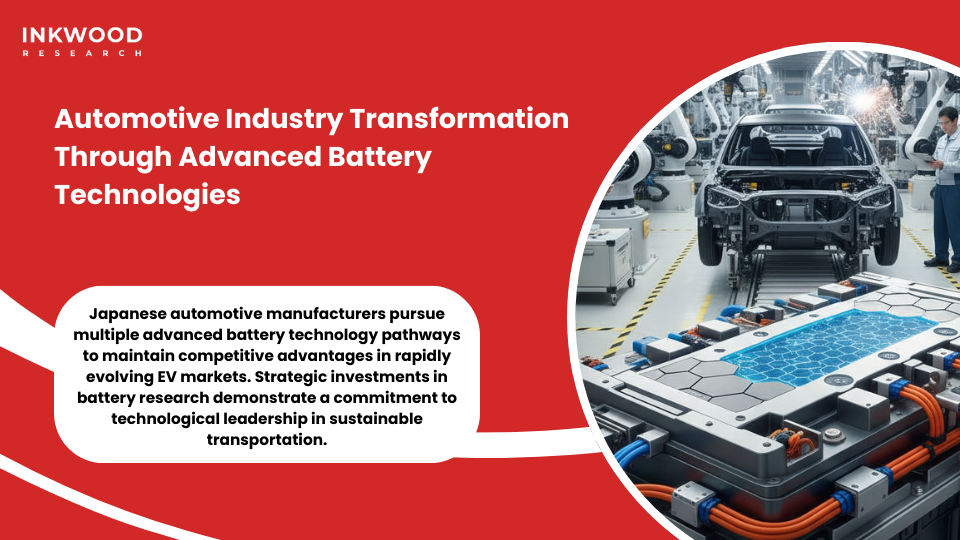
Japanese automotive manufacturers pursue multiple advanced battery technology pathways to maintain competitive advantages in rapidly evolving EV markets. In May 2018, Toyota announced a new R&D program with Panasonic, Nissan, and Honda for the development of solid-state batteries, targeting ranges up to 500 miles. Moreover, these companies leverage extensive hybrid vehicle expertise when integrating new battery chemistries. Strategic investments in battery research demonstrate a commitment to technological leadership in sustainable transportation.
Toyota’s Battery Research Initiatives
Toyota holds over 1,331 global patents related to solid-state batteries, ranking first in the world, demonstrating a deep commitment to next-generation battery technologies. In September 2024, Toyota announced that the Japanese government had approved its plans to build cars with solid-state batteries, planning to start production by 2026 and have vehicles on the road by 2027. Furthermore, Toyota partnered with Idemitsu in October 2023 to collaborate on developing mass-production technology for solid electrolytes. Subsequently, Toyota’s cautious approach prioritizes proven performance over rushed commercialization.
Honda’s Electric Vehicle Strategy
Honda Motor Co. plans to double the driving range of its EVs by the late 2020s through the adoption of all-solid-state batteries, according to company statements. Additionally, Honda is investing 43 billion yen ($277 million) in a pilot production line, nearly half funded with Japanese government subsidies. Engineering teams optimize battery pack configurations for maximum energy density within compact dimensions. Furthermore, strategic partnerships with battery suppliers ensure access to cutting-edge production technologies. Therefore, Honda positions itself competitively in premium EV markets, demanding superior performance.
Nissan’s Innovation Pipeline
As a pioneer in mass-market electric vehicles with the Leaf, Nissan possesses valuable real-world battery performance data. Nissan expects to make its first solid-state batteries at the Yokohama site beginning in March 2025, deploying 100 workers per shift, with plans to step up production to 100 megawatt hours per year from fiscal year 2028. Research priorities include extending vehicle range and reducing charging times to match consumer expectations. Furthermore, Nissan collaborates with electronics companies, leveraging cross-industry expertise in materials science. Consequently, Nissan’s battery initiatives benefit from practical insights gained through years of EV manufacturing experience.
Electronics Giants Pioneering Consumer Applications
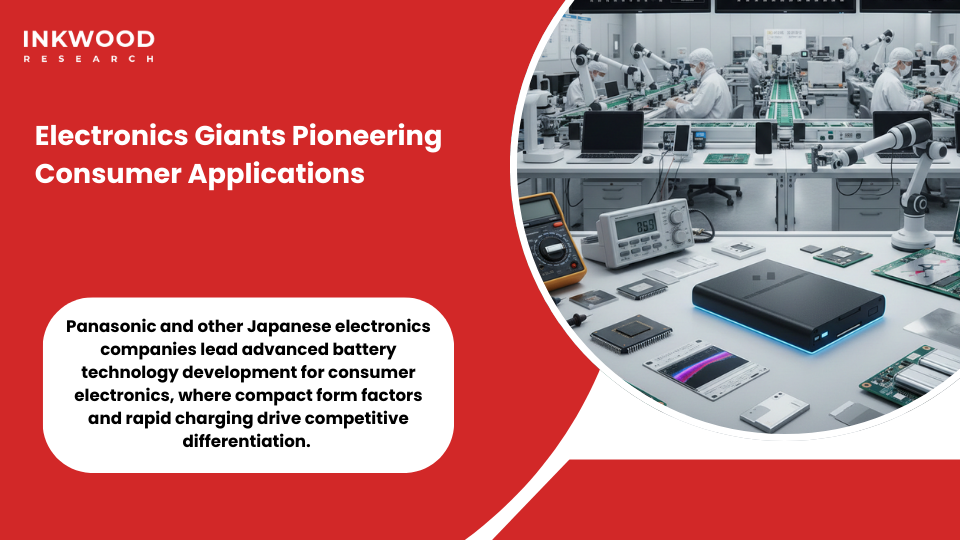
Panasonic and other Japanese electronics companies lead advanced battery technology development for consumer electronics, where compact form factors and rapid charging drive competitive differentiation. Specifically, smartphones, laptops, and wearable devices benefit from improved conductivity and lightweight properties. Moreover, consumer demand for longer battery life creates a strong market pull for advanced technologies. These electronics giants possess extensive experience in miniaturizing battery systems while maximizing performance capabilities.
Panasonic’s Energy Solutions
Panasonic is mentioned among key players developing graphene-based battery solutions for consumer electronics applications. Moreover, Panasonic holds 272 global patents related to solid-state batteries, ranking second after Toyota. Research focuses on improving energy density while reducing battery weight, critical factors for portable devices. Additionally, Panasonic formed a joint venture with Toyota called Prime Planet Energy & Solutions in 2020, specializing in automotive prismatic batteries. Subsequently, the company maintains technological leadership across multiple battery market segments.
Emerging Applications in Consumer Electronics
In the global consumer electronics market, specifically, wearable applications demand ultra-compact batteries with long operational lifespans. Moreover, graphene’s flexibility enables innovative form factors impossible with conventional rigid batteries. Companies develop batteries conforming to device contours, maximizing available space utilization. Therefore, advanced battery technologies unlock entirely new product design possibilities in consumer electronics.
Research and Development Infrastructure
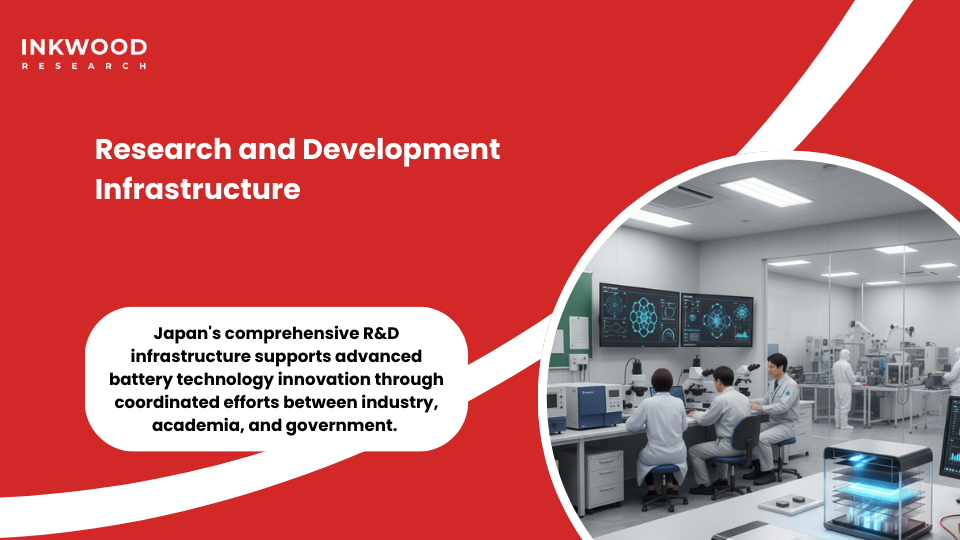
Japan’s comprehensive R&D infrastructure supports advanced battery technology innovation through coordinated efforts between industry, academia, and government. Universities conduct fundamental research into graphene properties and battery applications. Moreover, government agencies provide substantial funding for projects demonstrating commercial viability. Industry consortia facilitate knowledge sharing while protecting competitive intellectual property. Subsequently, collaborative frameworks accelerate Japan’s battery technology development pace significantly.
University Research Programs
Leading universities establish dedicated materials research centers, attracting top talent from physics, chemistry, and engineering disciplines. Additionally, doctoral programs produce skilled researchers who transition into industry roles, strengthening corporate R&D capabilities. Universities maintain state-of-the-art characterization equipment, enabling atomic-level analysis of material structures. Furthermore, publications in peer-reviewed journals demonstrate Japan’s contributions to global battery knowledge. Therefore, academic excellence reinforces Japan’s reputation for scientific rigor and innovation quality.
Government Funding Mechanisms
The Japanese government has been involved in battery R&D programs and provides substantial subsidies for battery technology development. Specifically, programs support both fundamental research and applied development activities. Moreover, funding criteria prioritize projects with clear commercialization pathways and environmental benefits. Competitive grant processes ensure resources flow to the most promising research directions. Additionally, government-backed incubators support battery technology startups, reducing entrepreneurial barriers. Consequently, public investment complements private sector R&D expenditures effectively.
Industry Research Consortia
In 2018, Toyota, Honda, Nissan, and Panasonic, along with the Japanese Government, announced a new R&D program called Libtec for the development of solid-state batteries. Furthermore, consortium structures enable risk sharing for expensive research equipment and facilities. Participants maintain intellectual property rights to specific innovations while contributing to shared knowledge bases. Meanwhile, government facilitators ensure fair participation terms and protect confidential information. Therefore, consortia accelerate Japan’s overall battery competitiveness without diminishing individual company advantages.
International Collaborations Accelerating Innovation
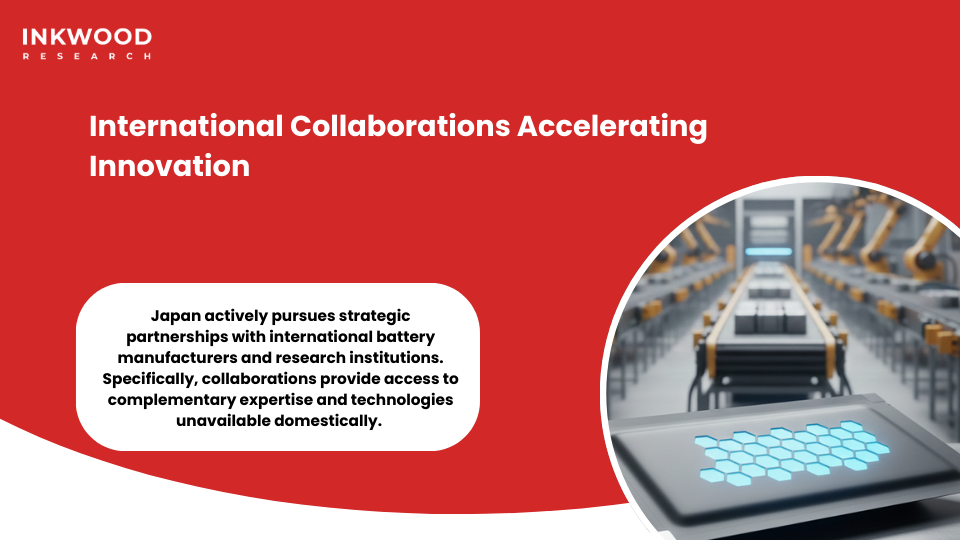
Japan actively pursues strategic partnerships with international battery manufacturers and research institutions. Specifically, collaborations provide access to complementary expertise and technologies unavailable domestically. Moreover, partnerships with European and North American entities facilitate knowledge exchange across different research traditions. Joint development projects reduce individual company risks while accelerating overall innovation timelines. Subsequently, international cooperation strengthens Japan’s position in global battery markets.
European Technology Partnerships
Japanese companies establish research relationships with European battery producers, accessing advanced synthesis techniques. Additionally, collaborative projects combine Japanese manufacturing excellence with European materials science expertise. Cross-border teams tackle complex challenges requiring diverse perspectives and capabilities. Furthermore, partnerships facilitate market access, enabling Japanese products to penetrate European automotive and electronics markets. Therefore, transatlantic cooperation creates mutual benefits for participating organizations.
North American Research Ties
Collaborations with American universities and technology companies provide Japanese firms with cutting-edge research insights. Moreover, proximity to Silicon Valley innovation ecosystems exposes Japanese engineers to disruptive thinking and rapid prototyping methodologies. Toyota received $4.5 million in federal funding from the U.S. Department of Energy in December 2024 for battery circularity technology development. Additionally, partnerships support knowledge transfer in both directions, enriching technological capabilities globally. Consequently, Japanese companies maintain awareness of emerging competitive threats and opportunities.
Asian Regional Cooperation
Within the Asia-Pacific, Japanese firms partner with South Korean and Chinese entities on specific battery projects. Specifically, collaborations focus on supply chain optimization and manufacturing efficiency improvements. Moreover, regional partnerships reduce transportation costs and improve responsiveness to Asian market demands. Shared research facilities enable cost-effective experimentation unavailable to individual companies. Therefore, Asian cooperation networks strengthen regional competitiveness against Western competitors.
Market Growth Drivers and Future Projections

The Japan graphene market’s strong growth reflects strong demand across automotive and electronics applications. While electric vehicle adoption in Japan accelerates as charging infrastructure expands nationwide, consumer electronics manufacturers continuously seek performance advantages in competitive global markets. Government policies supporting clean energy technologies provide additional growth catalysts.
Electric Vehicle Market Expansion
Japanese EV sales increase steadily as manufacturers introduce diverse models across price segments. Additionally, government incentives reduce purchase prices, making electric vehicles accessible to broader consumer bases. Charging infrastructure development alleviates range anxiety concerns that previously limited EV adoption. Furthermore, corporate fleets transition to electric vehicles, driven by sustainability commitments and total ownership cost advantages. Therefore, automotive battery technology demand grows steadily throughout the forecast period.
Consumer Electronics Demand
Graphene batteries are increasingly adopted in consumer electronics, with the market segment projected to grow significantly. Moreover, laptop and tablet markets prioritize thin, lightweight designs enabled by high-density batteries. Wearable device adoption expands as battery improvements enable smaller form factors with acceptable operational lifespans. Additionally, IoT applications create new market segments requiring specialized battery characteristics. Consequently, consumer electronics represent substantial growth opportunities for advanced battery technologies.
Energy Storage System Adoption
Japan’s commitment to renewable energy integration drives demand for grid-scale energy storage solutions. Specifically, solar and wind power installations require battery systems to manage intermittent generation patterns. Moreover, residential energy storage systems are gaining popularity as backup power and self-consumption optimization tools. Industrial facilities adopt battery systems for peak shaving and power quality management. Therefore, energy storage markets complement automotive and electronics applications, diversifying revenue opportunities.
Quality Control and Precision Manufacturing
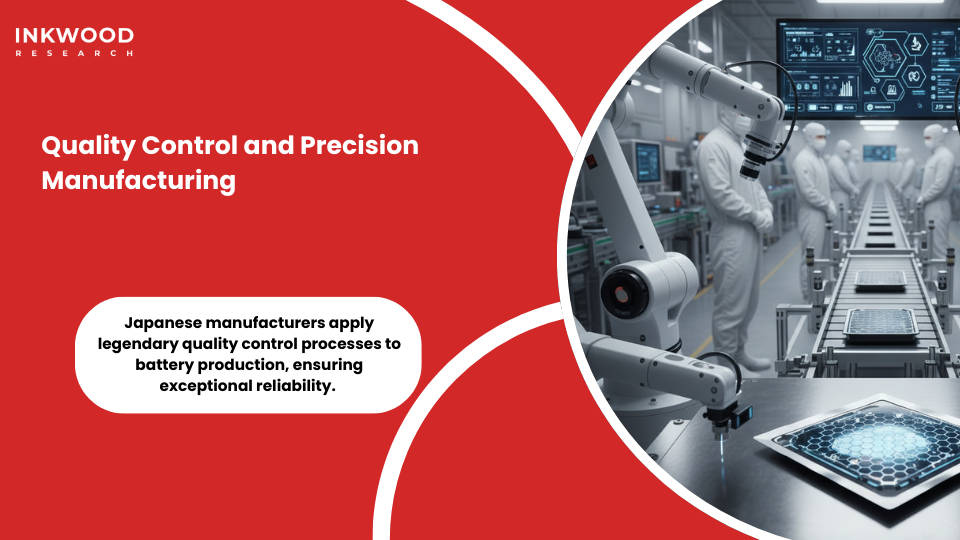
Japanese manufacturers apply legendary quality control processes to battery production, ensuring exceptional reliability. Specifically, statistical process control monitors production parameters continuously, detecting deviations before they affect product quality. Moreover, automated inspection systems verify specifications at multiple production stages. Workforce training emphasizes quality responsibility at every organizational level. Subsequently, Japanese batteries achieve significantly lower defect rates compared to international competitors.
Six Sigma and Kaizen Methodologies
Companies implement Six Sigma frameworks targeting near-zero defect rates in battery manufacturing. Additionally, Kaizen’s continuous improvement principles encourage incremental enhancements from frontline workers. Cross-functional teams analyze production data, identifying optimization opportunities systematically. Furthermore, quality circles empower employees to propose and implement process improvements. Therefore, cultural commitment to quality permeates organizational structures comprehensively.
Advanced Testing Protocols
Battery testing facilities subject products to extreme conditions exceeding normal usage scenarios. Specifically, thermal cycling, vibration, and accelerated aging tests validate long-term performance characteristics. Moreover, destructive testing establishes safety margins and failure mode patterns. Non-destructive evaluation techniques screen every production unit without damaging cells. Additionally, field performance data feeds back into testing protocol refinements continuously. Consequently, Japanese batteries demonstrate exceptional reliability across diverse applications.
Key Takeaways
- Toyota, Honda, and Nissan lead advanced battery development, with Toyota holding 1,331 solid-state battery patents and targeting production by 2026-2027
- Panasonic holds 272 solid-state battery patents and formed joint venture Prime Planet Energy & Solutions, with Toyota, pioneering consumer and automotive applications
- The Japanese government funds battery R&D programs, with Honda receiving 43 billion yen ($277 million) for pilot production lines
- Toyota received $4.5 million in U.S. Department of Energy funding for battery circularity technology, demonstrating international collaboration, strengthening global market positions
- Japanese manufacturing excellence emphasizes quality control through Six Sigma and Kaizen methodologies, achieving significantly lower defect rates than competitors
Conclusion:
Japan’s battery technology sector represents a natural evolution of the nation’s strengths in precision manufacturing and technological innovation. The graphene market’s projected growth reflects both market opportunity and Japanese companies’ systematic approach to technology commercialization. Unlike competitors prioritizing rapid deployment, Japanese manufacturers emphasize quality, reliability, and long-term performance validation—characteristics that historically differentiate Japanese products globally.
Strategic partnerships with international manufacturers, combined with a robust domestic R&D infrastructure, position Japan favorably for sustained growth. Moreover, automotive industry transformation and electronics sector innovation create complementary demand drivers supporting market expansion. As electric vehicle adoption accelerates and consumer electronics evolve, Japan’s battery technology initiatives will likely establish new industry benchmarks for performance and reliability.
Partner with Inkwood Research to navigate Japan’s battery technology landscape. Our customized market intelligence and strategic consulting services provide the insights you need for informed decision-making in this dynamic sector.
Frequently Asked Questions
What distinguishes Japan's approach to battery development?
Japanese manufacturers prioritize quality, reliability, and long-term performance validation over rapid commercialization. Moreover, decades of battery manufacturing experience and precision production capabilities create unique advantages. Toyota holds 1,331 solid-state battery patents, the most globally.
Which Japanese companies lead battery innovation?
Toyota, Honda, and Nissan dominate automotive applications through their collaborative Libtec R&D program, while Panasonic leads consumer electronics with 272 solid-state battery patents and joint ventures with Toyota. Additionally, numerous component manufacturers and material suppliers support the broader ecosystem.
How do international collaborations benefit Japan's battery industry?
Partnerships provide access to complementary expertise, as demonstrated by Toyota’s $4.5 million U.S. Department of Energy funding. Furthermore, collaborations facilitate knowledge exchange while strengthening Japanese companies’ global market positions and accelerating commercialization timelines.