Table of Contents
This analysis is brought to you by Inkwood Research, a leading market intelligence firm specializing in Japanese industrial technology ecosystems, smart manufacturing innovation, and advanced energy storage solutions. Our research team combines extensive experience analyzing Society 5.0 implementation strategies, industrial IoT deployment patterns, and flexible battery integration across Japan’s automotive, electronics, and machinery manufacturing sectors. Based on our proprietary research methodologies and strategic partnerships with Japanese battery manufacturers, industrial automation companies, robotics integrators, and government research organizations, we deliver actionable insights that empower strategic decision-making for enterprises navigating Japan’s super-smart manufacturing revolution.
TLDR
Japan’s Society 5.0 initiative integrates flexible thin film battery technology into smart manufacturing ecosystems. The Japan flexible thin film and printed battery market grows from US$130.60 million in 2025 to US$474.97 million by 2032 at a 20.26% CAGR. These IoT battery solutions enable industrial automation, robotics, and connected factories, advancing Japan’s super-smart society vision. Printable power sources support sensor networks, wearable device batteries enhance worker safety, and miniaturized battery solutions power autonomous systems, transforming manufacturing processes.
Manufacturing executives implementing Industry 4.0 technologies, industrial IoT developers requiring flexible electronics battery solutions, robotics engineers designing autonomous systems, smart factory architects integrating micro battery solutions, and policy makers understanding Japan’s digital transformation strategy, gain critical insights. Additionally, industrial equipment manufacturers, sensor network designers, worker safety technology developers, and supply chain optimization specialists benefit from understanding how bendable batteries enable connected manufacturing ecosystems.
Understanding Japan’s Society 5.0 Vision
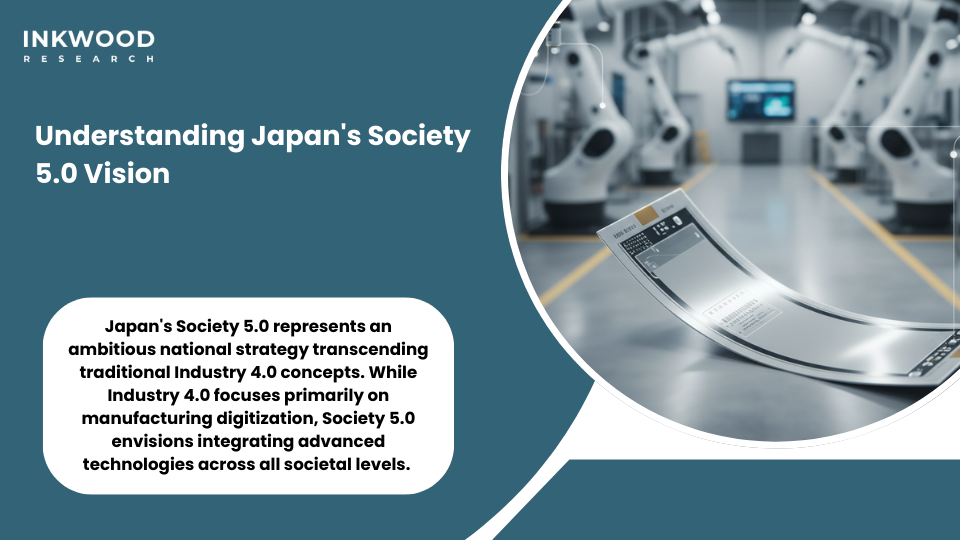
Japan’s Society 5.0 represents an ambitious national strategy transcending traditional Industry 4.0 concepts. While Industry 4.0 focuses primarily on manufacturing digitization, Society 5.0 envisions integrating advanced technologies across all societal levels. Furthermore, the initiative emphasizes human-centric innovation addressing demographic challenges through IoT, artificial intelligence, robotics, and big data. Flexible thin film battery technology plays a crucial enabling role throughout this transformation.
According to government initiatives, Japan aims to achieve Society 5.0 through the full utilization of technological innovation, including IoT, AI, and Big Data derived from the fourth industrial revolution. Moreover, the Ministry of Economy, Trade and Industry (METI) promotes “Connected Industries” as a framework where industries create added value and solutions by connecting data, technologies, people, and organizations.
The Japan flexible thin film and printed battery market demonstrates impressive growth aligned with Society 5.0 implementation. Market valuations reached $130.60 million in 2025, with projections indicating expansion to $474.97 million by 2032. This represents a 20.26% CAGR, reflecting accelerating adoption across manufacturing and infrastructure applications.
Demographic Challenges Driving Innovation
Japan confronts unique demographic pressures motivating technological adoption. As of 2024, approximately 29.1% of Japan’s population is 65 years old or older, making it the world’s most aged society. Additionally, representing the world’s highest percentage, the country faces severe labor shortages. By contrast, most countries won’t reach a 20% elderly population until 2050. This reality necessitates automation, robotics, and efficiency improvements impossible without advanced power solutions.
Moreover, Japan’s manufacturing competitiveness depends on productivity enhancements. Global competition from lower-cost producers threatens traditional industries. Smart manufacturing technologies offer pathways to maintain competitive advantages through quality, customization, and efficiency rather than labor costs. In this regard, IoT battery solutions enable sensor networks and connected systems, delivering these improvements.
Additionally, sustainability commitments require energy efficiency across all sectors. Japan targets significant renewable energy adoption and carbon emission reductions. Smart grids, energy storage systems, and optimized manufacturing processes all depend on advanced battery technologies. Consequently, next-generation battery technology developments align directly with environmental objectives.
Flexible Thin Film and Printed Battery Market: Smart Factories and Connected Industries
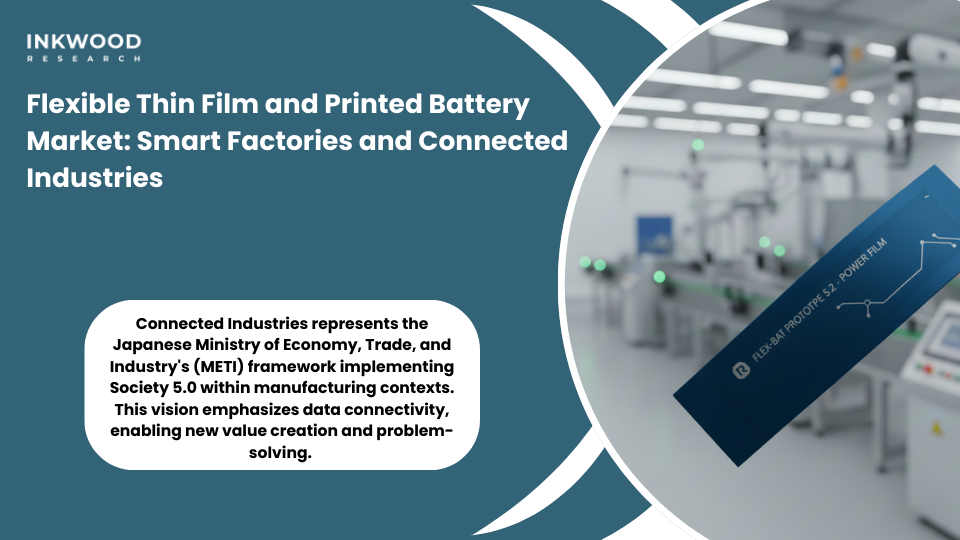
Connected Industries represents the Japanese Ministry of Economy, Trade, and Industry’s (METI) framework implementing Society 5.0 within manufacturing contexts. This vision emphasizes data connectivity, enabling new value creation and problem-solving. Unlike Germany’s Industrie 4.0, which focuses on supply chain optimization, Japan’s approach integrates manufacturing strengths with societal needs.
Flexible thin film battery technology enables the sensor networks, mobile devices, and autonomous systems, making this vision practical. Smart manufacturing capabilities enhance production accuracy by up to 35% in automotive assembly lines. Accordingly, collaborations between tech giants like Mitsubishi Electric and Hitachi accelerate transformation through AI and digital twin investments.
Hitachi’s Lumada platform exemplifies connected industry applications. This system integrates hardware, software, and analytics, enabling smart manufacturing, urban infrastructure development, and more. Further, the platform requires extensive sensor deployments throughout facilities, collecting operational data. These sensors demand reliable, maintenance-free power sources that printable power sources and micro battery solutions provide efficiently.
Digital Twin Technology Integration
Digital twins create virtual replicas of physical manufacturing processes, enabling simulation, optimization, and predictive maintenance. These systems require continuous data streams from sensors monitoring equipment conditions, environmental parameters, and production metrics. Thousands of sensors throughout factories generate the information feeding digital twin models.
Furthermore, bendable batteries enable sensor placement impossible with conventional power sources. Sensors mounted on rotating equipment, confined spaces, or vibrating machinery require flexible, durable batteries that can withstand mechanical stresses. Conversely, traditional rigid batteries fail under these conditions, limiting sensor deployment options.
Additionally, wireless sensor networks eliminate infrastructure costs associated with wired systems. Battery-powered sensors install quickly without electrical work, reducing implementation expenses. However, sensor batteries must operate for years without replacement, making energy efficiency and longevity critical design parameters.
Predictive Maintenance Applications
Predictive maintenance represents a primary smart factory benefit. Equipment sensors detect anomalies indicating impending failures, enabling proactive maintenance, preventing costly downtime. Additionally, vibration sensors, temperature monitors, and acoustic detectors identify bearing wear, lubrication issues, and other problems before catastrophic failures occur.
Moreover, machine learning algorithms analyze sensor data, identifying subtle patterns invisible to human operators. These systems learn normal operational signatures, flagging deviations warranting investigation. Accuracy improves continuously as algorithms process more data, refining failure predictions.
Industrial IoT Sensor Networks
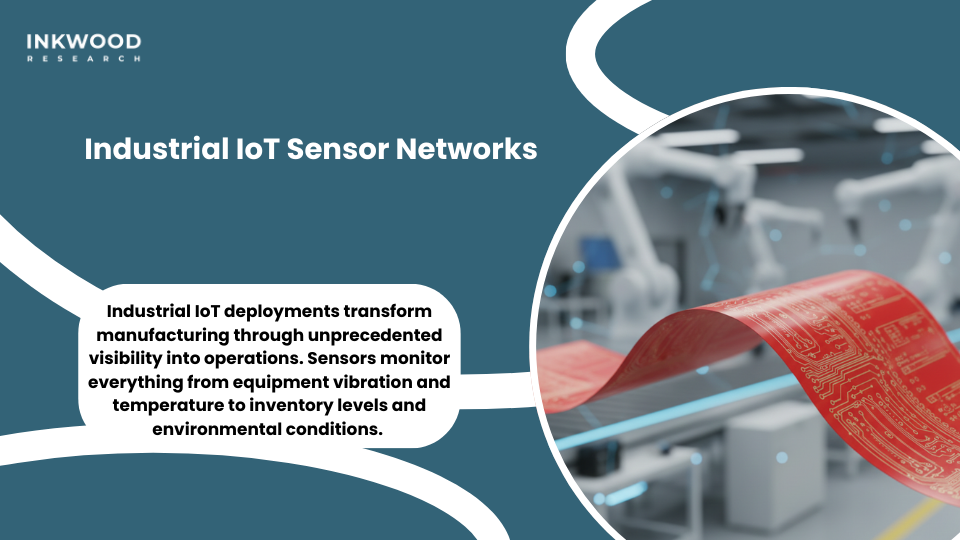
Industrial IoT deployments transform manufacturing through unprecedented visibility into operations. Sensors monitor everything from equipment vibration and temperature to inventory levels and environmental conditions.
The Japanese government is strongly advancing smart manufacturing under its Society 5.0 vision, highlighted by a ¥300 billion allocation in 2024. In parallel, Japan is undergoing a major AI infrastructure transformation supported by a combined ¥10 trillion commitment from the government and private sector, further reinforcing Society 5.0 objectives, including next-generation manufacturing.
This funding supports research, development, and implementation of automation technologies and IoT applications. Government subsidies encourage companies to adopt advanced manufacturing solutions, accelerating technology deployment across industries. These investments directly stimulate demand for lightweight batteries powering distributed sensor networks.
Temperature sensors lead market adoption given their critical role in process control and quality assurance. Manufacturing environments require precise temperature monitoring throughout production sequences. Battery-powered wireless sensors provide deployment flexibility while eliminating wiring infrastructure costs. Further, according to market data, temperature sensors dominate due to widespread applicability across manufacturing, food processing, and chemical industries.
Edge Computing and Local Processing
Edge computing architectures process data locally rather than transmitting everything to centralized servers. This approach reduces latency, bandwidth requirements, and cloud computing costs. Sensors incorporate processing capabilities, performing initial analysis before sending summarized information to higher-level systems.
However, edge computing increases power consumption. Additional processing requires more energy than simple data transmission. Consequently, flexible thin film battery designs must balance energy density, size constraints, and cost considerations. Engineers optimize battery performance for specific edge computing requirements.
Furthermore, energy harvesting technologies complement battery power in some applications. Solar cells, thermoelectric generators, or piezoelectric elements capture ambient energy, extending battery life or enabling perpetual operation. In this regard, hybrid systems combining energy harvesting with batteries provide reliability during periods when harvested energy proves insufficient.
Wireless Communication Standards
Industrial environments employ various wireless protocols optimized for different requirements. Zigbee networks support mesh topologies, enabling robust communication through self-healing paths. These systems excel in building automation and smart metering applications found throughout factories.
Additionally, cellular technologies, including 4G LTE and emerging 5G networks, provide wide-area connectivity. Remote monitoring applications tracking distributed assets across large campuses or multiple facilities utilize cellular connections. However, cellular communication consumes significantly more power than short-range protocols, influencing battery selection.
Robotics and Autonomous Systems Integration
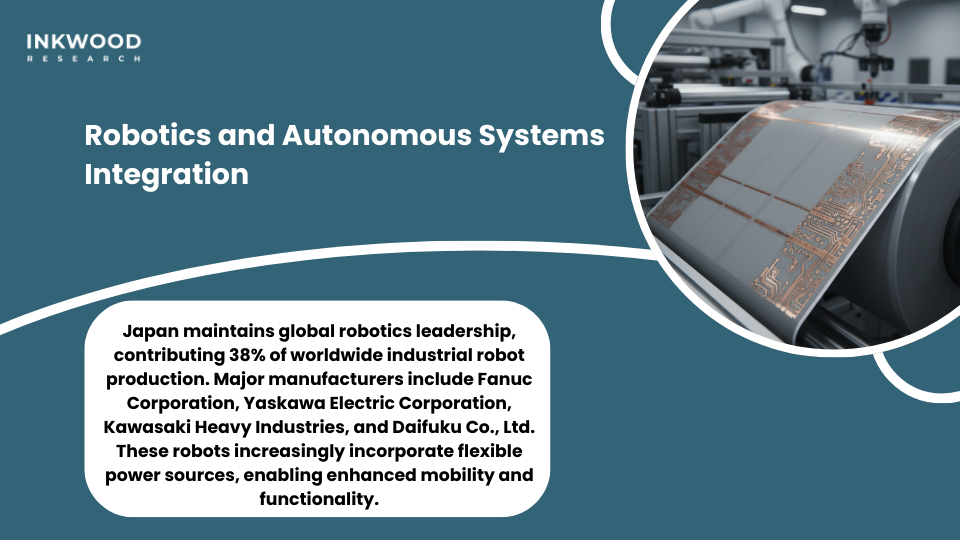
Japan maintains global robotics leadership, contributing 38% of worldwide industrial robot production. According to the International Federation of Robotics, Japan exported 160,801 robots in 2023. Major manufacturers include Fanuc Corporation, Yaskawa Electric Corporation, Kawasaki Heavy Industries, and Daifuku Co., Ltd. These robots increasingly incorporate flexible power sources, enabling enhanced mobility and functionality.
The Robot Revolution Initiative accelerates robot adoption across manufacturing, healthcare, and agriculture sectors. Additionally, government programs provide funding and support for companies integrating robotic systems. These initiatives address labor shortage challenges while improving productivity and quality. Further, robotic applications span from traditional manufacturing automation to collaborative robots working alongside human operators.
Autonomous Mobile Robots (AMRs) represent rapidly growing applications. Unlike Automated Guided Vehicles following fixed paths, AMRs navigate dynamically using sensors and AI. These robots transport materials throughout facilities, adapting routes based on real-time conditions. Further, battery technology critically impacts AMR performance, determining operational duration and charging frequency.
Collaborative Robots and Human-Machine Interaction
Collaborative robots, or “cobots,” work directly alongside human workers without safety barriers. These systems incorporate advanced sensors detecting human presence and movements, adjusting operations to prevent collisions. Collaborative applications require robots operating extended periods between charges, supporting full work shifts.
Moreover, cobots increasingly incorporate wearable human-machine interfaces. Workers wear devices communicating with robots through gestures, voice commands, or haptic feedback. Also, these interfaces require wearable device batteries providing all-day operation comfort without frequent charging interruptions.
Additionally, augmented reality systems guide workers through complex assembly processes or maintenance procedures. Smart glasses display instructions, part locations, and quality checkpoints overlaid on the worker’s field of view. These devices depend on flexible wearable battery technology conforming to frame geometries while remaining lightweight and unobtrusive.
Drone Integration in Manufacturing
Industrial drones perform inventory management, facility inspections, and security surveillance. These applications suit large factories, warehouses, and outdoor facilities where ground-based systems prove impractical. Drones equipped with cameras and sensors survey stockpiles, inspect roofs and high structures, or monitor perimeter security.
Furthermore, battery technology fundamentally limits drone capabilities. Flight duration directly correlates with battery energy density and weight. Lightweight batteries with high energy densities enable longer flight times or increased payload capacities. Manufacturers continuously improve battery performance, supporting the expansion of drone applications.
Worker Safety and Wearable Technology
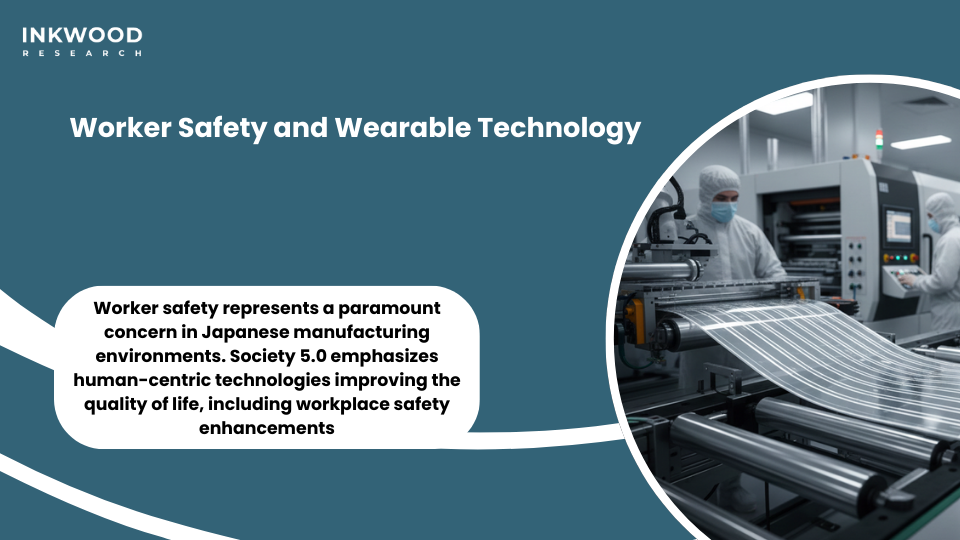
Worker safety represents a paramount concern in Japanese manufacturing environments. Society 5.0 emphasizes human-centric technologies improving the quality of life, including workplace safety enhancements. Wearable devices monitoring worker health, detecting hazardous conditions, and preventing accidents align perfectly with this vision. Flexible thin film battery technology enables comfortable, unobtrusive devices that workers wear throughout shifts.
Smart helmets incorporate sensors that detect impacts, monitor ambient conditions, and provide communication capabilities. Moreover, these devices alert supervisors to accidents immediately while tracking worker locations within facilities. Battery life must support entire shifts without replacement, making efficient power management essential.
According to industry developments, flexible and biocompatible battery systems enable advanced healthcare electronics. Applications extend from medical monitoring to industrial safety devices requiring body-worn sensors. Batteries must demonstrate flexibility, biocompatibility, and reliable performance under mechanical stress.
Exoskeleton Systems and Augmentation
Powered exoskeletons assist workers in lifting heavy objects or performing repetitive motions. These devices reduce injury risks while extending workers’ productive years despite aging demographics. Exoskeletons require substantial battery capacities supporting extended operation under load conditions.
Moreover, exoskeleton designs prioritize ergonomics and comfort. Battery placement significantly impacts wearability, with poorly positioned batteries creating pressure points or restricting movement. Flexible wearable battery technology enables distributed power placement, optimizing weight distribution and comfort.
Additionally, passive exoskeletons using springs and dampeners rather than powered actuation still benefit from battery-powered sensors. These systems monitor usage patterns, providing data to optimize mechanical designs. Smart exoskeletons adapt support levels based on task requirements and worker fatigue indicators.
Environmental Monitoring and Alert Systems
Wearable gas detectors protect workers in chemical plants, refineries, and other hazardous environments. Additionally, these devices continuously monitor air quality, alerting workers to dangerous concentrations of toxic gases or oxygen deficiency. Battery failure could prove fatal, making reliability absolutely critical.
Furthermore, noise monitoring devices track cumulative exposure to protect workers’ hearing. Japanese regulations mandate hearing protection programs in high-noise environments. Wearable dosimeters measure actual exposure throughout shifts, providing documentation for regulatory compliance.
Supply Chain Optimization Through Battery Innovation
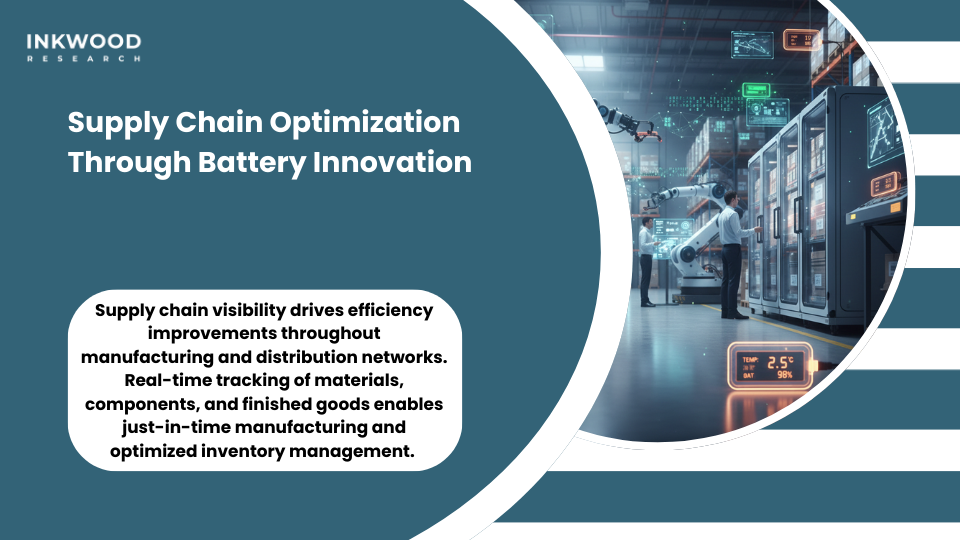
Supply chain visibility drives efficiency improvements throughout manufacturing and distribution networks. Real-time tracking of materials, components, and finished goods enables just-in-time manufacturing and optimized inventory management. IoT battery solutions power the sensors and tags, making this visibility possible.
Active RFID tags incorporating batteries transmit location data, temperature readings, and security status continuously. Unlike passive tags requiring proximity to readers, active tags communicate over longer distances, enabling automatic updates as items move through supply chains. Battery life spans must support typical supply chain transit times without replacement.
According to logistics research, Connected Industries frameworks emphasize supply chain integration. Companies share data across organizational boundaries, improving coordination and efficiency. Also, real-time visibility prevents stockouts while minimizing excess inventory carrying costs.
Cold Chain Monitoring Applications
Pharmaceutical products and perishable foods require strict temperature control throughout distribution. Battery-powered data loggers track temperature continuously, providing audit trails proving compliance with storage requirements. Moreover, these devices alert stakeholders to temperature excursions, enabling corrective actions to prevent product losses.
Moreover, sophisticated cold chain systems incorporate multiple sensors throughout shipping containers. Temperature gradients within containers can cause quality issues even when overall averages remain acceptable. Additionally, distributed sensor networks provide spatial temperature mapping, revealing hot spots or cold spots.
Blockchain integration creates immutable records of supply chain conditions. Temperature data from battery-powered sensors feeds into blockchain systems, creating verifiable chains of custody. Accordingly, customers access complete environmental histories verifying proper handling throughout distribution.
Asset Tracking and Equipment Management
Manufacturing facilities track thousands of tools, fixtures, and mobile equipment items. Battery-powered tracking tags enable real-time location services, preventing losses while optimizing equipment utilization. In this regard, facilities quickly locate needed items rather than maintaining excessive backup inventories.
Furthermore, equipment maintenance schedules benefit from usage tracking. Smart tags record actual utilization, enabling condition-based maintenance rather than arbitrary time intervals. This approach reduces unnecessary maintenance while preventing failures through data-driven scheduling.
Key Takeaways
- Market Growth: The Japan flexible thin film and printed battery market expands from US$130.60 million in 2025 to US$474.97 million by 2032 at a 20.26% CAGR, driven by Society 5.0 implementation.
- Society 5.0 Integration: Flexible thin film battery technology enables Japan’s super-smart society vision by powering IoT sensors, robotics, and connected systems throughout manufacturing environments.
- Smart Factory Enablement: IoT battery solutions support digital twin technologies, predictive maintenance systems, and autonomous operations, transforming traditional manufacturing processes.
- Robotics Leadership: Japan’s dominance in industrial robotics creates substantial demand for lightweight batteries powering autonomous mobile robots and collaborative systems.
- Worker Safety: Wearable device batteries enable safety monitoring systems, powered exoskeletons, and environmental sensors protecting the aging workforce.
- Supply Chain Visibility: Printable power sources and micro battery solutions enable active RFID tracking and cold chain monitoring, optimizing logistics operations.
- Government Support: Strategic investments, including ¥1 trillion in smart manufacturing funding, accelerate next-generation battery technology adoption across industries.
- Demographic Response: Japan’s aging population necessitates automation and efficiency improvements that flexible electronics battery solutions enable effectively.
Conclusion:
Japan’s Society 5.0 initiative represents a comprehensive societal transformation extending far beyond manufacturing digitization. Flexible thin film battery technology serves as essential infrastructure enabling connected industries, autonomous systems, and human-centric innovations. The convergence of advanced batteries with IoT, AI, and robotics creates synergies impossible with previous technologies.
Based on our analysis, Japan’s integrated approach combining government policy, corporate investment, and technological excellence positions the country advantageously to navigate demographic challenges through innovation. The Japan flexible thin film and printed battery market growth reflects the broader digital transformation accelerating across industries.
Looking forward, continued battery technology improvements will unlock additional applications, further advancing Society 5.0 objectives. Energy density increases, cost reductions, and manufacturing scalability improvements enable progressively sophisticated systems. Japan’s commitment to human-centric technology development ensures batteries serve societal needs rather than pure technical advancement.
Ready to understand how flexible battery innovations support smart manufacturing implementations? Contact Inkwood Research for comprehensive market intelligence and strategic guidance, navigating Japan’s Society 5.0 transformation.
Frequently Asked Questions
How does Society 5.0 differ from Industry 4.0?
Industry 4.0 focuses primarily on manufacturing digitization and supply chain optimization. Society 5.0 extends beyond industry to integrate advanced technologies across all societal levels, addressing demographic challenges, quality of life improvements, and sustainability. The initiative emphasizes human-centric innovation rather than purely technological advancement. IoT battery solutions enable both visions, but Society 5.0 applications span healthcare, transportation, energy, and social services beyond manufacturing.
What role do flexible batteries play in industrial robotics?
Lightweight batteries with high energy densities enable autonomous mobile robots to operate for extended periods between charges. These batteries power navigation sensors, communication systems, and motor controllers. Additionally, collaborative robots benefit from bendable batteries, enabling ergonomic designs. Worker-worn human-machine interfaces require wearable device batteries supporting all-day operation. Battery performance directly impacts robot capabilities and operational economics.
Why does Japan invest so heavily in smart manufacturing technologies?
Japan faces severe demographic challenges, while labor shortages necessitate productivity improvements through automation and efficiency gains. Additionally, global competition from lower-cost manufacturers threatens traditional industries. Smart manufacturing technologies enable competitive advantages through quality, customization, and efficiency rather than labor costs. Next-generation battery technology developments support these strategic imperatives while addressing sustainability commitments.