Table of Contents
Inkwood Research provides authoritative market intelligence across Japan’s dental imaging market, digital healthcare transformation initiatives, and clinical software innovation patterns. Our expertise encompasses AI diagnostic platforms, cloud-based imaging solutions, and digital workflow optimization across Asia-Pacific’s most technologically advanced healthcare systems, delivering strategic insights for software developers, medical device manufacturers, and digital health investors.
TLDR
Japan’s dental imaging market undergoes a profound digital transformation through software innovation and cloud platforms. The Japan dental imaging market expands from US$149.01 million (2026) to US$301.74 million (2034), achieving a 9.22% CAGR. Cloud-based dental imaging platforms and AI-enabled dental imaging solutions dominate growth trajectories. Aging population dynamics accelerate digital dental imaging technology adoption. 3D intraoral scanning and imaging systems integrate seamlessly with CAD/CAM integrated dental imaging systems, revolutionizing clinical workflows nationwide.
Dental software developers, healthcare IT professionals, clinic administrators, digital health investors, equipment manufacturers, AI platform providers, clinical workflow consultants, and policy analysts will gain critical insights into Japan’s digital transformation. This analysis illuminates the dental imaging technology market forecast, software-driven innovation, cloud platform adoption, and strategic opportunities within one of Asia’s most sophisticated healthcare technology markets.
Understanding Japan’s Digital Transformation in Dental Healthcare Technology
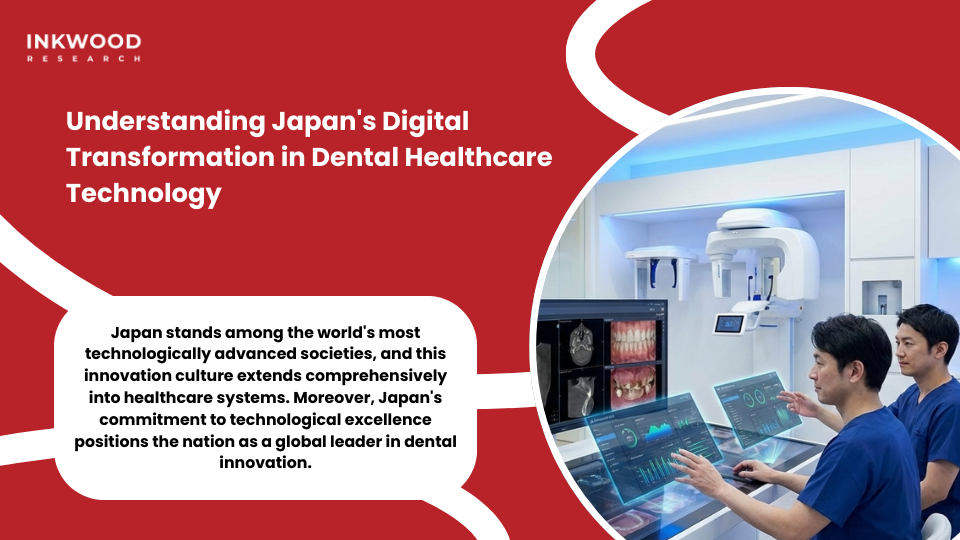
Japan stands among the world’s most technologically advanced societies, and this innovation culture extends comprehensively into healthcare systems. The Japan dental imaging market exemplifies this digital transformation, growing from US$149.01 million in 2026 to US$301.74 million by 2034. This 9.22% compound annual growth rate reflects sustained investment in sophisticated diagnostic infrastructure. Moreover, Japan’s commitment to technological excellence positions the nation as a global leader in dental innovation.
Market Structure and Digital Infrastructure
Japan’s dental care market represents a significant sector in the Asia-Pacific, which naturally creates substantial opportunities for technology advancement. Interestingly, digital imaging technologies have penetrated deeply across both urban and regional practices. According to industry analysis, a significant percentage of dental clinics in developed markets, including Japan, had incorporated digital diagnostic tools by 2021. Consequently, this baseline adoption enables rapid advancement toward cloud-based and AI-enhanced platforms.
Digital dental imaging technology encompasses various modalities serving different clinical needs throughout the care continuum. For instance, intraoral sensors have replaced traditional film radiography almost universally across Japanese practices. Meanwhile, cone beam CT dental imaging systems provide three-dimensional visualization for complex procedures requiring detailed anatomical information. These technologies generate substantial data volumes requiring sophisticated management solutions. Therefore, software platforms become increasingly critical infrastructure components supporting clinical operations.
Government Policy Supporting Digital Healthcare
Japanese government initiatives actively promote healthcare digital transformation through targeted funding and regulatory support. Specifically, policies encourage technology integration that improves efficiency and accessibility across underserved populations. Furthermore, financial incentives offset adoption costs for smaller practices that might otherwise lack capital for major technology investments. Additionally, regulatory frameworks establish standards ensuring interoperability between systems from different manufacturers. Consequently, coordinated ecosystem development accelerates rather than occurring haphazardly across disconnected initiatives.
Moreover, Japan’s cultural emphasis on precision and quality aligns perfectly with advanced imaging capabilities. Patients increasingly expect comprehensive diagnostics rather than reactive treatments after problems develop. Similarly, cultural preferences favor preventive care utilizing cutting-edge technology in healthcare settings. These social factors create favorable environments for the dental imaging technology market forecast expansion through software innovation.
Cloud Platforms and Software Solutions Driving Market Growth
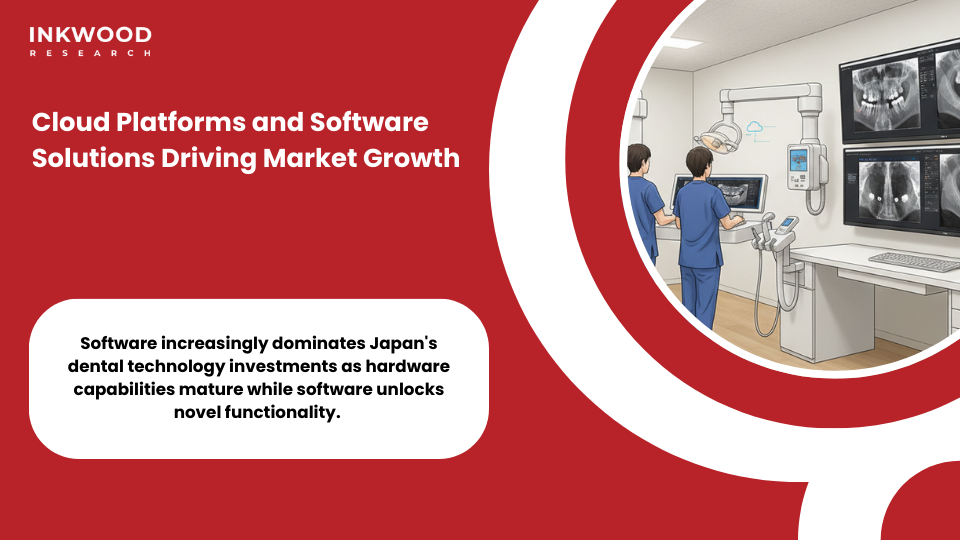
Software increasingly dominates Japan’s dental technology investments as hardware capabilities mature while software unlocks novel functionality. Cloud-based dental imaging platforms enable capabilities impossible through standalone systems operating independently. This fundamental shift transforms how practices manage diagnostic data and clinical workflows. Furthermore, the transition toward cloud-based solutions represents more than simple technology upgrades—it fundamentally reimagines dental practice operations.
Practice Management Software Integration
Comprehensive practice management platforms coordinate all clinic operations from scheduling through billing and inventory management. These systems integrate traditionally separate functions into unified workflows. Importantly, modern platforms incorporate imaging directly rather than treating it as separate functionality requiring manual coordination.
This integration streamlines workflows significantly while reducing data silos that create inefficiencies. Subsequently, practitioners spend less time managing technology and more time delivering patient care. Japan’s dental software market demonstrates exceptional growth trajectories that exceed even hardware investments. Notably, software adoption accelerates faster than hardware investments, reflecting its central importance in modern dental practice operations.
Leading providers like DentiMax expanded comprehensive practice management features throughout 2023 in response to market demand. These enhancements align strategically with Japan’s digital dentistry evolution. Moreover, software platforms increasingly offer cloud deployment options that practitioners can access from any device. This flexibility facilitates remote consultations and multi-location practice management. Additionally, this accessibility proves particularly valuable as teledentistry adoption increases across Japan’s geographically dispersed population.
Cloud Infrastructure Advantages
Cloud-based dental imaging platforms provide numerous operational benefits that extend beyond simple convenience. First, centralized data storage eliminates local server maintenance requirements that burden small practices. Automatic backups ensure data security without requiring manual processes prone to human error. Moreover, cloud platforms enable seamless software updates where practices receive new features automatically without disruptive installations. Consequently, technology remains current without a dedicated IT staff managing complex upgrade processes.
Collaboration capabilities represent another critical advantage driving cloud platform adoption. Multiple practitioners can access identical datasets simultaneously without version control issues. Furthermore, specialists review cases remotely without physical image transfers or patient travel requirements. Similarly, dental laboratories receive digital impressions instantly rather than waiting for physical shipments. These workflow improvements reduce treatment timelines substantially while enhancing coordination between care team members.
Additionally, cloud platforms facilitate regulatory compliance efficiently through built-in features addressing common requirements. Automated audit trails track data access comprehensively for regulatory reporting purposes. Encryption protects patient information during transmission and storage without requiring custom security implementations. Backup redundancy satisfies disaster recovery requirements that smaller practices struggle to implement independently. These built-in compliance features reduce administrative burdens compared to on-premise solutions requiring manual compliance management.
Digital Workflow Optimization
Integrated digital dental workflow imaging systems connect imaging directly with treatment planning and execution phases. For example, dentists capture intraoral scans that automatically populate prosthetic design software without manual data transfer. CAD/CAM integrated dental imaging systems enable same-day crown fabrication from digital impressions. This seamless workflow eliminates traditional multi-appointment procedures that inconvenience patients. Therefore, patient satisfaction improves while practice efficiency increases simultaneously.
According to digital dentistry adoption statistics, intraoral scanner sales increased significantly from 2020 to 2022 globally. Japan participated prominently in this growth trajectory. Practitioners increasingly recognize efficiency gains that justify technology investments despite initial capital requirements. Specifically, chair time reductions improve practice productivity while enhancing patient experiences through faster appointments. Therefore, integrated workflows become competitive necessities rather than optional enhancements for forward-thinking practices.
Moreover, digital workflows generate comprehensive documentation automatically throughout treatment processes. Treatment records include detailed images at every procedural stage without additional documentation burden. This comprehensive documentation supports quality assurance efforts while protecting against liability claims. Furthermore, insurance submissions include complete diagnostic evidence supporting treatment necessity. These administrative benefits amplify clinical advantages, strengthening business cases for digital transformation beyond purely clinical considerations.
Artificial Intelligence Reshaping Clinical Diagnostics
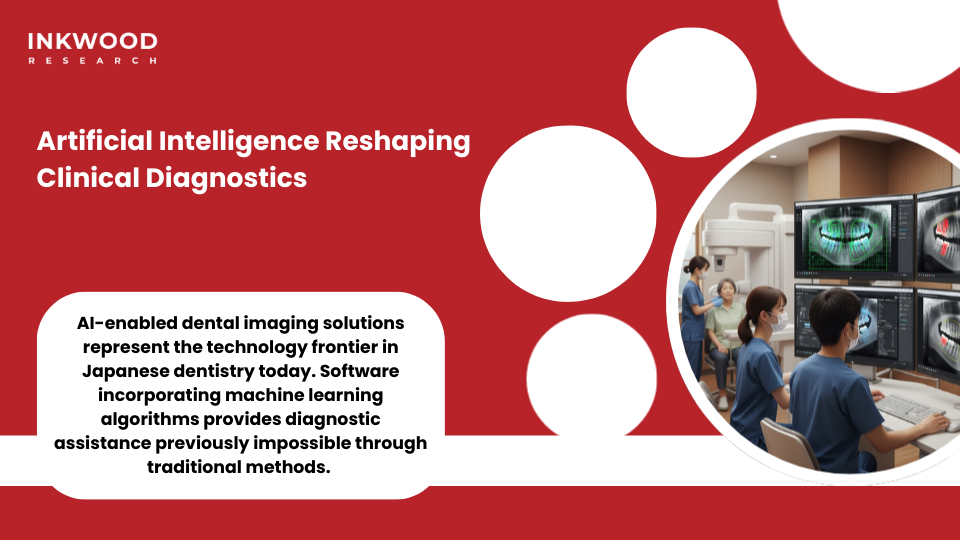
AI-enabled dental imaging solutions represent the technology frontier in Japanese dentistry today. Software incorporating machine learning algorithms provides diagnostic assistance previously impossible through traditional methods. These platforms analyze images instantaneously, identifying pathologies and recommending interventions based on vast training datasets. Consequently, clinical decision-making becomes more evidence-based and consistent across different practitioners and practice settings.
AI Diagnostic Platform Capabilities
Modern AI platforms detect various dental pathologies automatically with remarkable accuracy. For instance, caries identification algorithms flag suspicious areas on radiographs that might escape visual detection. Similarly, periodontal assessment software measures bone levels quantitatively rather than subjectively. Additionally, endodontic analysis tools identify root fractures and periapical lesions that traditional interpretation might miss. Importantly, these capabilities supplement practitioner expertise rather than replacing clinical judgment entirely.
MEDIA Co Ltd played a vital role in bolstering AI diagnostic software development in Japan through extensive research partnerships. The company developed the first Ministry of Health, Labor and Welfare-approved AI dental diagnostic system. This osteoporosis screening software analyzes panoramic radiographs, determining jaw bone fragility with clinical-grade accuracy. Furthermore, the platform assists dentists lacking specialized training in osteoporosis detection. This democratization of expertise exemplifies AI’s clinical value across diverse practice settings.
Moreover, AI platforms standardize diagnostic criteria across different practitioners working within the same organization. Subjective interpretation variability decreases significantly when algorithms provide objective measurements. Consequently, multi-provider practices maintain consistent quality standards regardless of individual practitioner experience levels. Patient care improves through reduced diagnostic discrepancies that previously occurred between different clinicians. These benefits prove particularly valuable in Japan’s aging society, requiring extensive dental interventions across large patient populations.
Machine Learning Integration with CBCT Technology
Cone beam CT dental imaging systems generate complex three-dimensional datasets requiring extensive analysis. Analyzing these volumes manually demands considerable time and expertise that many general practitioners lack. Fortunately, AI algorithms automate critical tasks like anatomical segmentation efficiently. Specifically, software identifies individual teeth, nerve canals, and sinuses automatically within seconds. This processing occurs dramatically faster than manual analysis, requiring hours of specialist time.
Implant planning benefits tremendously from AI-powered CBCT analysis capabilities. Algorithms calculate optimal implant positions considering bone density, anatomical constraints, and prosthetic requirements simultaneously. Virtual surgical guides are generated automatically from AI analysis without manual design work. These capabilities make advanced implantology more accessible to general practitioners. Therefore, general practitioners can confidently undertake procedures previously requiring specialist referrals and patient transfers.
Additionally, AI platforms detect pathologies that might be easily missed during manual CBCT review. Algorithms systematically analyze every voxel, identifying subtle anomalies throughout the dataset. Research indicates AI detects tumors larger than 6mm with 98.6% sensitivity in specialized applications. This comprehensive analysis ensures nothing escapes detection during routine examinations. Consequently, diagnostic thoroughness improves substantially compared to manual review, limited by human attention spans.
Continuous Learning and Performance Improvement
Cloud-based AI platforms improve continuously through federated learning approaches utilizing anonymized data. Algorithms analyze datasets from thousands of practitioners across different geographic regions. Each case study enhances diagnostic accuracy incrementally without compromising individual patient privacy. Users benefit from collective experience without individual data sharing, raising privacy concerns. This network effect accelerates AI performance beyond any single institution’s capabilities or dataset size.
Japanese developers collaborate extensively with dental schools and research institutions to validate algorithms. Academic partnerships provide large, well-annotated datasets for algorithm training and validation. Furthermore, clinical validation studies demonstrate AI effectiveness rigorously before commercial deployment. This research-driven approach ensures platforms meet strict Japanese quality standards before market introduction. Consequently, practitioner confidence in AI recommendations remains high throughout the adoption process.
Aging Population Accelerating Technology Adoption
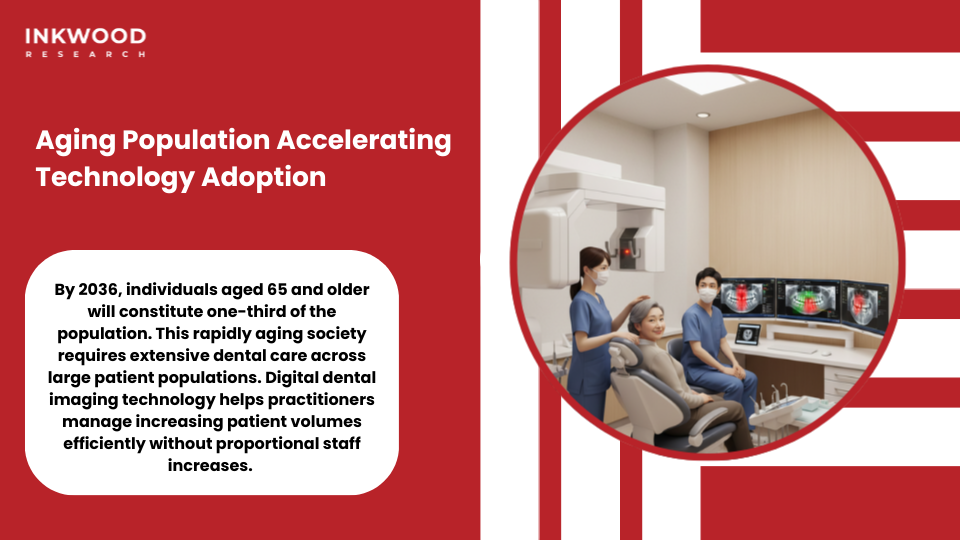
Japan’s demographic profile fundamentally shapes healthcare technology demand in unique ways. By 2036, individuals aged 65 and older will constitute one-third of the population. This rapidly aging society requires extensive dental care across large patient populations. Digital dental imaging technology helps practitioners manage increasing patient volumes efficiently without proportional staff increases. Moreover, technology becomes an essential infrastructure rather than an optional enhancement given demographic realities.
Geriatric Dental Care Requirements
Elderly patients present complex dental conditions requiring comprehensive diagnostics across multiple specialties. Periodontal disease prevalence increases significantly with age, requiring detailed monitoring. Similarly, tooth loss necessitates prosthetic replacements and careful implant planning. Furthermore, oral cancer screening becomes critically important for early detection. These clinical needs drive sustained demand for sophisticated imaging capabilities across multiple modalities serving different diagnostic purposes.
Additionally, elderly patients often experience mobility limitations affecting healthcare access. Teledentistry enabled by cloud-based dental imaging platforms provides remote consultations without office visits. Practitioners can review radiographs and photographs remotely without requiring homebound patients to travel. This accessibility proves particularly valuable for individuals aging in place with limited mobility. Therefore, digital infrastructure supports broader aging-in-place initiatives extending beyond dentistry alone.
Moreover, geriatric patients typically require consultations with multiple medical specialists beyond dentistry. Cardiologists, endocrinologists, and rheumatologists must coordinate dental care for medically complex cases. Shared digital platforms facilitate interdisciplinary collaboration that improves outcomes. Specialists access dental imaging remotely, providing input without separate appointments or redundant imaging. This integrated care model becomes feasible only through comprehensive digitalization connecting different specialties.
Preventive Care Emphasis
Japan’s healthcare system emphasizes prevention rather than reactive treatment wherever possible. Regular dental examinations become increasingly common as health consciousness rises across all age groups. This preventive focus drives sustained demand for early detection capabilities, identifying problems before symptoms develop. AI-enabled dental imaging solutions excel at identifying incipient pathologies invisible to visual inspection alone.
According to oral health surveillance research, early caries detection enables conservative treatments preserving natural tooth structure. AI algorithms identify demineralization patterns that visual inspection cannot reliably detect. Subsequently, remineralization therapies prevent cavity progression without invasive procedures. This preventive approach aligns perfectly with Japanese healthcare philosophy while reducing long-term treatment costs substantially.
Moreover, preventive care generates substantial imaging volumes requiring efficient management. Each examination produces radiographs requiring storage, retrieval, and analysis. Cloud platforms manage this data efficiently without overwhelming local storage capacity. Meanwhile, AI automates preliminary screening processes that would otherwise consume excessive practitioner time. Practitioners can then focus attention on genuine pathologies rather than reviewing predominantly normal findings. Therefore, technology enables sustainable preventive care delivery despite growing patient populations and limited practitioner availability.
Workforce Optimization Through Technology
Japan faces significant healthcare workforce challenges as the population ages rapidly. Training new dentists requires extensive time investments spanning many years. Meanwhile, current practitioners increasingly approach retirement age themselves. Technology helps bridge workforce gaps by enhancing individual practitioner productivity substantially. 3D intraoral scanning and imaging systems reduce procedure times while maintaining or improving quality outcomes.
Digital workflows eliminate redundant tasks that historically consumed valuable staff time. For example, automated appointment reminders reduce no-shows without manual phone calls. Electronic prescriptions are transmitted directly to pharmacies without paper handling. Similarly, centralized imaging platforms require less manual data management than traditional systems. These efficiency gains enable practices to serve more patients without proportional staff increases.
Furthermore, AI diagnostic assist1ance supports less experienced practitioners entering the profession. Recent graduates can access expertise levels that traditionally required decades of experience to develop. This capability proves particularly valuable in rural areas where specialist access remains limited. Therefore, technology democratizes expertise both geographically and temporally throughout practitioners’ career trajectories.
Leading Innovators in Japan’s Digital Dental Ecosystem
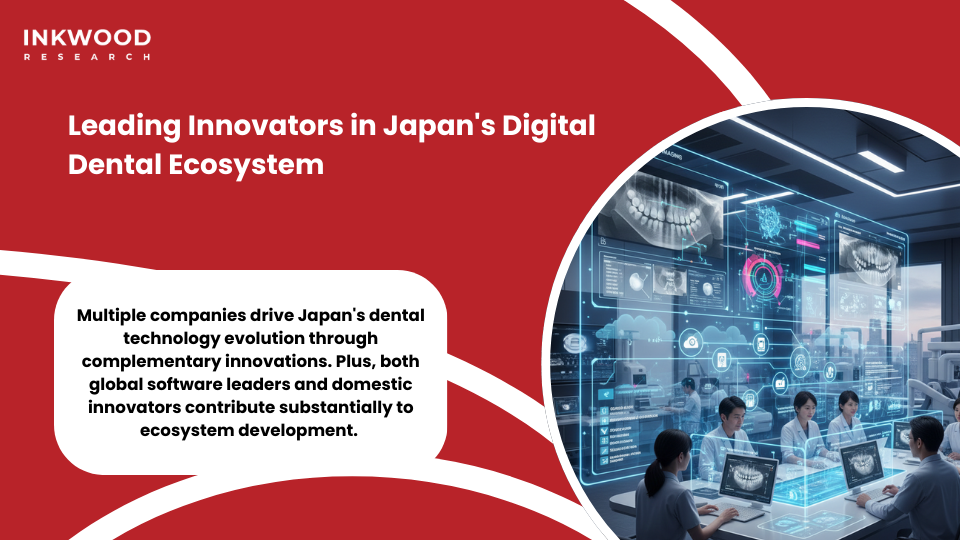
Multiple companies drive Japan’s dental technology evolution through complementary innovations. Plus, both global software leaders and domestic innovators contribute substantially to ecosystem development. Furthermore, strategic collaborations between hardware manufacturers and software developers accelerate comprehensive solution development. This collaborative approach benefits the entire industry through interoperability and shared standards.
Japanese Technology Pioneers
MEDIA Co Ltd has established itself as a leading dental IT solution provider since its founding in 1982. The company offers comprehensive systems, including electronic medical records, imaging platforms, and practice management software. Notably, MEDIA pioneered cloud-based products and secure data communication platforms early in the cloud computing era. This early adoption positioned the company advantageously as digital transformation accelerated across Japanese healthcare.
MEDIA’s affiliated company, EyeTech Co Ltd, specializes in AI image analysis with deep expertise. Collaboration between these entities produces sophisticated AI diagnostic platforms leveraging complementary strengths. The osteoporosis screening software represents Japan’s first Ministry-approved AI dental diagnostic system. This regulatory milestone validates MEDIA’s technology leadership while establishing precedents for future AI medical device approvals.
Moreover, MEDIA maintains strong relationships with dentists across Japan through extensive market presence. Customer feedback directly informs product development priorities, ensuring market relevance. Joint research with universities ensures solutions reflect the latest clinical insights and evidence. This customer-centric innovation approach sustains competitive advantages in Japan’s demanding technology market.
Global Software Leaders
- Carestream Dental brings extensive international expertise to Japanese markets through localized solutions. The company’s cloud-based imaging software updates in April 2025 incorporated enhanced AI analytics. These innovations specifically address Asia-Pacific market requirements, including language support and regional preferences. Furthermore, Carestream’s partnerships with Japanese distributors expand technology access beyond metropolitan centers into regional areas.
- 3Shape provides comprehensive digital dentistry platforms, including 3D intraoral scanning and imaging systems. The company’s CAD/CAM solutions integrate seamlessly with imaging workflows, creating unified platforms. In 2023, 3Shape enhanced software capabilities specifically for Japanese users, addressing unique market requirements. These localized solutions leverage global R&D investments while addressing local market needs.
- DentiMax expanded practice management features over recent years, aligning with Japan’s accelerating digital shift. Cloud deployment options enable multi-location practice coordination and remote access. Integration with imaging systems creates comprehensive platforms that manage all clinical and administrative functions. This holistic approach appeals to Japanese practitioners who value comprehensive solutions over fragmented point products.
Equipment Manufacturers Embedding Software Innovation
Traditional imaging equipment manufacturers increasingly differentiate through software rather than hardware alone. Companies like J. Morita Corp and The Yoshida Dental Mfg. Co., Ltd embeds sophisticated analysis algorithms into devices. This integration simplifies adoption because practitioners purchase complete solutions rather than assembling separate components.
In January 2023, Imagoworks partnered with Ci Medical, introducing Dentbird Solutions to Japanese markets. This web-based CAD program harnesses artificial intelligence for dental prosthesis design. Currently deployed in 93 countries worldwide, Dentbird represents cutting-edge software capabilities. Its Japanese introduction demonstrates strong market receptivity to advanced digital solutions.
NSK Ltd. unveiled innovative bearing technology enhancing air turbine handpiece performance in November 2022. While primarily a hardware innovation, this development illustrates Japan’s comprehensive technology advancement. Companies compete across all performance dimensions, including hardware reliability, software sophistication, and integrated system capabilities.
Future Directions for Software-Driven Dental Innovation
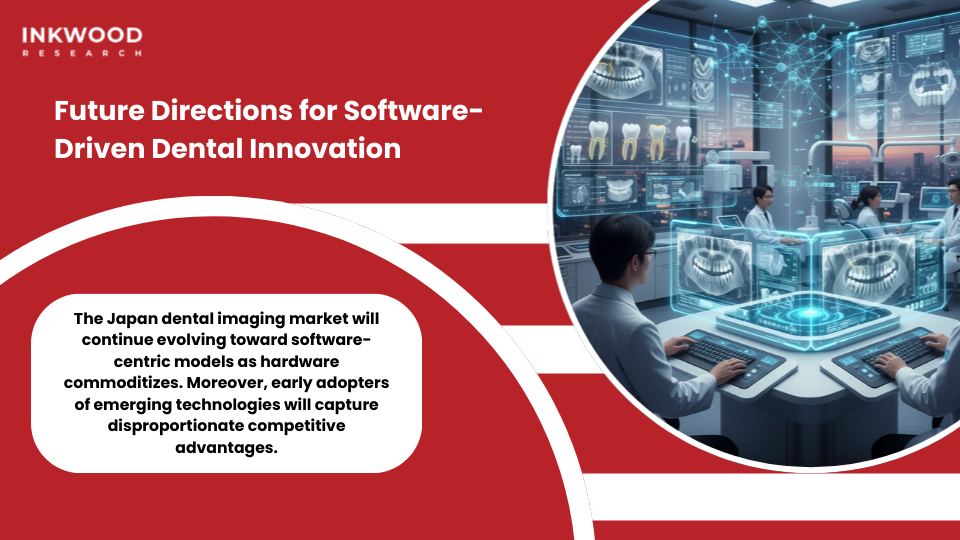
The Japan dental imaging market will continue evolving toward software-centric models as hardware commoditizes. Software creates differentiation and sustainable value in mature technology markets. Understanding these trajectories enables strategic positioning for future success. Moreover, early adopters of emerging technologies will capture disproportionate competitive advantages.
Expanded AI Capabilities and Applications
Current AI platforms focus primarily on detection and measurement tasks within defined parameters. However, future systems will incorporate comprehensive treatment planning recommendations based on patient data. Algorithms will suggest optimal therapeutic approaches considering individual patient characteristics and evidence-based outcomes. This evolution transforms AI from a diagnostic assistant to a complete clinical decision support infrastructure.
Predictive analytics represents another exciting frontier for AI applications. Systems analyzing longitudinal patient data will forecast disease progression probabilities with increasing accuracy. Risk stratification enables personalized preventive strategies, optimizing resource allocation. Specifically, high-risk patients receive intensive monitoring while low-risk individuals follow standard protocols. This precision medicine approach optimizes healthcare resource allocation across diverse patient populations efficiently.
Furthermore, AI will increasingly integrate with robotic systems for surgical applications. Automated surgical guidance based on AI planning already exists experimentally in research settings. Commercial deployments will expand as technologies mature and regulatory approvals progress through validation. These advanced capabilities position Japan advantageously in global dental technology innovation leadership.
Virtual and Augmented Reality Integration
Virtual reality transforms dental education fundamentally by providing immersive practice environments. Students practice complex procedures in realistic simulations before treating actual patients. This training approach accelerates skill development while eliminating practice-related patient risks. Japanese dental schools increasingly incorporate VR into curricula, recognizing pedagogical advantages.
Augmented reality enhances patient communication substantially through visual demonstration capabilities. Practitioners overlay diagnostic findings onto patient photographs showing exactly where pathologies exist. Treatment simulations demonstrate expected outcomes visually rather than through verbal descriptions alone. This communication clarity improves patient understanding and case acceptance rates. AR applications integrated with dental imaging platforms become standard consultation tools.
Moreover, AR assists during actual procedures by providing real-time information overlays. Heads-up displays show imaging during surgery without requiring practitioners to look away from the operating fields. Navigation systems overlay planned paths onto anatomical views visible through AR headsets. These capabilities improve precision while reducing procedural complications. Therefore, AR integration represents a natural evolution of integrated digital dental workflow imaging systems.
Interoperability and Data Standardization
Japan’s government prioritizes healthcare data interoperability through regulatory initiatives. Standards enabling seamless information exchange between different systems will mature substantially. Dental platforms will integrate more comprehensively with general medical records across specialties. This connectivity enables truly coordinated patient care across different healthcare providers.
Blockchain technologies may enhance data security and patient control over medical information. Distributed ledgers enable patients to manage access permissions granularly across providers. Healthcare providers request data access rather than maintaining separate databases independently. This paradigm shift addresses privacy concerns while facilitating appropriate information sharing.
Furthermore, international data standards will enable cross-border research collaboration at unprecedented scales. Large-scale studies combining datasets from multiple countries accelerate clinical knowledge development. Japanese innovations in AI dental diagnostics contribute to global platforms benefiting practitioners worldwide. This international collaboration amplifies individual nations’ research investments substantially through shared knowledge.
Key Takeaways
- Japan’s dental imaging market undergoes a profound digital transformation driven by software innovation rather than hardware alone. The Japan dental imaging market grows from US$149.01 million (2026) to US$301.74 million (2034) at a 9.22% CAGR.
- Cloud-based dental imaging platforms dominate growth trajectories, enabling advanced workflows and comprehensive AI integration. AI-enabled dental imaging solutions provide diagnostic capabilities that enhance clinical decision-making substantially.
- Aging population dynamics accelerate technology adoption as geriatric dental care demands increase significantly. Preventive care emphasis drives imaging volume growth, requiring efficient data management solutions.
- Leading providers, including MEDIA Co., Carestream Dental, and 3Shape, deploy sophisticated platforms across Japanese markets. Both domestic innovation and international expertise contribute meaningfully to ecosystem advancement.
- Future directions include expanded AI capabilities, virtual and augmented reality integration, and enhanced interoperability standards. Software-driven innovation will continue dominating investment priorities across the sector.
- Digital dental imaging technology becomes an essential infrastructure rather than an optional enhancement. Strategic positioning around software platforms determines competitive success in evolving markets.
Conclusion:
Software innovation fundamentally transforms Japan’s dental diagnostics landscape in measurable ways. Cloud-based dental imaging platforms and AI-enabled dental imaging solutions provide capabilities impossible through traditional standalone systems. This digital revolution improves clinical outcomes while addressing demographic challenges facing Japanese society. Japan’s cultural emphasis on technology integration and quality healthcare creates ideal environments for advanced platform adoption.
The dental imaging technology market forecast indicates sustained growth driven by software rather than hardware investments alone. CAD/CAM integrated dental imaging systems and 3D intraoral scanning and imaging systems exemplify comprehensive digital workflows. These technologies streamline operations while simultaneously enhancing diagnostic precision. Consequently, patient care quality improves alongside practice efficiency and productivity.
Based on our analysis, software-centric approaches will dominate dental technology evolution going forward. Hardware capabilities mature while software unlocks novel functionality continuously through updates. Cloud platforms enable capabilities impossible through standalone systems operating independently. AI algorithms provide expertise democratization, benefiting both practitioners and patients across diverse settings. Organizations prioritizing software innovation position themselves advantageously for future success.
For organizations seeking comprehensive intelligence on dental software markets or digital healthcare transformation in Japan, Inkwood Research delivers data-driven insights and strategic guidance. Contact our team to explore how these technological trends align with your business objectives and competitive positioning.
Frequently Asked Questions
How does cloud-based dental imaging software improve clinical workflows in Japan?
Cloud-based dental imaging platforms centralize data storage, eliminating local server maintenance while enabling remote access from any device. Multiple practitioners can access identical datasets simultaneously, facilitating specialist consultations and laboratory collaborations efficiently. Automatic software updates deliver new features without disruptive installations. These capabilities streamline operations substantially while supporting teledentistry expansion across Japan’s aging population.
What drives Japan's exceptionally high digital dentistry adoption rates?
Japan’s technology-focused culture, supportive government policies, and aging demographic create favorable adoption environments. Cultural preferences favor precision and comprehensive diagnostics over reactive treatments. Financial incentives offset technology costs for smaller practices. Additionally, workforce challenges necessitate productivity enhancements through digital tools. These factors collectively accelerate digital dental imaging technology penetration beyond global averages.
Which dental imaging technologies show the strongest growth in Japanese markets?
3D intraoral scanning and imaging systems demonstrate rapid adoption, with sales increasing substantially from 2020-2022. Cone beam CT dental imaging systems provide essential capabilities for implantology and complex cases. However, software platforms and AI-enabled dental imaging solutions show the fastest percentage growth. Cloud-based practice management systems integrating imaging, treatment planning, and administrative functions increasingly dominate investment priorities.