Table of Contents
This analysis is brought to you by Inkwood Research, a leading market intelligence firm specializing in Japan’s healthcare technology ecosystem, demographic transition impacts, and medical imaging market dynamics. Our research team combines extensive experience analyzing Japanese healthcare policy frameworks, aging population care requirements, and medical display technology adoption patterns across the nation’s sophisticated healthcare system. Based on our proprietary research methodologies and strategic partnerships with Japanese hospital networks, medical device associations, and geriatric care organizations, we deliver actionable insights that empower strategic decision-making for enterprises navigating Japan’s demographically-driven healthcare transformation and medical display market evolution.
TLDR
The Japan medical display monitors market expands from $153.42 million in 2026 to $229.41 million by 2034 at a 5.16% CAGR. Additionally, the nation’s unprecedented aging demographics—with 36.25 million citizens over 65 as of 2024—drive sustained diagnostic imaging demand. Consequently, healthcare facilities prioritize advanced visualization technologies supporting geriatric care, chronic disease management, and preventive screening programs. Moreover, domestic manufacturers like EIZO leverage technological expertise serving this demographically driven market transformation.
Healthcare policy analysts studying demographic impacts on medical technology markets, hospital administrators planning geriatric care infrastructure, medical imaging equipment distributors targeting Japanese markets, and healthcare investment professionals evaluating aging society opportunities benefit from these insights. Additionally, medical device manufacturers developing age-appropriate technologies, healthcare technology consultants advising Japanese facilities, and gerontology researchers examining healthcare system adaptations gain valuable perspectives.
Japan’s Demographic Challenge and Healthcare Response
Understanding Japan’s Super-Aged Society Status
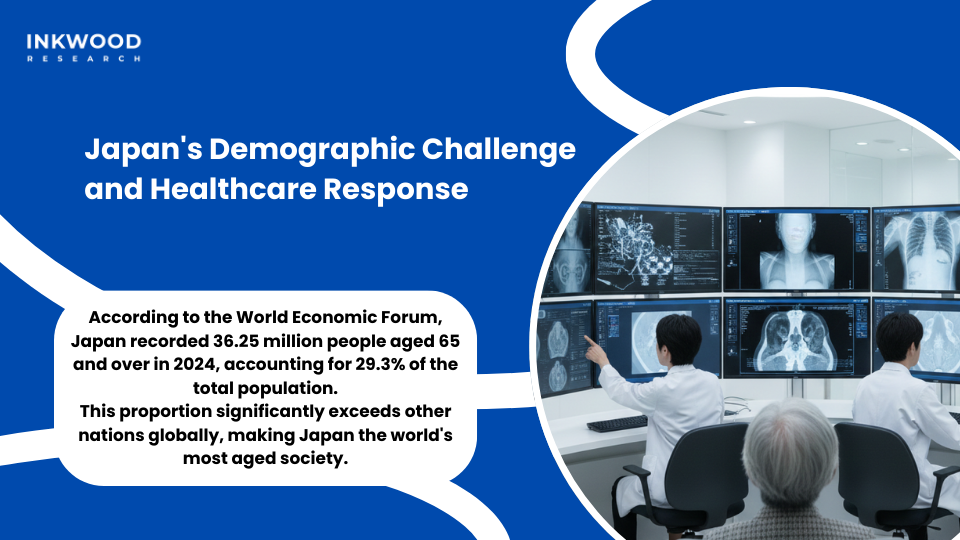
Japan medical display monitors market grows from $153.42 million in 2026 to $229.41 million by 2034, reflecting a compound annual growth rate of 5.16%. This expansion directly correlates with the nation’s unprecedented demographic transformation. According to the World Economic Forum, Japan recorded 36.25 million people aged 65 and over in 2024, accounting for 29.3% of the total population.
This proportion significantly exceeds other nations globally, making Japan the world’s most aged society. Furthermore, projections indicate this elderly population share will rise to 34.8% by 2040 and 36.3% by 2045. Further, these demographic realities create fundamental challenges for healthcare systems while simultaneously driving sustained demand for medical technology, particularly diagnostic imaging equipment and associated display technologies.
The aging population increases healthcare utilization rates substantially, particularly for diagnostic imaging services. Elderly patients require more frequent medical evaluations, chronic disease monitoring, and preventive screening procedures. Consequently, medical facilities across Japan invest in advanced imaging modalities and high-quality display systems, ensuring accurate diagnostic interpretation for this predominantly elderly patient population.
Healthcare System Adaptation Requirements
Japan’s healthcare system, which achieved universal coverage in 1961, must continuously adapt to serve increasingly elderly populations effectively. The Ministry of Health, Labour and Welfare implements comprehensive policy frameworks addressing aging-related healthcare challenges. Moreover, these initiatives include enhanced preventive care programs, chronic disease management systems, and healthcare infrastructure modernization supporting geriatric medicine specialties.
Healthcare facilities experience growing patient volumes while managing resource constraints, including physician shortages in certain specialties. According to research, Japan’s healthcare system confronts challenges in balancing quality care delivery with sustainable financing models. In this regard, medical display technology plays an increasingly important role in addressing these challenges through improved diagnostic efficiency and telehealth capabilities serving remote elderly populations.
Medical Imaging Demand from Aging Population
Age-Related Disease Prevalence Drives Imaging Volumes
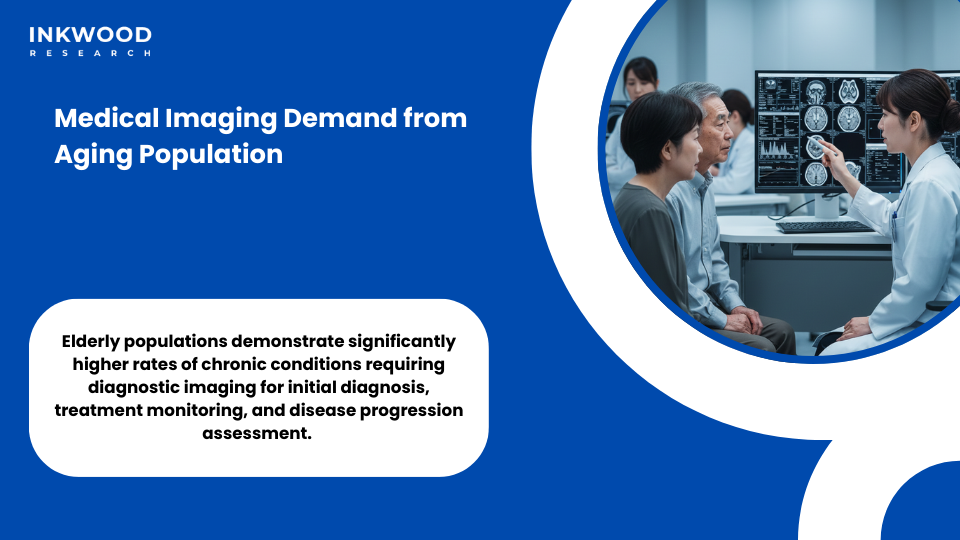
Elderly populations demonstrate significantly higher rates of chronic conditions requiring diagnostic imaging for initial diagnosis, treatment monitoring, and disease progression assessment. In this regard, cardiovascular diseases, cancers, neurological disorders, and musculoskeletal conditions all necessitate sophisticated imaging technologies. Moreover, early detection through preventive screening programs becomes increasingly important for managing age-related health risks effectively.
Dementia represents a particularly significant healthcare challenge. Government estimates project that between 20% to 22% of the population over age 65 will suffer from dementia by 2030. This amounts to approximately one in fourteen to sixteen people in the entire country. Consequently, neurological imaging volumes increase substantially, driving demand for high-quality display systems enabling accurate interpretation of brain CT and MRI studies.
Preventive Screening Program Expansion
Japan’s healthcare policy emphasizes preventive care through comprehensive screening programs targeting age-related conditions. The Elderly Health Care Act, enacted in 1983, mandated annual health checkups for early detection and prevention of chronic conditions. Additionally, these programs generate sustained diagnostic imaging volumes requiring reliable display infrastructure across healthcare facilities nationwide.
Cancer screening programs particularly drive diagnostic imaging demand. In this regard, breast cancer screening using mammography, colorectal cancer screening utilizing CT colonography, and lung cancer screening through low-dose CT all require high-resolution medical display monitors for accurate interpretation. Furthermore, follow-up imaging for positive screening results adds to overall imaging volume growth, compounding medical display equipment demand.
Chronic Disease Monitoring Requirements
Elderly patients with established chronic conditions require regular imaging follow-ups, monitoring disease progression, and assessing treatment effectiveness. Cardiovascular patients undergo serial echocardiograms and cardiac CT studies. Also, cancer patients receive periodic surveillance imaging to assess treatment response and detect potential recurrence. Orthopedic conditions, on the other hand, necessitate regular radiographic evaluations, monitoring joint deterioration, and fracture healing.
These chronic disease management protocols create sustained, predictable imaging volumes throughout healthcare systems. Besides, unlike acute care imaging responding to episodic illness, chronic disease monitoring generates steady equipment utilization supporting ongoing investments in medical display technology. Consequently, healthcare facilities prioritize reliable, high-performance display systems ensuring consistent diagnostic quality over extended operational lifecycles.
Technology Adaptation for Geriatric Care

Display Ergonomics for Extended Clinical Use
Radiologists and clinicians serving predominantly elderly patient populations spend extended hours reviewing complex imaging studies. In this regard, display ergonomics significantly impact physician productivity, diagnostic accuracy, and occupational health. Modern medical displays incorporate anti-glare coatings, adjustable viewing angles, and optimized brightness levels, reducing eye strain during prolonged viewing sessions.
EIZO, Japan’s leading medical display manufacturer, emphasizes ergonomic design throughout its RadiForce product line. Further, these displays feature flicker-free technology, blue light reduction modes, and auto-brightness adjustment capabilities responding to ambient lighting conditions. Such features become particularly important as physician workforces themselves age, requiring technology accommodations supporting continued professional effectiveness.
Integration with Electronic Health Records
Japan’s healthcare digital transformation initiatives emphasize electronic health record adoption and health information exchange systems. Accordingly, medical displays must integrate seamlessly with these platforms, enabling efficient access to imaging studies alongside clinical documentation, laboratory results, and medication histories. Plus, this integration becomes especially critical for elderly patients with complex medical histories requiring a comprehensive information review during diagnostic interpretation.
The Satusehat platform represents Indonesia’s digital health transformation strategy, while Japan implements comparable systems promoting healthcare data integration. According to reports, 98.6% of Indonesian healthcare institutions connected to their unified system by early 2025. Japan pursues similar digital integration goals, driving demand for displays supporting modern clinical workflow requirements.
Telemedicine and Remote Diagnostic Capabilities
Japan’s geography includes numerous remote islands and rural areas with aging populations and limited local healthcare resources. Telemedicine technologies enable specialists at urban medical centers to provide diagnostic interpretation and consultation services for patients in underserved regions. Essentially, medical display technology plays fundamental roles in these telemedicine applications, ensuring remote physicians view imaging studies with diagnostic quality comparable to on-site review.
Moreover, display standardization across telemedicine networks becomes critically important for consistent diagnostic interpretation. DICOM calibration standards ensure displays at referring hospitals and consulting specialist centers present identical image quality. Furthermore, high-bandwidth connectivity enables real-time collaboration between local providers and remote specialists during complex diagnostic evaluations, improving care access for elderly rural populations.
Domestic Manufacturers Leading Innovation
EIZO’s Market Leadership Position
EIZO Corporation dominates Japan’s medical display market through exceptional product quality, technological innovation, and comprehensive local support. The company’s RadiForce line sets global benchmarks for diagnostic display performance, particularly in color accuracy and image stability. EIZO’s success stems from a deep understanding of clinical workflows, close collaboration with Japanese healthcare institutions, and commitment to manufacturing excellence.
The RadiForce RX670, launched in late 2024, demonstrates EIZO’s continued innovation leadership. This 30-inch 6-megapixel color monitor offers native resolution of 3280 x 2048 pixels, brightness of 1200 cd/m², and contrast ratio of 2000:1. These specifications enable radiologists to detect subtle abnormalities critical for early disease detection in elderly patients. Moreover, EIZO’s displays maintain consistent performance throughout extended operational lifecycles, reducing total ownership costs.
Technology Strengths in Diagnostic Applications
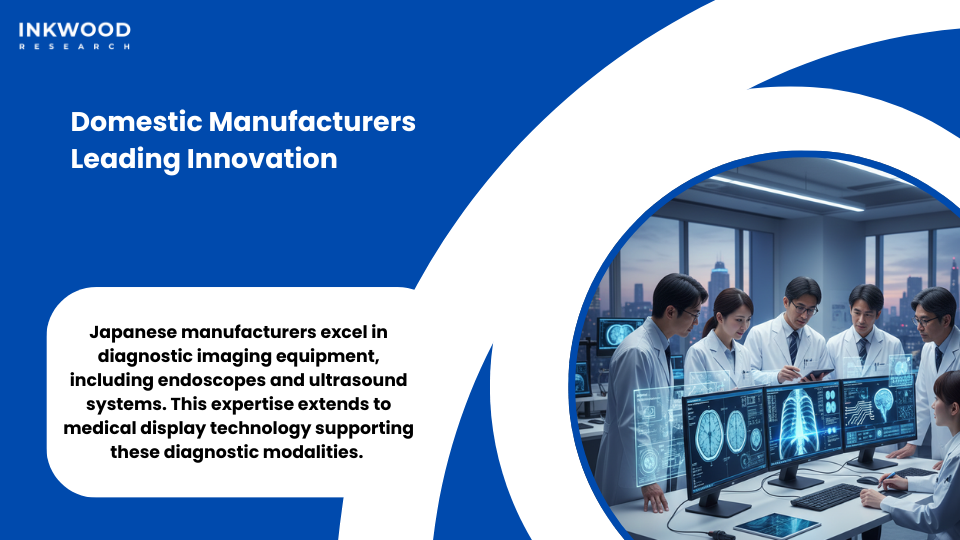
Japanese manufacturers excel in diagnostic imaging equipment, including endoscopes and ultrasound systems, according to analysis by the Ministry of Economy, Trade and Industry. This expertise extends to medical display technology supporting these diagnostic modalities. Accordingly, EIZO’s displays particularly excel in endoscopic imaging applications, where color accuracy proves critical for tissue characterization and abnormality detection.
Display manufacturers benefit from Japan’s broader technological ecosystem, including advanced LCD panel production, precision optics manufacturing, and sophisticated electronic component industries. Moreover, these strengths enable Japanese companies to produce medical displays meeting stringent quality requirements while maintaining competitive manufacturing costs. Consequently, EIZO successfully competes globally despite premium pricing strategies.
Local Service and Support Advantages
EIZO maintains comprehensive service networks throughout Japan, providing rapid response times for equipment issues and calibration services. Also, this local presence offers significant advantages over international competitors, requiring longer support response times. Healthcare facilities prioritize reliable vendor relationships, ensuring minimal equipment downtime, particularly important when serving time-sensitive diagnostic workflows for elderly patients.
Technical support capabilities extend beyond basic maintenance to include clinical application consultation, workflow optimization guidance, and continuing education programs for radiology staff. Additionally, these comprehensive service offerings create strong customer loyalty and support premium pricing strategies. Furthermore, EIZO’s deep relationships with Japanese healthcare institutions position the company to influence display technology specifications and clinical workflow standards.
Government Policy Supporting Healthcare Infrastructure
Healthcare Modernization Investment Programs
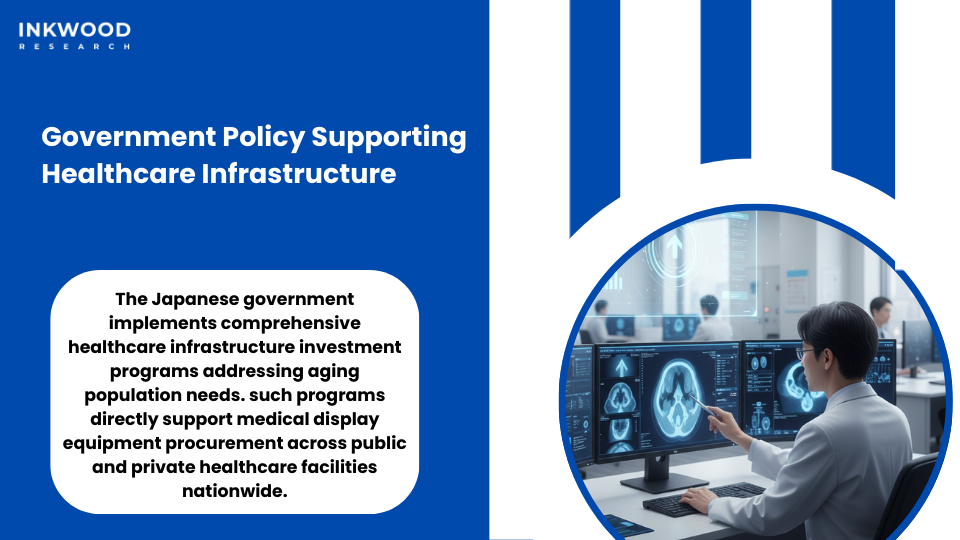
The Japanese government implements comprehensive healthcare infrastructure investment programs addressing aging population needs. These initiatives include hospital construction and renovation projects, medical equipment modernization subsidies, and healthcare information technology adoption incentives. Moreover, such programs directly support medical display equipment procurement across public and private healthcare facilities nationwide.
The Healthcare Policy, approved in July 2014, promotes overseas activities of the healthcare sector while strengthening domestic capabilities. This policy framework recognizes healthcare technology industries as strategic economic sectors deserving government support. Consequently, medical device manufacturers, including display technology providers, benefit from favorable regulatory environments and research collaboration opportunities.
Long-Term Care Insurance System
Japan’s Long-Term Care Insurance system, launched in 2000, provides comprehensive coverage for elderly care services. This system creates sustained healthcare financing supporting diagnostic services and medical technology investments. Moreover, insurance reimbursement policies influence healthcare facility equipment procurement decisions, including medical display technology selections.
Policy frameworks increasingly emphasize preventive care and early disease detection, generating diagnostic imaging demand requiring reliable display infrastructure. Also, government initiatives promoting comprehensive geriatric assessments include imaging components evaluating cardiovascular health, cancer screening, and cognitive function. These policy-driven screening programs create predictable imaging volumes supporting ongoing display equipment investments.
Digital Health Transformation Strategy
Government digital health initiatives promote electronic health record adoption, health information exchange platforms, and telemedicine service expansion. Furthermore, the Ministry of Health, Labour and Welfare’s digital transformation priorities create technology requirements extending to medical display capabilities. Displays must support modern clinical workflows, integrating imaging with comprehensive patient information accessed through networked systems.
Telemedicine policies particularly impact medical display specifications, requiring consistent performance across distributed healthcare networks. Additionally, regulatory frameworks establish technical standards ensuring remote diagnostic quality matches on-site interpretations. Furthermore, reimbursement policies increasingly cover telemedicine consultations, driving healthcare facilities to invest in appropriate display infrastructure supporting these services.
Future Market Outlook and Opportunities
Sustained Growth Through 2034
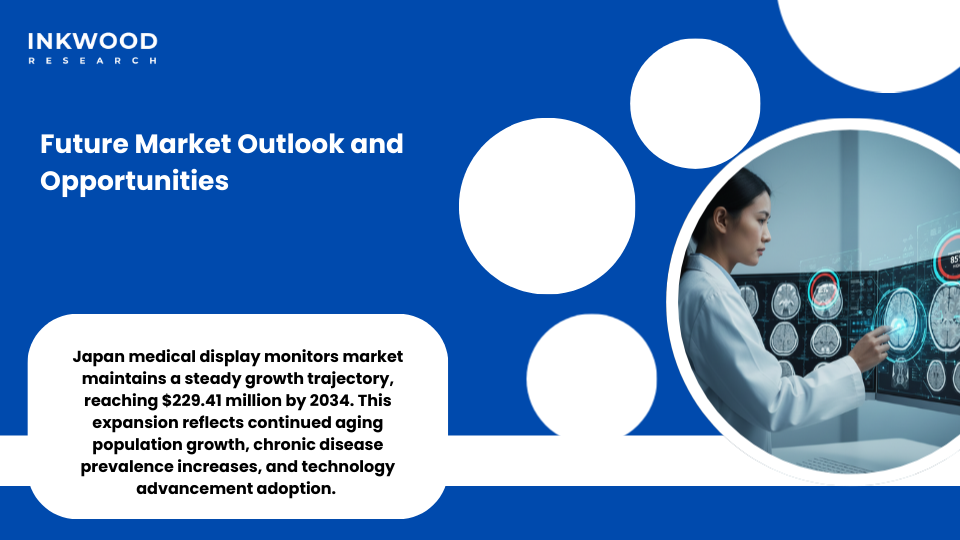
Japan medical display monitors market maintains a steady growth trajectory, reaching $229.41 million by 2034. This expansion reflects continued aging population growth, chronic disease prevalence increases, and technology advancement adoption. Furthermore, equipment replacement cycles for aging display infrastructure create sustained procurement opportunities even beyond demographic-driven demand growth.
Healthcare facilities increasingly recognize medical display quality as fundamental to diagnostic accuracy and clinical outcomes. Consequently, investments shift from budget displays toward premium systems offering superior performance and reliability. This quality emphasis benefits established manufacturers like EIZO, commanding premium market positioning through proven clinical validation and comprehensive service capabilities.
AI Integration Opportunities
Artificial intelligence applications in medical imaging expand rapidly, creating new opportunities for display technology innovation. Besides, AI-enhanced diagnostic tools require high-quality displays presenting algorithm-generated insights effectively. Display manufacturers increasingly collaborate with AI software developers, ensuring optimal visualization of computer-aided detection findings, quantitative analysis results, and predictive risk assessments.
Japan’s strength in diagnostic imaging technology positions the nation advantageously for AI integration leadership. However, manufacturers must address integration challenges, including latency management, color accuracy for AI overlays, and workflow optimization. Successfully addressing these requirements creates competitive advantages in increasingly AI-dependent diagnostic environments.
Aging Radiologist Workforce Considerations
Japan’s radiologist workforce itself ages, creating unique technology requirements supporting continued professional effectiveness. Plus, display manufacturers must consider ergonomic features, user interface simplification, and accessibility enhancements, accommodating aging physicians. Technologies like voice control, automated calibration, and intelligent brightness adjustment reduce operational complexity while maintaining diagnostic performance.
Furthermore, radiologist shortages (Japan has approximately 5,680 registered radiologists according to healthcare analyses as of early 2025) increase per-physician workloads. Technology solutions improving reading efficiency have become strategically important. Besides, advanced display features, including multi-modality viewing, intelligent hanging protocols, and workflow optimization tools, address these productivity challenges while maintaining diagnostic quality standards.
Key Takeaways
- The Japanese medical display monitors market grows from $153.42 million in 2026 to $229.41 million by 2034 at a 5.16% CAGR. Unprecedented aging demographics—36.25 million citizens over 65 representing 29.3% of the population—drive sustained diagnostic imaging demand and medical display equipment investments.
- Age-related disease prevalence, preventive screening program expansion, and chronic disease monitoring requirements generate increasing imaging volumes. Dementia projections of 20-22% among the elderly by 2030 particularly impact neurological imaging demand, requiring high-quality display technology.
- EIZO Corporation dominates domestic markets through superior product quality, technological innovation, and comprehensive local support networks. The RadiForce RX670’s 6-megapixel resolution and 1200 cd/m² brightness demonstrate continued innovation leadership serving demanding clinical applications.
- Government policies, including Long-Term Care Insurance, healthcare infrastructure modernization programs, and digital health transformation strategies, support medical display equipment procurement. These frameworks create favorable environments for sustained market growth through 2034.
- Display technology adaptations for geriatric care emphasize ergonomics, electronic health record integration, and telemedicine capabilities. AI integration opportunities and aging radiologist workforce considerations shape future technology development priorities.
Conclusion:
Japan’s super-aged society status fundamentally shapes the medical display monitor market dynamics, creating sustained growth opportunities through demographic-driven demand increases. Plus, healthcare facilities serving predominantly elderly populations prioritize advanced visualization technologies supporting accurate diagnosis, chronic disease monitoring, and preventive care programs. Consequently, medical display investments become strategic priorities rather than discretionary equipment purchases.
EIZO’s market leadership demonstrates how domestic manufacturers leverage technological expertise, clinical understanding, and comprehensive service capabilities to dominate demographically-driven markets. Furthermore, government policies supporting healthcare infrastructure modernization and digital transformation create favorable environments for continued technology adoption and market expansion.
The intersection of demographic challenges and technology opportunities positions Japan as a leading market for medical display innovation. Healthcare organizations worldwide can learn from Japan’s experience adapting medical technology to the super-aged society requirements. These lessons become increasingly relevant as other nations confront similar demographic transitions in the coming decades.
For expert consultation on medical display technology strategies serving aging populations and guidance on equipment selection optimized for geriatric care applications, connect with Inkwood Research’s healthcare technology specialists.
Frequently Asked Questions
How does Japan's aging population affect medical display demand?
Japan’s 36.25 million citizens over 65 drive increased diagnostic imaging volumes through age-related disease prevalence, preventive screening programs, and chronic disease monitoring. Consequently, healthcare facilities invest in advanced medical display technology supporting accurate interpretation of growing imaging studies serving elderly patients.
Which manufacturer leads Japan's medical display monitor market?
EIZO Corporation dominates through superior product quality, technological innovation, and comprehensive local support. The RadiForce line sets global benchmarks for diagnostic display performance, particularly excelling in color accuracy, image stability, and long-term reliability, critical for Japanese healthcare facilities.
What growth rate does the Japan medical display market demonstrate?
The Japan medical display monitors market expands at 5.16% CAGR from $153.42 million in 2026 to $229.41 million by 2034. This steady growth reflects aging demographic trends, technology modernization cycles, and government healthcare infrastructure investment programs supporting diagnostic imaging capabilities.