Table of Contents
This analysis is brought to you by Inkwood Research, a leading market intelligence firm specializing in Asia-Pacific medical technology, diagnostic cardiology innovations, and healthcare digitalization ecosystems. Our research team combines extensive experience analyzing electrocardiography technologies, hospital procurement patterns, and wireless health monitoring adoption across Indonesia, Southeast Asia, and emerging markets. Based on our proprietary research methodologies and strategic partnerships with Indonesian healthcare providers, medical device manufacturers, government health agencies, and cardiology centers, we deliver actionable insights that empower strategic decision-making for global enterprises navigating Indonesia’s rapidly evolving cardiac diagnostics landscape.
TLDR
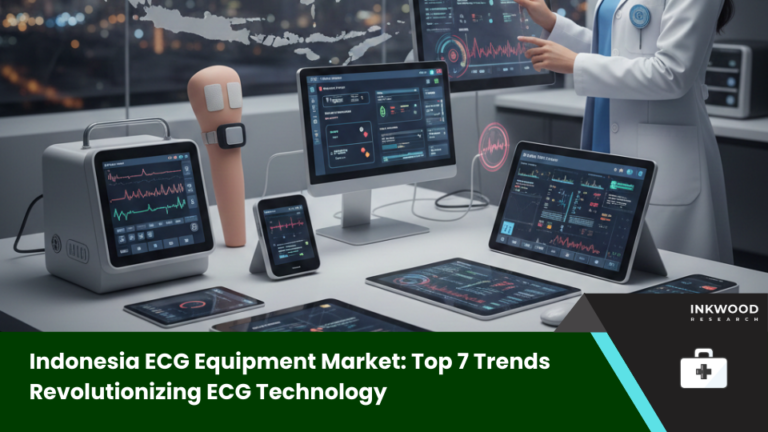
Indonesia’s ECG equipment market is experiencing unprecedented transformation through wireless technology, artificial intelligence, and wearable cardiac monitors. The market, valued at US$89.15 million in 2026, is projected to reach US$153.10 million by 2034 with a CAGR of 6.99%. From Apple Watch disrupting traditional diagnostic pathways to hospital-grade AI systems enhancing accuracy, these seven revolutionary trends are reshaping how 278 million Indonesians access critical heart health monitoring across 3,155 hospitals nationwide.
Healthcare administrators managing Indonesia’s hospital networks will discover strategic equipment procurement insights. Medical device distributors exploring Southeast Asian markets will identify emerging opportunities. Cardiologists seeking technology integration solutions will understand implementation pathways. Healthcare investors evaluating diagnostic equipment sectors will gain market intelligence. Policy makers developing digital health initiatives will recognize infrastructure requirements essential for advancing Indonesia’s cardiovascular care landscape.
Understanding Indonesia’s ECG Equipment Transformation
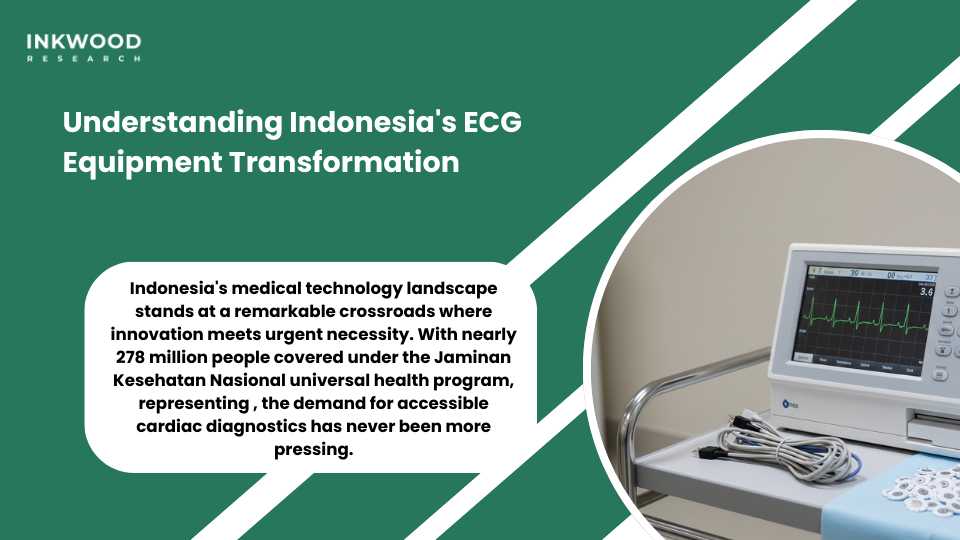
Indonesia’s medical technology landscape stands at a remarkable crossroads where innovation meets urgent necessity. With nearly 278 million people covered under the Jaminan Kesehatan Nasional universal health program, representing 99% of the population, the demand for accessible cardiac diagnostics has never been more pressing. Moreover, this massive coverage creates both challenges and opportunities that are fundamentally reshaping how healthcare delivers electrocardiography services in the Indonesia ECG equipment market.
How Market Dynamics Are Reshaping Healthcare Delivery
President Prabowo’s administration recognized these challenges early, committing IDR 218.5 trillion in 2025 specifically toward healthcare access improvements. This substantial investment doesn’t just represent numbers on a budget sheet. In fact, it signals a fundamental shift in how Indonesia approaches medical technology procurement and deployment. More importantly, it creates the financial foundation that allows healthcare providers to consider advanced ECG equipment that might have seemed financially out of reach just a few years ago.
What makes this transformation particularly fascinating is how digital infrastructure development amplifies these investments. Aligning with this, the SatuSehat national electronic medical records system now connects an impressive 98.6% of healthcare providers according to official trade data, creating a technological backbone that modern ECG equipment can leverage. Meanwhile, telemedicine platforms have already reached 15 million rural residents, demonstrating that Indonesians are ready and willing to embrace digital health solutions when they’re made accessible.
Why Cardiovascular Disease Makes This Urgent
Behind these impressive statistics lies a sobering reality that drives much of this urgency: cardiovascular disease remains Indonesia’s leading health challenge. Heart conditions don’t discriminate based on geography or economic status. However, access to diagnostic tools historically has been concentrated in major urban centers like Jakarta, Surabaya, and Bandung. As a result, this creates a troubling paradox where the Indonesians who most need cardiac monitoring often have the least access to it.
The situation becomes even more complex when you consider Indonesia’s aging demographics. By 2040, projections indicate substantial growth in elderly populations who require regular cardiac monitoring. Further, traditional hospital-based approaches simply cannot scale to meet this coming wave of demand, which is why the seven trends we’re about to explore are essential solutions to a looming healthcare crisis.
Trend 1: Wireless ECG Revolutionizes Patient Monitoring
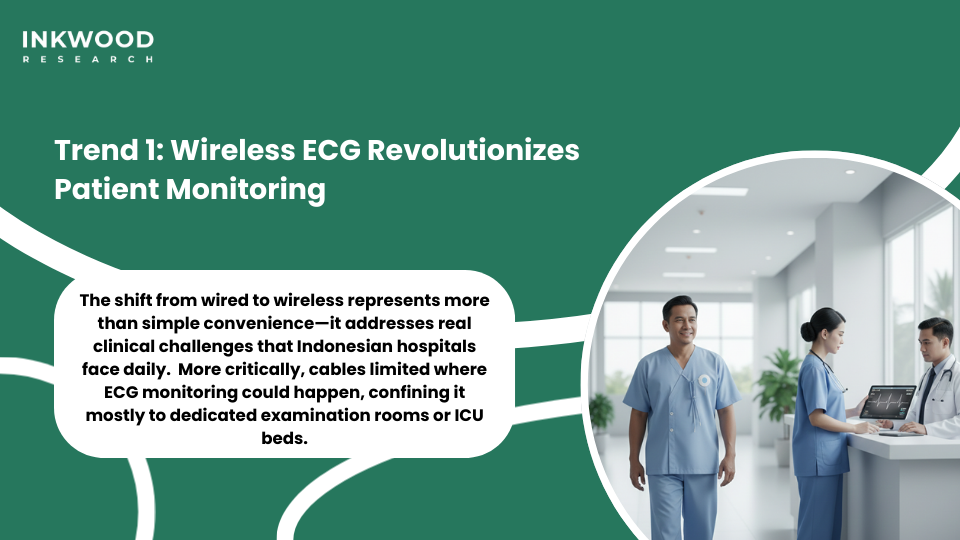
Walk into any major Indonesian hospital today, and you’ll likely witness something remarkable: patients moving freely through corridors while their cardiac rhythms are continuously monitored by nursing stations. However, this wasn’t possible five years ago when tangled cables tethered patients to bedside machines. The wireless ECG revolution has fundamentally transformed not just patient comfort, but the entire workflow of cardiac monitoring in Indonesian healthcare facilities.
Breaking Through Traditional Limitations
The shift from wired to wireless represents more than simple convenience—it addresses real clinical challenges that Indonesian hospitals face daily. Traditional ECG machines with their maze of cables created infection control nightmares in crowded wards. Earlier, nurses spent precious minutes untangling wires that patients accidentally pulled or that got caught in bed rails. More critically, cables limited where ECG monitoring could happen, confining it mostly to dedicated examination rooms or ICU beds.
Accordingly, wireless technology eliminates these constraints in ways that genuinely improve patient outcomes. Bluetooth and WiFi connectivity mean hospitals can now monitor patients during physical therapy sessions, observe cardiac responses during stress tests without physical tethers, and even track cardiac function in patients who need to move between departments. Moreover, this flexibility proves particularly valuable in Indonesia’s busy public hospitals, where space comes at a premium and patient volumes can overwhelm available examination rooms.
How Indonesian Hospitals Are Adapting
Major metropolitan medical centers in Jakarta and Surabaya have become early adopters, deploying wireless systems across cardiology departments. What started as pilot programs in a few wards has rapidly expanded as hospitals recognize the operational benefits. Yet, the transformation isn’t limited to elite tertiary care centers. Tier-2 city hospitals in places like Medan, Semarang, and Makassar are increasingly choosing wireless systems for new ECG equipment purchases. Also, they recognize that the higher upfront costs quickly pay for themselves through improved efficiency and patient throughput.
Perhaps most impressively, Indonesia’s unique archipelagic geography has driven particularly innovative applications of wireless ECG technology. Mobile health teams traveling to remote islands now carry battery-powered wireless ECG monitors that can function for hours without reliable electricity. Also, these devices transmit data via cellular networks when available, storing readings locally when internet connectivity proves unreliable. This resilience makes them perfect for Indonesia’s challenging infrastructure environment, where power outages and spotty internet remain common realities outside major urban areas.
Trend 2: AI-Powered Diagnostic Interpretation
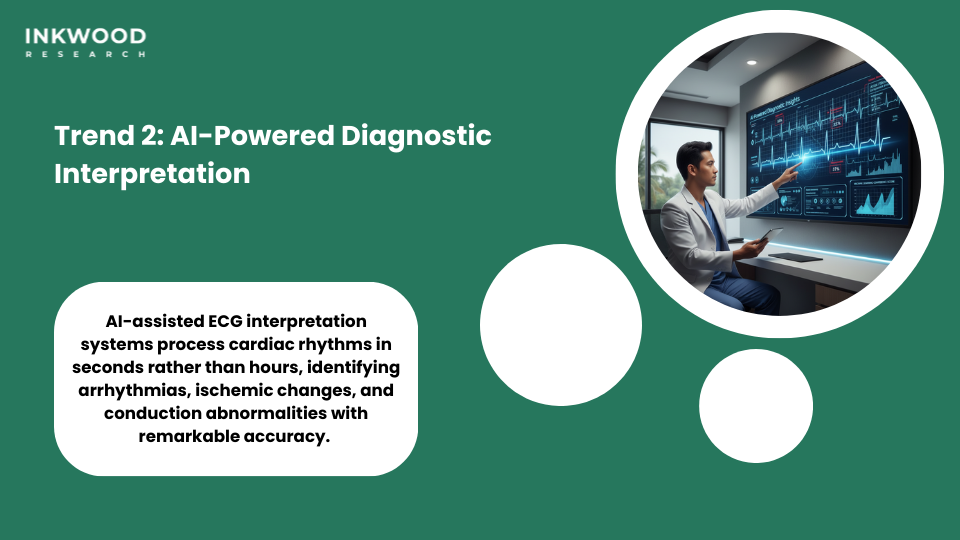
Artificial intelligence in ECG interpretation represents perhaps the most transformative trend reshaping Indonesian cardiac care. The challenge AI addresses is fundamentally human: Indonesia simply doesn’t have enough trained cardiologists to interpret the millions of ECG readings performed annually. Besides, while hospitals in Jakarta might have multiple cardiologists on staff, provincial hospitals often have none, forcing them to send readings to distant specialists for interpretation—delays that can prove fatal in emergency situations.
Bridging the Specialist Gap Through Technology
AI-assisted ECG interpretation systems process cardiac rhythms in seconds rather than hours, identifying arrhythmias, ischemic changes, and conduction abnormalities with remarkable accuracy. What makes these systems particularly valuable in the Indonesian context is their ability to flag urgent findings immediately while providing detailed interpretations that help general practitioners make informed decisions before specialist consultation becomes available. This doesn’t replace cardiologists. Rather, it multiplies their effective reach by handling routine interpretations and escalating only complex or ambiguous cases.
Philips made waves in 2024 by launching an AI ECG marketplace that allows multiple AI algorithms to work together, each specialized for different cardiac conditions. Moreover, this platform approach means Indonesian hospitals aren’t locked into a single AI vendor’s capabilities. Instead, they can select and combine algorithms that best match their patient populations and clinical needs. Meanwhile, GE Healthcare’s dominance in Indonesia’s resting ECG market is impressive. The company commands a significant market share in North America and maintains a strong presence in Indonesia. Plus, their AI-guided workstations are becoming increasingly common in Indonesian hospitals.
Real-World Impact on Clinical Practice
The practical benefits extend beyond just faster interpretation. General practitioners in rural health centers now have access to diagnostic support that approaches specialist-level expertise. When a village doctor performs an ECG on a patient complaining of chest pain, the AI system immediately analyzes the reading and provides guidance: “Findings suggest acute inferior wall myocardial infarction—recommend immediate transfer to cardiac center.” In all, this instant decision support can mean the difference between life and death in time-critical cardiac emergencies.
Indonesian physicians initially approached AI interpretation with healthy skepticism, questioning whether algorithms could match human expertise. However, as clinical experience accumulates and AI systems prove their reliability, acceptance has grown substantially. Consequently, cardiologists now view AI as a valuable assistant that handles routine work, allowing them to focus on genuinely complex cases that require human judgment and nuanced clinical reasoning.
Trend 3: Apple Watch Challenges Traditional Players
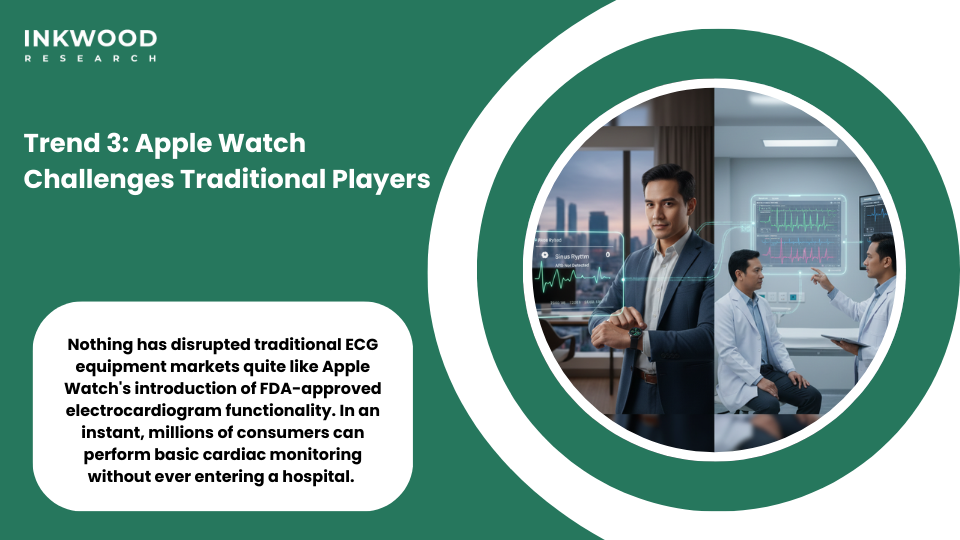
Nothing has disrupted traditional ECG equipment markets quite like Apple Watch’s introduction of FDA-approved electrocardiogram functionality. In an instant, millions of consumers can perform basic cardiac monitoring without ever entering a hospital. For traditional medical device manufacturers like Philips, GE Healthcare, and Mindray, this consumer technology breakthrough represents both a challenge and an opportunity. Moreover, it is fundamentally changing market dynamics in Indonesia and globally.
When Consumer Technology Meets Medical Diagnostics
The Apple Watch ECG feature works by having users touch the digital crown for 30 seconds, creating a single-lead electrocardiogram equivalent to hospital lead-I readings. Plus, recent meta-analysis research demonstrated that the Apple Watch achieves an impressive 94.8% sensitivity and 95% specificity for detecting atrial fibrillation. These interesting statistics represent a genuine capability to catch serious cardiac conditions that might otherwise go undetected until a catastrophic event occurs.
Indonesian consumers, particularly urban professionals in Jakarta and other major cities, have embraced smartwatch technology enthusiastically. The devices track fitness metrics, monitor sleep patterns, and now provide legitimate cardiac health insights. Further, this democratization of ECG technology creates interesting challenges for traditional healthcare systems. Patients increasingly arrive at cardiology appointments with days or weeks of continuous heart rhythm data from their smartwatches, fundamentally changing the diagnostic conversation.
How Traditional Manufacturers Are Responding
Rather than viewing wearables as existential threats, forward-thinking medical device companies recognize them as complementary tools that actually expand the overall cardiac monitoring market. The data suggests this perspective has merit: while Apple Watch can detect certain arrhythmias reliably, it cannot replace comprehensive 12-lead ECG examinations that remain essential for definitive cardiac diagnosis. Instead, consumer wearables serve as effective screening tools that increase awareness and drive more patients toward professional cardiac evaluation.
Philips and GE Healthcare have adapted their strategies accordingly, developing systems that can incorporate wearable-generated data into clinical workflows. Indonesian hospitals are beginning to integrate patient-provided smartwatch data into electronic health records, using it for pre-screening and long-term trend analysis. As a result, this collaborative approach benefits everyone: patients gain convenient continuous monitoring and physicians receive richer longitudinal data. Plus, traditional medical device manufacturers maintain their essential role in delivering comprehensive cardiac diagnostics.
Trend 4: Telemedicine Integration Expands Access
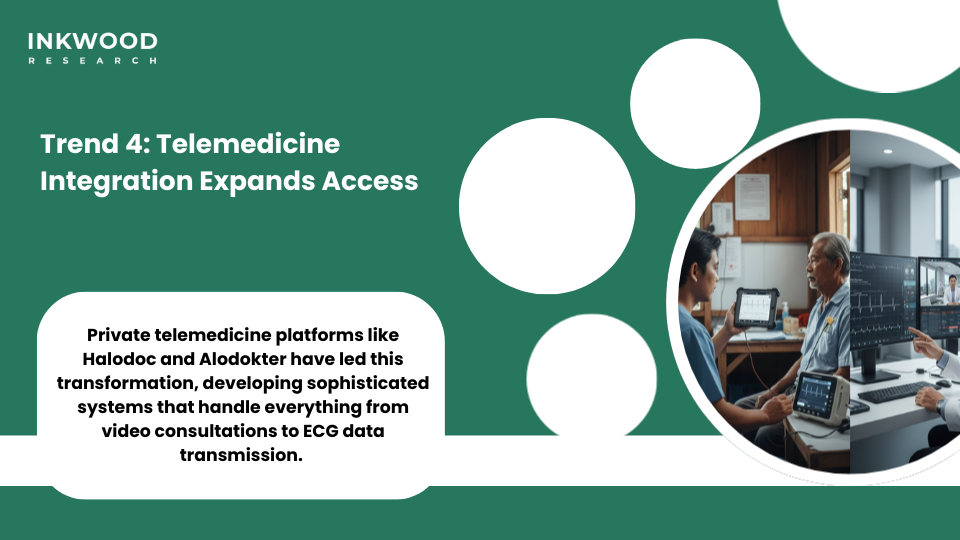
Indonesia’s vast archipelago spanning thousands of islands creates geographic challenges that make traditional healthcare delivery models practically impossible in many regions. Accordingly, telemedicine offers an elegant solution to this challenge, and ECG equipment integration with virtual care platforms is transforming how Indonesians access cardiac expertise regardless of where they live. Plus, the numbers tell a compelling story: telemedicine platforms now reach 15 million rural residents. This, in turn, brings specialist consultations to communities that previously had no access to cardiologists.
Building Bridges Across Geographic Barriers
Consider the practical reality facing a village health worker on a remote Maluku island when a patient presents with concerning cardiac symptoms. Without telemedicine, that patient might need to travel by boat for hours, then by bus for several more hours, just to reach a hospital with a cardiologist. However, this journey could cost weeks of wages and prove impossible for elderly or seriously ill patients. With integrated telemedicine and ECG equipment, that same health worker can now perform a professional-quality ECG examination, transmit the results instantly to a cardiologist in Jakarta, and receive expert interpretation within hours.
Private telemedicine platforms like Halodoc and Alodokter have led this transformation, developing sophisticated systems that handle everything from video consultations to ECG data transmission. What started as simple virtual doctor visits has evolved into comprehensive digital health platforms. Moreover, these companies recognized early that telemedicine without diagnostic capabilities was incomplete. In this regard, patients need more than just conversation with doctors; they need actual diagnostic assessments. By integrating ECG monitoring support, these platforms have become genuinely useful clinical tools rather than simple convenience services.
Government Infrastructure Amplifies Effectiveness
The SatuSehat national electronic medical records system deserves special recognition for how it amplifies telemedicine’s effectiveness. According to official government data, this system now connects 98.6% of Indonesian healthcare providers, creating a shared information backbone that enables seamless data exchange. Plus, when a rural health worker performs an ECG and transmits it through a telemedicine platform, that reading automatically becomes part of the patient’s permanent health record, accessible to any authorized provider anywhere in Indonesia.
The financial model supporting this expansion has evolved as well. BPJS, Indonesia’s national health insurance, has increasingly embraced telemedicine reimbursement. Aligning with this, the BPJS mobile app reached 18 million users in 2024, with daily telemedicine consultations averaging 20,000 sessions. This growing acceptance validates the telemedicine-ECG integration model, demonstrating that Indonesians value virtual care when it provides genuine clinical utility.
Trend 5: Cloud-Enabled Data Management Systems
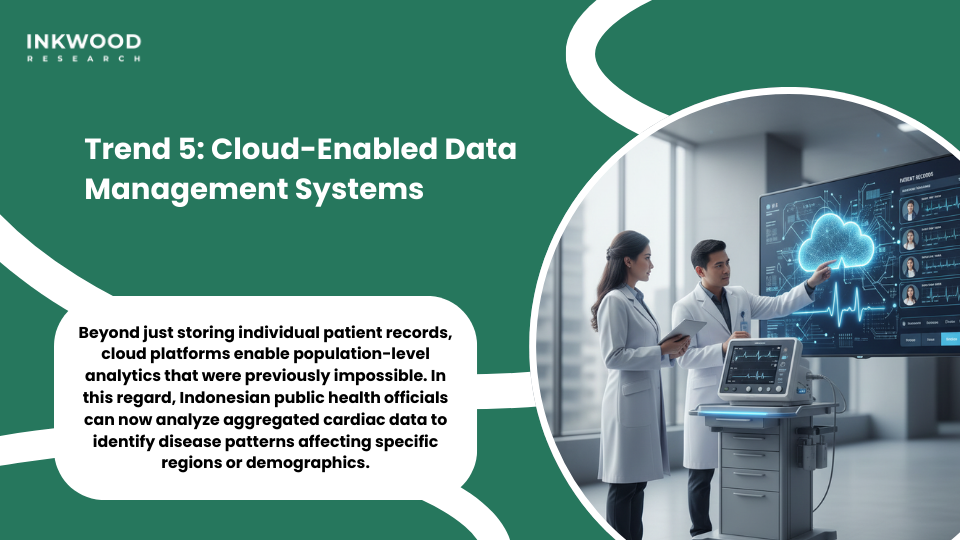
Cloud technology fundamentally reimagines how Indonesian healthcare systems store, access, and analyze cardiac data. Traditional ECG machines stored results locally, meaning that if you had an ECG at one hospital, those results were essentially trapped there unless someone physically copied them. On the other hand, cloud-enabled systems eliminate this limitation entirely, uploading readings instantly to secure servers accessible from anywhere with internet connectivity. This transformation enables genuinely coordinated cardiac care across Indonesia’s fragmented healthcare landscape.
Unlocking the Power of Centralized Information
Imagine a Jakarta resident who has regular ECG monitoring at their local clinic suffering a heart attack while vacationing in Bali. With traditional systems, Bali emergency physicians would have no access to that patient’s cardiac history, and they’d be working blind, unable to compare current readings against baseline patterns. Moreover, cloud-enabled ECG systems eliminate this dangerous information gap. Emergency physicians can instantly retrieve the complete cardiac record, identifying changes that might indicate the severity and type of cardiac event, allowing for more targeted treatment.
This capability proves particularly valuable for Indonesia’s hospital chains that operate facilities across multiple cities. Siloam Hospitals Group, for example, can maintain unified patient cardiac records across its entire network. Plus, a patient can visit any Siloam facility, and their complete cardiac history follows them automatically. This seamless information flow directly impacts patient safety by ensuring every physician has access to complete information when making critical decisions.
GE Healthcare’s innovative voice-command ECG system exemplifies how cloud integration enhances usability. The device supports multilingual inputs, crucial for Indonesia’s diverse population, and provides real-time cloud backup. Moreover, above 20,000 units were deployed across the U.S. by mid-2024, with Indonesian hospitals watching closely and beginning their own implementations.
Enabling Advanced Analytics That Drive Better Care
Beyond just storing individual patient records, cloud platforms enable population-level analytics that were previously impossible. In this regard, Indonesian public health officials can now analyze aggregated cardiac data to identify disease patterns affecting specific regions or demographics. This intelligence informs resource allocation decisions if data shows unusually high rates of certain cardiac conditions in particular provinces. Subsequently, health ministries can target interventions and equipment deployment accordingly.
Additionally, research institutions benefit enormously as well, gaining access to anonymized cardiac data from thousands or millions of patients. This accelerates clinical research into cardiac diseases affecting Indonesian populations specifically, potentially revealing patterns unique to Southeast Asian genetics or environmental factors. Besides, such insights would never emerge from isolated ECG machines storing data locally.
Trend 6: Portable Systems Transform Rural Healthcare
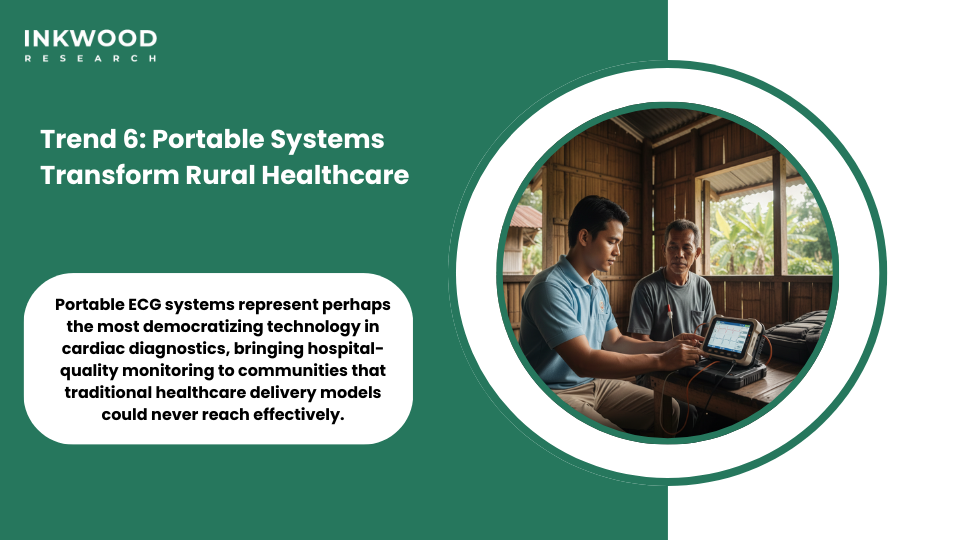
Portable ECG systems represent perhaps the most democratizing technology in cardiac diagnostics, bringing hospital-quality monitoring to communities that traditional healthcare delivery models could never reach effectively. These compact devices fit into backpacks, operate on battery power for hours, and withstand the humid tropical conditions and rough transportation that characterize rural Indonesian healthcare. Moreover, for the first time, villagers in remote regions can receive cardiac screenings without traveling to distant urban hospitals.
Overcoming Infrastructure Challenges Through Innovation
Indonesia’s public healthcare system operates 1,181 public hospitals serving a vast archipelagic nation, but many serve rural communities where infrastructure remains rudimentary. In this regard, traditional hospital-grade ECG machines require stable electricity, controlled temperature environments, and trained technicians for maintenance. Also, these requirements make them impractical for rural health posts that might experience daily power outages, lack air conditioning, and have minimal technical support. Portable ECG systems, by contrast, are specifically designed to function despite these challenging conditions.
Battery-powered operation alone transforms what’s possible in rural healthcare delivery. Mobile health teams can now conduct cardiac screening campaigns that visit remote villages on regular schedules. Accordingly, they assess hundreds of patients over several days using equipment that never needs to be plugged into wall outlets. The ruggedized construction withstands being packed into vehicles, carried on boats, and even transported by motorcycle over rough roads. Moreover, this durability means the equipment keeps functioning despite treatment that would quickly damage conventional hospital ECG machines.
Real-World Impact on Rural Healthcare Access
Mindray Medical’s ECG trolley system demonstrates how portable technology adapts to developing market needs. Featuring a 15-inch touch display, WiFi and Bluetooth connectivity, and enhanced pediatric algorithms, over 17,000 units were sold across China and Southeast Asia in 2023. Plus, Indonesian rural health centers have become significant adopters, recognizing that portable systems offer professional diagnostic capabilities at price points their limited budgets can accommodate.
The cost-effectiveness deserves emphasis because it directly determines what’s feasible for resource-constrained rural healthcare. Portable ECG systems typically cost 40-60% less than full hospital-grade equipment while providing equivalent diagnostic accuracy for most cardiac assessments. Additionally, this pricing allows rural health centers to purchase multiple units rather than a single stationary system, enabling simultaneous screening campaigns across different villages. The expanded reach dramatically increases diagnostic capacity across underserved regions.
Trend 7: Multi-Parameter Patient Monitoring Integration
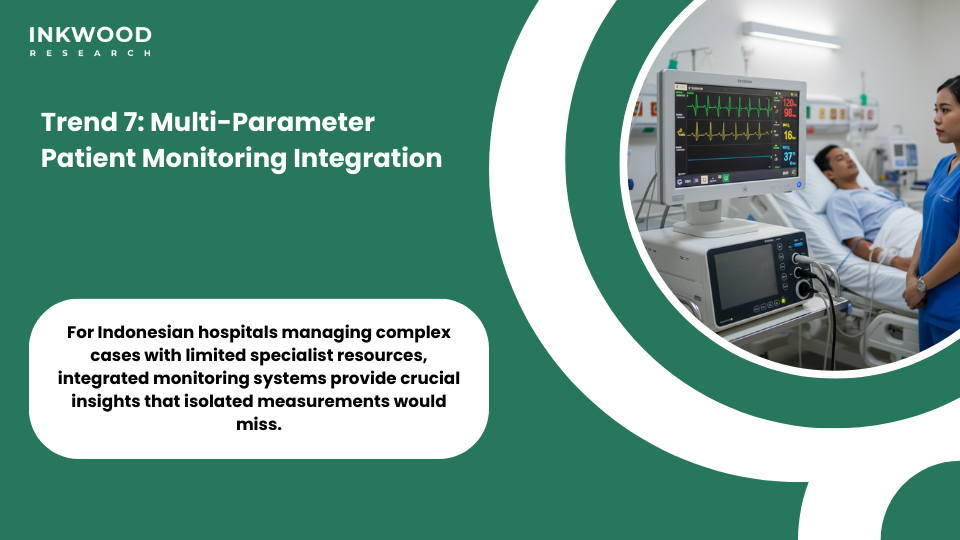
Modern ECG devices increasingly function as components within comprehensive patient monitoring ecosystems rather than standalone diagnostic tools. These multi-parameter platforms track cardiac rhythm alongside blood pressure, oxygen saturation, temperature, and respiratory rate, creating holistic patient health pictures that enhance clinical decision-making. For Indonesian hospitals managing complex cases with limited specialist resources, integrated monitoring systems provide crucial insights that isolated measurements would miss.
Creating Comprehensive Patient Assessment Capabilities
Indonesian intensive care units particularly benefit from multi-parameter monitoring integration. Moreover, critically ill patients require continuous assessment of multiple physiological parameters simultaneously, with physicians needing to understand how these measurements interact. Also, an elevated heart rate might indicate different problems depending on whether blood pressure is rising or falling, oxygen levels are adequate or declining, and temperature is normal or elevated. Integrated systems display all vital signs on unified dashboards, enabling physicians to recognize dangerous parameter combinations immediately.
Contec Medical Systems and Guangdong Biolight Meditech, both major players in China’s multi-parameter monitoring market, have extended their expertise throughout Southeast Asia. Plus, Indonesian hospitals increasingly prefer their integrated solutions over traditional standalone ECG machines because the efficiency gains justify higher initial investments. Nurses no longer need to check multiple machines and manually record readings from each. The integrated system automatically documents everything, reducing both workload and error rates.
How Integration Improves Patient Safety
Alert algorithms become dramatically more sophisticated when analyzing multiple data streams simultaneously. A standalone ECG machine might detect an irregular heart rhythm, but an integrated system recognizes when that arrhythmia occurs alongside falling blood pressure and declining oxygen saturation; this is a combination that demands immediate intervention. Moreover, these intelligent alerts help medical teams identify deteriorating patients before they reach crisis points, enabling proactive treatment rather than reactive emergency management.
The workflow improvements extend beyond just data collection and alerts. Electronic health records integrate seamlessly with multi-parameter monitoring systems, meaning every vital sign measurement, including ECG readings, automatically populates patient charts. Further, this eliminates transcription errors that occurred when staff manually transferred information from monitors to medical records. Additionally, documentation becomes both more accurate and more complete, improving the medical-legal record while freeing nurses to spend more time on direct patient care rather than paperwork.
Future-Proofing Healthcare Technology Investments
Hospital administrators making equipment purchasing decisions must consider not just current needs but future requirements as well. Multi-parameter systems offer crucial flexibility through software updates and additional sensors that can be added as needs evolve. Also, an ECG monitor purchased today can become a comprehensive diagnostic platform tomorrow through upgrades, protecting capital equipment investments over ten-year or longer lifecycles. This adaptability particularly appeals to Indonesian hospitals operating under budget constraints that make frequent equipment replacement impractical.
Key Takeaways
- Indonesia’s ECG equipment market transformation reflects far more than simple technological advancement. It represents a fundamental reimagining of how cardiac care reaches 278 million Indonesians across thousands of islands.
- Wireless technology has liberated patients from restrictive cables while giving healthcare workers unprecedented monitoring flexibility. Moreover, artificial intelligence addresses critical specialist shortages by providing expert-level interpretation support to general practitioners in underserved areas.
- Consumer wearables like Apple Watch have disrupted traditional markets in ways that ultimately expand access to cardiac monitoring, creating complementary ecosystems rather than simple competition.
- Telemedicine integration extends specialist expertise to remote communities that previously had no cardiologist access whatsoever. Also, cloud-enabled systems unlock the power of centralized data, enabling coordinated care across Indonesia’s fragmented healthcare landscape.
- Portable equipment has democratized cardiac diagnostics by bringing hospital-quality monitoring to villages hours from the nearest medical center.
- Multi-parameter integration creates comprehensive patient assessment capabilities that improve both safety and efficiency in resource-constrained environments. Together, these trends drive the market’s 6.99% CAGR growth trajectory from US$89.15 million in 2026 toward US$153.10 million by 2034.
The implications extend well beyond market statistics. Each trend addresses real barriers that have historically prevented Indonesians from accessing essential cardiac care—geographic isolation, specialist shortages, inadequate infrastructure, limited budgets, and fragmented information systems. By solving these fundamental challenges through technology, Indonesia’s ECG equipment revolution promises to save countless lives while establishing models that other archipelagic and developing nations can adapt to their own contexts.
Conclusion:
The transformation reshaping Indonesia’s ECG equipment market offers a masterclass in how technology can address systemic healthcare challenges when deployed thoughtfully. Wireless ECG devices become exponentially more valuable when combined with cloud connectivity and telemedicine integration. AI interpretation multiplies its effectiveness when deployed on portable equipment reaching underserved communities. Additionally, multi-parameter monitoring delivers maximum benefit when integrated into comprehensive digital health ecosystems.
What makes Indonesia’s experience particularly instructive is how it demonstrates that developing nations need not simply replicate healthcare delivery models from wealthy countries. Instead, Indonesia is pioneering approaches specifically suited to archipelagic geographies, limited specialist workforces, and resource constraints—challenges that traditional healthcare models never adequately addressed. The solutions emerging here may ultimately prove more relevant to the majority world than conventional Western healthcare paradigms.
For organizations seeking to participate in this transformation, whether as equipment manufacturers, software developers, service providers, or investors, success requires a deep understanding of Indonesia’s unique context alongside technological expertise. The market’s robust 6.99% CAGR growth through 2034 reflects sustained momentum, but capturing opportunities demands strategies attuned to Indonesian realities rather than simply transplanting approaches from other markets.
Contact Inkwood Research to explore comprehensive insights into Indonesia’s ECG equipment market dynamics and develop strategies optimized for this transformative landscape.
Frequently Asked Questions
How do wireless ECG devices maintain data security when transmitting cardiac information?
Modern wireless ECG systems employ multiple layers of security protection, including end-to-end encryption during transmission, secure authentication protocols that verify both devices and users, and compliance with international healthcare data standards. Indonesian healthcare providers implement additional security measures through their network infrastructure, using virtual private networks and firewalls to protect patient information.
Can AI-powered ECG interpretation replace cardiologists in Indonesian hospitals?
AI-powered ECG interpretation should be understood as a powerful tool that amplifies cardiologists’ effectiveness rather than a replacement for human expertise. These systems excel at handling routine interpretations quickly and flagging urgent findings that need immediate attention, effectively multiplying each cardiologist’s capacity to serve more patients. However, complex cases involving multiple cardiac conditions, unusual presentations, or subtle findings that require clinical context still benefit enormously from human cardiologist judgment.
What infrastructure requirements do Indonesian hospitals need for implementing cloud-enabled ECG systems?
Cloud-enabled ECG equipment requires reliable internet connectivity as the foundational requirement, though modern systems include offline capabilities that store data locally when internet connections drop temporarily, then sync automatically when connectivity is restored. Hospitals also need basic IT infrastructure, including secure networks with firewalls, though most Indonesian hospitals that already use electronic health records possess adequate infrastructure.