Table of Contents

This analysis is brought to you by Inkwood Research, a leading market intelligence firm specializing in Asian renewable energy markets and industrial technology transitions. Our research team combines extensive experience analyzing biomass energy policies, agricultural waste valorization, and India’s renewable infrastructure development. Based on our proprietary research methodologies and strategic partnerships with government agencies, agricultural cooperatives, and industrial energy providers, we deliver actionable insights that empower stakeholders navigating India’s biomass energy transformation.
TLDR
India’s National Bioenergy Programme propels industrial biomass boiler adoption through targeted financial assistance. The government allocated Rs. 858 crore to support biomass power generation and pellet manufacturing. Furthermore, agricultural residue utilization addresses stubble burning concerns effectively. Industrial facilities receive subsidies for biomass cogeneration systems. The Ministry of New and Renewable Energy coordinates implementation across states. Meanwhile, co-firing mandates in coal plants create substantial pellet demand. Market projections indicate robust growth through comprehensive policy frameworks.
Industrial energy planners evaluating renewable investments, agricultural processors exploring cogeneration opportunities, biomass equipment manufacturers targeting Indian markets, policy analysts tracking renewable programs, sustainability consultants advising corporate clients, and project developers seeking government subsidies will gain valuable insights into India’s biomass energy policies and industrial heating market dynamics.
National Bioenergy Programme Framework Driving India’s Industrial Biomass Boiler Growth
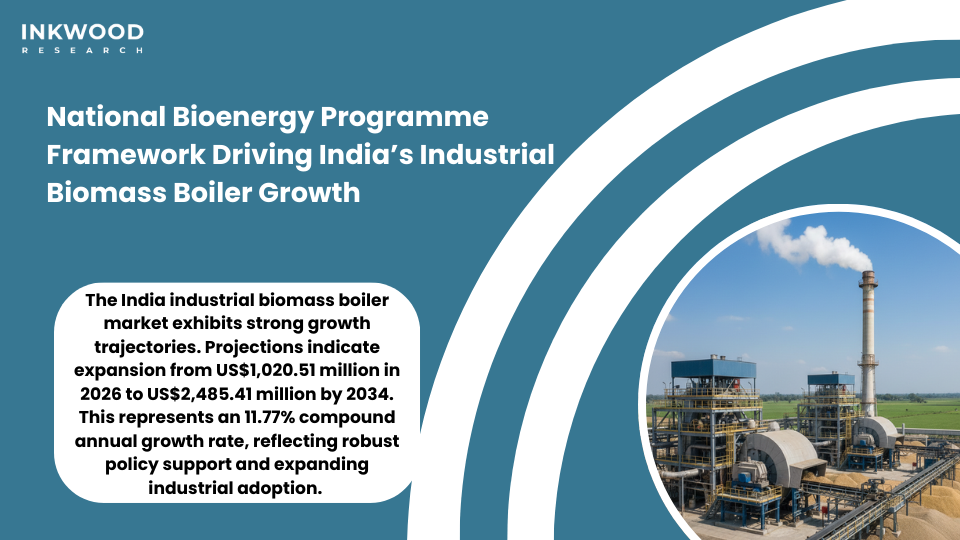
India’s biomass energy sector operates within comprehensive policy frameworks. The Ministry of New and Renewable Energy administers the National Bioenergy Programme, targeting sustainable energy development. This initiative addresses multiple objectives simultaneously, including agricultural waste management, rural employment generation, and renewable capacity expansion. Consequently, industrial biomass boilers receive systematic governmental support.
According to official ministry documentation, the programme operates from 2021-2026 with Rs. 858 crore Phase-I funding. This substantial allocation demonstrates governmental commitment to biomass energy development. Moreover, the budget supports specific sub-schemes, including waste-to-energy initiatives and biomass cogeneration promotion. Therefore, industrial facilities pursuing biomass projects have access to dedicated financial resources.
The India industrial biomass boiler market exhibits strong growth trajectories. Projections indicate expansion from US$1,020.51 million in 2026 to US$2,485.41 million by 2034. This represents an 11.77% compound annual growth rate, reflecting robust policy support and expanding industrial adoption. Furthermore, geographic diversity enables biomass development across various agricultural zones nationwide.
Central Financial Assistance Mechanisms for Industrial Projects
Subsidy programs reduce capital barriers for biomass adoption. The government provides Central Financial Assistance for pellet manufacturing plants and biomass cogeneration facilities. Additionally, eligibility criteria emphasize new equipment installations, ensuring modern efficiency standards. Consequently, industrial investors access financial support, offsetting initial technology costs.
Application procedures operate through the BioURJA Portal, streamlining subsidy processing. Projects require in-principle approvals before commissioning, ensuring governmental oversight. Furthermore, State Nodal Agencies coordinate implementation at the regional levels. This multi-tier approach balances national objectives with local conditions effectively.
Performance monitoring ensures accountability and effectiveness. The Sardar Swaran Singh National Institute of Bio-Energy conducts inspections for biomass cogeneration projects. Moreover, SCADA systems mandate remote monitoring capabilities for funded installations. These requirements promote operational excellence while validating subsidy utilization appropriately.
Agricultural Residue Valorization Through India’s Industrial Biomass Boilers
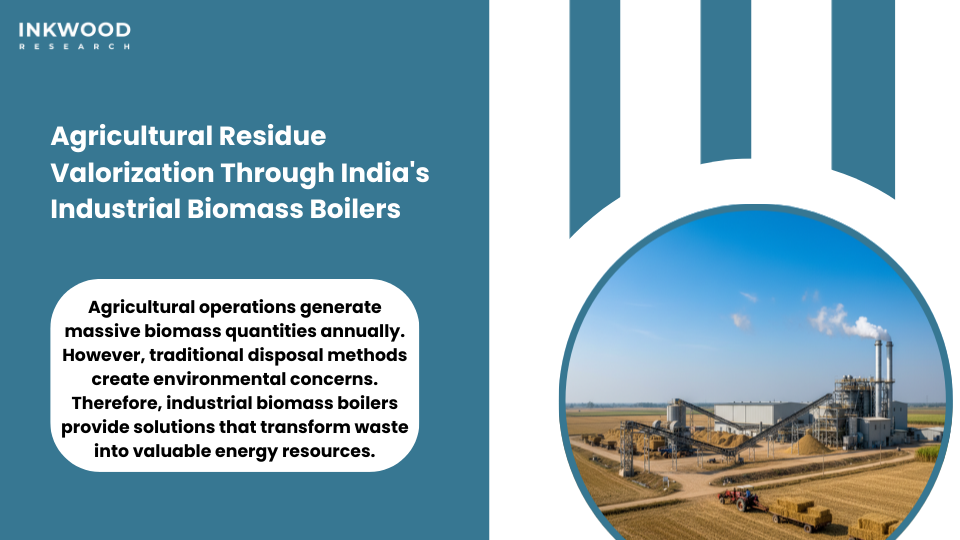
Agricultural operations generate massive biomass quantities annually. Rice, wheat, sugarcane, and cotton cultivation produce substantial crop residues. However, traditional disposal methods create environmental concerns, particularly stubble burning in northern states. Therefore, industrial biomass boilers provide solutions that transform waste into valuable energy resources.
Stubble burning contributes significantly to air pollution during harvest periods. Farmers traditionally burn residues for rapid field preparation between cropping cycles. Nevertheless, this practice releases particulate matter and greenhouse gases, affecting regional air quality severely. Consequently, governmental policies increasingly prioritize residue utilization alternatives, including biomass energy conversion.
Pellet manufacturing addresses feedstock logistics challenges. Converting bulky agricultural residues into dense pellets improves transportation economics and storage efficiency. Moreover, pelletization standardizes fuel quality for industrial boiler applications. The National Mission on Biomass co-firing explicitly supports pellet infrastructure development, creating market demand, driving sector growth.
Co-firing Mandates Creating Industrial Demand
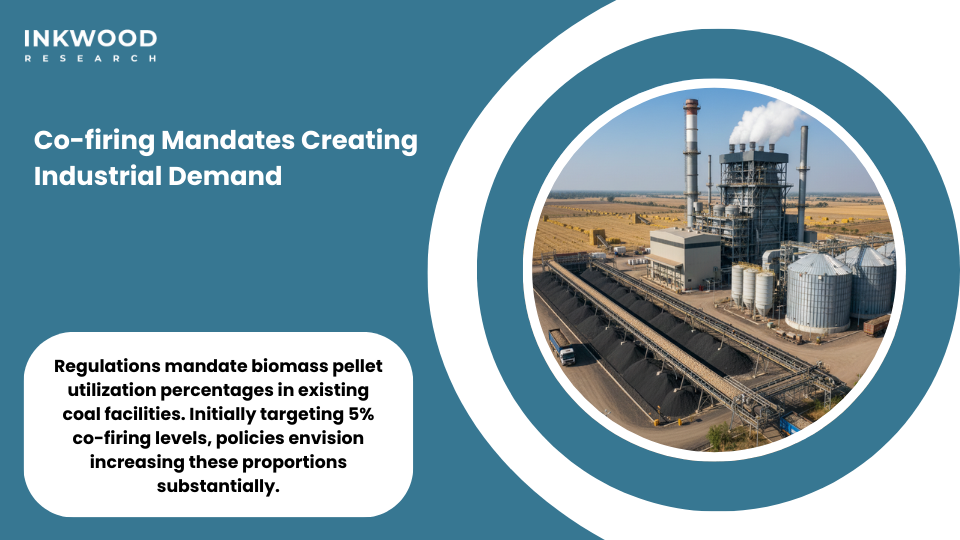
Coal-fired thermal power plants face co-firing requirements progressively. Regulations mandate biomass pellet utilization percentages in existing coal facilities. Initially targeting 5% co-firing levels, policies envision increasing these proportions substantially. Consequently, thermal plants require biomass pellet supplies measured in millions of tonnes annually.
This regulatory framework stimulates biomass supply chains comprehensively. Pellet manufacturers receive assured demand from power sector offtake agreements. Additionally, farmers gain economic incentives for residue collection rather than burning practices. Therefore, co-firing mandates create integrated value chains connecting agricultural production with industrial energy consumption.
Technical challenges accompany co-firing implementation. Biomass pellets contain different ash compositions and combustion characteristics compared to coal. Furthermore, boiler modifications may prove necessary for handling increased silica and alkali content. Nevertheless, research initiatives address these engineering challenges, developing adapted combustion technologies for Indian conditions.
Industrial Sector Applications for Biomass Energy Systems
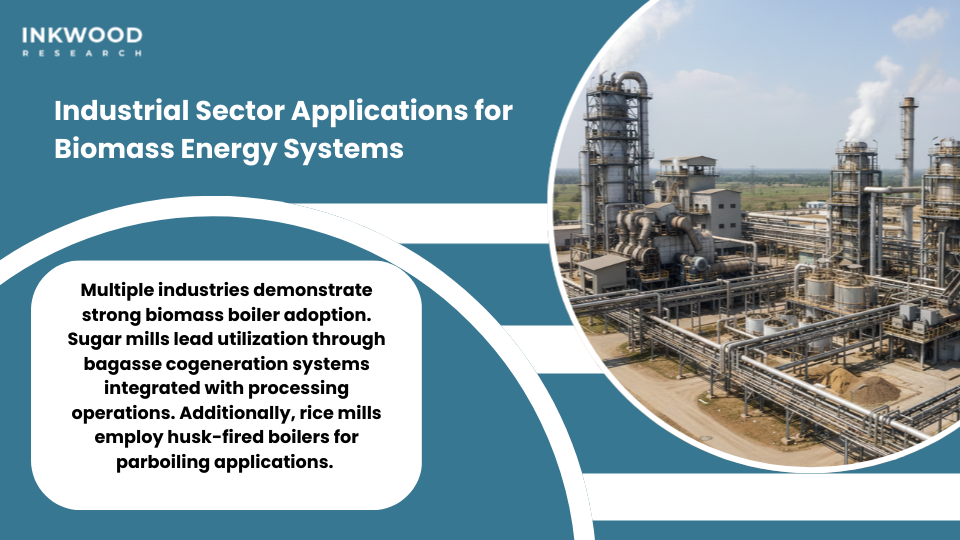
Multiple industries demonstrate strong biomass boiler adoption. Sugar mills lead utilization through bagasse cogeneration systems integrated with processing operations. Additionally, rice mills employ husk-fired boilers for parboiling applications. Paper manufacturing facilities utilize pulp and paper waste for process steam generation. Each sector develops specialized applications matching biomass characteristics to thermal requirements.
Cogeneration systems achieve exceptional efficiency in industrial applications. Facilities producing both electricity and process steam maximize energy value from biomass resources. Moreover, cogeneration qualifies for preferential tariffs and renewable energy certificates. These incentives improve project economics substantially, accelerating industrial adoption across suitable applications.
Capacity scaling accommodates diverse industrial requirements. Small-scale installations serve individual manufacturing facilities with modest thermal demands. Conversely, large biomass power plants generate megawatts of capacity for grid distribution. This technological flexibility enables biomass solutions addressing requirements ranging from village industries to major industrial complexes.
State-Level Implementation and Regional Variations
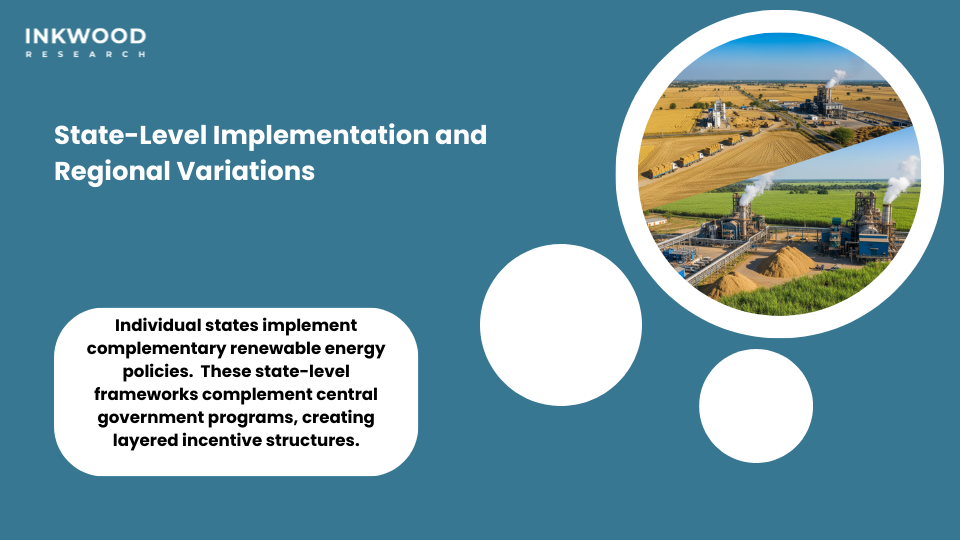
Individual states implement complementary renewable energy policies. State electricity regulatory commissions establish preferential tariffs for biomass power. Additionally, Renewable Purchase Obligations create market demand for clean electricity. These state-level frameworks complement central government programs, creating layered incentive structures.
Geographic factors influence regional biomass development patterns. Northern states with intensive wheat and rice cultivation possess abundant straw resources. Meanwhile, southern regions generate sugarcane bagasse and coconut residues. Consequently, industrial biomass boiler deployment reflects agricultural commodity distributions across different zones.
Infrastructure development proceeds at varying paces regionally. Progressive states establish biomass clusters, facilitating technology adoption and supply chain coordination. However, less developed regions face challenges, including limited technical capacity and infrastructure constraints. Therefore, targeted support programs address regional disparities in implementation capabilities.
Technology Transfer and Capacity Building Initiatives
Training programs build essential technical capabilities. Government institutes offer specialized courses on biomass systems operation and maintenance. Additionally, demonstration projects showcase technologies under Indian operating conditions. These knowledge transfer mechanisms accelerate industrial adoption by addressing skill gaps systematically.
International cooperation enhances domestic capabilities. Partnerships with advanced biomass markets facilitate technology adaptation for Indian requirements. Moreover, collaborative research addresses challenges specific to tropical agricultural residues and monsoon climate conditions. This global engagement strengthens indigenous technology development efforts.
Quality standards ensure performance consistency. Indian Standards specifications govern biomass pellet characteristics, including moisture content, ash percentage, and calorific value. Furthermore, certification programs validate equipment performance claims. These standardization efforts protect industrial investors while maintaining sector credibility.
Investment Climate and Market Opportunities
Favorable policies attract domestic and international capital. Government subsidies improve project returns significantly for qualifying installations. Additionally, carbon credit opportunities provide supplementary revenue streams. Consequently, biomass energy projects demonstrate competitive financial profiles compared to conventional alternatives.
Equipment manufacturing develops rapidly to meet growing demand. Domestic suppliers offer increasingly sophisticated Indian industrial biomass boiler systems. Moreover, technology partnerships with international manufacturers bring advanced designs to Indian markets. This competitive environment benefits industrial buyers through improving quality and competitive pricing.
Financing mechanisms facilitate project implementation. Specialized funds provide loans for renewable energy investments. Furthermore, partial risk-sharing facilities reduce lender exposure for innovative technologies. These financial instruments address capital access challenges, particularly for smaller enterprises pursuing biomass adoption.
Key Takeaways
- India’s comprehensive policy framework drives systematic biomass energy growth. The National Bioenergy Programme provides structured financial support and implementation mechanisms.
- Furthermore, co-firing mandates create substantial market demand for biomass pellets. These coordinated policies transform agricultural waste into valuable energy resources.
- Market projections indicate exceptional growth potential. The India industrial biomass boiler sector demonstrates an 11.77% compound annual growth rate through 2034. This expansion reflects policy effectiveness and expanding industrial adoption. Additionally, geographic diversity enables biomass development across multiple agricultural regions.
- Successful implementation requires multi-stakeholder coordination. Government agencies, agricultural producers, industrial consumers, and technology providers must collaborate effectively.
- Moreover, continued policy support remains essential for sustaining market momentum. Therefore, stakeholder engagement determines long-term sector development trajectories.
- Technology advancement and capacity building enable scaling. Training programs develop essential operational skills. Meanwhile, quality standards ensure performance consistency. Consequently, industrial buyers gain confidence in biomass technologies, accelerating mainstream adoption across diverse applications.
Conclusion:
Government policies fundamentally reshape India’s industrial energy landscape. The National Bioenergy Programme demonstrates systematic approaches to transforming agricultural waste into productive energy. Moreover, financial incentives and regulatory frameworks address adoption barriers comprehensively.
Industrial facilities increasingly recognize biomass boiler advantages. These systems provide cost-effective thermal energy while supporting sustainability objectives. Furthermore, assured feedstock availability from agricultural operations strengthens supply security. Consequently, biomass energy adoption accelerates across suitable industrial applications.
Looking forward, policy continuity will determine market development trajectories. Based on our analysis, sustained governmental commitment combined with industrial demand growth creates favorable long-term prospects. The India industrial biomass boiler market appears positioned for continued expansion, serving national renewable energy objectives.
For comprehensive market intelligence on India’s biomass energy sector or industrial heating solutions, Inkwood Research offers detailed analysis and strategic consulting. Contact our team to explore how these policy-driven opportunities align with your business objectives.
Frequently Asked Questions
What subsidies support industrial biomass boiler adoption in India?
The National Bioenergy Programme provides Central Financial Assistance for pellet manufacturing and biomass cogeneration projects. Additionally, state-level incentives complement central schemes. Projects utilizing new equipment qualify for subsidies, reducing capital costs. Application processes operate through the BioURJA Portal, streamlining approval procedures.
How do co-firing mandates affect biomass demand in India?
Thermal power plants face requirements for biomass pellet co-firing with coal. Initial mandates target 5% levels with plans for progressive increases. Consequently, the power sector creates substantial pellet demand measured in millions of tonnes annually. This regulatory framework stimulates comprehensive biomass supply chain development.
Which industries most commonly adopt biomass boilers in India?
Sugar mills lead adoption through integrated bagasse cogeneration systems. Rice mills utilize husk-fired boilers for parboiling operations. Paper manufacturers employ pulp waste for process steam. Additionally, various processing industries increasingly adopt biomass systems, matching available agricultural residues to thermal requirements.