Table of Contents
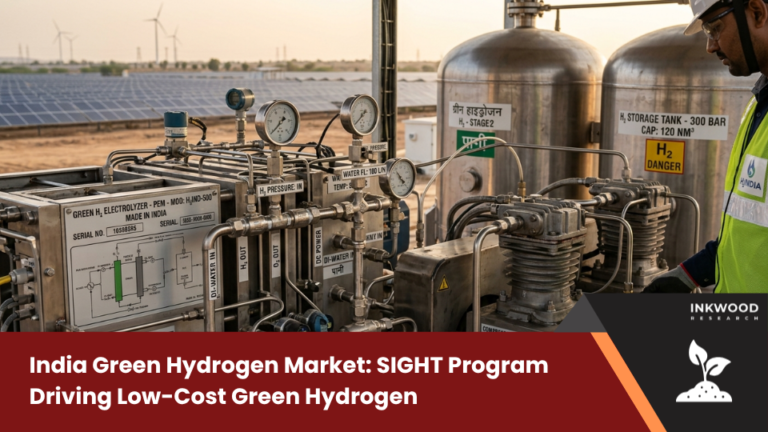
This analysis is brought to you by Inkwood Research, a leading market intelligence firm specializing in South Asian energy transition, clean hydrogen policy frameworks, and electrolyzer manufacturing ecosystems. Our research team combines extensive experience analyzing government incentive programs, renewable energy infrastructure development, and industrial decarbonization strategies across India and neighboring markets. Based on our proprietary research methodologies and strategic partnerships with Indian energy producers, technology developers, and policy institutions, we deliver actionable insights that empower strategic decision-making for enterprises navigating India’s green hydrogen transformation.
TLDR
The India green hydrogen market expands from US$551.13 million in 2026 to US$14,509.32 million by 2034 at 50.50% CAGR. SIGHT (Strategic Interventions for Green Hydrogen Transition) allocates ₹17,490 crore for production incentives and electrolyzer manufacturing. This program drives electrolysis green hydrogen deployment through renewable source integration, targeting 5 million metric tonnes annual production capacity by 2030. Meanwhile, Sino-Synergy Hydrogen Energy Technology and domestic manufacturers accelerate industrial green hydrogen adoption, avoiding 50 million metric tonnes of annual carbon emissions.
Policy makers designing hydrogen incentive frameworks, Indian manufacturers evaluating electrolyzer production opportunities, renewable energy developers planning hydrogen integration, international investors exploring India market entry, industrial consumers seeking decarbonization pathways, technology providers assessing partnership opportunities, and energy analysts tracking South Asian hydrogen economy development will gain comprehensive insights into SIGHT program mechanisms driving India’s transformative green hydrogen market expansion through strategic government interventions.
India Green Hydrogen Market Outlook
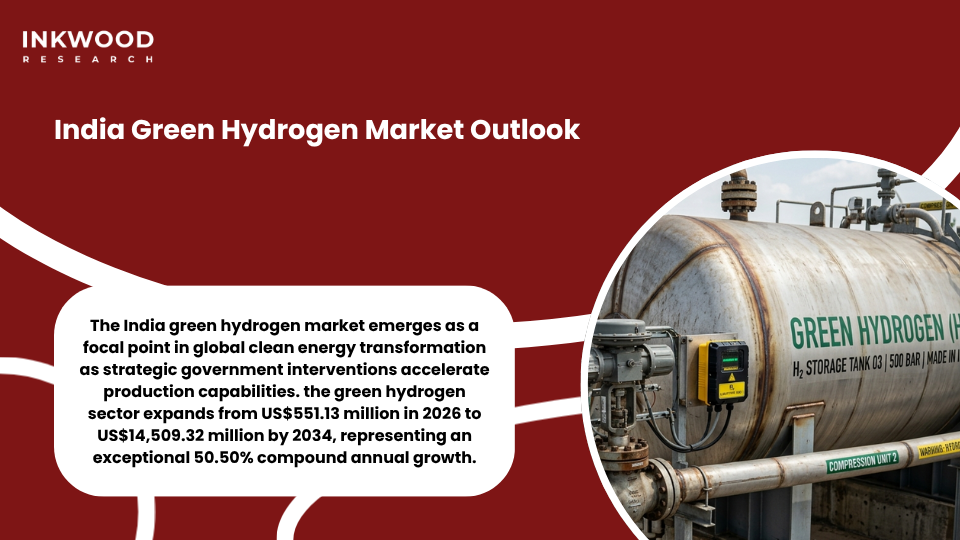
The India green hydrogen market emerges as a focal point in global clean energy transformation as strategic government interventions accelerate production capabilities. According to our research, the green hydrogen sector expands from US$551.13 million in 2026 to US$14,509.32 million by 2034, representing an exceptional 50.50% compound annual growth. This trajectory reflects how renewable energy abundance combines with policy support to create favorable conditions.
Moreover, the SIGHT program—Strategic Interventions for green hydrogen Transition—provides crucial financial mechanisms driving hydrogen energy adoption. Companies, including Sino-Synergy Hydrogen Energy Technology, advance electrolysis green hydrogen systems through alkaline electrolysis green technologies, enabling industrial green hydrogen production from renewable source installations across the subcontinent.
India’s National Green Hydrogen Mission establishes ambitious targets reflecting the nation’s commitment to energy independence and climate objectives. The initiative aims to develop 5 million metric tonnes of annual production capacity by 2030 while attracting substantial private investments. Subsequently, this framework positions India as a potential global hydrogen hub, leveraging competitive renewable electricity costs and growing domestic demand.
SIGHT represents the financial cornerstone of this mission, allocating ₹17,490 crore specifically for production incentives and manufacturing support. These mechanisms address critical barriers preventing rapid market development. Furthermore, the program’s dual focus on production and equipment manufacturing creates comprehensive value chains within India’s borders, reducing import dependencies while building technological capabilities.
Understanding India’s Green Hydrogen Market Transformation
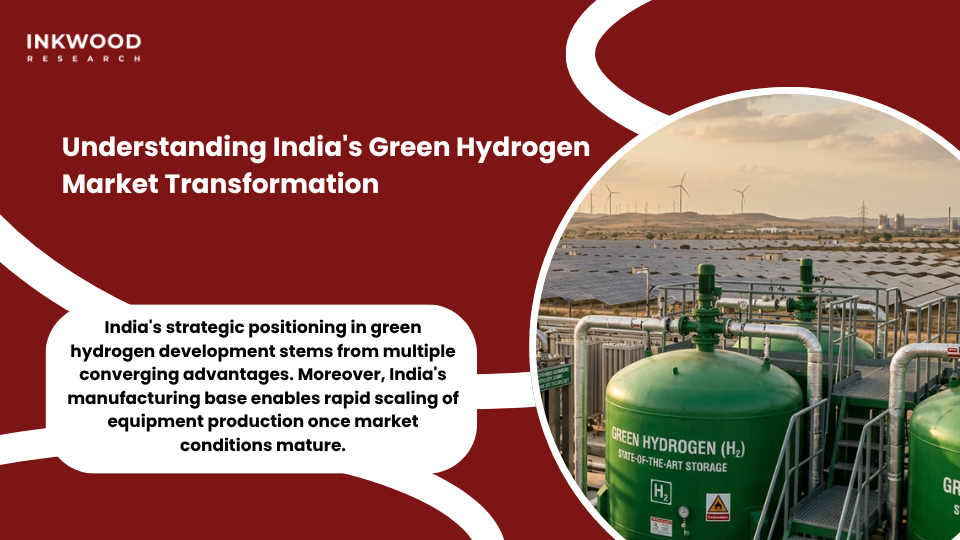
India’s strategic positioning in green hydrogen development stems from multiple converging advantages. The nation possesses exceptional renewable energy resources, particularly solar capacity across vast land areas. Additionally, declining costs for solar and wind installations create favorable economics for hydrogen production. Industrial sectors face increasing pressure to decarbonize operations, generating substantial domestic demand for clean alternatives.
Market Drivers Propelling India Green Hydrogen Market Growth
Several factors converge to accelerate the India green hydrogen market beyond conventional forecasts. Government commitments toward net-zero emissions by 2070 establish a clear policy direction encouraging investments. Energy security concerns drive efforts to reduce fossil fuel imports through domestic clean energy production. Moreover, India’s manufacturing base enables rapid scaling of equipment production once market conditions mature.
Based on our analysis, cost competitiveness emerges as a defining characteristic of India’s hydrogen sector. Renewable electricity prices rank among the world’s lowest following aggressive capacity additions. This advantage directly translates to hydrogen production costs, potentially positioning India as a leading exporter. Consequently, international partnerships intensify as global players recognize India’s strategic importance in future hydrogen supply chains.
National Targets and Strategic Objectives
The National Green Hydrogen Mission establishes comprehensive frameworks guiding India’s hydrogen economy development. Production targets aim for 5 million metric tonnes annually by 2030, requiring substantial infrastructure investments. Associated renewable energy capacity additions approach 125 gigawatts, supporting both hydrogen production and broader electrification goals.
Employment generation represents another crucial objective, with expectations for over 600,000 jobs across the hydrogen value chain. These positions span manufacturing, operations, maintenance, and supporting services. Furthermore, the mission projects a cumulative reduction in fossil fuel imports exceeding ₹1 lakh crore, addressing trade balance concerns while enhancing energy security.
SIGHT Program Structure and Financial Mechanisms
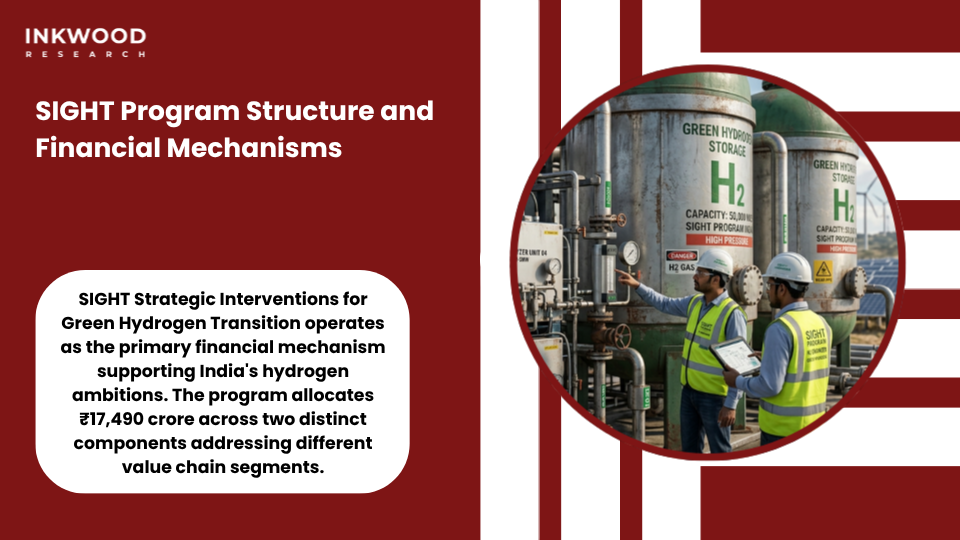
SIGHT—Strategic Interventions for Green Hydrogen Transition—operates as the primary financial mechanism supporting India’s hydrogen ambitions. The program allocates ₹17,490 crore across two distinct components addressing different value chain segments. This dual approach recognizes that both production capacity and equipment manufacturing require targeted support for successful market development.
Component I focuses on electrolyzer manufacturing, allocating ₹4,440 crore for domestic production capacity development. These incentives attract manufacturers establishing facilities within India, building self-reliant supply chains. Meanwhile, Component II dedicates ₹13,050 crore toward green hydrogen production itself, encouraging project developers to construct facilities utilizing domestic equipment.
Incentive Distribution Mechanisms
SIGHT employs competitive bidding processes, ensuring efficient allocation of public funds. Developers submit proposals detailing production capacities, technology choices, and financial requirements. Selection criteria emphasize cost-effectiveness, technical viability, and alignment with program objectives. Consequently, winning projects receive incentives, reducing production costs below levels achievable through market forces alone.
According to our findings, this competitive framework drives innovation as participants optimize designs to strengthen applications. Technology providers collaborate with project developers, creating partnerships that accelerate knowledge transfer. These dynamics establish virtuous cycles where each project round improves overall sector capabilities and cost structures.
Program Timeline and Implementation Phases
SIGHT operations extend through 2029-30, providing sufficient duration for meaningful capacity development. Early allocation rounds focus on establishing initial production facilities demonstrating technical and commercial viability. Subsequent phases scale volumes as supply chains mature and costs decline. This staged approach manages risks while maintaining momentum toward long-term targets.
Implementation milestones include specific capacity awards announced periodically. As of recent updates, 19 companies received allocations totaling 862,000 tonnes of annual green hydrogen production capacity. Additionally, 15 firms secured awards for 3,000 megawatt electrolyzer manufacturing capacity. These initial allocations validate program effectiveness while establishing momentum for future expansion.
Electrolyzer Manufacturing Incentives Driving Local Production
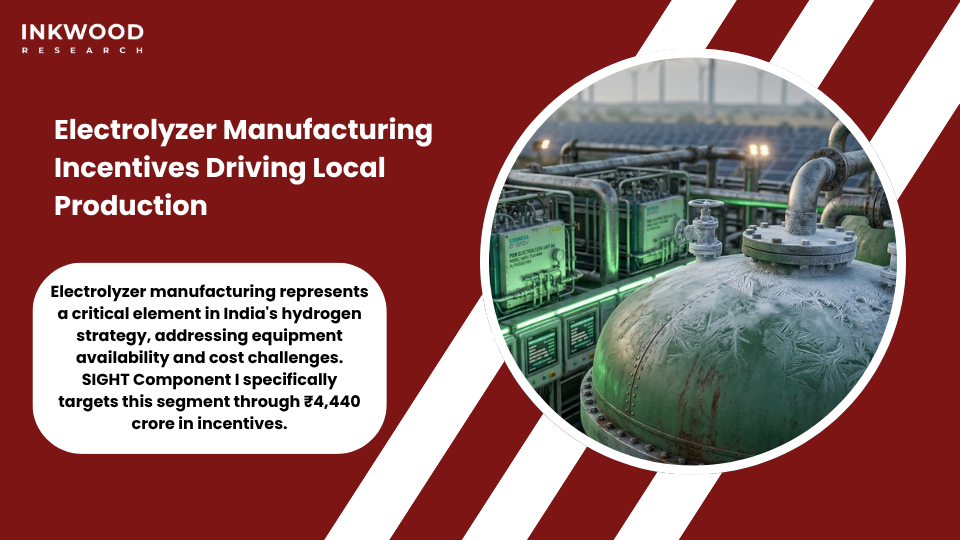
Electrolyzer manufacturing represents a critical element in India’s hydrogen strategy, addressing equipment availability and cost challenges. SIGHT Component I specifically targets this segment through ₹4,440 crore in incentives. These funds support companies establishing production facilities for both PEM electrolysis and alkaline electrolysis systems within India’s borders.
Domestic manufacturing capabilities reduce reliance on imports while enabling customization for Indian operating conditions. Local production facilities can adapt designs addressing specific requirements related to water quality, ambient temperatures, and renewable energy profiles. Furthermore, proximity to end-users facilitates better after-sales support and maintenance services.
Technology Choices and Manufacturing Strategies
Manufacturers pursue diverse technology pathways reflecting different market segments and applications. Alkaline electrolysis systems offer proven reliability and lower capital costs for large-scale industrial applications. These technologies suit steady-state operations with consistent power inputs. Conversely, PEM systems provide flexibility responding to variable renewable generation, making them ideal for grid-connected installations.
Companies, including Sino-Synergy Hydrogen Energy Technology and domestic manufacturers, develop capabilities across this technology spectrum. International partnerships accelerate capability development through knowledge transfer and joint ventures. Meanwhile, research institutions support these efforts through R&D programs funded under broader mission allocations.
Supply Chain Development and Value Addition
Complete electrolyzer manufacturing requires extensive supply chains spanning multiple component categories. Stack assemblies, power electronics, balance-of-plant equipment, and control systems all demand specialized suppliers. SIGHT incentives catalyze the development of these supporting ecosystems through direct manufacturing support and downstream demand creation.
Based on our research, component localization proceeds gradually as volumes increase and specialized capabilities develop. Initial manufacturing operations may utilize imported stacks while localizing other components. Subsequently, increasing domestic content percentages reduces costs and strengthens technology absorption. This progression builds comprehensive manufacturing capabilities supporting long-term competitiveness.
Production Incentives Accelerating Hydrogen Deployment
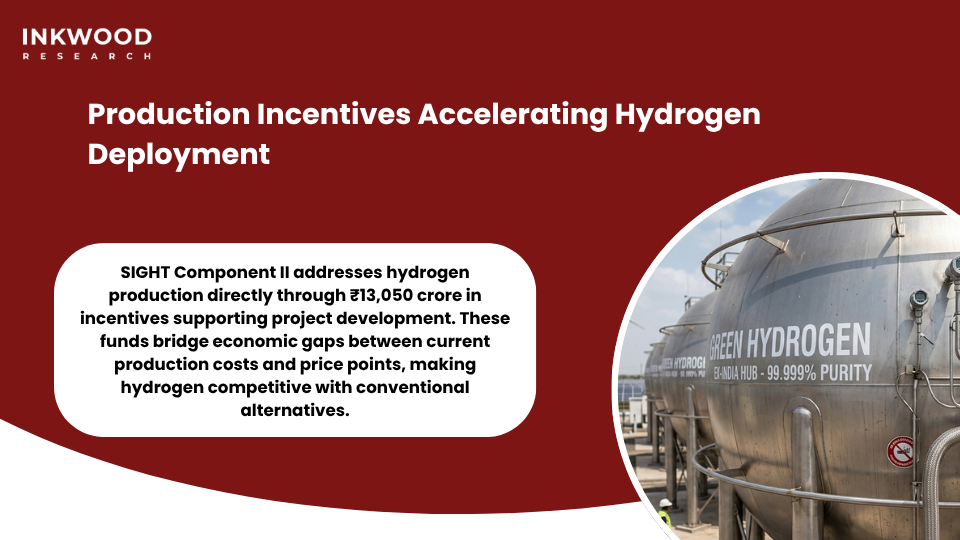
SIGHT Component II addresses hydrogen production directly through ₹13,050 crore in incentives supporting project development. These funds bridge economic gaps between current production costs and price points, making hydrogen competitive with conventional alternatives. Without such support, early projects would struggle to achieve commercial viability despite favorable renewable energy costs.
Production incentives are typically structured as payments per kilogram of verified green hydrogen output. This performance-based approach ensures public funds support actual production rather than just capacity installation. Verification requirements include renewable energy sourcing and emissions accounting, maintaining program integrity while encouraging best practices.
Project Scale and Geographic Distribution
Approved projects span diverse scales and locations, reflecting India’s varied renewable resources and industrial bases. Coastal facilities leverage port infrastructure for potential exports and maritime applications. Interior locations serve manufacturing clusters requiring hydrogen for industrial processes. This geographic diversity ensures nationwide capability development rather than concentrated growth in limited regions.
Recognized hydrogen hubs include major ports like Deendayal Port Authority in Gujarat, V.O. Chidambaranar Port Authority in Tamil Nadu, and Paradip Port Authority in Odisha. These locations offer integrated infrastructure for production, storage, and distribution. Moreover, coastal positioning facilitates future export opportunities as international markets develop.
Environmental Benefits and Emissions Reduction
Green hydrogen production supported by SIGHT contributes substantially toward India’s climate commitments. At full implementation, the program expects to avert nearly 50 million metric tonnes of carbon dioxide emissions annually. This mitigation results from replacing fossil-derived hydrogen and fuels across industrial applications. Such a scale demonstrates hydrogen’s potential to contribute meaningfully toward national decarbonization objectives.
According to our analysis, emissions reduction benefits extend beyond direct fuel substitution. Hydrogen production provides flexible services supporting renewable energy integration, reducing curtailment of clean electricity. These system-level benefits amplify environmental advantages while improving overall energy system economics and reliability.
Renewable Energy Integration Supporting Hydrogen Growth
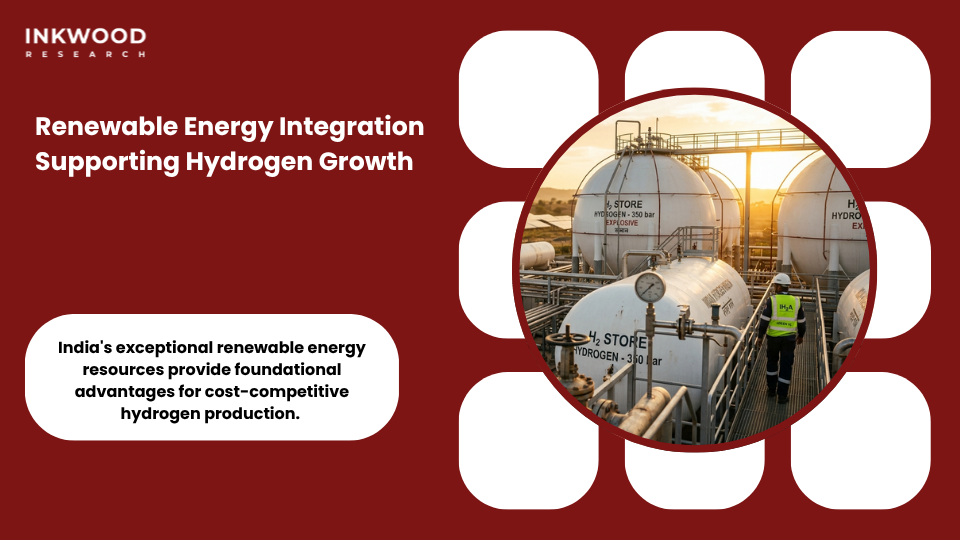
India’s exceptional renewable energy resources provide foundational advantages for cost-competitive hydrogen production. Solar capacity installations exceed 80 gigawatts, with aggressive expansion plans targeting 500 gigawatts total renewable capacity by 2030. Wind installations contribute additional capacity, particularly along coastal regions and in western states. This abundance creates favorable conditions for hydrogen production through electrolysis.
Policy frameworks facilitate renewable energy procurement for hydrogen projects through several mechanisms. Dedicated transmission access ensures priority connectivity for hydrogen production facilities. Banking provisions allow producers to store surplus renewable generation rights for later use. These arrangements address intermittency challenges while optimizing electrolyzer utilization factors.
Grid Integration and System Services
Hydrogen production facilities offer valuable grid services through flexible demand management. Electrolyzers can ramp operations responding to grid conditions, absorbing excess renewable generation during high-output periods. Conversely, reducing loads during supply constraints helps maintain system stability. These capabilities become increasingly valuable as renewable penetration increases across India’s power system.
Furthermore, hydrogen storage enables long-duration energy storage, addressing seasonal variations in renewable generation and demand. Salt cavern storage and other geological formations provide cost-effective options for massive storage capacities. This infrastructure supports grid reliability while maximizing renewable energy utilization throughout annual cycles.
Renewable Energy Certificates and Additionality
Green hydrogen certification requires demonstrating that production utilizes genuinely additional renewable electricity rather than displacing existing clean power. India’s Green Hydrogen Certification Scheme, launched in April 2025 provides frameworks ensuring credible emissions accounting. These standards enable premium pricing for certified green hydrogen in domestic and international markets.
Based on our findings, certification systems balance environmental integrity with practical implementation considerations. Temporal and geographic correlation requirements ensure reasonable connections between renewable generation and hydrogen production. These standards evolve as markets mature and monitoring capabilities improve, maintaining credibility while supporting industry growth.
Industrial Applications and Decarbonization Pathways
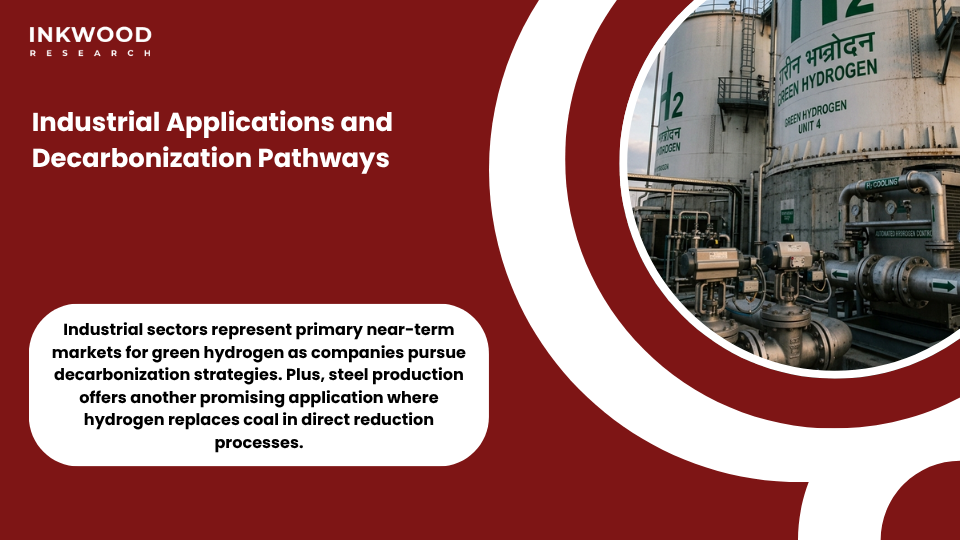
Industrial sectors represent primary near-term markets for green hydrogen as companies pursue decarbonization strategies. Fertilizer manufacturing consumes substantial hydrogen volumes for ammonia synthesis through the Haber-Bosch process. Currently, this hydrogen primarily comes from natural gas reforming with significant emissions. Transitioning to green hydrogen eliminates these carbon footprints while maintaining production volumes.
Plus, steel production offers another promising application where hydrogen replaces coal in direct reduction processes. Several Indian steel manufacturers explore these pathways through pilot projects supported by National Green Hydrogen Mission funding. These initiatives demonstrate technical feasibility while establishing operational knowledge supporting broader adoption across the sector.
Petroleum Refining and Chemical Industries
Petroleum refineries utilize massive hydrogen quantities for hydrocracking and desulfurization processes, upgrading crude oil into transportation fuels. India’s substantial refining capacity creates considerable demand for hydrogen supplies. Transitioning existing grey hydrogen consumption to green alternatives represents straightforward decarbonization opportunities, leveraging existing infrastructure and processes.
Chemical industries similarly depend on hydrogen as a feedstock for various synthesis processes. Methanol production, for instance, combines hydrogen with captured carbon dioxide, creating circular economy opportunities. These applications demonstrate how hydrogen enables decarbonization while supporting continued industrial activity and economic growth.
Mobility and Transportation Sectors
Transportation applications focus initially on heavy-duty segments where battery-electric alternatives face challenges. Long-haul trucking, buses, and potentially railway applications offer suitable use cases for hydrogen fuel cells. SIGHT funding includes ₹496 crore specifically for mobility pilot projects demonstrating hydrogen vehicle operations and refueling infrastructure.
According to our research, maritime shipping represents particularly promising opportunities given India’s extensive coastline and port infrastructure. Green ammonia produced from hydrogen serves as a maritime fuel, eliminating emissions from shipping operations. Pilot facilities at major ports demonstrate bunkering capabilities supporting this emerging application.
Technology Partnerships Strengthening Domestic Capabilities
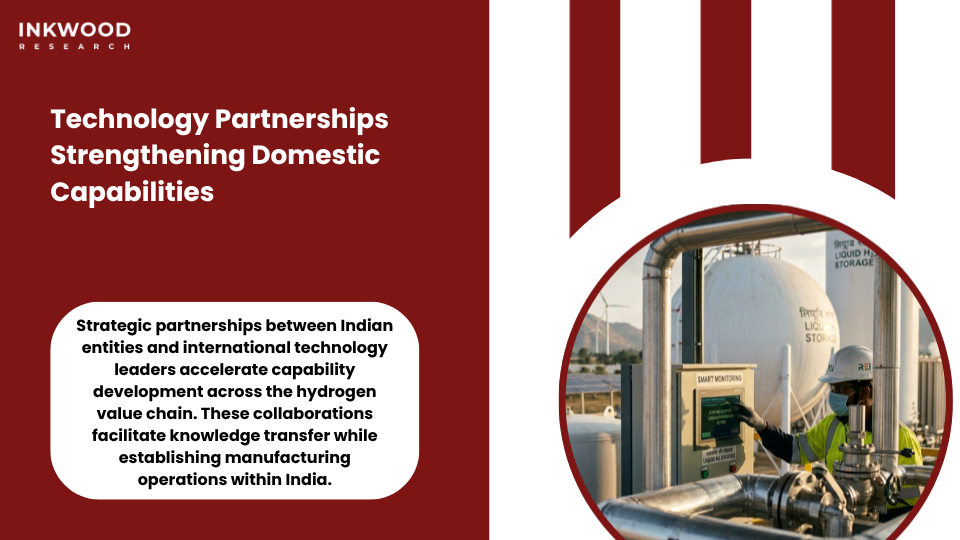
Strategic partnerships between Indian entities and international technology leaders accelerate capability development across the hydrogen value chain. These collaborations facilitate knowledge transfer while establishing manufacturing operations within India. Companies like Sino-Synergy Hydrogen Energy Technology bring operational experience and technical expertise supporting domestic ecosystem development.
Joint ventures often combine international technology with Indian market access and manufacturing capabilities. Such arrangements benefit all participants while building self-reliant supply chains within India. Furthermore, technology localization provisions in SIGHT incentive programs encourage meaningful domestic value addition rather than simple assembly operations.
Research and Development Initiatives
Research programs under the National Green Hydrogen Mission allocate ₹400 crore to support technological innovation. Currently, 23 projects advance developments in production methods, storage systems, safety protocols, and industrial applications. An additional ₹100 crore call for proposals specifically targets start-ups working on innovative hydrogen technologies.
These R&D investments address India-specific challenges and opportunities while building intellectual property portfolios. Academic institutions collaborate with industry partners, creating pathways for technology commercialization. Moreover, international research collaborations through frameworks like the EU-India Trade and Technology Council expand access to global knowledge networks.
Workforce Development and Skill Building
Successful hydrogen economy development requires skilled workforces across manufacturing, operations, maintenance, and engineering disciplines. Training programs supported by the mission build necessary capabilities through vocational education and professional development initiatives. These efforts ensure adequate human resources supporting rapid industry expansion.
Based on our analysis, workforce development programs emphasize safety protocols given hydrogen’s unique handling requirements. Certification systems establish competency standards ensuring consistent quality across operations. International partnerships contribute training methodologies and best practices, accelerating knowledge dissemination throughout India’s emerging hydrogen sector.
Key Takeaways
- The India green hydrogen market expands at 50.50% annually, reaching US$14,509.32 million by 2034 as SIGHT program incentives accelerate development.
- Strategic Interventions for Green Hydrogen Transition allocates ₹17,490 crore across production incentives and electrolyzer manufacturing support. The program targets 5 million metric tonnes of annual production capacity by 2030 while avoiding 50 million metric tonnes of carbon emissions.
- Component I dedicates ₹4,440 crore toward electrolyzer manufacturing, with 15 firms receiving 3,000 megawatt capacity awards. Component II allocates ₹13,050 crore for production incentives, supporting 19 companies producing 862,000 tonnes annually.
- Renewable energy integration leverages India’s exceptional solar and wind resources, creating cost-competitive hydrogen production.
- Industrial applications in fertilizers, steel, and refining create substantial near-term demand for green hydrogen.
- Technology partnerships with companies like Sino-Synergy Hydrogen Energy Technology strengthen domestic capabilities through knowledge transfer.
- Workforce development and R&D programs build comprehensive ecosystems supporting long-term competitiveness and innovation.
Conclusion
According to our research, India’s SIGHT program establishes comprehensive frameworks addressing multiple barriers hindering green hydrogen market development. Financial incentives reduce production costs while manufacturing support builds self-reliant supply chains. This dual approach recognizes that both production capacity and equipment availability require targeted interventions for successful ecosystem development.
The program’s competitive allocation mechanisms ensure efficient public fund utilization while driving innovation across projects. Early capacity awards demonstrate program effectiveness, creating momentum for subsequent expansion phases. Moreover, integration with broader National Green Hydrogen Mission elements establishes coordinated approaches spanning research, pilot projects, and commercial deployments.
Success will position India as a major player in global hydrogen markets, leveraging renewable energy advantages and growing industrial base. Challenges remain around infrastructure development, technology absorption, and market creation. Nevertheless, SIGHT provides crucial catalytic support, transforming hydrogen from an emerging possibility into an established reality within India’s energy landscape.
Frequently Asked Questions
What does SIGHT stand for, and what is its purpose in the India green hydrogen market?
SIGHT stands for Strategic Interventions for Green Hydrogen Transition, a flagship incentive scheme under the National Green Hydrogen Mission supporting domestic electrolyzer manufacturing and low cost green hydrogen production capacity expansion
How is SIGHT funding distributed under India’s green hydrogen policy?
The SIGHT scheme allocates funds across electrolyzer manufacturing incentives and green hydrogen production subsidies through competitive bidding, offering performance linked financial support based on actual output and cost efficiency
What environmental benefits will the SIGHT program deliver in India?
SIGHT supported projects are expected to significantly reduce carbon dioxide emissions by replacing fossil fuel based hydrogen in fertilizers, refineries, and steel, contributing to India’s long term decarbonization and net zero targets
How does SIGHT strengthen domestic electrolyzer manufacturing in India?
SIGHT promotes local electrolyzer manufacturing through capital incentives, scale based production support, and supply chain development, reducing import dependence and building a competitive green hydrogen equipment ecosystem
Which industries will benefit most from India’s SIGHT backed hydrogen production?
Key beneficiary sectors include fertilizer manufacturing, oil refining, steel production, chemicals, and heavy transport, where green hydrogen can replace grey hydrogen and fossil fuels to cut lifecycle emissions
How does SIGHT improve India’s energy security and import reduction goals?
By scaling domestic green hydrogen production, SIGHT reduces reliance on imported natural gas and fossil fuels, lowers foreign exchange outflows, and supports long term clean energy self sufficiency