Table of Contents
This analysis is brought to you by Inkwood Research, a leading market intelligence firm specializing in India’s electric mobility transformation, battery manufacturing ecosystems, and regulatory compliance frameworks. Our research team combines extensive experience analyzing battery testing equipment market dynamics, government incentive programs, including PLI schemes, and testing standard implementations across India’s automotive and energy storage sectors. Based on our proprietary research methodologies and strategic partnerships with Indian battery manufacturers, government-accredited testing laboratories, BIS certification agencies, and automotive technology providers, we deliver actionable insights empowering strategic decision-making for domestic and international enterprises navigating India’s complex regulatory landscape and market opportunities.
TLDR
India’s battery testing equipment market is experiencing transformative growth fueled by government initiatives, including the ₹18,100 crore PLI scheme for battery manufacturing. The market valued at $29.08 million in 2025 will reach $47.14 million by 2032, progressing at a 7.15% CAGR. Stringent testing standards, including AIS-156, AIS-038, IS 16046, and IS 16893, mandate comprehensive validation before market entry. However, manufacturers face critical challenges navigating complex regulatory frameworks while meeting international certification requirements. Understanding these evolving standards becomes essential for successful market participation in India’s rapidly expanding electric mobility ecosystem.
This comprehensive analysis serves electric vehicle manufacturers in establishing gigafactory operations in India under the PLI scheme provisions. Battery testing laboratory operators seeking NABL accreditation and BIS certification compliance find critical guidance. Additionally, international battery suppliers entering the Indian markets benefit from detailed regulatory frameworks. Quality assurance professionals implementing AIS-156 and AIS-038 testing protocols gain actionable insights. Furthermore, policy advisors and investment analysts evaluating India’s battery ecosystem receive strategic intelligence supporting informed decision-making.
India Battery Testing Equipment Market: What Manufacturers Need to Know

India’s electric mobility revolution demands rigorous battery testing standards, ensuring safety and performance. Manufacturers navigating the battery testing equipment market must understand complex regulatory frameworks before market entry. Consequently, comprehensive knowledge of AIS-156, AIS-038, and BIS certification requirements becomes mission-critical for success.
India’s battery testing equipment market valued at $29.08 million in 2025 demonstrates the country’s commitment to establishing a robust testing infrastructure. Furthermore, projections indicating $47.14 million by 2032 reflect sustained government support through PLI schemes and National Electric Mobility Mission initiatives. Meanwhile, mandatory co-location of energy storage with solar projects creates additional testing demands.
However, navigating India’s regulatory landscape presents unique challenges. Import dependence for high-end equipment increases acquisition costs through tariffs and duties. Additionally, the absence of uniform testing standards across states creates compliance complexities. Therefore, understanding these nuances becomes essential for manufacturers planning Indian market entry.
Understanding AIS-156 and AIS-038 Standards
The Ministry of Road Transport and Highways implemented critical amendments to AIS-156 and AIS-038 (Rev 2) standards in two phases. Phase 1, effective December 1, 2022, introduced requirements, including battery pack traceability, additional safety fuses, and regenerative braking protection. Subsequently, Phase 2 was implemented on March 31, 2023, and added earth leakage detection, EMC testing, and thermal propagation tests.
According to research, thermal propagation testing ensures user safety from vehicles experiencing thermal runaway. This procedure evaluates battery systems’ ability to withstand propagation triggered by internal short circuits. Importantly, audio-visual warnings must alert users to thermal events before catastrophic failures.
Compared with previous AIS-048 regulations, new standards significantly changed regulatory frameworks, technical requirements, and test methods. Earlier regulations allowed testing at the cell, module, and pack levels without environmental testing. However, updated standards mandate comprehensive validation, including temperature extremes, vibration, and mechanical shock assessments.
BIS Certification Framework
BIS certification under the Compulsory Registration Scheme ensures products meet stringent safety standards before Indian market entry. IS 16046-1 and IS 16046-2 standards, based on the international IEC 62133 framework, govern lithium-ion and lithium-polymer batteries in portable devices.
Meanwhile, IS 16893 addresses large-format batteries used in electric vehicles and renewable energy storage systems. This standard specifies requirements for the safe design, assembly, and testing of lithium-ion battery packs. Furthermore, IS 17092 focuses on solar energy applications, establishing safety criteria for renewable storage solutions.
Performance testing standards address Indian climate conditions, mandating validation under extreme temperatures. Charge-discharge cycles, thermal stress evaluations, and short circuit tests ensure durability and reliability. Consequently, manufacturers must invest in comprehensive testing equipment meeting these rigorous requirements.
Government Initiatives Driving Market Growth
India’s Production Linked Incentive scheme allocates ₹18,100 crore, establishing gigascale manufacturing facilities. This unprecedented investment creates substantial demand for quality assurance infrastructure throughout battery production ecosystems. Moreover, the National Electric Mobility Mission and PM E-Drive scheme accelerate electric vehicle adoption.
Government mandates requiring 10% storage capacity co-located with solar projects drive testing requirements across renewable installations. Accordingly, approximately 14 GW/28 GWh of storage will be installed by 2030. Therefore, testing facilities must accommodate both automotive and stationary energy storage validation.
PLI Scheme Impact on Testing Infrastructure
Companies establishing manufacturing facilities under PLI provisions must meet the mandatory 60% domestic value addition within five years. Consequently, a stationary testing infrastructure becomes essential for R&D and quality certification activities. Furthermore, government-accredited centers operated by organizations like TÜV SÜD India rely exclusively on stationary systems for certification services.
The segment benefits from declining lithium-ion costs, which dropped 20% to $115/kWh in 2024. This cost reduction drives higher testing volumes as manufacturers scale production. Meanwhile, integration of automated protocols and real-time analytics enhances throughput and accuracy.
Stationary systems support emerging battery chemistries, including lithium iron phosphate and solid-state technologies requiring specialized testing parameters. However, high initial investments typically ranging $100,000-$500,000 remain barriers for small enterprises. Consequently, many smaller producers rely on third-party testing services rather than establishing in-house capabilities.
Make in India Localization Requirements
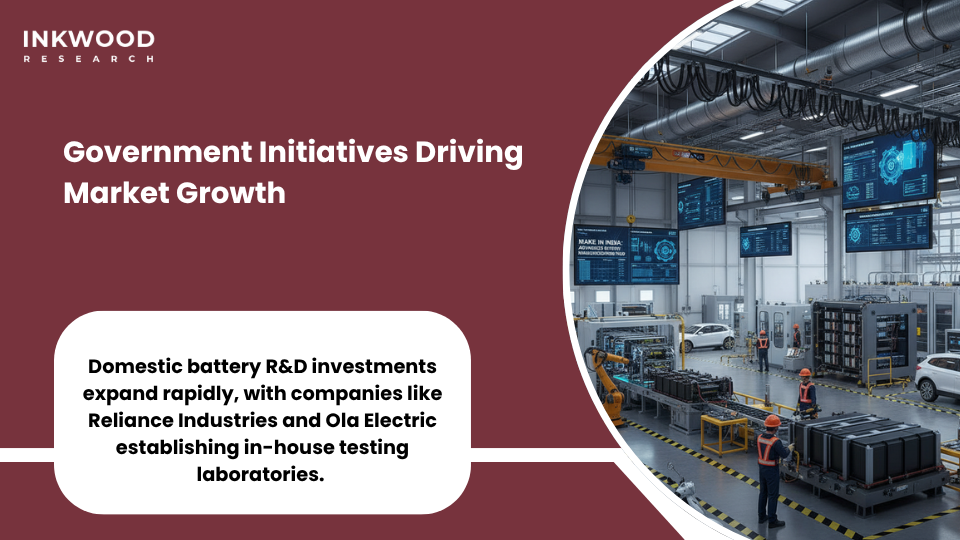
Domestic battery R&D investments expand rapidly, with companies like Reliance Industries and Ola Electric establishing in-house testing laboratories. This development reduces import dependence while building indigenous capabilities. Furthermore, partnerships between Indian laboratories and global equipment providers facilitate technology transfer and local support networks.
Companies increasingly offer modular systems allowing staged capacity expansion. This approach reduces upfront capital requirements while maintaining flexibility for future growth. Additionally, as production volumes increase and quality requirements tighten, more manufacturers invest in dedicated stationary testing infrastructure.
Nevertheless, challenges persist. Import dependence for high-end equipment remains significant despite localization efforts. Moreover, tariffs and duties increase acquisition costs, impacting smaller manufacturers disproportionately. Therefore, government support for testing equipment domestic manufacturing becomes increasingly important.
Critical Testing Requirements for Market Entry
Manufacturers must navigate complex testing protocols before launching products. Battery management system validation requires microprocessor-based circuits with comprehensive safety features. Specifically, systems must demonstrate over-charge, over-discharge, over-temperature, overcurrent, and short circuit protection capabilities.
Charger requirements include voltage cut-off preventing overcharging, soft-start functions, pre-charge capabilities, detecting deep discharge conditions, and input supply variation protection. Furthermore, earth leakage detection per IS 12640 Class 1 standards becomes mandatory. Therefore, testing equipment must validate these diverse specifications comprehensively.
Thermal Propagation Testing Protocol
Thermal propagation testing represents the most critical safety validation. During assessments, battery systems must demonstrate no evidence of fire or explosion triggered by single-cell thermal runaway events. Additionally, audio-visual warnings must alert users to thermal events, enabling safe response.
Temperature sensors integrated into battery management systems require validation under various thermal conditions. Systems must accurately detect abnormal temperature rises, preventing catastrophic failures. Moreover, testing must validate sensor placement and response times, ensuring effective thermal management.
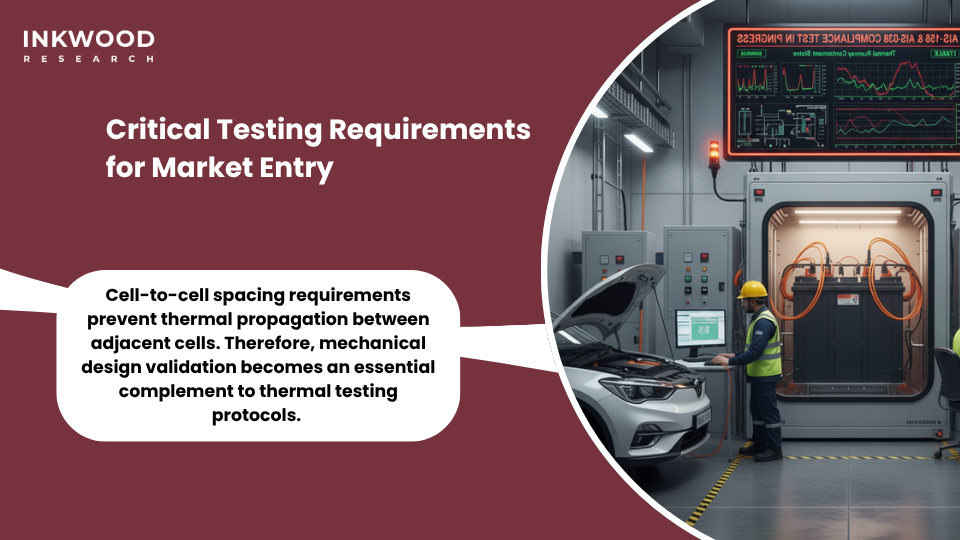
Cell-to-cell spacing requirements prevent thermal propagation between adjacent cells. Therefore, mechanical design validation becomes an essential complement to thermal testing protocols. Furthermore, pack-level testing must demonstrate containment capabilities if individual cells experience thermal runaway events.
Cycle Life and Performance Validation
Cells used in battery pack manufacturing must undergo a minimum of one cycle of charge-discharge at a C/3 current rate according to regulations. Manufacturers must maintain detailed cycling data throughout production processes. Consequently, testing equipment must provide comprehensive data logging and reporting capabilities.
Performance validation under Indian climate conditions presents unique challenges. Ambient temperatures exceeding 45°C require robust thermal management systems. Therefore, testing must validate performance across wide temperature ranges, ensuring reliability throughout diverse geographic regions.
Long-term degradation assessment becomes critical for warranty support. Manufacturers typically provide 8-10 year warranties requiring accurate lifetime predictions. Consequently, accelerated aging protocols must reliably forecast capacity fade and power degradation under realistic operating conditions.
NABL Accreditation and Testing Laboratory Requirements
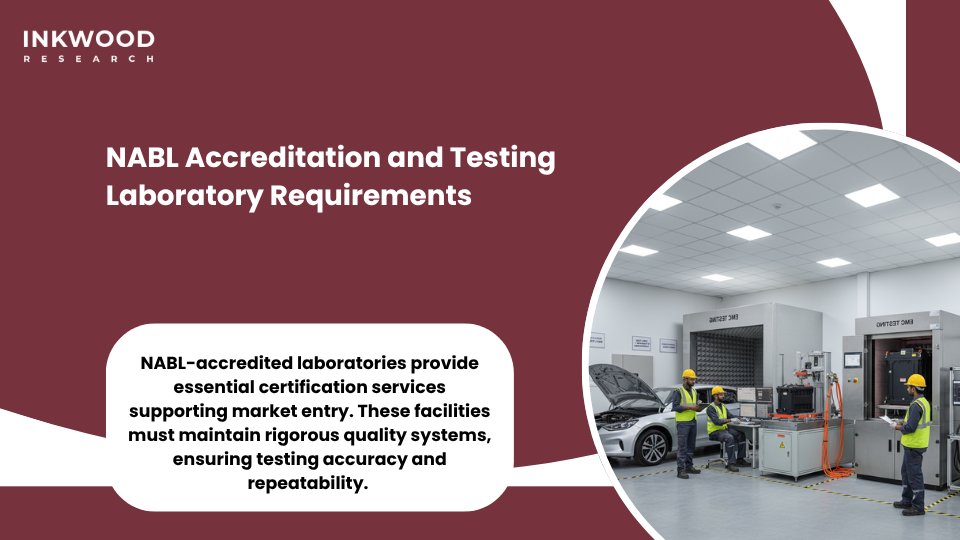
NABL-accredited laboratories provide essential certification services supporting market entry. These facilities must maintain rigorous quality systems, ensuring testing accuracy and repeatability. Furthermore, accreditation demonstrates competence meeting international standards, including ISO/IEC 17025.
Government-accredited centers validate compliance with AIS-156, AIS-038, and IS 16893 requirements before product launches. Testing includes electrical safety, thermal performance, mechanical integrity, and environmental durability assessments. Additionally, laboratories must participate in proficiency testing programs, maintaining accreditation status.
Laboratory Capability Requirements
Comprehensive testing facilities require diverse equipment portfolios. Battery cyclers enabling charge-discharge testing across various current rates form foundational capabilities. Moreover, thermal chambers validating performance from -40°C to +85°C accommodate extreme condition assessments.
Safety testing equipment, including overcharge, over-discharge, and short circuit simulators, validates protection system functionality. Additionally, vibration tables and mechanical shock testers ensure batteries withstand transportation and operational stresses. Therefore, capital investments for complete laboratory capabilities typically exceed several million dollars.
Emerging requirements for electromagnetic compatibility testing per AIS 004 standards necessitate specialized EMC chambers. These shielded facilities enable accurate RF emission and immunity measurements. Furthermore, laboratories must maintain calibration programs ensuring measurement accuracy throughout equipment lifecycles.
Third-Party Testing Service Models
Small and medium enterprises increasingly rely on third-party testing services, avoiding substantial capital expenditures. This approach enables market entry without significant upfront investments. However, testing capacity constraints at established laboratories can create schedule delays impacting product launches.
Organizations like TÜV SÜD India, Nemko India, and ITC India provide comprehensive testing services. These providers maintain international accreditations, facilitating export market access. Additionally, testing reports from recognized laboratories gain broader acceptance, reducing certification complexities across multiple markets.
Nevertheless, proprietary testing capabilities offer strategic advantages for larger manufacturers. In-house facilities enable rapid iteration during development cycles. Furthermore, confidential battery chemistries and designs receive better protection through internal testing programs.
Competitive Landscape and Market Players
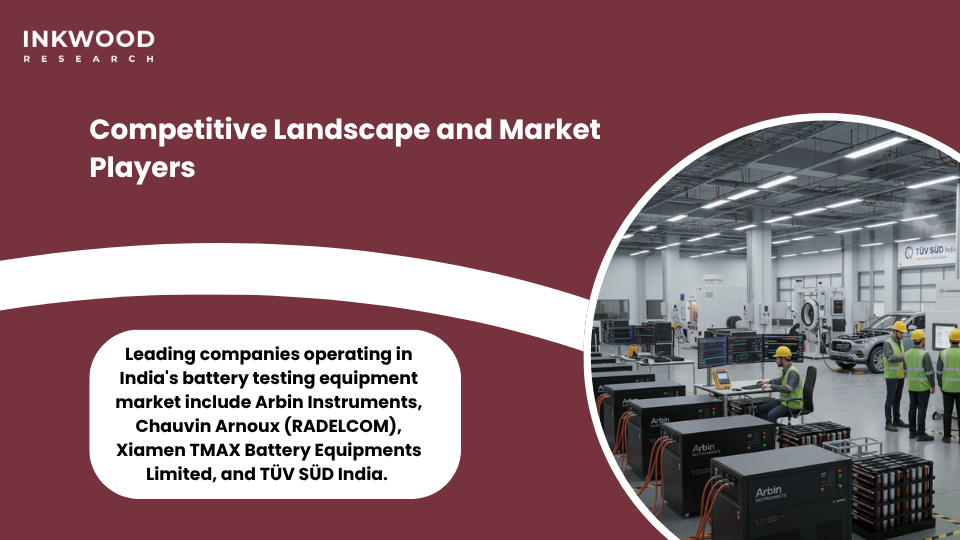
Leading companies operating in India’s battery testing equipment market include Arbin Instruments, Chauvin Arnoux (RADELCOM), Xiamen TMAX Battery Equipments Limited, and TÜV SÜD India. These organizations provide comprehensive solutions supporting India’s battery ecosystem development.
Chauvin Arnoux through RADELCOM India
Chauvin Arnoux operates through authorized partner RADELCOM India, providing electrical testing and measurement solutions. The company specializes in advanced instruments essential for battery evaluation, energy storage systems, and power electronics applications. Product ranges include battery analyzers, power quality analyzers, and electrical safety testers.
Equipment supports compliance with international standards, including IEC and ISO requirements critical for battery certification. Through RADELCOM’s distribution network, Chauvin Arnoux delivers technical support, calibration services, and training programs. This partnership enables local access to European-engineered testing technology with responsive after-sales service.
Furthermore, the company serves automotive manufacturers, research laboratories, and energy storage facilities throughout India. Consequently, comprehensive support capabilities strengthen customer relationships while facilitating technology adoption. Moreover, training programs develop local expertise supporting India’s battery testing ecosystem growth.
TÜV SÜD India Certification Services
TÜV SÜD India operates government-accredited testing centers providing essential certification services. These facilities validate compliance with AIS-156, AIS-038, and IS 16893 requirements before market entry. Additionally, international accreditations facilitate export market access for Indian battery manufacturers.
Comprehensive testing capabilities encompass electrical safety, thermal performance, mechanical integrity, and environmental durability assessments. Furthermore, expertise in emerging standards, including solid-state battery testing, positions TÜV SÜD for future market developments. Therefore, partnerships with equipment providers ensure facilities maintain cutting-edge capabilities.
The organization’s global network enables technology transfer and knowledge sharing, supporting Indian ecosystem development. Moreover, training programs develop local talent, addressing skill gaps in battery testing specializations. Consequently, TÜV SÜD plays critical roles beyond testing services, supporting overall industry capability building.
Emerging Technologies and Future Requirements
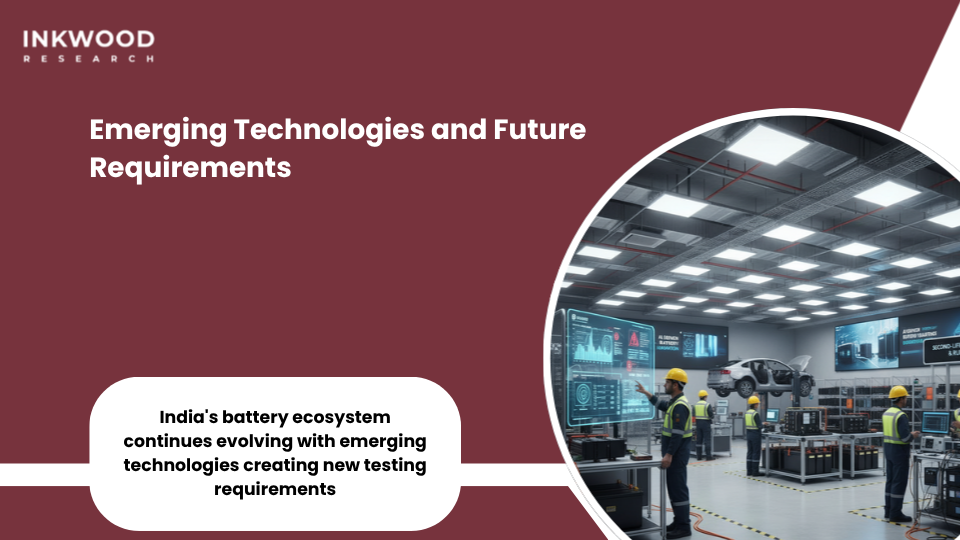
India’s battery ecosystem continues evolving with emerging technologies creating new testing requirements. Solid-state batteries promise higher energy densities and improved safety characteristics. However, these innovations necessitate specialized testing protocols beyond conventional lithium-ion approaches.
Lithium iron phosphate chemistries gaining market share require different testing parameters than nickel-based systems. Consequently, equipment must accommodate diverse battery types through flexible testing configurations. Furthermore, modular architectures enabling chemistry-specific adaptations become increasingly valuable.
Advanced Battery Management System Testing
Sophisticated battery management system technologies incorporating artificial intelligence and machine learning require enhanced validation approaches. Systems must demonstrate accurate state-of-charge and state-of-health estimations across battery lifecycles. Additionally, cybersecurity testing becomes essential as connectivity increases.
Wireless battery management systems present unique testing challenges. RF communication reliability under various interference conditions requires validation. Moreover, cybersecurity vulnerabilities must be identified and addressed to protect against malicious attacks. Therefore, testing laboratories must develop expertise in these emerging areas.
Predictive maintenance capabilities enabled by advanced BMS require long-term data collection and analysis. Testing equipment must support extended monitoring programs, validating algorithm accuracy. Furthermore, integration with cloud platforms necessitates additional validation, ensuring data integrity and security.
Second-Life Battery Testing Requirements
India’s growing electric vehicle fleet will create substantial second-life battery opportunities. However, repurposing requires a comprehensive assessment determining remaining useful life and safety. Consequently, specialized testing equipment for evaluating used batteries becomes increasingly important.
State-of-health assessment technologies must accurately characterize degraded batteries for second-life applications. Methods, including electrochemical impedance spectroscopy, provide detailed insights beyond simple capacity measurements. Therefore, laboratories must invest in advanced diagnostic capabilities supporting circular economy initiatives.
Regulatory frameworks governing second-life batteries remain under development. Nevertheless, proactive manufacturers establishing testing capabilities position themselves advantageously for emerging opportunities. Furthermore, experience gained through early initiatives informs standard development processes, ensuring practical requirements.
Key Takeaways
- AIS-156 and AIS-038 standards mandate comprehensive EV battery testing, including thermal propagation validation and BMS safety feature verification before market entry.
- BIS certification under IS 16046 and IS 16893 standards ensures batteries meet stringent safety requirements, addressing Indian climate conditions and usage patterns.
- PLI scheme investments creating gigascale manufacturing facilities drive substantial testing infrastructure demands throughout India’s battery ecosystem.
- NABL-accredited laboratories provide essential certification services while third-party testing enables market entry for smaller manufacturers without major capital investments.
- Import dependence for high-end testing equipment increases costs through tariffs, while the absence of uniform state-level standards creates compliance complexities.
- Emerging technologies, including solid-state batteries and advanced battery management systems, require continuous testing capability evolution supporting innovation.
Conclusion
Success in India’s battery testing equipment market requires a comprehensive understanding of evolving regulatory frameworks. Manufacturers must invest in robust testing capabilities meeting AIS-156, AIS-038, and BIS certification requirements. Furthermore, partnerships with NABL-accredited laboratories accelerate market entry while managing capital expenditures.
Government initiatives, including PLI schemes and renewable energy storage mandates, create sustained market growth opportunities. However, navigating complex compliance requirements demands specialized expertise and strategic planning. Therefore, organizations benefit from expert guidance throughout market entry processes.
Inkwood Research provides comprehensive intelligence supporting the successful navigation of India’s battery testing landscape. Our team offers strategic insights addressing regulatory compliance, testing capability development, and market entry strategies.
Contact us to discuss how our expertise accelerates your success in India’s dynamic battery ecosystem.
Frequently Asked Questions
What are the main differences between AIS-156 and AIS-038 testing standards?
AIS-156 applies to two and three-wheelers while AIS-038 governs four-wheelers. Both require comprehensive safety validation, including thermal propagation testing, BMS verification, and environmental durability assessments, with phase-wise implementation completed by March 2023.
How does IS 16893 differ from IS 16046 certification requirements?
IS 16893 addresses large-format batteries used in electric vehicles and energy storage, requiring pack-level validation. IS 16046 governs portable devices, focusing on cell and small pack testing based on IEC 62133 standards.
What capital investment is required for establishing a NABL-accredited testing laboratory in India?
Comprehensive laboratory capabilities typically require investments exceeding several million dollars, including battery cyclers, thermal chambers, safety testing equipment, vibration tables, EMC chambers, and facility infrastructure meeting NABL quality system requirements.