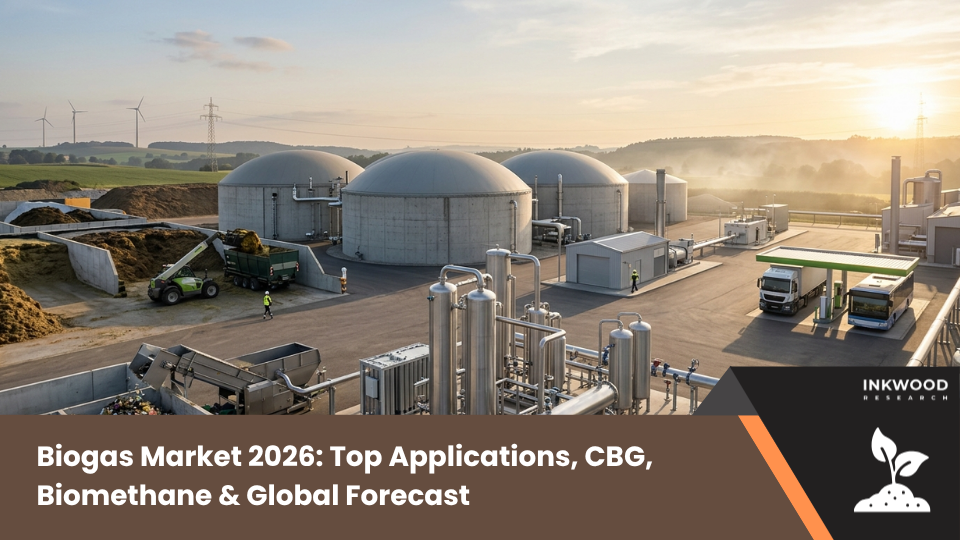
Biogas is a renewable gas mixture produced by breaking down organic matter through anaerobic digestion and landfill processes—without oxygen. Primarily containing methane and carbon dioxide, it delivers clear advantages over fossil fuels across applications such as electricity generation, heat production, and transportation fuel. Furthermore, biogas upgrading to biomethane is rapidly expanding its role as a pipeline-ready green gas alternative for industrial, domestic, and transport uses.
Based on our research, the global biogas market is valued at US$90.30 billion in 2026 and is projected to reach US$128.81 billion by 2034, advancing at a steady CAGR of 4.54% during the forecast period. Supportive government policies, accelerating biogas carbon emissions reduction goals, and a decisive energy transition toward circular economy biogas models are collectively fueling this sustained biogas market growth.
Global Biogas Market Size & Regional Forecast 2026–2034
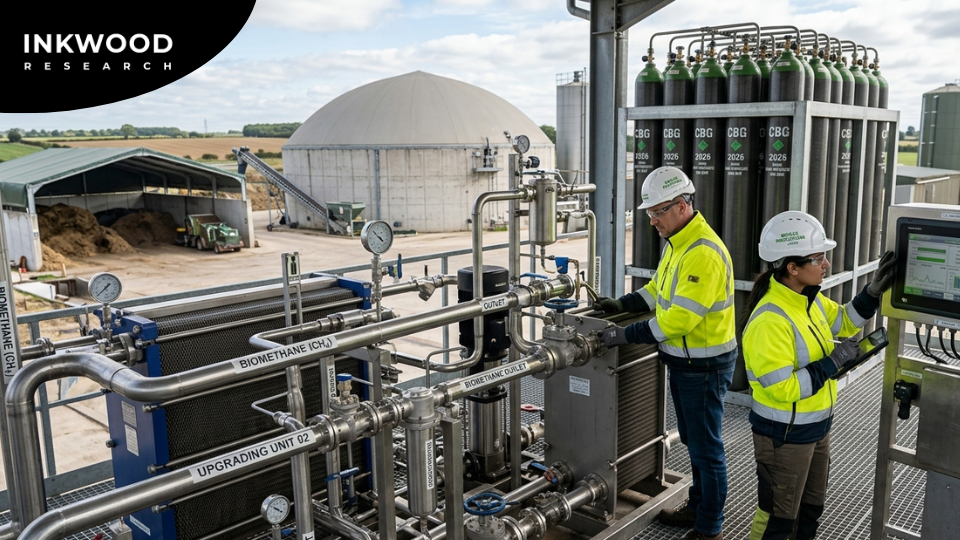
The global biogas market demonstrates broad-based expansion across all major geographies. Below are the key country-level biogas market forecast figures from our analysis:
- United States Biogas Market: US$18,325.39M (2026) → US$23,415.32M (2034) | CAGR: 3.11%
- China Biogas Market: US$10,654.72M (2026) → US$16,695.06M (2034) | CAGR: 5.77%
- Germany Biogas Market: US$8,128.50M (2026) → US$9,567.61M (2034) | CAGR: 2.06%
- India Biogas Market: US$6,046.15M (2026) → US$12,178.81M (2034) | CAGR: 9.15%
The India biogas market registers the fastest growth among major economies, at a 9.15% CAGR, nearly three times the US rate. Consequently, the Asia-Pacific biogas market emerges as the highest-growth regional bloc, driven by expanding compressed biogas (CBG) market infrastructure and strong government mandates. The Germany biogas market, while growing more steadily, continues to anchor the Europe biomethane market as the continent’s single largest biogas producer.
Top 3 Applications of Biogas across Market Verticals
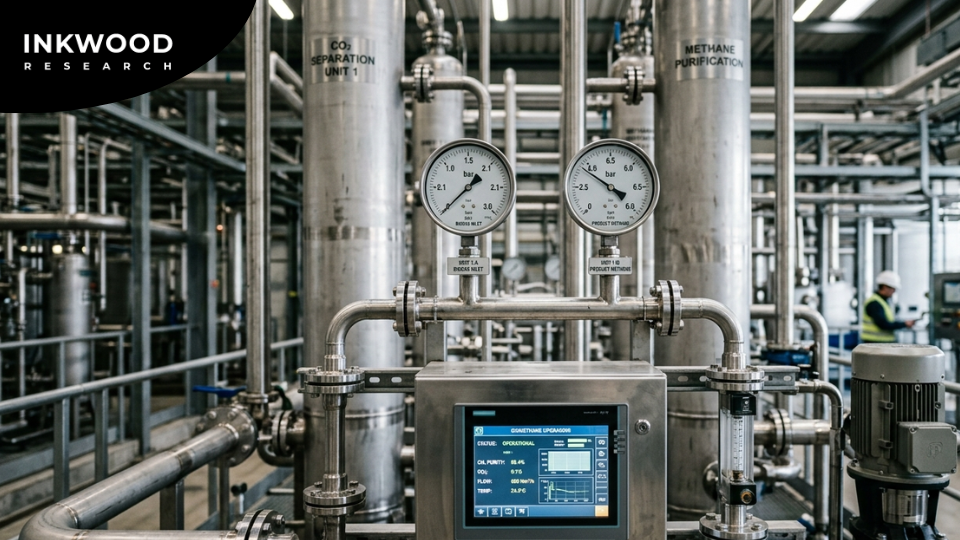
Our biogas industry analysis suggests that the global biogas market is anchored by three dominant application pillars: biofuel production, electricity generation, and heat generation. Collectively, these verticals define the current biogas market segmentation and shape the biogas market forecast through 2034.
Biofuel Production & Compressed Biogas (CBG) Market
For decades, the world’s energy dependency on fossil fuels, including coal and crude oil, has driven the majority of global greenhouse gas emissions. Consequently, the last decade has seen a decisive pivot toward cleaner alternatives. Today, biogas upgrading to biomethane and compressed biogas (CBG) are transforming the biogas for transportation fuel landscape. Biogas upgraded to pipeline quality becomes renewable natural gas (RNG), fully interchangeable with fossil CNG, making it ideal for buses, trucks, and domestic piped networks.
The CBG vs LNG vs LPG comparison increasingly favors CBG in markets where agricultural feedstock is abundant. CBG-fueled vehicles emit up to 90% less particulate matter than diesel equivalents, a compelling advantage for dense urban transport networks. Furthermore, the anaerobic digestion biogas process driving CBG production converts organic waste to biogas, integrating seamlessly with waste-to-energy biogas infrastructure across municipalities and industrial zones.
Key 2025–2026 developments in this segment include:
- Shell PLC completed its acquisition of Nature Energy, Europe’s largest renewable natural gas producer, for nearly US$2 billion in February 2023, adding 14 biogas plants to its portfolio. This move directly reinforces Shell’s low-carbon energy strategy targeting US$10–15 billion in clean energy investment through 2025.
- BP plc acquired US-based RNG producer Archaea Energy for approximately US$4.1 billion in 2022, creating one of the most significant integrated biogas production market portfolios in North America.
- ENGIE SA significantly expanded its biomethane activities in France, increasing connected production capacity from 10,822 GWh (end-2023) to 12,970 GWh (end-2024), while maintaining long-term offtake agreements and reinforcing its leadership within the Europe biomethane market.
- In October 2025, EnviTec Biogas AG secured its first contract to construct a biogas upgrading plant with CO₂ liquefaction in Belgium, enabling biomethane grid injection and daily bio-LCO₂ production for circular economy applications.
Biogas for Electricity Generation
There is a rapid, sustained surge in electricity demand globally, driven by urbanization, industrialization, and expanding population levels. Biogas for electricity generation addresses this demand directly through biomass power plants and combined heat and power (CHP) systems that convert organic waste streams into dispatchable, grid-connected energy.
According to the International Energy Agency (IEA), combined biogas and biomethane production is forecast to rise 23% between 2025 and 2030 in a base-case scenario. When only medium- and large-scale projects are considered, this growth strengthens to approximately 80%. Furthermore, the World Biogas Association (WBA) estimates that 10–13% of global greenhouse gas emissions can be reduced through biogas derived from sewage, industrial waste, food waste, and agricultural feedstocks.
Germany remains the dominant force in biogas for electricity generation within the EU, accounting for 53% of total EU biogas production. Moreover, EU biomethane production grew 14% year-on-year in 2024, outpacing direct biogas growth significantly. In regions with limited pipeline infrastructure, notably Brazil, India, and China, direct biogas for electricity and CHP generation remains the most impactful deployment pathway.
Key developments reinforcing this segment include:
- Veolia Environnement S.A. formalized a 13-year Biomethane Purchase Agreement with ENGIE and Waga Energy in France in May 2024, enabling market-financed renewable gas off-take without government feed-in tariff dependency, a landmark model for biogas investment opportunities.
- Air Liquide S.A. announced the construction of two new biomethane production units in Pennsylvania and Michigan in April 2024, converting dairy farm waste into purified RNG for grid injection.
- The American Biogas Council (ABC) reported in March 2026 that farms operating biogas capture systems in the US have more than doubled since 2020, now exceeding 631 facilities, while the vast majority of agricultural biogas potential remains untapped, signaling enormous biogas investment opportunities ahead.
Biogas for Heat Generation & Industrial Energy
One of the most direct applications of biogas remains biogas for heat generation. In areas where conventional fuels are scarce or expensive, small scale biogas plants and industrial biogas systems provide reliable heat energy for cooking, water heating, and community-level illumination. Combined heat and power (CHP) units further optimize output by generating both heat and electricity simultaneously.
Various countries are accelerating investment in biogas for industrial energy applications, driven by energy security concerns and the imperative to reduce fossil fuel dependency. The Joint Biomethane Declaration, published in Brussels in March 2026 by leading European industry associations, called on EU policymakers to make biomethane a central pillar of the bloc’s reindustrialisation, energy security, and decarbonisation strategy, specifically targeting hard-to-abate industrial sectors.
Additionally, France’s new blending mandate for biomethane grid injection will take effect in 2026, while the Netherlands is developing a parallel mandate. Ireland has set a national blending mandate for heating, further diversifying the renewable biogas market demand beyond transport.
India Biogas Market & the SATAT Scheme
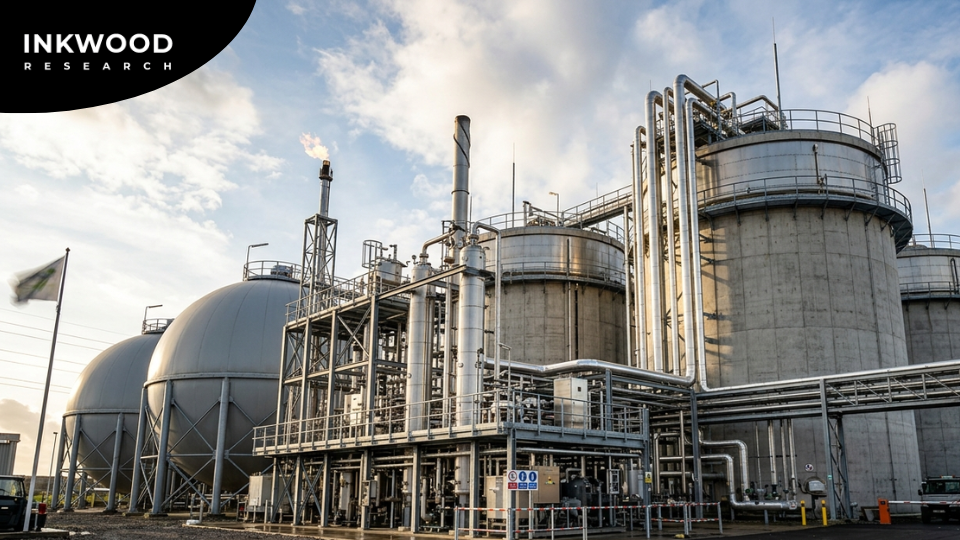
The India biogas market represents one of the most compelling biogas investment opportunities globally, advancing at a 9.15% CAGR from US$6,046.15 million in 2026 to US$12,178.81 million by 2034. India’s immense agricultural base, with over 5 million biogas plants already operational, provides an unparalleled feedstock advantage for biogas in the agriculture sector expansion.
The government’s SATAT (Sustainable Alternative Towards Affordable Transportation) scheme, launched in 2018, targets the establishment of 5,000 compressed biogas plants and annual CBG production of up to 15 MMT. Under SATAT, oil marketing companies provide guaranteed offtake agreements to CBG producers, creating reliable revenue streams for biogas plant feasibility planning. Additionally, India’s National Biofuels Coordination Committee (NBCC) mandated a phase-wise CBG blending with CNG and piped natural gas from FY 2025–2026 onward, converting voluntary adoption into a regulatory imperative.
Key 2025–2026 milestones for the India biogas market include:
- Hindustan Petroleum Corporation Limited (HPCL) announced a landmark ₹20 billion (US$231 million) investment in June 2025 to develop 24 compressed biogas plants, each producing 10–15 metric tonnes of CBG per day from agricultural residue, cattle dung, and sewage feedstocks.
- GAIL (India) Limited and VERBIO India Private Limited signed an MoU in October 2024 to explore agricultural residue-based CBG plants across India, directly addressing agri waste to biogas supply chain development.
- Oil India Limited signed an MoU with Bhubaneswar Municipal Corporation in December 2024 to establish a CBG plant processing 200 tonnes per day of municipal waste, producing 10–15 TPD of biomethane.
- India’s biogas sector is projected to draw investments surpassing ₹5,000 crore (€534 million) during the 2026–27 financial year, according to the Indian Biogas Association.
Furthermore, the IEA’s Renewables 2025 report highlights India’s CBG blending mandate as a structural policy driver, with the compressed biogas market India pipeline now expanding quickly, reflecting rising interest from both domestic and foreign investors.
Biogas Market Trends & Industry Opportunities

Biogas Upgrading Technologies & Biomethane Market Growth
Biogas upgrading technologies represent one of the fastest-evolving segments within the biogas production market. Advanced systems, including Pressure Swing Adsorption (PSA), Water Scrubbing, and Vacuum Swing Adsorption (VSA), are enabling cost-effective biogas purification systems at scale. Furthermore, in June 2024, CSIR-IIP announced a collaboration with ORSL to implement VSA technology for CBG production, upgrading 350 m³/h of raw biogas into high-quality biomethane for industrial and transport applications.
Additionally, dry fermentation process adoption has improved biogas yields by up to >15–20%, especially with high-solid feedstocks. Digitization of plant monitoring and predictive maintenance tools has enhanced operational efficiency in more than 30% of newly installed plants since 2021. These innovations collectively drive down biogas plant cost, improving the profitability of biogas plant projects across markets.
Feedstock Diversification & Circular Economy Biogas
More than 50 new biogas policies have been introduced globally since 2020, reflecting growing recognition of biogas’s role in sustainable energy systems. A central theme across these policies is circular economy biogas, positioning biogas production as a waste valorisation mechanism for agricultural residue, municipal solid waste, industrial effluents, and sewage sludge.
The majority of biogas producers are shifting toward agricultural waste and forestry residues as primary feedstock for biogas production, increasing waste utilisation efficiency significantly. This transition directly supports biogas carbon credits frameworks, as waste-derived biogas delivers measurable methane emission reductions. Methane carries a global warming potential more than 28 times that of CO₂, making its capture through anaerobic digestion biogas process one of the highest-impact near-term climate interventions available.
Biogas Carbon Credits & ESG Investment
The biogas carbon credits market is gaining structural momentum. Biogas carbon emissions reduction credentials are increasingly accepted within voluntary carbon frameworks, particularly as corporates seek verified, measurable emission offset pathways. Furthermore, more than 132,000 biogas plants are operational globally as of 2026, delivering distributed emission mitigation at scale.
Biogas Competitive Landscape & Key Companies
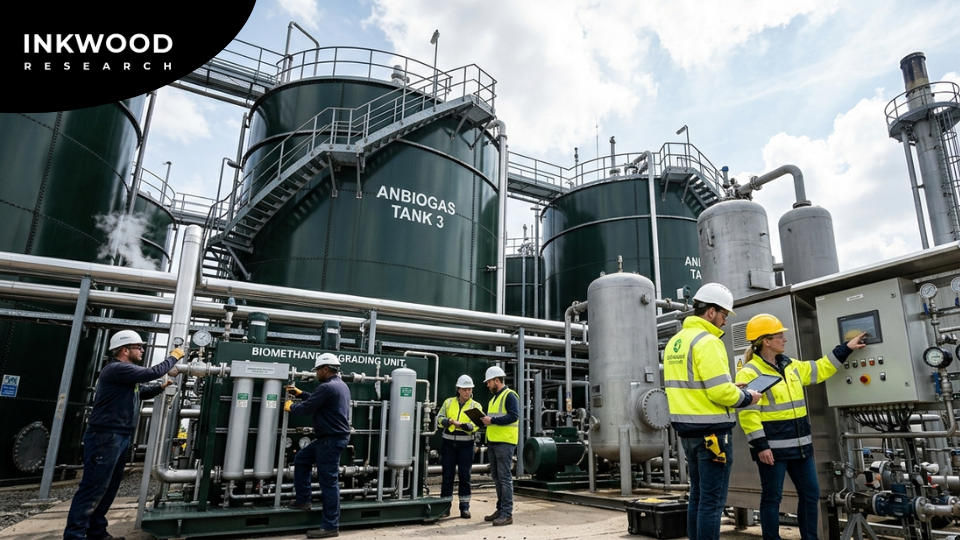
The biogas competitive landscape is defined by a moderately consolidated mix of global renewable energy leaders and regional waste-to-energy biogas specialists. Based on our analysis, leading biogas companies include Air Liquide SA, ENGIE SA, Hitachi Zosen Inova AG, EnviTec Biogas AG, Snam S.p.A., Veolia Environnement S.A., Shell PLC, BP plc, Greenlane Renewables, and Wärtsilä Oyj Abp. Together, companies like Engie, Veolia, and EnviTec collectively operate more than 2,800 plants across the EU alone.
Strategic priorities shaping the biogas competitive landscape in 2025–2026 include:
- Biogas upgrading technology leadership: Companies such as Hitachi Zosen Inova, Greenlane Renewables, and Air Liquide are deploying advanced membrane, PSA, and cryogenic upgrading systems, directly strengthening their biogas plant market positioning.
- Geographic expansion: China’s 14th Five-Year Plan targets 3.2 billion m³ of biomethane by 2025, opening significant doors for international technology providers, including Air Liquide, Wärtsilä, and DMT Environmental Technology, to supply biogas upgrading technologies to the world’s largest biogas production market in China.
- Vertical integration: Major energy companies, particularly Shell and BP, are building fully integrated biogas production market portfolios, from feedstock sourcing through distribution and retail sale of renewable biogas market volumes.
- Modular and scalable design: Smaller entrants are deploying modular small scale biogas plants and industrial biogas systems to target underserved agricultural and municipal markets, particularly across South and Southeast Asia
Biogas for Transportation Fuel: Future Prospects
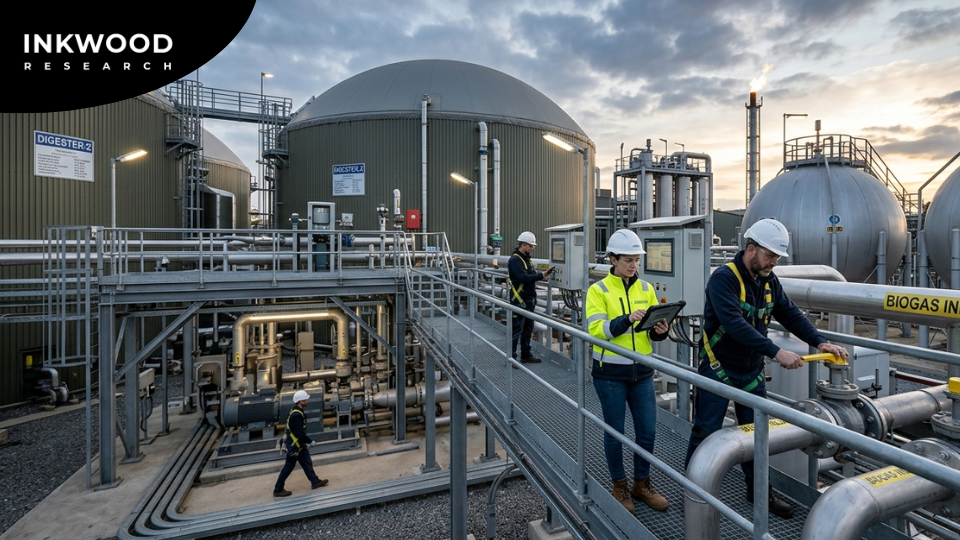
When biogas upgrading to biomethane reaches pipeline quality, it becomes renewable natural gas (RNG), and its role as a biogas for transportation fuel is accelerating rapidly. Hundreds of public CNG stations across Europe now offer biomethane blends, while Sweden operates around 50,000 vehicles powered by biomethane. The CBG business model is proving commercially viable in markets where agricultural feedstock abundance and government mandates converge.
The IEA forecasts combined biogas and biomethane production growth of 23% between 2025 and 2030, driven primarily by biomethane’s versatility and the ability to leverage existing natural gas grid infrastructure. Ultimately, a level playing field in energy policy, alongside continued biogas plant technology advancement, will determine the pace of global biogas market adoption. The convergence of waste-to-energy biogas economics, biogas carbon credits revenue streams, and transportation fuel demand represents the most compelling long-term driver of biogas market growth.
Key Takeaways
- The global biogas market size grows from US$90.30 billion in 2026 to US$128.81 billion by 2034 at a CAGR of 4.54%, driven by biofuel, electricity, and heat generation applications across the biogas industry analysis.
- The India biogas market advances at the fastest rate among major economies, 9.15% CAGR, supported by the SATAT scheme, HPCL’s US$231 million CBG commitment, and a mandatory CBG blending policy effective from FY 2025–2026.
- The Germany biogas market (US$8.13B in 2026) and China biogas production market (US$10.65B in 2026) anchor their respective regional biogas market share by region positions, while the Asia-Pacific region leads global growth momentum.
- Biogas upgrading technologies, including VSA, PSA, and membrane systems, are reducing biogas plant cost, improving the profitability of biogas plant projects, and accelerating biomethane market growth globally.
- Leading biogas companies, including ENGIE, Shell, BP, Veolia, EnviTec Biogas, and Air Liquide, are driving consolidation and capacity expansion across the biogas plant market, with over 2,800 EU plants operated by top players collectively.
Conclusion
In conclusion, the future of the global biogas market is defined by three intersecting forces: expanding compressed biogas (CBG) market infrastructure, deepening biomethane market growth in Europe, and transformative policy momentum from markets like India.
Moreover, the ongoing convergence of circular economy biogas, biogas carbon credits, and transportation decarbonization creates sustained biogas investment opportunities for companies, governments, and institutional investors across the global renewable biogas market.
If you require personalized consultation, contact us today!
Explore our in-depth global biogas market research reports or request a FREE sample tailored to your specific business needs.
By Sukanya Mukherjee