Table of Contents
This analysis is brought to you by Inkwood Research, a leading market intelligence firm specializing in European energy infrastructure, North Sea wind development, and continental energy security strategies. Our research team combines extensive experience analyzing offshore wind technologies, cross-border electricity markets, and renewable energy policy frameworks across Germany, Denmark, the Netherlands, Belgium, and the United Kingdom. Based on our proprietary research methodologies and strategic partnerships with European energy developers, grid operators, and government agencies, we deliver actionable insights that empower strategic decision-making for enterprises navigating Europe’s offshore wind transformation and energy independence objectives.
TLDR
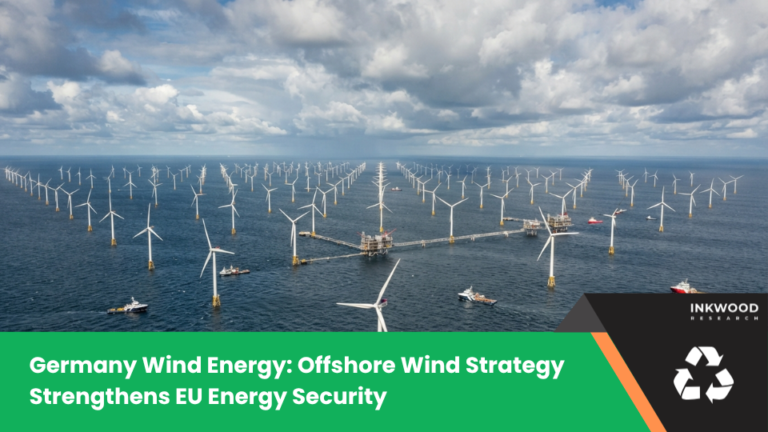
Germany’s offshore wind strategy has evolved from national energy policy into a cornerstone of European energy independence following Russia’s invasion of Ukraine. Through the January 2026 North Sea Summit in Hamburg, Germany, and nine partner nations committed to developing 100 additional gigawatts of offshore wind capacity through unprecedented cross-border collaboration. The Bornholm Energy Island project with Denmark and initiatives like He Dreiht and Borkum Riffgrund 3 demonstrate how Germany is transforming the North Sea into Europe’s largest clean energy hub while simultaneously reducing dependence on Russian fossil fuel imports.
European energy executives, renewable energy investors, grid infrastructure planners, and policy analysts seeking insights into continental energy security strategies will find this analysis invaluable. Additionally, offshore wind developers, manufacturing firms, and international energy corporations evaluating European market opportunities will benefit from understanding Germany’s pivotal role in shaping North Sea energy cooperation and reducing continental dependence on external energy suppliers.
Why Did the North Sea Summit 2026 Transform European Energy Policy?
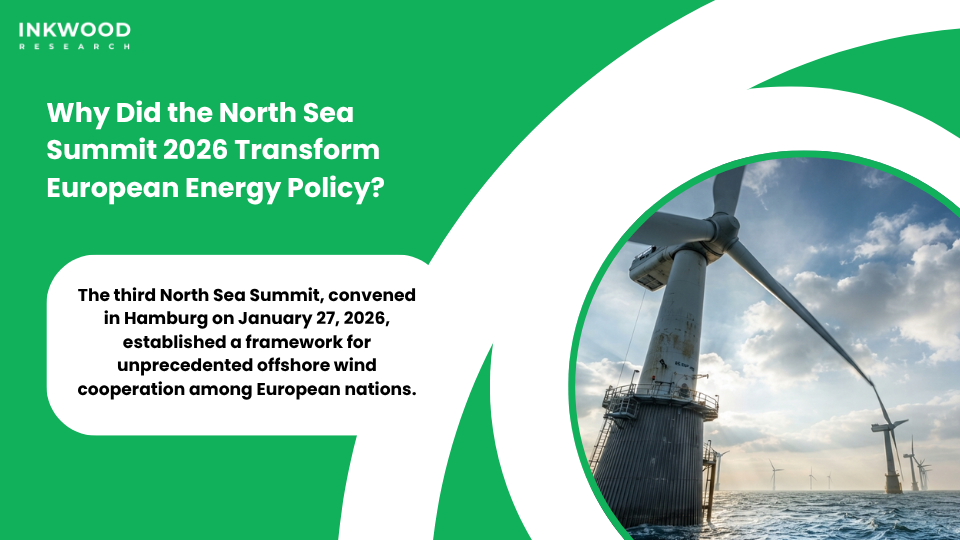
The third North Sea Summit, convened in Hamburg on January 27, 2026, established a framework for unprecedented offshore wind cooperation among European nations. German Chancellor Friedrich Merz hosted leaders from Belgium, Denmark, France, Iceland, Ireland, Luxembourg, the Netherlands, Norway, and the United Kingdom. Significantly, this summit marked NATO’s first participation in North Sea energy discussions, highlighting the security dimensions of renewable infrastructure.
The Hamburg Declaration commits participating nations to developing 100 additional gigawatts of offshore wind capacity through joint, cross-border projects. This ambitious target builds upon the 2023 Ostend Declaration, which aimed for 300 total gigawatts by 2050 across the region. Importantly, these coordinated commitments transform individual national policies into an integrated continental energy strategy.
Furthermore, EU Energy Commissioner Dan Jørgensen characterized the agreement as sending a clear message to Russia regarding the European determination to achieve energy independence. The Commissioner emphasized that Europe would no longer tolerate energy blackmail or indirectly fund conflicts through fossil fuel purchases. Therefore, offshore wind development represents both environmental progress and geopolitical strategy.
Strategic Importance of North Sea Wind Resources
The North Sea possesses exceptional wind resources that make it ideal for large-scale offshore development. Wind speeds consistently exceed those available in most onshore locations. Moreover, the relatively shallow waters across much of the North Sea facilitate fixed-bottom turbine installations, reducing costs compared to floating platforms required in deeper waters.
Additionally, the North Sea’s geographic position provides strategic advantages. The sea is surrounded by nations with high electricity demand and advanced grid infrastructure. Consequently, offshore wind generation can directly serve major industrial and population centers in Germany, the Netherlands, Belgium, Denmark, and the United Kingdom. This proximity minimizes transmission distances and associated energy losses.
How Does the Bornholm Energy Island Project Strengthen Cooperation?
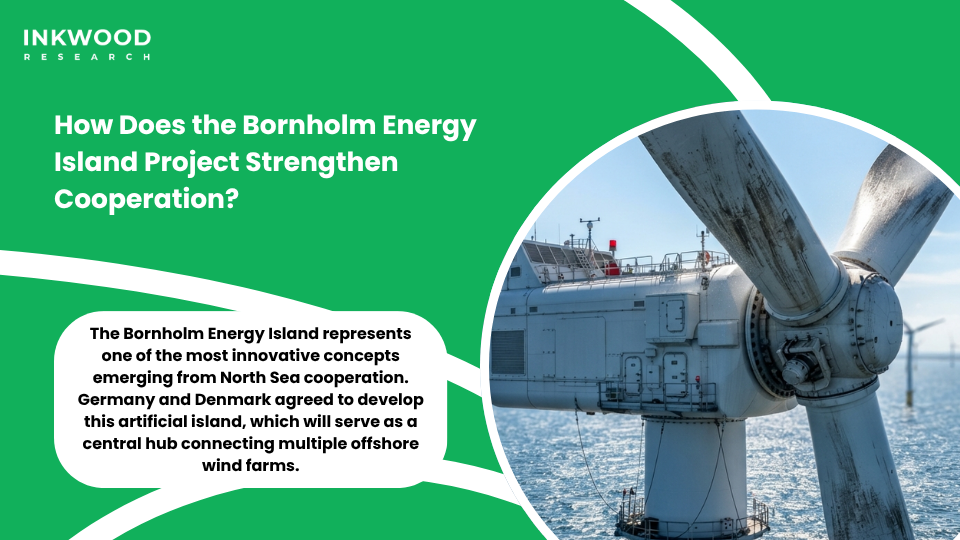
The Bornholm Energy Island represents one of the most innovative concepts emerging from North Sea cooperation. Germany and Denmark agreed to develop this artificial island, which will serve as a central hub connecting multiple offshore wind farms. The project will initially support 3 gigawatts of offshore wind capacity, with potential for significant expansion.
Energy islands represent a paradigm shift in offshore wind architecture. Traditional projects connect individual wind farms directly to onshore substations through dedicated cables. However, energy islands aggregate power from multiple wind farms, convert it to high-voltage direct current, and transmit it efficiently to multiple countries. This approach optimizes transmission infrastructure and enables unprecedented scale.
Technical Innovation in Germany Wind Energy Market Infrastructure
The Bornholm project demonstrates how technical innovation can overcome previous limitations on offshore wind scale. By centralizing conversion and transmission functions on artificial islands, developers can access wind resources in more distant waters while maintaining economic viability. Moreover, these islands can potentially host hydrogen production facilities, creating integrated clean energy hubs.
Furthermore, the bilateral nature of the Bornholm agreement exemplifies how cross-border cooperation can accelerate development. Rather than competing for limited North Sea space, Germany and Denmark are jointly optimizing resource utilization. Additionally, shared infrastructure reduces per-project costs and creates economies of scale that benefit both nations.
What Role Does Germany’s Wind Energy Market Play in European Security?
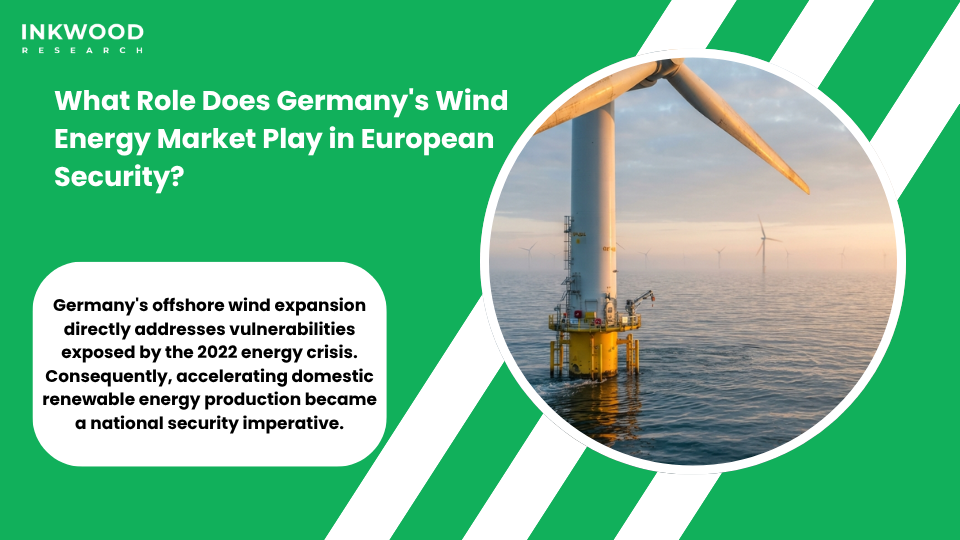
Germany’s offshore wind expansion directly addresses vulnerabilities exposed by the 2022 energy crisis. Prior to Russia’s invasion of Ukraine, Germany imported significant quantities of natural gas for electricity generation and industrial processes. When Russia weaponized these energy supplies, Germany faced a potential economic crisis and difficult policy choices between energy security and supporting Ukraine.
Consequently, accelerating domestic renewable energy production became a national security imperative. Offshore wind offers particularly attractive characteristics for this objective. Unlike solar power, wind turbines generate electricity consistently throughout the winter months when heating demands peak. Moreover, offshore wind’s capacity factors typically exceed those of onshore installations, providing more reliable baseload-style generation.
Economic Benefits Beyond Energy Independence
Germany’s offshore wind strategy delivers substantial economic benefits alongside security advantages. The sector creates thousands of high-skilled manufacturing jobs across turbine production, foundation fabrication, and installation vessel operations. Moreover, German companies like Siemens Gamesa and Nordex have emerged as global leaders in wind turbine technology.
Additionally, offshore wind supports Germany’s industrial competitiveness by providing access to abundant clean electricity. Energy-intensive industries, including steel, chemicals, and automotive manufacturing, require reliable, affordable power. Furthermore, as global markets increasingly demand low-carbon products, access to renewable electricity becomes a competitive advantage for German exporters.
Which Major Projects Are Advancing German Offshore Wind Capacity?
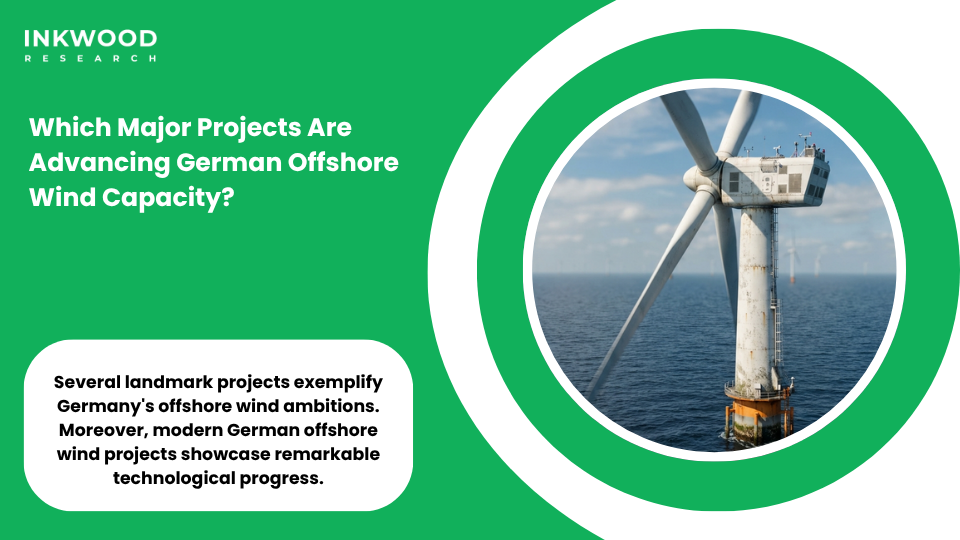
Several landmark projects exemplify Germany’s offshore wind ambitions. The He Dreiht wind farm, developed by EnBW, represents one of Germany’s largest offshore installations with 960 megawatts of capacity. This project utilizes Vestas V236-15 turbines, each capable of generating 15 megawatts. Also, it is among the most powerful offshore turbines commercially available. Located 85 kilometers northwest of Borkum Island, He Dreiht will supply electricity to 1.1 million households.
Furthermore, Borkum Riffgrund 3, jointly owned by Ørsted and Nuveen Infrastructure, achieved a significant milestone in December 2025 when it began delivering power to the German grid. With 913 megawatts of installed capacity, this project becomes Ørsted’s largest German offshore wind farm. Importantly, the project was constructed using wind turbines and foundations from Germany and Denmark, cables from Germany and France, and installation vessels from the Netherlands and Belgium, demonstrating robust European supply chain integration.
Technological Advancement in Wind Turbines and Foundations
Moreover, modern German offshore wind projects showcase remarkable technological progress. The 15-megawatt turbines deployed at He Dreiht feature 236-meter rotor diameters, larger than the wingspan of an Airbus A380. Each rotation of these massive rotors sweeps an area equivalent to six football fields. Consequently, individual turbines can generate enough electricity in a single rotation to power four households for an entire day.
Moreover, foundation technologies have evolved to support these increasingly massive turbines. Engineers have developed innovative designs that withstand harsh North Sea conditions while minimizing environmental impacts. Additionally, German projects increasingly incorporate noise mitigation systems during installation to protect marine ecosystems, demonstrating a commitment to sustainable development practices.
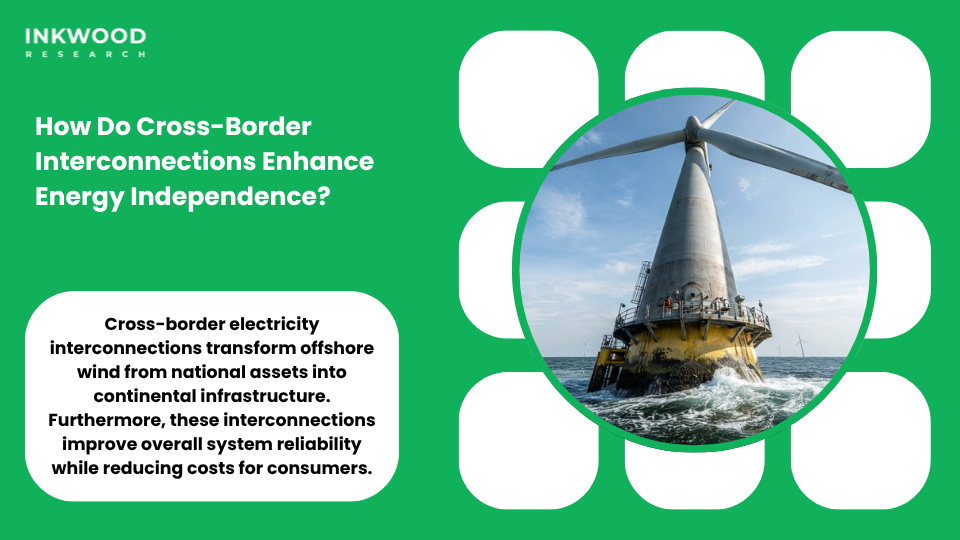
Cross-border electricity interconnections transform offshore wind from national assets into continental infrastructure. The NordLink cable, operational since 2021, connects German and Norwegian grids with 1.4 gigawatts of transmission capacity. This connection enables Germany to export excess offshore wind power to Norway during high-generation periods. Conversely, Norway can supply hydroelectric power to Germany when wind generation decreases.
Furthermore, these interconnections improve overall system reliability while reducing costs for consumers. When one nation experiences high renewable generation, it can export to neighbors with higher demand. This balancing mechanism reduces the need for expensive backup generation capacity. Additionally, it maximizes the utilization of renewable resources across the continent rather than curtailing excess generation.
Future Interconnection Projects Supporting the German Wind Energy Market
Numerous additional interconnection projects are advancing to support expanded offshore wind deployment. TenneT and other transmission system operators are developing plans for meshed offshore grids that connect multiple wind farms across multiple countries. These integrated systems offer superior efficiency compared to radial connections linking individual projects to single onshore points.
Moreover, hybrid interconnectors that combine offshore wind collection with cross-border transmission are emerging as particularly efficient solutions. These projects serve dual purposes: aggregating power from offshore wind farms while simultaneously enabling electricity trading between nations. Therefore, they deliver both renewable energy deployment and market integration benefits through unified infrastructure.
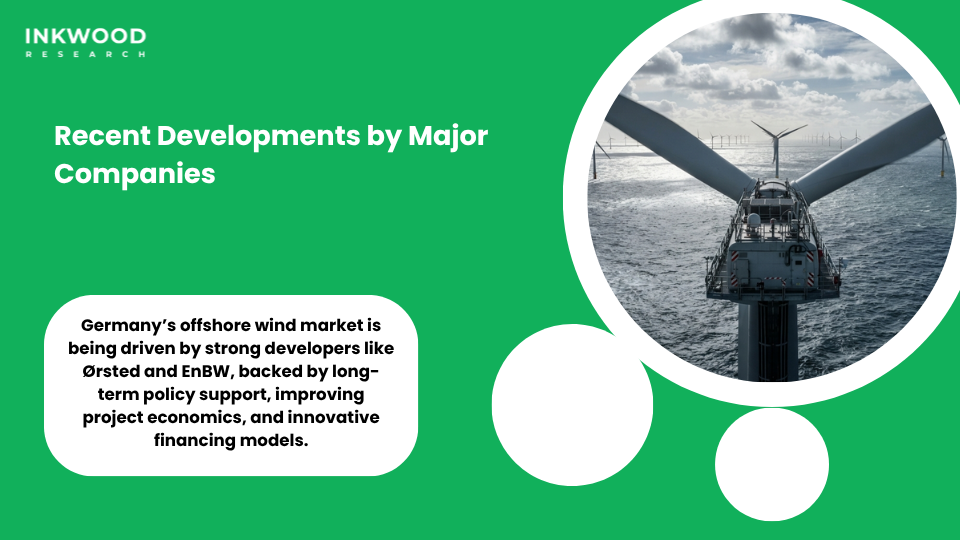
Germany’s offshore wind market is being driven by strong developers like Ørsted and EnBW, backed by long-term policy support, improving project economics, and innovative financing models. At the same time, intense competition among turbine manufacturers such as Siemens Gamesa, Vestas, and GE is accelerating technology advances and scaling up European manufacturing capacity to support rapid offshore expansion.
- Ørsted continues to lead European offshore wind development with multiple German projects. Beyond Borkum Riffgrund 3, the company holds development rights for additional North Sea sites. Ørsted’s commitment to the German market reflects confidence in long-term policy support and favorable wind resources. Additionally, the company’s partnerships with financial institutions like Nuveen demonstrate sophisticated approaches to project financing.
- EnBW, Germany’s third-largest energy utility, has emerged as a domestic offshore wind champion. The company’s He Dreiht project represents one of Europe’s first subsidy-free offshore wind farms, demonstrating that the technology has achieved cost competitiveness with conventional generation. Furthermore, EnBW is developing additional projects that will expand its offshore portfolio beyond 2 gigawatts.
- Meanwhile, turbine manufacturers including Siemens Gamesa, Vestas, and General Electric are competing to supply increasingly powerful machines for German projects. These companies continue pushing technological boundaries with larger rotors, taller towers, and more efficient generators. Moreover, European manufacturing capacity is expanding to meet growing demand from German and regional offshore wind development.
Key Takeaways
- The Germany wind energy market is projected to grow from US$9,108.21 million in 2026 to US$15,714.18 million by 2034, reflecting a compound annual growth rate of 7.06% as offshore wind capacity expands toward national targets.
- The January 2026 North Sea Summit in Hamburg established commitments for 100 additional gigawatts of cross-border offshore wind projects, transforming European energy policy from national initiatives into a coordinated continental strategy.
- The Bornholm Energy Island project between Germany and Denmark demonstrates innovative hub-and-spoke architecture that centralizes power conversion and enables efficient multi-country transmission from offshore wind resources.
- Major projects, including He Dreiht and Borkum Riffgrund 3, showcase technological advancement with 15-megawatt turbines and subsidy-free economics, proving offshore wind’s competitiveness with conventional generation.
- Cross-border interconnections like NordLink enhance energy security by enabling mutual support between nations, balancing renewable variability, and reducing dependence on external fossil fuel suppliers.
Conclusion:
Germany’s offshore wind strategy has evolved far beyond climate policy to become essential infrastructure for European energy security and economic independence. The nation’s leadership in coordinating North Sea cooperation demonstrates recognition that continental challenges require collaborative solutions. Moreover, Germany’s commitment to achieving 30 gigawatts by 2030 and 70 gigawatts by 2045 provides clear market signals that attract substantial private investment.
Nevertheless, achieving these ambitious targets requires sustained political will, continued technological innovation, and ongoing stakeholder cooperation. Supply chain development, grid infrastructure investment, and regulatory coordination all demand attention. However, the economic and security benefits justify these efforts—not merely for Germany but for all of Europe.
For businesses and investors seeking opportunities in Europe’s energy transition, understanding Germany’s central role in offshore wind development is essential. Inkwood Research provides comprehensive market intelligence and strategic consulting to help organizations navigate this dynamic sector. Contact our team to explore how Germany’s offshore wind expansion aligns with your strategic objectives.
Frequently Asked Questions
What is Germany's current offshore wind capacity?
As of early 2026, Germany operates approximately 9.2-9.5 gigawatts of offshore wind capacity, with projects like He Dreiht and Borkum Riffgrund 3 adding substantial new capacity.
What was decided at the North Sea Summit 2026 in Hamburg?
Ten European nations committed to developing 100 additional gigawatts of offshore wind through cross-border projects, transforming the North Sea into the world’s largest clean energy hub.
How does the Bornholm Energy Island work?
This artificial island will aggregate power from multiple offshore wind farms, convert it to high-voltage direct current, and efficiently transmit it to both Germany and Denmark.
Why is offshore wind critical for European energy security?
Offshore wind reduces dependence on imported fossil fuels, particularly Russian natural gas, while providing reliable domestic electricity generation that cannot be weaponized geopolitically.
Which companies lead German offshore wind development?
Ørsted, EnBW, and RWE lead development, while Siemens Gamesa, Vestas, and General Electric supply turbines for projects across the German North Sea and Baltic regions.
How do cross-border interconnections benefit Germany?
Interconnections enable electricity trading with neighbors, balance renewable generation variability, improve grid reliability, and maximize utilization of North Sea wind resources across multiple nations.